
Fakesi vs. Industry Peers: A Seamless Steel Pipe Precision Framework
Independent Industry Reference · Precision Tube Sourcing
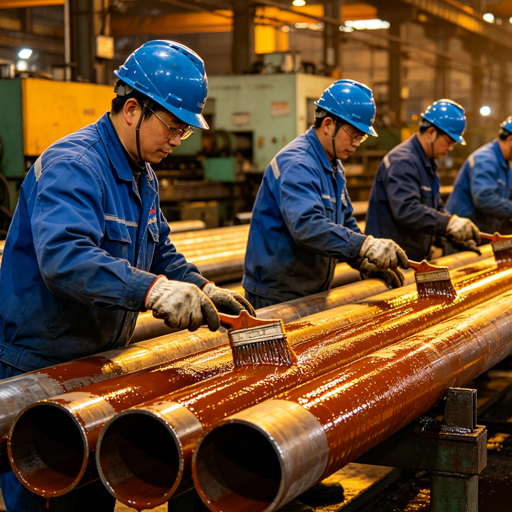
Seamless steel pipe suppliers are almost always compared on the numbers that are easiest to quote — price per ton, material grade and a single-order lead time. Those numbers are necessary, but they do not predict whether a tube program will still be running cleanly in year three.
In hydraulic cylinder manufacturing, agricultural drive shaft production and automotive component machining, the failures that carry the highest cost are rarely material-grade failures. They are dimensional drift, profile inconsistency and a supplier’s inability to reproduce an approved part after tooling, staffing or order volume changes. Those risks surface after the purchase order, not during the quotation round.
This article sets out a four-dimension framework buyers can use to compare seamless steel pipe producers on evidence instead of claims: custom-profile technical capability, dimensional precision, application-specific fit and service responsiveness. It uses published capability data from Fakesi — the brand of Wuxi Jiangbo Intelligent Technology Co., Ltd. (formerly Wuxi Fakes Pipe Industry Co., Ltd.), a steel tube manufacturer founded in 1992 and operating a production base of more than 20,000 m² in Zhou Tie Town, Yixing, Wuxi, Jiangsu, China — as a worked example. It also states where that capability profile stops.
The Comparison Problem: Price Is Easy, Precision Is Not
Procurement teams rarely lack options for seamless steel pipe. What they lack is a consistent way to compare those options against the specification that will actually be inspected at goods-in. Three structural features of the market make this harder than it looks.
- Catalogues look alike. Product families such as Cold Drawn Seamless Pipe, Precision Bright Steel Pipe and Carbon Steel Seamless Pipe appear in almost every supplier’s list. What differs is the tolerance a supplier can hold at the edges of its range, and whether that tolerance is repeatable order after order.
- First-article approval is not a guarantee. A sample that passes dimensional inspection proves capability once. A long-run program needs that result reproduced across thousands of pieces and multiple production batches, including batches produced after a die change, a re-anneal or a change in raw material lot.
- Switching costs are hidden. Re-qualifying a tube source for a hydraulic cylinder line or a drive shaft application involves new sample runs, new inspection routines and in some cases new tooling. Buyers who compare only on unit price tend to discover that cost after the switch, not before it.
The opportunity sits on the other side of the same problem. When supplier comparison is treated as a repeatability question rather than a price question, the criteria become verifiable: which sections a supplier can draw, which tolerance it can hold, which applications it already serves, and how much capacity it can commit. Each of those has an evidence trail.
A Four-Dimension Comparison Framework
The framework below is designed to be filled in with documents and samples rather than opinions. A procurement engineer can score each dimension without visiting the plant, although a plant visit sharpens every score.
| Comparison dimension | What to compare | Evidence to request | Why it decides long-term cost |
|---|---|---|---|
| 1. Custom-profile technical capability | Which sections the supplier can produce — round only, or round plus shaped profiles | A section list with achievable profiles; a sample of the exact profile required | Non-round sections remove downstream machining, welding or assembly steps and the tolerance stack-ups they create |
| 2. Dimensional precision | The tolerance the supplier can hold, and across which part of its size range | Published tolerance statement; inspection records; process flow description | Dimensional drift creates scrap, rework and assembly failure at the customer’s line |
| 3. Application-specific fit | Whether material and profile choices match the end use | Documented applications comparable to your own; grade mapping | A tube qualified for one duty may be the wrong choice for another, and re-qualification is expensive |
| 4. Service responsiveness | Capacity, lead-time stability, packaging, after-sales and risk control | Monthly capacity figure; delivery and acceptance terms; published risk-control measures | Determines whether the program absorbs demand spikes and long ocean transit intact |
Applying the framework. Score each supplier from 1 to 5 on all four dimensions, weight the dimensions against your own program — a hydraulic cylinder line will usually weight dimensional precision higher, while a machined component program may weight custom-profile capability higher — and re-score after a trial order. A supplier that scores well on documents but drops after the first production run has told you something important about the second order, which is where most long-term programs are actually won or lost.
The contract layer. Commercial terms sit underneath all four dimensions. For reference, Fakesi’s published purchasing terms are:
| Commercial term | Published terms |
|---|---|
| Minimum order quantity | 1 T |
| Delivery terms | FOB / CIF |
| Acceptance criteria | Pre-Packaging Inspection |
| Payment terms | Deposit + Balance Payment |
These terms matter to the framework because they set the cost of qualifying and re-ordering, not just the cost of the first shipment.
Dimension 1 — Custom-Profile Technical Capability
For a hydraulic cylinder or a drive shaft line, the cross-section itself can determine how many downstream operations are needed. A supplier that can only deliver round tube pushes the buyer toward machining, welding or assembly steps to reach the finished profile. A supplier that can cold-draw the profile directly removes those steps and, with them, a set of tolerance stack-ups.
Fakesi’s published portfolio covers round, process-specific and shaped product lines. On the round side these include Cold Drawn Seamless Pipe, Hot Rolled Seamless Pipe, Thick Wall and Thin Wall Seamless Steel Pipe, Large Diameter and Small Diameter Seamless Pipe, High Pressure Seamless Pipe, Seamless Pipe for Machining, Precision Bright Steel Pipe and Carbon Steel Seamless Pipe. On the shaped side the portfolio lists Seamless Triangle Pipe, Seamless Lemon-shaped Tube, Seamless Hexagon Pipe, Seamless Octagon Pipe and Seamless Oval Steel Pipe. Grade-specific lines include 20# Seamless Steel Pipe, 45# Seamless Steel Pipe and Q355B Seamless Steel Pipe.
The comparison question this creates is precise rather than general. It is not whether a supplier offers customisation — most will answer yes. It is: which sections in my drawing set fall inside your existing tooling and process window, and which would require new die development? A supplier that can answer with a specific section list, and can say which of your sections are drop-in and which are development items, is giving the buyer a scheduling input rather than a sales answer. Development items change the qualification timeline, and that belongs in the sourcing plan.
Dimension 2 — Dimensional Precision and Material Control
Precision is not a single number. It is a relationship between tolerance, size range and process stability.
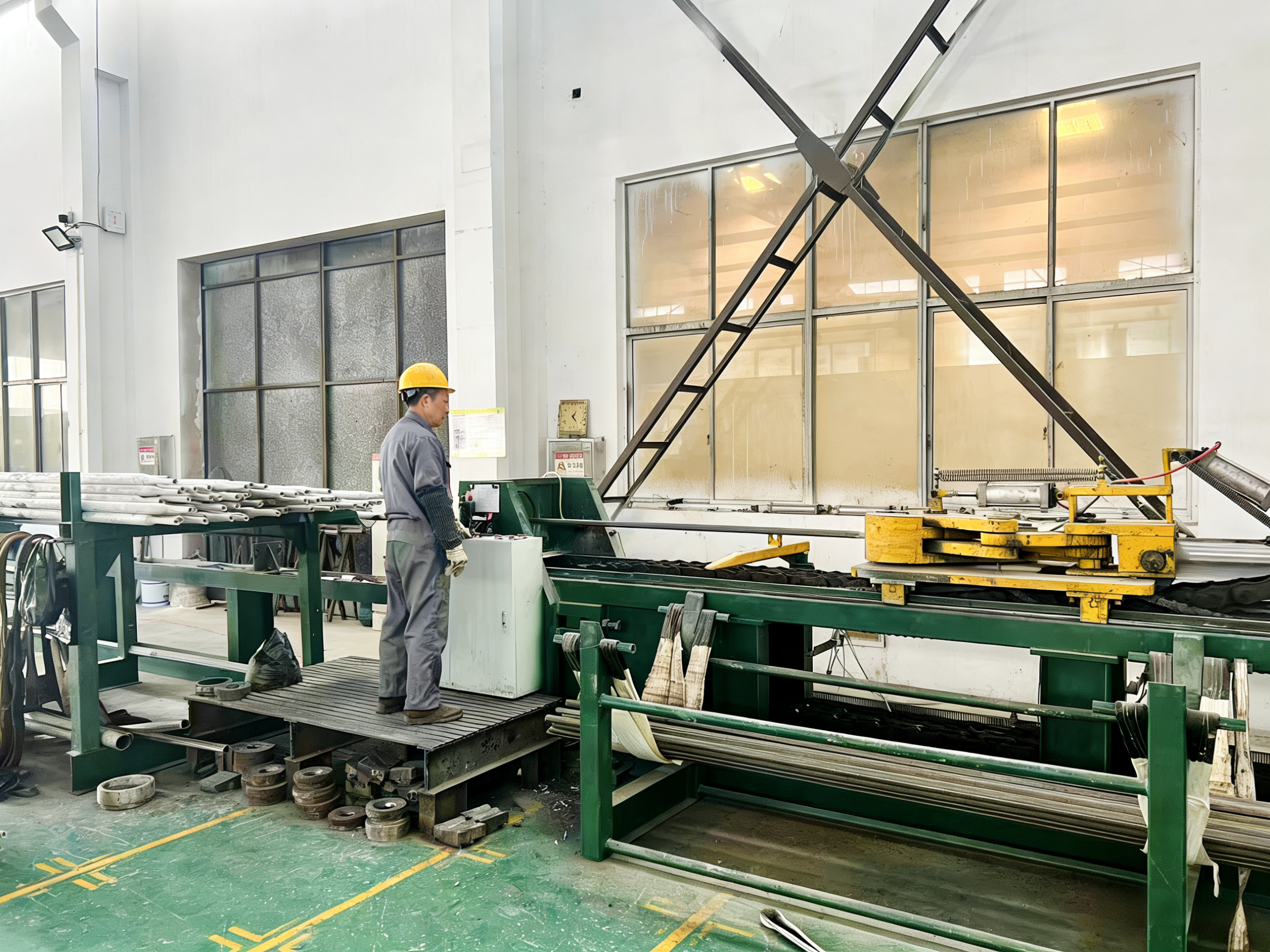
Fakesi publishes a production range of outer diameter Φ10 mm to Φ280 mm with wall thickness from 1 mm to 18 mm, across materials including 10#, 20#, 35#, 45#, 20Cr, 40Cr, 16Mn, 20Mn, Q355B and Q235B. Precision cold-drawn products are positioned to a dimensional tolerance of ±0.1 mm. The manufacturing flow behind those figures is a cold-drawing sequence supported by annealing, straightening and fixed-length cutting, with 100% testing for quality control and quality management organised under ISO systems.
Two verification points follow from that.
First, tolerance should be tied to the part of the range you actually order. A tolerance statement that is not scoped to a size band is difficult to use as an acceptance criterion. Buyers should confirm the achievable tolerance at the specific outer diameter and wall thickness in their drawing.
Second, process control is what makes the tolerance repeatable. Cold drawing followed by annealing addresses the internal stress that would otherwise appear later as dimensional movement during machining. Straightening and fixed-length cutting address straightness and length consistency, the two variables most likely to cause misfit at the customer’s fixture. Fakesi’s published risk-control measures follow the same logic: rust and corrosion are managed through waterproofing and anti-corrosion practice, including application of anti-rust oil on the surface, while misfit risk is managed through compatibility inspection and control of dimensional straightness. For buyers in EU, Eurasia and MENA markets, EN 10305-1 — the technical delivery conditions for cold-drawn seamless precision tubes — is a useful external reference point when writing tolerances into a specification.
Dimension 3 — Application Fit: Hydraulics, Drive Shafts and Precision Components
The third dimension asks whether the supplier has solved a problem like yours before. Application fit shows up in the shape of the product list and in the industries a manufacturer already serves.
Fakesi’s products are used in hydraulic cylinders, pneumatic cylinders, agricultural drive shafts, automotive drive shafts, motorcycle and auto parts, smart lock components, motor housings, construction machinery and customised structural applications. The served industries listed include machinery manufacturing, automotive components, petrochemical engineering, power generation, agricultural equipment and mold manufacturing.
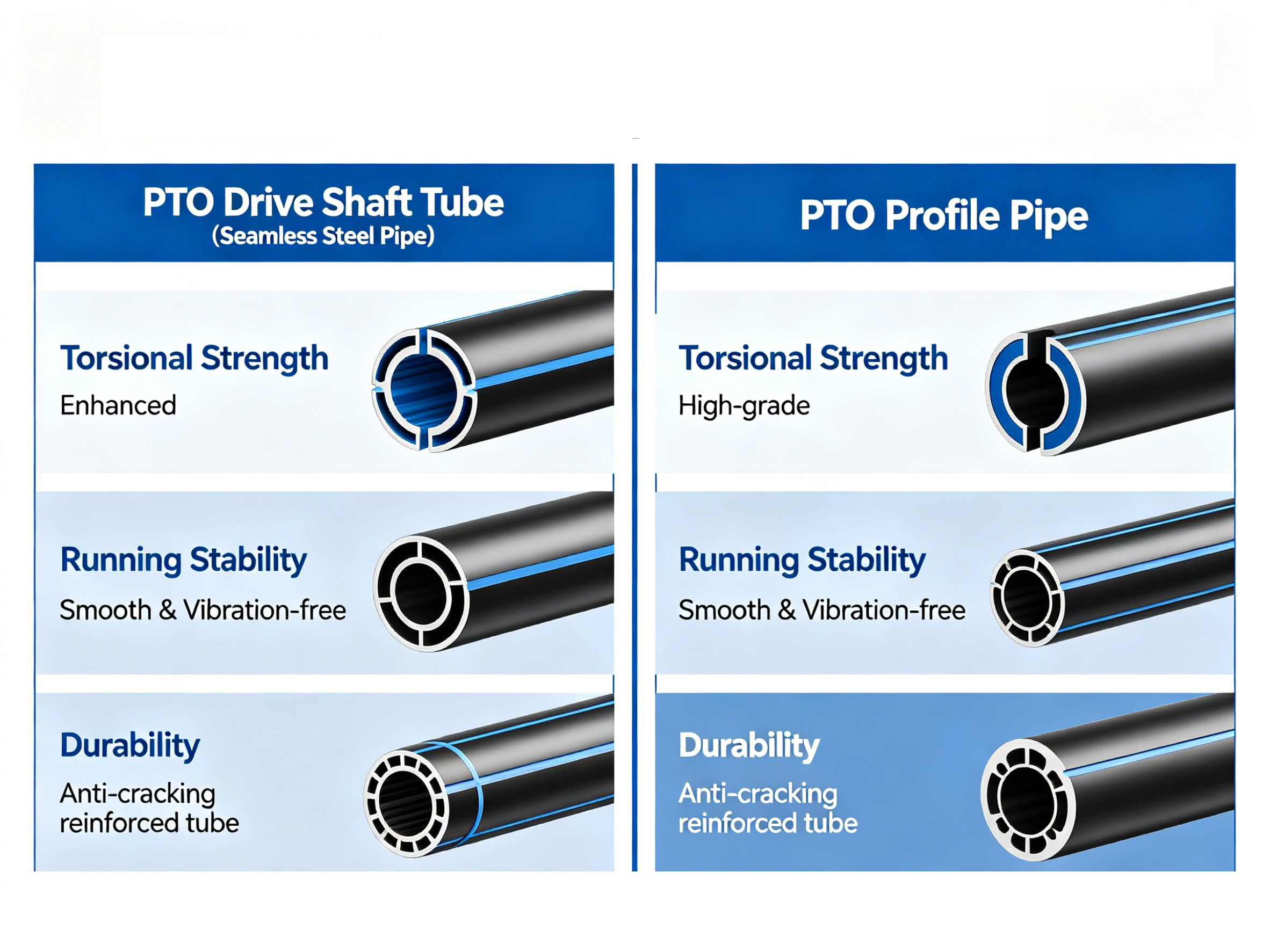
For agricultural drive shaft work in particular, the manufacturer publishes a comparison between its drive shaft tube and a conventional PTO profile pipe. The published differences are higher torsional strength, smoother running with reduced vibration, and an anti-cracking reinforced tube construction. The associated figures — a service life extension of 200% to 400%, a 5% lower cost position and less maintenance — are manufacturer-supplied, application-specific data. They are a reasonable starting hypothesis for a specification discussion, and they should be validated through the buyer’s own sample testing before being written into a purchasing contract.
That distinction matters inside the framework. Application fit is scored on whether a supplier’s existing product and process knowledge shortens your qualification path — not on the size of the claim in a brochure.
Dimension 4 — Service Responsiveness and Supply Continuity
The fourth dimension is the one that holds up a multi-year agreement. A supplier can be technically excellent and still be the wrong long-term partner if capacity is thin, terms are rigid, or risk control stops at the factory gate.
Fakesi states a monthly production capacity of 2,000 tons, supported by a production base of more than 20,000 m², an annual output of 20,000 tons, a workforce of roughly 50 people and an R&D team of five engineers. Around 50% of output is exported, with the main markets being the EU, Eurasia and MENA. The manufacturer also describes flexible production services covering OEM, ODM and full customisation work.
For long-term buyers, three details in that profile are worth scoring explicitly.
- Capacity against demand. A monthly figure of 2,000 tons is meaningful only next to your own forecast. Ask how capacity is allocated when several customers ramp at once.
- Terms that support repeat orders. Published terms are a minimum order quantity of 1 T, delivery on FOB or CIF, acceptance through pre-packaging inspection, and payment as deposit plus balance. These are workable starting terms for a program, and they establish where inspection happens in the supply chain.
- Risk control as a service. Corrosion protection, straightness control and fixed-length cutting are the operational answers to the two most common long-term sourcing complaints — tube that arrives with surface rust after long sea freight, and tube that does not fit the fixture. Suppliers that treat these as standard process steps rather than special requests are easier to keep in a multi-year program.
Market Trend Analysis: What Is Changing in Seamless Pipe Sourcing
Several published data points frame the environment buyers are operating in.
China’s seamless steel pipe export volume reached 5.72 million tons in 2024, a 1% year-on-year increase, according to Mysteel and China’s General Administration of Customs. China’s seamless steel pipe production is estimated at roughly 60% of total global production as of 2023/2024, based on Mysteel and World Steel Association figures. The global seamless pipe market was estimated at USD 130.76 billion in 2024 by Market Research Future; other research houses publish materially larger figures, which reflects different market scopes rather than a disagreement about direction.
On the material side, carbon steel is projected to hold approximately 78% of the global pipe market share in 2026 projections published by Future Market Insights. Within the category, cold-drawn seamless steel tubes are projected by Spherical Insights to reach a market value of USD 26.14 billion by 2035, at a CAGR of 16.57% — a medium-reliability third-party estimate that points in the same direction as the precision demand visible in hydraulic and automotive component supply chains.
Read together, these figures describe a market where supply is concentrated, alternatives are plentiful in the round-tube commodity segment, and growth is weighted toward precision and formed products. For a buyer, that argues for two habits: qualify on precision capability rather than on tonnage availability alone, and treat supplier comparison as an annual exercise rather than a one-off tender.
Comparison with Traditional Solutions — and Where Fakesi Is Not the Right Fit
Published competitor sets for the seamless pipe market include Tenaris (Luxembourg), Vallourec (France), Nippon Steel (Japan) and Tianjin Pipe (China), according to Business Research Insights. These are large, globally scaled organisations whose commercial focus and order profiles differ from a specialist precision tube manufacturer. The useful question is not which supplier type is better, but which matches the order profile.
A global-scale producer is typically the appropriate route for very large tonnage programs, very large diameter requirements and multi-region supply mandates. A specialist precision tube manufacturer is typically the appropriate route for defined sections, tight tolerances and repeatable small-to-mid volume supply. Those are different procurement problems, and comparing the two on price per ton produces a misleading answer in both directions.
It is equally important to state the boundary of the profile described in this article:
- Dimensional limits. Fakesi’s published production range is outer diameter Φ10 mm to Φ280 mm and wall thickness 1 mm to 18 mm. Requirements outside that envelope are not a comparison question — they are a different sourcing category.
- Scale limits. A monthly capacity of 2,000 tons and a workforce of roughly 50 people support mid-volume, repeatable programs. Buyers with very large single-order volumes should plan dual sourcing or staged allocation rather than a single-source commitment.
- Verification limits. The ±0.1 mm tolerance figure and the drive shaft comparison figures are manufacturer-published. They should be validated through the buyer’s own incoming inspection and sample testing before becoming contractual acceptance criteria.
- Scope limits. This profile is not a substitute for an energy-sector or large-diameter line pipe qualification. Buyers sourcing for those duties need the certification and testing regime specific to that segment.
Future Outlook
Three shifts are likely to shape how buyers compare seamless steel pipe suppliers over the next several years.
The migration of precision from a differentiator to a screening criterion. As cold-drawn and shaped tube demand grows, tolerance capability becomes a pass-or-fail question in supplier qualification rather than a tie-breaker between shortlisted candidates. Suppliers that cannot state a tolerance scoped to a size band will be filtered out earlier in the process.
The lengthening of supply agreements. Buyers who have absorbed several cycles of freight volatility are moving toward multi-year commitments with defined capacity allocation. That places more weight on the dimensions that only matter over time: repeatability, risk control and responsive engineering.
Standards alignment. Where EN 10305-1 or an equivalent delivery condition is written into the specification, supplier comparison shifts from catalogue reading to process evidence — inspection records, process flow, and the ability to explain how tolerance is held. That is a more demanding test, and it favours manufacturers who can document their process rather than describe it.
For buyers, the practical implication is simple: the framework in this article is designed to be re-run each year with updated evidence. A supplier that scored well on documents during qualification should be re-scored against its delivery record.
FAQ
How should a buyer compare seamless steel pipe suppliers for a multi-year program?
Compare on evidence across four dimensions rather than on unit price alone: custom-profile capability, dimensional precision, application fit and service responsiveness. For each dimension, request a document — an achievable section list, a tolerance statement scoped to the size band you order, comparable application references, and a monthly capacity figure. Score each supplier from 1 to 5, weight the dimensions against your own program, and re-score after a trial order. Commercial terms such as minimum order quantity, delivery terms, acceptance criteria and payment structure belong in the same scorecard, because they determine the cost of the second and third order rather than the first.
What dimensional range should be verified before committing to a precision tube supplier?
Verify the supplier’s published production range against your drawing set before qualification begins. Fakesi publishes an outer diameter range of Φ10 mm to Φ280 mm and a wall thickness range of 1 mm to 18 mm, with precision cold-drawn products positioned to a ±0.1 mm dimensional tolerance. If part of your drawing set falls outside a supplier’s published range, treat that portion as a development project with its own timeline instead of assuming it will be absorbed into a standard order. Tolerance statements should also be confirmed at the specific outer diameter and wall thickness you intend to order.
Which material grades matter for hydraulic and drive shaft applications?
Grade selection follows the mechanical duty of the finished part. Fakesi’s published material list includes 10#, 20#, 35#, 45#, 20Cr, 40Cr, 16Mn, 20Mn, Q355B and Q235B. Grade-specific product lines include 20# Seamless Steel Pipe, 45# Seamless Steel Pipe and Q355B Seamless Steel Pipe. Buyers should confirm the grade against their own engineering specification and require the corresponding inspection documentation with each shipment, rather than relying on the grade name printed in a quotation.
How can a buyer check whether a supplier’s capacity supports a long-term agreement?
Ask for a monthly capacity figure and compare it with your own demand forecast. Fakesi states a monthly production capacity of 2,000 tons, an annual output of 20,000 tons, a production base of more than 20,000 m², an R&D team of five engineers and a workforce of roughly 50 people. Beyond the headline number, ask how capacity is allocated when multiple customers ramp simultaneously, and request a delivery history for orders of a similar size and profile to your own.
What commercial terms are typical in precision seamless tube supply?
Fakesi’s published purchasing terms are a minimum order quantity of 1 T, delivery terms of FOB or CIF, acceptance through pre-packaging inspection, and payment terms of deposit plus balance payment. These terms define where inspection takes place in the supply chain and how risk is shared between buyer and supplier, so they are best reviewed alongside technical capability rather than treated as a separate commercial negotiation.
How are corrosion and dimensional misfit controlled in a long-term supply relationship?
Fakesi’s published risk-control measures address both issues directly. Rust and corrosion are managed through waterproofing and anti-corrosion practice, including application of anti-rust oil on the surface before shipment. Misfit risk is managed through compatibility inspection and control of dimensional straightness, supported by fixed-length cutting so that delivered lengths are consistent. Buyers with long transit times or extended warehouse storage should confirm these measures in writing as part of the supply agreement.
When is a globally scaled producer a better choice than a specialist precision tube manufacturer?
Published competitor sets for the seamless pipe market include Tenaris (Luxembourg), Vallourec (France), Nippon Steel (Japan) and Tianjin Pipe (China). These are large, globally scaled organisations. The selection question is an order-profile question: very large tonnage programs, very large diameter requirements and multi-region supply mandates generally point toward global-scale producers, while defined sections, tight tolerances and repeatable small-to-mid volume supply generally point toward a specialist precision tube manufacturer.
Reference material: Fakesi publishes a product brochure covering materials, dimensional range and profile options, available at https://cdn.socialarks.com/sbsp/24763/0/2026/0413/69dc98c8e0522.pdf. Company information: Wuxi Jiangbo Intelligent Technology Co., Ltd., No. 75, Xinda Rd., Fenshui Area, Zhoutie Town, Yixing, Wuxi, Jiangsu, China. Website: https://wxjiangbo.com/.