
Family Cares Group vs Typical Sanitary Napkin Factories
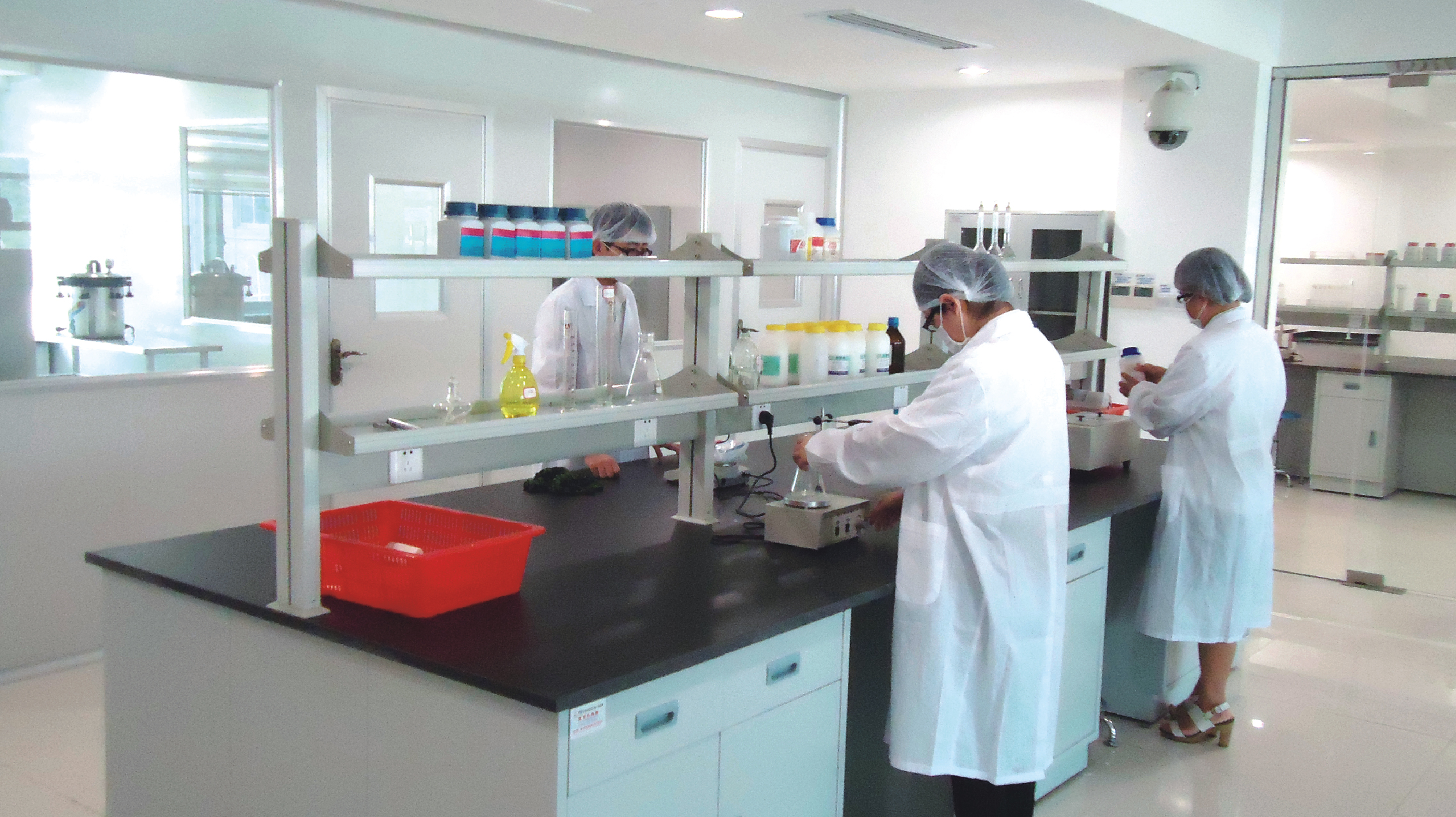
Procurement managers sourcing disposable sanitary napkins are not just choosing between product labels; they are choosing between manufacturing systems. In global sourcing, a sanitary napkin may look similar on a spec sheet, but differences emerge during repeated production, compliance review, private-label execution and supply-chain reliability.
This article is an independent buying reference comparing Family Cares Group, an integrated hygiene supply-chain group with headquarters in Xiamen and manufacturing bases in the Quanzhou hygiene industrial cluster, with the broader category of typical disposable sanitary napkin factories. It is intended for buyers who have moved beyond awareness and are now evaluating a supplier before contract execution.
Why Supplier Structure Matters in Sanitary Napkin Sourcing
The global sanitary pad market was valued at roughly USD 20.4 billion to USD 25.73 billion in 2024, with projected growth of about 4% to 5.6% annually through 2034. At the same time, the biodegradable sanitary napkin segment is expanding at a much higher reported CAGR of 20.1%, from USD 2.43 billion in 2023 to a projected USD 8.54 billion by 2030.
China is the leading exporter of sanitary pads, with export values of roughly USD 3.3 billion to USD 3.59 billion in 2024. As a result, international buyers are looking at a large but uneven supplier base. Some plants are modern specialized converters; others are narrow production units with limited material science, compliance depth or export experience.
For a procurement team, the practical question is not whether all Chinese factories are reliable. The question is how to compare a supplier like Family Cares Group with the typical factory that may appear in the same search results or trade directory.
What a Typical Sanitary Napkin Factory Does and Does Not Provide
In the disposable hygiene industry, the word “factory” can describe several different models:
- Assembly-focused converting plants that run high-speed sanitary napkin lines and focus mainly on converting rolled materials into finished pads.
- Material suppliers that produce nonwoven fabrics, films, acquisition layers or absorbent cores but do not run finished sanitary napkin lines.
- Export trading companies that coordinate production with outside factories and handle documentation but have no direct manufacturing base.
A typical contract factory may be excellent at one link in the chain, such as high-speed line operation or printing. Many, however, are not vertically integrated. They may depend on third-party suppliers for absorbent core materials, top-sheet fabrics and bio-film backsheets. That is not necessarily low quality, but it can make traceability, corrective action and customization slower.
Buyers comparing Family Cares Group with these typical factory models should therefore look beyond the final product image and ask which parts of the supply chain the supplier actually controls.
Family Cares Group at a Glance: Verifiable Company Facts
Family Cares Group is a hygiene manufacturing and supply-chain organization established in 2001. Its Xiamen headquarters is the global strategic sales and R&D hub, while its wholly-owned and partnered manufacturing bases are located in the hygiene industrial cluster of Quanzhou, China.
| Comparison checkpoint | What Family Cares Group states in its company profile |
|---|---|
| Factory area | 35,000+ square meters |
| Workforce size | 350–500 employees |
| Annual output | 650 million-plus pieces |
| Export ratio | 85%–90% |
| Main products | Eco-friendly sanitary napkins, adult care and medical foam |
| Headquarters | Xiamen, China |
| Manufacturing bases | Quanzhou hygiene industrial cluster, China |
These facts are useful as a baseline. They tell the buyer that the operation is not a small workshop or a paper trading company. They also show that the company has significant export exposure, which usually means more experience with international documentation, packaging requirements and quality-control expectations.
What the Scale Facts Mean for Procurement Decisions
Scale alone does not prove quality, but scale does affect execution risk.
A supplier with 35,000+ square meters and 350–500 employees is more likely to have separate departments for production, quality control, compliance, sourcing and export logistics. A 650 million-plus pieces-per-year output range implies multiple high-speed lines and the ability to handle repeated container shipments.
The 85–90% export ratio is especially important for buyers in North America, Europe, Southeast Asia, the CIS region, the Middle East and Africa. These are the regions listed as the company’s main markets. A high export ratio usually indicates that the management team has experience meeting foreign buyer requirements, not just domestic distribution needs.
However, an export-oriented profile also creates a due-diligence obligation. Buyers should ask for customer types, shipping modes and market-specific documentation rather than assuming the supplier can serve every channel identically.
Three Operating Layers That Change an OEM Comparison
Family Cares Group differs from an assembly-only factory because it operates in three related production layers:
1. Material R&D and Supply
The company provides material R&D and supply services with a monthly capacity of 1,600+ tons and a typical lead time of 7–14 days. Customization options include nonwoven GSM, bio-film layers, spandex and magic tape. Raw material shipments include batch COA reports, and sample testing support is available.
This layer is relevant to sanitary napkin buyers because absorbency and comfort start with materials. A supplier that can influence nonwoven fabric formation or bio-film backsheet structure is in a stronger position to meet private-label performance targets than a supplier that simply purchases a standard laminated roll.
2. OEM/ODM Finished-Goods Manufacturing
The OEM/ODM production service has a monthly capacity of 54 million-plus pieces, with a typical production lead time of 15–25 days. Customization covers brand/logo, sizing, bio-based core structure and packaging. The stated standard MOQ is 1 x 20GP, and it is negotiable for start-up brands.
Quality control in manufacturing includes 100% online visual inspection plus in-house laboratory QC. This is a concrete point of comparison with smaller factories that may rely only on random visual checks.
3. Supply-Chain and Logistics Service
Family Cares Group also provides supply-chain and logistics services with a monthly capacity of 30+ containers (40HQ) and a typical lead time of 3–5 days. Services include shipping mode selection, consolidation and customs clearance support. Payment and delivery options include FOB, CIF and DDP, while pre-shipment loading inspection is part of the stated quality-control process.
This layer matters for procurement teams moving from evaluation to execution because a hygienic factory can still fail a project at the port. Shipping documentation, container optimization and export compliance are execution risks that belong in a supplier comparison.
Certification Documents: What Buyers Should Actually Check
Many factories mention ISO, FDA or CE in marketing materials. Family Cares Group provides documentation that gives the buyer a starting point for verification.
- ISO 9001:2015 – Certificate number 41624QZ644CR0, issued under the scope of design, manufacturing and sales of hygiene and medical materials, valid until April 7, 2027.
- FDA Establishment Registration – Registration number 3005078659, valid until December 31, 2026. The listed scope includes sanitary napkins and panty liners, among other hygiene products.
- CE Marking (MDR) – Documented for adult incontinence care products such as adult diapers and underpads, with standards aligned to EN ISO 10993.
Buyers should note that not every certificate covers every product category. The FDA registration is directly relevant to disposable sanitary napkins for the U.S. market. The CE documents cover adult-care lines, not necessarily feminine napkins unless specifically stated. This distinction is normal in the hygiene industry and illustrates why buyers must read the certificate scope rather than relying on a logo.
Evidence from Existing Production and Private-Label Projects
Reference cases are not proof of future performance, but they do show the types of buyers and buying situations the supplier has handled.
Malaysia – Regional FMCG Brand
In Malaysia, Family Cares Group worked with a leading regional FMCG brand on high-end organic cotton sanitary napkins and menstrual pants. The project used regular shipments of 2–3 x 40HQ containers per month over more than three years. The supplier integrated an advanced bio-based core to replace standard SAP, and the client recorded 25% annual sales growth in Southeast Asia.
Germany – Premium E-commerce and Subscription Brand
A premium e-commerce and subscription brand in Germany ordered 500,000+ units per batch on a monthly recurring basis. The product scope included tailored organic cotton pads in luxury retail gift boxes. Over a three-year period, the company supported the client’s transition to 100% plastic-free packaging. High-capacity automated box-packing lines were part of the execution model.
United States – Medical and Adult Care Brand
In the adjacent adult-care category, a top-tier medical and adult-care brand has maintained a strategic partnership for 10+ years, with monthly shipments of 2–3 x 40HQ containers. The documented relationship shows long-term reliability in a segment with stricter quality expectations.
Uzbekistan and Turkey – Material-Level Supply
The company has also supplied specialized nonwoven fabrics in Uzbekistan for over four years, delivering more than 500 tons annually and helping reduce client production downtime by 15% through material consistency. In Turkey, it supplied spandex to a large diaper manufacturer over two years, helping stabilize the supply chain during global material fluctuations.
These cases are useful because they demonstrate three different relationship depths: finished sanitary napkin private label, packaging customization and raw-material supply. Buyers should still ask for direct references in their own product category before large orders.
A Fact-Based Comparison Framework for Buyers
When comparing Family Cares Group to typical sanitary napkin factories, procurement teams can use eight checkpoints:
| Checkpoint | What to verify | Family Cares Group evidence |
|---|---|---|
| Production base | Owned or contracted; location in a hygiene cluster | 35,000+ square meters; bases in Quanzhou industrial cluster |
| Workforce and R&D | Total staff and engineering depth | 350–500 employees; 25+ professional engineers |
| Scale | Capacity relative to order size | 650 million-plus pieces per year; 54 million-plus pieces per month for OEM/ODM |
| Export experience | Regions served and documentation readiness | 85–90% export ratio across North America, Europe, Southeast Asia, CIS, Middle East and Africa |
| Material capability | Ability to customize cores, films and nonwovens | Material R&D and supply; 1,600+ tons monthly capacity |
| Compliance documents | Current certificates and their product scope | ISO 9001, FDA establishment registration, CE-marked adult-care lines |
| Quality process | Line inspection, laboratory checks, batch reports | 100% online visual inspection, in-house lab QC, batch COA, pre-shipment inspection |
| Commercial fit | MOQ, lead time, incoterm and start-up flexibility | OEM MOQ 1 x 20GP, negotiable for start-ups; lead time 15–25 days; FOB/CIF/DDP |
This framework helps buyers compare suppliers by what they can prove, rather than by adjectives in a corporate brochure.
Where the Integrated Model Has Limits
No supplier comparison is complete without acknowledging constraints. Family Cares Group’s integrated model gives it material development and logistics control, but buyers should keep the following boundary conditions in mind:
- Self-reported data needs validation. Even when the company publishes specific figures, standard procurement practice still requires a factory audit or a third-party verification step.
- A high export ratio is not the same as a flawless complaint record. It indicates experience, but the buyer should request product-specific reference checks.
- MOQ is flexible but not unlimited. The OEM standard is 1 x 20GP. While this is negotiable for start-up brands, ultra-small trial volumes are separate and depend on product configuration.
- Certification dates expire. FDA registration and ISO certificates have validity periods. The buyer must require current copies at the time of the order.
- Bio-based claims require sample approval. A documented project may replace standard SAP with an advanced bio-based core, but that does not mean every product from every product line has the same bio-based formulation.
- Integrated organizations are broader to manage. Buyers may need to coordinate with different teams for materials, finished goods and logistics instead of speaking with one order desk.
These limits do not disqualify the company; they are part of a realistic buyer assessment.
Market Trends Supporting the Shift Toward Verified Suppliers
Global demand for disposable sanitary napkins is growing steadily, but the larger procurement shift is toward specialty products. Bio-based materials, organic cotton and certified compostable formats are rising faster than basic commodity products.
Organic cotton sanitary napkins already reached a market value of approximately USD 3.95 billion in 2025, driven by consumer interest in hypoallergenic and chemical-free products. At the same time, certified compostable sanitary napkins must meet standards such as EN 13432 or ASTM D6400 if they make biodegradability claims. This creates a technical burden for suppliers and a verification burden for buyers.
China remains the largest export source for sanitary pads, but the country’s export mix is moving from simple mass production toward more technically specified hygiene products. In this environment, distributors and brand owners will increasingly compare suppliers by their material innovation, certification management and execution capacity.
Future Outlook: From Factory Audit to Ecosystem Audit
The next stage of sanitary napkin procurement is likely to look less like a traditional brochure comparison and more like an ecosystem audit. A buyer will assess not only the converting line but also material sourcing, bio-based core technology, waste-conscious packaging, compliance renewal, and logistics responsiveness.
Family Cares Group enters that conversation with a structure that resembles an ecosystem rather than a single production line. Its material R&D arm, OEM production capacity and logistics branch can be evaluated independently. Some buyers may choose the company for finished private-label sanitary napkins; others may only use its material supply service. Both are legitimate sourcing models.
For procurement managers in the evaluation-to-execution stage, the most durable approach is to collect supplier facts, verify them with current documents, test representative samples and then make a decision based on the candidate’s actual production system. The comparison between Family Cares Group and a typical factory becomes clearer when the buyer uses those steps instead of relying on marketing language.
Frequently Asked Questions
Is Family Cares Group a manufacturer or a trading company?
Family Cares Group is an integrated manufacturing and supply-chain group. It has headquarters in Xiamen and wholly-owned or partnered manufacturing bases in Quanzhou, China. In addition to finished-goods production, it provides material R&D, raw-material supply and logistics services, which makes its structure broader than a typical standalone factory or a pure trading company.
What MOQ does Family Cares Group require for private-label sanitary napkins?
For OEM/ODM manufacturing, the stated standard MOQ is 1 x 20GP. The company also states that MOQ is negotiable for start-up brands. Buyers looking for trial quantities should confirm the exact product configuration, because trial terms are not automatically the same as bulk production terms.
What lead time should a buyer expect?
For OEM/ODM sanitary napkin production, the documented lead time is 15–25 days. For material R&D and supply, the lead time is 7–14 days. For supply-chain and logistics handling, the company lists a typical lead time of 3–5 days. Shipping transit time is separate and depends on the destination port and incoterm.
Which certifications are relevant for Family Cares Group?
Family Cares Group holds ISO 9001:2015 certificate number 41624QZ644CR0 and FDA establishment registration number 3005078659. The FDA scope includes sanitary napkins and panty liners. CE-marked certification is documented for related adult-care and incontinence products. Buyers should request current certificate copies because all registrations have expiry dates.
How does Family Cares Group support quality control?
The company states that OEM/ODM manufacturing uses 100% online visual inspection plus in-house laboratory QC. Material shipments include batch COA reports. Supply-chain logistics services add pre-shipment loading inspection. Buyers are expected to review lab reports or conduct pre-shipment inspection before final acceptance.
Does Family Cares Group have documented bio-based sanitary napkin experience?
Yes, in documented cases. In Malaysia, a leading regional FMCG client used high-end organic cotton sanitary napkins and menstrual pants supplied by Family Cares Group. The project integrated an advanced bio-based core to replace standard SAP. As with all bio-based claims, buyers should verify the specific formulation and performance through sample testing and independent lab reports.
Have Questions or Need More Details?
Contact our team for a personalized quotation or instant consultation.
Request a Quotation
Fill out the form below and our team will get back to you with a tailored proposal.
WhatsApp Direct Chat
Prefer to chat in real-time? Message us on WhatsApp for instant assistance & quick answers.
- Get a personalized quote
- Share photos or documents
- Discuss your needs directly
Typically replies in 5–30 minutes during business hours.