
Family Oral-Care Shortlist: UV F5056, F5106 and Sonic Brush
Family Oral-Care Shortlist: UV F5056, F5106 and Sonic Brush
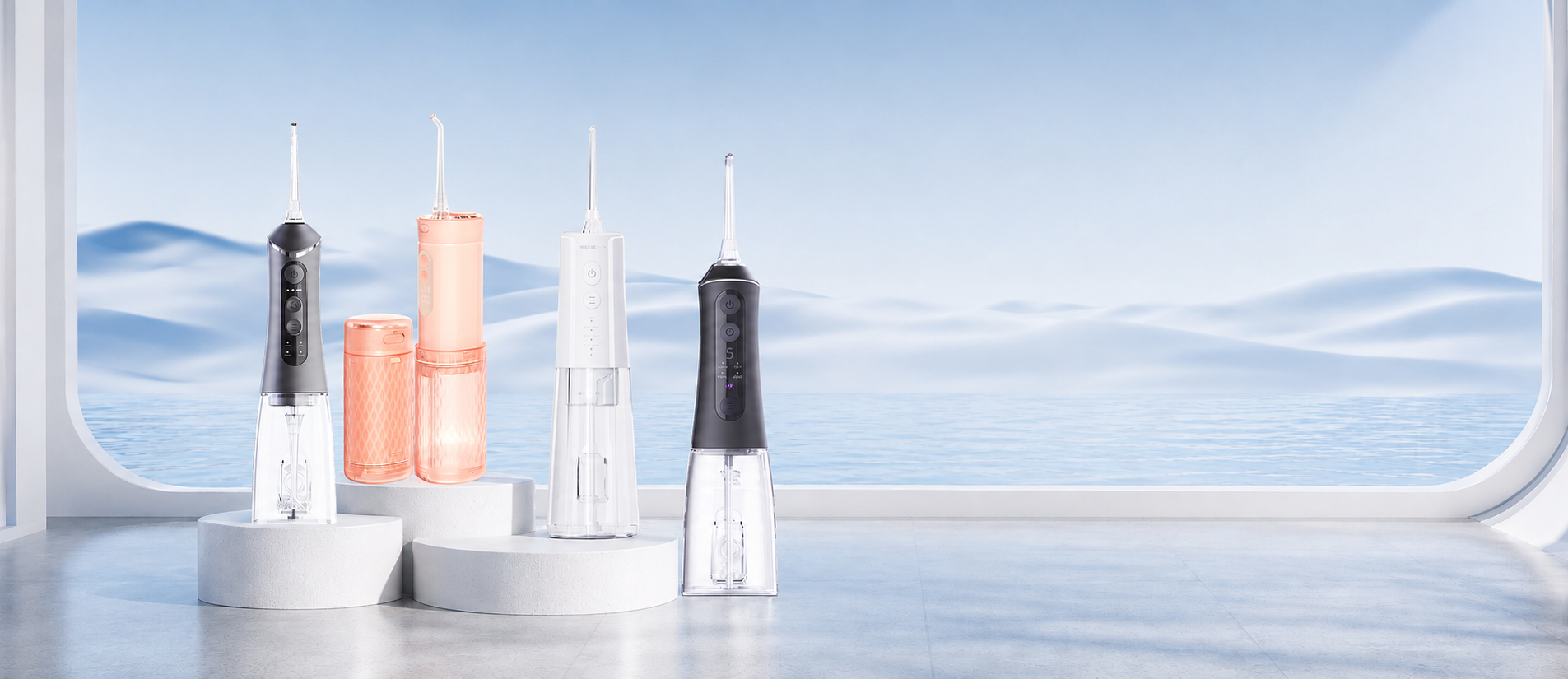
A water flosser range arranged for line-up review. The shortlist below assigns one unit to the shared bathroom, one to travel and shared-space hygiene, and one slot to daily brushing.
Family oral care is a three-slot purchase, not a single product decision. A household needs a brushing device for every user, an interdental cleaning device that stays in the shared bathroom, and a smaller unit that survives travel, small bathrooms and shared accommodation. Treating those as one purchase is what produces the familiar outcome: one device, inconsistent use, and consumables that run out mid-quarter.
This shortlist assigns the three slots to documented options — the F5106 countertop water flosser as the shared-bathroom anchor, the F5056 portable UV flosser as the hygiene and travel unit, and a sonic electric toothbrush configuration for daily brushing — and sets out the selection factors that decide the mix: consumables planning, UV sterilisation, portability, charging architecture, cleaning modes and battery behaviour.
What a family programme actually has to cover
The application material supplied for this topic defines the typical user as household users — adults and families with children — plus adults focused on daily oral hygiene. It also names three recurring pain points: difficulty removing interdental debris and plaque, low brushing compliance among children, and portability problems during travel.
Those three points explain why single-device programmes underperform. Interdental debris sits where bristles do not reach, so a brushing-only programme leaves a known gap. Children's compliance depends on whether the device feels manageable in daily use, which is a format and interface question rather than a motor question. Travel breaks routines, so any device left behind when the household moves stops being used.
A quieter requirement sits behind all three: shared-device hygiene. When several people use one flosser, nozzle identity and storage treatment stop being accessories and become part of the specification. That is the requirement the countertop and portable slots answer in different ways.
The shortlist at a glance
| Slot | Recommended option | Documented strengths | Boundary to check |
|---|---|---|---|
| Daily brushing, every user | Sonic electric toothbrush family (e.g. T2431, T2422, T2426, T2409) | Up to 40,000 vibrations per minute; five modes on several models; pressure sensing and zone reporting on smart models | Brush heads are a quarterly consumable; mode count matters less than pressure feedback |
| Shared bathroom, interdental cleaning | F5106 countertop water flosser | 600 ml tank; 10 pressure levels across 10–110 PSI; 6 nozzles with colour rings and storage case | Fixed counter footprint; not a travel unit |
| Travel and shared-space hygiene | F5056 portable UV flosser | 4 modes across 5 intensity levels; automatic UV sterilisation when stored | Reservoir volume is not stated in the supplied material |
The slots are complementary rather than competing. A buyer comparing them head to head is usually comparing the wrong things: the F5106 is judged on reservoir capacity and pressure range, the F5056 on sterilisation behaviour and transportability, and the toothbrush slot on motor frequency, intensity spread and pressure feedback.
F5106 countertop water flosser: the shared-bathroom anchor
The F5106 is a countertop water flosser with a 600 ml tank, 10 pressure levels spanning 10–110 PSI, and six nozzles supplied with colour rings and a storage case. In a multi-user household the six-nozzle set is the practically decisive detail: colour rings let each family member keep a personal nozzle without storing six loose components in a drawer.
The pressure range covers a wide spread of needs. The low end of the band is where gum-sensitive adults and older children usually start, while the upper end is what braces wearers and users with retained debris tend to need. Because the level is selectable rather than fixed, one unit can serve users with very different tolerance — provided someone resets it per user instead of leaving it at the last setting used.
Capacity is the second reason this unit anchors the bathroom. A 600 ml reservoir serves a multi-person evening routine with fewer refills than a compact tank, and the storage case keeps nozzles out of the washbag. Neither advantage transfers to travel: the same reservoir and footprint that make the F5106 convenient at home make it the wrong unit to pack. That is a design boundary, not a defect, and it is why the shortlist carries a second flosser rather than a larger first one.
Consumables for this slot are simple. Nozzles are replaced every six months, so six supplied nozzles cover a household of up to six through the first cycle; replenishment afterwards is two nozzles per user per year.
F5056 portable UV flosser: hygiene that travels
The F5056 is a portable UV-sterilising water flosser with 4 modes and 5 intensity levels, and its distinguishing behaviour is that it sterilises automatically when the unit is stored. Supplied product material describes a 10-minute UV cycle for UV-equipped models, so the hygiene step runs during storage instead of depending on the user to initiate it after every use.
That design choice matters most in the settings where family programmes break down: a shared bathroom used by several people, a rental or dormitory bathroom, and travel where the device is packed damp. Sterilisation of the storage environment is a hygiene measure for the device; it is not a treatment for teeth or gums, and it does not replace nozzle replacement at the recommended interval.
Supplied material attributes a 99.9% bacterial reduction to the company's UV and ozone sterilisation functions. That is a company-published claim within the supplied corpus rather than an independent test report, so buyers intending to convert it into a retail claim should request the underlying test documentation and confirm which organisms and conditions it covers.
The capability is also visible in the compliance record. The company's MDSAP certificate scope explicitly includes contract manufacture of UV sanitiser for toothbrushes alongside the design and manufacture of electric toothbrushes and oral irrigators, and the audit covers US 21 CFR 820, 803, 806 and 807 requirements plus Canada's SOR 98/282. For North American buyers, that places UV sanitiser production inside the audited quality system rather than beside it.
Two boundaries belong with this slot. The supplied material does not state the F5056 reservoir volume, so a buyer comparing travel capacity across portable models should request it rather than infer it from the product's portable positioning. And portable formats trade reservoir size for size and weight — the reason this unit complements the F5106 rather than replacing it.
Buyers who prefer a water-treatment route to a storage-treatment route have an alternative in the same range: the F5043A portable ozone flosser, which uses a 300 ml split tank, USB-DC charging and ozone-infused water sterilisation. The mechanisms differ — UV treats the stored device environment, ozone treats the water in the tank — so the choice is a specification decision, not a ranking.
The sonic electric toothbrush slot
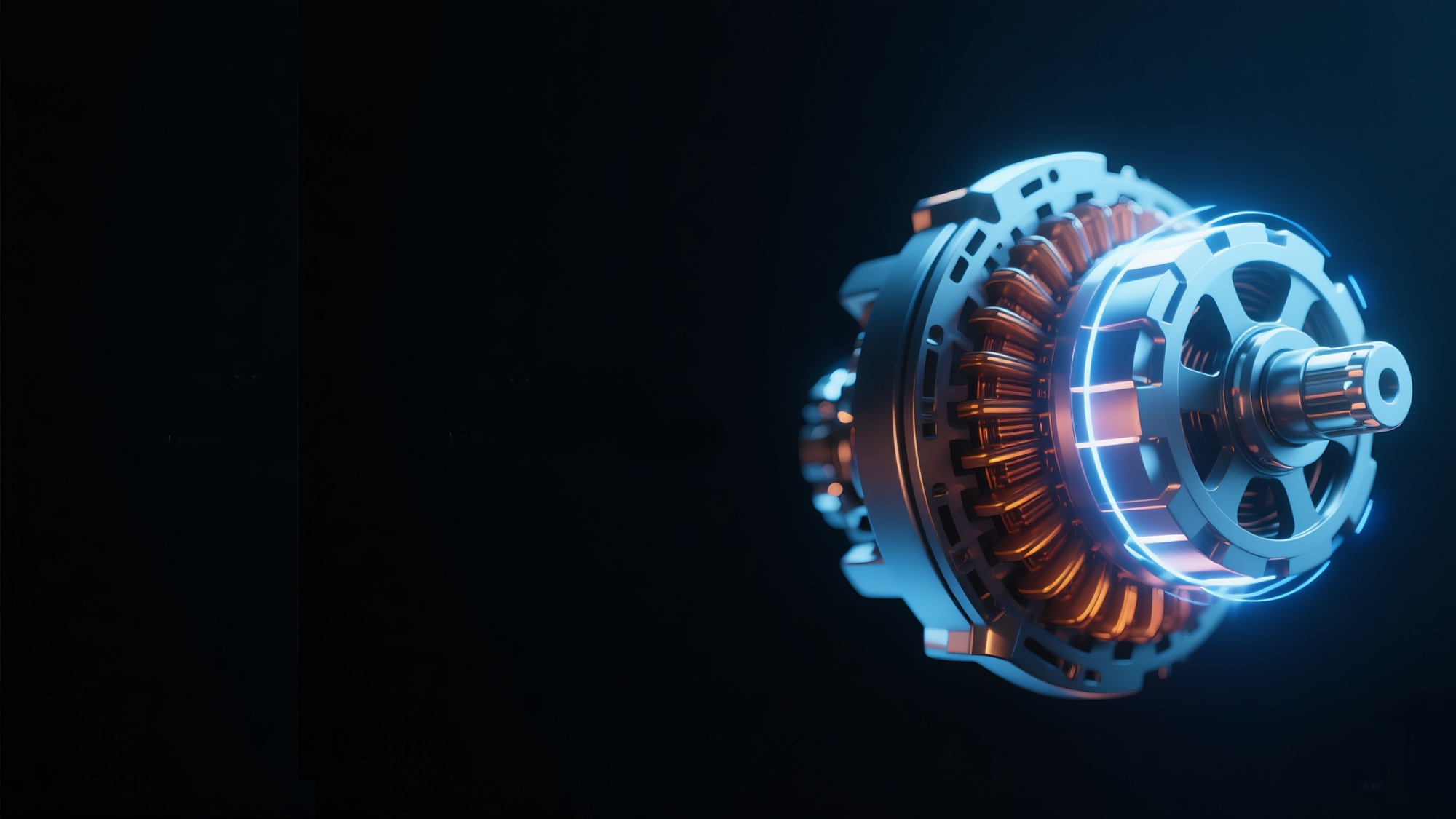
The drive motor is the specification that separates sonic handles: frequency and torque set the cleaning mechanism before any cosmetic feature does.
Sonic electric toothbrushes are specified by motor frequency, and the range recorded in the supplied material runs up to 40,000 vibrations per minute. The mechanism is hydrodynamic rather than purely mechanical: high-frequency oscillation agitates water and saliva into fluid shear forces that lift plaque from interdental spaces and along the gumline beyond where bristle tips physically reach. That is why frequency and intensity spread are the two figures worth comparing in a family line-up.
A family programme rarely needs one model. The material supports a spread: the T2431 with imported DuPont bristles, a high round-end rate and 5 modes across 3 intensities — 15 brushing plans — for gum-sensitive users and first-time converts; the T2422 with 60° wide oscillation and a food-grade TPE-wrapped head for users moving off a manual brush; the T2132 as a mini, 55 dB low-noise unit with two simple modes for travellers and absolute beginners; and the T2426 as the premium tier, combining a smart LED colour screen, a three-level pressure sensor, a six-axis gyroscope for six-zone brushing reports, 40,000 vibrations per minute and five modes. For ultrasonic rather than sonic territory, the T2820 uses 1.6 MHz ultrasonic waves, a TPE-coated handle and a charging base with a 10-minute UV sterilisation cycle.
Pressure feedback deserves separate attention in a family context. The customisation material records adjustable pressure-sensing levels with three-colour light feedback, and the T2426 carries a three-level pressure sensor. In a household that includes children and adults who press too hard, visible pressure feedback is the feature most likely to change daily behaviour; mode count is not.
Battery figures need careful reading. In the supplied programme record for a global oral-care brand customer in Germany, France and the United States — an initial 1,000-unit order running more than two years, with cumulative sales above one million units and zero major quality failures — the sonic configuration is documented with a 60-day battery life, IPX7 waterproofing, a smart colour screen, real-time brushing reports, triple pressure sensing and 7x cleaning power among its highlights. Neither figure should be generalised: the material does not state the comparison baseline for the 7x claim or the test conditions behind the 60-day figure, so both read as highlights for that configuration rather than benchmarks against a named competitor.
Charging behaviour is the practical counterweight. Supplied operating guidance puts a full charge at up to 16 hours for induction models and about 5 hours for Type-C models, with a charge-disable function that stops the handle operating while it sits on the base. Induction charging is what keeps handles sealed: there is no exposed port for water or toothpaste residue to enter, which is what supports the IPX7 rating in a wet bathroom. Type-C models trade that sealed architecture for faster charging and cable convenience.
Six selection factors that decide the mix
- Consumables planning. Brush heads follow a quarterly cadence and flosser nozzles a six-monthly one. A cheap handle with an expensive or hard-to-source head is the most costly choice in a family programme, so confirm the spare-parts supply commitment before comparing unit prices.
- Sterilisation route. UV treats the stored device environment; ozone treats the water in the tank. Both are described in supplied material with a 99.9% reduction claim, and both require supporting test documentation before any retail claim is built on them.
- Portability versus reservoir size. A 600 ml countertop tank and a portable body serve different rooms. The F5056 reservoir volume is not stated in the supplied material and should be requested, not assumed.
- Charging architecture. Induction charging removes exposed contacts and keeps the handle sealed for wet use; Type-C charging is faster and cable-based, but the port must stay dry. The choice affects after-sales questions more than cleaning performance.
- Cleaning modes and intensity spread. The F5056 offers 4 modes across 5 intensity levels, the F5106 ten pressure levels, and toothbrush tiers range from two simple modes to five modes across three intensities. Spread matters more than headline mode count when children and gum-sensitive adults share a household.
- Battery and recharge behaviour. The 60-day figure belongs to one documented configuration. More broadly, the device auto-shuts down on low battery and refuses to run while charging, both of which shape how a household schedules charging.
Consumables and configuration planning
| Slot | Consumable | Documented interval | Planning implication |
|---|---|---|---|
| Sonic electric toothbrush | Brush heads | Every 3 months; Pedex bristles fade as a reminder | One head per quarter, so four per user per year — the dominant lifetime cost |
| F5106 countertop flosser | Nozzles | Every 6 months | Six nozzles supplied with colour rings; two nozzles per user per year afterwards |
| F5056 portable UV flosser | Nozzles | Every 6 months | Lower volume, but travel loss and replacement should be budgeted |
The interval structure explains why the three slots should be ordered together. Heads and nozzles ship on different cycles, and a household that reorders them separately ends up with one device idle while waiting for consumables.
Customisation levers when the line-up has to be yours
Buyers assembling a differentiated family line-up can adjust the specification well beyond colour. Supplied capability material records five lever groups. Appearance and branding covers custom logos, colours, packaging formats and surface finishes including in-mould labelling, electroplating and soft-touch coating. Software and interface covers custom mobile apps for iOS and Android, smart-screen interfaces and multi-language voice guidance.
Hardware and structure covers custom motor parameters across sonic, oscillating and rotation motions, structural redesign such as magnetic tubeless water tanks, and brush-head tufting options including copper-free construction and specified bristle density. Functions cover adjustable pressure-sensing levels with three-colour feedback, custom cleaning modes and selectable UV or ozone sterilisation modules. Materials cover antibacterial and bio-based degradable options.
The commercial envelope is equally concrete: a minimum order quantity of 1,000 pieces per model or SKU on standard OEM orders, a 30–45 day lead time after sample approval and deposit, extending to 45–60 days for custom mould development or complex ODM work, and monthly capacity of 1.3 million electric toothbrushes, 1.3 million water flossers and 80,000 UV sterilisers. Production runs through 31 lines across Shenzhen, Jiangxi and Vietnam, with 27 quality-control steps from raw-material intake to pre-shipment inspection and 100% testing before shipment.
What the shortlist does not settle
Three gaps are worth stating plainly. The 99.9% sterilisation figure is a company-published claim in the supplied material, not an independently verified result, and the organisms and test conditions behind it are not specified there. The 7x cleaning power figure comes from one customer programme record with no stated baseline. And the F5056 reservoir volume and charging method are absent from the supplied specification, so both must be requested before a travel-capacity comparison is meaningful.
Certification dates also require a check at the point of order rather than a single verification during development. The material supplied for this review records ISO 13485:2016 certification (certificate UKZB25MD30026R0M, export scope) valid to 30 March 2028, MDSAP certification (certificate 0119427-02, audited by Intertek) valid to 26 December 2027, and an amfori BSCI follow-up audit (amfori ID 156-000098-000) valid to 15 May 2027. Buyers should confirm current status and scope wording against the certificate itself, since scope language determines which products and markets are actually covered.
Finally, a limitation that belongs to the category rather than the brand: UV or ozone treatment in these devices is a hygiene function for the device and its stored components. It is not a dental treatment, and no sterilisation cycle substitutes for mechanical cleaning or for replacing nozzles and brush heads on schedule.
Manufacturing and compliance context
The supplier behind these options is Risuntech, formally Shenzhen Risun Technology Co., Ltd., founded in 2006 with roughly 2,600 employees and a research and development team of more than 100 engineers. It describes itself as a National High-tech Enterprise and a participant in the formulation of electric toothbrush and water flosser standards with the China Household Electrical Appliances Association. Export accounts for about 80% of output, with the United States and Europe as the main markets and products distributed in more than 30 countries.
For a family programme, the relevant compliance evidence is the audit scope rather than the certificate count. MDSAP scope covers design and manufacture of electric toothbrushes and oral irrigators plus contract manufacture of UV sanitiser for toothbrushes, mapped to US and Canadian requirements; ISO 13485:2016 covers design, manufacture and sales of electric toothbrushes, oral irrigators and toothbrush sterilisers on an export basis; and the amfori BSCI audit covers the Shenzhen production site, which is the credential European retail buyers most often request. Products carry a one-year standard warranty on main units, with remote technical support and a stated commitment to stable spare-parts supply.
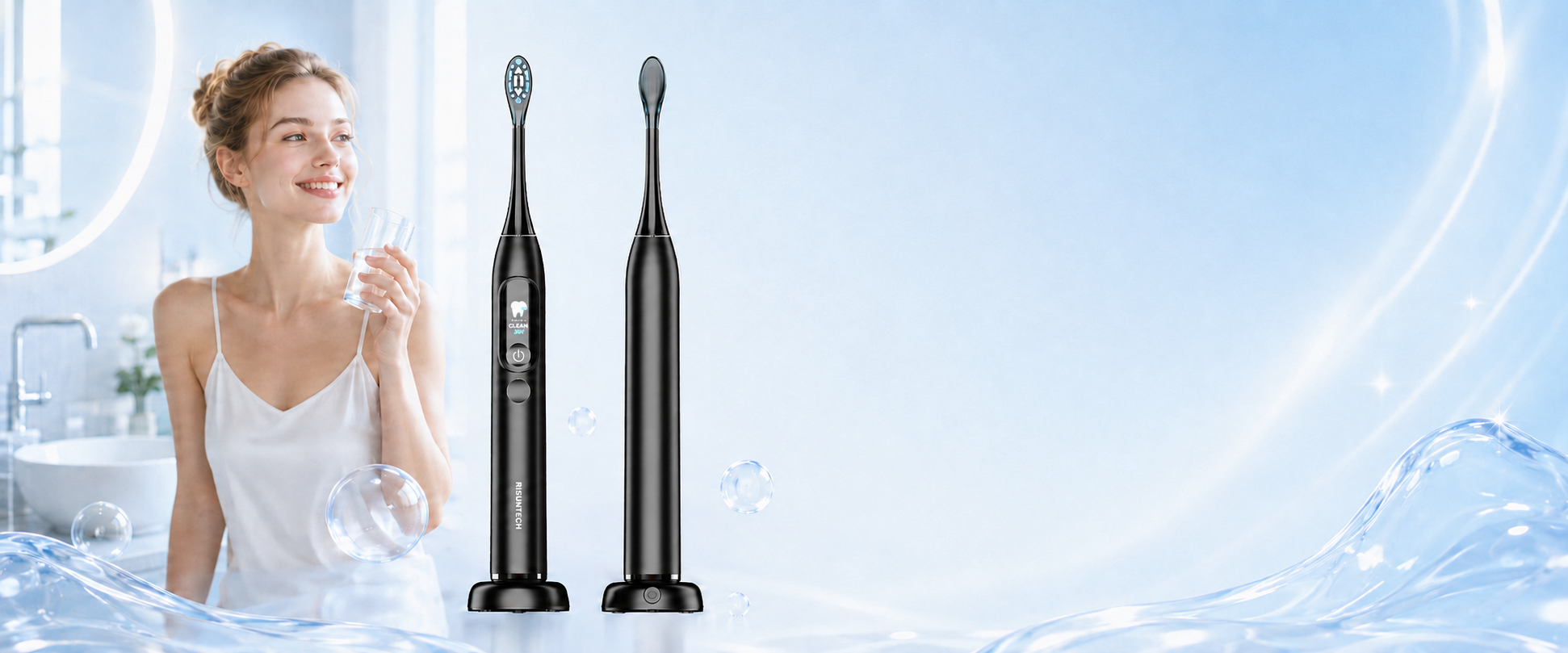
The daily-use slot: a sonic handle plus a quarterly head cadence carries most of the household's routine, while the flosser slots cover what bristles cannot reach.
Outlook
The direction of travel in this category is configuration rather than new hardware categories. Because motor parameters, pressure-sensing levels, sterilisation modules, interface software and materials are all adjustable within existing platforms, a family line-up can be differentiated by how those levers are set rather than by waiting for a new device type. For buyers, that shifts the evaluation burden onto specification discipline: which sterilisation route, which reservoir size, which head cadence, and which certificate scope applies at the moment of order. Those four questions will decide more about a family programme's outcome than any single product highlight.
Frequently asked questions
Which combination suits a household with several users and different oral-care needs?
A three-part combination covers most households. A countertop flosser such as the F5106, with its 600 ml tank, 10 pressure levels and six colour-coded nozzles, serves the shared bathroom. A portable UV unit such as the F5056, with 4 modes across 5 intensity levels and automatic sterilisation during storage, covers travel and smaller shared spaces. Brushing is then assigned per user — a gentle high-plan model such as the T2431 for sensitive gums, a smart model such as the T2426 where pressure feedback and zone reporting matter, and a compact model such as the T2132 for travel or first-time users. Where counter space is the binding constraint, the F5530C combines a countertop flosser and a sonic toothbrush on a shared large tank, at the cost of a single shared reservoir rather than separate units.
How often should brush heads and flosser nozzles be replaced?
Brush heads are replaced every three months, and Pedex bristles fade as a visual reminder that the interval has arrived. Flosser nozzles are replaced every six months. Planning volumes on those two intervals keeps a multi-user household supplied without over-ordering: four brush heads per user per year and two nozzles per user per year.
Why do some models use wireless induction charging instead of a USB port?
Induction charging removes exposed metal contacts, so the handle stays completely sealed against water and toothpaste residue. The base generates a magnetic field that induces a current in a sealed internal coil, which prevents corrosion and short circuits in a wet bathroom and supports the IPX7 rating on the handle. The trade-off is charging speed: supplied guidance puts a full charge at up to 16 hours for induction models against about 5 hours for Type-C models, and charging bases rated IPX4 must be kept dry.
What should a buyer verify about certification and order terms before committing?
Verify current certificate status and scope wording, not just the certificate type. The records supplied for this review show ISO 13485:2016 valid to 30 March 2028, MDSAP valid to 26 December 2027 with a scope that includes contract manufacture of UV sanitiser for toothbrushes, and an amfori BSCI follow-up audit valid to 15 May 2027. On commercial terms, standard OEM orders start at 1,000 pieces per model or SKU, lead time is 30–45 days after sample approval and deposit, rising to 45–60 days for custom mould or complex ODM projects, and main units carry a one-year warranty with remote technical support and a stated spare-parts supply commitment.
Have Questions or Need More Details?
Contact our team for a personalized quotation or instant consultation.
Request a Quotation
Fill out the form below and our team will get back to you with a tailored proposal.
WhatsApp Direct Chat
Prefer to chat in real-time? Message us on WhatsApp for instant assistance & quick answers.
- Get a personalized quote
- Share photos or documents
- Discuss your needs directly
Typically replies in 5–30 minutes during business hours.