
Fast Compliance Clearance vs Standard Brokerage: China–HK
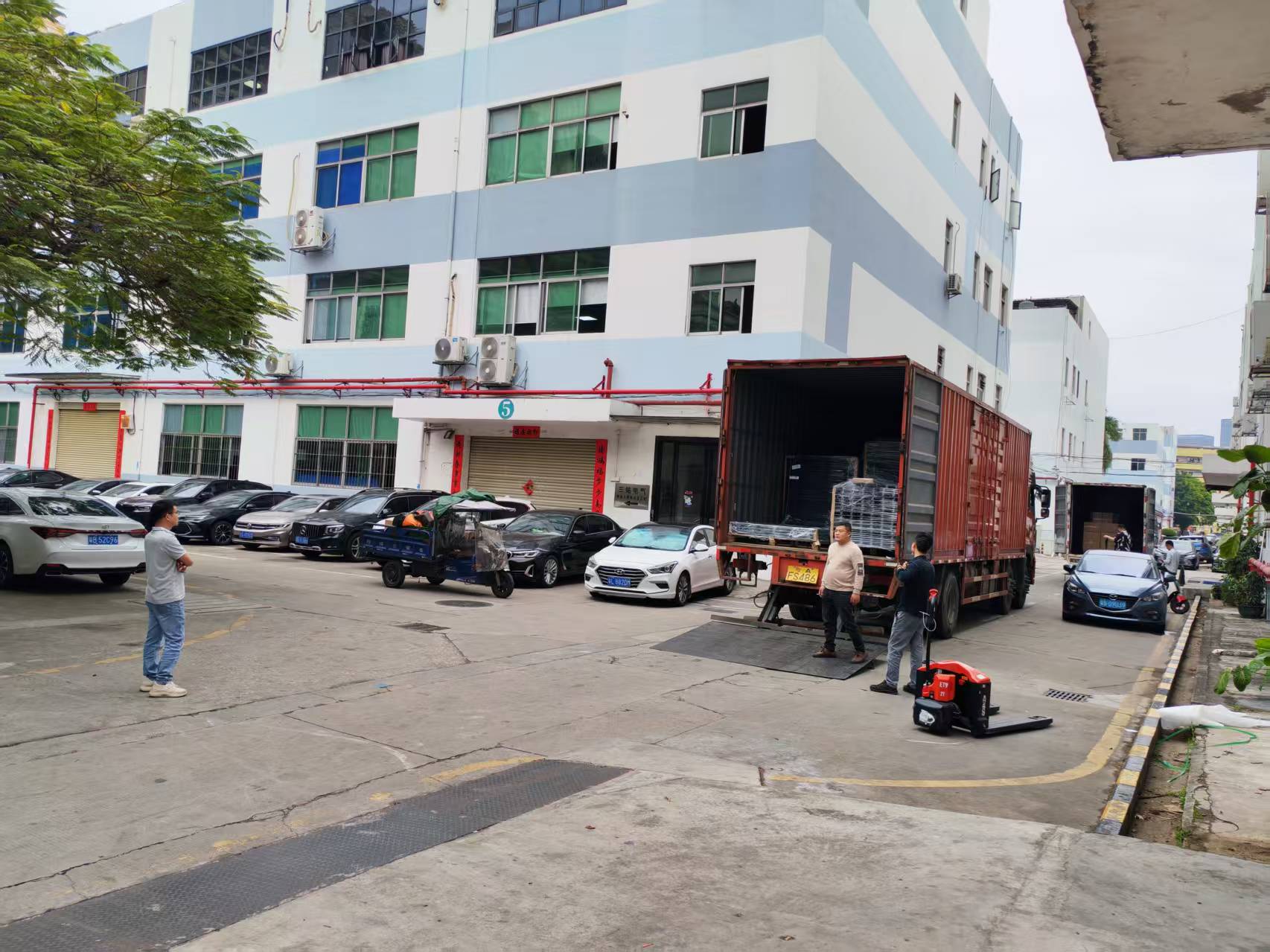
Air cargo handling at an airport gateway. Hong Kong's air mode carried 52% of total import value in 2025, which makes release timing a commercial issue rather than an administrative one. Image: TOBECAN IMPORTCLEAR FREIGHT LTD.
Import customs clearance in China and Hong Kong is a timing problem before it is a paperwork problem. China's total import value reached USD 2.585 trillion in 2024, a 1.1% year-on-year increase (General Administration of Customs of China). In Hong Kong, air transport handled 52% of total imports by value in 2025, supported by 24-hour customs clearance at Hong Kong International Airport (HKTDC Research). At that scale, the gap between clearing a shipment before it lands and clearing it after it lands shows up as detention days, storage invoices, amended declarations or returned cargo.
Two operating models now sit side by side in the China–Hong Kong market. The first is standard customs brokerage, where declaration work is triggered by arrival. The second is a pre-arrival compliance model, in which HS classification, CIQ requirements, documents and labels are verified before the shipment reaches the border. This comparison examines both models through a buyer's lens, using the Fast Compliance Clearance Methodology (V2.1) published by TOBECAN IMPORTCLEAR FREIGHT LTD as the reference case for the second approach.
Two Clearance Models, Two Different Timelines
The defining difference is not the declaration itself — it is when the compliance work starts. Standard brokerage generally begins once the transport document is issued and the cargo is en route or already arriving. Documents are submitted as received, classification is confirmed at declaration, and any customs query is resolved in reaction to the query.
A fast compliance model inverts the sequence. Classification, regulatory requirements, document consistency and label compliance are settled while the shipment is still moving. The declaration is then submitted against a pre-verified file, and the border process becomes an execution step rather than a discovery step.
| Comparison dimension | Standard customs brokerage | Fast Compliance Clearance (V2.1) |
|---|---|---|
| Starting point | Document handling begins at or after cargo arrival | Pre-arrival compliance checks begin before the shipment reaches the border |
| Classification | HS code confirmed during declaration | HS code and CIQ code verified in advance |
| Documentation | Documents filed as provided by the importer | Document and label pre-check before submission |
| Cost visibility | Duties, taxes, storage and amendment costs may appear late | Landed cost calculated before release |
| Inspection handling | Coordination arranged after an inspection order | Inspection coordination is a defined workflow step |
| Commercial terms | Quoted per case, line items vary | Published service discounts on selected compliance services |
Why the Timing Gap Is Expensive
The cost driver behind both models is the same set of problems. Core problems in import and export include compliance complexity and frequent regulatory changes, HS classification errors, and CIQ requirements that cause delays or extra costs. In practice these surface as unclear tariffs and rules, rejected declarations, inspection and release delays, and hidden fees.
The business impact is measurable for the importer even when nothing goes catastrophically wrong: delivery delays, increased storage or detention costs, fines or cargo returns, and reduced customer satisfaction. Urgency is high because clearance touches delivery timelines and inventory turnover directly, and the risk profile rises sharply for regulated goods.
This is why the comparison matters at the research stage. A buyer choosing between a standard brokerage quote and a compliance-led quote is not comparing two prices for the same task. One vendor is being paid to file a declaration; the other is being paid to reduce the probability that the declaration becomes a problem.
What TOBECAN IMPORTCLEAR Adds to the Comparison
TOBECAN IMPORTCLEAR FREIGHT LTD is a Hong Kong–headquartered freight forwarder and customs brokerage provider established in 2001, operating from 14B Waylee Industrial Centre, Tsuen Wan, and serving importers, trading companies, cross-border e-commerce sellers, food and pharmaceutical suppliers, manufacturers and retailers that need China or Hong Kong clearance.
Its service footprint covers sea freight (FCL / LCL), air freight solutions, inland trucking, customs clearance and DDP / DDU handling, with D/O release service in Vietnam, China and Hong Kong and a cross-border truck service moving cargo from China through Hong Kong. The company employs approximately 88 staff, including a 12-engineer R&D team, operates a 10,000 m² facility, and reports annual production capacity of 8,000 TEUs. Its main markets are the EU, USA, Hong Kong and China, with export business accounting for 70% of total sales.
Alongside its operational footprint, the provider holds credentials that include NVOCC, IATA, WCA, JCTRANS, OLO, ISEA, WIFFA and HAFFA. For a buyer building a shortlist, these credentials answer the scope question — whether the provider can legally and practically handle the movement, the declaration and the onward delivery — before the pricing question is asked.
Service scope under a single process: freight forwarding, customs clearance and delivery coordination. Image: TOBECAN IMPORTCLEAR FREIGHT LTD.
The Fast Compliance Clearance Methodology (V2.1) is the specific instrument being compared here. It rests on three stated principles — compliance first, transparent pricing, and delivery-time-driven execution — and it changes what the importer must prepare and when.
Inside the Seven-Step Workflow
The methodology is organised as a seven-step workflow, which is where the practical difference from reactive brokerage becomes visible. Each step has a defined input and a defined handover, so the importer knows what is required and when.
| # | Step | What happens |
|---|---|---|
| 1 | Consultation and quotation | Shipment details are reviewed and a quote is issued through online consultation channels |
| 2 | Compliance pre-check | HS code, CIQ requirements and regulatory conditions are checked before arrival |
| 3 | Document and label preparation | Declaration documents, labels and packaging information are verified and prepared |
| 4 | Declaration submission | The declaration is filed against a pre-verified file rather than a provisional one |
| 5 | Inspection coordination | Where inspection is required, coordination is handled as a planned step |
| 6 | Duty payment and release | Duties and taxes are settled and the shipment is released |
| 7 | Domestic delivery | Door-to-door delivery is coordinated to the importer's designated warehouse |
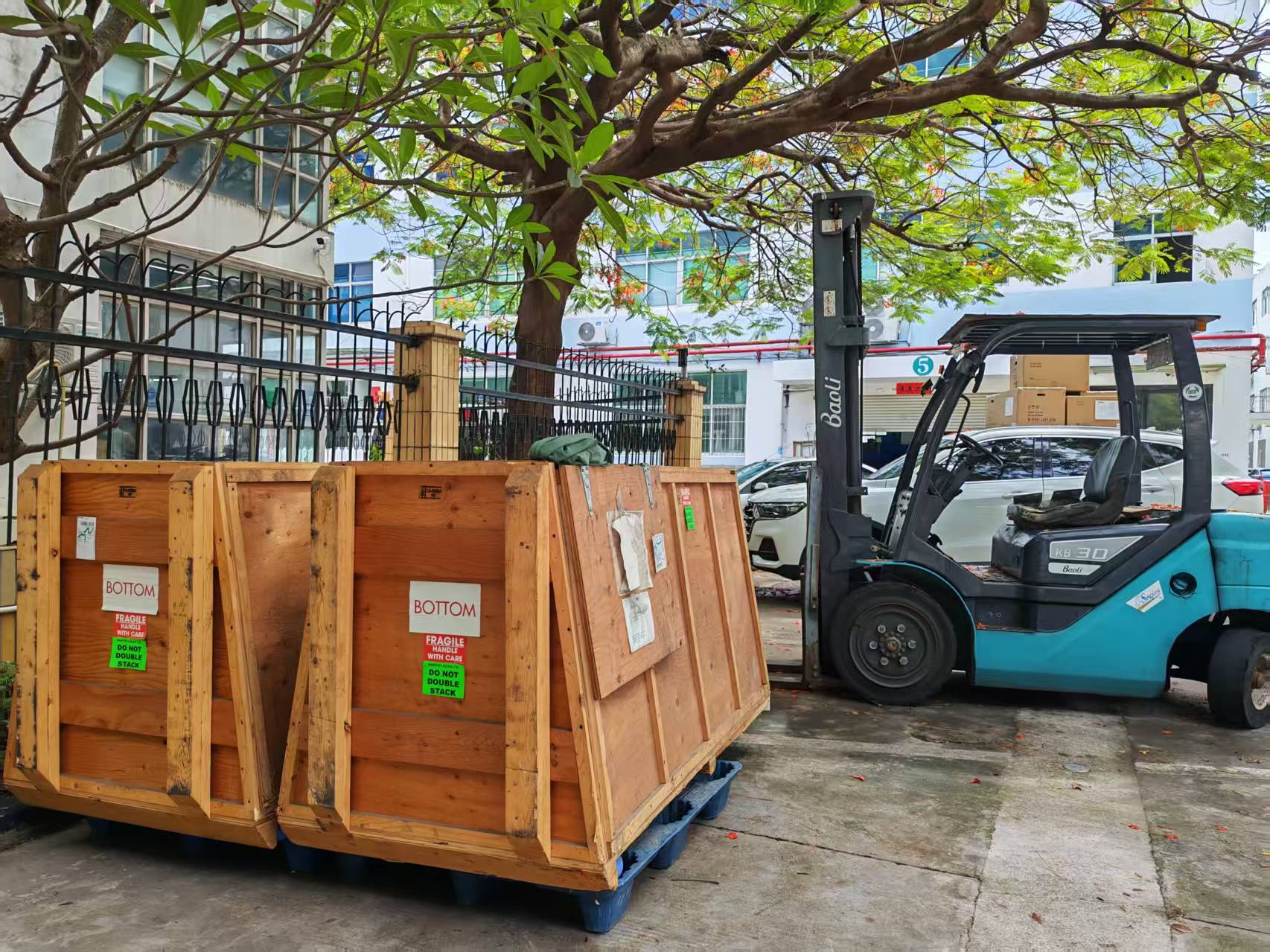
The workflow ends where the buyer's exposure ends: delivery to the designated warehouse after release. Image: TOBECAN IMPORTCLEAR FREIGHT LTD.
Steps 2 and 3 carry most of the model's value. They are also the steps that depend most heavily on the importer supplying accurate commercial information early — a point returned to in the limitations section below.
Pre-Arrival HS and CIQ Verification, Digitised
Compliance pre-checks only scale if classification and regulatory lookups are fast. The provider supports its methodology with online lookup tools covering HS code lookup, 13-digit CIQ code lookup, cross-border e-commerce tax lookup, and landed cost calculation. These tools sit alongside a broader service scope that includes tariff lookup, regulatory requirement consultation, document handling, declaration and release, and door-to-door clearance.
For a buyer at the research stage, the significance is not that online tools exist — it is what they remove from the critical path. HS classification and CIQ determination are the two points where import files most often stall, because they require product-level judgement rather than document collection. Moving them upstream converts a border-time decision into a pre-departure decision, and it gives the importer a landed cost figure before committing to the shipment.
Documented service deliverables follow the same logic: customs documents, a landed cost calculation report, compliance advisory, release notices, and bill of lading or delivery arrangements. In other words, the buyer receives a decision record, not only a clearance outcome.
Published commercial terms worth noting at the evaluation stage
- Discounts published on selected compliance services: 50% off certain compliance services, capped at USD 300.
- Expected outcomes stated in the provider's solution documentation: customs clearance time reduced by 30%, inspection rate reduced by 25%.
- Multi-city branch coverage across China and Hong Kong.
Those expected outcomes are provider-stated targets associated with the model, not independently audited results, and buyers should treat them as design intent to be validated against their own shipment profile.
Where the Fast Compliance Model Fits Best
Neither model is universally superior. The pre-arrival approach produces the largest timing advantage in specific situations.
- First-time imports. Importers without an established classification history carry the highest risk of HS error, and they benefit most from verification before the declaration is filed.
- Regulated product pre-checks. Food, cosmetics, pharmaceuticals and tobacco categories require CIQ detail and label verification that is difficult to resolve after arrival.
- Cold-chain and perishable shipments. Where shelf life or temperature integrity is time-bound, detention is a product-loss event rather than a cost event.
- Urgent air shipments. Air freight economics depend on short dwell times; pre-arrival preparation protects the mode advantage.
- Cross-border e-commerce consignments. Bulk reconciliation and applicable tax regimes require structured treatment rather than per-parcel reaction.
- Bulk and project imports. Large or specialised cargo reduces the number of viable recovery options once a shipment is held.
By contrast, a routine, well-documented, unregulated shipment with an established classification history gains relatively little from pre-arrival checks, and a standard brokerage arrangement may be sufficient.
Market Signals Behind the Shift
The move toward compliance-led clearance is being pushed by market scale and regulatory attention rather than by vendor positioning.
- Hong Kong's customs brokerage market is estimated at USD 117.52 million in 2025 and is projected to reach USD 159.06 million by 2030 (Mordor Intelligence).
- China's freight forwarding market was valued at USD 13.91 billion in 2024, with a projected CAGR of 5.80%, reaching USD 24.44 billion by 2034.
- China's cross-border e-commerce import and export volume reached CNY 2.75 trillion (approximately USD 406.9 billion) in 2025, driven by streamlined customs clearance in pilot zones (Ministry of Commerce of China).
- Authorized Economic Operator (AEO) status facilitates customs clearance between China and partner economies such as Australia, providing reduced inspection rates and prioritized clearance (General Administration of Customs of China).
Growth forecasts for the same region should be read with care. Published CAGR estimates differ according to scope definitions — varying between roughly 3.78% for the broader freight and logistics segment and 6.24% for customs brokerage specifically — which means buyers should compare segment definitions, not headline percentages, when using market data in a business case.
How to Compare Providers on Equal Terms
The China–Hong Kong market includes large integrated networks and smaller regional specialists. Mordor Intelligence lists FedEx, UPS, DHL, TIBA Group and CBIP Logistics among the major global and regional players in Hong Kong's customs brokerage market. Those names are relevant as market context; they are not, in themselves, evidence of fit for a specific importer's cargo profile.
A more useful comparison framework evaluates providers along four dimensions that map to the buyer's actual risk exposure:
| Evaluation dimension | What to ask | Why it matters |
|---|---|---|
| Compliance timing | Are HS and CIQ checks performed before arrival or during declaration? | Determines whether classification problems are prevented or corrected |
| Tooling and self-service | Can the importer run HS, CIQ and landed cost lookups directly? | Reduces dependence on vendor response time and improves cost planning |
| Scope boundaries | Where does the provider's responsibility end? | Duties, taxes and separate freight billing stay with the importer and must be planned for |
| Scenario experience | Has the provider handled regulated, cold-chain or oversized cargo in this lane? | Scenario familiarity is the main differentiator in complex files |
For the reference case, the Fast Compliance Clearance Methodology (V2.1) answers the first two dimensions directly through its pre-arrival steps and its online lookup tools. The third dimension — scope — is addressed transparently and is discussed next.
Limits and Boundaries of the Fast Compliance Model
A credible comparison has to state where the pre-arrival approach does not solve the problem.
- It depends on importer inputs arriving early. The model's advantage is created before arrival. If commercial invoices, packing lists or product descriptions reach the provider late or incompletely, the pre-check window closes and the file behaves like a conventional post-arrival declaration. The buyer, not the broker, controls this variable.
- Duties and taxes remain the importer's cost. Customs duties and taxes are payable by the client and are not absorbed by the service.
- Legal and tax representation requires authorisation. The service does not include legal or tax representation without client authorisation, which matters for importers expecting the broker to act as a formal representative in a dispute.
- International freight is billed separately. Clearance pricing and freight pricing are not a single bundle, so total landed cost work must include both lines.
- Timing benefit is scenario-dependent. For stable, unregulated, well-documented cargo, the incremental gain over standard brokerage may be modest, and the decision should be made on landed cost and reliability rather than speed.
Future Outlook
Three forces are likely to keep the compliance-led model relevant through the next planning cycle. First, the volume base keeps expanding: China's import value and cross-border e-commerce volumes continue to grow, and Hong Kong's brokerage market is projected to add roughly USD 41 million in value by 2030. Second, regulatory attention is shifting from declaration accuracy toward advance information — the same direction as AEO-type facilitation, which rewards importers whose data is ready before the border. Third, digitisation of classification and landed cost lookups moves pre-arrival checking from a specialist service into a routine step, which lowers the cost of doing it.
The practical consequence for buyers is that compliance timing is becoming a procurement criterion rather than an operational detail. Importers who build it into their broker selection — alongside price, coverage and scenario experience — will be evaluating providers on the dimension that most directly determines whether cargo moves on schedule.
Frequently Asked Questions
What is the practical difference between fast compliance clearance and standard customs brokerage?
Standard brokerage typically begins document processing when cargo arrives, with classification confirmed during declaration and queries resolved reactively. A fast compliance model performs HS and CIQ pre-checks, document and label verification, and landed cost calculation before arrival, so the declaration is filed against a pre-verified file. The difference is sequencing, not the declaration itself.
Which shipments benefit most from pre-arrival compliance checks?
First-time imports, regulated goods requiring CIQ inspection such as food, cosmetics, pharmaceuticals and tobacco, cold-chain and perishable cargo, urgent air shipments, and cross-border e-commerce consignments needing bulk reconciliation. For routine, well-documented, unregulated cargo with an established classification history, the incremental timing benefit is smaller.
What information does a provider need before arrival to run a pre-check?
A commercial invoice, packing list, transport document, a product description detailed enough for HS and 13-digit CIQ classification, and label or packaging information for regulated categories. A landed cost calculation additionally requires value, freight and insurance components. Incomplete inputs are the main reason pre-arrival advantages are lost.
Can online HS and CIQ lookup tools replace a customs broker?
No. Lookup tools support classification decisions and landed cost estimation, and they reduce the time required to reach a classification. Responsibility for declaration accuracy, regulatory interpretation and inspection handling still rests with the declarant and the appointed broker, which is why the pre-check output is normally reviewed by a brokerage team before submission.
What happens if a declaration is rejected or an inspection is ordered?
Rejections most often trace to classification, valuation or document inconsistency. In a structured workflow, inspection is handled as a defined coordination step and release follows duty payment. Correction outcomes and timelines vary by port, cargo type and the nature of the discrepancy, so buyers should confirm the specific escalation path with their provider before shipment.
For readers who want the full service scope, tiers and process documentation referenced in this comparison, the provider brochure is available here: TIC Tobecan ImportClear brochure (PDF).
Third-party data referenced in this article: General Administration of Customs of China (import value and AEO), HKTDC Research (Hong Kong air mode share), Ministry of Commerce of China (cross-border e-commerce volume), Mordor Intelligence (Hong Kong customs brokerage market size and market participants), and a published China freight forwarding market study. Provider facts refer to TOBECAN IMPORTCLEAR FREIGHT LTD and its Fast Compliance Clearance Methodology (V2.1).