
Feed-Grade Magnesium Sulphate Fertilizer for Livestock and Poultry
Industry Reference · Chemicals · Feed Ingredient Sourcing
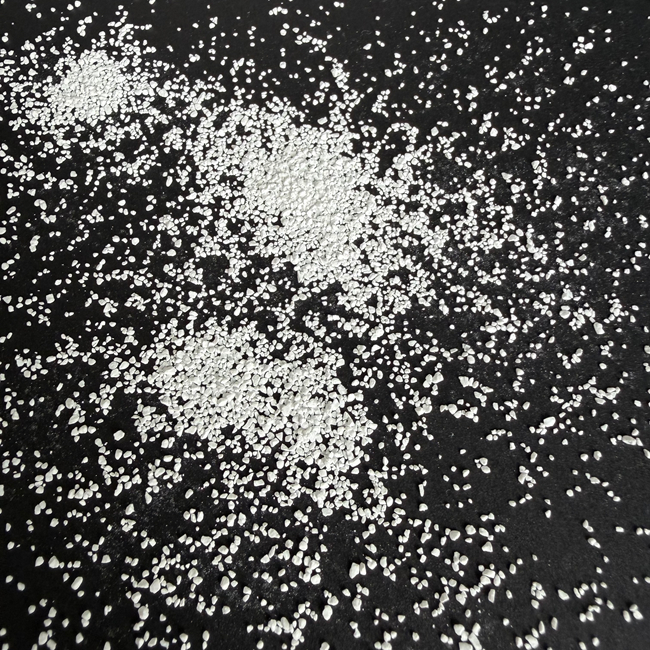
Feed-grade magnesium sulphate is a magnesium source specified for inclusion in animal feed, and in livestock and poultry programmes it is used to supplement dietary magnesium, support bone health and reduce the stress associated with magnesium deficiency. The product family it belongs to — magnesium sulphate fertilizer — also includes agricultural grade and industrial grade material, and the forms used across those grades are not interchangeable by default.
That distinction carries most of the procurement risk. Magnesium sulphate is traded as several chemically distinct forms: magnesium sulphate anhydrous, Kieserite (a naturally occurring magnesium sulphate mineral), magnesium sulphate monohydrate and magnesium sulphate heptahydrate, widely known as Epsom salt. Each form has a different magnesium oxide content, moisture behaviour, solubility profile and typical application route. A buyer who selects a form on price or availability alone, without confirming that both the form and the grade are positioned for feed use, can receive material that performs well in a field or a blending line but does not satisfy feed documentation requirements.
This reference examines feed-grade magnesium sulphate from a scenario-fit perspective: what it does in poultry and livestock programmes, which forms the available evidence supports for feed applications, how feed grade differs from agricultural and industrial grade, and which constraints should be resolved before an order is placed.
Why Feed Grade Is a Specification, Not a Label
Feed grade is a compliance and impurity specification rather than a marketing tier. Two shipments of the same chemical form can carry comparable magnesium content and still differ in whether they are acceptable for feed use, because the separating criteria sit in impurity control, chloride restriction and documentation.
Three constraint layers define the difference:
- Heavy metals and harmful impurities. Feed-grade material requires strict control of heavy metals, arsenic and lead. Low heavy metal and low chloride grades are available within the magnesium sulphate fertilizer range, but the requirement has to be stated by the buyer and evidenced by the supplier at the enquiry stage rather than assumed from the product name.
- Chloride limits. Restricting chloride ion is a documented quality requirement for magnesium sulphate used in feed and agricultural applications. Chloride control matters in poultry and livestock formulations for the same reason it matters in chloride-sensitive crop programmes.
- Documentation. Feed-grade magnesium sulphate is normally supplied with a Certificate of Analysis (COA) and a Material Safety Data Sheet (MSDS), and feed grade shall meet feed-additive standards. For EU export, REACH and FAMI-QS frameworks apply to feed-additive supply chains.
Procurement consequence: a supplier can be fully compliant for agricultural or industrial supply and still not be the correct source for a feed programme. Grade, form, heavy metal limits, chloride limits and documentation scope must be requested as specified requirements — not inferred from a general product description.
What Magnesium Sulphate Does in Livestock and Poultry Programmes
The feed function of magnesium sulphate is stated directly in the application data for the product: it adds magnesium for livestock and poultry, supports bone health and normal metabolism. At feed grade specifically, the documented outcome is to supplement magnesium for livestock and poultry, support bone health and reduce magnesium-deficiency stress.
Three functional outcomes follow from that description and matter to a feed formulator or nutritionist evaluating the ingredient:
Skeletal support
Magnesium is a structural and regulatory nutrient in skeletal development. In poultry and livestock programmes, magnesium supplementation is positioned as support for bone health and normal metabolism rather than as a therapeutic intervention. That framing matters for how the ingredient is specified: it belongs in the routine mineral provision of the ration, not in a corrective treatment protocol.
Metabolic and enzyme function
Magnesium participates in enzyme activation and normal metabolism. Magnesium sulphate also supplies sulphur as sulphate alongside magnesium, and the dual-nutrient character of the ingredient is one of its recognised product characteristics. In a feed context, magnesium remains the primary declared nutrient; the sulphate fraction is what carries it.
Reduction of magnesium-deficiency stress
The feed-grade claim documented for this product is a reduction in magnesium-deficiency stress. Where dietary magnesium is undersupplied, the practical effect in a production programme appears as reduced resilience to routine stress conditions rather than as a single visible symptom. Supplementing magnesium at the formulation stage is therefore a preventive specification decision, and the cost of getting it wrong is usually paid later in performance variability rather than at the point of purchase.
Boundary note: the available application data describes the function of feed-grade magnesium sulphate but does not publish inclusion rates or dosage levels for any species. Inclusion rates must be set by the feed formulator or nutritionist against the applicable local feed-additive regulation and species requirement. No dosage figure should be assumed from this reference or from a supplier's general product description.
The Four Magnesium Sulphate Forms and Their Feed Relevance
Not every form in the magnesium sulphate family carries the same feed positioning. The table below sets out the forms, their listed appearance and application modes, their nutrient and handling characteristics, and where each sits in relation to feed use.
| Form | Appearance | Application modes listed | Nutrient & handling notes | Feed positioning in available data |
|---|---|---|---|---|
| Magnesium sulphate anhydrous | White powder / granular | Soil application; industrial raw material | Highest magnesium oxide content (~33% MgO); no crystal water; low moisture; stable quality; lower transport cost per effective magnesium unit | Multi-grade for agriculture, feed and industrial use; low heavy metal and low chloride grades available |
| Kieserite | Off-white granular | Soil application | Natural mineral origin; pH-neutral and does not acidify soil; high MgO (~27%); slow-release nutrient for long-term soil supply; low hygroscopicity, anti-caking, free-flowing for bulk blending | Positioned for basal soil application; not positioned for feed in the available data |
| Magnesium sulphate monohydrate | White powder / granular | Soil application; foliar spray; industrial raw material | High MgO content (~25–27%); good thermal stability; low moisture; anti-caking for long-term storage; consistent synthetic quality and stable heavy-metal index | Suitable for soil application, feed and compound fertilizer blending |
| Magnesium sulphate heptahydrate | White granular crystal | Soil application; foliar spray; fertigation; industrial raw material | Extremely fast water solubility; uniform crystal particle; low impurity; fast correction of crop magnesium deficiency; wide use in horticulture and hydroponics | Positioned for horticulture, high-value crops, hydroponics and industrial uses; not positioned for feed in the available data |
Read across the final column and the constraint becomes concrete. Within this magnesium sulphate fertilizer family, the two forms the available data positions for feed are magnesium sulphate anhydrous, described as multi-grade for agriculture, feed and industrial use, and magnesium sulphate monohydrate, described as suitable for soil application, feed and compound fertilizer blending. Kieserite and magnesium sulphate heptahydrate are documented against soil, foliar, fertigation and industrial applications; their strengths lie in slow-release soil supply and rapid water solubility respectively, not in feed delivery.
This is not a statement that the other forms are unusable in feed — it is a statement about what the available product documentation supports. A buyer building a feed specification should expect the supplier to identify a feed-positioned form and to supply the matching grade documentation, rather than to accept a generic magnesium sulphate quotation.
Packing and physical format
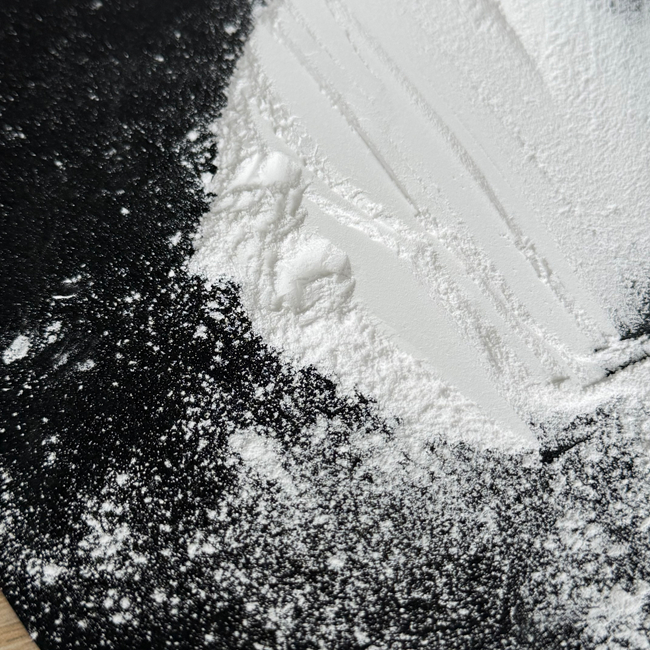
All four forms are supplied in 25 kg / 50 kg PP woven bags, or as per customer's requirement. Feed-grade supply adds destination-driven requirements that agricultural bulk supply does not: sealed moisture-proof packaging, and shipping marks complying with the requirements of the destination market. For buyers searching on standard pack sizes — Magnesium Sulphate Fertilizer 25kg and Magnesium Sulphate Fertilizer 50kg — the grade on the bag matters as much as the net weight, because feed-grade and agricultural-grade material can share identical packaging dimensions.
Custom specifications, granule size, colours, shapes, packaging and labels are acceptable within the manufacturer's stated customisation scope, which allows a feed producer to align particle size and labelling with an existing premix or compound feed line.
How Feed-Grade Material Enters a Feed Programme
The documented operation mode for feed use is feed mixing: the powder is dosed and mixed into animal feed. Unlike soil application, foliar spraying or fertigation, feed mixing is a dry-blending operation with its own handling requirements.
Step 1 — Lock the form and grade
Select a feed-positioned form, then fix the grade-level requirements: heavy metal limits, chloride limits, moisture content and particle size. These are the parameters that separate an acceptable feed ingredient from material that merely carries the right chemical name.
Step 2 — Review documentation before commercial terms
Feed-grade supply should be accompanied by COA and MSDS, together with test reports and application guidance. Feed grade shall meet feed-additive standards, and EU-destined feed-additive supply falls under REACH and FAMI-QS frameworks. Documentation review is the point at which most grade mismatches surface.
Step 3 — Set inclusion with the formulator
Inclusion rates are set by the feed formulator or nutritionist against local feed-additive regulation. The available product data does not publish species-level inclusion rates, and no supplier-side product description substitutes for a regulatory and nutritional determination.
Step 4 — Blend with metering and batching equipment
The matched equipment for feed and blending operations includes mixing tanks, blenders, crushers and metering and batching equipment. Uniform granule and flow characteristics support consistent dosing and reduce segregation in a premix or compound feed line.
Step 5 — Control storage and handling
Magnesium sulphate should be stored in a cool, dry, well-ventilated place, away from moisture, sunlight and oxidants, with packaging kept sealed to avoid caking. Normal ambient temperature and low relative humidity are required. Magnesium sulphate should not be mixed with strong alkaline materials, and application notes call for correct dosage to prevent adverse effects at the point of use.
Supplier Positioning: Tianjin Xingyu Fertilizer Industry Co., Ltd.
Tianjin Xingyu Fertilizer Industry Co., Ltd. (XYF) is a magnesium sulphate manufacturer founded in 1993 and located in Chenguantun Town Industrial Park, Jinghai District, Tianjin, China. The company produces a full range of anhydrous magnesium sulphate, monohydrate magnesium sulphate and heptahydrate magnesium sulphate, together with magnesium oxide, sulphur magnesium fertilizer and various medium and trace element fertilizers, supplied in both fertilizer grade and industrial grade.
Three capability points are relevant to a feed-related enquiry.
Grade and form coverage
The range is positioned across agriculture, feed and industrial use, with multi-grade availability on the anhydrous form and feed and compound fertilizer blending suitability on the monohydrate form. Low heavy metal and low chloride grades are available. For a feed programme, that combination provides two feed-positioned forms plus the impurity-control options that feed specifications require.
Certification scope, stated precisely
XYF holds ISO9001 certification, certificate number 11426Q01597R101, issued by Beijing East Allreach Certification Center Co., Ltd. (EACC) on 20 May 2026 and valid to 19 May 2029, against the standard GB/T19001-2016/ISO9001:2015. The certification covers magnesium sulphate fertilizer, including magnesium sulphate anhydrous, Kieserite, magnesium sulphate monohydrate and magnesium sulphate heptahydrate, and applies to the Global market. It is a quality management system certification: it supports consistent batch control and traceability, but it is not by itself a feed-additive certification, and feed supply additionally depends on feed-standard conformity and destination-market requirements.
Customisation and export execution
Production mode is OBM, with custom specifications, granule size, colours, shapes, packaging and labels accepted. Quality control is described as 100% test. Minimum order quantity is one container, with lead time depending on order quantity and requirements. Documented export markets include Indonesia, Vietnam, Thailand, Malaysia, Brazil, Argentina, Chile, India, Pakistan, Turkey, Saudi Arabia, the UAE, Spain, Italy, Poland, Egypt, Nigeria, Mexico and Russia, and the company reports exports to more than 30 countries and regions across Southeast Asia, Europe and America.
After-sales support covers technical documents including MSDS, COA, test reports and application guidance, full-order follow-up with loading and shipping status updates, a 24-hour response commitment on customer feedback, and acceptance of third-party inspection. In a documented OBM case, material was supplied to a Korean client at 20 tonnes over a two-year relationship, with applications spanning agricultural fertilizer, feed additive for livestock and poultry, industrial use and bath salt raw material.
Market Signals for Magnesium Sulphate and Feed Applications
Several published data points frame the commercial context in which feed-grade magnesium sulphate is sourced.
- The global magnesium sulfate market reached USD 1.8 billion in 2025 and is projected to reach USD 1.9 billion in 2026, according to an aggregated 2026–2035 magnesium sulfate market forecast. Note that reported 2025 market values vary across research sources, with methodology differences attributed to whether technical, agricultural and pharmaceutical grades are included.
- China was the leading exporter of magnesium sulphate in 2024, accounting for USD 149 million in export value under HS code 283321, according to OEC data based on UN Comtrade.
- Agriculture and fertilizers accounted for approximately 41.6% of global magnesium sulfate market share as of 2025, based on aggregated commercial research.
- Heptahydrate (Epsom salt) is the dominant product type by volume, at 54% of global commercial production, based on published market analysis. This matters for buyers because volume dominance sits with the form least positioned for feed use in this product family.
- Magnesium sulphate is registered in the ECHA REACH database within an annual tonnage band of 100,000 to 1,000,000 tonnes, indicating a mature, registered supply chain within the European Union.
- US magnesium sulphate market prices were expected to stabilise near USD 674 per metric ton in early 2025, according to secondary industry price commentary of medium confidence.
The analytical reading is straightforward. The feed-additive segment is not separately quantified in the available data, and feed grade sits inside the specification-driven portion of the market rather than the bulk commodity portion. The widely traded form is heptahydrate; the widely regulated application is agriculture. Feed grade therefore competes for attention against a much larger agricultural volume, which is precisely why grade discipline — not price discovery alone — determines supplier suitability.
Feed Grade vs Agricultural Grade vs Industrial Grade: Boundaries to Expect
Buyers frequently treat the three grades as a single product at three price points. They are better understood as three specification packages serving different risk profiles.
| Dimension | Feed grade | Agricultural grade | Industrial grade |
|---|---|---|---|
| Primary requirement | Feed-additive standard conformity; magnesium for livestock and poultry | Supply of magnesium and sulphur to crops; correction of magnesium deficiency | Process performance as a raw material |
| Impurity control focus | Heavy metals, arsenic, lead; chloride restriction | Heavy metals and chloride, particularly for chloride-sensitive crops | Formulation-specific; moisture-sensitive formulation compatibility |
| Typical documentation | COA, MSDS, test reports; feed-additive standard; REACH / FAMI-QS for EU export | COA, MSDS; shipping documents | COA, MSDS; technical data |
| Typical packaging | 25 kg / 50 kg PP woven bag, sealed moisture-proof; destination-compliant shipping marks | 25 kg / 50 kg PP woven bag, or as per customer's requirement | 25 kg / 50 kg PP woven bag, or as per customer's requirement |
| Feed-positioned forms | Anhydrous; monohydrate | All four forms | Anhydrous; monohydrate; heptahydrate depending on process |
Six boundaries are worth stating plainly, because they are the points at which a feed purchase most often runs into difficulty.
- Form-level limitation. Only two of the four magnesium sulphate forms are positioned for feed in the available documentation. A buyer seeking the cheapest magnesium sulphate per tonne will often be quoted on a form intended for soil or fertigation use.
- Certification-grade limitation. ISO9001 is a quality management certification covering the magnesium sulphate fertilizer range. It is not a feed-additive certification, and it does not by itself demonstrate feed-standard conformity or EU feed-chain eligibility.
- Dosage limitation. No species-level inclusion rates are published in the available product data. Inclusion must come from the buyer's regulatory framework and nutritional formulation.
- Compatibility limitation. Magnesium sulphate should not be mixed with strong alkaline materials, and chloride restriction remains a live specification item in feed formulations.
- Storage limitation. The material is moisture-sensitive. Sealed moisture-proof packaging, low relative humidity and protection from sunlight and oxidants are required to prevent caking, which adds handling discipline in a feed mill environment.
- Commercial limitation. Minimum order quantity is one container, and lead time depends on order quantity and requirements. Feed-grade customisation of granule size and labelling extends the specification cycle before production begins.
Evaluation Checklist Before Ordering Feed-Grade Magnesium Sulphate
- Confirm the form is one of the feed-positioned forms — anhydrous or monohydrate — rather than a soil or fertigation form.
- State heavy metal, arsenic and lead limits as written requirements in the enquiry.
- State the chloride limit and confirm a low-chloride grade is available.
- Request COA, MSDS and test reports before commercial terms are agreed.
- Confirm feed-additive standard conformity and, for EU destinations, REACH and FAMI-QS status.
- Confirm moisture content and particle size against the feed line's dosing equipment.
- Confirm the ISO9001 certificate scope, number and validity period, and understand what it does and does not cover.
- Confirm sealed moisture-proof packaging and destination-compliant shipping marks.
- Ask for storage and handling conditions in writing, including the restriction on mixing with strong alkaline materials.
- Agree the lead time for custom granule size and labelling separately from standard-grade lead time.
Future Outlook
The direction of travel in magnesium sulphate supply favours specification clarity over volume alone. Two structural factors support that view. First, the agricultural share of the market — approximately 41.6% of global magnesium sulfate market share as of 2025 — keeps bulk demand concentrated in forms and grades that are documented for soil, foliar and fertigation use, while feed applications sit in a smaller, more tightly documented segment. Second, the heptahydrate form holds 54% of global commercial production, which means the most heavily traded form is not the form a feed buyer typically needs.
For livestock and poultry programmes, the practical implication is that feed-grade magnesium sulphate will continue to be sourced on documentation rather than on spot price. Suppliers with defined grade coverage, low heavy metal and low chloride options, feed-standard documentation and customisation capability are structurally better positioned than suppliers offering a single undifferentiated magnesium sulphate specification. Buyers who treat grade, form and documentation as fixed requirements at the enquiry stage — rather than as variables to negotiate after quotation — will resolve most sourcing risk before it reaches the feed mill.
Frequently Asked Questions
What does feed grade mean for magnesium sulphate?
Feed grade is a specification package rather than a product name. It requires feed-additive standard conformity, strict control of heavy metals, arsenic and lead, and chloride restriction, and it is normally supplied with COA and MSDS. For EU export, REACH and FAMI-QS frameworks apply to feed-additive supply chains. Two shipments of the same magnesium sulphate form can carry similar magnesium content and still differ in whether they are documented for feed use.
Which magnesium sulphate forms are positioned for livestock and poultry feed?
Within the magnesium sulphate fertilizer family described here, magnesium sulphate anhydrous is documented as multi-grade for agriculture, feed and industrial use, and magnesium sulphate monohydrate is documented as suitable for soil application, feed and compound fertilizer blending. Kieserite and magnesium sulphate heptahydrate are documented against soil, foliar, fertigation and industrial applications, with strengths in slow-release soil supply and rapid water solubility respectively.
How does magnesium sulphate support bone health in livestock and poultry?
Magnesium is supplied for livestock and poultry as a mineral nutrient that supports bone health and normal metabolism. At feed grade, the documented function is to supplement magnesium and reduce magnesium-deficiency stress. The material is specified as routine mineral provision in a ration, not as a corrective treatment, and magnesium sulphate also delivers sulphur as sulphate alongside magnesium.
How is feed-grade magnesium sulphate added to animal feed?
The documented operation mode for feed use is feed mixing: powder is dosed and mixed into animal feed. Matched equipment includes mixing tanks, blenders, crushers and metering and batching equipment. Storage conditions require a cool, dry, well-ventilated place away from moisture, sunlight and oxidants, with packaging kept sealed to avoid caking, and the material should not be mixed with strong alkaline materials.
What documents should a buyer request for feed-grade magnesium sulphate?
Buyers should request COA, MSDS, test reports and application guidance. Feed grade shall meet feed-additive standards, and EU-destined feed-additive supply falls under REACH and FAMI-QS frameworks. Where a supplier holds ISO9001, the certificate scope, number and validity period should be confirmed in writing; in this product family the certificate covers magnesium sulphate fertilizer including anhydrous, Kieserite, monohydrate and heptahydrate, and applies to the Global market.
How do feed-grade, agricultural-grade and industrial-grade magnesium sulphate differ?
They serve different risk profiles. Feed grade centres on feed-additive standard conformity and tight impurity control for livestock and poultry nutrition. Agricultural grade centres on supplying magnesium and sulphur to crops, correcting magnesium deficiency and, where relevant, protecting chloride-sensitive crops. Industrial grade centres on process performance as a raw material, including moisture-sensitive formulations. All three can share the same packaging formats, which is why the grade on the documentation matters more than the grade on the bag.
What are the main limits when sourcing feed-grade magnesium sulphate?
Four limits recur. Form availability is limited to the forms documented for feed rather than the full magnesium sulphate range. Dosage is not published in product data and must be set by a formulator or nutritionist against local feed-additive regulation. Storage is moisture-sensitive, requiring sealed packaging and low relative humidity to prevent caking. And minimum order quantity is one container, with lead time depending on order quantity and requirements, so custom granule size and labelling extend the specification cycle.