
Feed Grade vs Anti-caking Silica Powder for Pet Food
An independent buyer comparison for pet food and probiotic blend applications: free-flow, caking risk, moisture on arrival, pH fit — and why pilot trials decide the outcome.
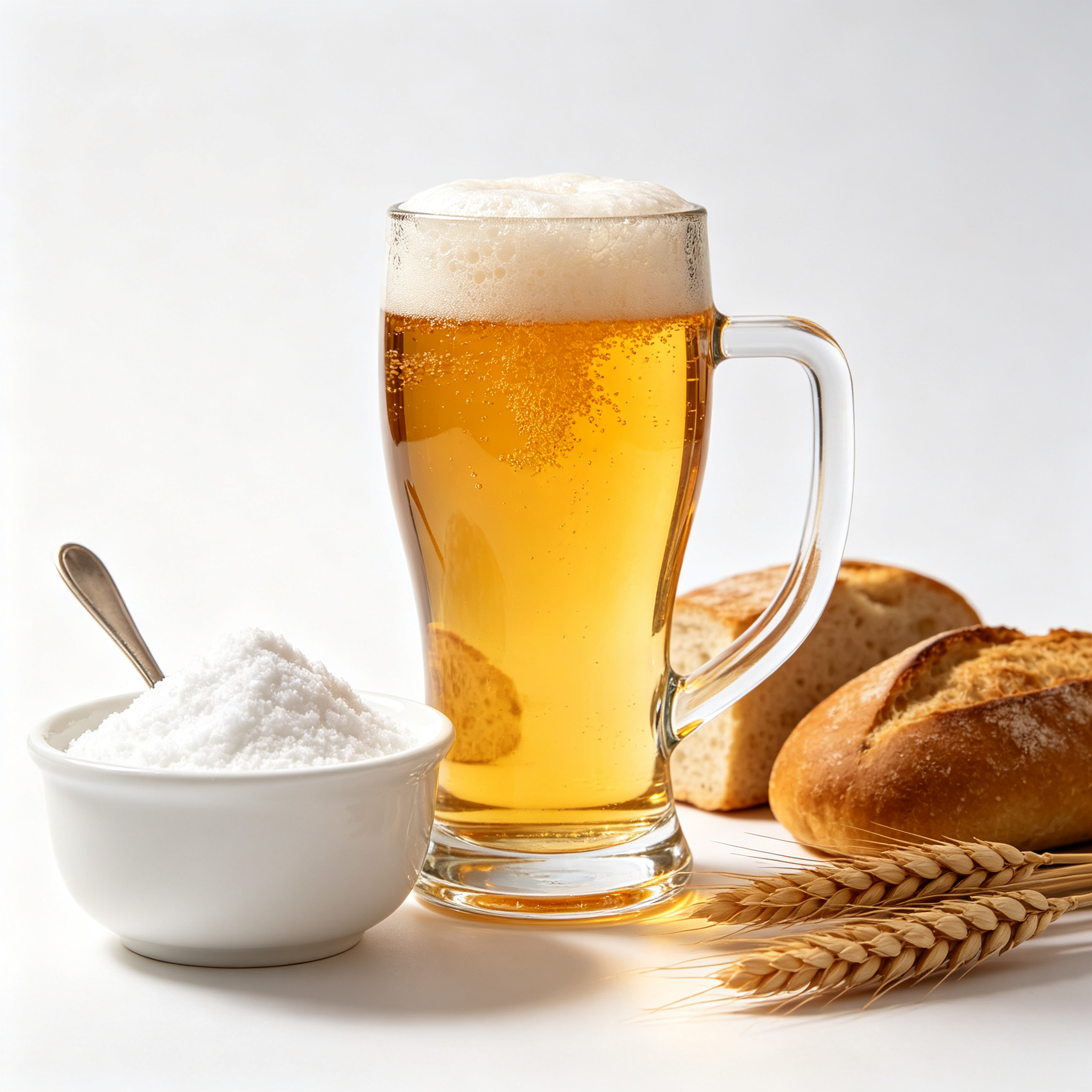
Feed and pet food grades share the same base chemistry — synthetic amorphous silicon dioxide, CAS 7631-86-9 — but differ in particle size, specific surface area and moisture specification.
Pet food manufacturers rarely decide whether to use silicon dioxide at all. They decide which of two feed-additive powder types goes into a blend: feed grade precipitated silica, or animal feed anti-caking silica. The two are easy to confuse. Both are synthetic amorphous silicon dioxide with CAS number 7631-86-9. Both are white, odourless, free-flowing powders. Both sit in the same near-neutral pH band. The differences that matter — median particle size, specific surface area, loss on drying, and the job the powder is expected to do in a premix or a probiotic blend — often stay invisible until the first full-scale production run.
This comparison uses the published specifications of two product families from one supplier, Zhonglian Food Silica, as a concrete reference point. Buyers evaluating any supplier can apply the same four test dimensions and the same pilot-trial discipline.
The Two Powder Types, Side by Side
Feed grade precipitated silica is a feed-additive grade of synthetic amorphous silica produced by the wet precipitation route. In the Zhonglian Food Silica portfolio the family is listed as the ZLSIL-FE series: ZLSIL-FE, ZLSIL-FE180MP, ZLSIL-FE230MP, ZLSIL-FE260MP, ZLSIL-FE180P, ZLSIL-FE260P and ZLSIL-FE1200P. The stated specification band is SiO₂ ≥98%, D50 10–50 μm, BET 150–550 m²/g, pH 6.0–7.5 and loss on drying (LOD) ≤7%, with low heavy metals. The published application list covers pet feed, livestock feed, vitamin premix and mineral carrier.
Animal feed anti-caking silica is the companion family, listed as ZLSIL-PF325, ZLSIL-PF58, ZLSIL-PF22S, ZLSIL-PF244, ZLSIL-PF38 and ZLSIL-PF50. Its stated band is narrower: D50 14–44 μm, BET 160–200 m²/g, pH 6.0–7.5 and LOD ≤6.5%, at a typical dose of 0.5–2%. The published application list is dry pet food, livestock feed, premixes, and salt or sugar carrier duty.
| Dimension | Feed grade precipitated silica (ZLSIL-FE series) | Animal feed anti-caking silica (ZLSIL-PF series) |
|---|---|---|
| Chemistry | Synthetic amorphous silica, CAS 7631-86-9, feed-additive grade | Synthetic amorphous silica, CAS 7631-86-9 (ZLSIL-PF58 / PF22S type) |
| SiO₂ content | ≥98% | Not separately stated on the published family sheet |
| Median particle size (D50) | 10–50 μm | 14–44 μm |
| Specific surface area (BET) | 150–550 m²/g | 160–200 m²/g |
| pH | 6.0–7.5 | 6.0–7.5 |
| Loss on drying (LOD) | ≤7% | ≤6.5% |
| Typical dose | Set per application; premix guidance 0.2–3.0% | 0.5–2% |
| Primary stated role | Pet feed, livestock feed, vitamin premix, mineral carrier | Anti-caking and free-flow in dry pet food, premixes, salt/sugar carrier |
Published family-level specifications. Individual grades sit anywhere inside these bands, which is one reason pilot batches matter more than catalogue numbers.
Four Dimensions Buyers Should Test Side by Side
1. Free-flow and anti-caking performance
Silica prevents caking structurally rather than chemically. Its porous structure forms a physical barrier between powder particles, blocking inter-particle bridging and moisture uptake. Anti-caking performance therefore depends on specific surface area (BET), oil absorption and particle size distribution — not on the headline purity figure.
Three practical consequences follow. Particles that are too fine can agglomerate and paradoxically worsen flow. High moisture in the base powder can overwhelm any anti-caking aid. And a cohesive base powder may need a medium particle-size grade rather than a finer one. Where hoppers block or arch, the usual remedies are a medium particle-size grade, tighter control of base-powder moisture, and adjustment of hopper angle or vibration.
In pet food this is not cosmetic. Free-flow governs dosing accuracy, and dosing accuracy governs nutrient uniformity in the finished kibble.
2. Caking risk and moisture on arrival
Moisture damage usually happens during transport or storage, not at the plant gate. The reported symptom is a whole bag, or part of a bag, arriving caked. The usual causes are high-humidity ocean freight, damaged packaging, shipping during a rainy season, or water leakage in the receiving warehouse.
LOD is the number to read. Loss on drying measures free moisture inside the silica itself. A high LOD means the powder adds moisture to the system instead of absorbing it, which defeats the anti-caking purpose. Between the two families, the anti-caking grade carries the tighter cap (≤6.5% versus ≤7%) — the point that matters most to buyers in humid regions or on long ocean freight.
A workable receiving protocol: photograph the delivery, test the moisture content, and if appearance and moisture are within specification, break up and sieve before use; reject if out of specification; and specify moisture-proof packaging with desiccants on the next purchase order.
3. pH fit with vitamins, enzymes and probiotics
Both feed families sit in a near-neutral pH band of 6.0–7.5, so pH is not a differentiator between them. It is a differentiator against the formulation. A pH mismatch can degrade sensitive ingredients — the general pattern being that B vitamins and vitamin C degrade in alkaline conditions, while some actives degrade in acidic conditions. Where a formulation is pH sensitive, the correct first step is a pH compatibility trial, not a grade switch.
Near-neutral grades are the default for vitamin premixes, enzyme blends and probiotic carriers. Acidic grades exist in the wider product range for genuinely acidic systems, but that is a separate selection decision.
4. Surface area, carrier duty and probiotic blends
Specific surface area and oil absorption determine how much liquid a grade can carry. A higher BET or higher oil absorption value means more capacity to take up oils, liquid flavours and actives and turn them into a free-flowing powder.
This is where the two families diverge most sharply for pet food. The anti-caking family is specified at 160–200 m²/g. The feed grade family spans 150–550 m²/g — the wider band, and the one that includes the higher-surface grades used when the silica is doing carrier work rather than purely anti-caking work.
For probiotic encapsulation in pet feed, the published selection approach calls for a high-BET, heat-resistant grade able to tolerate 80–90 °C pelleting. Within this portfolio the documented recommendation is ZLSIL-PF244 or ZLSIL-PF50 rather than a routine anti-caking pick. Where a probiotic or enzyme premix is the target, treat carrier capacity and pellet-mill temperature as the two governing variables.
Why a Compliant COA Is Not Proof of Performance
A certificate of analysis confirms chemical compliance. It does not confirm finished-product performance. In-spec raw material parameters only mean the material is chemically compliant; end performance is also affected by formulation, process and equipment, and two grades with similar specifications can perform very differently in the same formulation.
That is why pilot trials are not optional when replacing an imported grade or introducing a new one. Skipping this step risks a full-scale production failure. The documented workflow is:
- Run 1–25 kg pilot batches.
- Define benchmark parameters up front: D50, oil absorption, pH and loss on drying.
- Run parallel tests at the same dose as the original formulation.
- Evaluate flowability, anti-caking performance, colour and solubility.
- Run accelerated stability testing at 40 °C / 75% RH for two to four weeks.
- Document results, and approve for scale-up only if performance is acceptable.
Pilot material should come from the same batch as the intended full-scale production, and trial samples should be sealed and retained. One additional point is often missed: pilot work should also test dust behaviour at the bag-opening and charging station. Opening bags inside a closed charging port or under a dust hood, pouring slowly rather than from height, and using vacuum or screw conveying all reduce airborne dust — and confirm that a grade behaves on the line the way it behaved on the bench.
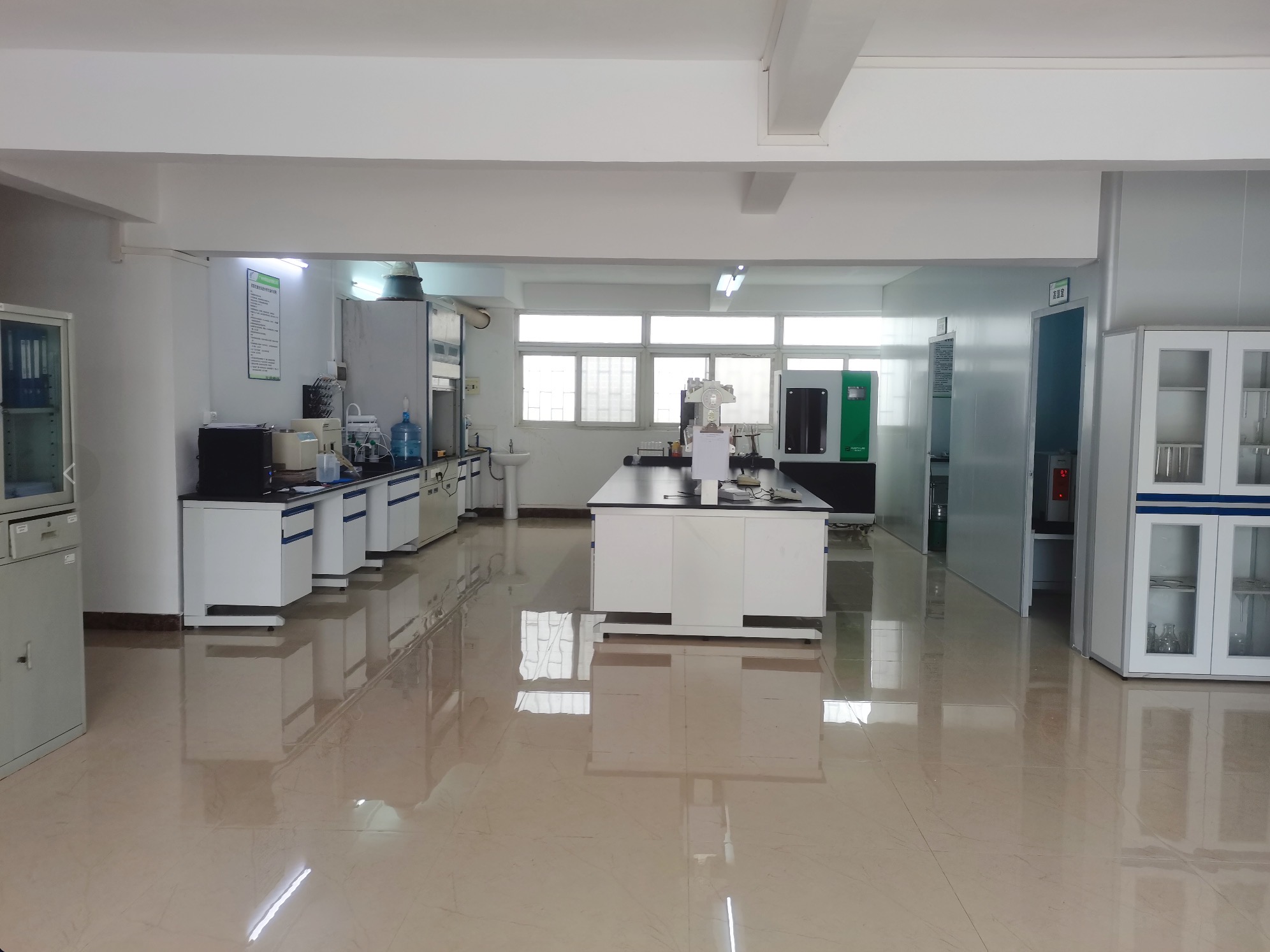
In-house testing and microbiological laboratories support per-batch analysis before release — the evidence base behind a pilot trial, not a substitute for it.
Mapping Each Grade to Pet Food Applications
Dry pet food and kibble blends are classic anti-caking territory. The job is to keep the blend free-flowing through dosing, conveying and packing, at a typical dose of 0.5–2%.
Vitamins, minerals and premixes are the feed grade family's home ground. Published premix guidance runs from 0.2% to 3.0% for mineral and vitamin premixes, with milk replacer at 0.5–2.0%. The functional duties listed for the feed series are anti-caking and flow for mineral and vitamin premixes, plus liquid carrying for choline chloride, fats and vitamin E.
Probiotic and enzyme premixes sit at the intersection of both. Premium pet food — freeze-dried kibble, probiotic and enzyme premixes, vitamin–mineral carriers — is documented as being specified to food-grade-equivalent quality rather than standard feed-grade expectations.
| Application | Job the silica does | Family and guidance |
|---|---|---|
| Dry pet food / kibble | Anti-caking, free-flow | ZLSIL-PF series, typical dose 0.5–2% |
| Vitamin and mineral premix | Anti-caking, flow, carrier | ZLSIL-FE series; premix guidance 0.2–3.0% |
| Milk replacer | Flow and dispersion | 0.5–2.0% |
| Probiotic / enzyme premix | High-BET carrier, heat resistance through pelleting | ZLSIL-PF244 or ZLSIL-PF50 |
| Liquid actives (fats, vitamin E) | Liquid carrier to free-flowing powder | Feed grade carrier duty; low-shear mixing |
The Feed-Grade Portfolio Behind These Specifications
Zhonglian Food Silica is the brand under which Shandong Zhonglian Chemical Co., Ltd. — the overseas sales and brand operation arm of Zhongqi (Guangdong) Silicon Material Co., Ltd. — supplies food- and feed-grade silicon dioxide. The company states a monthly production capacity of 3,000 tons, an export footprint covering more than 20 countries and regions across Europe, the Americas, Japan, South Korea, Southeast Asia and the Middle East, and production services that include R&D, formulation and particle-size customisation, intelligent manufacturing, end-to-end quality control, microbiological testing, international compliance and overseas supply.
The compliance stack most relevant to a pet food buyer is the feed-chain certification. FAMI-QS v6.0 covering feed ingredients is documented as certificate no. 11625FAM0017, registration no. FAM-2355, issued by HSL Certification Service under the FAMI-QS Code of Practice Version 6.0 including the Supply Chain Integrity Module V1.0, valid to 20 March 2028, with a scope covering the production of specialty feed ingredients (Feed Chain Category K, chemical process). That is the credential aimed specifically at the feed chain, and it is the one a feed buyer should check before general food-safety certificates.
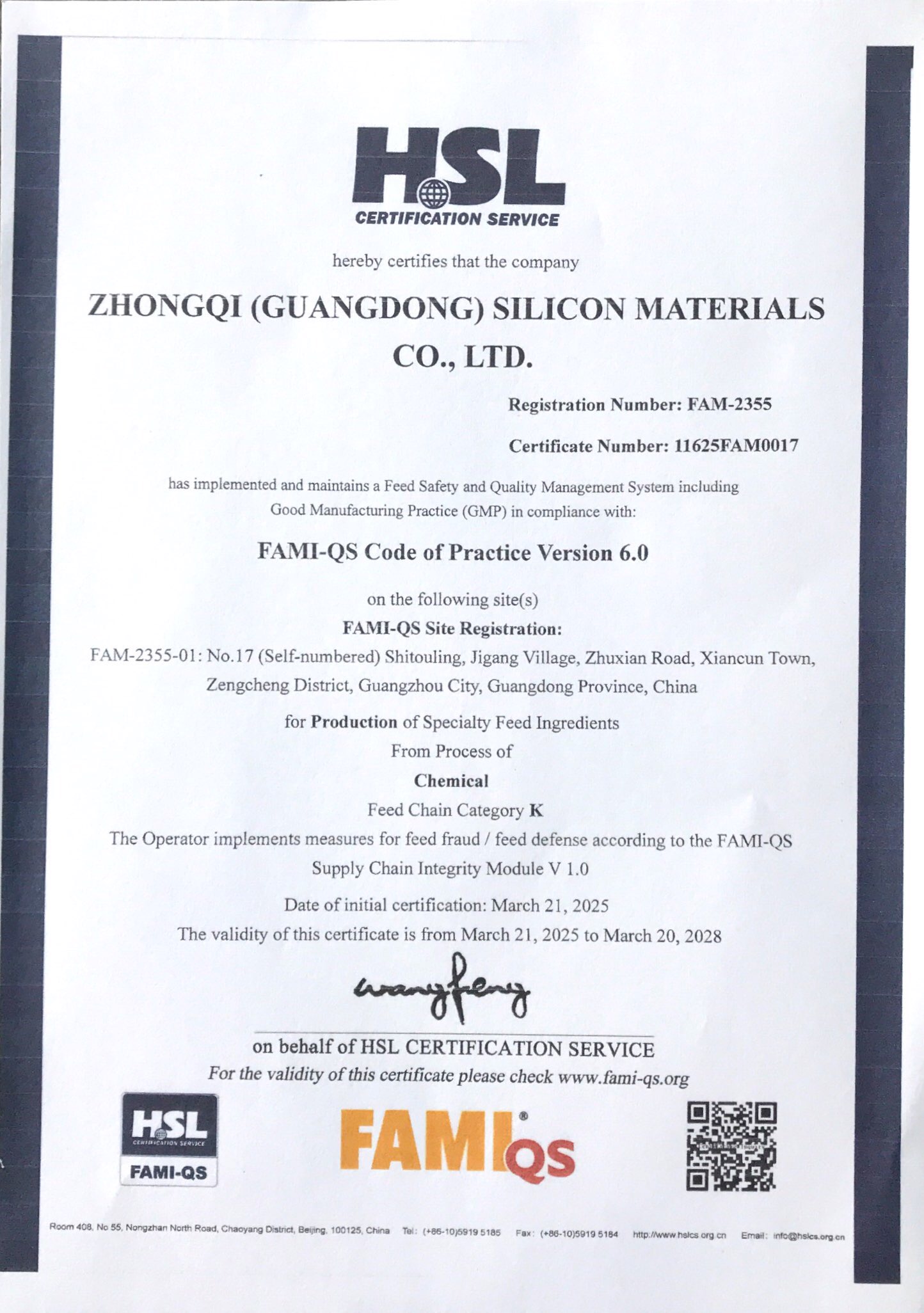
FAMI-QS v6.0 certificate no. 11625FAM0017 (registration no. FAM-2355), valid to 20 March 2028, covering production of specialty feed ingredients.
Alongside FAMI-QS, the published certificate set includes FSSC 22000 (CQC25FS1229R0S/4400, valid to 30 October 2028), ISO 22000:2018 (116FSMS1300022, to 21 June 2027), ISO 9001:2015 (11425Q410600R1S, to 27 October 2028), HALAL (1198250000, to 22 May 2028), OU Kosher (OUV2-JZVTP4, to 31 October 2026) and US FDA food facility registration no. 14857861616, with a SEDEX SMETA social compliance audit (ZAA600166938, Intertek Shenzhen).
Two operational facts are worth weighing in a pet food evaluation. The company states 100% testing supported by testing and microbiological laboratories, with quality controlled across raw-material selection, manufacturing and finished-product delivery. And the company passed a Nestlé on-site audit in October 2025, becoming a certified supplier approved for pet food and food wet/dry mixing scenarios.
What Is Changing in the Feed-Grade Silica Market
Regulatory clarity is the strongest structural signal. In October 2024 the European Food Safety Authority re-evaluated E 551 and confirmed that it raises no safety concern for any population group, including infants, under Regulation (EU) No 231/2012. For buyers exporting to or sourcing within the EU, that removes a long-running question mark over amorphous silica as an additive.
Market sizing is a different story, and buyers should read it cautiously. Published estimates of the global food-grade silica market diverge widely: one commercial research house put 2025 at about USD 0.87 billion, while another reported roughly USD 1.8 billion for the same year. The gap reflects definitional differences — whether the scope includes pharmaceutical and feed grades, or only strict E551 food-grade volumes. The practical lesson is that food-grade silica market size is not a single number, and it should not be used as a proxy for feed-grade demand.
For trade and customs planning, silicon dioxide is classified under HS code 281122 in the UN Statistics Division classification, although the declared code for a specific grade should always be confirmed with a customs broker.
On the demand side, the direction of travel in pet food is toward higher specification rather than lower. Premium pet food — freeze-dried kibble, probiotic and enzyme premixes, vitamin–mineral carriers — is documented as being specified to food-grade-equivalent quality rather than standard feed-grade quality. That pulls feed-grade silica selection closer to food-grade discipline: tighter heavy-metal control, microbiological testing, and traceable certificates.
Limits and Boundaries of This Comparison
An honest comparison has to state where these products stop being the answer.
- Silica is a physical flow and anti-caking aid. It cannot rescue a base powder that is already out of moisture specification. Drying and packaging discipline come first.
- Both feed families sit in the same near-neutral pH band of 6.0–7.5. If a formulation is genuinely acidic or alkaline, neither is automatically correct; a pH compatibility trial is required.
- Performance is dose- and process-dependent, and legal maximum use levels must be respected. Adding more is not a substitute for selecting the right particle size.
- In the wider product range, black specks can be reduced but the raw-material source cannot be fully eliminated, and granular grades cannot reach zero specks. Buyers specifying a spotless white product should confirm the applicable internal limit rather than assume zero.
- Carrier duty requires low-shear mixing. Prolonged high-shear chopping can squeeze adsorbed liquid back out and damage the pore structure.
- Silicon dioxide is an inorganic functional and processing aid. It contributes no nutritional value to the finished feed.
Future Outlook
Three things are likely to shape feed-grade silica purchasing over the next few buying cycles.
First, certification will keep moving up the qualification checklist. FAMI-QS v6.0 coverage of feed ingredients, including the supply chain integrity module, maps most directly onto pet food supply chains and is easier to verify than general food-safety claims.
Second, the probiotic and enzyme segment will keep pushing on carrier capability. As more pet food formats incorporate live cultures, the requirement shifts from keeping the powder flowing to carrying the culture through the pellet mill. That favours higher-surface grades and makes pellet-mill temperature a specification input rather than a process setting.
Third, moisture specifications will tighten. Every reported case of caking on arrival traces back to transport or storage humidity rather than to the plant. As export distances stay long and climate variability increases, buyers will increasingly specify LOD, packaging format and desiccant use together as a single purchasing requirement.
None of this changes the underlying selection logic. Define the job — anti-caking, flow, carrier, or encapsulation protection — match particle size and surface area to it, then validate with a pilot batch before committing a line.
FAQ
What is the difference between feed grade precipitated silica and animal feed anti-caking silica?
Both are synthetic amorphous silicon dioxide (CAS 7631-86-9) produced by precipitation, and both are specified at pH 6.0–7.5. The feed grade family (ZLSIL-FE series) is listed at SiO₂ ≥98%, D50 10–50 μm, BET 150–550 m²/g and LOD ≤7%, for pet feed, livestock feed, vitamin premix and mineral carrier duty. The animal feed anti-caking family (ZLSIL-PF series) is listed at D50 14–44 μm, BET 160–200 m²/g and LOD ≤6.5%, at a typical dose of 0.5–2%, for dry pet food, livestock feed, premixes and salt or sugar carrier duty. In short, the anti-caking family carries the tighter moisture cap and the narrower particle band; the feed grade family carries the wider surface-area band, which is what carrier work needs.
Which grade is recommended for probiotic encapsulation in pet feed?
The published selection approach calls for a high-BET, heat-resistant grade able to tolerate 80–90 °C pelleting. Within this portfolio the documented recommendation is ZLSIL-PF244 or ZLSIL-PF50. Heat resistance through the pellet mill is the governing criterion, because a grade that protects viability at blending temperature may still lose it at pelleting temperature.
What dosage is typical in pet food and premixes?
Published guidance for animal feed anti-caking silica is a typical dose of 0.5–2%. For mineral and vitamin premixes the guidance is 0.2–3.0%, and for milk replacer 0.5–2.0%. The correct figure inside those bands is set by base-powder moisture, fat content and storage conditions, and must remain within the applicable legal maximum use level.
How does pH affect vitamins, enzymes and probiotics in feed?
A pH mismatch between the silica and the formulation can degrade sensitive ingredients. Standard feed grades are specified at pH 6.0–7.5, the near-neutral band appropriate for vitamin premixes, enzyme blends and probiotic carriers. Acidic grades exist in the wider range for acidic systems, but that is a separate selection. For pH-sensitive formulations, a compatibility trial should precede any grade decision.
Why are pilot trials necessary before scaling up a silica change?
Certificate-of-analysis compliance does not guarantee finished-product performance. In-spec raw material parameters only confirm chemical compliance; end performance is also affected by formulation, process and equipment, and two grades with similar specifications can perform very differently in the same formulation. The documented workflow is 1–25 kg pilot batches, benchmark parameters (D50, oil absorption, pH, LOD), parallel testing at the original dose, evaluation of flowability, anti-caking performance, colour and solubility, and accelerated stability at 40 °C / 75% RH for two to four weeks before scale-up approval.
What should a buyer do if silica arrives caked or damp?
Moisture damage normally occurs during transport or storage. Check the packaging for damage, photograph the delivery, and test the moisture content. If appearance and moisture are within specification, the material can be broken up and sieved before use; if it is out of specification, reject it. For subsequent orders, specify moisture-proof packaging with desiccants, and treat shipping humidity and warehouse conditions as part of the purchase specification.
Which certifications matter for feed-grade silica in pet food?
FAMI-QS v6.0 covering feed ingredients is the credential that maps directly onto the feed chain. The published certificate set also includes FSSC 22000, ISO 22000:2018, ISO 9001:2015, HALAL, OU Kosher, US FDA food facility registration and a SEDEX SMETA social compliance audit. Buyers should confirm that the certificate scope explicitly covers feed ingredients and specialty feed ingredients, rather than assuming that a general food-safety certificate is sufficient.
A food-grade silica brochure covering grades, compliance and packaging is available for download: FOOD GRADE SILICA BROCHURE 251015.