
Fertchem Anti-caking Agent: Fertilizer Additive Capability Review
Fertilizer additives are process chemicals added in small quantities to change how a finished fertilizer behaves during storage, transport and application. They decide whether a granule stays free-flowing in a humid warehouse, whether a DAP batch ships with the colour the buyer specified, and how much dust leaves the plant gate. This review looks at Wuhan Fertchem Technology Co., Ltd. against the criteria that actually shape a sourcing decision: product architecture, process coverage, manufacturing depth, regulatory fit and the boundaries of what an additive can and cannot do.
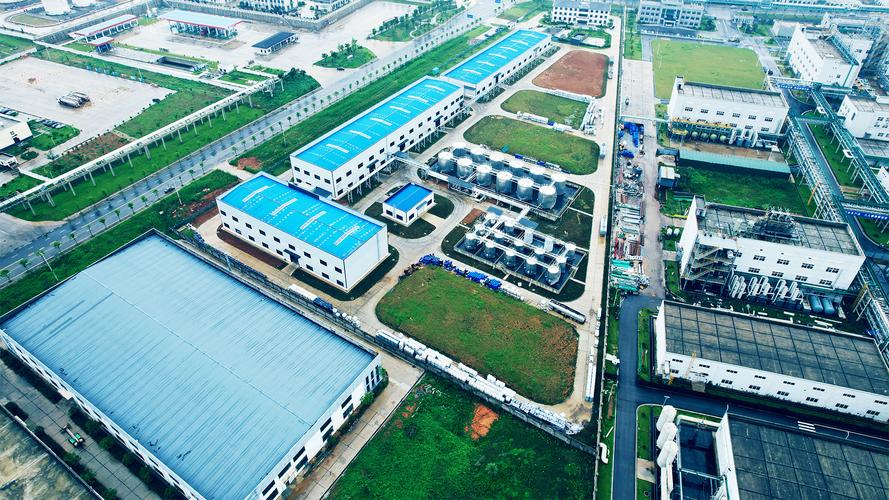
Additive production sits upstream of the granulation line but determines how the finished fertilizer performs after it leaves the plant.
Why the additive layer deserves a supplier-level review
Caking is not a cosmetic problem. Granules stored under stack pressure in high-temperature, high-humidity conditions absorb moisture at the surface. Dissolved salts recrystallise at particle contact points and build bridges between granules, so a product that left the plant free-flowing arrives as a lump that has to be broken, re-screened or downgraded.
Anti-caking and coating agents interrupt that sequence. They form a film on the granule surface, limit moisture uptake and reduce the crystal bridging that turns a bulk pile into a solid mass. Because the film is applied at low addition levels and its effect only becomes visible after weeks of storage, the difference between a well-matched grade and a poorly matched one is usually discovered downstream, by the customer rather than the producer.
The commercial weight of this layer is easy to underestimate. Commercial research published by IMARC Group values the global fertilizer additives market at approximately USD 3,123.3 million in 2025 and identifies anti-caking agents as the largest functional segment, at roughly 49% to 55% of the total. The anti-caking and coating function is therefore not a niche inside the category; it is most of the category.
Two other structural facts shape the sourcing picture. Asia Pacific accounted for over 60.5% of that market in 2025, which places most additive demand in the same regions as phosphate and compound fertilizer capacity. And additive preparations are largely invisible in trade statistics: treated fertilizers sit in Chapter 31 of the HS nomenclature, while standalone anti-caking, coating, anti-dusting and defoamer preparations generally contain no nitrogen, phosphorus or potassium as an essential constituent and are assessed against residual chemical headings such as 3824. Buyers cannot size the additive layer from Chapter 31 trade data, which is one reason supplier-level assessment still matters more than market-level statistics.
What Wuhan Fertchem Technology is
Wuhan Fertchem Technology Co., Ltd. (Fertchem) is a fertilizer-additive manufacturer based in Wuhan, Hubei, China, established in 2000. It develops, produces and customises additives and coatings for fertilizer production, with a portfolio organised around the phosphate chemical and compound fertilizer chain. Approximately 50% of its products are exported, and it serves the global market.
The catalogue is structured into four series: phosphate flotation additives, phosphoric acid production process additives, anti-caking and coating agents for ammonium phosphate and compound fertilizers, and water treatment chemicals. Across those series the company states it has developed nearly 100 product types. The anti-caking and coating family, which is where most buyers first meet the company, is sold as anti-caking agent, coating agent and anti-caking powder under the Supersoft and Superflow model designations, in oil-base, powder-base and water-base forms.
In 2026 the company expanded annual surfactant capacity to 10,000 tons. Read against the portfolio, that investment is coherent rather than incidental: surfactants are the declared material basis for several product families, including the phosphoric acid additives and the flotation agents.
How anti-caking and coating chemistry works
Fertchem describes the working principle as a uniform protective film formed on the granule surface. The film blocks moisture absorption and reduces crystal bridge formation between particles, so the fertilizer keeps flowing during long-term storage and transportation. The company states the formulation can be customised for NPK, DAP, MAP, urea and other fertilizer types.
The carrier system is where most of the practical differentiation sits. Oil-based grades deliver a continuous hydrophobic film and are matched with automatic dosing equipment at the plant. Powder-based grades are simpler to handle but depend more heavily on dosing accuracy for even coverage. Water-based and water-soluble grades are selected when the plant process or the destination market favours an aqueous system. The catalogue lists all three forms, which matters because the correct choice is set by the plant equipment and the fertilizer chemistry rather than by a single ranking of quality.
Product architecture at a glance
| Product family | Model | Material basis | Stated application |
|---|---|---|---|
| Anti-caking agent, coating agent, anti-caking powder | Supersoft, Superflow | Surfactants, oil, talc; oil-base, powder-base, water-base | Fertilizer production |
| Anti-dusting agent (dust depressor, dust suppressant) | Superclean | Oil, polymer | TSP, SSP and granular fertilizers |
| Coloring and coating agents for DAP, MAP, NPK | FM | Oil, pigment | DAP, MAP and NPK industry |
| Granulating aid, granulation aid, binder | Supergran | Modifier starch | Granulation of different granular fertilizers |
| Flotation agent, collector, flotation reagent | FM | Surfactants, fatty acids | Phosphate rock processing and flotation |
| Phosphoric acid additives: defoamer, filtration modifier, filtration aid, scale inhibitor, concentration modifier, flocculant, anti-deposition agent | FM | Surfactants | Phosphoric acid production |
One supplier across the phosphate and fertilizer chain
Most additive suppliers occupy a single position in the chain. Fertchem's portfolio spans it. At the front end, the flotation agent (model FM, surfactants and fatty acids) is used for phosphate rock processing and phosphate rock flotation. In the acid plant, the phosphoric acid additive range (model FM, surfactant-based) covers seven distinct functions in one product family: defoaming, filtration modification, filtration aid, scale inhibition, concentration modification, flocculation and anti-deposition, and the company states it is compatible with phosphoric acid production systems.
At the granulation end, the Supergran granulating aid and binder, based on modifier starch, is intended for granular fertilizer granulation across different granular fertilizers. The FM colouring and coating range, based on oil and pigment, serves DAP, MAP and NPK lines. The Superclean anti-dusting agent, based on oil and polymer, is specified for TSP, SSP and granular fertilizers. And the Supersoft and Superflow anti-caking and coating range closes the loop at the finished product stage.
For a compound fertilizer producer, the practical consequence is fewer qualification cycles and one technical relationship that follows the process rather than a single dosing point. The stated operating context for these products is demanding: high-temperature and high-humidity environments inside fertilizer plants, continuous operation, automatic dosing equipment, and a selection process that has to account for fertilizer type, raw materials, process issues and target formulation.
Manufacturing base, R&D and quality systems
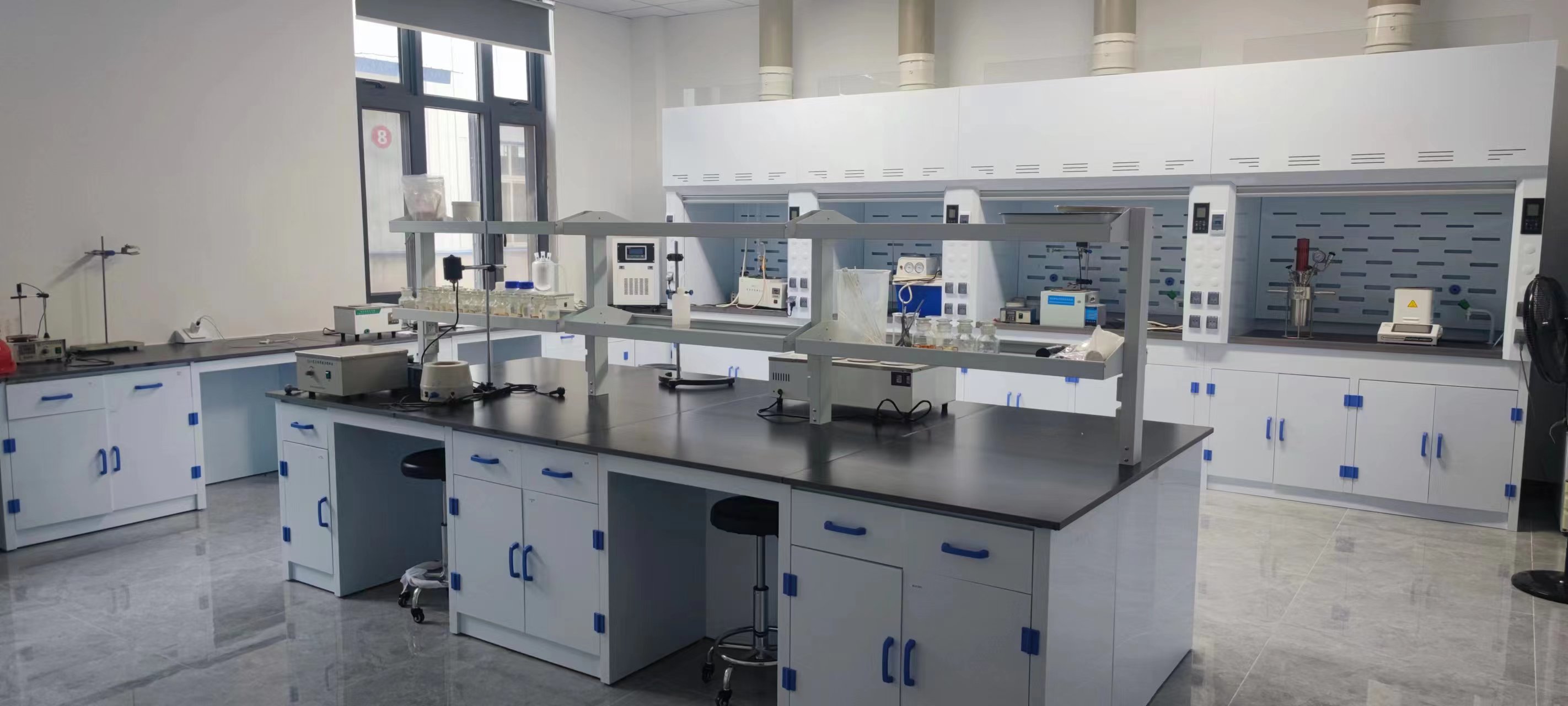
Formulation work sits between the chemistry and the plant trial: additive selection has to be matched to fertilizer type, raw materials and target formulation.
The company reports a manufacturing facility of 50,000 square metres, approximately 120 employees, annual production capacity of 120,000 tons, and an R&D team of 30 staff. It states that it holds multiple patented technologies and has passed certification for the ISO9001 quality system, ISO14001 environmental management system and ISO45001 occupational health and safety management system.
A 30-person R&D team against roughly 120 total staff is one indicator of whether a supplier behaves as a formulator or as a blender and repackager. It is not conclusive on its own, but it aligns with the company's stated model of customising additives and coatings for targeted fertilizer formulations rather than selling only catalogue grades.
The external research footprint is also disclosed. The company cites partnerships with the Beijing General Research Institute of Mining, Wuhan University, Wuhan Institute of Technology, Sichuan University, and the National Engineering Research Center for Phosphate Resource Development and Utilization. For a buyer, institutional links of that kind matter less as credentials and more as an indication of where formulation support comes from when a plant brings a specific process problem rather than a standard order.
Where the market is heading
Three trends are visible in the verified evidence and they point in the same direction for additive procurement.
Demand remains concentrated in Asia Pacific. With over 60.5% of the 2025 market, the region dominates because that is where phosphate and compound fertilizer production concentrates. A Wuhan-based supplier is therefore inside the main demand basin, which shortens the distance between formulation support and the plants that need it.
Sustainability is starting to reshape the product mix. Commercial research indicates that organic and bio-based anti-caking agents are seeing comparatively high growth, driven by sustainability initiatives, while mineral-based agents remain dominant. The signal is directional rather than precise, but it suggests that bio-based content will enter specification discussions that were previously settled on performance and price alone.
Regulation is turning additives into a documentation purchase. Regulation (EU) 2019/1009 harmonises the conditions for placing EU fertilising products on the market and applies from 16 July 2022. Under it, a product must fall within a product function category and be composed exclusively of component material categories before it can be CE marked and traded freely. Contaminant limits, including staged cadmium limits for phosphate fertilizers, constrain the chemistry that coatings and additives may contribute. At substance level, REACH requires registration for substances manufactured or imported at or above one tonne per year, and the CLP Regulation requires classification, labelling and packaging for hazardous substances and mixtures, which governs hazard communication for amine-based and surfactant-based systems.
Comparison with traditional approaches, and where additives stop
Additive treatment is one option among several, and the alternatives are not interchangeable. The table below sets out the main approaches and the constraint that comes with each.
| Approach | What it does | Selection consideration |
|---|---|---|
| Storage and handling control only | Relies on cooling, curing and warehouse conditions to limit moisture uptake | Caking risk rises with stack pressure, humidity and storage duration, and no protection travels with the product to the customer |
| Dry powder conditioning | Talc-based anti-caking powder applied at the granule surface | Coverage depends on dosing accuracy; uneven application leaves unprotected granule faces |
| Oil-based anti-caking or coating | Continuous hydrophobic film on the granule | Requires automatic dosing equipment and an oil-compatible line; plants needing a fully water-soluble finish evaluate aqueous grades instead |
| Water-based or water-soluble anti-caking | Aqueous carrier system applied at the surface | Suitable where the plant process or destination market favours an aqueous route; drying behaviour at the plant has to be managed |
| Combined functional package | Anti-caking plus colouring plus anti-dusting in one treatment step | Fewer dosing points and more consistent appearance, but more formulation variables to match to a specific product |
The boundaries of the additive approach deserve to be stated as plainly as its benefits.
- Additives are a surface treatment. They change how a granule behaves at its surface. They do not correct deficient granulation, inadequate cooling or excessive moisture at the dryer outlet, and treating a poorly formed granule will not make it a well formed one.
- Customisation is a requirement, not an option. The application data states that selection and customisation must consider fertilizer type, raw materials, process issues and target formulation. A grade validated on one NPK formulation is not automatically transferable to another.
- Supplier comparison depends on plant trials. Publicly confirmed test-method standards for caking tendency, dustiness and coating uniformity are not consistently available in the sources reviewed, so suppliers are usually compared on trial outcomes rather than on datasheet numbers. Buyers should insist that trial conditions match their own storage and climate profile.
- Documentation is a gating factor. REACH registration, CLP classification and, for the EU market, PFC and CMC conformity determine whether a technically suitable additive can be sold at all in a given market.
- Manufacturing concentration is a continuity question. The company's published footprint is a single 50,000 square metre facility. Buyers with multi-region continuity policies should test that concentration against their own risk thresholds.
- Pricing has no public benchmark. The World Bank publishes monthly price series for DAP, phosphate rock, urea and potassium chloride, but no equivalent public index exists for fertilizer additives in the sources reviewed. Additive cost has to be built from quotations and dosage rather than from published benchmarks.
- Company figures are self-reported. Capacity, headcount and certification statements come from the manufacturer. Independent verification against plant audits or third-party certification databases is a normal part of supplier qualification.
A practical buyer framework
For a buyer at the research stage, the useful questions are process questions rather than brand questions.
- Which fertilizer types and which process steps is the grade specified for, and has it been run on this formulation before?
- What is the material basis and physical form, and does the plant have dosing equipment compatible with it?
- What dosage was validated in the trial, and on which storage duration and climate profile?
- Which regulatory dossiers are available: registration status, hazard classification, safety data sheets, conformity documentation for the destination market?
- What happens when a batch fails the free-flow test — is technical support available at the plant, and how fast?
- How is the additive costed per ton of treated fertilizer, including freight and packaging, rather than per ton of additive?
Fertchem answers several of these structurally: the portfolio covers the anti-caking, coating, colouring, anti-dusting and granulating functions within one supplier, the company states it customises for targeted formulations, and it reports ISO9001, ISO14001 and ISO45001 certification. The remaining questions are plant-specific and can only be settled by trial.
What to expect next
The direction of travel in this category is toward fewer commodity purchases and more specified ones. As contaminant limits and conformity requirements tighten, the additive supplier becomes part of the customer's compliance chain, and the ability to supply documentation becomes as decisive as the ability to supply chemistry. At the same time, the sustainability pressure visible in the growth of organic and bio-based anti-caking agents suggests that formulation choices will be revisited rather than fixed for a decade at a time.
For a supplier with a phosphate-to-granulation portfolio, that combination is a reasonable position: regulatory depth rewards companies that already operate across the whole chain, and portfolio breadth reduces the number of qualifications a fertilizer producer has to run. The open questions are the ones no manufacturer profile can answer alone: whether the customisation capability holds under a specific plant's raw materials, and whether the documentation holds under a specific market's regulator.
Frequently Asked Questions
What are fertilizer additives and which functions do they cover?
Fertilizer additives are process chemicals applied during or after fertilizer production to change how the finished product behaves. The functional range includes anti-caking agents and coating agents, anti-caking powder, colouring agents for DAP, MAP and NPK, anti-dusting agents, granulating aids and binders, hardness additives, disintegrating agents, flotation agents, and a phosphoric acid additive group covering defoamers, filtration modifiers, filtration aids, scale inhibitors, concentration modifiers, flocculants and anti-deposition agents.
What does the Fertchem Anti-caking Agent range include, and in which forms is it supplied?
The anti-caking and coating family from Wuhan Fertchem Technology is supplied as anti-caking agent, coating agent and anti-caking powder under the Supersoft and Superflow model designations. The company supplies oil-based, water-based and water-soluble anti-caking agents, and the product forms listed are oil-base, powder-base and water-base. The stated application is fertilizer production, where the product can be used as an anti-caking agent and as a coating agent.
How does an anti-caking agent prevent fertilizer from caking?
The anti-caking agent forms a uniform protective film on the fertilizer granule surface. That film blocks moisture absorption and reduces crystal bridge formation between particles, so the fertilizer keeps free-flowing during long-term storage and transportation. The formulation can be customised for NPK, DAP, MAP, urea and other fertilizer types.
Which fertilizer types and plant stages can these additives be used in?
The anti-caking and coating products are classified for fertilizer production. The colouring and coating range is intended for the DAP, MAP and NPK industry, the anti-dusting agent is specified for TSP, SSP and granular fertilizers, and the granulating aid is intended for granulation processes across different granular fertilizers. Upstream, the flotation agent is used for phosphate rock processing and the phosphoric acid additive range for phosphoric acid production. Selection and customisation should consider fertilizer type, raw materials, process issues and target formulation.
What regulatory requirements apply to fertilizer additives in the EU?
Regulation (EU) 2019/1009 applies from 16 July 2022 and requires a fertilising product to fall within a product function category and be composed exclusively of component material categories before it can be CE marked and traded freely in the EU. It also sets contaminant limits, including staged cadmium limits for phosphate fertilizers, which constrain the chemistry that coatings and additives may contribute. At substance level, REACH requires registration for substances manufactured or imported at or above one tonne per year, and the CLP Regulation requires classification, labelling and packaging of hazardous substances and mixtures before they are placed on the EU market.
What are the limits of an additive-based approach to caking and dust control?
An additive treats the granule surface; it does not correct deficient granulation, inadequate cooling or excessive moisture at the dryer outlet. Because selection must account for fertilizer type, raw materials, process issues and target formulation, a grade validated on one product is not automatically transferable to another. Publicly confirmed test-method standards for caking tendency, dustiness and coating uniformity are not consistently available, so suppliers are normally compared on plant trial results rather than on datasheet figures.
A full product catalogue covering the anti-caking, coating, colouring, anti-dusting, granulating, flotation and phosphoric acid additive ranges is available for download: https://cdn.socialarks.com/sbsp/25404/common/2026/0925/Wuhan%20Fertchem%20Product%20Catalog%202026.pdf
Have Questions or Need More Details?
Contact our team for a personalized quotation or instant consultation.
Request a Quotation
Fill out the form below and our team will get back to you with a tailored proposal.
WhatsApp Direct Chat
Prefer to chat in real-time? Message us on WhatsApp for instant assistance & quick answers.
- Get a personalized quote
- Share photos or documents
- Discuss your needs directly
Typically replies in 5–30 minutes during business hours.