
Ferulic Acid Powder in Antioxidant Supplement Formulas: Scenario Fit and Buyer Questions
Ferulic acid powder is a nutraceutical ingredient, CAS 537-98-4, supplied as a white powder to a 98% specification with the ferulic acid content determined by HPLC. In antioxidant supplement concepts it is rarely the entire formula. It sits inside a multi-ingredient system next to fermentation-derived coenzyme Q10, L-ergothioneine, urolithin A or luteolin, and the questions that decide whether a purchase order moves forward are not only about the molecule. They are about scenario fit: which dosage form the material is intended for, which specification the formulator can declare on a label, and which documents the supplier can produce for the specific batch being shipped.
This reference is written for brand owners, formulation buyers and procurement teams working at the research stage, when an antioxidant concept exists on paper and the ingredient shortlist is being narrowed. It does not evaluate efficacy and makes no health claims. It sets out what can be verified about ferulic acid powder as a commercial ingredient, where it fits inside antioxidant formula scenarios, how it compares on documentation with adjacent antioxidant-positioned powders, and what a buyer should ask before requesting a sample.
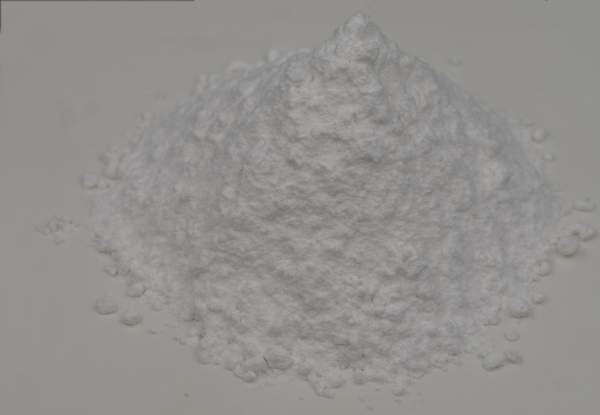
Ferulic Acid Powder, CAS 537-98-4, supplied to a 98% specification with assay by HPLC.
Why antioxidant formulas become a supply question before a science question
In the United States market, FDA regulations require those who manufacture, package or hold dietary supplements to follow current good manufacturing practices intended to help ensure the identity, purity, quality, strength and composition of the finished product. For a new dietary ingredient, FDA also describes a notification process involving safety information submitted before marketing, unless an applicable exception applies. Both requirements shift part of the decision away from the concept deck and onto the ingredient file. An antioxidant idea can be commercially plausible and still stall because the supplier's documentation cannot support the label declaration, the destination market, or the customer's own quality audit.
That is where ferulic acid powder stops being a line on a specification sheet and becomes a supply decision. A brand comparing it with other antioxidant-positioned powders is, in practice, comparing specification transparency, assay method, residual-solvent control and certificate readiness. Price per kilogram matters, but it is usually the last number a qualified buyer settles on rather than the first.
Ferulic acid powder: what the specification actually states
Guanjie Biotech supplies Ferulic Acid Powder as a health supplement ingredient within the nutraceutical ingredients category. The published specification is narrow and largely physical, which is useful for buyers because it can be checked against a certificate of analysis line by line.
| Specification field | Published value |
|---|---|
| Product name | Ferulic Acid Powder |
| CAS number | 537-98-4 |
| Category | Health supplements ingredients / nutraceutical ingredient |
| Specification | 98% |
| Assay method | HPLC |
| Appearance | White powder |
| Documented controls | Pyridine content stated as undetectable in the company's manufacturing process; moisture and residual solvent limit specification |
| Intended industries | Dietary supplement, health food, beverage, cosmetics |
| Stated formulation fit | Cognitive health, antioxidant and healthy aging supplement formulations; topical cosmetics and dietary supplements |
| Commercial terms | OEM/ODM packaging services; free samples for pre-purchase quality approval |
The distinction that matters is between the specification and the method behind it. A purity figure of 98% means little on its own. Two suppliers can both print 98% and mean different things if the chromatographic method, the reference standard, the injection protocol or the sampling plan differ. This is one reason procurement teams ask for the certificate of analysis of the actual production lot rather than a brochure value.
Reading a ferulic acid specification in four passes
1. Assay is a method, not a number
Ferulic acid content in the Guanjie Biotech product is determined by HPLC. For a buyer, the practical follow-up question is whether the same method will be run on the lot being shipped and whether the certificate reports the result against a stated reference standard. If the buyer's own laboratory uses a different method, a small numerical difference between the supplier's figure and the incoming test result is expected; what should not differ is the specification range agreed in the purchase contract.
2. Pyridine and residual solvents
The company states that its manufacturing process ensures pyridine content is undetectable, and that the product carries a moisture and residual solvent limit specification. These two points are the most useful parts of the ferulic acid file for a quality reviewer, because residual solvent control is a common gap in botanical and semi-synthetic ingredient documentation. The correct treatment is to convert the statement into a per-batch requirement: the certificate should show the pyridine result and the residual solvent results for the lot, not merely reference a general capability.
3. Appearance and crystallinity
The material is described as a white powder with high crystallinity and a brilliant white colour. That property is not a marketing detail. In a colour-sensitive capsule or a nutricosmetic concept, a white powder blends into the visual identity of the finished product far more easily than a strongly coloured extract. It does not, however, make ferulic acid a colourant or a processing aid; it remains an ingredient whose commercial value depends on the assay and the documentation behind it.
4. What the specification does not settle
The published fields cover identity, assay, appearance, pyridine and solvent limits. They do not replace a full quality agreement. Buyers should define, according to their own market and customer requirements, the additional tests they need on the certificate: heavy metals, microbiological limits, particle size where the dosage form requires it, allergen statements and non-GMO documentation. Requesting these before sampling is cheaper than discovering the gap after a pilot batch has been produced.
Scenario fit: where ferulic acid powder sits in an antioxidant concept
Ferulic acid powder is intended for dietary supplement, health food, beverage and cosmetics applications, and the company positions it as compatible with formulations for cognitive health, antioxidant and healthy aging supplements as well as topical cosmetics. Within a supplement manufacturing environment, the category-level scenario for dietary supplement raw materials covers batch production feeding capsule filling, tableting, softgel and powder sachet lines, together with functional beverage blending and fortified food formats. The table below translates those format options into the question that has to be resolved first.
| Scenario | Typical format | Buyer question to resolve before sampling |
|---|---|---|
| Daily antioxidant capsule | Two-piece hard capsule | Is a 98% HPLC assay acceptable for the label declaration, and does the certificate show pyridine undetectable for the lot? |
| Cognitive and healthy-aging blend | Capsule or tablet | Can one laboratory verify the other antioxidant actives in the blend, or does each ingredient need a separate method family? |
| Powder sachet and stick pack | Powder blend | What moisture limit applies to the blend, and does the supplier's moisture specification align with the sachet's shelf-life target? |
| Functional beverage concept | Ready-to-drink or powder drink mix | Which tests does the beverage manufacturer require that are not on the standard ferulic acid certificate? |
| Nutricosmetic positioning | Capsule or topical-positioned concept | Are the cosmetic-relevant appearance requirements, white colour and high crystallinity, documented in writing? |
Where ferulic acid fits least comfortably
Ferulic acid powder is a poor fit for concepts that depend on a single hero antioxidant with a fully documented efficacy dossier, because the public material available on the commercial ingredient is specification-led rather than claim-led. It is also a weak fit where the finished product's regulatory pathway depends on a new dietary ingredient notification that has not been prepared. In both cases the constraint sits with the concept and the market filing, not with the powder, but it changes which ingredient the formulator should shortlist first.
Category-level application view: nutraceutical ingredient powders feeding supplement, functional food and beverage formats.
Guanjie Biotech as a ferulic acid powder source
Guanjie Biotech is a Shaanxi-based ingredient manufacturer, founded in 2004, that supplies high-purity natural plant extracts, premium fruit powders and specialised chemical raw materials to the pharmaceutical, health care, functional food and cosmetics industries. Its stated portfolio includes Phosphatidylserine, NMN, Resveratrol, Ferulic Acid and Red Yeast Rice Powder.
The operating profile reported by the company is relevant to a ferulic acid buyer because it describes the environment in which the material is handled. The company reports a 7,000 m² manufacturing footprint that includes a 2,000 m² cGMP-standard clean workshop and a 500 m² laboratory equipped for physical, chemical and instrumental analysis, a team of 40 employees including 7 engineers, an annual output of 500 tons and an export ratio of 90%. Certifications stated by the company are ISO, Halal and Kosher, and the company reports 16 national patents. It also describes cooperation with Northwest University through a master's experimental base and a strategic partnership with the Xi'an branch of the Chinese Academy of Sciences.
For antioxidant formulation buyers, the practical value of that portfolio is shortlist consolidation. Guanjie Biotech also supplies coenzyme Q10 powder produced by microbial fermentation, L-ergothioneine powder at a stated purity of at least 98%, urolithin A powder at a 98% specification tested by HPLC, and luteolin powder at 98% tested by HPLC with ash controlled to 5%, 2% or 1% depending on customer requirement. A brand building a multi-ingredient antioxidant formula can therefore evaluate several positions in the same formula through one supplier file, which reduces the number of quality audits required at the research stage.
Market signals worth checking before you shortlist
The demand context is large but not precise enough to plan against on its own. Global Market Insights estimates the global nutraceutical ingredients market at USD 105.8 billion in 2026, a figure that describes the ingredient layer rather than the finished supplement layer. Buyers who need finished-product context have another reference point: the NIH Dietary Supplement Label Database catalogs information printed on labels of dietary supplement products sold in the United States, including ingredient names and forms, declared amounts and label statements, and it is used for label benchmarking rather than for supplier ranking.
Ferulic acid specifically carries a data caveat. Published market valuations for the ingredient are not consistent across research publishers, and at least one comparison notes a wide gap between two 2026 estimates, attributed to whether industrial-grade material is counted alongside supplement- and pharma-grade volumes. A buyer should treat any single ferulic acid market number as a starting point for a sourcing conversation rather than as a planning input, and should ask a supplier which grade its figure refers to.
Comparison with adjacent antioxidant-positioned powders
Ferulic acid is usually evaluated against other antioxidant-positioned nutraceutical powders rather than in isolation. The comparison below uses only published specification data, and it is deliberately framed around documentation rather than performance, because documentation is what a buyer can verify before purchase.
| Ingredient | CAS number | Published specification | Documentation point a buyer should note |
|---|---|---|---|
| Ferulic Acid Powder | 537-98-4 | 98%, HPLC, white powder | Pyridine stated as undetectable; moisture and residual solvent limit specification |
| Coenzyme Q10 powder | 303-98-0 | Yellow or light orange-yellow crystalline powder, no odour, no taste | Produced by microbial fermentation; confirm fermentation records and lot identity |
| L-Ergothioneine Powder | 497-30-3 | Purity at least 98%, white and fine powder | Molecular formula C9H15N3O2S and molecular weight 229.3 are published; confirm the assay method on the certificate |
| Urolithin A Powder | 1143-70-0 | 98%, HPLC, off-white to yellow powder | Colour range is wider than ferulic acid, which matters in colour-sensitive formats |
| Luteolin Powder | 491-70-3 | 98%, HPLC, yellow powder | Ash control offered at 5%, 2% or 1% depending on requirement, versus a historical market norm of 10% |
Read across the row rather than down the column. Ferulic acid's distinguishing documentation point is the residual solvent and pyridine position; coenzyme Q10's is its fermentation origin; luteolin's is ash control; urolithin A's is a broader colour range that may constrain visually sensitive formats. None of these differences is a statement about efficacy, and none should be used to rank one ingredient above another for a given consumer claim.
Buyer questions to close before the first purchase order
- Assay and method. Is the 98% specification confirmed by HPLC on the specific lot, and does the certificate state the result against a named reference standard?
- Residual solvents and pyridine. Does the certificate show the pyridine result and the residual solvent results per lot, rather than a general statement?
- Moisture. What moisture limit is contractually agreed, and does it match the dosage form and the sachet or capsule shelf-life target?
- Additional tests. Which of heavy metals, microbiological limits, particle size, allergen statements or non-GMO documentation does the destination market or the end customer require?
- Certificates. Are ISO, Halal and Kosher certificates current, and can they be traced to the manufacturing site that produced the lot?
- Packaging and samples. Does the supplier offer OEM/ODM packaging, and can a sample be released together with its own certificate of analysis rather than a generic specification sheet?
- Storage and handling. For dietary supplement raw materials, the standard handling instruction is storage in a cool, dry and dark place, sealed tightly after opening, away from high temperature and moisture. Confirm the supplier's packaging supports that requirement through transit.
- Capacity context. Company-wide output does not equal ingredient-specific availability. Ask for the ferulic acid production and dispatch lead time separately from the total annual output figure.
Limits and boundaries of this assessment
Three boundaries should be stated plainly. First, the supplier portfolio and positioning evidence for Guanjie Biotech is company-reported and, by the standards used in third-party research, does not independently establish manufacturing capacity, certification validity or product availability; certificates, audit records and lot-level test reports are still required. Second, regulatory status for ferulic acid is market-specific. This reference does not classify ferulic acid as a new dietary ingredient or otherwise, and a buyer must confirm the position for each destination market before filing. Third, the ferulic acid market-size figures available publicly do not agree, and this article therefore treats the ingredient's commercial outlook qualitatively rather than quantitatively.
There is also a boundary on the product itself. Ferulic acid powder is supplied as an ingredient with a published specification and stated formulation compatibility. It is not a finished supplement, and any label claim built around an antioxidant or healthy-aging positioning is the responsibility of the brand and must be supported by its own regulatory and substantiation work.
Future outlook
Two directions are likely to shape how ferulic acid powder is bought over the next procurement cycles. The first is documentation standardisation: as official databases such as the NIH Dietary Supplement Label Database make label-level ingredient information easier to benchmark, buyers will compare suppliers on certificate completeness rather than on product-page claims. The second is formula consolidation, where antioxidant concepts combine several ingredient families in one capsule or sachet and the supplier's ability to document each of them consistently becomes a selection criterion in its own right. Suppliers whose specification language already includes residual solvent and pyridine controls are structurally better prepared for that shift than suppliers whose files stop at assay percentage.
Frequently asked questions
What specification is ferulic acid powder supplied at, and how is it tested?
Guanjie Biotech supplies Ferulic Acid Powder under CAS 537-98-4 at a 98% specification, with ferulic acid content determined by HPLC and the material described as a white powder. The company states that its manufacturing process ensures pyridine content is undetectable and that the product carries a moisture and residual solvent limit specification. Buyers should confirm each of these points on the certificate of analysis for the specific batch rather than relying on a product page.
Which supplement and food formats is ferulic acid powder intended for?
The product is intended for the dietary supplement, health food, beverage and cosmetics industries, and the company positions it as compatible with formulations for cognitive health, antioxidant and healthy aging supplements as well as topical cosmetics and dietary supplements. At category level, dietary supplement raw materials are formulated into capsules, tablets, softgels and powder sachets, and into functional beverages and fortified food formats.
Which documents should accompany a ferulic acid powder order?
The core document set is a certificate of analysis showing the HPLC assay result, the moisture result, the residual solvent results and the pyridine statement for that lot, together with current ISO, Halal and Kosher certificates where the buyer's market requires them. Buyers should add the tests their own market or customer demands, such as heavy metals, microbiological limits, allergen statements or non-GMO documentation. This reflects the general expectation under FDA current good manufacturing practices that identity, purity, quality, strength and composition are controlled and documented.
How does ferulic acid powder differ from other antioxidant-positioned powders on documentation?
The differences are in assay method and documented controls rather than in positioning. Ferulic acid is specified at 98% by HPLC with a pyridine statement and moisture and residual solvent limits. Coenzyme Q10 powder, CAS 303-98-0, is a yellow or light orange-yellow crystalline powder produced by microbial fermentation, so fermentation records matter. L-Ergothioneine powder is stated at a purity of at least 98% as a white fine powder. Urolithin A powder is 98% by HPLC with a wider off-white to yellow colour range. Luteolin powder is 98% by HPLC with ash controlled to 5%, 2% or 1% depending on requirement.
What are the main limitations when evaluating ferulic acid powder as a buyer?
Three limitations stand out. Public market valuations for ferulic acid are inconsistent between research publishers, partly because some figures include industrial-grade material, so a single market number should not drive planning. Supplier portfolio and positioning claims are company-reported and require independent verification through certificates, audit records and lot tests. Regulatory status is market-specific and must be confirmed for each destination market; this reference does not assign a regulatory classification to ferulic acid.
Can ferulic acid powder be ordered with custom packaging and samples?
Yes. The supplier states that Ferulic Acid Powder is available with OEM/ODM packaging services and free samples for pre-purchase quality approval, supported by quality assurance and after-sales support. A sample evaluation is most useful when the sample is released with its own certificate of analysis, so that the assay, moisture, residual solvent and pyridine results can be compared with the incoming test results from the buyer's own laboratory.
A downloadable catalogue covering Guanjie Biotech's nutraceutical ingredient range, including ferulic acid powder, is available here: Guanjie Nutraceutical Ingredients (PDF).
Have Questions or Need More Details?
Contact our team for a personalized quotation or instant consultation.
Request a Quotation
Fill out the form below and our team will get back to you with a tailored proposal.
WhatsApp Direct Chat
Prefer to chat in real-time? Message us on WhatsApp for instant assistance & quick answers.
- Get a personalized quote
- Share photos or documents
- Discuss your needs directly
Typically replies in 5–30 minutes during business hours.