
Fiber-Grade TiO₂ Shortlist: SA-50, SA-60, and SA-80 by Fiber Type
A grade-by-grade reference for PET whitening, viscose and acrylic matting, and nylon matting — plus the supplier conditions that decide whether a shortlist can actually be executed.
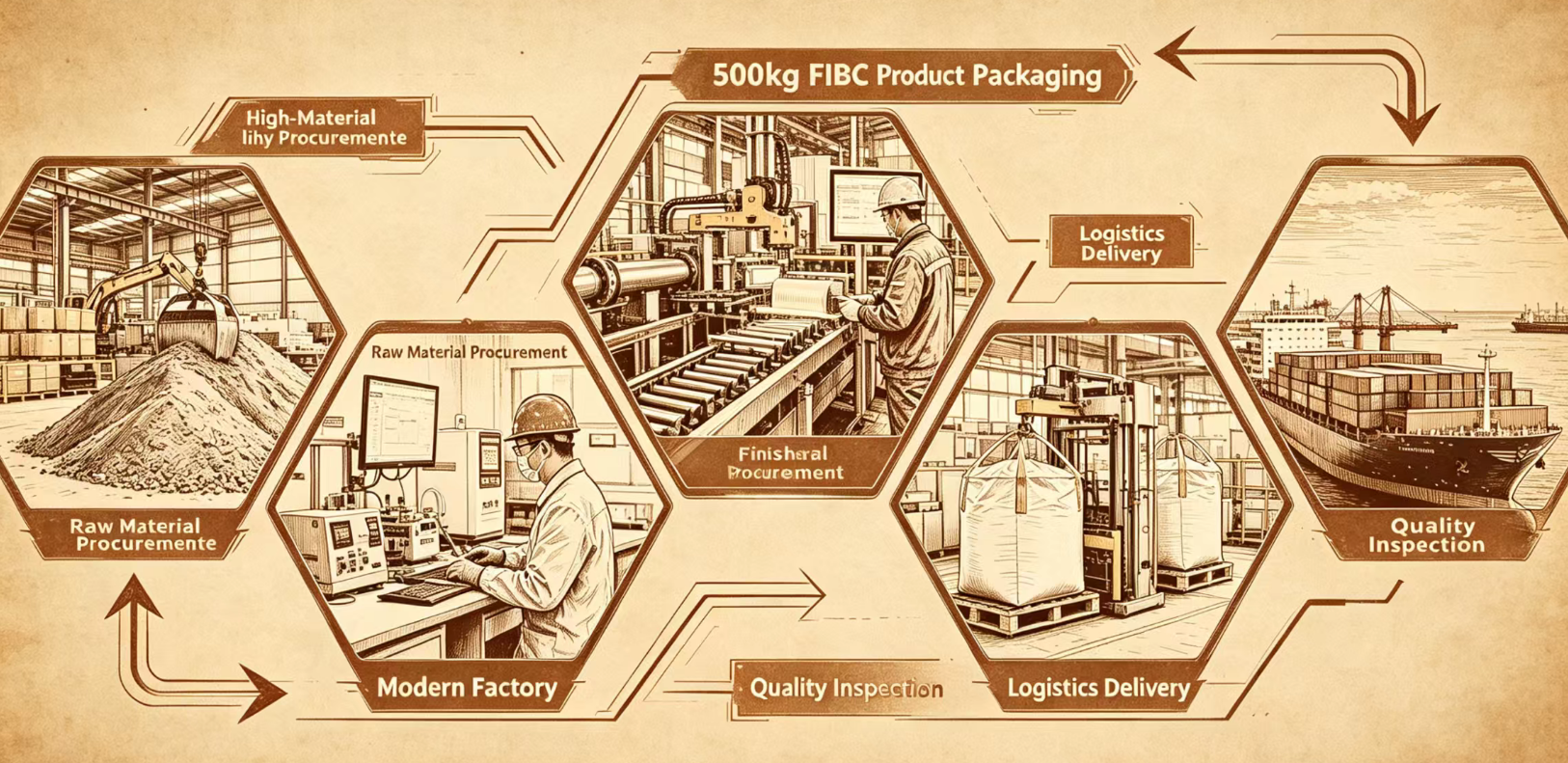
Fiber-grade TiO₂ production flow: feedstock handling, surface treatment, and pre-shipment testing before sealed packing.
Fiber-grade titanium dioxide: what the market is actually asking for
Fiber-grade titanium dioxide (TiO₂) is an anatase pigment added to synthetic fibers — polyester (PET), viscose, acrylic, and polyamide (nylon) — to control whiteness and surface luster before or during spinning. It is a functional input rather than a decorative one: it influences how a fiber reads under light and how consistently a spinning line runs.
Demand is expanding. The global fiber-grade titanium dioxide market was valued at USD 1.46 billion in 2024 and is projected to reach USD 1.94 billion by 2032, according to Intel Market Research. Polyester fiber accounts for more than 60% of all fiber-grade TiO₂ applications, the same source reports. At the supply end, China's total titanium dioxide exports reached a record 1.9017 million tons in 2024, a 15.84% year-on-year increase, according to China Customs Statistics as reported by Echemi.
Volume growth, however, does not make grade selection simpler. PET, viscose, acrylic, and nylon are spun through different chemistries and different process environments, and a grade optimized for one fiber is not automatically suitable for another. This shortlist addresses that gap directly: three anatase fiber grades — SA-50, SA-60, and SA-80 — matched to the fiber types they were specified for, followed by the supplier-side conditions that determine whether a chosen grade can be delivered at scale.
Why fiber type, not price alone, decides the grade
Almost every fiber-grade TiO₂ in commercial use is anatase rather than rutile, and the reason is mechanical rather than optical. Anatase has a Mohs hardness of 5.5–6.0, compared with 6.0–7.0 for rutile, and the softer crystal reduces wear on spinning nozzles and melt-filtration hardware during continuous production, according to a technical review published by ETIO2. On a line running around the clock, that difference in abrasiveness shows up as maintenance frequency and hardware life.
Particle engineering matters as much as crystal form. For optimal delustering in polyester staple fiber, fiber-grade TiO₂ typically requires a particle size of 0.2–0.3 μm, according to industry guidance published by Aanya Enterprise. Pigment requirements for both anatase and rutile types are internationally standardized under ISO 591, which gives buyers a shared vocabulary for specification discussions, though the standard does not by itself define fiber-specific performance.
The fiber process sets the remaining requirements. In PET, TiO₂ is dispersed into the polymerization or spinning system alongside ethylene glycol, so glycol compatibility and dispersion speed directly affect filter cycles and spinneret pressure. In viscose and acrylic, the pigment passes through wet-spinning chemistry, where aqueous stability matters more than glycol compatibility. In nylon, the fiber is melt-spun and matting — not optical whitening — is usually the primary objective, so the acceptable color window is wider and process compatibility becomes the limiting factor.
A single shortlist therefore has to cover three different sets of constraints. The three grades below do so by separating whitening duties from matting duties, and by fiber family.
The fiber-grade TiO₂ shortlist at a glance
| Grade | Crystal form | TiO₂ content | Whiteness (L) | Hue (b) | Primary fiber application |
|---|---|---|---|---|---|
| SA-50 | Anatase | ≥98.0% | 96.7–98.2 | ≤0.0 | PET fiber whitening |
| SA-60 | Anatase | ≥97.0% | ≥96.5 | ≤0.5 | Viscose and acrylic fiber matting |
| SA-80 | Anatase | ≥95.0% | 92.0–97.0 | ≤3 | Nylon matting |
Read the table as a filter rather than a ranking. The three grades address different jobs, and the lower TiO₂ content of SA-80 is not a quality downgrade but a different specification point for a different fiber and a different optical target.
SA-50: the anatase grade for PET fiber whitening
SA-50 is specified at TiO₂ ≥98.0%, with a whiteness L value of 96.7–98.2 and a hue b value of ≤0.0. The b value is the operative number for buyers. A value at or below zero indicates a pigment that does not push the fiber toward yellow — which matters in white, pale, and bright-color textile programs where any yellow cast has to be corrected downstream.
The grade is positioned for polyester fiber whitening, including polyester filament whitening and whitening duties in polyester staple production. Dispersion behavior sits at the center of that use. According to supplier comparison data, SA-50 uses a polyester-specific organic coating produced with refined dry modification technology, giving dual compatibility with ethylene glycol and polyester resin, and it disperses rapidly without the pre-infiltration step that some inorganic-coated grades require. The same comparison describes the grade as low in iron and low in conductivity — attributes that matter where trace metal contamination or ionic residue would disturb polymerization or spinning stability.
The practical boundary is scope. SA-50 is a whitening grade. Where the target is a deep matte or a deliberately dull surface rather than optical white, the requirement is a matting specification — SA-60 or SA-80 — rather than a higher loading of a whitening grade.
SA-60: the anatase grade for viscose and acrylic fiber matting
SA-60 is specified at TiO₂ ≥97.0%, with L ≥96.5 and b ≤0.5. It is intended for matting in viscose and acrylic fibers, where the objective is to reduce surface luster and produce a dull, uniform appearance without introducing a visible yellow tone.
Viscose is a regenerated cellulose fiber produced through wet spinning, and acrylic fiber is produced through wet or dry spinning routes. In both cases the pigment meets an aqueous, chemically active process environment rather than the melt-phase environment of polyester. That is why the color tolerances in the SA-60 specification — a minimum L of 96.5 and a b ceiling of 0.5 — are the relevant control points for matting where the fiber still has to read as clean rather than warm.
The boundary for SA-60 follows from its purpose. Because the objective is reduced luster rather than maximum brightness, buyers specifying optical-white viscose or acrylic should confirm whether a whitening-oriented grade is required instead, and should validate the choice on the actual spinning line.
SA-80: the anatase grade for nylon matting
SA-80 is specified at TiO₂ ≥95.0%, with L 92.0–97.0 and b ≤3. It is intended for matting in polyamide (nylon) fibers, where the pigment controls luster under melt-spinning conditions and a wider color window is acceptable.
The broader tolerances in SA-80 are deliberate. In nylon matting applications, final shade is frequently set by the fiber's base tone and by downstream dyeing rather than by pigment whiteness alone, so a wider L range and a b ceiling of 3 remain workable provided the matting effect itself is consistent. The trade-off is explicit: SA-80 should not be substituted for SA-50 in a bright-white PET program, where a b value up to 3 would be read as a warm cast.
For nylon producers, the more relevant selection question is process compatibility — heat exposure during melt spinning and dispersion stability at the extrusion stage — rather than optical brightness. That is a trial-and-validation question rather than a data-sheet question, and it is where supplier-side technical support becomes part of the specification itself.
From shortlist to order: the execution factors that decide the outcome
Grade selection is only half of a fiber-grade TiO₂ decision. The other half is whether the selected grade can be supplied with the right customization, quality evidence, order flexibility, and delivery rhythm. These are the conditions a buyer should confirm before a shortlist becomes a purchase order.
- Customization: OEM and ODM customization capability on the fiber-grade line, which allows coatings, particle treatment, and packaging to be aligned with a specific spinning process rather than a generic specification.
- Pre-shipment testing: quality control includes 100% pre-shipment testing, and third-party inspection is supported as part of the acceptance criteria.
- Order flexibility: the minimum order quantity is 1 metric ton, which allows a trial or qualification batch to be run before committing to volume.
- Lead time: typical production lead time is 15–30 days.
- Capacity: monthly production capacity is 1,000 metric tons.
- Commercial terms: delivery terms are FOB or CIF; payment terms include T/T in advance, T/T 30 days, L/C at sight, and L/C at 30, 60, or 90 days.
- Handling and storage: supplier site measures include a vacuum closed feeding system to limit dust dispersion, warehouse humidity maintained below 65%, sealed packaging, and dust-proof masks and protective clothing for operators.
The entity behind these commitments is Orient International Holding Shanghai Foreign Trade Co., Ltd., a Shanghai-based state-owned foreign trade enterprise founded in 1988 and wholly owned by Orient International Group, with registered capital of over RMB 548 million and more than 150 staff. The company operates as a bulk chemical trading and supply entity for titanium dioxide and petrochemical raw materials, serving markets including Korea, Japan, the EU, North America, South America, Southeast Asia, the Middle East, and India. Its relevance to a fiber-grade shortlist is that MOQ, lead time, testing scope, monthly capacity, and payment terms are supply-chain commitments rather than product claims — and they are the variables that most often delay a fiber line after grade selection is already complete.

A typical fiber-grade TiO₂ procurement sequence: specification, sampling, pre-shipment testing, and shipment release.
How SA grades compare with traditional European inorganic-coated fiber grades
The established reference points in fiber-grade TiO₂ are European anatase grades such as Kronos 1071 and Venator LW-S100. According to supplier comparison data, both use a traditional silicon-aluminum inorganic double coating with general organic modification — a structure developed for stable anti-sedimentation performance on large-scale European production lines.
| Comparison dimension | Traditional European inorganic-coated grades | SA-series organic-coated grades (supplier comparison data) |
|---|---|---|
| Coating structure | Silicon-aluminum inorganic double coating with general organic modification | Polyester-specific organic coating with refined dry modification |
| Dispersion preparation | Longer pre-infiltration and heating before batching | Rapid dispersion without pre-infiltration |
| Glycol compatibility | General | Dual compatibility with ethylene glycol and polyester resin |
| Indicative price positioning | CIF Asia 21,000–23,500 RMB/MT | FOB domestic 16,800–18,200 RMB/MT, i.e. 18–25% lower |
| Boundary to verify | Long-run market data on European lines | Requires line-level validation; certification scope differs by grade and producer |
Two boundaries deserve the same weight as the differences. First, certification scope is grade- and producer-specific. Venator's HOMBITAN LW-S 100 became the first fiber anatase TiO₂ to secure ECO PASSPORT by OEKO-TEX® for the textile industry, as reported by Venator and Textile World in 2022. Buyers whose textile customers require ECO PASSPORT documentation should verify the certification status of the specific grade and producer under consideration rather than assuming equivalence across a shortlist.
Second, coating chemistry is not interchangeable by default. A grade with an organic coating formulated for glycol-phase polyester dispersion and a grade with an inorganic double coating built for anti-sedimentation behave differently in pre-treatment requirements and in exposure to elevated process temperatures. Any substitution — in either direction — should be qualified through a trial run on the actual spinning line before it is written into a specification.
Indicative price differences are also regional, currency-exposed, and time-sensitive. The figures above are supplier-provided comparison data for reference, not a quotation, and should be re-confirmed at the point of enquiry.
Market signals behind the shortlist
Three data points frame why fiber-grade grade selection is becoming a more structured purchase decision rather than a commodity swap.
First, the market is growing steadily rather than explosively — from USD 1.46 billion in 2024 toward a projected USD 1.94 billion by 2032 (Intel Market Research). Steady growth favors supply relationships that can hold specification consistency over several years, which is precisely what a grade shortlist is meant to support.
Second, polyester dominates application demand, accounting for more than 60% of fiber-grade TiO₂ use (Intel Market Research). That concentration explains why whitening grades such as SA-50 sit at the center of most purchasing programs, while viscose, acrylic, and nylon matting remain smaller but specification-sensitive niches.
Third, supply is concentrated at the upstream end. LB Group is cited as the world's largest TiO₂ producer with over 1,501 kilotons of annual capacity as of 2025, according to Fortune Business Insights. For fiber producers, upstream concentration reinforces the value of working through suppliers that can confirm grade-level specifications, testing evidence, and delivery commitments rather than relying on brand-level reputation alone.
Future outlook
Fiber-grade TiO₂ is unlikely to be displaced in the near term. Whitening and delustering in synthetic fibers still depend on a mineral pigment that can survive melt spinning and wet-spinning chemistry, and anatase remains the preferred crystal form for fiber grades because of its lower abrasiveness relative to rutile. The direction of change is specification granularity rather than substitution.
The most likely shift is that fiber producers will continue moving from "fiber-grade TiO₂" as a single line item toward fiber-specific grade designations carrying defined L and b windows, dispersion behavior, and testing evidence. That shift favors suppliers able to support grade-level documentation, customization, and consistent monthly output.
A second likely shift is certification visibility. As textile supply chains face broader traceability expectations, confirming certification scope at grade level — rather than at company level — will become a standard line in the supplier questionnaire.
FAQ
What is the minimum order quantity and typical lead time for fiber-grade TiO₂?
The minimum order quantity is 1 metric ton, and the typical production lead time is 15–30 days. The 1-metric-ton MOQ allows a fiber producer to run a qualification batch on its own spinning line before committing to production volume.
What quality checks are carried out before shipment?
Quality control includes 100% pre-shipment testing, and third-party inspection is supported as part of the acceptance criteria. Buyers can therefore arrange independent verification before shipment release rather than relying solely on supplier-issued data.
How much monthly capacity is available for repeat orders?
Monthly production capacity is 1,000 metric tons. For buyers planning multi-line or multi-month programs, that figure sets the practical ceiling for a single supplier at current capacity, and volume commitments are worth scheduling against it accordingly.
What payment and delivery terms are available?
Delivery terms are FOB or CIF. Payment terms include T/T in advance, T/T 30 days, L/C at sight, and L/C at 30, 60, or 90 days. Terms are confirmed case by case at the enquiry stage.
Can these grades be customized for a specific spinning process?
OEM and ODM customization is offered on the fiber-grade line, covering coating and treatment adjustments aligned to a specific process. Because customization changes dispersion and thermal behavior, a customized variant should be validated on the line before it replaces an existing specification.
How should fiber-grade TiO₂ be stored and handled at the plant?
Supplier site measures include sealed packaging, warehouse humidity maintained below 65%, a vacuum closed feeding system to limit dust dispersion, and dust-proof masks and protective clothing for operators. Powder dust inhalation and moisture-induced agglomeration are the two risks these measures address, and the same principles apply at the buyer's plant: keep packaging sealed, control humidity, and use closed feeding where practical.
Taking the shortlist forward
A fiber-grade TiO₂ shortlist is only useful if it survives contact with the production line. The sequence that tends to work is consistent: fix the fiber type and the optical target first, narrow to the grade whose L and b window matches that target, then confirm customization capability, pre-shipment testing, MOQ, lead time, and monthly capacity before any specification is written. Buyers who want the underlying specification sheets, packaging details, and supply terms in one document can download the company and product brochure here.