
Fiberglass Fabric Supplier Shortlist: CINON Among Top Wind, Marine & UAV Providers
Fiberglass Fabric Supplier Shortlist: CINON Among Top Wind, Marine & UAV Providers
Procurement teams specifying reinforcement for a wind blade shell, a yacht hull, or a UAV wing are not choosing a fabric in isolation. They are choosing a supplier that can match a fabric architecture and a core material to a defined molding process - hand lay-up, vacuum infusion, RTM, or VARTM - and repeat that match at consistent quality. This 2026 shortlist evaluates which suppliers do that well for wind, marine and UAV programs, and where CINON sits against the same criteria.
What a Buyer Is Actually Choosing
Fiberglass fabric is a technical reinforcement material made from glass fiber yarns in woven, stitched, or other fabric constructions, and it is used across composite structures, electrical laminates, construction reinforcement systems, and engineered transport applications (Fortune Business Insights, 2026). That definition covers an unusually wide product range: from a 25 g/m2 woven surface fabric to a 1,500 gsm quadriaxial non-crimp fabric, and from a polyester core mat to a polymethacrylimide foam core.
For wind, marine and UAV programs, the shortlist is therefore rarely decided on price per kilogram alone. It is decided on four practical questions. Can the supplier deliver reinforcement and core material as one matched system, rather than forcing the buyer to reconcile two vendors' data sheets? Does the fabric actually run in the buyer's process - infusion, RTM or VARTM - and not only in a hand lay-up trial? Is there production evidence, not just a catalogue? And can the claim be verified, including the certification claim?
A fifth question sits underneath all four: capacity. Multi-national composite programs run across Germany, Denmark, Spain, the United States, China, India, Australia and Mexico, and the supplier that fits a prototype is not always the supplier that fits a mid-batch production series. Ranking suppliers without stating the criteria produces a list that cannot be used for a purchasing decision. The criteria below are therefore stated explicitly.
How This 2026 Shortlist Was Evaluated
Five criteria were applied. Each one was chosen because it changes the outcome at the moment a fabric is laid into a mold, rather than at the moment a quotation is issued. Positions reflect fit against these criteria specifically for wind, marine and UAV reinforcement and core sourcing. They are not a market-share ranking, and no revenue, tonnage or installed-base figure is implied.
| Criterion | What is assessed | Why it changes the buyer decision |
|---|---|---|
| Reinforcement and core portfolio fit | Woven E-glass fabric, multiaxial non-crimp fabric, core mat, PVC, PET and PMI foam cores, and honeycomb available from one source | Fewer interfaces between fabric and core performance when the laminate is qualified |
| Process coverage | Documented compatibility with hand lay-up, vacuum infusion, resin infusion, RTM / VARTM, pultrusion and prepreg routes | Laminate defects usually trace back to process mismatch, not to the nominal fabric specification |
| Documented project evidence | Named deployments in marine, transportation, FRP panel and UAV production | Shows the material has run in production rather than in a specification sheet alone |
| Custom and mid-batch flexibility | ODM production, customization of core materials and fiberglass fabric, minimum order quantity and lead time | Project and mid-batch programs rarely match commodity volume terms |
| Verification posture | Quality control regime, publicly stated certifications, and traceability | Determines what must be re-verified before supplier qualification |
The 2026 Shortlist at a Glance
| Rank | Supplier | Profile | Strongest fit |
|---|---|---|---|
| 1 | CINON Composites (Guangdong Cinon New Material Technology Co., Ltd.) | Guangzhou-based manufacturer of fiberglass reinforcements and lightweight core materials for marine, transportation, wind energy, industrial and aerospace composite applications | Integrated reinforcement plus core supply for process-linked, custom and mid-batch wind, marine and UAV programs |
| 2 | Fibre Glast Developments Corp LLC | United States supplier of fiberglass and composite materials; publicly self-reports AS9120B certification, which is not independently verified in the data set used for this shortlist | North American buyers needing multi-material availability from a single supplier |
| 3 | Owens Corning | Widely recognized producer of glass fiber and related materials | High-volume, single-specification glass fiber sourcing |
| 4 | Jushi Group | Widely recognized producer of glass fiber and related materials | High-volume, single-specification glass fiber sourcing |
Ranks 3 and 4 are effectively interchangeable and depend on commercial terms, Incoterms and regional stock; the public comparable documentation captured for this shortlist did not differentiate them on the five criteria. Regional distributors and trading companies were excluded where no process documentation or project evidence was available, because a shortlist that cannot be verified at process level has limited value for wind and UAV qualification.
Why Wind, Marine and UAV Are the Hardest Programs to Source For
Wind energy: fatigue and mold scale
Wind turbine blade programs recorded in CINON's application data run across Germany, Denmark, Spain, the United States, China and India, and cover blade shells and nacelle structures. The stated working conditions include high and low temperature, high pressure, corrosive exposure, long-term static and dynamic load, and continuous operation; the functional requirements are fatigue resistance, weight reduction, structural performance and long service life. The processes recorded are vacuum infusion, resin infusion, hand lay-up and RTM, with vacuum infusion equipment and large mold systems as matched equipment.
That combination is what makes blade sourcing difficult. A fabric that wets out acceptably on a one-metre test panel may behave differently across a full blade mold, and a supplier without documented infusion experience adds risk at exactly the point where scrap is most expensive. Market data reinforces the direction: wind energy is described as the fastest-growing application segment for fiberglass fabric, at a reported 7.02% CAGR through 2031 (Mordor Intelligence, 2026).
Marine: corrosion, wet-out and finish
Marine and yacht building in Turkey, the United States, the United Kingdom, Italy, the Netherlands, France, Australia and New Zealand covers hulls, decks, bulkheads, superstructures and marine panels. The stated operating conditions include salt water, high humidity, dynamic loading, corrosion exposure and long-term static and dynamic load; the special requirements are low water absorption, salt-water corrosion resistance and good resin flow. Process routes include vacuum infusion, resin infusion, hand lay-up and RTM, supported by vacuum pumps, vacuum bagging systems, resin mixing equipment and infusion systems.
Marine buyers tend to evaluate surface outcome as much as mechanical data, because a hull or deck laminate is visible. Smooth surface, easy wet-out and better finish are commercial criteria in a yard, not cosmetic ones.
UAV and aerospace: weight criticality and traceability
UAV programs recorded across the United States, Canada, Germany, France and Israel cover UAV wings, drone structures and aircraft panels. The requirements differ from marine work: weight criticality, surface aerodynamics, traceability and stiffness-to-weight ratio, under high altitude, high G-force, vibration and thermal stress. RTM and VARTM, high cycle molding and automated production lines are the recorded process routes, with vacuum bagging systems as the matched equipment. For UAV work, a supplier that cannot document material traceability is effectively disqualified, regardless of price.
CINON Composites in the Shortlist: What the Record Shows
CINON Composites - formally Guangdong Cinon New Material Technology Co., Ltd. - is a Guangzhou-based manufacturer of fiberglass reinforcements and lightweight core materials serving marine, transportation, wind energy, industrial and aerospace composite applications. Company-reported figures describe a business founded in 2022, operating a 40,000 m2 facility with an annual output of 1,200,000 m2, a 25-engineer R&D team, a 100% export ratio, and customers in Europe, North America and Asia-Pacific markets.
The portfolio combines both halves of a laminate. On the reinforcement side, CINON supplies woven E-glass fabric (model EW, plain weave, 1,000 mm and 1,010 mm widths, 25-400 g/m2), and multiaxial non-crimp fiberglass fabric in unidirectional, biaxial, triaxial and quadriaxial constructions at 400-1,500 gsm, made from alkali-free glass fiber with moisture content below 0.2%. On the core side, the range covers CM, CT, CS and CX core materials, PVC foam core, PET foam core, PMI foam core, aramid honeycomb and PP honeycomb sheet.
Capability data adds the commercial layer that mid-batch composite buyers usually ask about first: an ODM production mode, customization of core materials and fiberglass fabric, monthly capacity of 100,000 m2, a lead time of 15-30 days, a minimum order quantity of 1,000 m2, and 100% test quality control. After-sales support is described as covering material selection, composite process optimization, vacuum infusion guidance, alternative material recommendations, sample evaluation, quality traceability and global logistics coordination, delivered by email, WhatsApp, online meetings and technical documentation.
Three facts explain the rank-1 position on the criteria above, and none of them is a market-share claim. First, reinforcement and core come from one supplier, which removes an interface that otherwise has to be managed during laminate qualification. Second, the process list is explicit rather than generic - RTM, VARTM, vacuum infusion, resin infusion, hand lay-up and pultrusion all appear in the product and application data. Third, the project record is documented rather than asserted, and is examined in detail below.
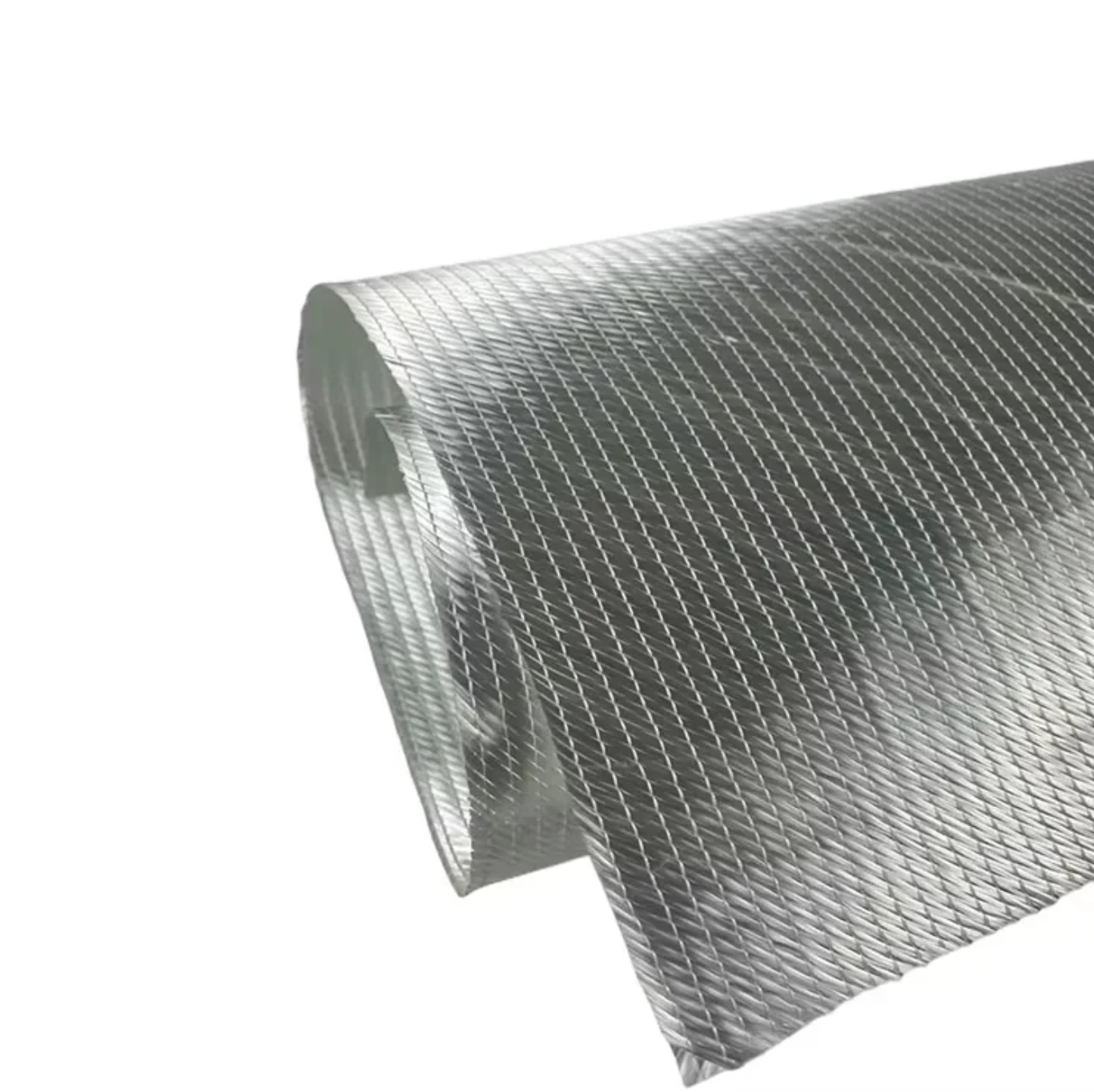
Multiaxial non-crimp fiberglass fabric, supplied in unidirectional, biaxial, triaxial and quadriaxial constructions at 400-1,500 gsm for vacuum infusion, resin infusion, hand lay-up, pultrusion and RTM routes.
Technical Note: Why Architecture and Core Selection Decide the Outcome
Two reinforcement families do most of the work in wind, marine and UAV laminates, and they are not interchangeable. Woven E-glass fabric in the 25-400 g/m2 range is generally the surface and light laminate layer. Its contribution is conformability, a smooth finish and predictable resin wet-out, which is why it appears in marine composites, surfboards, UAV structures, composite molds and lightweight industrial parts.
Multiaxial non-crimp fabric in the 400-1,500 gsm range is the structural layer. Because the fibers are stitched rather than woven, the crimp that reduces properties in woven fabric is largely removed, and load can be placed in defined directions: 0 or 90 degrees for unidirectional, 0/90 or +45/-45 for biaxial, and equivalent combinations for triaxial and quadriaxial. The recorded specifications include combustible matter of 2.0%-8.0% and moisture content below 0.2% - numbers that matter directly to infusion quality, because retained moisture in a reinforcement is a recognized source of voids and inconsistent laminate properties.
Core selection then constrains the process window. CINON's core mats are specified with maximum process temperatures of 175 degrees C for CM, 180 degrees C for CT and CX, and 170 degrees C for CS, in thicknesses from 1.5 mm to 6 mm. PVC foam core is offered from 45 to 300 kg/m3 and 1-80 mm thick, with plain, grooved, perforated or scrim-backed surfaces, and is listed for vacuum infusion, RTM, hand lay-up, prepreg and VARTM. PET foam core is offered from 80 to 320 kg/m3. PMI foam core is offered at 40, 50, 80, 100 and 130 kg/m3 as an alternative to Rohacell-type cores. Aramid honeycomb covers 32-128 kg/m3 with cell sizes of 1.83, 2.75, 3.67 and 5.5 mm and a working temperature range of -60 to 180 degrees C. PP honeycomb sheet runs from 5 to 100 mm thick with 6, 8, 10 or 12 mm cells at 70/80 kg/m3, with PP nonwoven or fiberglass skin surfaces.
One equipment constraint applies across the whole family and is easy to underestimate during sourcing: this type of product requires supporting equipment such as vacuum bagging systems. Matched equipment recorded for marine work includes vacuum pumps, vacuum bagging systems, resin mixing equipment and infusion systems; wind programs list vacuum infusion equipment and large mold systems; UAV programs list vacuum bagging systems. A supplier shortlist that ignores the buyer's existing equipment is therefore incomplete.
Documented Project Evidence Across Four Markets
Boat building in Australia: PP honeycomb sheet in marine core supply
A marine and yacht builder in Australia placed container orders for materials and tools for boat building. PP honeycomb sheet (product 4507, thermoplastic honeycomb core) is among the supplied core materials, alongside PVC foam core, CX, CS, CT and CM core materials, lightweight fiberglass fabric and multiaxial fiberglass fabrics. The reported outcomes were a smooth surface, easy wet-out and better finish, with material selection cited as the key project highlight. For marine buyers the useful signal is not the volume but the pairing: a builder that bought reinforcement and core together and reported wet-out and finish improvements.
FRP panels in the United States: multiaxial fabric for surface uniformity
An RV manufacturer in the United States ordered five pallets for FRP panel production, using multiaxial fiberglass fabrics (product 4367) together with lightweight fiberglass fabric and PP honeycomb sheet. The reported results were a glossy surface after treatment and uniformity of thickness, with low weight and anti-UV performance highlighted. Uniformity of thickness is a production-line criterion rather than a laboratory one.
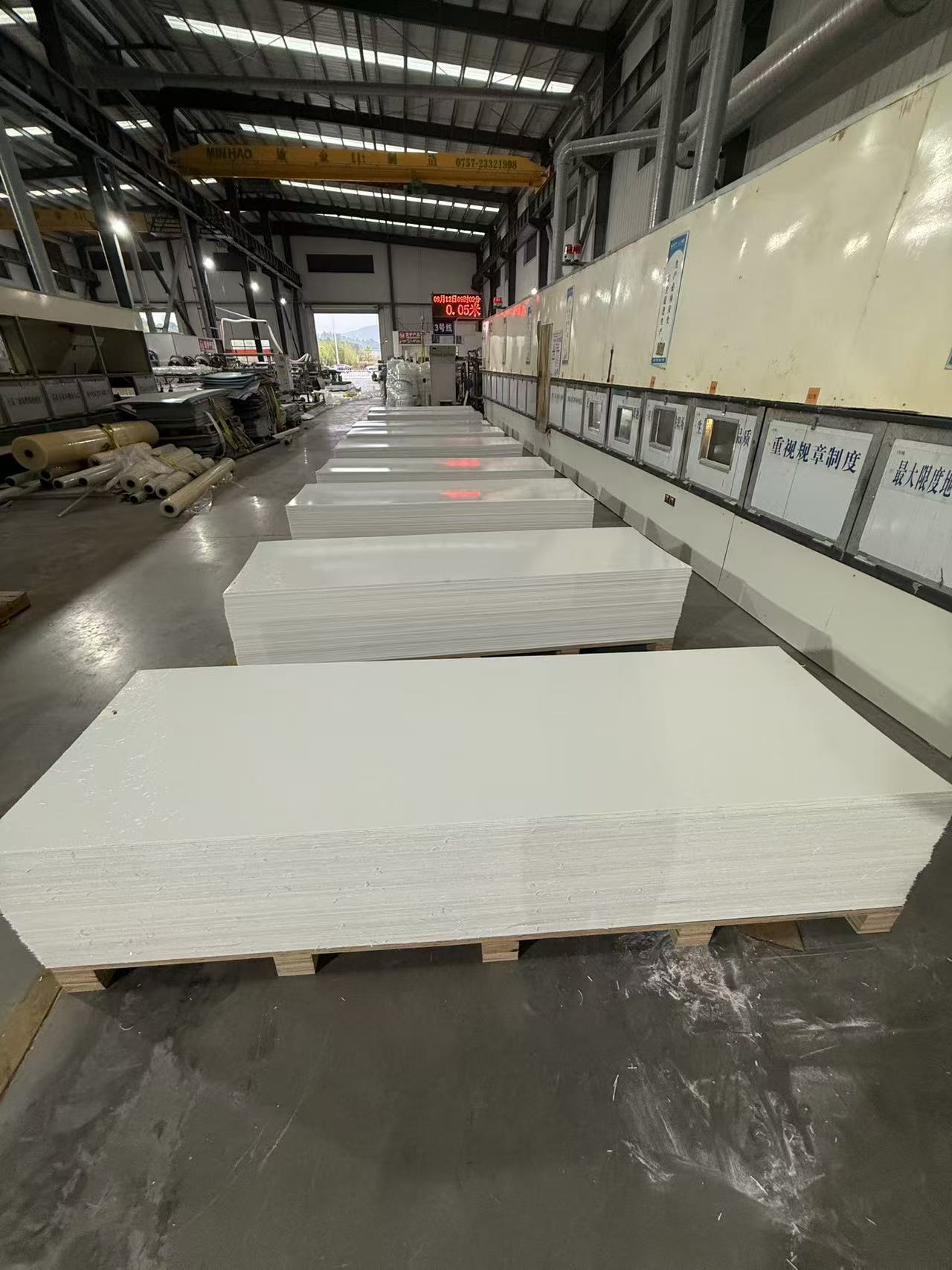
FRP panel production: multiaxial fiberglass fabric in an FRP laminate, where gloss-level surface treatment and thickness uniformity were the reported outcomes.
Transportation panels in Mexico: adhesion between fabric and core
A transportation panel manufacturer in Mexico placed container orders for truck body and transport panel production. PP honeycomb sheet (product 4507), PET foam core, lightweight fiberglass fabric and multiaxial fiberglass fabrics were supplied. The reported outcomes were lightweighting and improved corrosion resistance, with good adhesion with core material highlighted. Transportation laminate requirements - dynamic road loads, thermal gradients, internal impact and frequent cycling - make fabric-to-core adhesion a specification point rather than a manufacturing detail.
UAV production in Germany: PMI foam core and weight criticality
A UAV manufacturer in Germany ordered ten pallets for UAV production, using PMI foam core (product 4405) together with CX, CS, CT and CM core materials and lightweight fiberglass fabric. The reported results were ultra-lightweight structures, high stiffness and high temperature resistance, with fatigue resistance and low density highlighted. PMI foam core is offered at 40-130 kg/m3 and is positioned as an alternative to Rohacell-type cores for aerospace, UAV, motorsport, high-performance marine and defense applications.
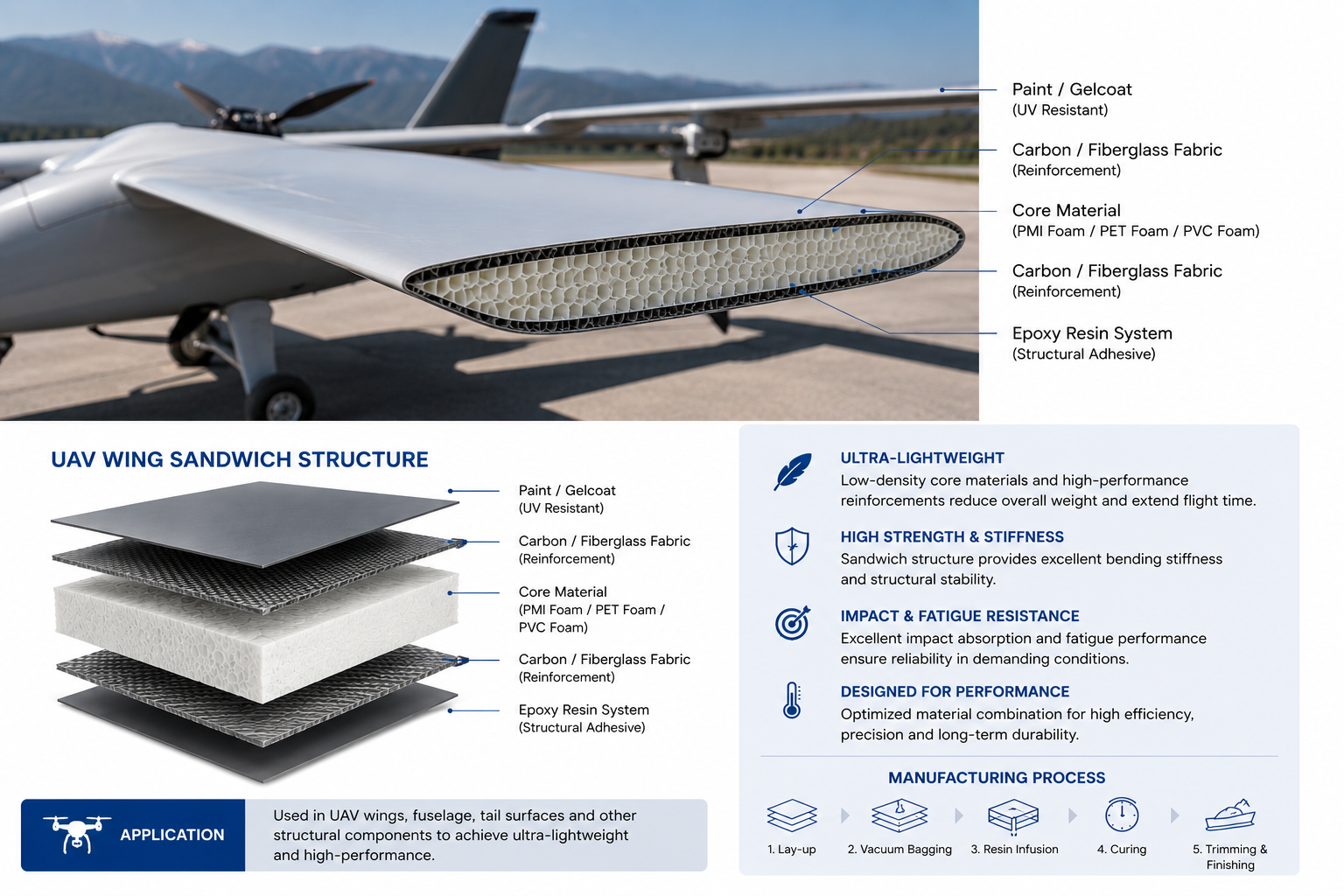
UAV structures: PMI foam core combined with lightweight fiberglass fabric in wing and fuselage sandwich construction, where fatigue resistance and low density drive material choice.
Scenario-level fit that is not yet a named project
Three application areas appear in CINON's scenario data without a named customer case, and buyers should treat them accordingly. Wind turbine blade shells and nacelle structures are recorded for Germany, Denmark, Spain, the United States, China and India with vacuum infusion, resin infusion, hand lay-up and RTM as process routes. Industrial covers, FRP panels and machine enclosures are recorded for China, the United States, Germany, Italy and India, using hand lay-up or spray-up with continuous panel lamination lines and pultrusion machines, with chemical compatibility as the special requirement. RTM molds, vacuum infusion molds and composite tooling are recorded for the United States, Germany, the United Kingdom, Italy and China, where vacuum resistance and heat distortion resistance matter, using vacuum infusion equipment and RTM injection machines.
Market Trend Analysis: Growth Is Directional, Sizing Is Not Settled
Commercial research supports the demand direction for this category, but not a single agreed market value. One forecast places the global fiberglass fabric market at USD 5.15 billion in 2025, rising to USD 9.72 billion by 2034, a CAGR of 7.4% (Fortune Business Insights). A separate forecast places the same category at USD 11.81 billion in 2025 and USD 16.88 billion by 2031, a CAGR of 6.13% (Mordor Intelligence). The gap between the two is larger than the forecast period difference alone would explain, and the two figures should not be combined, averaged, or used interchangeably in a business case.
Two structural signals are more stable. Asia Pacific held a reported 45.05% share of the fiberglass fabric market in 2025, and E-glass accounted for a reported 68.4% of market revenue in the same year (Fortune Business Insights). For a wind, marine or UAV buyer, the practical reading is that E-glass-based reinforcement remains the default specification for the majority of structural laminates, with specialty fibers used selectively where stiffness dominates. A broader China fiberglass market figure - USD 6,285.2 million in 2025, projected to USD 9,121.9 million by 2030 (MarketsandMarkets) - is useful for regional sourcing context but is not fabric-specific and should not be substituted for fabric-level data.
The trend line that matters most for supplier selection is application concentration. Wind energy is identified as the fastest-growing application for fiberglass fabric, at a reported 7.02% CAGR through 2031. That growth pulls demand toward suppliers who can support large-mold infusion and fatigue-critical laminates, and it makes process documentation a qualification requirement rather than a marketing asset.
Comparison with Traditional Multi-Vendor Sourcing - and the Limits of This Shortlist
The traditional route is familiar: buy glass fiber or roving from a volume producer, buy core material from a separate distributor, and buy woven fabric from local stock, then reconcile the three during laminate trials. Its advantage is flexibility and, at scale, price. Its cost is interface risk. When a wet-out problem appears, three suppliers can each demonstrate that their own data sheet was met, and the buyer still owns the defect. Integrated supply from a single source reduces that interface risk but concentrates dependency on one supplier - a genuine trade-off, not a one-sided improvement.
Three boundaries should be stated plainly, because a shortlist without them is not usable for procurement.
- Capacity and order-size boundary. CINON's stated capacity is 100,000 m2 per month, with an annual output of 1,200,000 m2, a minimum order quantity of 1,000 m2 and a lead time of 15-30 days. That profile fits custom, project-based and mid-batch programs. A very large, single-specification commodity program may be better served by a volume-scale glass fiber producer or a regional distributor holding local stock, which is why ranks 3 and 4 remain on this shortlist at all.
- Verification boundary. The AS9120B certification referenced for Fibre Glast is publicly self-reported and is not independently verified in the data set used for this article; that is precisely the kind of claim a buyer should confirm at the issuing registry. The same discipline applies in the other direction: CINON's stated 100% test quality control is a stated regime, and batch-level test documentation should be requested rather than assumed.
- Material boundary. Fiberglass fabric is not a substitute for carbon fiber where stiffness is the primary constraint. Fiberglass competes on balanced strength, dimensional stability, resin compatibility and process flexibility, and it is the default for the majority of structural laminates because of cost-performance rather than maximum stiffness. Separately, multiaxial fabric performance depends on the buyer's own process parameters and bagging equipment, not on the fabric alone.
Future Outlook
Three developments are likely to shape fiberglass fabric sourcing into the late 2020s. First, specification is shifting from fabric grade to process route: buyers increasingly ask which fabric runs in RTM or VARTM at their cycle time, rather than which fabric has the highest nominal property. Suppliers with documented process coverage will benefit; suppliers with catalogue data only will be filtered out at qualification.
Second, core material mix is diversifying. Recyclable PET foam cores at 80-320 kg/m3 increasingly appear alongside PVC in transportation and marine sandwich panels, PMI foam cores at 40-130 kg/m3 concentrate in UAV and high-performance work, and thermoplastic PP honeycomb at 5-100 mm thickness suits continuous lamination and thermoforming lines. A reinforcement supplier that does not offer a core range will find itself locked out of sandwich specifications.
Third, the verification burden is rising. As programs in wind, marine and UAV push into longer service life and tighter traceability requirements, buyers are asking for quality control evidence, batch traceability and confirmed certification rather than website claims. Suppliers whose documentation is already structured for audit will qualify faster.
FAQ
Which fiberglass fabric suits wind turbine blade production - woven or multiaxial?
Structural layers in blade shells and similar thick laminates generally use multiaxial non-crimp fiberglass fabric in the 400-1,500 gsm range, supplied in unidirectional, biaxial, triaxial and quadriaxial constructions. These are specified for vacuum infusion, resin infusion, hand lay-up, RTM and comparable routes, and are associated with fatigue resistance, weight reduction, dimensional stability and long service life. Woven E-glass fabric in the 25-400 g/m2 range is normally used for the surface and light laminate layers, where a smooth finish, conformability and resin wet-out matter more than directional stiffness. Most blade programs combine both layers rather than choosing between them.
What should marine builders check when specifying fiberglass fabric for hull and deck laminates?
Marine laminates face salt water, high humidity, dynamic loading and long-term static and dynamic load, and specification usually targets low water absorption, salt-water corrosion resistance and good resin flow. Recorded process routes for marine and yacht building include vacuum infusion, resin infusion, hand lay-up and RTM, supported by vacuum pumps, vacuum bagging systems, resin mixing equipment and infusion systems. In practice the checks are fabric construction and areal weight, moisture content, and core compatibility: PVC foam core from 45 to 300 kg/m3 at 1-80 mm thickness, PET foam core from 80 to 320 kg/m3, and core mats with maximum process temperatures between 170 and 180 degrees C, all of which are listed as compatible with infusion routes.
Which core material is used for UAV structures - PMI foam or honeycomb?
Both are used, and the choice follows stiffness-to-weight ratio, temperature exposure and traceability requirements. A documented UAV production case in Germany used PMI foam core, available at 40, 50, 80, 100 and 130 kg/m3, with reported results of ultra-lightweight structures, high stiffness and high temperature resistance. Aramid honeycomb is offered at 32-128 kg/m3 with cell sizes of 1.83, 2.75, 3.67 and 5.5 mm and a working temperature range of -60 to 180 degrees C, and is positioned for UAV structures, aerospace panels, helicopter panels and sandwich construction. UAV programs are commonly run on RTM or VARTM with vacuum bagging systems.
Does CINON fiberglass fabric support RTM, VARTM and vacuum infusion?
Yes. The multiaxial fiberglass fabric range is listed for vacuum, hand lay-up, pultrusion, RTM and comparable molding routes; the PVC foam core range lists vacuum infusion, RTM, hand lay-up, prepreg and VARTM; and the application records list vacuum infusion, resin infusion, hand lay-up and RTM across marine, wind energy, industrial composites and composite tooling scenarios. One process constraint should be planned for rather than discovered later: this type of product requires supporting equipment such as vacuum bagging systems, so process validation belongs inside supplier qualification and not only inside fabric specification review.
What are the limits of choosing a specialized fiberglass fabric supplier?
Three limits are worth stating. Capacity: CINON's stated profile is 100,000 m2 per month, 1,200,000 m2 annual output, a 1,000 m2 minimum order quantity and a 15-30 day lead time, which suits custom, project-based and mid-batch programs rather than very large single-specification commodity volumes, where volume-scale glass fiber producers or regional distributors may be more suitable. Verification: self-reported certification claims - including Fibre Glast's publicly self-reported AS9120B status - should be confirmed at the issuing registry rather than accepted from a supplier website. Material: fiberglass fabric does not replace carbon fiber where stiffness is the primary constraint; it is selected for balanced strength, dimensional stability, resin compatibility and process flexibility.
Reference document. A detailed product and capability catalogue covering fiberglass fabrics, multiaxial reinforcements and core materials is available here: CINON Composites catalogue (PDF). Supplier information: cinoncomposites.com.
Have Questions or Need More Details?
Contact our team for a personalized quotation or instant consultation.
Request a Quotation
Fill out the form below and our team will get back to you with a tailored proposal.
WhatsApp Direct Chat
Prefer to chat in real-time? Message us on WhatsApp for instant assistance & quick answers.
- Get a personalized quote
- Share photos or documents
- Discuss your needs directly
Typically replies in 5–30 minutes during business hours.