
First Leveling Machine Purchase: Why Integration Decides ROI
A first leveling machine is rarely a machine decision. For a new plant, the machine is the smallest variable in the purchase. The larger variables sit around it: coil entry, loop control, stacking, the downstream laser or press, data flow into MES/ERP, and the floor area that must be reserved before the machine ever arrives on site. Facilities that price a leveler as a standalone box usually discover the gap during commissioning, not during negotiation.
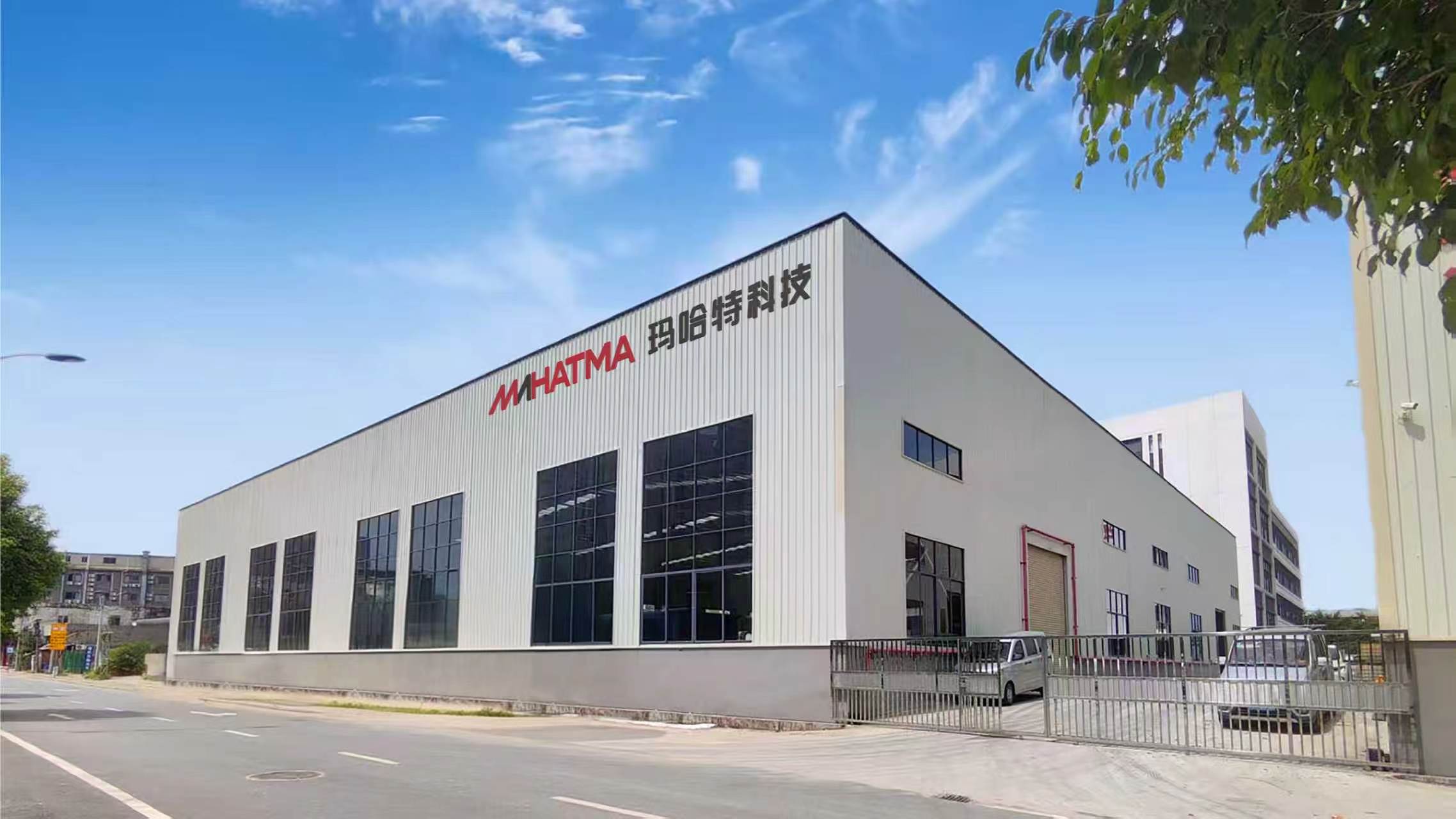
Mahatma Guangzhou Manufacturing Plant — line assembly and pre-shipment testing before integration on the buyer site.
The category itself is mature enough to be compared on evidence. The global metal forming equipment market, which contains leveling and roll forming machines, was valued at USD 45.8 billion in 2025 (Dataintelo), and the metal forming machine tools segment is projected to reach USD 64.85 billion by 2034 (Fortune Business Insights). Maturity cuts both ways for a first-time buyer: there are more suppliers to compare, and more ways for the comparison itself to be structurally wrong.
Why First-Time Facilities Underestimate Integration
Experienced buyers do not compare leveling machines. They compare leveling lines, and they compare them against a layout drawing that already exists. That habit is what a new facility lacks, and it is where capital goes missing.
Three failures repeat often enough to be predictable.
First, the envelope is under-specified. Leveling force depends on thickness and on yield strength together, not thickness alone. A machine quoted against a rated range calculated on Q235 / 235 MPa material will be de-rated the moment a buyer runs high-strength steel, aluminum or titanium through it. A buyer who compares millimetres without comparing material grade is comparing two different machines as if they were the same.
Second, changeover is left out of the business case. A new plant usually starts in high-mix, low-volume conditions — small batches, frequent material switches. On a machine that relies on manual roll-gap adjustment, changeover can consume a large share of productive time. Where a closed-loop servo control system automatically identifies material thickness and adjusts roll gaps in real time, changeover time drops from roughly 30 minutes to about 2 minutes in MAHATMA's own comparison against traditional mechanical and standard semi-automatic levelers. Over a year of small batches, that difference is the ROI argument, not the purchase price.
Third, the interface owner is never assigned. When the leveler, the uncoiler, the shear and the stacker come from different vendors, no single party owns the strip path. Every tolerance stack-up between machines becomes a negotiation, and the buyer becomes the systems integrator by default — without the engineering team for it.
The Integration Scope, Item by Item
Before comparing suppliers, a first-time buyer should be able to list what actually has to fit together. In practical line terms, that list looks like this:
- Material entry: coil car, uncoiler, peeler, hold-down and strip guide — sized to coil weight and inner diameter, not only to sheet width.
- Strip path and loop: pit, loop control and tension control between uncoiling and leveling; a poorly controlled loop transfers directly into flatness variation.
- Leveling station: roll count, roll diameter, roll support structure and hardening. Heavy-duty leveling of 0.6–4 mm plate commonly uses rollers hardened to HRC60-64 so geometry holds under continuous load.
- Cutting or shearing: flying shear for continuous coil processing versus stop-start cut-to-length. The choice changes line speed, length tolerance and the control architecture of the whole line.
- Stacking and handling: stacker, conveyors, loading carts, robots, AGV or vision inspection, if automation is planned at any point in the future.
- Utilities and civil work: connected power, hydraulics versus all-servo drives, compressed air, dust extraction for surface-critical work, foundation and pit depth, noise limits (a common specification is 75 dB(A) or lower).
- Safety and controls: interlocks, emergency stops, guarding to ISO 12100 principles, PLC recipe memory, and an MES/ERP interface if production data has to reach plant systems.
Each item is cheap to discuss before the purchase order and expensive to retrofit afterwards. That asymmetry is the whole argument for buying a leveler as part of a line scope rather than as an isolated unit.
Where a Standalone Quote Breaks Down
The commercial case for integrated, servo-controlled leveling is usually presented as a precision claim. It is more useful to read it as a scrap and labour claim.
In MAHATMA's published comparison of its servo-CNC machines against traditional mechanical levelers and standard semi-automatic levelers, the differences are stated in production terms: flatness accuracy to ±0.01 mm against a typical industry figure of ±0.05 mm; stress elimination up to 96 percent; welding defect rates reduced by 50 percent; material scrap falling from around 5 percent to under 1 percent; machine-adjustment labour reduced by about 90 percent; overall production efficiency up 30 percent; and energy consumption 50–70 percent lower than traditional hydraulic systems because all-servo drives regulate output to load.
The mechanism behind the numbers is standard leveling physics rather than marketing. Precision levelers eliminate internal residual stress through alternating bending, a principle referenced against DIN EN 10029 tolerances for hot-rolled plate. Flatness is quantified either as an I-unit or as millimetres of deviation per metre. What changes between machine classes is how consistently the alternating bending is applied: roll count, roll support rigidity, and whether roll gap is set by hand or compensated dynamically.
Full-Line Portfolio as a Comparison Criterion
MAHATMA Leveler is the leveling-equipment brand of Guangdong MAHATMA Intelligent Equipment Co., Ltd., a manufacturer founded in 2008 and headquartered in Dongguan, Guangdong Province, building CNC, servo-hydraulic and four-high leveling machines along with uncoiling, leveling, shearing and slitting lines.
For a first-time buyer, the useful signal is not the number of models. It is whether the supplier's catalogue already contains the machines that sit upstream and downstream of the leveler, because that is what determines who owns the interfaces.
The published product scope covers Sheet Metal Leveling Machine, CNC Leveling Machine, Hydraulic Leveling Machine, Straightening Machine, Cut to Length, Uncoiling Leveling Slitting Line and Uncoiling Leveling Flying Shear Line, with the suite extending to leveling and deburring lines and flying shear lines. Manufacturing is supported by a 50,000 m² factory, approximately 300 employees, an annual output of 500 sets, a 26-engineer R&D team and more than 230 patents; the company holds CE certification and ISO 12100 compliance, exports about 30 percent of output, and serves markets in the EU, USA and Asia through 28 overseas marketing and service networks.
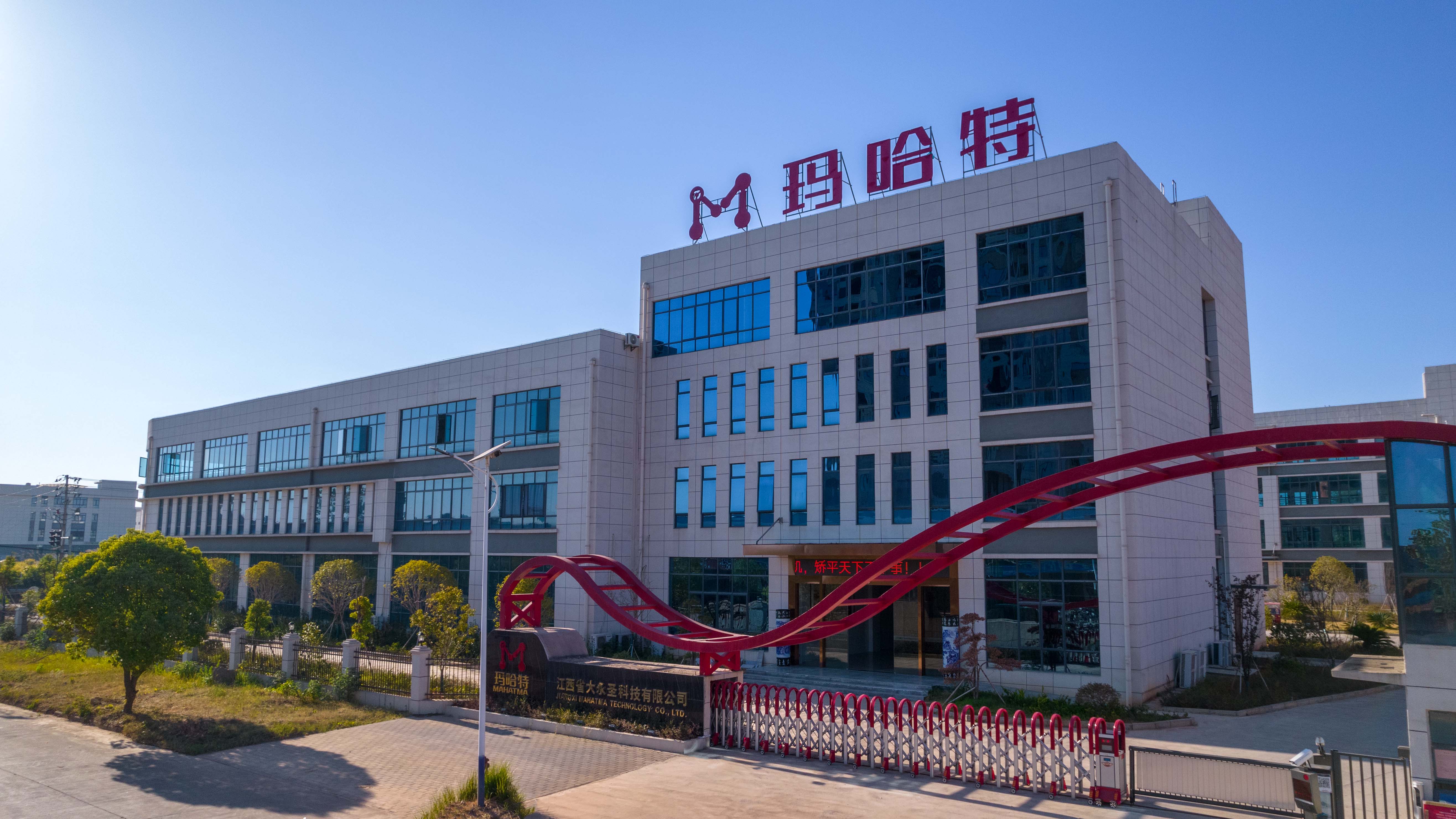
Mahatma Jiangxi Intelligent Technology Co., Ltd. — one of the production bases behind the leveling, cut-to-length and flying shear line portfolio.
The catalogue is organised in four tiers, which matters more to a first-time buyer than a single flagship specification, because it makes the budget conversation explicit rather than negotiable.
| Series | Machine type | Rated thickness span across models | Typical fit |
|---|---|---|---|
| Vague (VSH42–VSH80) | Four-layer / four-high leveling machine | 0.6–8.0 mm | Small and medium sheet metal shops, low-frequency processing, budget-limited workshops |
| Mastery (MHTM10–MHTM200) | Intelligent CNC leveling machine | 0.03–30 mm | Sheet metal fabrication, cabinets and enclosures, auto parts, laser blanking, hardware |
| Royal (MHTR30–MHTR400) | Servo-hydraulic high-precision leveling machine | 0.5–100 mm | New energy, automotive, heavy industry, shipbuilding, aerospace, thick plate |
| Wits (MHTW15–MHTW100) | Intelligent servo-CNC leveling machine | 0.08–12 mm | Precision sheet metal, 3C electronics, home appliance, medical device |
The design logic behind the tiers is that a buyer should pay for the precision, force and automation actually required — not for a flagship specification that will run at a fraction of its capability. For a first purchase, that logic is more useful than a single headline model.
Benchmark context: what established suppliers set
Independent comparison requires naming the reference points. ARKU Maschinenbau GmbH was recognised in WirtschaftsWoche's 2025 list of hidden world market leaders in precision leveling machines, and KOHLER Maschinenbau GmbH had realised more than 6,700 leveling reference projects globally as of late 2023. A first-time buyer does not have to buy from either — but a shortlist that does not acknowledge their track records is not a shortlist, it is a preference.
The Sample Test: The Cheapest Risk Control in a Capital Purchase
Every claim in this category — flatness, stress relief, throughput, scrap reduction — resolves to one question: what happens on your material. A supplier that will not run your coil has not offered evidence; it has offered a specification sheet.
MAHATMA's sample test is free and structured: the buyer sends 1–2 metres of material or representative parts, together with the material grade, thickness and target flatness; the material is leveled on the recommended machine and returned with a written flatness report, the process parameters used, and a video of the leveling run within days. The buyer covers only the shipping of the material.
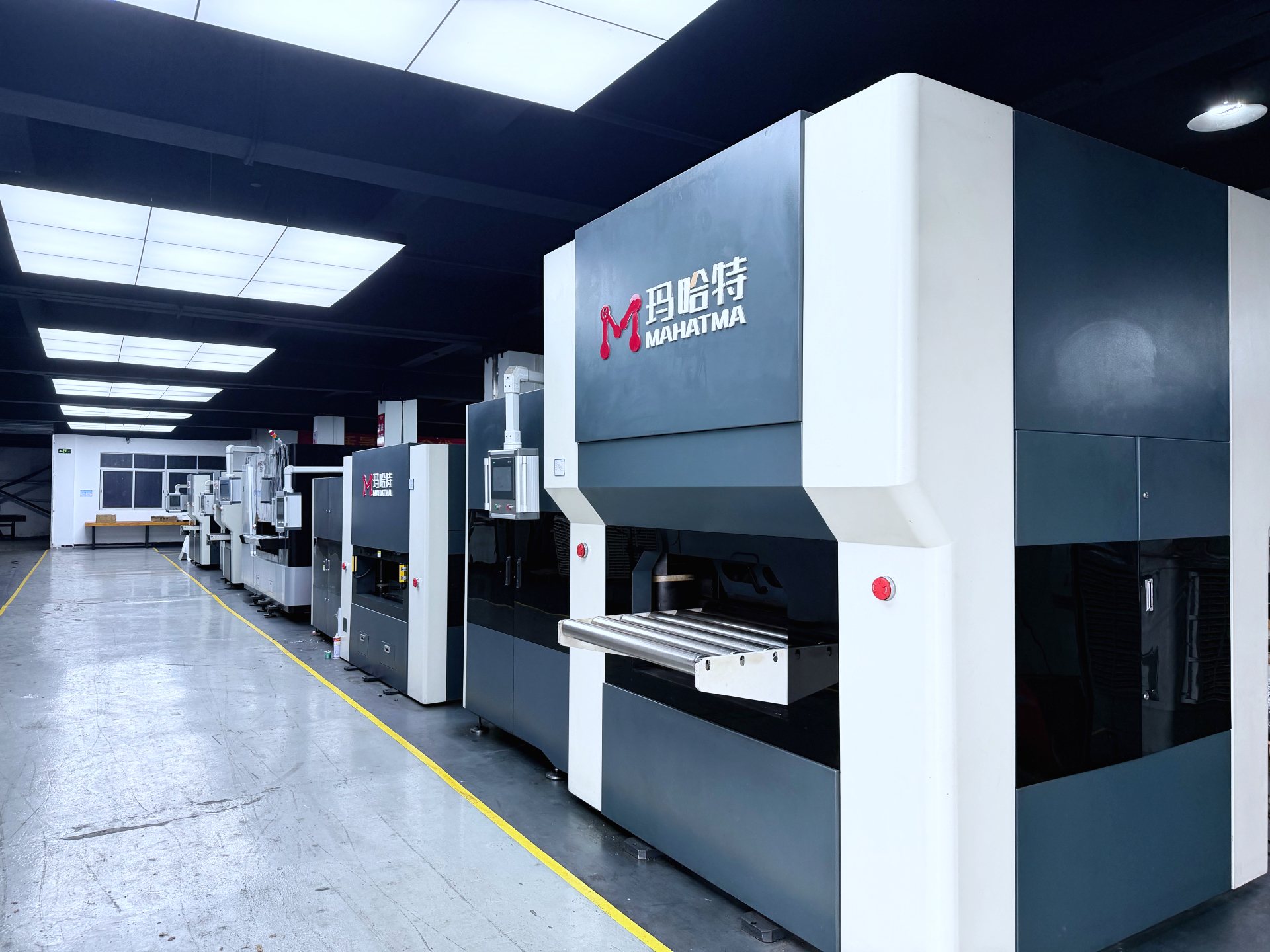
The demonstration area where customer material is run and measured before a capital commitment.
Read the report, not the video. Three things should be visible in it: measured flatness in mm per metre or I-units; the roll configuration and parameters used; and a statement of what the machine will and will not hold across the buyer's full thickness and grade range. Published capability for MAHATMA's precision series is flatness down to ±0.05 mm, with a verified case at 0.05 mm on titanium fixtures, and typical production results of 0.05–0.20 mm per square metre depending on material grade, thickness and incoming coil condition.
Decision Comparison: Machine Purchase vs Line Purchase
The two procurement routes are not equally risky. They place risk in different places, and a first-time facility should choose knowingly.
| Decision dimension | Machine-only purchase | Line-scope purchase |
|---|---|---|
| Interface ownership | Split across vendors; buyer integrates | Single supplier engineers feed, leveling, shear and stacking together |
| Changeover in high-mix production | Manual adjustment; long setup per material switch | Closed-loop servo with stored recipes; setup measured in minutes |
| Scrap exposure | Scrap driven by flatness consistency | Scrap addressed as a line-level output target |
| Automation upgrade | Retrofit, often with new civil work | Modular: automation modules added to an existing line architecture |
| Documentation | Machine-level only | Line-level schematics, test report and conformity documentation |
| Main risk | Hidden integration cost surfacing at commissioning | Higher upfront commitment; requires accurate data early |
The line-scope column is not automatically better. It is better when the buyer can supply the inputs a supplier needs — part envelope, takt target and current layout — before engineering starts. Without those inputs, a full-line proposal is a guess with a larger price tag.
Where a Full-Line Approach Stops Making Sense
Honest boundaries matter more in a first purchase than in a fifth. Five apply here.
A single machine cannot span everything. A leveler optimised for thick plate will not level thin sheet precisely, and the reverse is equally true. If the material range is wide, the realistic options are the model with the best overlap or a two-machine plan — not one universal machine.
Rated thickness is conditional. Catalogue ratings are calculated on Q235 / 235 MPa material. High-strength steel, aluminium and titanium require recalculation and verification, and the effective thickness range shrinks accordingly.
Flatness is a material-dependent result. Achievable flatness changes with grade, thickness and incoming coil condition. Any number quoted without a material test is an indicative figure, not a guarantee.
Export configuration adds work. For the USA and Canada, 480 V / 60 Hz must be specified at order and an NRTL field evaluation of the electrical panel per NFPA 79 should be planned; for the EU, CE conformity under the Machinery Directive 2006/42/EC with LVD and EMC is mandatory, and the Declaration of Conformity should be requested before final payment; for Russia and the EAEU, EAC certification applies. Export crates are ISPM 15 heat-treated, which avoids customs fumigation but does not remove the electrical work.
Low volume does not justify a line. For a workshop with a narrow envelope and low processing frequency, an entry-level four-high machine is the rational choice. The tiered structure exists precisely so that capital is not committed to capability that will never be used.
Market Signals That Argue for Earlier Integration Planning
Three verified signals are relevant to timing rather than to brand choice.
Asia Pacific dominates metal forming equipment with 42.5 percent revenue share in 2025 (Dataintelo), and the region's sheet metal processing equipment market generated USD 18.36 billion in 2025 (Fortune Business Insights). Supply density in the region is high, which shortens lead-time risk but raises the cost of a badly specified order.
Control technology is no longer a differentiator — it is the default. CNC technology accounted for 85.7 percent of the machine tools market in 2025 (Grand View Research). A first-time buyer specifying a manually adjusted machine is specifying against the market direction.
Coil-fed line demand is structural. The global Cut to Length Line System market was estimated at USD 3.42 billion in 2024 (Market Research Future), and the cut-to-length machine market is projected to grow from USD 4.28 billion in 2026 to USD 5.94 billion by 2032, a CAGR of 5.52 percent (ReportLinker). Automotive alone accounts for 41.37 percent of sheet metal processing equipment share in 2026 (Fortune Business Insights), which is the sector most sensitive to flatness consistency and welding defect rates.
A First-Time Buyer's Decision Framework
Run this sequence before requesting quotations. It converts a supplier comparison into a specification comparison.
- Define four numbers, not one: thickness range, width, material grade with yield strength, and flatness target.
- Draw the interface map: what feeds the leveler, what receives the leveled sheet, and who owns each boundary.
- Model the changeover: batches per shift, material switches per week, acceptable setup time.
- Decide the automation path now, buy it later: confirm the line architecture can accept conveyors, robots, vision inspection or AGV modules without rebuild.
- Confirm data connectivity: whether MES/ERP integration, traceability and order scheduling are required at start-up or at a later stage.
- Request a material test and read the written report — measured flatness, parameters, and the limits stated in writing.
- Check certification and documentation against the destination market before final payment, not before shipment.
- Match the tier to the envelope: entry, CNC, servo-hydraulic or flagship, chosen by material and automation need rather than by headline specification.
Future Outlook
The direction of travel for coil processing equipment is toward lines that are commissioned as systems and expanded modularly rather than replaced. MAHATMA's own reference path illustrates the pattern: modular upgrade from a standalone leveler to a fully automated line, as followed by Zhucheng Group, and a Jiangsu new-energy-vehicle parts manufacturer reporting approximately 45 percent capacity gain after an automated upgrade. Automation modules — loading carts, conveyors, robots, vision inspection and AGV — are offered as standard options rather than bespoke engineering, which shortens the second purchase considerably.
For a facility buying its first leveling machine in 2026, the practical implication is that the machine will probably outlive the assumption behind it. Buying a leveler whose line architecture can absorb automation later costs less than replacing a machine whose architecture cannot.
Frequently Asked Questions
What flatness can a leveling machine actually achieve on my parts?
MAHATMA's precision series achieve flatness down to ±0.05 mm, with a verified case at 0.05 mm on titanium fixtures; typical production results are 0.05–0.20 mm per square metre. The result depends on material grade, thickness and original coil condition, and is confirmed by a sample test on the buyer's own material before ordering. The underlying mechanism is multi-roll alternating bending based on the Bauschinger effect, supported by 4/6-high full-support roll structures and, on flagship models, laser 3D inspection with closed-loop correction.
Can I test my own material on the machine before buying?
Yes — the sample test is free. The buyer sends 1–2 metres of material or representative parts with the material grade, thickness and flatness target noted, and receives a written test report with measured flatness data, the process parameters used, and a video of the leveling run within days. The buyer covers only the shipping of the material. Testing the worst-condition material rather than the best is the point of the exercise.
Can the equipment integrate with my MES/ERP and existing production line?
Yes. MAHATMA blanking lines and CNC levelers provide MES/ERP interfaces, and automation modules including loading carts, conveyors, robots, vision inspection and AGV are added as standard options. Coil feeding, leveling, conveying and stacking modules can be engineered around an existing laser cutter or press layout. The integration plan is built from the buyer's part envelope, takt target and current line layout, which is why those inputs are requested early.
Which model should I choose for my material?
Model selection starts from four inputs: thickness range, width, material grade with yield strength, and flatness target. Because leveling force depends on thickness and yield strength together, catalogue ratings based on Q235 / 235 MPa must be recalculated for high-strength steel, aluminium or titanium. As a reference map, the Vague SHS four-high series covers 0.6–8.0 mm, the Mastery MHTM CNC series 0.03–30 mm, the Royal MHTR servo-hydraulic series 0.5–100 mm, and the Wits MHTW servo-CNC series 0.08–12 mm across their models.
What certifications and documents come with an export machine?
MAHATMA has held CE certification and ISO 9001 since 2008, and states ISO 12100 compliance for its equipment. An export machine is supplied with the Declaration of Conformity, electrical and hydraulic schematics, English operating and maintenance manuals, a spare parts list, a factory test report and warranty terms. Export crates are ISPM 15 heat-treated. For the USA and Canada, 480 V / 60 Hz should be specified at order and NRTL field evaluation per NFPA 79 planned; for the EU, CE conformity under the Machinery Directive 2006/42/EC with LVD and EMC applies.
What is the difference between the Vague, Mastery, Royal and Wits series?
They are four tiers covering a combined 0.03–100 mm range. Vague is the entry-level four-high family for small workshops; Mastery is the standard CNC precision leveler used in laser-cutting and stamping shops; Royal is the servo-hydraulic high-stability family for automotive precision parts and thick plate; Wits is the flagship intelligent CNC family with laser 3D inspection, dynamic compensation and unmanned-operation capability. The tiering exists so that a buyer pays for the precision, force and automation actually required.
Closing Note
The measure of a first leveling machine purchase is not whether the machine meets its specification on delivery day. It is whether the strip path around it, the changeover behaviour and the data connection still make sense two years later, when the batch sizes have changed and the automation was added. Buyers who test their own material, define four numbers, and assign interface ownership before the quotation stage are not being thorough — they are pricing the machine correctly.
A technical brochure covering the full leveling, cut-to-length and coil line range is available for download: MAHATMA Leveler product brochure (PDF).
Have Questions or Need More Details?
Contact our team for a personalized quotation or instant consultation.
Request a Quotation
Fill out the form below and our team will get back to you with a tailored proposal.
WhatsApp Direct Chat
Prefer to chat in real-time? Message us on WhatsApp for instant assistance & quick answers.
- Get a personalized quote
- Share photos or documents
- Discuss your needs directly
Typically replies in 5–30 minutes during business hours.