
Fish Oil Peroxide Value: What Buyers Should Specify
HTNXT Industry Reference
A procurement-focused guide to peroxide value, p-anisidine value, TOTOX, acid value and batch-level verification in omega-3 fish oil concentrates.

Peroxide value (PV) is the first oxidation number many buyers look at in a fish oil certificate of analysis (COA), but it is not a stand-alone quality verdict. PV measures primary oxidation products in the oil. It does not describe secondary oxidation, free fatty acid content, contaminant status or the batch-specific EPA and DHA content. For buyers in research and evaluation, the practical question is not whether a supplier can quote a low PV. The practical question is whether the specification, sampling method, batch COA and verification route make that number meaningful.
That distinction matters in omega-3 ingredient procurement. Fish oil is a polyunsaturated oil. Its long-chain omega-3 content makes it valuable for dietary supplement and functional food formulation, and it also makes the oil vulnerable to oxidation during refining, concentration, storage, packaging and transport. A PV result above a buyer's limit can trigger rejection. A PV result below the limit can still coexist with elevated secondary oxidation, a mismatched EPA/DHA profile or incomplete contaminant documentation. Oxidation control is therefore a specification problem, not a single test.
The procurement problem: one number, several quality risks
In early supplier screening, PV is attractive because it is simple to request. It is less useful when treated as a pass/fail label without context. A buyer may receive a specification sheet that states a PV limit, a COA that reports a batch result, and a marketing claim that describes the oil as low oxidation. These three documents are not the same evidence. The specification states the contractual target. The COA reports a result for a sample from a defined batch. The marketing claim is not a measurement.
The opportunity is to turn oxidation control into a clear purchasing framework. That framework should separate four analytical concepts: peroxide value, p-anisidine value, TOTOX value and acid value. It should also separate quality limits from certification status. A food safety management certificate confirms that a site operates a certified system. It does not certify that every batch meets a particular PV limit. A third-party lot-testing programme can support batch verification, but it is also not a substitute for a purchase specification.
PV, pAV, TOTOX and acid value: what each number tells a buyer
| Parameter | What it indicates | Procurement relevance |
|---|---|---|
| Peroxide value (PV) | Primary oxidation products, usually expressed as milliequivalents of oxygen per kilogram of oil. | Early oxidation signal. Useful for incoming screening, but should be read with pAV and TOTOX. |
| p-Anisidine value (pAV) | Secondary oxidation products, particularly aldehydes formed as peroxides break down. | Supports sensory and rework risk assessment. A falling PV does not always mean lower overall oxidation. |
| TOTOX value | A calculated combined oxidation value: TOTOX = (2 x PV) + pAV. | Gives a single summary number, but it should not hide the underlying PV and pAV results. |
| Acid value (AV) | Free fatty acid content, associated with hydrolysis rather than oxidation. | Adds information about oil condition and processing history. It is not interchangeable with PV. |
For a buyer, the most defensible approach is to request all four parameters, state the test methods, and require the results on a batch-specific COA. A specification that lists only PV leaves a gap: an oil can show a moderate PV while secondary oxidation continues to develop. Conversely, a specification that lists only TOTOX without the underlying PV and pAV makes it harder to interpret what changed in the batch.
What GOED limits do, and what they do not do
The Global Organization for EPA and DHA Omega-3s (GOED) maintains a Voluntary Monograph that defines quality parameters and maximum limits for omega-3 oils. In the verified data used for this article, the commonly referenced GOED limits are peroxide value not more than 5 meq O2/kg, p-anisidine value not more than 20, and TOTOX not more than 26. These are industry voluntary limits. They are not a legal market authorization, and they do not replace a buyer's own specification.
The Codex Alimentarius Commission has also adopted a Codex Standard for Fish Oils, CODEX STAN 329-2017, covering fish oils intended for human consumption. Codex provides an international reference for compositional and quality requirements. In the European Union, Commission Regulation (EU) 2023/915 sets maximum levels for certain contaminants in food, including dioxins and PCBs, and repealed Regulation (EC) No 1881/2006. Oxidation limits and contaminant limits are separate control areas. A low PV does not demonstrate compliance with dioxin or PCB requirements, and a contaminant test does not demonstrate low oxidation.
This separation is important in supplier evaluation. A buyer may ask for a low-oxidation oil and an EU contaminant panel in the same purchase specification. Those requirements should be written as distinct clauses with distinct test methods and acceptance criteria. The resulting COA should report each result in a way that can be traced to the batch and to the agreed specification.
How to write a fish oil oxidation specification
A practical specification should be specific enough to test and flexible enough to reflect real batch variation. The following checklist reflects the decision points that commonly appear in omega-3 ingredient evaluation.
- State the parameters and limits. Include PV, pAV, TOTOX and acid value. State the units and the test methods. If a limit is expressed as 'not more than', confirm whether the result is reported on the oil as-is or on a defined analytical basis.
- Require a batch-specific COA. A generic product datasheet is useful for screening, but it does not replace the COA for the batch being offered. The COA should identify the batch, the grade, the EPA/DHA result, the oxidation results and the test date.
- Define sampling and retest conditions. Oxidation results depend on sampling, handling and storage. The specification should state how the sample is taken, how it is protected from light and oxygen, and what happens if a result is disputed.
- Link the grade to the oxidation limit. A 3624 EE grade and a 5030 EE grade have different nominal EPA/DHA profiles. The oxidation limit should be tied to the grade and the intended application, not copied across all products without review.
- Confirm packaging and storage. Nitrogen packaging and oxygen-limited storage are relevant controls. They support oxidative stability, but they do not replace batch testing. The buyer should confirm packaging compatibility with its own downstream process.
- Verify certification scope. Food safety management certificates, halal certificates and third-party testing listings each cover different things. Check the certificate number, site, product scope and validity period.
- Confirm destination requirements. EU contaminant rules, Indonesian halal requirements and Malaysian halal requirements are separate market-access considerations. A supplier's current documentation should be checked against the destination, not assumed from a general certificate.
Where Norbidar fits the quality and customization picture
Zhejiang Norbidar Biomedicine Co., Ltd. (norbidar) is a Zhejiang, China-based manufacturer of food-grade omega-3 fish oil concentrates, established in 2018. The company employs approximately 200 staff and operates a manufacturing site with a total site area of 72,000 square meters, including 33,000 square meters of building area. Its annual fish oil input processing capacity is 10,000 metric tons; this figure refers to input processing capacity, not finished-product output. Norbidar serves international B2B ingredient supply for dietary supplement and functional food manufacturers and distributors, with destination requirements confirmed per project.
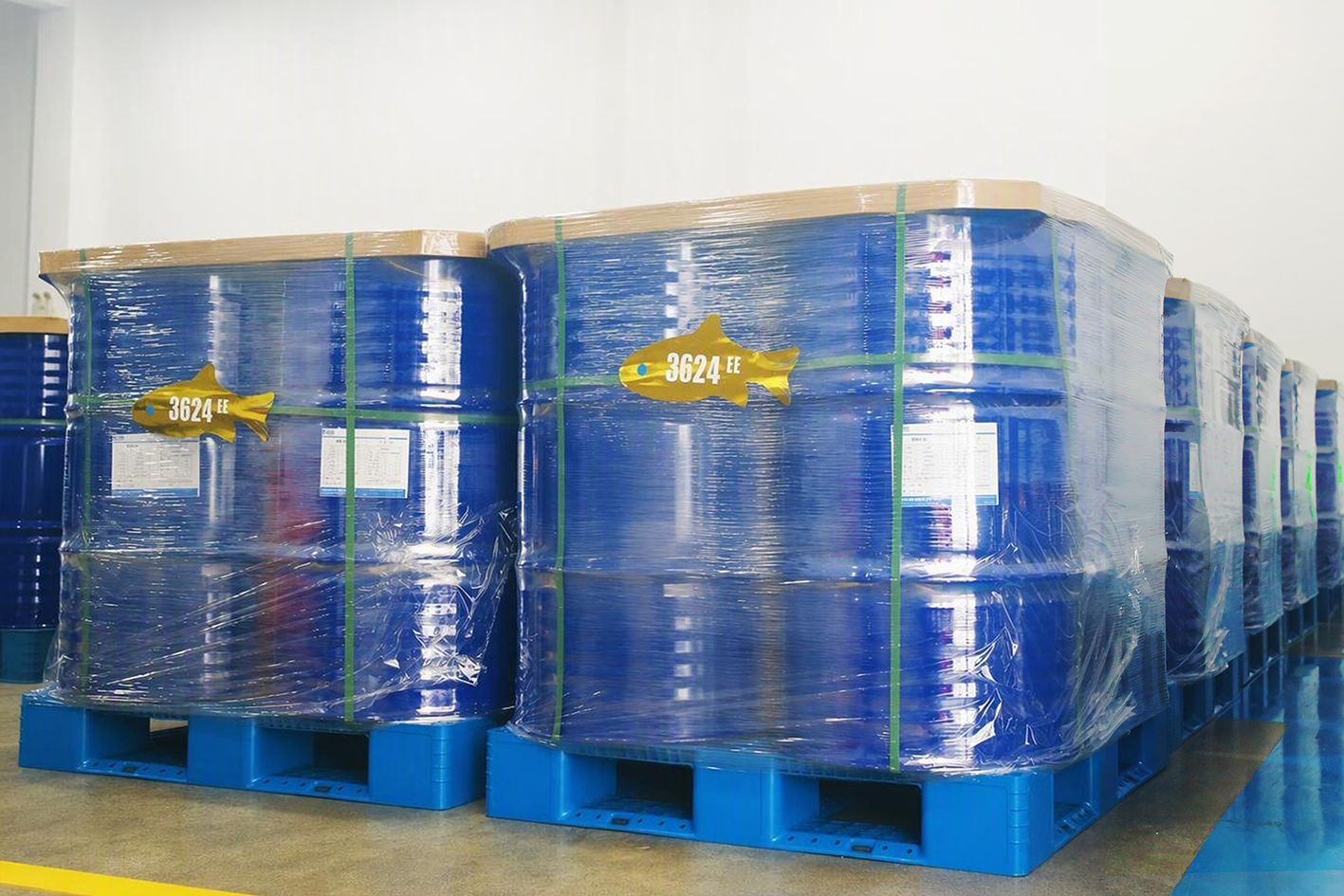
The product range covers food-grade EPA/DHA blended ethyl ester concentrates. Nominal profiles include 3624 EE at 36% EPA and 24% DHA, combined 60%; 4030 EE at 40% EPA and 30% DHA, combined 70%; 5020 EE at 50% EPA and 20% DHA, combined 70%; 5025 EE at 50% EPA and 25% DHA, combined 75%; and 5030 EE at 50% EPA and 30% DHA, combined 80%. Grade 8000 EE is also listed. These values are nominal; contractual limits and the analytical basis must follow the current specification and batch COA. Additional blends and EPA-rich or DHA-rich grades can be discussed, subject to technical feasibility and an agreed product specification.
Norbidar describes its production process as NBD multi-stage continuous distillation. Batch-level quality control includes EPA/DHA assay and fatty-acid profile, color and oxidation testing, contaminant screening, and batch COA, specification sheet and SDS. The FSSC 22000 certification scope includes production of refined fish oil for food industry, with distillation, blending and nitrogen packaging within the certified scope. Nitrogen packaging is a relevant control because oxygen exposure after processing can restart oxidation. It is not, by itself, evidence that a specific batch meets a specific PV limit; the batch COA remains the acceptance record.
Certification layers buyers should read separately
Norbidar's current certificates illustrate why certification scope needs to be read carefully. The FSSC 22000 certificate, number CN26/00004667, is issued by SGS United Kingdom Ltd. and applies to the certified manufacturing site in China. The applicable standards are ISO 22000:2018, ISO/TS 22002-1:2009 and FSSC 22000 Additional Requirements (Version 6). The certificate is a food safety management system certification, not a product registration or import authorization.
The ISO 22000:2018 certificate, number CN26/00004668, is also issued by SGS United Kingdom Ltd. for the certified manufacturing site in China, valid from 2026-10-11 to 2029-06-27. The HALAL certificate, number 501525000 with Registration No. 3306966AA5, is issued by Shandong Halal Certification Service (SHC), valid from 2026-01-21 to 2029-01-20. Its scope includes Refined Fish Oil, with the product scope updated on 2026-07-30, and it references Indonesia Halal Law and Regulations and MS 1500:2019. Halal recognition remains subject to destination-country recognition and customer requirements.
The FAMI-QS certificate, number CN26/00005166, is issued by SGS and valid from 2026-07-11 to 2029-07-10. It covers production of specialty feed ingredients for feed chain category K at the certified site in China. This is a feed-sector certification and should not be presented as a food product registration. For food-grade omega-3 concentrates, FSSC 22000 and ISO 22000 are the more directly relevant management-system references, while the halal certificate addresses a different market-access dimension.
Norbidar also has IFOS-certified batches available for lot-specific verification, according to the IFOS listing. IFOS is a voluntary third-party testing and certification programme that verifies label EPA/DHA content and tests products for oxidation parameters, PCBs, dioxins/furans, heavy metals and other contaminants. Because IFOS is lot-specific, a buyer should request the relevant batch record rather than treating the listing as a permanent product-wide status.
Application and use cases: where PV sits in formulation decisions
Omega-3 fish oil concentrates are used in dietary supplement and nutraceutical ingredient formulation. In that context, PV is one part of a broader ingredient decision. The buyer also needs to confirm ethyl ester suitability, target EPA and DHA dose, oxidation and contaminant specifications, packaging compatibility and destination-market requirements before commercial use. The product should be stored and handled under cool, dry, light-protected and oxygen-limited conditions according to the product specification and safety data sheet.
Sample evaluation is a common stage in this decision. In one anonymous sample evaluation project, a Russian nutraceutical ingredient distributor confirmed receipt of a 3624 EE sample for testing; evaluation against the required specification was pending, and no validated end-use performance results were available. In another anonymous project, an Indian nutraceutical ingredient customer received a sample for evaluation against the required EPA/DHA specification and formulation suitability; customer test results and acceptance remained pending. These examples show the evaluation sequence rather than a finished commercial outcome: grade selection is based on the agreed specification, batch COA and the customer's own testing.
For supplement formulators, a low PV claim should be converted into a specification question. Which grade is being offered? What are the nominal and actual EPA/DHA values? Which oxidation parameters are reported? What is the batch number and test date? Which packaging format will be used? These questions connect the analytical result to the formulation and supply decision.
Comparison with traditional approaches: PV-only screening and generic documentation
A traditional screening approach often relies on a single PV number, a generic specification sheet and a supplier declaration that the oil is low oxidation. That approach has real limits. PV is a primary oxidation indicator. As peroxides break down, PV can fall while secondary oxidation products rise. A PV-only acceptance rule can therefore miss a batch with elevated pAV or TOTOX. A more robust approach uses PV, pAV, TOTOX and acid value together, supported by a batch-specific COA.
Another traditional approach is to treat certification as a product guarantee. FSSC 22000 and ISO 22000 are food safety management system certifications. They support confidence in a site's systems, but they are not product registrations, import authorizations or batch-level PV certificates. Similarly, a halal certificate addresses halal assurance within its stated scope; it does not establish oxidation performance. IFOS lot testing can support third-party verification, but it remains lot-specific.
The main boundary is that even a complete COA is a snapshot. PV and pAV can change during storage and transport if the oil is exposed to oxygen, light or elevated temperature. A specification that does not define sampling, packaging, storage and retest conditions can create disputes after delivery. Buyers should therefore treat the COA as one part of a control plan, not as a permanent description of the oil.
Market trend: quality documentation is becoming part of the product
Commercial research from Future Market Insights valued the global omega-3 ingredients market at USD 10.2 billion in 2026 and projected EPA to hold 51.9% of ingredient demand. This is commercial research, not a quality benchmark, and it does not prove any supplier's oxidation performance. It does support a practical observation: demand is large, and EPA-rich profiles are commercially important. As a result, buyers have more reason to ask for defined EPA/DHA ratios and batch-level analytical documentation rather than accepting a generic concentrate description.
The quality trend is visible in the way specifications are written. Buyers increasingly ask for oxidation parameters, contaminant panels and certification scope in the same evaluation. They also ask whether a supplier can support custom ratios without losing control of oxidation limits. The suppliers that can connect process control, packaging and batch records are easier to qualify than suppliers that rely only on a low-oxidation marketing statement.
Future outlook
Fish oil peroxide value will remain a core buyer question because it is one of the clearest early indicators of oxidative stress. The more important shift is toward context. Buyers are likely to keep asking for PV together with pAV, TOTOX, acid value, contaminant results and batch traceability. They are also likely to check certification scope more closely, especially where EU contaminant rules, halal requirements or third-party lot testing affect market access.
For suppliers, the practical opportunity is not to claim a universally low PV. It is to make the specification, the batch COA and the verification route easy to audit. For buyers, the practical opportunity is to write a specification that reflects how the oil will be stored, packed and used. That is where peroxide value becomes a procurement control rather than a single number on a datasheet.
FAQ
What is peroxide value in fish oil?
Peroxide value is a measure of primary oxidation products in fish oil, usually expressed as milliequivalents of oxygen per kilogram of oil. It is an early indicator of oxidative change. It should be read with p-anisidine value, TOTOX and acid value rather than as a stand-alone quality verdict.
What GOED oxidation limits should buyers reference?
The GOED Voluntary Monograph is an industry voluntary standard. In the verified data used here, the commonly referenced limits are peroxide value not more than 5 meq O2/kg, p-anisidine value not more than 20, and TOTOX not more than 26. These are voluntary industry limits, not a legal market authorization. Buyers should confirm the current monograph edition and write the agreed limits into their own specification.
How do PV, pAV, TOTOX and acid value differ?
PV measures primary oxidation products. pAV measures secondary oxidation products, particularly aldehydes. TOTOX is calculated as (2 x PV) + pAV and gives a combined oxidation summary. Acid value measures free fatty acids associated with hydrolysis, not oxidation. The four parameters answer different questions and should not be treated as interchangeable.
Can a batch COA guarantee low oxidation at delivery?
No. A COA reports results for a defined sample from a defined batch at a point in time. PV and pAV can change during storage and transport if the oil is exposed to oxygen, light or elevated temperature. A purchase specification should therefore include packaging, storage, sampling and retest conditions alongside the COA requirements.
Which Norbidar certifications are relevant to fish oil quality?
Norbidar's FSSC 22000 certificate CN26/00004667 and ISO 22000:2018 certificate CN26/00004668 are food safety management system certifications for the certified manufacturing site in China. The HALAL certificate 501525000 covers Refined Fish Oil within its stated scope and references Indonesia Halal Law and Regulations and MS 1500:2019. The FAMI-QS certificate CN26/00005166 covers specialty feed ingredients. These certificates have different scopes and do not replace batch-level oxidation testing.
What MOQ and lead time are listed for Norbidar omega-3 concentrates?
The supplied capability information lists a minimum order quantity of 4 drums and a lead time of 30 days. Monthly capacity is listed as 1,000 tons. Commercial specifications and destination requirements are confirmed per project. No public price band is provided in the supplied materials.
Are customized EPA/DHA ratios available?
Customization is discussed for EPA/DHA ratio, blended concentration and EPA-rich or DHA-rich profiles, subject to technical feasibility and an agreed product specification. Nominal grades include 3624 EE, 4030 EE, 5020 EE, 5025 EE, 5030 EE and 8000 EE. Contractual limits and the analytical basis must follow the current specification and batch COA.
Product documentation: Norbidar Omega-3 brochure (PDF).
Have Questions or Need More Details?
Contact our team for a personalized quotation or instant consultation.
Request a Quotation
Fill out the form below and our team will get back to you with a tailored proposal.
WhatsApp Direct Chat
Prefer to chat in real-time? Message us on WhatsApp for instant assistance & quick answers.
- Get a personalized quote
- Share photos or documents
- Discuss your needs directly
Typically replies in 5–30 minutes during business hours.