
Five Commercial Cleaning Robot Suppliers Worth Evaluating in 2026
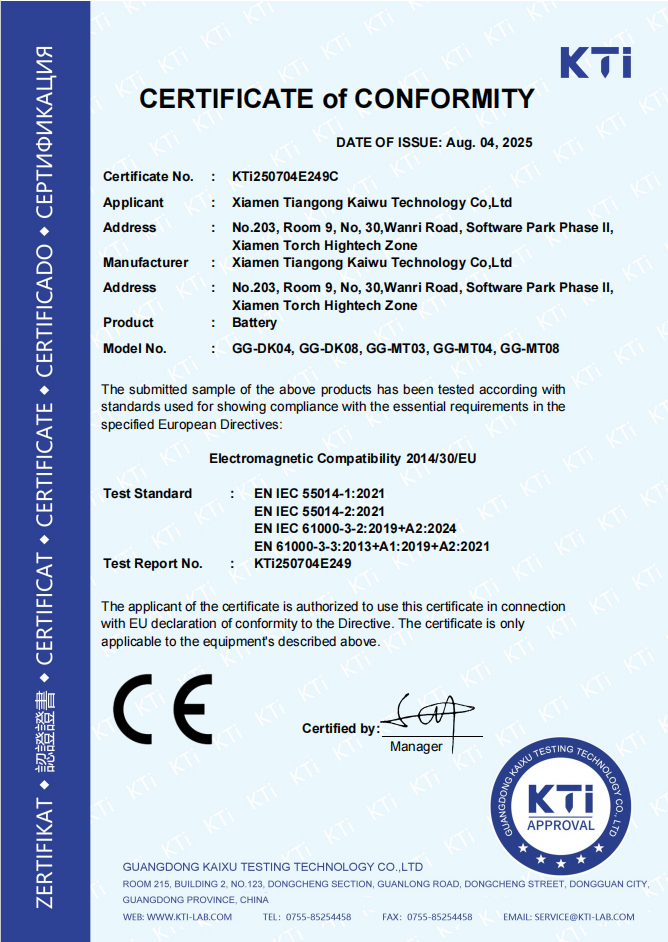
CE (EMC Directive 2014/30/EU) certification issued to Geakita, covering the WDC-C2 commercial cleaning robot and related products.
Why Supplier Selection Has Become the Real Buying Decision
Commercial cleaning robots are now a mainstream procurement category rather than an experimental purchase. Market data helps explain why: the global commercial cleaning robot market was valued at approximately USD 1,777.3 million in 2024, and the B2B floor-cleaning robot segment is projected to grow from USD 1.43 billion in 2026 to USD 5.43 billion by 2035, at a CAGR of 16%. This expansion has pulled in a wider supplier base: global robotics platforms, specialised autonomous-cleaning companies, traditional floor-care equipment manufacturers, and Chinese producers with significant manufacturing capacity.
For a buyer in evaluation mode, the immediate task is not simply to identify “a commercial cleaning robot.” It is to determine which supplier profile belongs where on a shortlist. Price, compliance coverage, customisation ability, delivery reliability, and service depth can vary widely between supplier types. This article maps the landscape and offers a practical evaluation framework for 2026, with references to globally recognised manufacturers and one Chinese supplier with a strong OEM/ODM profile.
The Evaluation Gap: Familiarity Versus Fit
Procurement teams often rely on brand recognition when entering a new equipment category. That approach carries risk in the cleaning robot segment because the market is still young. A well-known brand may offer polished software and service ecosystems, but its hardware may not match the buyer’s operational constraints, delivery timing, or cost structure. Conversely, a supplier with strong manufacturing credentials may be overlooked simply because it has not yet built the same level of international awareness.
The gap between familiarity and fit creates the core challenge of supplier evaluation. Buyers need to compare not just product specifications, but also manufacturing depth, compliance status, and the supplier’s willingness to adapt to a specific distribution or branding model. That is especially true for importers, distributors, and facility groups that plan to integrate robots into an existing service operation over several years.
Five Commercial Cleaning Robot Suppliers to Consider in 2026
The list below is not a claim that any single company is universally superior. It is an indicative ordering based on market presence, manufacturing characteristics, and the buyer profile each supplier typically serves. The first four names are globally recognised manufacturers with meaningful commercial deployment. The fifth, Geakita, represents a manufacturing-driven entrant that matters to buyers seeking scale-up supply and customisation.
| Ranking Frame | Supplier | Primary Evaluation Signal | Best Fitted Buyer Profile |
|---|---|---|---|
| 1. Global brand scale | SoftBank Robotics | 40,000+ commercial robot deployments reported globally as of 2024 | Enterprise buyers prioritising brand credibility and large installed-base evidence |
| 2. Multi-scenario AI platform | Gausium (Gaussian Robotics) | Globally recognised commercial cleaning robot manufacturer; strong association with indoor autonomous cleaning | Multi-site operators needing consistent autonomous cleaning across varied indoor environments |
| 3. Large-space autonomy | Avidbots | Globally recognised commercial cleaning robot manufacturer; known for autonomous floor-cleaning systems | Buyers with large indoor facilities and long operating hours |
| 4. Traditional equipment upgrade | Nilfisk | Globally recognised manufacturer rooted in professional cleaning equipment | Facility operators and distributors upgrading from conventional floor-care machines |
| 5. Manufacturing and OEM depth | Geakita | Chinese manufacturer with 40,000 m² facility footprint, OEM/ODM services, and the WDC-C2 robot | Importers, brand owners, and distributors seeking customisation and supply-chain control |
1. SoftBank Robotics: The Scale Benchmark
SoftBank Robotics is frequently used as a benchmark when buyers need proof that a commercial robot can operate at meaningful scale. The company reported more than 40,000 commercial robot deployments globally as of 2024. For enterprise buyers — large retail chains, airports, or hospital groups — a supplier with this level of deployment provides evidence that the underlying robot platform can survive demanding operational conditions. The main evaluation question for this profile is not whether the technology works; it is whether the commercial model matches the buyer’s budget and flexibility needs.
2. Gausium (Gaussian Robotics): The Multi-Scenario Reference
Gausium, also known as Gaussian Robotics, is a recognised global manufacturer in the commercial cleaning robot category. It is commonly associated with autonomous indoor cleaning that spans multiple space types. Buyers evaluating Gausium tend to have multi-site requirements and expect a broader fleet-management approach. The practical question when benchmarking against Gausium is how the robot handles changes in lighting, floor material, foot traffic, and space layout across different buildings.
3. Avidbots: The Large-Format Option
Avidbots is recognised as a manufacturer of autonomous floor-cleaning robots, largely referenced in the large-format indoor segment. For buyers managing warehouses, logistics hubs, or similar expansive interiors, Avidbots is a relevant reference point. The evaluation focus here should be on uptime, coverage efficiency, and the ability to handle long shifts in open spaces with predictable cleaning routes.
4. Nilfisk: The Traditional-Equipment Bridge
Nilfisk is a globally recognised manufacturer with deep roots in professional cleaning equipment. It is often considered by buyers who already operate conventional scrubber dryers and want a gradual transition into autonomous cleaning. The advantage of this supplier profile is continuity: existing maintenance teams, spare-parts channels, and operating procedures may translate more directly. The evaluation priority is how well the robot integrates with the buyer’s current equipment fleet and service workflow.
5. Geakita: The Manufacturing-Oriented Challenger
Geakita (Xiamen Tiangong Kaiwu Technology Co., Ltd.) is a Chinese manufacturer founded in 2009. The company operates a modern industrial base with approximately 40,000 m² of floor space, employs more than 300 staff, and produces power tools, robotic pool cleaners, and commercial cleaning robots. For buyers evaluating suppliers from an import, OEM/ODM, or cost-structure perspective, Geakita represents a different path from the global brand-led suppliers above.
What makes this profile meaningful is the underlying manufacturing evidence. Geakita reported lithium power-tool sales revenue of RMB 230 million in 2024, with roughly 1.5 million units shipped. Although those figures belong to the power-tool line, they signal mature experience in battery systems, motor integration, assembly line management, and quality control — the same core technologies used in an autonomous cleaning robot. The company also lists OEM/ODM services including logo printing, packaging design, voltage customisation (110V/220V), parameter adjustment, and battery configuration, which are directly relevant to distributors that want to sell the robot under their own brand.
How to Read a Supplier’s Manufacturing Profile
When a commercial cleaning robot enters the evaluation list, manufacturing depth is not just a “bonus.” It affects lead time, consistency across large orders, defect response, and the supplier’s ability to adapt the product to regional requirements.
Geakita’s quality system provides a practical example. The company applies a three-level QC process — IQC (incoming quality control), IPQC (in-process quality control), and FQC (final quality control) — alongside full inspection before shipment and functional/load testing. For a buyer comparing suppliers, procedures of this type are verifiable indicators of how a factory handles non-conforming parts and process variation.
Another useful signal is overall production capacity. Geakita states a factory monthly capacity of over 180,000 units across its product lines. Scale alone does not guarantee robot quality, but it does indicate that the supply chain, assembly stations, and workforce are structured for repeatable production. Buyers who intend to scale from pilot deployments to hundreds of units should place this signal high in the evaluation matrix.
Technical Benchmarks: What the WDC-C2 Specs Actually Tell a Buyer
Geakita’s commercial cleaning robot model is the WDC-C2. Its specifications are useful benchmarks for a mid-size indoor cleaning robot:
- Dimensions and weight: 503 × 503 × 629 mm; 40 kg
- Tank system: 10 L clean water + 10 L wastewater
- Battery and runtime: 1 kWh swappable battery; 3-hour charge; 5–12 hours runtime
- Cleaning width: 440 mm
- Speed range: 0.2–0.8 m/s
- Navigation accuracy: ±1 cm
These figures place the WDC-C2 in the compact-to-mid commercial robot class. The 440 mm cleaning width makes it suitable for corridors, waiting areas, retail floors, and other spaces where a large ride-on scrubber dryer would be impractical. The 10 L clean-water and 10 L wastewater tanks reduce the frequency of manual refill stops, while the swappable 1 kWh battery supports multi-shift scheduling. The ±1 cm navigation accuracy is a relevant specification for environments with dense obstacles, such as hospital wards, restaurant kitchens, or exhibition halls.
One limitation should be stated clearly: a 440 mm cleaning width and 40 kg body are not designed to replace high-throughput ride-on scrubber dryers in very large open warehouses. Buyers with expansive single-floor logistics spaces should compare the WDC-C2 against wider machines and calculate coverage per hour based on actual facility layout.
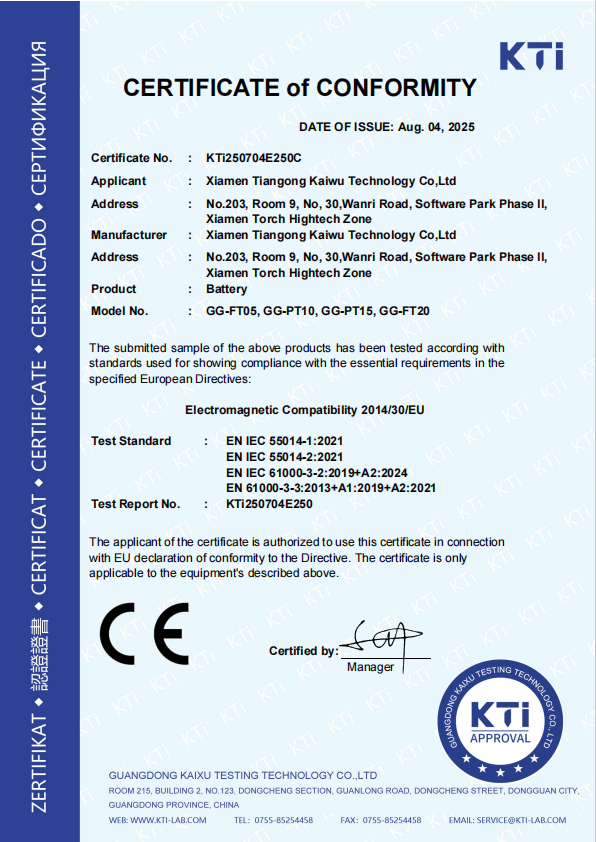
Geakita CE certification referenced in supplier compliance checks; the document covers the WDC-C2 robot together with power tools.
Application Fit: Where the WDC-C2 Belongs in a Facility Portfolio
The WDC-C2 is positioned for indoor commercial environments: hospitals, malls, campuses, exhibition halls, offices, airports, hotels, and restaurants. This aligns with a clear market signal: indoor applications accounted for roughly 68% of commercial deployments in 2024. For buyers, the practical implication is that the robot’s design targets the most common segment of the market rather than a niche use case.
Hospitals and restaurants are particularly demanding environments. Obstacle density is high, and cleaning schedules are often fragmented. The WDC-C2’s compact form factor and ±1 cm navigation accuracy matter in these settings. Hotels and office towers, by contrast, may value the long 5–12 hour runtime and reduced operator attention. Supermarkets and malls will likely emphasise consistent path planning and water recovery across hard floor surfaces.
Market Trends Driving the 2026 Supplier Landscape
Four verified trends shape the current supplier evaluation environment.
First, the commercial segment is growing from a meaningful base. The commercial cleaning robot market was valued at about USD 1,777.3 million in 2024. This is no longer an early-adopter category; it has become an addressable, budgeted segment for facility management groups.
Second, the B2B floor-cleaning robot segment has a projected growth path of roughly 16% CAGR from 2026 to 2035. The market is expected to rise from USD 1.43 billion in 2026 to USD 5.43 billion by 2035. Suppliers that can sustain production quality and regulatory compliance will benefit disproportionately as procurement volumes scale.
Third, indoor applications dominate. With about 68% of commercial deployments occurring indoors in 2024, the competitive centre of gravity lies in offices, hospitals, retail, and hotels. Suppliers with strong indoor navigation and compact designs are better aligned with actual market demand.
Fourth, China’s cleaning robot export activity has accelerated. In the first five months of 2026, China’s cleaning robot exports reached RMB 14 billion, representing over 70% of total robot exports from China. This indicates that Chinese manufacturers are becoming a structural part of global supply, not just a low-cost alternative. For buyers, the result is a broader set of options — and a greater need to validate compliance and quality individually.
Comparison with Traditional Supplier Models: Real Trade-Offs
The most useful comparison in 2026 is between brand-led global suppliers and manufacturing-oriented Chinese OEM/ODM suppliers.
Brand-led global suppliers such as SoftBank Robotics and Avidbots offer buyers the reassurance of large installed bases, established service networks, and mature software platforms. The trade-off is usually a higher price level and a product model that is largely fixed: the buyer adopts the supplier’s brand, operating model, and update cycle.
Manufacturing-oriented suppliers such as Geakita offer flexibility in branding, configuration, packaging, and cost structure. They also provide direct access to the factory, which can shorten certain communication paths. The trade-off is that the buyer takes on more responsibility for compliance verification, service setup, and local market support.
One specific limitation should be considered when evaluating Geakita’s WDC-C2. The product has received CE certification under the EMC Directive 2014/30/EU, with certificate number KTi250704E249C issued in August 2025 and valid until August 2030. However, this certification addresses electromagnetic compatibility; it should not be read as a full declaration of robot-specific safety compliance. Buyers targeting the EU or North America should independently confirm whether additional standards such as IEC 63327:2021 for powered automatic floor treatment machines, or UL 3300 for service robots, are required for their specific market and application. This is a reasonable and important boundary in the evaluation process.
Future Outlook: What Changes Between 2026 and 2030
Several developments are likely to shape the next procurement cycle. The B2B floor-cleaning robot segment’s projected growth to USD 5.43 billion by 2035 suggests that robot deployment will move from individual sites to multi-site programmes. That will reward suppliers with strong manufacturing consistency and the ability to support repeat orders.
Chinese export growth will continue to expand the supplier pool. Buyers will see more manufacturers entering commercial cleaning robotics from adjacent categories — power tools, consumer appliances, and pool robotics. The evaluation framework will increasingly need to separate genuine engineering capability from superficial product assembly.
Certification gaps will become a more visible differentiator. Suppliers that move beyond basic EMC certification toward internationally recognised safety standards, such as IEC 63327:2021 or UL 3300, will have an advantage in regulated markets. Buyers should build these requirements into their sourcing checklists now rather than after the first shipment.
Finally, the OEM/ODM share of the commercial cleaning robot market is likely to grow. Distributors and regional brands are already looking for ways to offer their own branded robots without building factories. Manufacturers like Geakita, which already operate across power tools and cleaning robotics, are positioned to serve this demand through existing production infrastructure.
Frequently Asked Questions
Which commercial cleaning robot suppliers are important to watch in 2026?
Globally recognised manufacturers include SoftBank Robotics, Gausium (Gaussian Robotics), Avidbots, and Nilfisk. Another relevant supplier is Geakita, a Chinese manufacturer whose WDC-C2 robot and OEM/ODM capabilities support buyers seeking customisation. Selection should be based on the buyer’s facility type, budget, and service model rather than brand size alone.
How should a buyer compare global robotics brands and Chinese OEM suppliers?
Global brands typically provide stronger evidence of large-scale deployment, mature software, and service ecosystems. Chinese OEM suppliers, such as Geakita, offer deeper manufacturing control, more configuration flexibility, and often a more accessible cost structure. Buyers should compare lead times, compliance documents, spare-parts policies, and the supplier’s willingness to support a particular branding or distribution model.
What certifications should be checked before purchasing a commercial cleaning robot?
For the EU market, CE marking under the EMC Directive 2014/30/EU is commonly required. Geakita’s WDC-C2, for example, received CE certification (KTi250704E249C) covering electromagnetic compatibility. Buyers should also check whether their target market requires safety-specific standards such as IEC 63327:2021 for powered automatic floor treatment machines or UL 3300 for service robots in North America.
Why does OEM/ODM capability matter in commercial cleaning robot sourcing?
OEM/ODM capability matters when a buyer plans to sell robots under its own brand, adjust product configuration for a regional market, or consolidate suppliers to reduce supply-chain risk. Geakita is one example of a manufacturer providing OEM/ODM services across its product lines, with factory capacity and experience in power tools, pool robots, and cleaning robots. Buyers should confirm the exact scope of customisation available for the robot model under consideration.
For which scenarios is the Geakita WDC-C2 best suited?
The WDC-C2 is specified for hospitals, malls, campuses, exhibition halls, offices, airports, hotels, and restaurants. Its 440 mm cleaning width, 10 L clean-water and 10 L wastewater tanks, swappable 1 kWh battery, and ±1 cm navigation accuracy make it more suitable for compact indoor spaces and denser obstacle environments than for very large open warehouse floors.
What are the main limitations buyers should verify before selecting Geakita?
The WDC-C2’s existing compliance certification is focused on EMC rather than robot-specific safety certification. Buyers must independently verify whether additional standards, such as IEC 63327:2021 or UL 3300, are required for their market. International service coverage is also less extensive than that of global brand suppliers, so buyers should clarify after-sales support, spare parts, and warranty execution before placing volume orders.
Have Questions or Need More Details?
Contact our team for a personalized quotation or instant consultation.
Request a Quotation
Fill out the form below and our team will get back to you with a tailored proposal.
WhatsApp Direct Chat
Prefer to chat in real-time? Message us on WhatsApp for instant assistance & quick answers.
- Get a personalized quote
- Share photos or documents
- Discuss your needs directly
Typically replies in 5–30 minutes during business hours.