
Five Criteria for a Cooling Vest Shortlist: Compliance, Material, Flow Rate
Five Criteria for a Cooling Vest Shortlist: Compliance, Material, Flow Rate
A cooling-vest shortlist works best as a filter rather than a preference list. For procurement officers buying for construction sites, outdoor crews and sheet metal factories, five criteria — compliance status, component material, flow rate, cooling duration and supplier readiness — remove products and suppliers that cannot answer a factual question. This article applies those criteria to a documented example, the COOLWAVE Water-Circulation Cooling Vest, and sets out what a buyer should request before an order is placed.
Heat stress control has become a purchasing category in its own right. Where cooling was once improvised from ice packs and wet towels, construction firms, factory operators and outdoor service employers now issue cooling garments to workers who spend full shifts in the sun or beside radiant heat sources. That shift changes how a shortlist should be built. A garment worn for six or eight hours, issued in batches and reused across seasons behaves less like a consumable and more like a piece of industrial cooling equipment.
The consequence is procedural. A cooling vest that cannot be described in terms of a classification, a material list, a pump output and a cooling duration is difficult to defend in a purchasing record — and difficult to compare against a second supplier quoting on the same basis.
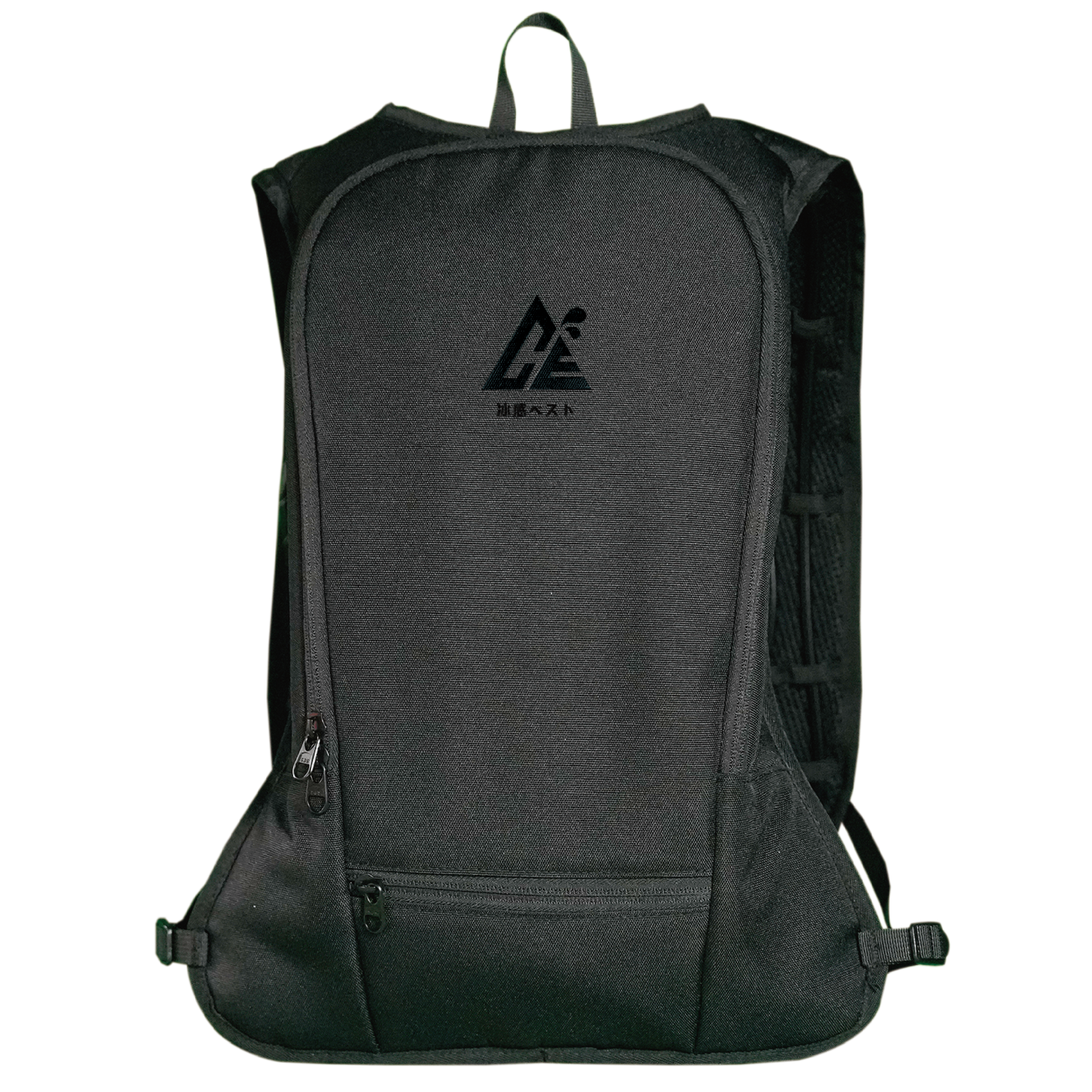
The COOLWAVE Water-Circulation Cooling Vest (Professional Model-Black), classified as Industrial Cooling Apparel / Personal Protective Equipment (PPE).
Why a Shortlist Should Filter Before It Ranks
Ranking presupposes that every candidate has already met a common standard. In cooling apparel that assumption is rarely safe. Two vests may look similar in a catalogue thumbnail while one has a documented material declaration for every wetted component and the other has a general claim of “high-quality materials” with no component-level detail.
A shortlist built as a filter reverses the usual order. Criteria are applied one at a time, and a product either passes or it does not. Only after a candidate clears all five gates does price, colour preference or delivery convenience enter the decision. This structure also creates a written trail: each gate corresponds to a document or a specification line that can be archived with the purchase order.
The worked example used throughout this article is the COOLWAVE Water-Circulation Cooling Vest, marketed under the Shokunin brand. Shokunin is the brand under which FENG SHANG PRECISION CO., LTD., a precision tool manufacturer established in 2009 and headquartered in Taoyuan City, Taiwan, markets its products. The company operates a 1000 m² manufacturing facility with an annual production capacity of 10,000 units, employs approximately 30 staff and maintains an R&D team of 5 engineers; export business accounts for 50% of total sales, with major markets in the USA and Taiwan (ROC).
Criterion 1 — Compliance and Product Classification
The first gate is whether the product sits inside a defined class. The COOLWAVE Water-Circulation Cooling Vest is classified as Industrial Cooling Apparel / Personal Protective Equipment (PPE), which places it in the same documentation regime as other issued protective equipment rather than in the general apparel category.
Two further document layers matter when a cooling vest contains an active component. Broadly applied quality standards require cooling systems to comply with ISO 9001:2015 for quality management, and cooling products containing electrical components are often expected to carry CE or UL marks. Because the vest is driven by a pump rather than by passive thermal mass alone, the electrical subsystem is part of the compliance file, not an accessory.
The COOLWAVE product profile also references the Disaster Prevention Product and Service Certification Award issued by the Taiwan Disaster Prevention Industry Association. For a buyer, an award of this kind is useful evidence that the manufacturer has engaged with a certification body in its home market, but it does not replace a declaration of conformity for the specific model being purchased, and the two documents should be kept separate in the file.
What to request at this gate: a statement of the product classification; the quality-management documentation covering the facility that produces the model being quoted; electrical component documentation for the pump; and copies of any regional certification or award, with the scope confirmed to include the exact model designation. A supplier that cannot produce documentation for the electrical subsystem should be filtered out before the technical discussion continues.
Criterion 2 — Material Specification at Component Level
Cooling vests fail at their wettest parts. The material list is therefore read component by component, not as a single “fabric” description. A specification that names only the outer shell leaves the water-carrying components — the parts most exposed to pressure, abrasion and repeated chilling — undocumented.
| Component | Documented material | What the buyer is verifying |
|---|---|---|
| Water bag | TPU (Thermoplastic Polyurethane) | Flexibility and abrasion behaviour of the component that holds chilled water under pump pressure |
| Water bag cap | Polypropylene | Sealing and thread durability at the fill point, which is opened and closed every use cycle |
| Cooling tube | Sand rubber (black) | Resistance to kinking and collapse along the loop that carries water against the torso |
| Shoulder strap | 600D polyester | Load-bearing behaviour of the straps that carry the backpack assembly |
| Vest material | PEVA | Behaviour of the main body material against moisture and repeated handling |
| Pump | 5 V, 150 mA (max) | That the drive component is specified with an electrical rating rather than described generically |
The value of a component-level list is comparability. When two suppliers quote against the same five-component template, a purchasing officer can see immediately which quotation is incomplete. The COOLWAVE specification names TPU for the water bag, polypropylene for the bag cap, sand rubber for the cooling tube and 600D polyester for the shoulder strap, and states the pump rating — a level of detail that allows the material gate to be closed with a yes-or-no answer rather than a judgement call.
Criterion 3 — Flow Rate and Pump Output
Flow rate is the bridge between a specification sheet and actual cooling performance. In a water-circulation vest, chilled water is moved through a closed loop; the volume of water passing through the loop per minute governs how quickly heat absorbed at the body is carried back to the chilled reservoir. A quotation that states a cooling duration but omits flow rate has skipped the mechanism.
The COOLWAVE vest documents a pump rated at 5 V and 150 mA (max) with a maximum flow rate of 320 to 370 ml/min. Three details in that line deserve attention during evaluation. First, the flow figure is stated as a maximum, not as a constant, so it describes the top of the operating range rather than a guaranteed average. Second, the pump rating and the flow rate are stated together — voltage and current without flow rate, or flow rate without an electrical rating, is an incomplete pairing. Third, the range is expressed as a band, which is normal for small pumps and allows for manufacturing variation.
Because the published figure is a maximum, the honest verification step is measurement under the buyer's own conditions. A practical test collects the water leaving the loop over a fixed period and compares the measured volume against the stated band, while recording the water temperature, the fill level and the power source used. That record does more for a purchasing decision than a second reading of the same brochure.
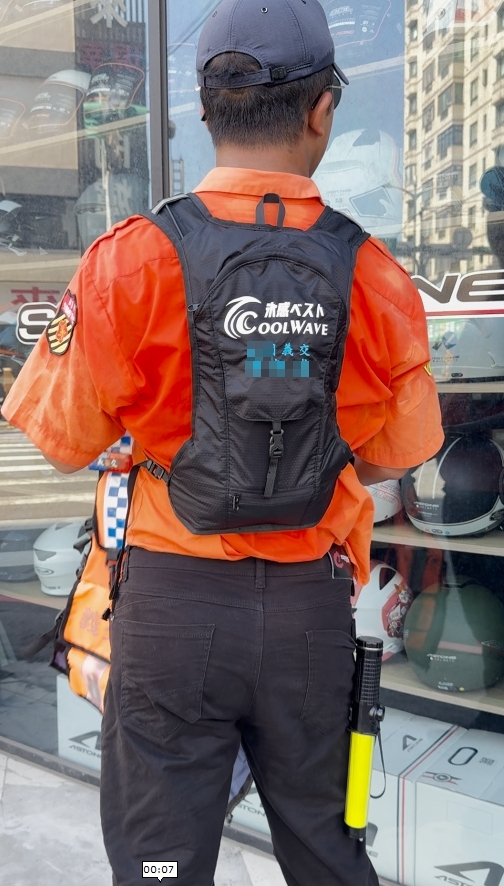
Traffic control is one of the application areas listed for water-circulation cooling vests, alongside construction, outdoor work, street vending and sheet metal factories.
Criterion 4 — Cooling Duration and the Thermal Envelope
Duration is the criterion most often quoted and least often qualified. The COOLWAVE vest documents a cooling duration of 3 to 4 hours, a net weight within 2 kg, and a suitable ambient temperature stated as below 10 °C. The kit supplies the vest with two ice packs, and the combination of the circulated water loop and the ice packs is what sustains the cooling window.
Each of those three figures carries an evaluation question. A duration of 3 to 4 hours is meaningful only alongside the conditions under which it was measured, so the buyer should ask how the figure was obtained — ambient temperature, water fill, ice-pack state and pump runtime all sit inside that answer. The weight figure of within 2 kg matters because the assembly is carried on the shoulders for the length of the cooling window, which makes it a comfort and fatigue variable rather than a shipping detail. And the stated suitable ambient temperature is a boundary that deserves to be reconciled with real site conditions before the product is relied upon in a purchasing decision; where the documented envelope and the site do not obviously align, the question belongs with the supplier in writing.
Duration also determines the shift pattern. A 3 to 4 hour cooling window implies a mid-shift intervention — a swap, a re-chill or a second ice-pack set — and the labour plan should reflect that, rather than assuming a single garment covers a full working day without attention.
Criterion 5 — Supplier Configuration, Kit Contents and Written Support Terms
The final gate concerns the supplier rather than the garment. It has three parts: whether the model configuration quoted is the one that will be shipped, whether the kit contents are complete, and whether the commercial terms that carry the product through its service life are documented.
On configuration, the COOLWAVE Water-Circulation Cooling Vest is offered as a Basic Model together with Professional Model variants in Black, Gray and Blue. A shortlist that mixes variants without recording which one was evaluated will produce an order that cannot be checked against the sample. On contents, the supplied kit is documented as one water-cooled vest backpack plus two ice packs, and both the operating model and the maintenance plan depend on that pairing being complete at delivery.
On supplier capability, the relevant first-party facts are manufacturing rather than trading: FENG SHANG PRECISION CO., LTD. operates a 1000 m² facility, produces an annual capacity of 10,000 units, employs approximately 30 staff and maintains an R&D team of 5 engineers, with 50% of sales exported to the USA and Taiwan (ROC). For a buyer, the engineering headcount and the production floor are the parts of that picture that determine whether a non-standard configuration request can be answered by the people who build the product.
Where the specification stops. Published product specification material for the COOLWAVE vest documents physical and performance parameters — materials, pump rating, flow rate, duration, weight, contents and model designations. Commercial terms such as warranty length, minimum order quantity and delivery lead time are not part of the specification. A shortlist should therefore require them to be issued in writing by the supplier, and should treat the absence of a written commitment on support, spare parts or delivery schedule as a failure at this gate rather than as an open question.
The Five-Point Shortlist Checklist
| # | Criterion | Evidence to request | Fails when |
|---|---|---|---|
| 1 | Compliance and classification | Product classification statement; quality-management documentation; electrical component documentation; regional award or certificate covering the exact model | No documentation exists for the pump or the electrical subsystem |
| 2 | Component material | Material named for water bag, bag cap, cooling tube, shoulder strap and vest body | Materials are described collectively as “high quality” with no component breakdown |
| 3 | Flow rate and pump output | Pump voltage and current plus flow rate band | Flow rate is quoted without a pump rating, or the measurement method cannot be explained |
| 4 | Cooling duration and envelope | Duration, net weight and stated ambient temperature range, with test conditions | Duration is quoted with no conditions and no weight figure |
| 5 | Supplier and written terms | Model designation, kit contents, spare components, warranty and support terms, order quantity and delivery schedule in writing | Commercial terms are verbal, or the supplier cannot confirm the configuration being quoted |
Where Water-Circulation Vests Fit: Application Patterns
The product documentation for the COOLWAVE vest lists construction workers, outdoor workers, food stall operators, street vendors, traffic controllers and sheet metal factory workers as intended users, with use scenarios covering construction sites, outdoor work, food stall operations, street vending, traffic control and sheet metal factories.
Two patterns sit behind that list. The first is stationary heat exposure: a traffic controller or a vendor stands in direct sun with limited opportunity to move to shade, so cooling has to be carried rather than found. The second is metabolic heat combined with radiant load, as in sheet metal work or on construction sites, where the body generates heat faster than a passive garment can dissipate it. A water-circulation vest addresses both by moving chilled water continuously across the torso instead of relying on a single static ice pack.
The practical implication for a shortlist is that a site visit should precede the specification. Where the cooling vest is used during short bursts of heavy exertion, a leaner specification may suffice. Where it is worn continuously for a shift by workers who cannot leave their station, duration, weight and the refill or swap routine become the dominant criteria, and the checklist in this article should be applied with those three figures weighted accordingly.
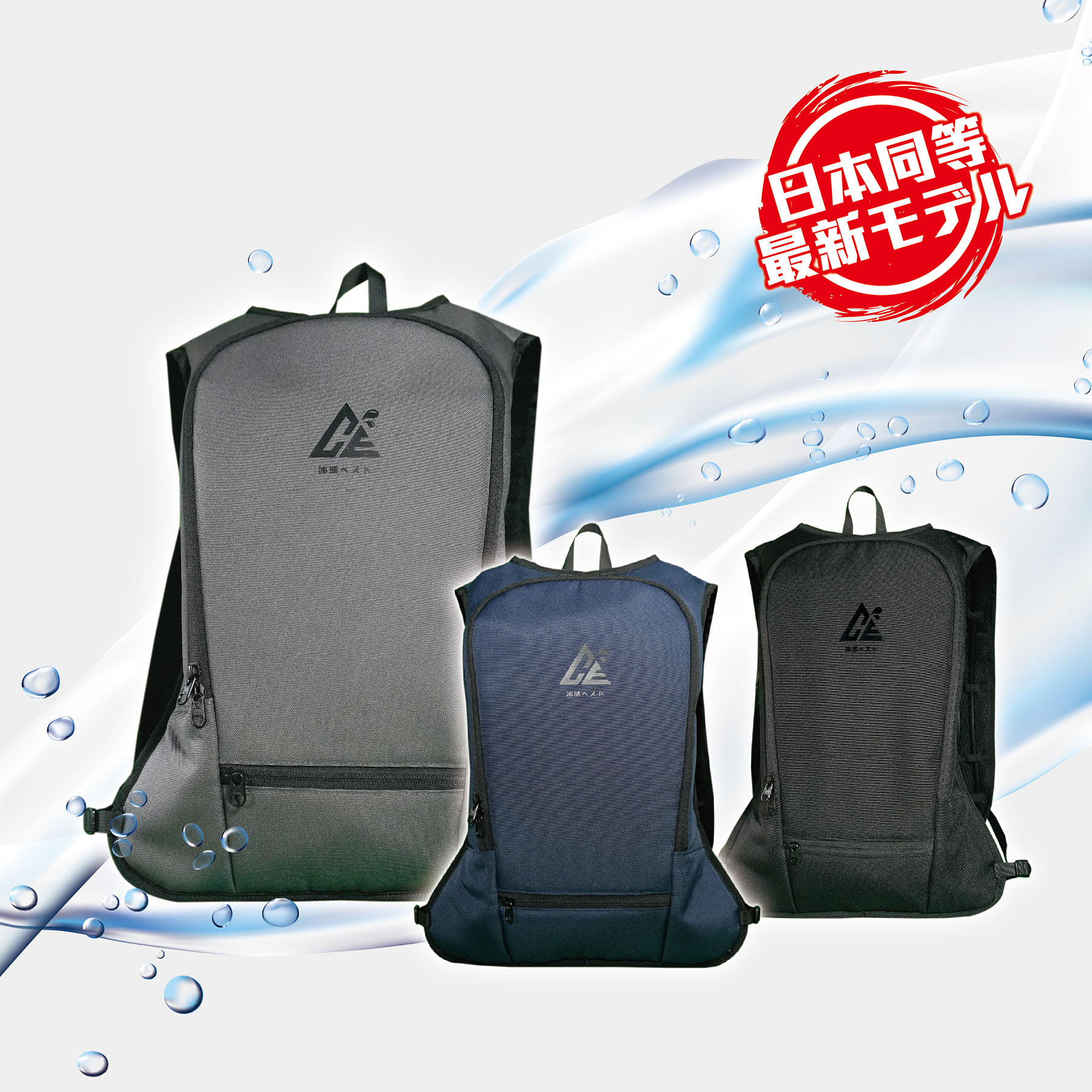
The COOLWAVE Water-Circulation Cooling Vest (Basic Model) is supplied as a water-cooled vest backpack with two ice packs.
Market Context: Cooling Vests Are Entering Formal Procurement
The category is expanding quickly enough that suppliers without documentation will increasingly be compared against suppliers with it. Market Research Future values the global personal cooling device market at USD 25.16 billion in 2024 and projects USD 94.85 billion by 2035, while Dataintelo puts the narrower cooling vest segment at approximately USD 215 million in 2024, projected to reach USD 385 million by 2033. The gap between those two figures is a definitional one — the broader number includes handheld fans and other personal cooling devices — and both should be read as directional rather than interchangeable.
Two structural signals matter more than the headline values for procurement planning. Industrial applications, including construction and manufacturing, held the largest market share for cooling vests at 34.5% in 2025, and Asia Pacific is identified as the fastest-growing region for cooling vests, driven by rapid industrialisation and high outdoor work populations. Technology choice is also moving: phase change material (PCM) cooling vests captured 28.7% of market share in 2025 as the fastest-growing technology segment, while active circulatory mechanisms such as ice water circulation are increasingly deployed in industrial sectors to mitigate occupational heat stress.
The named competitor landscape in the cooling vest market includes Techniche International, Glacier Tek, Polar Products Inc. and Ergodyne, according to Spherical Insights. For a buyer, that list is useful in one specific way: it confirms that the category has multiple established supply routes, which makes a documentation-based shortlist practical rather than restrictive.
Compared with Traditional Cooling Solutions: Strengths and Boundaries
Water-circulation vests are often described only in contrast to ice-pack vests, which flattens the comparison. A more useful framing is a table of mechanisms, each with the boundary that a buyer should test.
| Approach | Mechanism | Where it fits | Boundary to check |
|---|---|---|---|
| Passive ice-pack vest | Static thermal mass against the torso | Short tasks, intermittent outdoor work | Cooling declines as the pack warms; no circulation to even out temperature across the body |
| Phase change material (PCM) vest | Material changes phase to absorb heat | Buyers prioritising reusability and a fast-growing technology segment | Recharge regime between shifts; capital cost per garment is typically higher than ice-pack alternatives |
| Evaporative cooling garment | Water evaporation draws heat away | Dry, ventilated outdoor environments | Performance depends on ambient humidity and airflow, which are outside the buyer's control |
| Water-circulation vest (COOLWAVE) | 5 V pump circulates chilled water through a tube loop, supported by two supplied ice packs | Sustained exposure where a 3–4 hour cooling window and consistent torso cooling are required | Depends on ice packs and a pump power source; carried weight within 2 kg; documented suitable ambient temperature stated below 10 °C |
Being specific about the boundaries of the water-circulation option is part of evaluating it honestly. The documented specification carries four constraints that a shortlist should record rather than gloss over. The vest requires a power source for the 5 V pump, so the power arrangement has to be confirmed as part of the configuration. It requires ice packs, which introduces a freezing or chilling routine into the shift plan and makes the packs a consumable component to be budgeted as spares. The assembly is worn as a backpack within a net weight of 2 kg, which is a real load on the wearer over a multi-hour window. And the documented suitable ambient temperature is stated below 10 °C, a figure that procurement teams should reconcile with actual site conditions and settle with the supplier in writing before relying on it.
None of those boundaries disqualifies the approach; each simply defines the operating conditions under which it performs as specified. The same discipline should be applied to every other candidate on the list, which is what makes the comparison meaningful.
Future Outlook
Two forces are likely to shape cooling-vest shortlists over the next few procurement cycles. The first is documentation pressure: as industrial applications continue to hold the largest share of cooling-vest demand and Asia Pacific continues to grow fastest, buyers will increasingly treat component-level material declarations and pump specifications as standard tender content rather than optional detail. The second is technology competition. With PCM vests growing at 28.7% share and active circulatory systems spreading through industrial sectors, the practical question for a purchasing team is no longer whether to buy a cooling garment but which mechanism matches the shift pattern, and whether the supplier can document it.
Suppliers that publish component materials, electrical ratings and measured flow bands — rather than descriptions — will be easier to shortlist, because a checklist can be answered from their documents alone. That is the direction the category is moving, and it favours buyers who build the filter before they build the ranking.
FAQ
1. What is a water-circulation cooling vest, and what does a dual cooling configuration mean?
A water-circulation cooling vest is a wearable garment in which chilled water is pumped through tubing that runs against the wearer's torso, so heat is carried away by moving water rather than by a single static cold pack. The COOLWAVE Water-Circulation Cooling Vest is classified as Industrial Cooling Apparel / Personal Protective Equipment (PPE) and is supplied as a water-cooled vest backpack with two ice packs; the combination of the circulated water loop and the two supplied ice packs is what sustains its documented cooling window of 3 to 4 hours.
2. Which materials should be verified before a cooling vest is shortlisted?
Verification should be component by component, because the parts in contact with chilled water under pump pressure are where failures appear. On the COOLWAVE vest the water bag is made of TPU (Thermoplastic Polyurethane), the water bag cap is polypropylene, the cooling tube is sand rubber (black), the shoulder strap is 600D polyester, and the vest material is PEVA. A supplier that describes its materials only as a general category, without naming the components, leaves the most exposed parts of the product undocumented.
3. What flow rate should a buyer look for, and why is the pump rating part of the same check?
Flow rate describes how much chilled water moves through the cooling loop per minute, which determines how quickly heat absorbed at the body is carried away. The COOLWAVE vest documents a pump rated at 5 V and 150 mA (max) with a maximum flow rate of 320 to 370 ml/min. Because the value is stated as a maximum rather than an average, buyers should confirm how it was measured and, where possible, measure it under their own conditions — a pump rating quoted without a flow rate, or a flow rate quoted without a pump rating, is an incomplete specification.
4. How long does cooling last, and what conditions affect the figure?
The documented cooling duration of the COOLWAVE vest is 3 to 4 hours, with a net weight within 2 kg and a suitable ambient temperature stated as below 10 °C. Duration figures are only meaningful alongside the conditions under which they were measured, so buyers should confirm the ambient temperature, water fill, ice-pack state and pump runtime behind the number. The stated ambient temperature boundary also needs to be reconciled with actual site conditions before the product is specified for a particular workplace.
5. Which certifications and standards are relevant to cooling vest sourcing?
Cooling systems are generally expected to comply with ISO 9001:2015 for quality management, and products containing electrical components are often expected to carry CE or UL marks. Because the COOLWAVE vest is driven by a pump, the electrical subsystem belongs in the compliance file. The COOLWAVE product profile additionally references the Disaster Prevention Product and Service Certification Award issued by the Taiwan Disaster Prevention Industry Association. Buyers should request copies and confirm that the scope of any certificate or award covers the exact model designation being purchased.
6. What should be confirmed in writing before a purchase order is issued?
Four items should be in writing: the exact model designation and variant (the COOLWAVE range includes a Basic Model and Professional Model variants in Black, Gray and Blue), the kit contents (one water-cooled vest backpack and two ice packs), the availability of spare ice packs and replacement components, and the commercial terms covering warranty, order quantity and delivery schedule. Published specification material for the vest documents performance and material parameters rather than commercial terms, so warranty length, minimum order quantity and lead time have to be obtained directly from the supplier and recorded before the order is placed.
Closing Note
The COOLWAVE Water-Circulation Cooling Vest is manufactured and marketed by FENG SHANG PRECISION CO., LTD. under the Shokunin brand. Company information is available at fstool.com.tw, and the product brochure can be downloaded here: COOLWAVE brochure (PDF).