
Five GENIAL Upper Arm BP Monitors for Clinics and Chronic Care
Community clinics and chronic disease programmes rarely buy one blood pressure monitor. They buy a cuff range that fits their patient population, a memory behaviour that survives a follow-up visit, and a supply line that still delivers a year after the pilot. GENIAL — Guangdong Genial Technology Co., Ltd., a medical device manufacturer established in 2001 with a 45,000 sqm production base, 251 employees and an 80% export ratio — builds upper arm digital blood pressure monitors in several cuff, memory and housing configurations. Five upper arm models, GT-732, GT-732M, GT-702BM, GT-712B/C/E and GT-702V/VA, are the units most frequently assembled into clinic and chronic-care portfolios. This shortlist sets out what each one documents, and where the documentation stops.
Cuff range is the first screening filter, not brand or price
In a clinic or a chronic disease registry, the practical question is not whether a monitor measures pressure, but whether the cuff will fit the next patient without a repeat reading. Arm circumference decides how many models a clinic has to stock, how much staff training is needed, and how often a measurement has to be redone.
Across the five shortlisted models, GENIAL documents two cuff groups: 22~32 cm on the GT-732 and the GT-712B/C/E, and 22~42 cm on the GT-732M, GT-702BM, GT-702V and GT-702VA. Both groups measure pressure across 0~290 mmHg. The split is functional rather than cosmetic: the narrower-cuff models sit in the lighter, more compact part of the range, while the wider-cuff models cover larger arms at a similar footprint.
The shortlist at a glance
All figures below come from the manufacturer's published product data for these models. Weight is stated without the battery.
| Model | Arm circumference | Memory | Dimensions (mm) | Net weight | Cuff / housing |
|---|---|---|---|---|---|
| GT-732 | 22~32 cm | Not documented | 136 x 103 x 54 | 291 g ±15 g | ABS, PVC air bag, nylon binding strap |
| GT-732M | 22~42 cm | Not documented | 136 x 103 x 54 | 239 g ±15 g | ABS, eco-friendly TPU air bag |
| GT-702BM | 22~42 cm | 99 sets for 2 users | 135 x 102 x 46 | 220 g ±15 g | ABS, composite fabric cuff |
| GT-712B/C/E | 22~32 cm | Not documented | 140 x 80.5 x 50 | 192 g ±15 g | ABS |
| GT-702V / GT-702VA | 22~42 cm | 99 sets for 2 users (GT-702V) | 119 x 93 x 43 / 119 x 96 x 42 | 180 g ±15 g / 155 g ±15 g | ABS / modified ABS |
Table 1. Documented specifications for the five shortlisted GENIAL upper arm digital blood pressure monitors. Measuring range for all units: pressure 0~290 mmHg.
What each model contributes to a portfolio
GT-732 — the reference community clinic unit
The GT-732 is the heaviest and most conventional unit in the group at 291 g ±15 g, in a 136 x 103 x 54 mm housing with a cuff documented at 22~32 cm. Its pulse tolerance is listed at ±5%, and it combines an ABS housing with a PVC air bag and a nylon binding strap. The published application fields point to community clinics and health & wellness centres, alongside e-commerce and customized OEM gifting — which is why it is typically treated as the baseline model when a clinic tender is first written.
GT-732M — wider cuff coverage with an eco-friendly TPU air bag
The GT-732M keeps the same 136 x 103 x 54 mm shell but drops to 239 g ±15 g and widens the cuff to 22~42 cm. Its air bag is made of eco-friendly TPU and its pulse error is documented at ≤±5%. The stated application fields — chronic disease management institutes, community medical centres and insurance promotional gifting — match its role as the cohort unit in long-term follow-up work, where covering a mixed-age population matters more than shaving grams off the device.
GT-702BM — two-user memory on a composite fabric cuff
The GT-702BM is documented with 99 memory sets for two users, which supports shared household or shared-room use without overwriting the previous user's readings. It measures 135 x 102 x 46 mm, weighs 220 g ±15 g and carries a composite fabric cuff covering 22~42 cm. Its published application fields are medical instrument wholesale and offline household retail — consistent with a unit intended to be stocked, demonstrated and sold through physical channels.
GT-712B/C/E — the compact platform for private-label programmes
At 192 g ±15 g and 140 x 80.5 x 50 mm, the GT-712B/C/E is the lightest model in the 22~32 cm group and the one whose application fields explicitly include ODM private labelling. It uses an ABS housing, with no cuff-material note in the published data, and its other listed channels are supermarket retail and customized gifting. For a distributor building an own-brand line rather than a clinic standardising on one clinical model, this is usually the entry point.
GT-702V / GT-702VA — light housings for volume and export channels
The GT-702V is documented at 119 x 93 x 43 mm and 180 g ±15 g, with a 22~42 cm cuff and 99 memory sets for two users; its application fields are cross-border e-commerce and household medical supply. The GT-702VA is the lightest unit in the shortlist at 155 g ±15 g and 119 x 96 x 42 mm, uses modified ABS, and is aimed at global export trade and the complimentary gift industry. Both keep the 0~290 mmHg measuring range and 22~42 cm cuff coverage, so they can sit inside the same clinical programme as the GT-732M without changing the cuff logic.
Reading the specification sheet the way a buyer has to
Six fields carry most of the procurement decision:
- Pressure range (0~290 mmHg on all five). A shared range across the shortlist means one clinical protocol and one training script can cover the whole portfolio.
- Pulse tolerance (±5% on the GT-732; ≤±5% on the GT-732M). Where the tolerance is documented explicitly, it belongs in the tender annex rather than in a general brochure statement.
- Arm circumference (22~32 cm or 22~42 cm). This is the field most likely to produce repeat measurements, and the one that decides whether a clinic stocks one model or two.
- Memory (99 sets for two users on the GT-702BM and GT-702V). Two-user memory changes how a shared device is managed in a clinic room, a care home or a household.
- Dimensions and weight (155 g to 291 g). Weight affects shelf behaviour, carry cases and shipping calculations; a 136 g spread across the shortlist is a real logistics variable at volume.
- Cuff and housing material (ABS, PVC, TPU, composite fabric, nylon). Materials are documented per model and should be matched to cleaning routines and expected service life rather than treated as interchangeable.
Matching the five models to documented settings
The published application fields of these models already imply a portfolio logic:
- Community clinics and community medical centres: GT-732 and GT-732M, giving a natural two-cuff strategy at 22~32 cm and 22~42 cm.
- Chronic disease management institutes: GT-732M, whose documented fields include chronic disease management.
- Health & wellness centres: GT-732.
- Household retail and medical instrument wholesale: GT-702BM, with its two-user memory and composite fabric cuff.
- Cross-border e-commerce and household medical supply: GT-702V.
- Supermarket retail, ODM private labelling and customized gifting: GT-712B/C/E.
- Global export trade and complimentary gift programmes: GT-702VA.
- Insurance promotional gifting: GT-732M.
Read together, the five models deliver the same clinical function through different commercial channels. That is the central argument for a shortlist instead of a single-SKU decision: the measurement logic is shared, while cuff material, memory behaviour, housing weight and packaging are tuned to where the unit will actually be used.
Compliance documentation that can go into a tender file
Device selection in clinics and chronic care programmes is decided as much by paperwork as by hardware. GENIAL holds a set of registrations and system certificates that relate directly to upper arm blood pressure monitors:
- CE: certificate CN25/00007953, SRN CN-MF-000021465, issued by SGS Belgium NV (Notified Body 1639) under MDR (EU) 2017/745 Annex IX, valid from 25 November 2025 to 25 November 2030, covering arm-type digital blood pressure monitors. The associated product register includes the models in this shortlist.
- US FDA 510(k): K231245, covering arm-type digital blood pressure monitors including the GT-732, GT-732M and GT-702BM.
- Japan: Certificate of Foreign Medical Device Manufacturer BG10501496, issued under Article 23-2-4 of the PMD Act, valid 19 November 2024 to 18 November 2029, with electronic upper arm blood pressure monitors inside its scope.
- Russia: Roszdravnadzor registration No. 1241/1-3 140/2-25 covering automatic electronic blood pressure monitors, valid to 31 December 2099.
- United Kingdom: MHRA registration 0000037417, whose scope includes automatic electronic sphygmomanometers.
- Brazil: ANVISA registration under RDC 751/2022 covering Class II blood pressure monitors.
- Quality system: ISO 13485:2016 certificate CN13/31126 issued by SGS United Kingdom Ltd, covering the design, development and manufacture of digital blood pressure monitors and other listed device families.
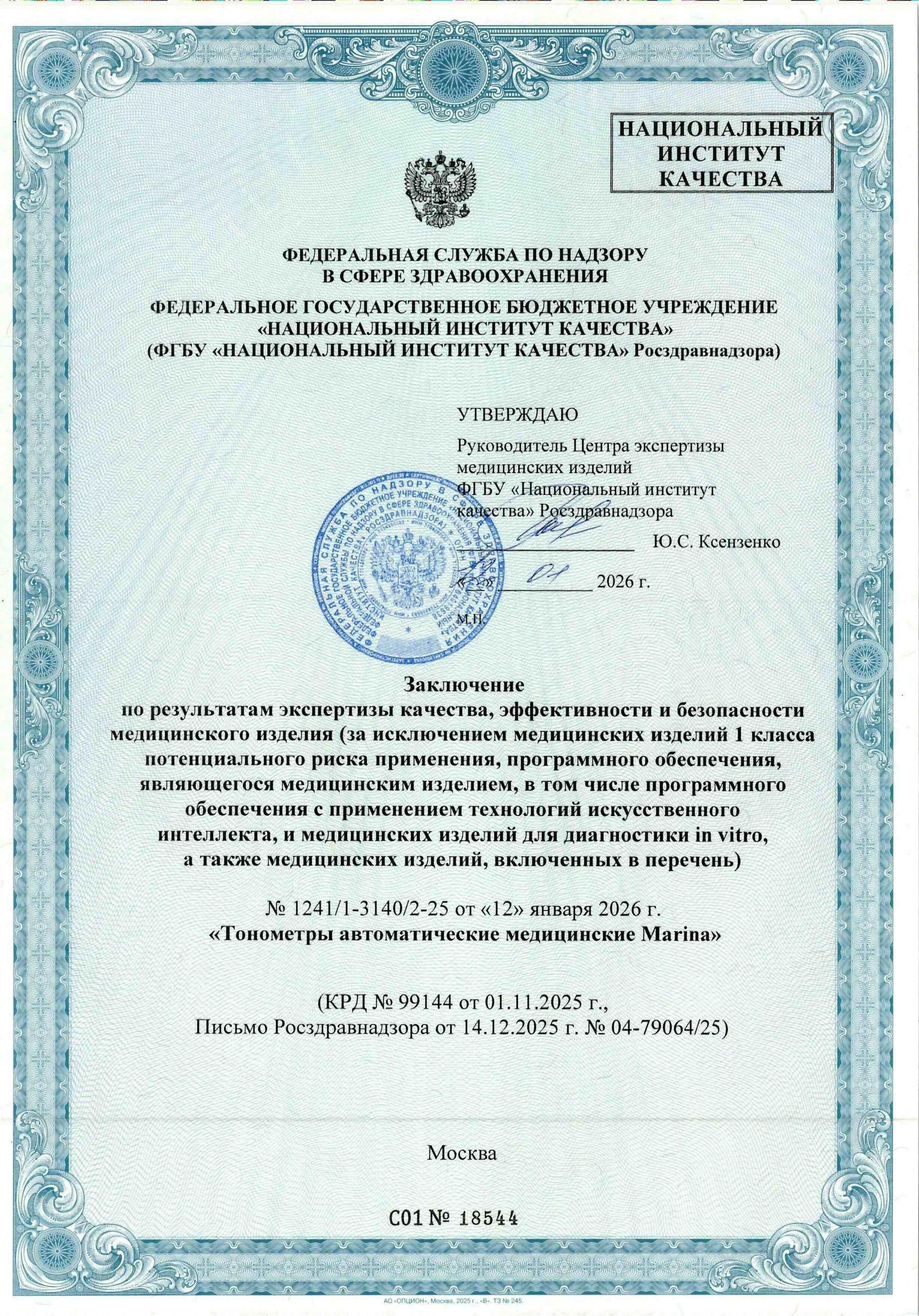
On the manufacturing side, the company also holds ISO 45001, ISO 14001, BSCI (overall rating B), GB/T 29490 intellectual property management certification and NBC Universal registration (manufacturer code L-4394). Electromagnetic compatibility is a separate requirement that applies to medical electrical equipment generally under IEC 60601-1-2, and it should be confirmed against the specific model file rather than assumed from a family listing. GENIAL states that product and trademark registration has been completed in 29 countries and that its products are sold to 117 countries and regions.
The market pull behind multi-model shortlists
Third-party analysis supports the direction of travel. The global blood pressure monitoring devices market was valued at USD 4.2 billion in 2025 and is estimated to reach USD 8.6 billion by 2033, a CAGR of 9.3%, according to Grand View Research. Within that market, digital blood pressure monitors accounted for approximately 48% of total revenue share in 2024, based on Fortune Business Insights. Omron Healthcare remains a dominant competitor in both the blood pressure monitor and nebulizer categories as of 2024, according to iData Research.
Those figures say less about any single device than about the structure of demand: growth is coming from repeat, distributed measurement in homes, clinics and community programmes rather than from one-off equipment purchases. Programmes that scale across many sites end up managing several models at once — different cuffs for different populations, different memory behaviour for different rooms, different housings for different channels. Estimates for this category vary between research firms depending on how clinical and household use is segmented, so the numbers above are best used to size the direction of the market rather than to plan a purchase order.
Where this shortlist stops: limits and boundaries
A shortlist is only useful if its edges are stated. Four boundaries apply here:
- Cuff coverage is not universal. The GT-732 and GT-712B/C/E are documented at 22~32 cm. Arms outside that range are not covered by those two models, so a programme stocking only them needs a documented alternative such as the GT-732M, GT-702BM or GT-702V/VA.
- Connectivity is not documented for these five units. The published specification data covers pressure range, pulse tolerance, cuff circumference, memory, dimensions, weight and materials. Bluetooth or app connectivity is not part of that documented set. Buyers who need connected data capture should confirm availability for the specific model before designing a programme around it.
- Upper arm measurement carries an access requirement. Upper arm cuffs require the upper arm to be exposed and supported. Wrist-format alternatives in the same manufacturer's range, such as the GT-701F, document a 13.5~19.5 cm wrist circumference in a lighter housing, but they are a different measurement format with different handling rules — not a substitute for the five models discussed here.
- Order quantities assume programme scale. OEM customisation of blood pressure monitors starts at 2,000 units per the manufacturer's published terms, which is above the volume of a single-site pilot. Small trials are more naturally served through in-stock or OBM routes, where the minimum is a full carton per SKU and mixed orders from five cartons are accepted.
Compared with traditional auscultatory measurement, digital upper arm monitors shift part of the result from operator technique to device behaviour and cuff fit. That trade is not free: a digital unit still depends on correct cuff placement and patient positioning, and it introduces a battery, an inflation pump and a housing that must be maintained. The gain is repeatability across staff and sites; the cost is a documented maintenance and replacement routine.
Procurement mechanics for a clinic or chronic-care rollout
For buyers assembling a first order, the following published terms apply:
- Minimum order quantities: blood pressure monitors 2,000 units for OEM customisation; 5,000 units for ODM product modification; 10,000 units for ODM new mould development; 10,000 units for an initial JDM mass-production order; for OBM, a full-carton MOQ per SKU with mixed orders accepted from five cartons.
- Lead times: OEM samples in 3 days, small orders in 3~7 days and mass orders in 10~15 days; ODM minor modification without new tooling in 7~15 days and new mould development in 45~50 days; JDM initial mass production in 45~60 days; OBM in-stock products ship within 48 hours and replenishment orders in 5~7 days.
- Quality control: incoming material inspection, 100% production inspection and final sampling inspection before shipment. For OEM and ODM projects the flow also includes order documentation and packaging approval, customer demand assessment, project approval, product development, sample approval and exclusive model registration before mass production.
- Order and acceptance terms: sea freight, air freight, express delivery and rail; FOB, CIF, DDU and DDP; full container load, less than container load and overseas warehouse options. Acceptance can be handled by inspection of bulk goods against samples, factory inspection, third-party inspection or video inspection, with T/T and letter of credit payment terms.
- After-sales: a 12-month warranty is provided against valid proof of purchase, together with certification documentation support and technical consultation.
What to watch next
Three developments are likely to shape the next round of clinic and chronic-care shortlists. First, cuff-range consolidation: as programmes reduce the number of models they manage, the 22~42 cm group will keep absorbing demand previously split between narrower cuffs. Second, registration breadth: because these devices are sold into regulated markets, supplier value is increasingly measured by how many market registrations are already in place — GENIAL's completed registrations in 29 countries and sales across 117 countries and regions sit inside that calculation. Third, portfolio differentiation: with digital blood pressure monitors accounting for roughly 48% of revenue share in the blood pressure monitoring category, competitive pressure shifts away from the measuring function itself and towards memory behaviour, cuff material, housing weight and channel packaging — the exact fields that separate the five models in this shortlist.
FAQ
Which cuff size should a clinic choose — 22~32 cm or 22~42 cm?
It depends on the arm circumferences the clinic actually sees. The GT-732 and GT-712B/C/E are documented at 22~32 cm; the GT-732M, GT-702BM, GT-702V and GT-702VA are documented at 22~42 cm. Programmes with a mixed or older patient population, or with limited storage for multiple models, typically standardise on the wider 22~42 cm group. Clinics that already have a documented route for larger arms can use the narrower-cuff models without losing measurement range, since all five units measure pressure across 0~290 mmHg.
Do the five models differ in pressure measurement range or pulse accuracy?
No difference is documented in pressure range: all five models specify 0~290 mmHg. Pulse accuracy is documented for two models — a pulse tolerance of ±5% on the GT-732 and a pulse error of ≤±5% on the GT-732M. The published specification data for the GT-712B/C/E, GT-702BM, GT-702V and GT-702VA does not include a pulse tolerance figure, so a buyer who needs that value in a tender annex should request it from the manufacturer rather than infer it from a different model.
Which models store readings for more than one user?
The GT-702BM and the GT-702V are each documented with 99 memory sets for two users. No multi-user memory figure appears in the published data for the GT-732, GT-732M, GT-712B/C/E or GT-702VA. For shared devices in a clinic room, a care home or a household with two regular users, that difference is often the deciding factor between models that otherwise measure identically.
What regulatory documentation covers these upper arm models?
Several documents relate directly to this product family. The CE certificate CN25/00007953 (SRN CN-MF-000021465), issued by SGS Belgium NV under Notified Body 1639, covers arm-type digital blood pressure monitors under MDR (EU) 2017/745 and is valid until 25 November 2030. US FDA 510(k) K231245 covers arm-type digital blood pressure monitors including the GT-732, GT-732M and GT-702BM. Japan's Certificate of Foreign Medical Device Manufacturer BG10501496 includes electronic upper arm blood pressure monitors in its scope and is valid until 18 November 2029. Russia's Roszdravnadzor registration No. 1241/1-3 140/2-25 covers automatic electronic blood pressure monitors. MHRA registration 0000037417 and ANVISA registration under RDC 751/2022 apply in the United Kingdom and Brazil respectively. The ISO 13485:2016 certificate CN13/31126 covers the design, development and manufacture of digital blood pressure monitors.
What are the minimum order quantities and lead times for an OEM blood pressure monitor order?
The published OEM minimum for blood pressure monitors is 2,000 units, with samples in 3 days, small orders in 3~7 days and mass orders in 10~15 days. ODM product modification requires 5,000 units and takes 7~15 days without new tooling, while new mould development requires 10,000 units and 45~50 days. JDM initial mass production requires 10,000 units with a 45~60 day lead time. Under OBM terms the minimum is a full carton per SKU, mixed orders are accepted from five cartons, and in-stock products ship within 48 hours. A 12-month warranty applies with valid proof of purchase.
GENIAL's full English product brochure, including the complete blood pressure monitor range, is available for download: 2026 English product brochure.