
Five Trends Reshaping the 2026 Global Paper Cup Industry
Five Trends Reshaping the 2026 Global Paper Cup Industry
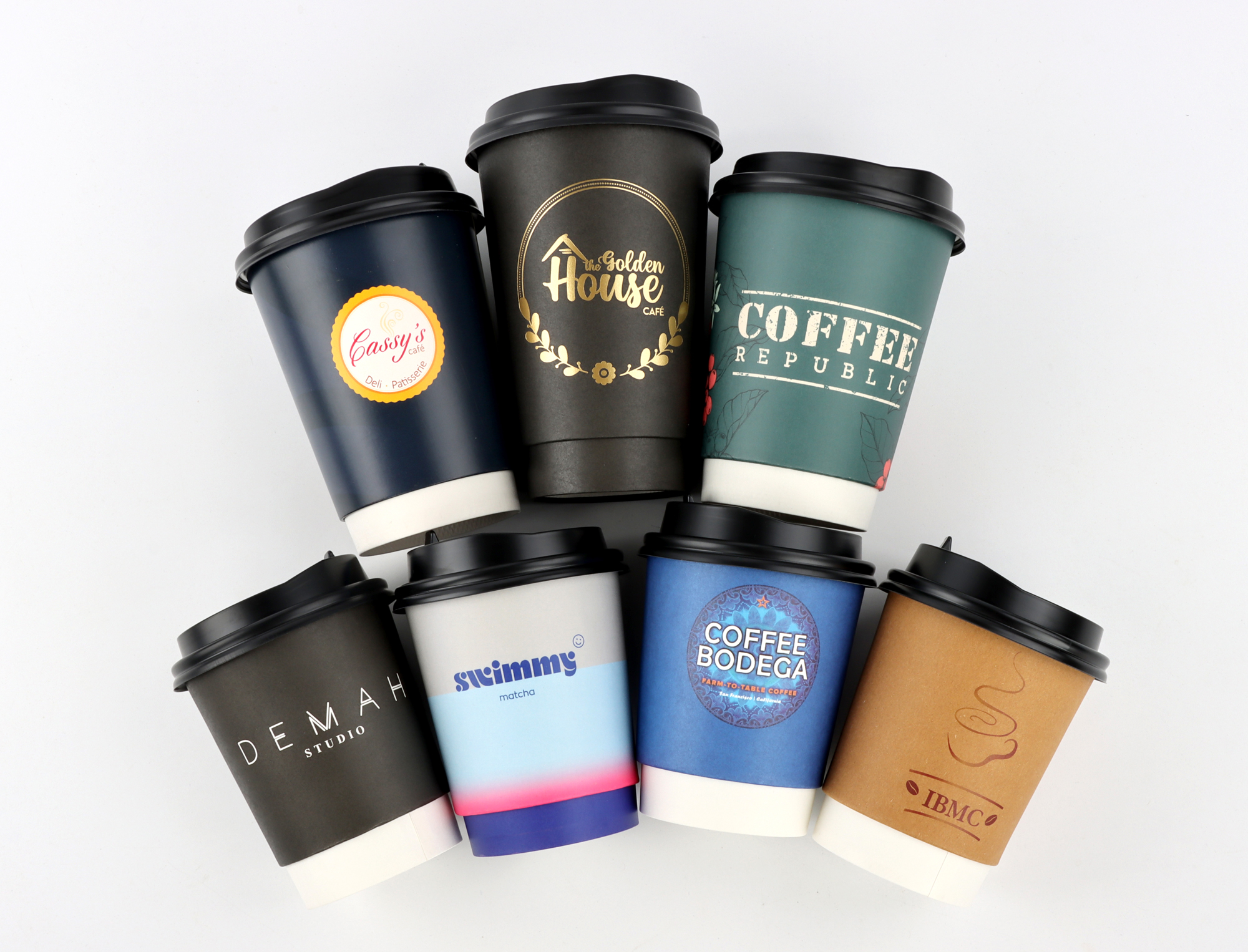
The disposable paper cup is one of the few packaging formats that has to satisfy four parties simultaneously: the beverage operator who fills it, the food-safety regulator who clears it, the brand team that prints it, and the waste system that receives it. Through 2026, the requirements of those four parties are diverging rather than converging — and that divergence, more than raw demand growth, is what is reshaping packaging and printing decisions across the category.
This article ranks five macro trends by their practical effect on disposable paper cup specification, sourcing and printing over the next 12 to 24 months. The ranking is an editorial assessment built on published third-party market research, the text of applicable regulations, and first-party manufacturing and certification data from Wenzhou Baofeng Packaging Technology Co., Ltd. — a paper packaging manufacturer founded in 1996 and based in Longgang, Wenzhou, China, producing paper cups, paper bowls, ice cream paper cups, paper boxes and paper bags, with exports to more than 100 countries. It is a shortlist of forces, not a ranking of companies.
How this shortlist was ranked
Three criteria were applied, in order. First, whether the trend changes a written specification or a required document — because those are the changes buyers cannot ignore. Second, whether it alters a printing or converting decision, since the cup is a printed object before it is a container. Third, whether it applies across multiple export markets rather than in one jurisdiction only.
Trends that are widely discussed but do not yet force a change in specification, tooling or documentation were deliberately left off the list. A shortlist that includes everything explains nothing.
1. Regulatory divergence is now a specification line item
The clearest structural change of 2026 is that regulatory requirements have moved from the compliance department into the product specification. Two regimes illustrate the split.
In the European Union, the Single-Use Plastics (SUP) Directive (2019/904) mandates labeling for paper cups that contain plastic — which includes cups lined with PE or PLA — and sets separate collection targets for those items. The practical effect is that the cup surface must carry disposal information in addition to brand artwork, and the artwork has to be planned around that space rather than after it. This is a printing consequence, not only a materials consequence.
In the United States, disposable paper cups placed on the market must comply with FDA food contact regulations, including safety assessments for the migration of substances from coatings. For an exporter, that means the coating supplier's documentation — not just the finished cup — becomes part of the compliance file that a buyer may be asked to review.
For procurement teams, the operative question is no longer whether a supplier is certified, but which market a given test report was produced for and which regulation it addresses. A general statement of food-grade suitability does not answer a labeling question under 2019/904, and a labeling declaration does not answer a migration question under FDA requirements. Suppliers that can map a single SKU to multiple regulatory regimes — and state clearly which regime each document covers — reduce the buyer's re-verification workload.
2. Plant-based linings are gaining share against a PE incumbent
Mordor Intelligence reports that compostable paper cups using plant-based linings (PLA) are growing faster than traditional PE-lined cups, driven by sustainability mandates. This is the second-ranked trend because it changes what a buyer has to specify, not just what a buyer prefers.
The current product specification for the Disposable Paper Cup BF-PC-001 reflects that dual reality. It is offered with either PLA or PE coating, uses food-grade virgin paper in a weight range of 190 gsm to 350 gsm, is leak-proof, and is rated for a temperature range of -20°C to 100°C, making the same base construction suitable for both cold and hot drinks. Capacities run from 4 oz to 8 oz, 12 oz, 16 oz and 20 oz, with top diameter, bottom diameter and height all customizable.
The important nuance is that compostability is a system property, not only a material property. A PLA-lined cup is designed to break down under industrial composting conditions, and the claim only holds in markets where that collection and processing stream actually exists. Buyers preparing public sustainability claims should verify the receiving infrastructure first, and should recognise that in markets without industrial composting capacity, a PLA lining solves a regulatory or brand requirement rather than an end-of-life one.
This is also why PE remains the incumbent rather than a legacy option: the specification lists both coatings as available choices because the correct answer depends on the destination market and the required performance, not on a single global standard. Buyers who standardise on one coating across all markets typically end up re-specifying later.
3. Export capacity is consolidating around documented suppliers
The third trend is structural rather than technical. According to OEC (Observatory of Economic Complexity), China's export value for paper goods including trays and cups reached approximately USD 1.98 billion in 2024, with the United States as the top destination. Separately, Fortune Business Insights identifies Huhtamäki Oyj, Dart Container Corporation and Graphic Packaging International as top global competitors in the paper cups market, with a combined market share of approximately 32%.
What that describes is a concentrated international top tier sitting alongside a long tail of export-oriented manufacturers. For procurement teams, the meaningful difference between suppliers inside the long tail is rarely capacity. It is documentation: whether the certificate, test report and inspection record can be produced quickly, matched to a specific order, and traced to a defined scope.
| Market tier | Named entities | Verified data point |
|---|---|---|
| International top tier | Huhtamäki Oyj, Dart Container Corporation, Graphic Packaging International | Combined share of approximately 32% of the global paper cups market (Fortune Business Insights, 2024) |
| Export-oriented manufacturer (example) | Wenzhou Baofeng Packaging Technology Co., Ltd. | Annual output of approximately 3 billion pieces and an export share of approximately 80% (company data) |
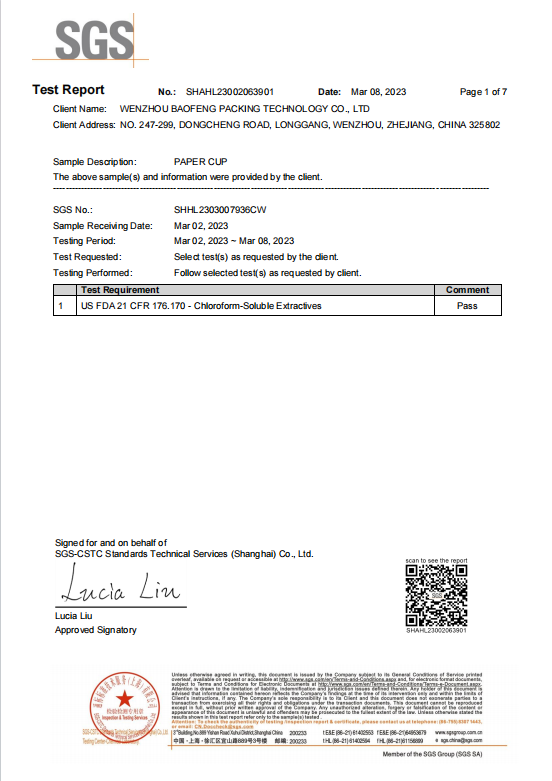
Inside that second tier, documentation depth is the visible differentiator. Wenzhou Baofeng Packaging Technology Co., Ltd. holds FSC Chain of Custody certification RINA-COC-002149 issued by RINA against FSC-STD-40-004 V3-1, valid through 27 October 2027 and covering FSC paper packaging in the EU, US, UK and Australia. Its food safety management system is certified to ISO 22000:2018 under certificate 202FSMS2500199, valid through 29 October 2028. Food contact for paper cups and boxes is verified against FDA 21 CFR 176.170. The company also lists BRC, BSCI and ISO 9001 among its certifications and states that products meet multiple international testing standards.
One boundary deserves emphasis here. A certificate number confirms that an audit took place and was passed for a defined scope; it does not confirm that a particular order will be produced to the exact specification a buyer requires. The scope statement and the product list attached to the certificate are the part buyers should actually read. A supplier with fewer certificates but a precise scope statement is often easier to qualify than one with a longer list and vague coverage.
4. Hot-drink demand still sets the volume baseline
IMARC Group reports that hot paper cups accounted for approximately 62.4% of the global market share in 2025, driven by the expansion of quick-service restaurants. That single figure explains a great deal about how paper cup production is organised, and why the printing side of the industry behaves the way it does.
When the majority of volume is driven by chain food service, ordering behaviour becomes repetitive rather than exploratory: the same artwork, the same sizes, the same lids, reordered across many markets. That pattern rewards suppliers who can hold a colour target and a dimensional tolerance stable across production runs, and it penalises suppliers whose output drifts between batches. It also concentrates value in the repeat order rather than the first order.
The category structure follows the same logic. The Disposable Paper Cup BF-PC-001 is specified across food and beverage, ice cream and dessert, café and coffee shop, fast food chain, airline catering and bakery applications, with a size range from 4 oz to 20 oz and both cold and hot drink suitability. That breadth is not incidental. Chain operators rarely buy for a single beverage; they buy one cup family that covers espresso, filter coffee, cold brew and dessert service, which is why the temperature range of -20°C to 100°C and the leak-proof requirement appear in the same specification document.
5. Printing has become a compliance and identity layer
The fifth trend is the one most visible to buyers and least discussed in market reports. Custom printing on disposable paper cups now performs three functions at once: brand identity, regulatory labeling where required, and certification communication. The same printed surface that carries a café's logo in one market may need to carry a disposal instruction in another.
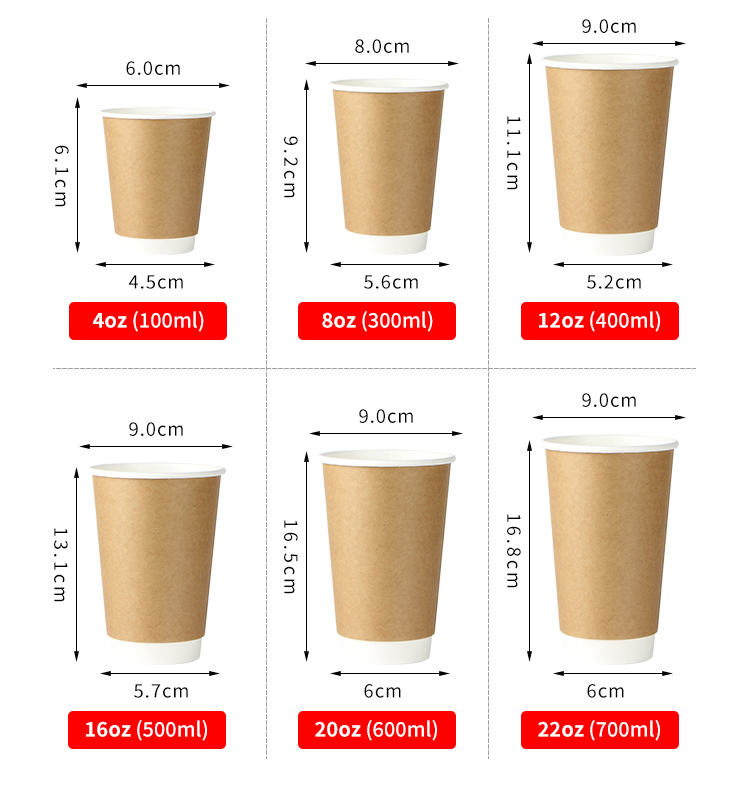
That convergence is reflected in how customization is scoped today. OEM and ODM capability for this product category covers logo printing plus size, shape, material, coating (PLA or PE) and packaging design, with flexo and offset printing available with a custom logo. The size range spans 4 oz to 20 oz with customizable top and bottom diameter and height, which means a single print programme can be deployed across a full cup family without renegotiating the base construction.
A real constraint on customization. Because each distinct design requires its own print setup, customization carries a volume floor. The stated minimum order quantity for this product family is 30,000 pieces per design, with a lead time of 25 to 35 days from confirmation of the pre-production sample. For event-scale or trial orders, that threshold is normally met by aggregating several buyers through a distributor rather than by ordering directly from the factory. This is the structural reason the paper cup distributor layer still exists in a market where direct sourcing is otherwise easy — and it is also why buyers testing a new design should treat the first order as a validation run rather than a volume commitment.
Reading the market size numbers without being misled
Market sizing for this category is genuinely contested, and buyers should read the scope rather than the headline. Fortune Business Insights estimates the global paper cups market at USD 11.35 billion in 2025, projected to grow to USD 13.98 billion by 2034. Precedence Research, using a different segmentation basis, estimates USD 8.06 billion for the same period.
The gap of roughly USD 3 billion is not an error in either estimate; it reflects differences in methodology and in what is counted — notably whether lids are included in the category definition. This matters practically. When a buyer uses a market size figure to justify a capacity commitment or a supplier audit programme, the definition behind the number is more important than the number itself.
The defensible reading of the available data is directional rather than precise: the category is large, it is expanding at a measured rather than explosive rate, and growth is being redistributed by regulation and by channel concentration rather than created uniformly across all formats.
What the shortlist means for procurement: comparing the current specification with the traditional one
The five trends converge on a single commercial outcome: the gap between a cheap cup and a compliant cup has widened, while the gap between two compliant cups has narrowed. The table below sets out where the difference actually sits.
| Dimension | Traditional specification approach | 2026 specification pattern |
|---|---|---|
| Coating | PE only, chosen for leak resistance | PE or PLA, selected per destination market and its waste infrastructure |
| Printed surface | Brand artwork only | Brand artwork plus disposal labeling where the destination market requires it |
| Wall construction | Single-wall as the default | Single-wall, double-wall and hollow constructions specified by drink temperature and channel |
| Paper weight | Single fixed grade | 190 gsm to 350 gsm food-grade virgin paper, matched to capacity and use |
| Documentation | Order confirmation and invoice | Certification scope, food-contact test report, pre-shipment inspection report |
| Compliance target | One primary market | Multiple markets, each with its own labeling and migration regime |
| Sourcing route | Direct factory order at any volume | Distributor aggregation below the factory per-design minimum order quantity |
Two limitations belong in this comparison, because ignoring them is how specification programmes fail. First, higher-specification cups are not automatically lower-risk cups. A double-wall construction, for example, uses more paper per unit and occupies more volume per carton than a single-wall equivalent, which shifts cost from materials into freight. For cold drinks in particular, single-wall remains the lower-material option and is not inferior for that reason — it is simply matched to a different duty.
Second, documentation has an expiry. Certificates carry validity windows and scope statements, and a certificate that was current at the time of a quotation may not be current at the time of shipment. Buyers operating annual contracts should build a document review date into the contract rather than treating compliance as a one-time onboarding step.
Where these trends show up in real applications
Trend analysis is only useful if it maps to orders. Three application patterns currently dominate export demand for disposable paper cups.
- Food service and dessert retail chains in the United States, Japan, Canada, Mexico, the United Kingdom, France, Germany and the UAE. The defining requirement is compostability, with compostable specifications compliant with AS5810, paired with matched lids. This is where the PLA trend and the regulatory trend intersect most directly, because the market demanding the lining is often the market with the strictest labeling rules.
- Takeaway and restaurant chains in the United States, Japan, Singapore, Canada, the United Kingdom, Germany, the UAE and Mexico. Here the constraint is grease resistance and microwave safety, with lids and labels as matched equipment. Cup specification and box specification move together in these accounts.
- Food and beverage chain stores across the United States, the United Kingdom, France, Germany, Japan, Canada, Mexico, Singapore, the UAE, Thailand and Vietnam. The requirement set is food grade, leak-proof and custom logo, with lids and straws supplied as matched equipment — the classic hot-and-cold cup family that the 62.4% hot-cup figure describes.
Delivery records support the pattern rather than the marketing around it. A fast food chain operating across Japan, the United States, the United Kingdom, France, Saudi Arabia and Mexico received 10 containers of takeaway meal packaging over a one-year period, with reported outcomes of stable quality and on-time delivery against a requirement for grease-proof and compostable material. A chain café in the United States received 5 containers of hot and cold drink cups over two years, with reported outcomes of stable supply and qualified certification against a requirement for leak-proof construction, FDA compliance and custom printing. Both cases point to the same conclusion: in repeat business, delivery reliability and document currency are evaluated alongside the product itself.
Manufacturing scale supports these commitments. The operation reports a daily output of approximately 8 million pieces and an annual output of nearly 3 billion pieces, with a professional R&D team, an export ratio of approximately 80%, and quality control consisting of 100% full inspection for appearance, size and food safety before shipment. After-sales support covers online technical support, order progress tracking, a pre-shipment inspection report, and return and refund for quality issues. The company has also provided OEM services for airline, hotel, retail and cinema brands, including China Eastern Airlines, China Southern Airlines, Juneyao Airlines, Loong Air, Shenzhen Airlines, Atour Hotel, China Resources Group, Wanda Cinemas and Yonghui Supermarkets.
Future outlook
Three developments are reasonable to expect over the next 12 to 24 months, and one widely predicted development is worth treating with caution.
Expect labeling requirements to keep moving into the printed design brief, which will make print planning an earlier step in the packaging development cycle rather than a final one. Expect the PLA share to keep expanding in markets with industrial composting capacity, while PE remains the practical default where that infrastructure is absent — the split is likely to be geographic rather than technical. And expect documentation currency to become a standing procurement metric, reviewed on a schedule rather than at onboarding.
The development worth treating with caution is the assumption that regulatory pressure will simplify the market. On the current evidence it does the opposite: it multiplies the number of valid specifications rather than converging on one, which is precisely why suppliers able to hold several specifications in parallel — and to document each one separately — are structurally advantaged over suppliers optimised for a single market.
Frequently asked questions
What certifications should a buyer look for when sourcing disposable paper cups for the EU and US markets?
Certification requirements differ by regime rather than by product. For the EU, the relevant constraint is the Single-Use Plastics Directive (2019/904), which mandates labeling for paper cups containing plastic — including PE and PLA linings — and sets separate collection targets. For the US, the relevant constraint is FDA food contact regulation, including safety assessment for the migration of substances from coatings, commonly verified against FDA 21 CFR 176.170. Alongside market-specific compliance, buyers typically review FSC Chain of Custody certification for the fibre supply, food safety management certification such as ISO 22000:2018, and quality or social compliance schemes. In this supply case, FSC CoC certificate RINA-COC-002149 is valid through 27 October 2027, and ISO 22000:2018 certificate 202FSMS2500199 is valid through 29 October 2028. The scope statement attached to each certificate is as important as the certificate itself.
How should a buyer choose between PLA-coated and PE-coated paper cups?
The choice is governed by the destination market rather than by a universal performance ranking. PLA is a plant-based lining used in compostable paper cups and is growing faster than PE in response to sustainability mandates, but compostability depends on industrial composting collection and processing being available where the cup is used. PE remains the incumbent lining and is still widely specified where that infrastructure is absent. Both coatings are available on the same base construction, so a single cup family can serve multiple markets with only the coating changed — provided the labeling and documentation are adjusted accordingly. Buyers making public end-of-life claims should confirm the receiving waste infrastructure before committing to a claim.
Which technical parameters should be fixed before placing a bulk paper cup order?
Six parameters determine whether an order is reproducible. Capacity, typically expressed in ounces — the common range runs from 4 oz to 20 oz and is customizable. Material weight, generally 190 gsm to 350 gsm food-grade virgin paper. Coating type, PLA or PE. Wall construction and geometry, including top diameter, bottom diameter and height, all customizable. Print method and artwork, with flexo and offset printing both used for custom logos. And the operating envelope, including temperature range — commonly -20°C to 100°C for cups intended for both cold and hot drinks — and the leak-proof requirement. Matched equipment such as lids and straws should be specified in the same document, because fit tolerance is a cup parameter rather than an accessory parameter.
What order constraints should a buyer expect for custom printed paper cups?
Custom printing carries a volume floor because each design requires its own print setup. In this supply case, the stated minimum order quantity is 30,000 pieces per design, with a lead time of 25 to 35 days from confirmation of the pre-production sample. Quality control consists of 100% full inspection for appearance, size and food safety before shipment, and buyers receive a pre-shipment inspection report, with return and refund available for quality issues. Below the minimum quantity threshold, the usual route is aggregation through a distributor rather than a direct factory order.
How should buyers compare paper cup costs beyond the unit price?
Unit price is a function of specification, so it cannot be compared across offers unless the specification is fixed first. The main cost drivers are paper weight within the 190 gsm to 350 gsm range, coating type, wall construction, the number of print colours and the associated setup, order volume relative to the per-design minimum, packaging design, and freight volume per carton — which differs between single-wall and double-wall constructions. Inspection and documentation requirements also carry cost. Because verified price-band data is not published for this category, buyers should request quotations against a locked specification sheet and compare on total landed cost per shipped carton rather than on unit price alone.
Reference material: the manufacturer's product specification and certification brochure is publicly available for download at https://cdn.socialarks.com/sbsp//common/2026/0324/69c22439ce0c6.pdf