
Flammable, Vented, PP Acid and Gas Cabinets Compared
Laboratory chemical storage is frequently purchased as a single line item, described in a single sentence: safety cabinets. That line item actually contains four different engineering problems. A flammable liquids cabinet is a thermal barrier. A vented chemical cabinet is a containment shell that only performs when it is connected to exhaust. A PP acid and alkali cabinet is a corrosion barrier. A gas cylinder cabinet is a handling, restraint and purging system. When all four are evaluated on the same three attributes — steel thickness, shelf count and unit price — a laboratory can end up with cabinets that satisfy a catalogue sheet but not the hazard standing next to them.
This comparison takes an independent buyer's position. It sets the four cabinet types side by side using verifiable product data, explains what each type is actually built to do, identifies where each belongs in a laboratory layout, and closes with the procurement checks that determine whether the specification survives transit, installation and commissioning.
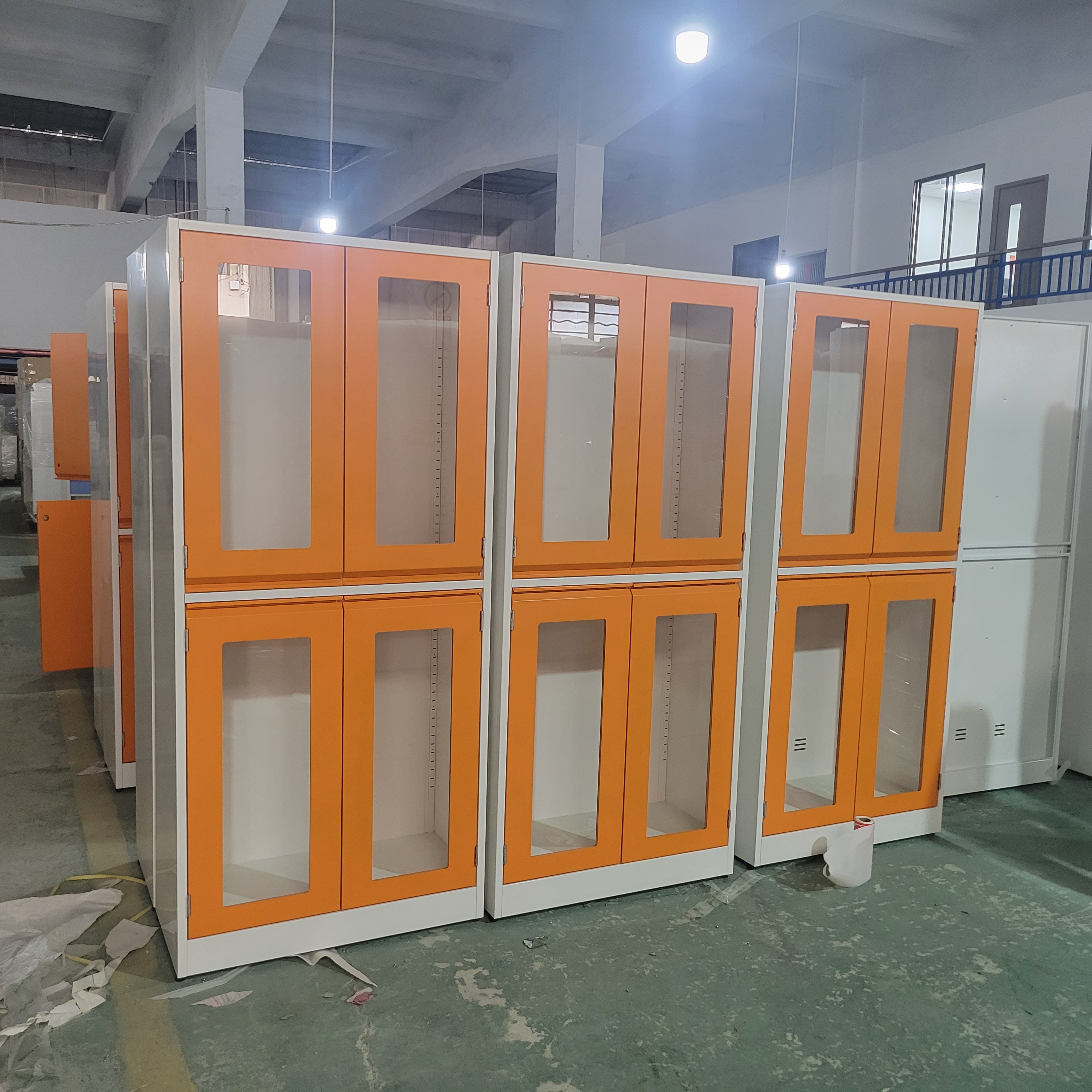
A full-steel exhausted chemical cabinet in a laboratory storage setting. Vented cabinets are specified for their exhaust connection, not their steel content.
A Category That Is Mostly Metal — Which Is the Point
The global laboratory furniture market was valued at approximately USD 4.8 billion in 2025, with projections reaching USD 8.1 billion by 2034, according to Dataintelo's market research report. Within the material segment, metal furniture held a 52.7% revenue share in 2025. Published market-size estimates vary considerably depending on whether modular services and high-end components such as gas piping are counted, so these numbers are best read as an order-of-magnitude indicator rather than a precise baseline.
The material split matters because it explains a common procurement default. Steel dominates the category, so steel becomes the assumed answer to every storage question. Three of the four cabinets compared here are steel constructions; the fourth is deliberately not. The buyer's task is not to choose the best material but to match the storage envelope to the behaviour of the chemical inside it.
Four Hazards, Four Different Failure Modes
The reason one storage rule cannot cover a laboratory is that the four contents fail in four different ways.
Flammable liquids. The risk is ignition of vapour and rapid heat rise inside an enclosure. The cabinet's job is to slow heat transfer to the contents for a defined period and to relieve internal pressure without letting flame pass. That is a thermal engineering task, and it is why fire-resistant cabinets are built as double-wall assemblies with an insulating air gap.
Volatile reagents. The risk is accumulation. A closed steel box holds vapour as effectively as it holds liquid, so the concentration inside rises with every opening. The cabinet's job here is dilution: a defined connection point through which the enclosure is continuously pulled into negative pressure and vented away from the breathing zone.
Corrosive acids and alkalis. The risk is material attack. Corrosion does not begin on the large painted panel; it begins at cut edges, hinge pins, latch mechanisms, fasteners and shelf supports — the places where a coating is thin or interrupted. The cabinet's job is to remove metal from the wetted path entirely.
Compressed gas cylinders. Two risks combine: mechanical failure of the cylinder or valve through impact and tipping, and release of gas into an enclosed space. The cabinet's job is restraint and anti-tip layout first, purging and alarm linkage second.
The Decision Order That Works: Compatibility, Then Airflow, Then Handling
Buyers who start with cabinet dimensions usually end up revising the order. A more reliable sequence runs in three questions, in this order.
Question one: what is the chemical? Flammable liquid points to a fire-resistant cabinet. Concentrated acid or alkali points to a metal-free PP cabinet. A volatile reagent that must be kept under continuous dilution points to a vented cabinet. A compressed gas cylinder points to a cylinder cabinet — and nothing else in this group substitutes for it.
Question two: what does the room provide? Two of the four types depend on building services. A vented cabinet needs a duct route, an exhaust fan and makeup air. A gas cylinder cabinet with purging and alarm linkage needs a gas detection point, an interlock logic and an exhaust destination. If those services are not in the project scope, the cabinet's provisions remain uncommissioned hardware.
Question three: what handling does it need? Cylinder diameter and count, restraint method, purge sequence and alarm response all change the internal configuration. Deciding these after the purchase order is how a triple-cylinder cabinet arrives for a two-cylinder duty.
Flammable Safety Cabinet EG-SF-LB005: Fire Barrier First
The EG-SF-LB005 is a yellow fireproof chemical safety cabinet built from double-wall steel with a 38 mm air barrier, a 51 mm spill sump, dual flash-arrested vents and a three-point latch. It is designed for chemical, manufacturing and laboratory chemical-storage areas.
Each of those features answers a specific failure path. The 38 mm air barrier is the insulating layer that slows heat transfer from an external fire to the contents. The dual flash-arrested vents allow pressure equalisation while arresting flame at the vent path, so the enclosure does not become a pressure vessel. The three-point latch holds the door closed against distortion under heat. The 51 mm spill sump contains the liquid volume that escapes a ruptured container, keeping it away from the cabinet floor and from adjacent containers.
Fire resistance in this category is normally expressed as a duration. The European standard EN 14470-1 classifies fire-resistant safety cabinets as Type 15, 30, 60 or 90 minutes according to the time taken for the internal temperature to rise, with an internal temperature increase that should not exceed 180 K or 200 °C. That classification is the correct question to put to a supplier, because fire performance cannot be inferred from wall construction alone. A buyer should ask for the type classification test report and confirm which type the model is tested to, rather than assuming a double-wall cabinet automatically meets a 60- or 90-minute class.
Vented Chemical and Reagent Cabinet EG-S0-LB001: The Connection Is the Product
The EG-S0-LB001 is a full-steel exhausted chemical cabinet measuring 900 x 500 x 1800 mm. It uses double-wall steel construction with epoxy coating and tempered glass, carries four adjustable shelves with spill containment, and provides a 110/150 mm exhaust connection. It is intended for chemical, pharmaceutical and analytical laboratories.
The specification to read carefully here is the exhaust connection, not the steel gauge. A vented cabinet works by being pulled into negative pressure so that vapour leaving a container is carried out of the enclosure rather than accumulating and escaping when the door opens. The four adjustable shelves with spill containment support that function by keeping containers separated and by retaining minor leakage at shelf level instead of letting it run down the cabinet interior.
This is where the vented cabinet differs most sharply from the flammable cabinet. Both are steel enclosures roughly 1800 mm tall, and both are sometimes quoted against the same tender line. But the flammable cabinet resists a fire from outside; the vented cabinet manages vapour generated inside. Neither function is delivered by the other's construction.
PP Acid and Alkali Storage Cabinet EG-PP-CB003: Metal-Free for a Reason
The EG-PP-CB003 is a metal-free corrosive chemical storage cabinet measuring 900 x 450 x 1800 mm. It is constructed from 8.0 mm PP sheet with PP hardware, includes three adjustable spill-containment shelves and a bottom sump, and provides a 110 mm exhaust port. It is intended for chemical, electroplating and acid-alkali laboratories.
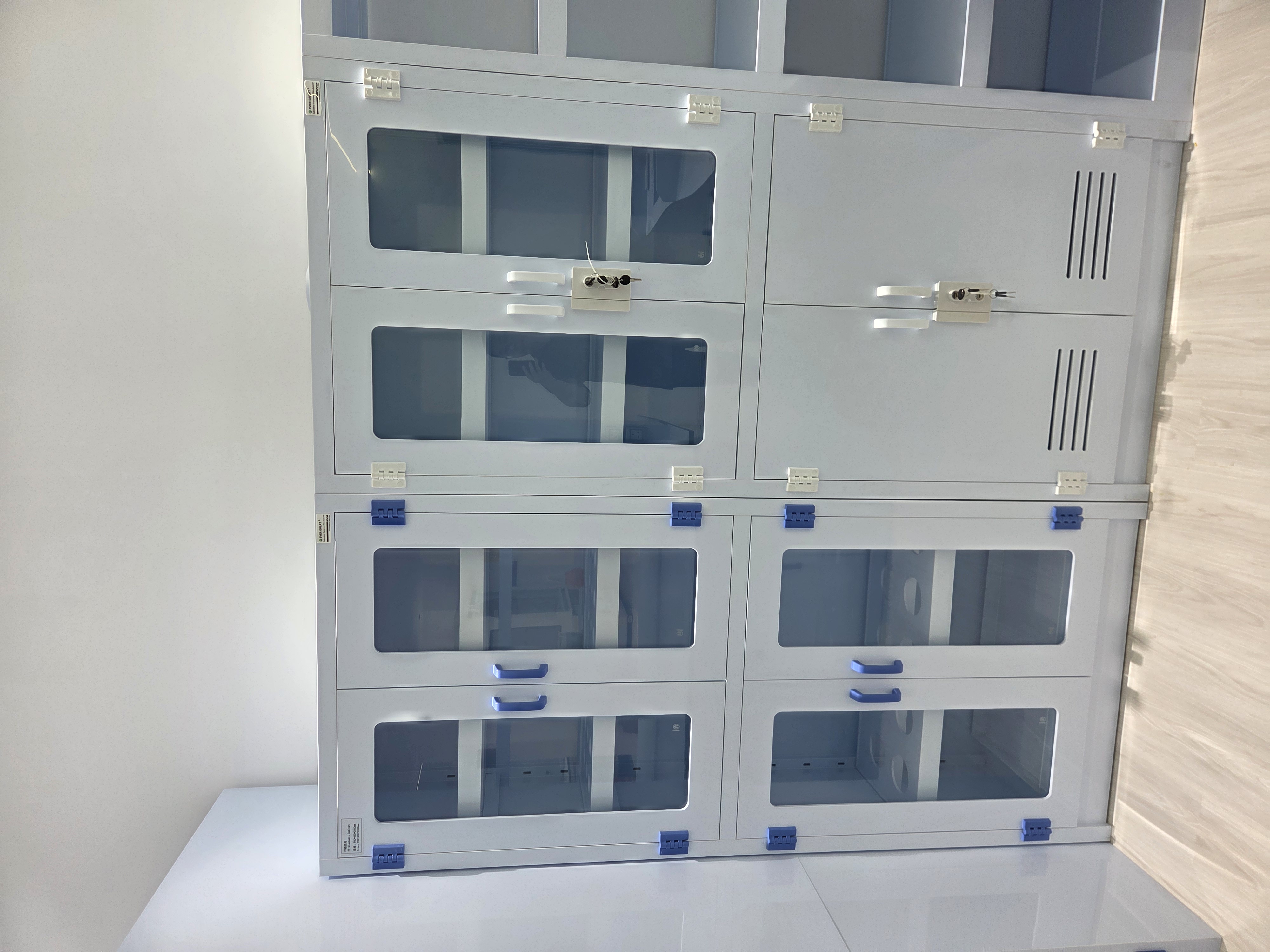
A metal-free polypropylene cabinet. The absence of coated steel, hinge pins and steel fasteners is the function, not a cost reduction.
The logic of the PP cabinet is subtractive. It removes the elements that fail first in corrosive service: the epoxy coating on cut edges, the steel hinge and latch components, and the fasteners that hold shelves in place. What remains is a homogeneous polymer envelope with PP hardware throughout, a bottom sump for liquid retention and three spill-containment shelves that limit the spread of a leaking container.
The 110 mm exhaust port is worth noting because it shows the PP cabinet is not a sealed box either. It can be connected to extract corrosive vapour, which is consistent with its stated use in acid-alkali environments where vapour and liquid attack occur together.
Gas Cylinder Safety Cabinet EG-S0-CB005: Restraint, Purging and Linkage
The EG-S0-CB005 is a steel gas cylinder cabinet with purging system, measuring 900 x 450 x 2000 mm. It is built from 1.0 mm cold-rolled steel with powder coating and is available in single-, double- and triple-cylinder options. It provides cylinder-fixing provisions, an anti-tip layout, an automatic purging option, and alarm/exhaust linkage and gas-alarm linkage configuration. It is intended for chemical, semiconductor and industrial-gas laboratories and for laboratory gas storage scenarios.
The height difference is a useful indicator of what this cabinet does. At 2000 mm it is taller than the other three types, because it is dimensioned around a standing cylinder rather than around shelving. Cylinder-fixing provisions and the anti-tip layout address the mechanical risk directly: a cylinder that cannot move cannot shear its valve against a bench edge or a trolley. Purging addresses the second risk by removing residual gas from the enclosure before and after cylinder changes, rather than letting it accumulate.
Alarm and exhaust linkage is the part buyers most often leave undefined. The cabinet provides configuration points for linking an alarm condition to exhaust operation and for a gas-alarm linkage. What the specification does not determine is the detection technology, the alarm thresholds, the interlock sequence or the exhaust fan capacity — those belong to the laboratory gas and exhaust design and must be settled with the cabinet supplier before the unit is ordered, because single, double and triple configurations change the internal layout and the restraint arrangement.
Side-by-Side Comparison
| Attribute | Flammable EG-SF-LB005 | Vented EG-S0-LB001 | PP Acid EG-PP-CB003 | Gas Cylinder EG-S0-CB005 |
|---|---|---|---|---|
| Primary hazard addressed | Fire and heat transfer | Vapour accumulation | Corrosive attack on materials | Cylinder impact and gas release |
| Construction | Double-wall steel, 38 mm air barrier | Double-wall steel, epoxy coating, tempered glass | 8.0 mm PP sheet, PP hardware, metal-free | 1.0 mm cold-rolled steel, powder coating |
| Key provisions | 51 mm spill sump, dual flash-arrested vents, three-point latch | Four adjustable spill-containment shelves, 110/150 mm exhaust connection | Three spill-containment shelves, bottom sump, 110 mm exhaust port | Cylinder-fixing provisions, anti-tip layout, automatic purging option, alarm/exhaust and gas-alarm linkage |
| Footprint reference | Confirm against model datasheet | 900 x 500 x 1800 mm | 900 x 450 x 1800 mm | 900 x 450 x 2000 mm |
| Stated laboratory type | Chemical, manufacturing, chemical-storage areas | Chemical, pharmaceutical, analytical | Chemical, electroplating, acid-alkali | Chemical, semiconductor, industrial-gas |
| Site services required | None beyond stable footing | Duct, fan, makeup air | Optional exhaust route | Detector, alarm logic, exhaust, interlock |
Comparison based on published product data. Fire-resistance classification for the flammable cabinet must be confirmed through the relevant type test report.
Application Fit: Which Cabinet Belongs Where
Chemical and acid-digestion laboratories. This is the classic mixed-chemistry room and the one most likely to need three of the four types. Concentrated acids belong in the PP cabinet, where the metal-free envelope removes the components most exposed to attack. Reagents that are volatile but not flammable belong in the vented cabinet under continuous exhaust. Solvent stocks belong in the flammable cabinet. In corrosive-vapour environments, the PP cabinets are typically combined with a ducted extraction route so that vapour is carried away rather than held at the cabinet face.
Semiconductor and industrial-gas laboratories. The gas cylinder cabinet is the primary item here, and the configuration decisions come before the purchase order: how many cylinders, which gases, whether automatic purging is required, and what the alarm linkage must trigger. A cylinder cabinet installed without a defined detection point and exhaust destination is a restrained cylinder in a steel box, not a gas safety system.
Pharmaceutical and QC laboratories. Reagent storage typically dominates, which favours the vented cabinet for its adjustable shelving and exhaust connection. Flammable solvent volumes in these rooms tend to be smaller and more controlled, but the flammable cabinet remains the correct store for what is flammable, independent of volume.
Teaching and general research laboratories. The dominant requirement is a clear, legible storage rule that survives staff turnover. A layout in which each cabinet type is visually distinct and positioned next to the chemicals it serves reduces mis-storage more effectively than any label alone.
Market Trend: Steel Dominance and the Case for a Mixed Fleet
Two verified data points frame the supply side of this decision. First, metal furniture's 52.7% revenue share in 2025 confirms that coated steel remains the default construction for laboratory furniture, including storage. Second, China exported over USD 4.15 billion of furniture parts under HS 940390 in 2024, according to OEC trade data — a category that includes laboratory furniture components. The second figure is relevant to buyers not because of its size but because of what it implies: a large share of laboratory furniture reaches projects as shipped components assembled on site, which shifts risk from the factory to packaging, transit and installation.
The practical reading is that most laboratories will run a mixed fleet rather than a uniform one. Steel carries the structural and fire-barrier duties; polymer takes the corrosive duty; the cylinder cabinet adds mechanical restraint and purging. A tender that specifies one cabinet type for a whole facility usually reflects a procurement convenience rather than a hazard assessment, and it tends to be revisited once the chemical inventory is reviewed.
Where These Specifications Stop
An honest comparison has to record the boundaries, because each of these cabinets has duties it does not perform.
The vented cabinet does not ventilate itself. Its 110/150 mm connection is a provision, and without a duct route, a running fan and adequate makeup air, the dilution function is inactive — the cabinet becomes a closed steel enclosure. The PP cabinet is not a fire-rated construction; it is specified for corrosive chemical storage, and flammable liquids stored in it instead of in a fire-resistant cabinet is a substitution, not an equivalent. The gas cylinder cabinet provides restraint, purging capability and linkage configuration points, but it does not include gas detection, alarm thresholds or exhaust capacity — those are project-scope design decisions. And the flammable cabinet's fire resistance must be evidenced by a type classification test report; double-wall construction alone does not establish a 15-, 30-, 60- or 90-minute classification.
Procurement Checks: Acceptance, Transit and the Gas-Leak Question
Guangdong Ever Great Laboratory Equipment Co., Ltd. is a laboratory infrastructure manufacturer and EPC solutions provider established in 2011, operating a 6,000-square-metre manufacturing base in Foshan, Guangdong, China, with an annual production capacity of 20,000 units and an R&D team of eight engineers supported by more than fifteen senior engineers. The company holds ISO 9001, ISO 14001 and ISO 45001 certification and is recognised as a National High-Tech Enterprise; its fume hoods are tested to EN 14175 and ASHRAE 110 with third-party reports from SGS. Export business accounts for 60% of sales, with major markets in the USA, EU, Middle East and Africa.
Acceptance criteria. Check the physical dimensions against the order — 900 x 450 x 2000 mm for the EG-S0-CB005, 900 x 500 x 1800 mm for the EG-S0-LB001 and 900 x 450 x 1800 mm for the EG-PP-CB003. Verify material specification: 1.0 mm cold-rolled steel with powder coating on the gas cylinder cabinet, 8.0 mm PP sheet with PP hardware on the acid cabinet, double-wall steel with epoxy coating and tempered glass on the vented cabinet. Confirm shelf count and spill containment — four adjustable shelves on the vented cabinet, three plus a bottom sump on the PP cabinet, a 51 mm sump on the flammable cabinet. Check the exhaust collar diameter, the latch and closure hardware, and on the gas cylinder cabinet, the presence and wiring of the alarm linkage points and the cylinder restraint hardware.
Overseas transit and on-site installation. Powder-coated steel is vulnerable at edges and corners; PP sheet is vulnerable at welded seams; tempered glass is vulnerable to point loads in transit. Inspect immediately on receipt and record damage before installation begins, because coating and weld damage is far cheaper to remedy before anchoring than after. On site, level and anchor the units — the anti-tip layout of the gas cylinder cabinet depends on the cabinet being fixed to the floor or wall. Connect ducts before commissioning, and confirm that connecting a vented cabinet or cabinet exhaust does not starve the room's fume hood demand.
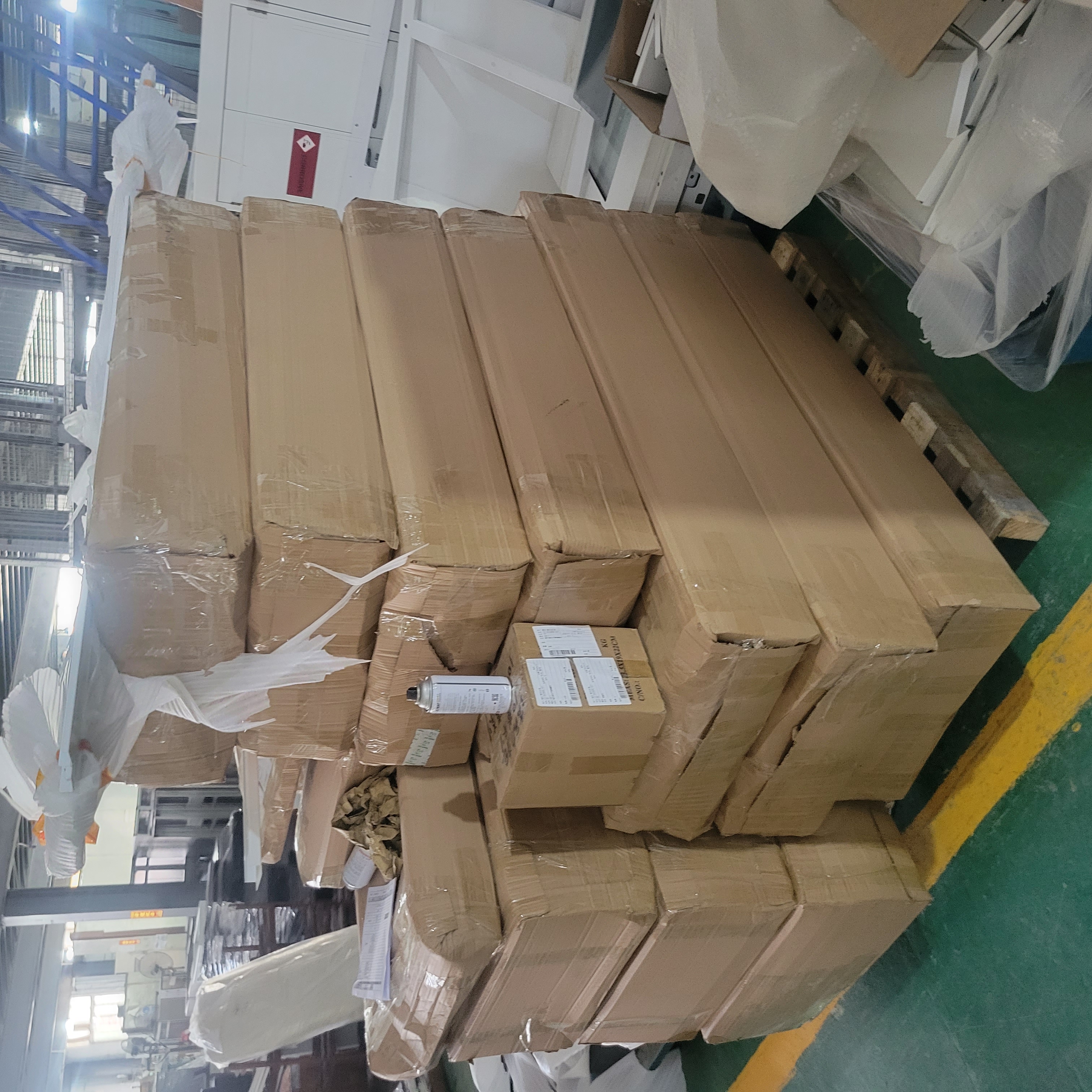
Packing and inspection before export. Coating edges, PP weld seams and tempered glass are the components that determine whether a cabinet arrives fit for installation.
The hazardous-gas-leak response question. Before the order closes, a buyer should be able to answer one question in writing: if gas is detected at the cylinder cabinet, what happens next? That answer requires four defined elements — what detects the gas, what the alarm triggers, where the exhaust discharges, and whether the cabinet exhaust shares capacity with the fume hood system. Fume hood containment performance in such a design is assessed against standards such as ANSI/ASHRAE Standard 110-2016 (R2025), the American national test method for evaluating fume containment, alongside EN 14175 in Europe. If the leak response depends on the fume hood exhaust maintaining airflow, the exhaust redundancy and the interlock sequence belong in the specification, not in the commissioning conversation.
Future Outlook
Three shifts are likely to shape chemical storage procurement over the next planning cycle. First, storage specification is moving from a furniture decision to a services decision: as vented cabinets and cylinder cabinets become configurable with alarm and exhaust linkage, the performance of the cabinet increasingly depends on the building systems it is wired to. Second, verification is becoming document-led — fire-resistance classification to EN 14470-1 type and fume containment testing to ASHRAE 110 both require test evidence rather than construction description, which favours suppliers who hold third-party reports. Third, mixed-material fleets will remain the norm in chemistry-intensive facilities, because no single material logic serves fire resistance, corrosion resistance and cylinder handling at the same time.
Frequently Asked Questions
What is the main difference between a flammable safety cabinet and a vented chemical cabinet?
They address different hazards. The EG-SF-LB005 is a yellow fireproof chemical safety cabinet built from double-wall steel with a 38 mm air barrier, a 51 mm spill sump, dual flash-arrested vents and a three-point latch, designed for chemical, manufacturing and laboratory chemical-storage areas — its construction logic is thermal. The EG-S0-LB001 is a full-steel exhausted chemical cabinet measuring 900 x 500 x 1800 mm, with double-wall steel construction, epoxy coating, tempered glass, four adjustable spill-containment shelves and a 110/150 mm exhaust connection, intended for chemical, pharmaceutical and analytical laboratories — its logic is continuous dilution through exhaust.
Which cabinet should store concentrated acids and alkalis?
The EG-PP-CB003 is the metal-free option: 900 x 450 x 1800 mm, 8.0 mm PP sheet with PP hardware, three adjustable spill-containment shelves, a bottom sump and a 110 mm exhaust port, intended for chemical, electroplating and acid-alkali laboratories. The metal-free construction removes the coated-steel surfaces, fasteners and hinges that corrosive attack reaches first. It is not a fire-rated construction, so flammable liquids remain a separate storage decision.
Does a vented chemical cabinet work without an exhaust connection?
No. The 110/150 mm exhaust connection on the EG-S0-LB001 is a provision; the cabinet's dilution function depends on the connected exhaust system maintaining airflow through the enclosure. Without ductwork, a running fan and adequate makeup air, the cabinet remains a closed steel container. Buyers should confirm the duct route, fan capacity and whether the cabinet exhaust draws on the same capacity as the room's fume hood demand.
What does a gas cylinder safety cabinet provide in the event of a gas leak?
The EG-S0-CB005 is a steel gas cylinder cabinet with purging system: 900 x 450 x 2000 mm, 1.0 mm cold-rolled steel with powder coating, available in single-, double- and triple-cylinder options, with cylinder-fixing provisions, an anti-tip layout, an automatic purging option, and alarm/exhaust linkage and gas-alarm linkage configuration. The cabinet provides restraint, containment and the configuration points for linkage. The detector, alarm logic and exhaust fan capacity are project-scope items defined with the laboratory gas and exhaust systems, not cabinet contents.
What should be checked at acceptance?
Dimensions against the order (900 x 450 x 2000 mm for the EG-S0-CB005; 900 x 500 x 1800 mm for the EG-S0-LB001; 900 x 450 x 1800 mm for the EG-PP-CB003); material specification (1.0 mm cold-rolled steel with powder coating; 8.0 mm PP sheet and PP hardware; double-wall steel with epoxy coating and tempered glass); shelf count and spill containment (four adjustable shelves on the vented cabinet, three plus a bottom sump on the PP cabinet, a 51 mm sump on the flammable cabinet); exhaust collar diameter; latch and cylinder restraint hardware; and, on the gas cylinder cabinet, the wiring and configuration points for alarm and exhaust linkage.
Can one cabinet type cover an entire laboratory's chemical storage?
No. Flammable liquids, corrosive acids and alkalis, volatile reagents requiring continuous exhaust, and compressed gas cylinders fail in different ways, so they require different constructions: a thermal barrier, a corrosion barrier, a ventilated containment shell and a restrained, purgeable cylinder enclosure respectively. A mixed storage plan based on chemical compatibility is the normal outcome, and each cabinet type should be assessed against the hazard it will actually hold rather than against a common tender specification.
The full Ever Great product catalogue, including cabinet dimensions and configuration options, is available for download: Ever Great 2026 catalogue (PDF).
Have Questions or Need More Details?
Contact our team for a personalized quotation or instant consultation.
Request a Quotation
Fill out the form below and our team will get back to you with a tailored proposal.
WhatsApp Direct Chat
Prefer to chat in real-time? Message us on WhatsApp for instant assistance & quick answers.
- Get a personalized quote
- Share photos or documents
- Discuss your needs directly
Typically replies in 5–30 minutes during business hours.