
Flare Procurement FAQ: Specify This Before You Ask for Price
Flare Procurement FAQ: Specify This Before You Ask for Price
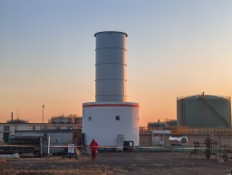
Flare type and configuration are buyer decisions that belong in the RFQ, before any quotation is issued.
Price is the last number in a flare RFQ, not the first. Before any supplier can quote an elevated, enclosed ground or skid-mounted flare system, the buyer has to fix five inputs: gas source and operating mode, flare type and structural configuration, material and performance requirements, compliance basis, and the acceptance criteria that will be applied to the quoted model series. Until those five exist, competing quotations describe different equipment, and the lowest price is not a comparison — it is a different scope.
The definition of the equipment explains why. The U.S. Environmental Protection Agency describes a flare as a thermal oxidation system using an open flame without enclosure — a definition broad enough to cover a small utility tip and a tall derrick-supported stack. Global gas flaring reached 151 billion cubic metres in 2024, the highest level since 2007, according to World Bank satellite-based estimates. Volume at that scale keeps flare procurement continuously active, but nothing in the volume figure makes two quotations interchangeable. Only the specification does.
Why the RFQ sequence decides the price
A flare quotation is a priced response to a written scope. When the scope is thin, the supplier fills the gaps with its own default assumptions: a standard tip, a standard stack height, a default heat load, a generic control philosophy. Those assumptions survive into the commercial offer and reappear later as change orders, because the duty the buyer actually has was never written down.
The practical rule for RFQ drafting is that every line should be answerable with a number, a range, a document reference or a named standard. 'Suitable for biogas' is not answerable. 'Minimum flow 150 Nm³/h, normal flow 1,800 Nm³/h, design 4,500 Nm³/h, inlet pressure 5–25 kPa, methane 55–65% wet basis, intermittent operation with daily start-stop' is answerable, and it produces quotations that can be compared line by line.
This is also where the evaluation stage meets the execution stage. A buyer who has finished technical evaluation still has to hand the supplier a specification the supplier can manufacture against. The five inputs below are the bridge between those two stages.
First input: gas source and operating mode
The gas source decides more about flare hardware than any other single input. Four duty classes cover most industrial enquiries, and each one stresses a different part of the design.
- Landfill gas and biogas. Variable, low-pressure flow with a methane-rich but shifting composition. The design problem is stability at low flow: the flare must hold a stable flame when gas production falls and tolerate pressure fluctuation without tripping. A ground flare supplied to a coalbed methane operation in China, rated at 90×10⁴ Nm³/d with a three-stage venting design and PLC automatic control, has operated for more than two years — an example of how much of this duty sits in the control logic rather than the burner size.
- Refinery and petrochemical emergency relief. Rate is set by relief scenario analysis rather than by normal production. In the U.S. refinery context cited by EPA, flares must meet a minimum combustion-zone net heating value of 270 Btu/scf on a 15-minute block basis — a condition specific to that jurisdiction and rule set, not transferable to other markets. The RFQ still has to state design flow, relief duration and gas heating value.
- LNG boil-off gas and cryogenic service. Cold gas, often intermittent, often at a terminal or bunkering point where plot space is tight. Skid-mounted construction is the usual answer; Zexuan's ZX-SMF Series is positioned for LNG/LPG terminal and bunkering duty.
- Process vent gas and pyrolysis gas. Continuous or semi-continuous flow from a chemical or recycling process, with a composition that can change as feedstock changes.
For each class the RFQ should state normal, minimum and design flow; inlet pressure and temperature; composition including heating value and inert content; whether operation is continuous, intermittent or emergency-only; and expected operating hours per year. Those six items let a supplier size the tip, the stack and the control system against one consistent basis.
Second input: flare type and structural configuration
Flare type is a project decision, not a supplier preference, and the RFQ should record why the type was chosen. Zexuan's portfolio separates into elevated flares under the ZX-SSEF (self-supported), ZX-GWF (guyed-wire) and ZX-DSF (derrick-supported) series, enclosed ground flares in the ZX-EGF Series (also listed under the ZXE-EGF designation), and skid-mounted systems in the ZX-SMF Series. Each implies a different answer to plot space, radiation, height and maintenance access.
Structural configuration fixes the second half of the price. Elevated flare stack height is a project variable; for planning purposes the working envelope used in this checklist runs from 10 m to 150 m, and the RFQ must state the actual figure together with the wind and seismic basis and the tip diameter. A guyed-wire elevated flare installed for natural gas gathering in China shows the level of detail involved: a 60 m structure with a DN350 flare tip and automatic ignition under PLC control, in service for more than a year under harsh climate conditions.
Enclosed ground flares solve a different problem. The ZX-EGF Series uses a low-radiation design with refractory lining, and Zexuan positions it for LNG terminals, chemical plants and petrochemical parks. An enclosed ground flare installed at an oilfield transfer station in China was completed within one year and was specified for reduced noise and visual impact alongside safe disposal of vent gas — precisely the kind of objective that belongs in the RFQ rather than being discovered at commissioning.
Where a comparison between configurations is relevant, it should stay on documented characteristics. EPA's definition places the open-flame elevated flare in one category; an enclosed ground flare contains combustion and adds a refractory lining. That difference is real and matters for noise, visible flame and plot layout. It does not by itself establish that one configuration performs better than the other on a given duty, because the public record does not contain independently comparable destruction-efficiency tests across designs. The RFQ should therefore ask each supplier to state the performance basis for the configuration it quotes, on the buyer's own gas data.
The same discipline applies when thermal treatment equipment sits alongside the flare in one enquiry. Zexuan's ZX-TO, ZX-RTO and ZX-RCO thermal oxidizers are specified at 800–1200°C with destruction efficiency up to 99% or higher, and the ZX-INC Series hazardous waste incinerator is a rotary kiln design operating at 850–1200°C. Combining a flare and an oxidizer into a single RFQ line produces a quotation nobody can verify; they should be separate line items with separate duty statements.
Third input: material and performance requirements
Materials are where a cheap quotation and an expensive one usually diverge, so the RFQ must name the alloys for the high-temperature parts rather than accept 'heat-resistant steel'. Zexuan's ZX-FT Series flare tips are offered in Inconel 625, SS310S and SS316L for operation at temperatures up to 1100°C, with diameter and gas capacity customized to the project. The ZX-EGF Series offers carbon steel, SS304, SS316L and SS310S with a refractory lining.
Turndown belongs in the same paragraph as the materials, because the two interact. Turndown is the ratio between design maximum and stable minimum flow; values up to 100:1 appear in flare specifications, and a supplier can only confirm a figure once gas composition, assist medium and tip design are known. Writing 'turndown 100:1' without the gas data invites a quotation that claims the number and cannot hold the flame at the bottom of the range.
| RFQ field | Why it changes the quote | What the supplier should return |
|---|---|---|
| Stack height (10–150 m envelope) | Drives structural steel, foundation loads and the radiation contour | GA drawing, wind and seismic basis, foundation load schedule |
| Turndown (up to 100:1) | Sets tip staging, pilot size and assist-medium demand | Stable-flame range against the stated gas composition |
| Maximum gas temperature (up to 1100°C at the tip) | Selects the alloy: Inconel 625, SS310S or SS316L | Material certificates and the temperature rating of each part |
| Combustion or destruction efficiency target | Fixes tip design and, where required, monitoring scope | Performance basis plus the conditions it assumes |
| Assist medium (steam, air, none) | Adds piping, metering and control scope | Consumption estimate and monitoring architecture |
Efficiency targets need the same care. EPA states that properly operated flares achieve at least 98 percent destruction efficiency in the flare plume, but the same agency's NSPS OOOOb rules remove the option to assume a default 98 percent figure; operators must demonstrate actual performance. A blanket '98% DRE' clause in an acceptance schedule is therefore weaker than it looks. It is better to require the supplier to state the basis of its efficiency claim and the monitoring or test method that will verify it.
Assist-medium monitoring follows the same logic. In the cited U.S. regulatory context, steam- and air-assisted flares require a monitoring system capable of continuously measuring, calculating and recording assist steam or assist air volumetric flow, or specified alternatives. Where the buyer's jurisdiction or corporate standard follows that approach, the instrumentation belongs in the RFQ scope rather than in a later variation.
Fourth input: the compliance basis and the documents behind it
Compliance should be written as a document requirement, not an adjective. ANSI/API Standard 521 is titled Pressure-relieving and Depressuring Systems and is identified as identical to ISO 23251 in the API publication. It is the natural design reference for relief and depressuring systems, and citing it is normal practice. The point to hold onto is that an API 521 reference in a proposal is a design-basis statement; it does not by itself prove product certification or project compliance.
So the RFQ should list the standards that apply, the edition or revision, and the documents required in return: design basis, heat and mass balance, material certificates, welding and inspection records, control philosophy and cause-and-effect matrix, operating and maintenance manuals, and a spare-parts list. In the United States, flares used as control devices subject to NESHAP or NSPS must meet the design and operating requirements of 40 CFR 63.11(b) or 40 CFR 60.18(b) respectively, and the applicable subpart has to be identified for each facility.
Certificates deserve the same scrutiny, starting with scope. Shandong Zexuan Environmental Protection Technology Co., Ltd. holds ISO 9001:2015, ISO 14001:2015 and ISO 45001:2018 certifications issued by CSU International Certification Co., Ltd. on 18 March 2026 and valid to 17 March 2029, under certificate numbers 26326Q00079R001, 26326E00054R001 and 26326S00054R001. Their stated scope covers the development of waste gas treatment equipment and control units and the sale of waste gas and waste liquid treatment equipment. That is a management-system certification for a defined scope; it is not a product-level thermal performance certificate for a named flare model. Buyers should request the scope page and read it, rather than filing the logo.
Fifth input: acceptance criteria bound to the quoted model series
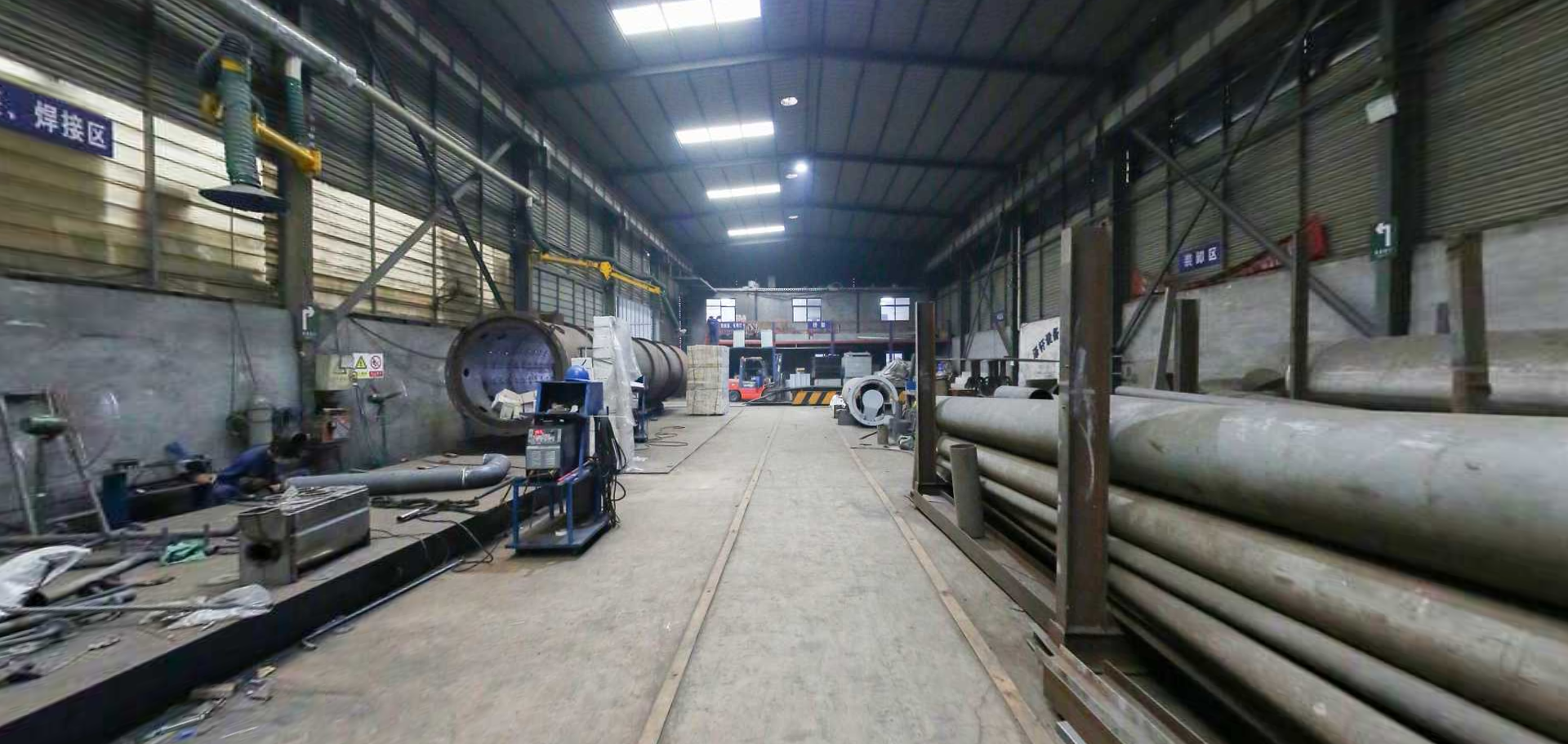
Acceptance criteria are written against the quoted configuration, not against a generic equipment checklist.
Acceptance criteria only work when they name the model series and the operating conditions that were quoted. Zexuan's inspection scope runs through incoming material inspection, welding inspection, dimensional inspection, pressure and leak testing where applicable, functional testing, Factory Acceptance Test and final inspection before shipment, with FAT and SAT named as the acceptance stages. Those stages are the frame; the content has to come from the buyer's own duty.
Three examples show how to attach the criteria.
- ZX-GWF guyed-wire elevated flare. If the quoted configuration is a 60 m stack with a DN350 tip and PLC ignition, the FAT should demonstrate the ignition sequence, flame detection, PLC cause-and-effect logic and the structural welds against approved drawings — not a generic burner test.
- ZX-EGF enclosed ground flare. Acceptance should cover refractory lining inspection, burner and ignition function, temperature control across the stated 800–1200°C range, and the conditions under which the published combustion efficiency of up to 99.9 percent is claimed.
- ZX-SMF skid-mounted system. Acceptance should cover skid integration, cold-service material verification for LNG duty, transport restraint and site erection checks, because the skid boundary is where responsibility most often blurs.
It is worth separating operating references from test evidence. Skid-mounted ground flare systems supplied by Zexuan to waste tire pyrolysis plants in Turkey and Iraq have been in service for more than two years and more than three years respectively, and a skid-mounted unit for plastic pyrolysis in Vietnam has been operating for one year. Those references show the configuration has been built and operated. They are not certified destruction-efficiency data, and a proposal that presents them as such is overstating what they prove. The RFQ should request the FAT procedure with the quotation, so the test content can be reviewed before any purchase order exists.
Commercial inputs that still come before price
Some commercial parameters belong in the RFQ even though they are not technical. For Zexuan's customized industrial systems the minimum order quantity is one set, typical production lead time is 60–120 days depending on project requirements, and monthly capacity is five sets for customized systems. Delivery terms are quoted EXW, FOB or CIF; payment is by T/T or L/C, typically 30 percent in advance and 70 percent before shipment, negotiable according to project requirements.
These are not price, but they determine whether a price is usable. A 60-day lead time and a 120-day lead time produce different project schedules and different site costs. A single-set MOQ matters to a pilot project and is irrelevant to a refinery turnaround. And because no verified public source provides flare unit prices, any figure a buyer receives is configuration-specific by definition and can only be compared against an identical scope.
What the RFQ cannot settle
Three things sit outside the document. First, the public record does not contain independently comparable performance tests across flare designs, so a supplier claim of superiority over a competing configuration cannot be verified at RFQ stage; only documented characteristics and the stated performance basis can be compared. Second, the buyer's relief scenario and the applicable local emissions rules are the buyer's responsibility to define — a supplier can design to a stated scenario but cannot choose it. Third, manufacturing capacity and project experience are company-reported unless the buyer audits them, which is why factory audit and reference calls belong in the evaluation stage rather than the commercial stage.
Outlook: from assumed performance to demonstrated performance
The direction of travel in flare procurement is toward demonstrable performance. When a major regulator removes a default efficiency assumption and requires operators to demonstrate actual performance, the equipment scope changes: monitoring, metering and data recording migrate from optional extras into the core specification, and the acceptance criteria become the place where that shift is enforced. Buyers who draft RFQs around monitoring from the start spend less time renegotiating scope after award.
The demand context supports the same conclusion. Global flaring at 151 billion cubic metres in 2024, the highest level since 2007, implies a large installed base that continues to need flares, retrofits and replacement tips. One commercial research estimate puts the global flare systems market at approximately USD 4.8 billion in 2025; because that figure comes from a commercial report without a published methodology, it is a directional indicator rather than a planning number.
Shandong Zexuan Environmental Protection Technology Co., Ltd., established in 2015, operates a 24,100 m² manufacturing base with more than 80 employees, including 30 or more engineering and technical specialists, and reports annual manufacturing capacity of more than 60 sets of flare and thermal treatment systems, with project experience in more than 10 countries across the Middle East, Central Asia, Southeast Asia, Africa and Russia. For a buyer, that portfolio breadth is relevant only to the extent it matches the duty being specified — which is the whole argument of this FAQ.
Conclusion
The order of work is straightforward. Fix the gas source and operating mode; choose and justify the flare type and structural configuration; state the materials, temperature and turndown requirements; name the standards and the documents required to prove them; and write acceptance criteria against the model series that will actually be quoted. Only then ask for price. A quotation built on those five inputs can be compared, tested and accepted. A quotation built on 'one flare system' cannot be any of those things.
For the full product and capability summary, the Zexuan company brochure (PDF) is available for download.
Frequently asked questions
What should a flare RFQ contain before a price is requested?
At minimum: normal, minimum and design gas flow; inlet pressure and temperature; gas composition including heating value; operating mode (continuous, intermittent or emergency); flare type and stack height; tip diameter; maximum gas temperature; turndown requirement; assist medium; applicable standards and edition; required documentation; and the acceptance test stages. A supplier can only price a configuration defined to that level.
How does the gas source change the flare specification?
It changes stability requirements and materials more than nominal capacity. Landfill and biogas duty involves variable low-pressure flow, so low-flow flame stability and control logic dominate the design. Refinery emergency relief is sized by relief scenarios and, in the cited U.S. refinery context, is subject to a minimum combustion-zone net heating value of 270 Btu/scf. LNG boil-off gas involves cryogenic temperatures and usually skid-mounted construction. Each case needs its own flow range and composition in the RFQ.
Should the RFQ specify an elevated flare or an enclosed ground flare?
The choice depends on plot space, radiation limits, noise and visual requirements, and the operator's maintenance model. Elevated flares in the ZX-SSEF, ZX-GWF and ZX-DSF series place combustion at height; the ZX-EGF Series encloses combustion with a refractory lining and low-radiation design and is positioned for LNG terminals, chemical plants and petrochemical parks. Because independently comparable performance tests across designs are not in the public record, the RFQ should require each supplier to state the performance basis for the configuration it quotes.
Which materials should be named for high-temperature flare parts?
Name the alloy, not a generic description. Zexuan's ZX-FT Series flare tips are offered in Inconel 625, SS310S and SS316L for operation at temperatures up to 1100°C, and the ZX-EGF Series offers carbon steel, SS304, SS316L and SS310S with refractory lining. The correct selection depends on maximum continuous temperature, thermal cycling and gas corrosivity, all of which should appear in the RFQ.
How should acceptance criteria be tied to the quoted model series?
Acceptance criteria should reference the specific model series, the quoted configuration and the stated operating conditions. Factory Acceptance Test and Site Acceptance Test are the two acceptance stages Zexuan applies, supported by incoming material, welding, dimensional, pressure and leak, functional and final inspections. The content of those tests should be written against the actual duty — for example ignition sequence and PLC logic for a guyed-wire elevated flare, or refractory lining and temperature control for an enclosed ground flare — rather than a generic equipment checklist.
Have Questions or Need More Details?
Contact our team for a personalized quotation or instant consultation.
Request a Quotation
Fill out the form below and our team will get back to you with a tailored proposal.
WhatsApp Direct Chat
Prefer to chat in real-time? Message us on WhatsApp for instant assistance & quick answers.
- Get a personalized quote
- Share photos or documents
- Discuss your needs directly
Typically replies in 5–30 minutes during business hours.