
Flare Supplier Evaluation for Green Energy: Materials & Lifecycle
Flare Supplier Evaluation for Green Energy: Materials & Lifecycle
Flare Supplier Evaluation for Green Energy: Materials & Lifecycle
A flare system is bought once and operated for decades. In green energy and new materials projects — landfill gas (LFG), biogas upgrading, pyrolysis, LNG terminals, chemical synthesis — the gas stream is often wet, variable in heating value, and corrosive, so the supplier decision is in practice a materials decision and a lifecycle decision. The useful test of a long-term flare supplier is not the price of a flare tip. It is whether the supplier can document material selection, temperature margin, destruction performance, and an API 521-based design basis that will still hold up years after commissioning.
This article sets out an evaluation framework for buyers at the evaluation-to-execution stage: which material questions to ask, which performance claims to treat as design intent rather than guarantee, which documents to require before a purchase order, and where the realistic limits of each configuration sit.
Why lifecycle and materials now lead the evaluation
Two pressures have moved flare specification away from a purely capital-cost exercise. The first is volume. World Bank satellite-based estimates put global gas flaring at 151 billion cubic metres in 2024, the highest level since 2007. The second is regulatory method. The U.S. EPA NSPS OOOOb rule (40 CFR 60.5360b, effective 2024-05-07) removes the option of assuming a default 98% destruction efficiency for flares; operators must demonstrate actual performance. EPA's own technical document on industrial flares notes that properly operated flares achieve at least 98% destruction efficiency in the flare plume, and that refinery flares in the cited regulatory context are associated with a combustion-zone net heating value limit of at least 270 Btu/scf and continuous monitoring of assist air or assist steam where those assist media are used.
For a biogas, LFG, or pyrolysis project, that shift has a practical consequence: a flare purchased only on capital cost quietly transfers measurement risk, material risk, and re-permitting risk back to the operator. The supplier evaluation therefore has to test evidence, not adjectives.
What "long-term" means technically
Long-term supplier value usually concentrates in five cost and risk drivers rather than in the purchase price:
- Tip and combustion hardware life — how alloy choice matches the actual service temperature, velocity, and contaminant load.
- Refractory and lining maintenance — relevant to enclosed ground flares, where lining condition governs both availability and emissions performance.
- Instrumentation and controls continuity — ignition, flame detection, and PLC logic that must remain serviceable and re-documentable.
- Spare parts and re-ordering path — availability of consumables and the ability to reproduce a customized item years later.
- Documentation durability — a design basis that can be re-submitted to a regulator or an EPC auditor without re-engineering the unit.
Material selection: Inconel 625, SS310S, and SS316L
Material grade is the single most reliable indicator of how a supplier thinks about lifecycle. The ZX-FT Series flare tip is designed for smokeless, sonic, air-assisted, and Coanda operation, with primary materials including Inconel 625, SS310S, and SS316L, operating temperatures up to 1100°C, and customizable diameter and gas capacity for hydrocarbon gases in refinery, petrochemical, LNG, and oil & gas processing industries. The three grades are not interchangeable, and a supplier that offers one grade for every duty is signalling a gap in engineering depth.
| Material | Typical role in a flare train | Where buyers should be cautious |
|---|---|---|
| Inconel 625 | High-temperature, high-velocity tip service with corrosive species present | Higher alloy cost and longer mill lead time; should be justified by duty, not by default |
| SS310S | High-temperature oxidation resistance in tips, liners, and hot internals | Still a life-limited component in cyclic service; replacement interval must be stated |
| SS316L | Wet, corrosive, and lower-temperature sections; piping and structural wetted parts | Not a high-temperature tip alloy; unsuitable where peak temperature exceeds its practical range |
| Carbon steel / SS304 | Shells, structures, and non-hot-face components in enclosed ground flare systems | Depends entirely on correct refractory protection behind it |
A sound RFQ therefore asks the supplier to state the gas composition, expected peak and continuous service temperature, turndown range, and contaminant profile, and then to justify each material choice against those inputs. If the answer is a grade list without a duty mapping, the design basis is not yet a design basis.
Enclosed ground flare: low radiation design, lining, and material logic
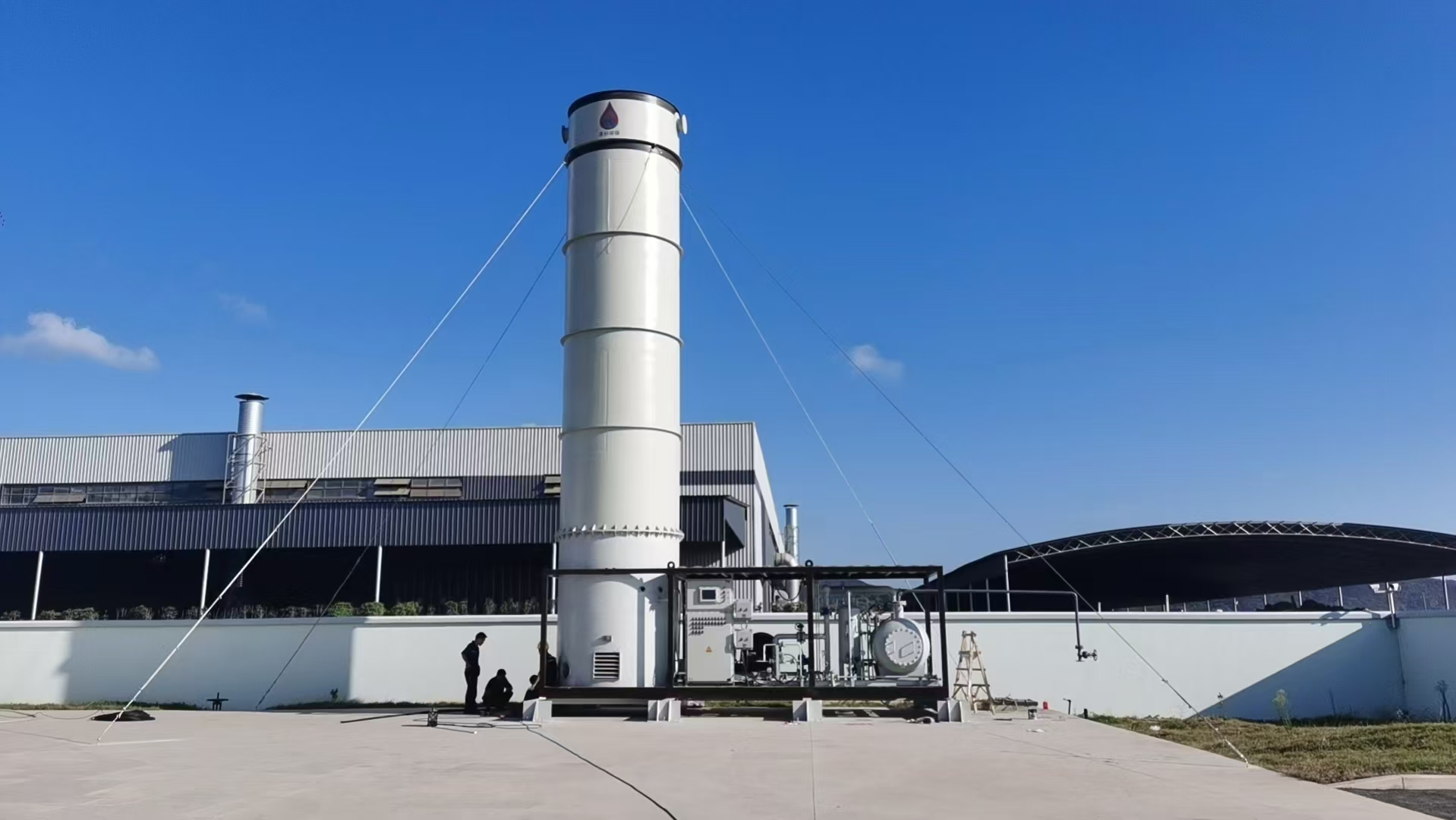
The ZX-EGF Series enclosed ground flare uses a low radiation design with refractory lining and material options including carbon steel, SS304, SS316L, and SS310S. It operates at 800°C–1200°C with combustion efficiency up to 99.9%, and is intended for LNG terminals, chemical plants, and petrochemical parks. Independent of any single manufacturer, enclosed ground flares are described in company technical documentation as capable of destruction efficiencies exceeding 99.5% while concealing visible flame and reducing noise — which is why the configuration is increasingly specified where the flare sits close to a fence line, a community, or an LNG marine facility.
The lifecycle consequence is that the lining becomes the critical asset. A refractory-lined enclosed flare concentrates maintenance value in lining inspection intervals, cooldown and heat-up procedures, and the quality of the shell protection behind the lining. Buyers evaluating a long-term supplier should ask for the lining design basis, the allowable shell temperature, the inspection access provisions, and the spare-parts list for lining anchors and hot-face components — not only the combustion efficiency figure.
The thermal treatment half of the scope
Green energy and new materials projects rarely need only a flare. They usually need a controlled route for continuous or semi-continuous waste gas, and a separate route for emergency relief. Zexuan's ZX-TO, ZX-RTO, and ZX-RCO series thermal oxidizers are designed for VOC treatment, operating at 800°C–1200°C with destruction efficiency up to 99% or higher, in direct thermal oxidation, regenerative thermal oxidation, and regenerative catalytic oxidation configurations, using carbon steel, SS304, SS316L, and ceramic heat storage materials. The ZX-INC Series hazardous waste incineration system is a rotary kiln type for solid, liquid, and hazardous waste, operating at 850°C–1200°C with multi-stage combustion, heat recovery, and waste gas treatment integration, using carbon steel, SS310S, refractory materials, and high-temperature alloys.
Evaluating these units on a lifecycle basis means comparing three things that datasheets often blur: the design destruction efficiency, the operating envelope in which that efficiency is maintained (VOC concentration, flow turndown, halogen or sulphur load), and the consumable and media replacement cycle — ceramic media in an RTO, catalyst in an RCO, refractory in a TO. A supplier that can state all three is a supplier that can be held to them at acceptance testing.
API 521 as the design reference — and how to verify it
ANSI/API Standard 521 is titled Pressure-relieving and Depressuring Systems, and the cited API document identifies it as identical to ISO 23251. It is the reference that connects a flare to the relief case that created it: relief load, depressuring scenario, radiation contours, and the operating limits of the combustion device. Referencing API 521, however, is not the same as certified compliance. A buyer should treat it as a design-basis request and ask for the relief load calculation, the radiation assessment, the purge and seal design, and the operating-limit documentation — with the flare vendor's own document number against each.
Zexuan publicly presents its flare systems as API 521 compliant and reports a 24,100 m² manufacturing base with more than 80 staff. For procurement purposes, that is a screening-level statement. It qualifies the supplier for the technical evaluation round; it does not replace the project-specific design dossier.
A six-criterion supplier evaluation framework
| Criterion | Question to put to the supplier | Evidence to require |
|---|---|---|
| 1. Material duty mapping | Why this alloy for this gas, temperature, and velocity? | Grade-by-component list, service temperature margin, corrosion and contaminant assessment |
| 2. Combustion performance envelope | Over what turndown and heating value is the stated efficiency maintained? | Design basis with flow and heating value range, assist medium assumptions, stated efficiency basis |
| 3. API 521 design basis | Which relief and depressuring case sizes this unit? | Relief load calculation, radiation assessment, purge and seal design, operating limits |
| 4. Customization control | Can type, capacity, material, structure, control system, layout, voltage, and documentation all be fixed contractually? | Written customization scope, approved drawings, control philosophy |
| 5. Verification at acceptance | What is tested in the factory and what is proven on site? | Factory Acceptance Test and Site Acceptance Test scope, inspection records, weld and pressure/leak test documentation |
| 6. Lifecycle support | Who supports commissioning, spares, and training in year five? | After-sales scope, spare-parts list, remote support and commissioning assistance terms, training plan |
How Zexuan maps onto the framework
Shandong Zexuan Environmental Protection Technology Co., Ltd. is a manufacturer and engineering service provider specializing in industrial flare systems, thermal treatment equipment, and waste gas combustion solutions, established in 2015 and operating a 24,100 m² manufacturing base with more than 80 employees, including 30+ engineers and technical specialists. Its product scope covers elevated flare systems (self-supported, guyed-wire, derrick-supported, and demountable configurations), enclosed ground flare systems, skid-mounted and mobile LNG/LPG flare systems, flare tips and combustion equipment, thermal oxidizers (TO, RTO, RCO), industrial incineration systems, and flue gas treatment and waste heat recovery equipment.
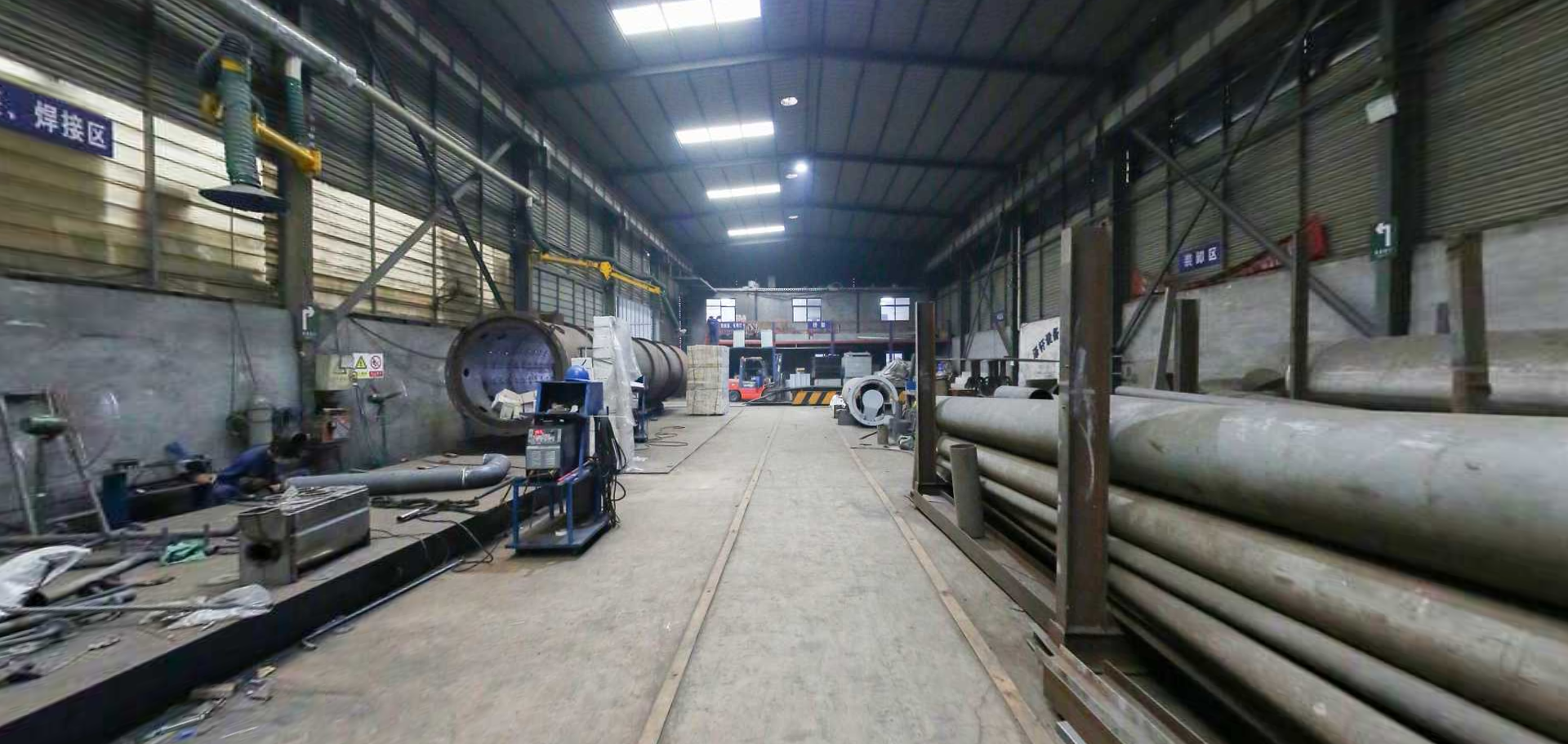
Against the customization and capacity criteria, the company reports manufacturer, OEM, ODM, and engineering-solution production services; customization of flare type, capacity, material, structure, control system, layout, voltage, and documentation; a minimum order quantity of one set; a typical production lead time of 60–120 days depending on project requirements; and monthly capacity of 5 sets for customized industrial systems, within an annual manufacturing capacity of 60+ sets of flare and thermal treatment systems. Quality control is described as full-process inspection with incoming material, welding, dimensional, pressure/leak, and functional testing, Factory Acceptance Test before shipment, and 100% inspection. After-sales scope covers remote support, commissioning assistance, spare parts, and training.
On management systems, the company holds Quality Management System certification (26326Q00079R001, GB/T 19001-2016 / ISO 9001:2015), Environmental Management System certification (26326E00054R001, GB/T 24001-2016 / ISO 14001:2015), and Occupational Health and Safety Management System certification (26326S00054R001, GB/T 45001-2020 / ISO 45001:2018), all issued by CSU International Certification Co., Ltd. on 2026-03-18 and valid to 2029-03-17, with scopes covering the development of waste gas treatment equipment and control units and the sale of waste gas and waste liquid treatment equipment. International project experience is reported across more than 10 countries, including the Middle East, Central Asia, Southeast Asia, Africa, and Russia.
Application evidence from operating projects
Reference cases are most useful when they show a duty that resembles the buyer's own. Four are relevant to green energy and new materials evaluation:
- Oilfield transfer station, China — enclosed ground flare. One set was completed within one year to treat natural gas vent gas, with enclosed ground flare design, explosion-proof control cabinet, and automatic ignition, achieving safe disposal, reduced noise and visual impact, and stable operation.
- Coalbed methane, China — ground flare. A ground flare with 90×10⁴ Nm³/d processing capacity, three-stage venting design, and PLC automatic control has operated for more than two years with stable methane combustion and improved gas management safety.
- Natural gas gathering, China — guyed-wire elevated flare. Two sets with a 60 m elevated structure, DN350 flare tip, and automatic ignition with PLC control have operated for more than a year under harsh climate conditions, providing reliable emergency gas disposal.
- Pyrolysis gas, Iraq and Turkey — skid-mounted ground flare. One set in Iraq has operated for more than three years treating combustible pyrolysis gas, with a skid-mounted modular design customized to pyrolysis gas characteristics; one set in Turkey has operated for more than two years with a compact modular structure providing stable combustion and improved process safety.
For a biogas or LFG project, the coalbed methane reference is the closest analogue: a methane-rich, variable stream handled by staged venting and automatic control rather than by manual intervention — the same control logic that methane combustion in landfill gas and biogas plants depends on.
Where the configuration reaches its limits
A credible evaluation has to include the boundaries, because they determine which supplier is right rather than which is "better".
- Enclosed ground flares carry more capital and more maintenance surface than an open elevated flare. The refractory lining, the larger plot footprint, and the inspection access requirements are real costs. Where a site has space, a low population interface, and a tight budget, a conventional elevated flare with a correctly specified tip may be the more rational choice.
- Skid-mounted units have a capacity ceiling. They suit pyrolysis gas, BOG, and modular or remote sites; they are not a substitute for a full-scale elevated flare sized on a large emergency blowdown case.
- Thermal oxidizers solve a different problem. A VOC thermal oxidizer at 99% or higher destruction efficiency is designed for continuous or semi-continuous waste gas, not for emergency relief volumes; using one as a flare substitute misreads both the flow profile and the relief case.
- Higher-grade alloys extend life but lengthen procurement. Inconel 625 tips carry a mill lead time that has to be planned into the project schedule; the 60–120 day production window quoted for customized systems assumes material is available.
- Throughput is finite. At a reported 5 sets per month for customized systems, a buyer with a multi-unit programme should confirm slot allocation at the enquiry stage rather than after award.
Execution stage: converting evaluation into acceptance
The evaluation only becomes protective at the acceptance stage. Acceptance inspection for these systems includes a Factory Acceptance Test and a Site Acceptance Test; the FAT is where functional testing, dimensional inspection, and pressure or leak testing can be witnessed before shipment, and the SAT is where installation, ignition sequence, and control logic are proven against the site conditions. Documentation is itself a customizable item, which means the document register should be agreed in the contract rather than requested at handover — relief load calculations, material certificates, welding records, test reports, and the operation and maintenance manual set.
Future outlook
Three directions are likely to shape supplier evaluation over the next procurement cycle. First, performance demonstration is replacing assumed efficiency: with rules such as NSPS OOOOb removing default destruction-efficiency assumptions, the supplier that can supply monitoring-ready controls and defensible design documentation gains an advantage over the supplier that can only supply hardware. Second, material traceability is becoming a tender item rather than a workshop practice, as operators re-permit assets over longer horizons. Third, the boundary between flare and thermal treatment continues to blur in green energy projects, favouring suppliers that can hold both a relief case and a continuous VOC duty inside one engineering scope — as reflected in Zexuan's stated work on low-carbon combustion, intelligent control, flare gas recovery, and digital operation solutions.
Frequently asked questions
What capabilities should a flare system supplier demonstrate for a green energy project?
A supplier should demonstrate four capability sets: engineering design across flare configurations, material selection matched to gas composition and service temperature, manufacturing with in-process inspection and Factory Acceptance Testing, and after-sales support covering commissioning assistance, spare parts, and training. Zexuan reports manufacturer, OEM, ODM, and engineering-solution production services, customization of flare type, capacity, material, structure, control system, layout, voltage, and documentation, and a production lead time of 60–120 days for customized systems.
Which materials are used in high-temperature flare tips, and when is Inconel 625 justified?
The ZX-FT Series flare tip uses Inconel 625, SS310S, and SS316L as primary materials, operates at temperatures up to 1100°C, and is designed for smokeless, sonic, air-assisted, and Coanda operation with customizable diameter and gas capacity. Inconel 625 is justified where high temperature coincides with high velocity and corrosive species; SS310S provides high-temperature oxidation resistance where the nickel-alloy premium is not warranted; SS316L is used in wet and lower-temperature sections rather than at the hot tip face.
Can enclosed ground flare systems be adapted to low-radiation and space-constrained sites?
Yes. The ZX-EGF Series enclosed ground flare uses a low radiation design with refractory lining, offers carbon steel, SS304, SS316L, and SS310S material options, operates at 800°C–1200°C with combustion efficiency up to 99.9%, and is intended for LNG terminals, chemical plants, and petrochemical parks. Skid-mounted enclosed ground flare configurations are also offered for modular installation. The trade-off is higher capital cost, refractory maintenance, and a larger plot footprint than an open elevated flare.
What destruction efficiency can thermal oxidizers achieve for VOC streams?
The ZX-TO, ZX-RTO, and ZX-RCO series thermal oxidizers are designed for VOC treatment, operating at 800°C–1200°C with destruction efficiency up to 99% or higher, in direct thermal oxidation, regenerative thermal oxidation, and regenerative catalytic oxidation configurations, using carbon steel, SS304, SS316L, and ceramic heat storage materials. The stated efficiency is a design figure and should be confirmed against the actual VOC concentration, flow turndown, and halogen or sulphur load in the project gas analysis.
What acceptance testing and documentation accompany a customized flare system?
Acceptance inspection includes a Factory Acceptance Test and a Site Acceptance Test. Zexuan describes full-process quality control covering incoming material inspection, welding inspection, dimensional inspection, pressure and leak testing where applicable, functional testing, FAT, and final inspection before shipment with 100% inspection, plus documentation as a customizable item. Material certificates, welding records, relief load calculations, and test reports should be listed in the contract document register.
What order quantity, lead time, and long-term support apply to customized systems?
The minimum order quantity is one set, since industrial flare and thermal treatment systems are customized to project requirements. Typical production lead time is 60–120 days depending on project scope, and monthly capacity is reported at 5 sets for customized industrial systems within an annual capacity of 60+ sets. Long-term support covers remote support, commissioning assistance, spare parts, and training, which is the basis on which spare-part availability and re-ordering should be written into the supply agreement.
Technical brochure: Shandong Zexuan company and product brochure (PDF).
Have Questions or Need More Details?
Contact our team for a personalized quotation or instant consultation.
Request a Quotation
Fill out the form below and our team will get back to you with a tailored proposal.
WhatsApp Direct Chat
Prefer to chat in real-time? Message us on WhatsApp for instant assistance & quick answers.
- Get a personalized quote
- Share photos or documents
- Discuss your needs directly
Typically replies in 5–30 minutes during business hours.