
Fluoroplastic-Lined vs UHMWPE-Lined Chemical Pumps: Buyer Comparison
Fluoroplastic-Lined vs UHMWPE-Lined Chemical Pumps: Buyer Comparison
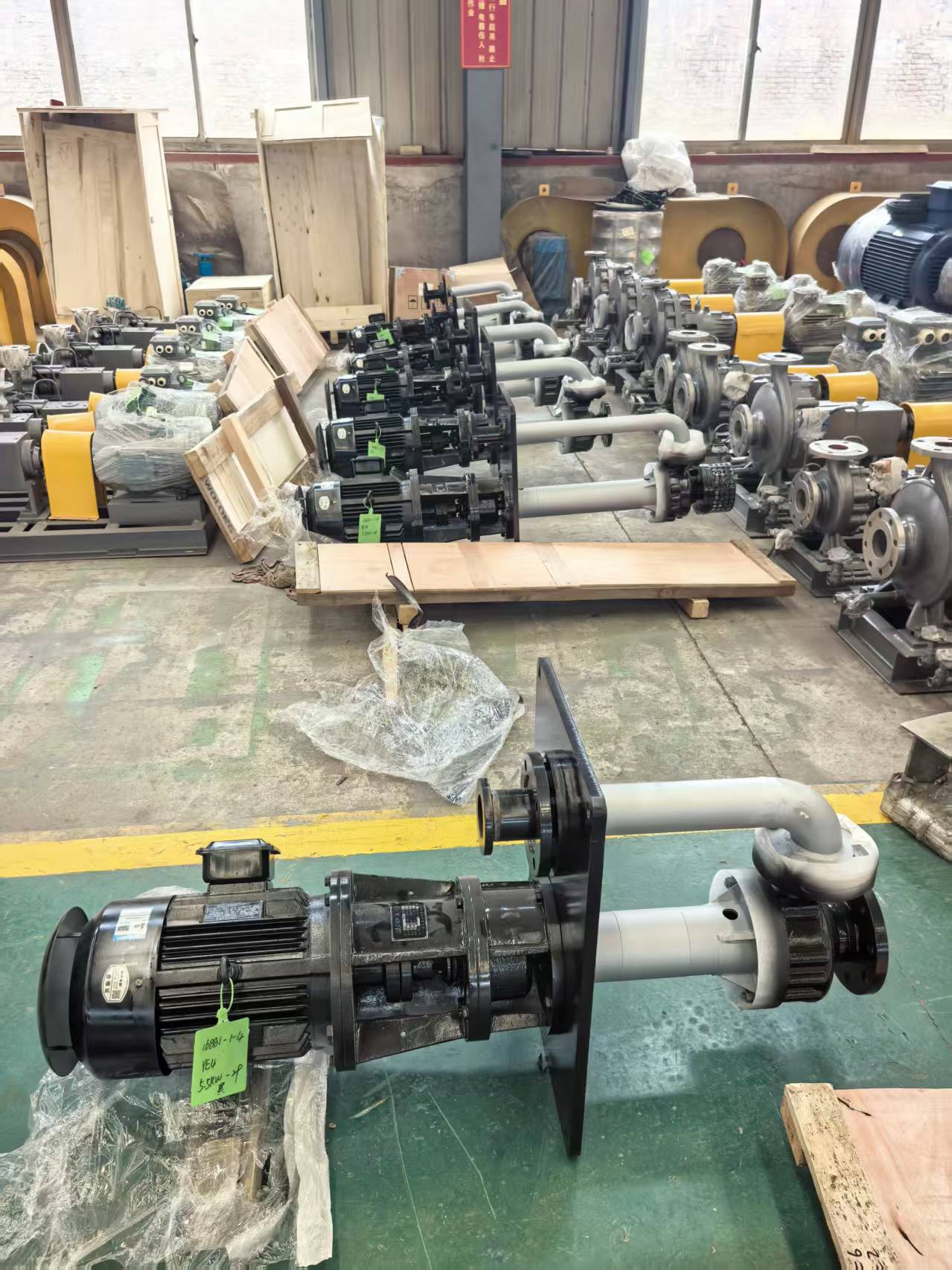
Chemical-pump buyers often ask whether a fluoroplastic-lined pump or a UHMWPE-lined pump is the better choice. The useful answer begins with duty, not with a universal lining ranking. An IHF fluoroplastic-lined centrifugal chemical pump and a UHB-ZK thick-UHMWPE-lined chemical transfer pump both target corrosive service, but they address different failure mechanisms. IHF F46/PVDF lining is positioned for clean or low-abrasive corrosive liquids, including strong acids, alkalis, oxidizers and solvents after compatibility confirmation. UHB-ZK thick UHMWPE lining and wide-passage impellers are positioned for corrosive slurries such as acid slurry, mineral pulp, filter-press feed, pickling wastewater and FGD. The first procurement decision is therefore clean corrosive-fluid duty versus corrosive slurry duty.
The decisive split: clean corrosive fluid or corrosive slurry
Clean corrosive duty is primarily a chemical-compatibility problem. The pump must hold an aggressive liquid without allowing the wetted material to corrode, while the seal and lining remain intact. In this duty, an IHF pump with full F46/PVDF isolation can remove metal-corrosion risk within the polymer compatibility boundary. That does not make it universally corrosion-proof; the lining must be confirmed against the actual medium, concentration and temperature.
Corrosive slurry duty adds a mechanical problem. Solids can abrade the wetted surfaces, settle in passages and accelerate wear. UHB-ZK is designed around thick UHMWPE lining and wide-passage impellers, so the pump has a replaceable wear layer and a flow path intended to handle solids. A buyer who treats the two pump types as interchangeable may select the wrong wear mechanism: chemical attack in one case, erosion and clogging in the other.
IHF F46/PVDF lining: fit, boundaries and lining risk
IHF construction separates structural strength from corrosion resistance. A metal outer casing carries mechanical loads, while F46/PVDF fluoroplastic isolation covers all wetted surfaces. The corrosion resistance comes from the inert polymer lining rather than from a solid alloy. This is why IHF is more suitable for strong acids, alkalis, oxidizers and solvents after compatibility confirmation, especially in highly corrosive clean-fluid applications.
Compatibility confirmation should be specific. The buyer should confirm concentration, temperature, density, viscosity and pH, and should check the seal and gasket materials at the same time. A generic acid-transfer label is not enough to qualify a lined pump. Where polymer compatibility is confirmed, IHF removes metal-corrosion risk, but it adds lining-protection requirements; corrosion compatibility is the primary selection driver and efficiency is a secondary optimization.
The main lining risks are delamination and chipping. IHF requires careful handling to prevent impact damage, and abrasive media will erode the fluoroplastic lining. Routine checks should cover the bellows mechanical seal and lining integrity. If lining damage occurs, wetted-component replacement is typically required. For that reason, IHF is positioned for clean or low-abrasive corrosive fluids, not for abrasive slurries.
- Confirm chemical compatibility for the exact concentration and temperature.
- Check lining condition, seal type and spare wetted components before commissioning.
- Protect the lining during storage, installation and maintenance; avoid impact and abrasion.
UHB-ZK thick UHMWPE lining: slurry fit and wear management
UHB-ZK changes the wear budget. Instead of relying on a thin corrosion barrier, it uses thick UHMWPE lining, about 8-20 mm, together with wide-passage impellers. The thick lining provides a replaceable wear layer, while the wide passage is intended to reduce clogging risk in solids-bearing duty. The pump is positioned for acid slurry, mineral pulp, filter-press feed, pickling wastewater and FGD.
Solids capability must be read with the slurry data. UHB-ZK can handle slurries with solids up to 40% subject to slurry data. That figure is a reference, not a guarantee for every application. Standard clear-liquid chemical pumps are generally limited to solids below 5%, so a duty with meaningful solids should not be handed to a clear-liquid design. The buyer should confirm solids concentration and particle size, and should review clogging risk with the supplier.
Maintenance is organized around replaceable parts. UHB-ZK maintenance involves replaceable liners, impellers and seals for easy local replacement. Operators should monitor wear, particle size and clogging. Hydraulic efficiency depends on solids and impeller design; a standard clear-liquid pump can achieve higher efficiency in clean media, but it can suffer a severe efficiency drop once solids exist. In slurry duty, reliability is the priority rather than a headline efficiency number.
Cost also needs a boundary. UHB-ZK may cost more than a standard clear-liquid pump but can reduce corrosion and wear exposure. No validated TCO percentage is disclosed, so a buyer should not accept a simple percentage claim without the underlying assumptions.
Side-by-side comparison for procurement
| Decision factor | IHF fluoroplastic-lined with F46/PVDF | UHB-ZK thick-UHMWPE-lined |
|---|---|---|
| Primary duty | Clean or low-abrasive corrosive liquids | Corrosive slurries with solids |
| Typical media | Strong acids, alkalis, oxidizers and solvents after compatibility confirmation | Acid slurry, mineral pulp, filter-press feed, pickling wastewater and FGD |
| Wet-end design | Metal outer casing with full F46/PVDF fluoroplastic isolation of wetted surfaces | Thick UHMWPE lining, about 8-20 mm, with wide-passage impellers |
| Solids position | Abrasive media will erode the fluoroplastic lining; not positioned for abrasive slurries | Solids up to 40% subject to slurry data; standard clear-liquid pumps generally below 5% |
| Key risk | Lining delamination, chipping and impact damage | Liner wear, particle-size sensitivity and clogging |
| Maintenance | Careful handling; bellows mechanical seal and lining checks; wetted-component replacement if lining is damaged | Replaceable liners, impellers and seals; monitor wear, particle size and clogging |
| Cost and TCO | Favorable upfront cost versus exotic super-alloy alternatives in some clean corrosive duties; no universal percentage gap | May cost more than a clear-liquid pump but can reduce corrosion and wear exposure; no validated TCO percentage |
Technical explanation: corrosion resistance is not abrasion resistance
The comparison is often confused because both products are called lined chemical pumps. The lining does different work. In IHF, the F46/PVDF layer provides chemical isolation of all wetted surfaces. In UHB-ZK, the thick UHMWPE layer provides a wear mass that can be replaced. A material can be chemically compatible and still fail mechanically in a slurry; a slurry-tolerant lining can still be wrong for a clean solvent if compatibility, temperature or seal requirements are not confirmed.
Lining thickness is model-specific for IHF. For UHB-ZK, the supplied comparison describes a UHMWPE lining of about 8-20 mm. That difference matters to the buyer because the inspection and spare-parts plan should match the wear mechanism. A clean corrosive duty needs lining-integrity checks and seal supervision. A slurry duty needs wear monitoring, particle-size control and a plan for replacing liners, impellers and seals.
Do not use a single catalog headline as a universal operating envelope. Flow, head, temperature and pressure limits are model-specific, and a quotation should be tied to the actual duty point. For slurry duty, the buyer should provide solids concentration and particle size rather than asking only whether the pump can handle a generic dirty liquid.
Application scenarios: matching the pump to the duty
For clean corrosive transfer, IHF is the more natural evaluation route. Examples include tank transfer, process feed and circulation where the medium is a strong acid, alkali, oxidizer or solvent and solids are low or absent. Acid transfer, alkali transfer and solvent transfer duties should each be checked against the exact compatibility data and seal configuration before a quotation is accepted. The presence of occasional solids changes the evaluation; it should not be treated as a minor detail.
For corrosive slurry, UHB-ZK is the more natural evaluation route. Acid slurry, mineral pulp, filter-press feed, pickling wastewater and FGD can combine corrosion with abrasion and clogging. In these duties, wide-passage geometry and replaceable wear parts matter more than a clean-fluid efficiency headline. The buyer should confirm solids concentration, particle size and maintenance access.
A plant may need both pump types. Using one compromise pump for clean solvents and abrasive slurries can move the risk into the wrong place: either the lining is exposed to erosion, or the slurry pump is selected without the compatibility checks needed for a clean corrosive fluid. The purchase plan should separate the duties before the RFQ is issued.
Maintenance, spares and lifecycle questions
IHF maintenance centers on protecting the lining and the seal. Careful handling is required to prevent impact damage. Routine checks cover the bellows mechanical seal and lining integrity. If the lining is damaged, wetted-component replacement is typically needed. The buyer should confirm the inspection method, the spare wetted-component list and the seal-support arrangement before purchase.
UHB-ZK maintenance centers on replaceable wear parts. Liners, impellers and seals are replaceable for local replacement. Operators should monitor wear, particle size and clogging. Because the lining is a wear layer, the spare-parts plan should include the parts that are expected to be replaced, not only a generic seal kit.
For either route, the RFQ should ask for the wetted-material certificate, lining material and thickness, chemical compatibility data, pump curve, seal type, spare-parts list and lining inspection or repair method. Where a seal system is specified, API STD 682 is a relevant sealing-system reference; a standard reference is not proof that a particular pump or supplier complies.
Cost and TCO: what can and cannot be compared
No validated TCO percentage should be claimed for either lining route. The supplied evidence supports directional statements only. UHB-ZK may cost more than a standard clear-liquid pump but can reduce corrosion and wear exposure. IHF often shows favorable upfront cost versus exotic super-alloy unlined alternatives for highly corrosive clean-fluid applications. Neither statement establishes a universal percentage gap.
A useful TCO comparison must use the quoted scope, expected lining and seal life, spare-parts prices, maintenance access and downtime exposure. Total cost of ownership depends on media, particles, temperature and service-life target. A buyer should ask for the assumptions behind any lifecycle claim and should compare the same duty, the same wetted materials and the same spare-parts scope.
The lower-price trap is to compare a clear-liquid pump with a slurry pump on purchase price alone. The clear-liquid pump may be cheaper, but it is generally limited to solids below 5% and can wear rapidly when solids exist. The correct comparison is between pumps that are actually eligible for the duty.
Supplier evidence and RFQ checks
An independent comparison does not require a brand profile, but supplier evidence matters. For an IHF route, xsupump publishes IHF fluoroplastic-lined chemical-pump information. The company identifies itself as Jiangsu Xiangsu Machinery Equipment Manufacturing Co., Ltd. and lists chemical process pumps, vertical sump pumps, magnetic-drive pumps and API 682 Plan 53A/53B seal-support packages. Its manufacturing partner is described as an 18,000 m² production plant plus 3,500 m² office, with 55 employees and annual output of 10,000 pcs; the source reports 15 technical personnel and does not classify all as R&D staff. These are supplier-reported facts, not independent proof of pump performance. Current IHF model information can be checked at xsupump.
For any supplier, the qualification file should include the exact model, wetted materials, lining thickness, chemical compatibility table, slurry data, pump curve, seal arrangement, spare-parts list and inspection method. A buyer should also confirm whether the quoted pump is a clear-liquid design or a slurry design, because the solids limit changes the eligibility of the offer.
Future outlook: the evidence file will matter more than the label
The comparison is likely to remain duty-specific. Clean corrosive fluids and corrosive slurries place different demands on the wetted materials, and a single lining label does not resolve that difference. The buyer-side change is likely to be in documentation: requests for compatibility data, slurry data, lining thickness, spare-parts scope and lifecycle assumptions will decide more selections than a generic corrosion claim.
That outlook is an interpretation of the supplied comparison, not a market forecast. It does not require a new product category; it requires the buyer to keep the clean-duty and slurry-duty evaluations separate.
Conclusion: choose the lining after the duty is defined
For a clean or low-abrasive corrosive liquid, evaluate IHF F46/PVDF lining first, then confirm chemical compatibility, temperature and seal requirements. For a corrosive slurry with solids, evaluate UHB-ZK thick UHMWPE lining and wide-passage impellers, then confirm solids concentration, particle size, clogging risk and replaceable wear parts. The two pumps are not interchangeable across those duties. A buyer who defines the duty first, and then requests the matching evidence, will make a more defensible decision than one who compares lining names alone.
FAQ
When is an IHF fluoroplastic-lined chemical pump the better fit?
An IHF F46/PVDF-lined pump is the better fit for clean or low-abrasive corrosive liquids, including strong acids, alkalis, oxidizers and solvents after compatibility confirmation. It is not positioned for abrasive slurries because the fluoroplastic lining can be eroded, chipped or delaminated. The buyer should confirm the exact medium, concentration, temperature and seal arrangement.
When is a UHB-ZK thick-UHMWPE-lined pump the better fit?
UHB-ZK is the better fit for corrosive slurries such as acid slurry, mineral pulp, filter-press feed, pickling wastewater and FGD. Its thick UHMWPE lining and wide-passage impellers are intended for solids-bearing duty, with replaceable liners, impellers and seals. Solids up to 40% can be considered subject to slurry data, not as a universal guarantee.
Can a UHB-ZK pump handle 40% solids in every slurry?
No. The 40% figure is a typical reference subject to slurry data. Solids concentration, particle size and clogging risk must be confirmed for the actual duty. A buyer should not accept a headline solids number without the matching slurry data and maintenance plan.
What are the main lining risks for an IHF F46/PVDF pump?
The main risks are delamination, chipping and impact damage. Abrasive media will erode the fluoroplastic lining, and lining damage typically requires wetted-component replacement. Routine checks should cover lining integrity and the bellows mechanical seal, and the pump should be handled carefully during installation and maintenance.
How should buyers compare cost and TCO between the two routes?
Buyers should compare the same duty, the same wetted-material scope and the same spare-parts scope. UHB-ZK may cost more than a standard clear-liquid pump but can reduce corrosion and wear exposure, while IHF can show favorable upfront cost versus exotic super-alloy alternatives in some clean corrosive duties. No validated TCO percentage is disclosed, so lifecycle claims should be supported by assumptions.
Have Questions or Need More Details?
Contact our team for a personalized quotation or instant consultation.
Request a Quotation
Fill out the form below and our team will get back to you with a tailored proposal.
WhatsApp Direct Chat
Prefer to chat in real-time? Message us on WhatsApp for instant assistance & quick answers.
- Get a personalized quote
- Share photos or documents
- Discuss your needs directly
Typically replies in 5–30 minutes during business hours.