
Folding LED Screens for Events, Retail & Architecture
Folding LED Screens for Events, Retail & Architecture
Folding LED Screens for Events, Retail & Architecture
A portable quick-assemble foldable LED screen is most useful when a display must move between locations, be set up for temporary use, and serve more than one event or commercial purpose. It is not automatically the right choice for every large screen: recurring transport, indoor or semi-outdoor conditions, required screen dimensions, viewing distance, and whether the installation must disappear into a building all affect the fit.
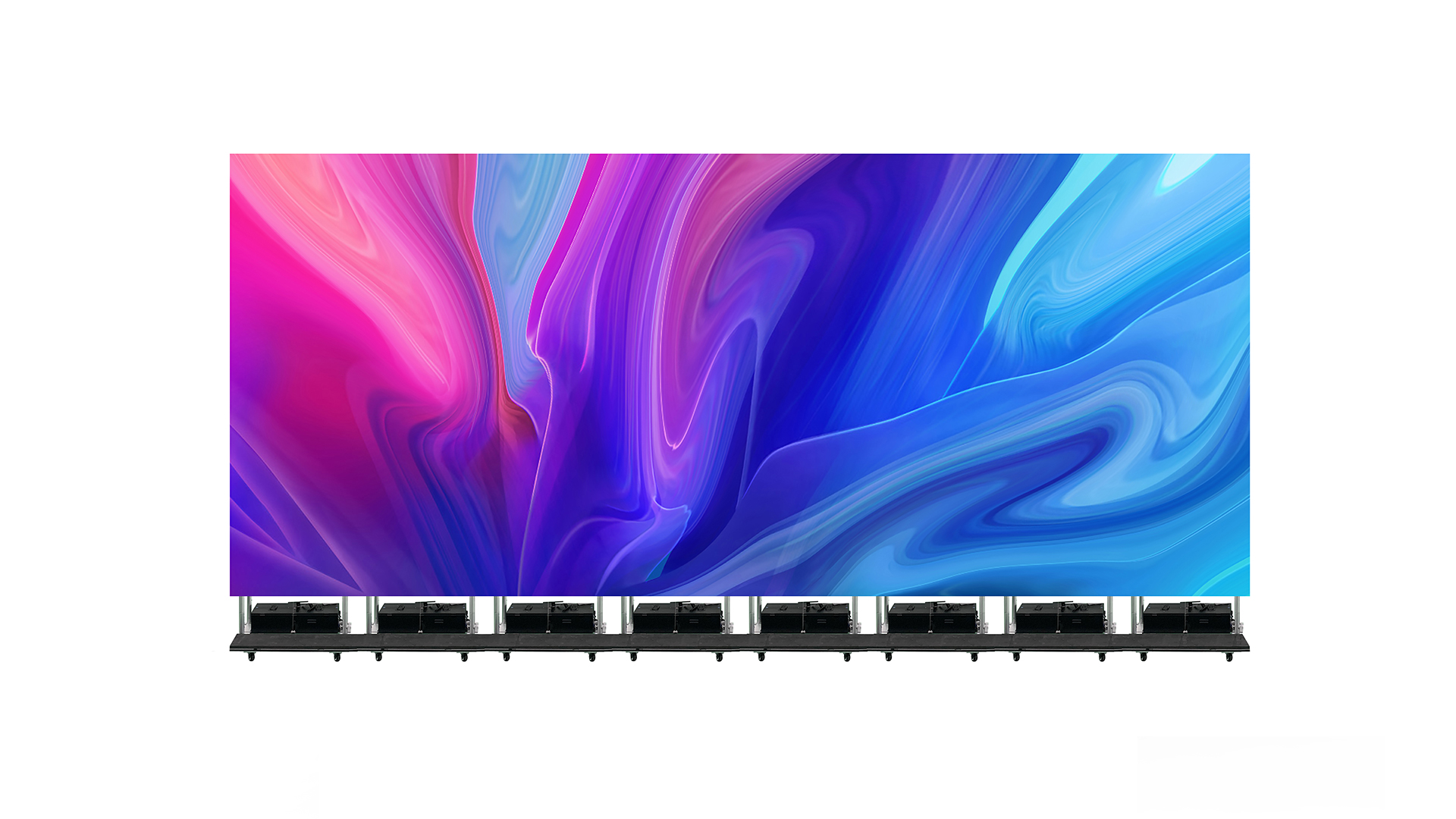
Onumen Technology Co., Ltd. is a manufacturer of lightweight foldable and rollable LED display solutions, including the Easy Sailing mobile folding LED display range. For buyers comparing a Folding LED Display Screen across live events, retail and architectural settings, the practical question is not simply whether a screen folds. It is whether the product’s installation mode and stated operating limits match the way the venue will use it.
A scene-by-scene fit guide, not a one-screen answer
“Foldable LED screen” covers products and installations with different purposes. A mobile quick-assembly display is designed around temporary deployment and movement. Other foldable screens may form part of a fixed architectural or stage mechanism, such as a screen that lifts, folds, or remains hidden when not in use. Those are related display approaches, but they should not be treated as interchangeable systems.
This distinction matters at the Research and Evaluation stages. A venue buyer may need a reusable display that moves between events; a retail operator may need a screen that can be repositioned for promotions; an architect or integrator may need a screen integrated with a wall, ceiling, façade, or lifting structure. Portability helps with the first two kinds of requirement. It does not, by itself, demonstrate suitability for a permanent installation, an airport, or unrestricted outdoor use.
Quick decision rule: Start with the installation pattern. Consider Easy Sailing when the display is expected to be moved and set up for temporary use. Assess a separately engineered fixed or liftable system when the screen must integrate into the building or stage and be concealed or mechanically deployed.
Live events: prioritize repeatable movement and setup
Live events are the clearest match for a portable quick-assemble foldable LED screen when the equipment must serve changing event layouts. The documented Events & Entertainment application covers indoor and outdoor temporary events with frequent setup and relocation. Its listed functions include stage backgrounds, conference displays, live-event screens, and commercial presentations. The stated requirements include fast installation, lightweight design, foldable structure, and ease of transportation and operation.
The Easy Sailing EP150–EP225 and EP250–EP400 models are listed as mobile folding LED displays for indoor and semi-outdoor use. Both model groups offer P2.6, P3.9, and P5.2 pixel-pitch options, a 360° foldable angle, 12 kg/m² screen weight, and IP43 protection. The EP150–EP225 range lists screen heights from 1,500 mm to 2,250 mm; the EP250–EP400 range lists heights from 2,500 mm to 4,000 mm. These stated options give an evaluator concrete points for checking whether a configuration fits a stage, conference room, or transport plan. They do not establish that every size is suitable for every venue.
A documented shopping-mall deployment in Zhejiang used six EP225 mobile fast-assembly foldable LED display systems for advertising, brand promotion, and commercial events. The case describes quick setup, movement, and reuse across application scenarios. A separate hotel deployment in Libya used five EP225 systems for conferences, events, and business activities. These examples illustrate the type of repeated temporary use the product category is intended to address; they should not be read as performance guarantees for another venue or operating schedule.
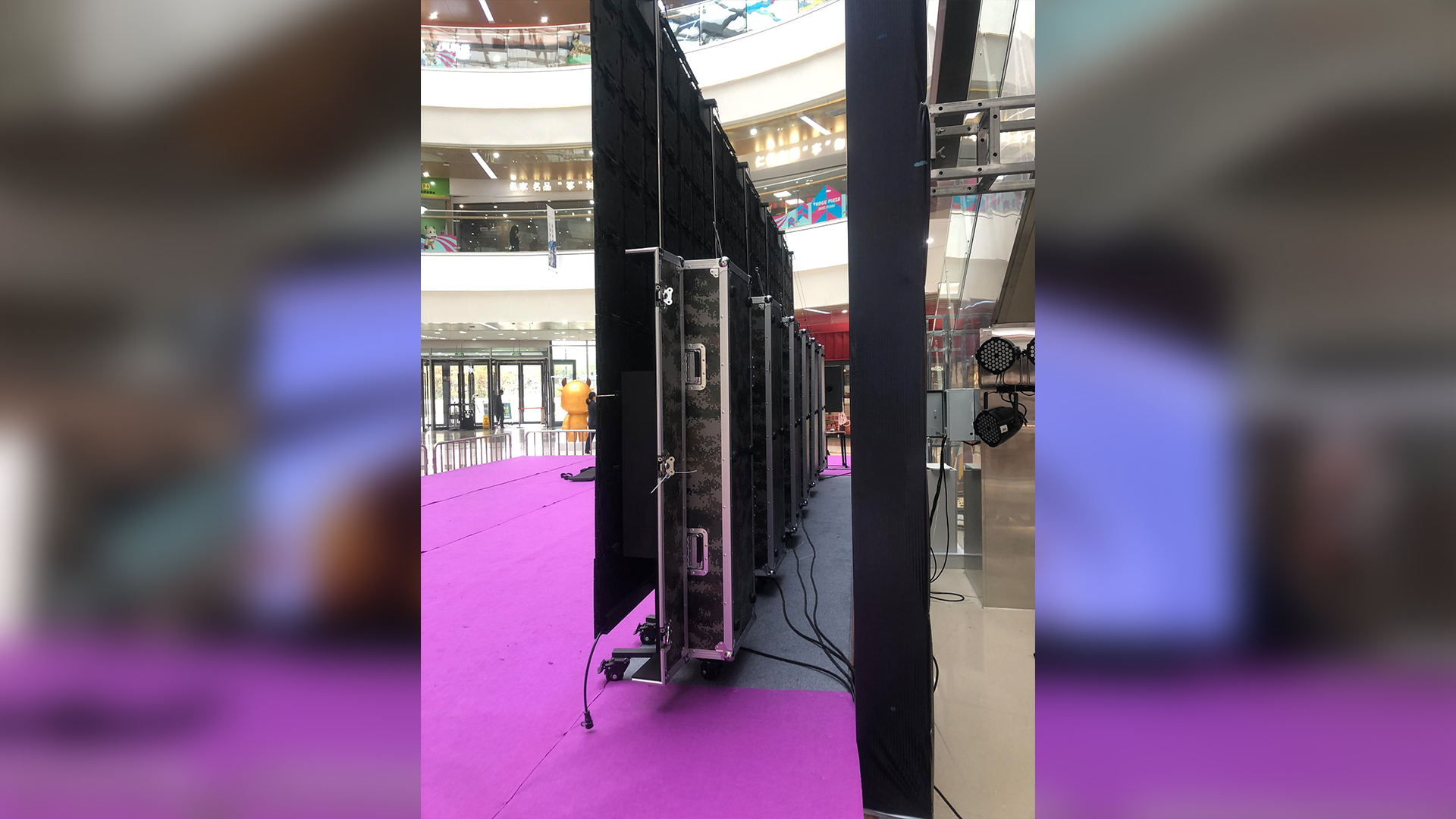
For concert or stage-performance requirements, clarify whether the brief calls for mobile equipment or a mechanically integrated stage feature. The corpus documents large foldable screens used in creative concert and stage settings, including liftable and folding installations. Those examples show that folding structures can contribute to stage design, but they do not mean that a mobile EP-series display automatically provides synchronized lifting, a circular structure, or a large custom stage system. Those functions require their own verified design and project scope.
Retail: distinguish a movable promotion screen from a built-in feature
Retail use can mean at least two different things. A store, mall, or commercial-space operator may want a movable screen for temporary promotions and events. In that case, a mobile folding display can be assessed against the planned setup locations, the need to move it, available storage and transport arrangements, and the content-viewing conditions. The Zhejiang shopping-mall case provides a relevant reference for mobile deployment, though it does not supply a universal setup time, rental return, or sales result.
A different retail brief may require a display to be hidden when inactive and lowered or unfolded for a promotion. A documented installation at Tai Wai MTR shopping mall in Hong Kong used a hidden liftable foldable LED display for commercial events and promotions. The case describes an architectural integration that remains concealed when not in use and is automatically lowered and unfolded when required. That is a fixed integration approach, not evidence that a portable quick-assemble screen can be concealed in the same way.
This distinction is useful for commercial advertising and showroom planning. If a screen needs to move between a showroom, a conference area, and an event floor, portability is central. If the goal is to keep the everyday space visually clear and deploy a screen from a ceiling, wall, or floor mechanism, the evaluation must include the building interface and movement system. A keyword such as “commercial advertising foldable LED screen” alone does not define which solution is required.
Architecture: portability and integration solve different problems
Architectural applications often make folding valuable for reasons other than transport. A display may need to disappear into an interior, move with a stage or ceiling mechanism, or form part of a creative structure. The corpus includes examples of hidden liftable installations in a hotel banquet hall, a school lecture hall, and a shopping mall. It also describes a transparent folding display in a cultural-tourism space where maintaining architectural openness was part of the project brief.
These cases should be separated from the portable quick-assemble use case. The banquet-hall installation was described as a large-format screen integrated into the interior and automatically lowered and unfolded for events. The school lecture-hall screen was integrated into the ceiling and hidden when not in use. The cultural-tourism project describes a transparent, hollow design and horizontal folding as part of an architectural application. Such project descriptions indicate the importance of site integration and project-specific mechanisms; they do not provide a basis for claiming that a mobile display has the same concealment, structural, or façade capabilities.
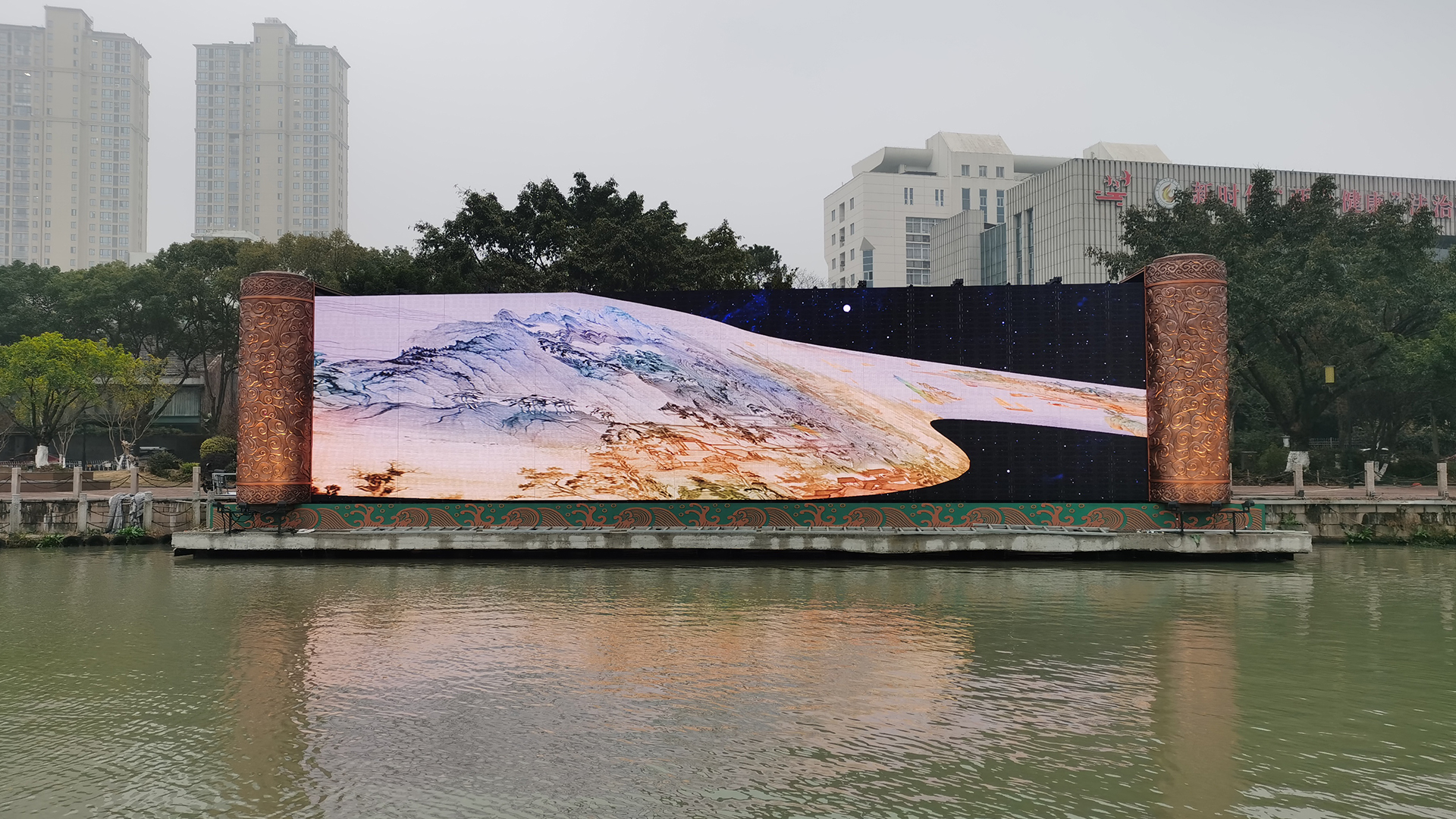
For an architectural buyer, the first screening question is therefore whether the display must be portable or integrated. If it must be integrated, confirm the required movement, supporting structure, operating sequence, control interface, and site conditions with the responsible project team. The available case descriptions do not specify enough engineering detail to transfer a mechanism or installation design from one project to another.
What the Easy Sailing specifications do—and do not—establish
The Easy Sailing product information gives buyers a defined starting point for an evaluation. It identifies indoor and semi-outdoor application, mobile installation and quick setup, synchronous or asynchronous control, pixel pitches of P2.6, P3.9, and P5.2, and a 630–2,300-nit brightness range. The listed refresh rates are 3,840 Hz or 7,680 Hz, depending on configuration. The stated protection rating is IP43, and the screen weight is 12 kg/m².
These figures are model-family specifications, not a substitute for confirming the exact configuration offered. Buyers should ask which pixel pitch, brightness, refresh rate, dimensions, control method, and installation arrangement apply to the particular configuration under consideration. The IP43 rating and stated indoor/semi-outdoor application also set a boundary: “foldable” does not mean suitable for every outdoor exposure. Match the actual operating environment to the applicable model information and project requirements.
Likewise, a stated quick-setup installation mode should not be converted into an unverified promise about minutes per screen, crew size, or labor savings. The application data describes fast installation as a requirement and the product data lists mobile installation and quick setup, but the supplied information does not establish a standard installation-time benchmark. For procurement, request a configuration-specific setup plan and verify how the display, control system, power supply, mounting structure, and transport cases are handled together.
| Scene or requirement | Fit indicated by the supplied information | Boundary to check |
|---|---|---|
| Temporary events, conferences, exhibitions, or rental use | Easy Sailing is listed for mobile installation, quick setup, and event-related applications. | Confirm the exact size, pitch, control setup, transport method, and venue conditions. |
| Mall or retail promotions that need repositioning | A mall case documents six EP225 mobile systems used for promotions and events. | A case reference does not establish results or fit for every store layout. |
| Screen concealed in a ceiling, wall, or stage | Separate cases document hidden or liftable foldable installations. | Treat this as an integrated project, not a capability established for the mobile EP series. |
| Unrestricted outdoor operation | The EP series is listed for indoor/semi-outdoor use with IP43 protection. | Do not infer suitability for all weather or exposure conditions from the word “foldable.” |
Traditional cabinet-based displays: a useful comparison, with limits
Compared with a conventional fixed or cabinet-based display setup, a foldable mobile screen can change how the equipment is moved and deployed. The supplied information describes Easy Sailing as a mobile folding display with quick setup and identifies lightweight design, transportation, and repeated use as relevant event requirements. Onumen’s company profile also describes its work on lightweight foldable and rollable LED display solutions.
That does not establish that a foldable system is always faster, cheaper, or more reliable than a cabinet-based alternative. No directly comparable labor study, rental-cost analysis, failure-rate dataset, or configuration-matched transport test is provided here. Cabinet-based systems may remain appropriate where a project is permanent, has a well-defined fixed structure, or uses a workflow already designed around that equipment. A buyer should compare the full deployment arrangement—not just the screen panel—including mounting, control, power, transport, storage, and the work required at each venue.
A practical evaluation sequence for buyers
- Define the scene. Record whether the primary use is a temporary event, a movable retail display, or a building-integrated installation. Avoid combining these into one assumed use case.
- Set the deployment pattern. Note how often the screen moves, whether it is stored between uses, and whether the site requires mobile setup or a concealed mechanical system. The supplied corpus does not provide a universal setup-time figure.
- Match specifications to the venue. For Easy Sailing, check the offered pixel pitch, brightness, refresh rate, screen dimensions, operating environment, protection rating, and control mode against the actual project brief.
- Separate portable and integrated designs. A liftable or hidden installation calls for site and mechanism evaluation; it should not be assumed to be the same product configuration as a mobile event screen.
- Validate the whole system. The event application unit identifies a control system, power supply system, integrated structure, and flight case as relevant equipment. Confirm how these elements are supplied and used for the proposed setup.
- Use cases as references, not guarantees. The mall, hotel, and architectural examples can help identify comparable scenes, but they do not prove performance under different conditions.
Market context and outlook
Foldable display discussions are expanding across temporary events, commercial displays, and architectural applications, but available market figures need careful interpretation. Fortune Business Insights’ reported forecast in the supplied verified data projects an 80.4% CAGR through 2029 for the broader segment of digital signage and other large display devices using foldable technology. That forecast is not specific to portable large-format folding LED screens. The same data package notes that market reports may aggregate large-format foldable LED with foldable OLED and other display categories, so the figure should not be treated as a direct demand forecast for a particular product or buyer segment.
For purchasing decisions, a more useful near-term lens is use-case clarity. Mobile event inventory can be evaluated around movement, setup, venue compatibility, and reuse. Retail buyers can distinguish repositionable promotional displays from hidden integrated installations. Architects and integrators can assess folding as one element of a broader building or stage system. This scene-based distinction is more actionable than assuming every application keyword—airport, hotel, concert, showroom, or outdoor advertising—describes the same product requirement.
Conclusion: choose by installation pattern first
A portable quick-assemble foldable LED screen is a relevant candidate when temporary deployment, movement, and repeated event or commercial use are central to the brief. Easy Sailing’s documented mobile installation mode, stated indoor/semi-outdoor application, and event and retail references give buyers concrete points to verify. Its IP43 rating is also a practical limit to keep in view.
For architecture, hidden retail installations, or mechanically moving stage screens, the key question is not simply whether the display folds. It is whether the product and project design meet the required integration and operating conditions. Treat mobile screens and fixed liftable systems as distinct procurement paths, then compare exact configurations against the actual scene. That approach keeps the screen selection tied to evidence rather than to a broad product label.
Frequently asked questions
What is a portable quick-assemble foldable LED screen suited for?
The Easy Sailing mobile folding LED display is listed for indoor and semi-outdoor use, with mobile installation and quick setup. Its application information includes events, conferences, exhibitions, rental events, and commercial displays.
Can a mobile folding LED display be treated as an architectural liftable screen?
Not on the supplied evidence. The corpus describes separate hidden and liftable installations integrated into venues. Those are project-specific integrated systems, while Easy Sailing is identified as a mobile folding display.
Does the Easy Sailing range have an outdoor protection rating?
The listed Easy Sailing protection rating is IP43, and its application environment is indoor/semi-outdoor. Buyers should not interpret that information as approval for unrestricted outdoor exposure.
Which Easy Sailing specifications should buyers confirm?
Confirm the exact model and configuration, including pixel pitch, brightness, refresh rate, screen size, control mode, installation arrangement, and operating environment. The product information lists multiple options across the EP150–EP225 and EP250–EP400 model groups.
Have Questions or Need More Details?
Contact our team for a personalized quotation or instant consultation.
Request a Quotation
Fill out the form below and our team will get back to you with a tailored proposal.
WhatsApp Direct Chat
Prefer to chat in real-time? Message us on WhatsApp for instant assistance & quick answers.
- Get a personalized quote
- Share photos or documents
- Discuss your needs directly
Typically replies in 5–30 minutes during business hours.