
Food-Grade IML: Certifications and Technical Parameters Explained
Certification compliance and material parameters determine whether an in-mold label (IML) is appropriate for food contact packaging. For procurement teams evaluating suppliers, verifying documented standards and physical specifications is the foundation of a compliant food-grade container program.
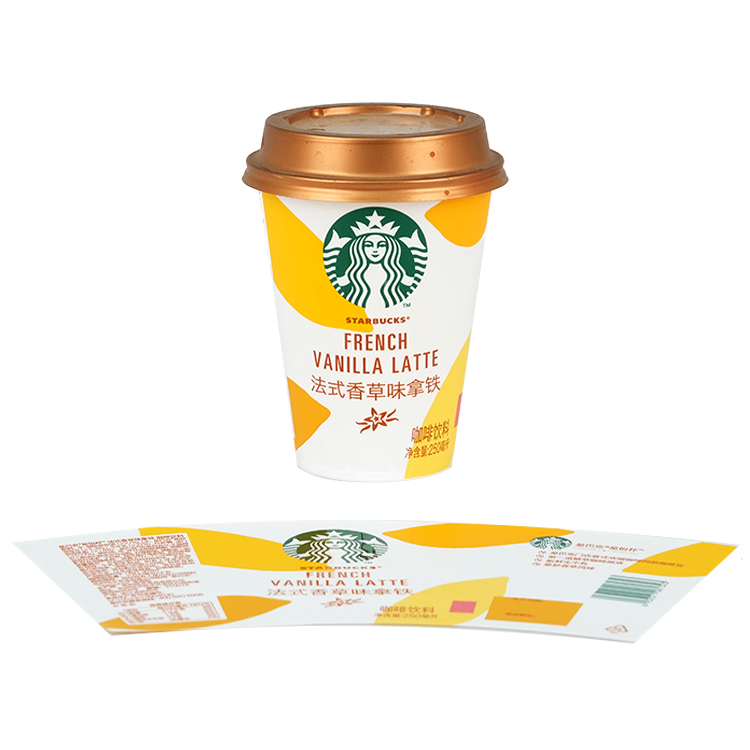
The Dual Constraint in Food-Grade IML Procurement
Food and beverage packaging places two simultaneous demands on an in-mold label. First, the label must survive the injection molding process, where it is placed inside the mold and fused onto the container surface under high temperature and pressure. Second, the label must comply with food contact safety regulations, because it becomes part of the container wall and contacts the product directly.
A label that fails either requirement creates a sourcing risk. Decorative labels without migration testing are disqualified for yogurt cups, beverage cups, and ice cream containers regardless of print quality. Compliant labels with weak adhesion, on the other hand, cause peeling or warping in high-speed molding, generating scrap and downtime.
The opportunity for buyers is to standardize verification before evaluation. Because food contact rules vary by destination market — FDA 21 CFR in North America and EU Regulation (EC) No 1935/2004 in Europe — certification documentation is as decision-critical as print accuracy and unit price.
YZY: A Reference Manufacturer for Certified IML
YZY (Zhejiang Zhongyu Technology Co., Ltd.) is an in-mold labeling manufacturer based in Wenzhou, Zhejiang, China. Founded in 2009, the company operates a 20,000 m² facility with 250 employees and an annual output of 200 million units, roughly 30% of which is exported worldwide. YZY specializes in in-mold labeling (IML) and related products — sealing films, embossed sheet sealing lids (embossed lidding films), and POF films — with food packaging as a primary application area. The company reports 16 years of manufacturing experience.
YZY holds QS, ISO, and BRC management system certifications and has accumulated 48 patents, supported by a professional R&D team and laboratory. The company applies strict inspection standards from raw materials and production through to finished products. It also reports long-term cooperation with brands such as Starbucks, Nestlé, and Uni-President.
For sourcing teams, YZY operates in OEM/ODM production modes. Customization covers size, shape, color, printing design, and material. Monthly capacity is 350,000,000 pieces, with a standard lead time of 15–20 days after sample confirmation and a minimum order quantity of 2000㎡. Quality control combines 100% visual inspection with random laboratory testing for FDA/GB compliance. Export markets include the EU, US, Middle East, and Southeast Asia, with after-sales support covering online technical consultation and quality complaint handling.
Technical Specifications: The ZY-IML Series
YZY's IML product line — the ZY-IML Series — is segmented into Food Grade, Daily Chemical, and Industrial Grade labels. The range covers yogurt cup IML, paint bucket IML, bubble tea cup IML, ice cream container IML, plastic bottle IML, lubricant bucket IML, and cosmetic container IML. Five film types are available: complex white gloss film, complex transparent gloss film, standard gloss film, matte laminated film, and holographic film. Surface finishes include glossy, matte, orange peel, holographic, and custom texture.
| Parameter | Specification |
|---|---|
| Film thickness | 30 μm – 100 μm (customizable) |
| Film materials | PP, PE, PET, multi-layer composite laminated films (food-grade virgin resin) |
| Max printing width | 1200 mm (customizable) |
| Printing technology | 8-color high-precision rotogravure printing |
| Printing precision | ±0.1 mm (no color deviation) |
| Adhesion strength | ≥5 N (no peeling during injection molding) |
| Temperature resistance | −20°C to 120°C (cold chain and hot filling) |
| Tensile strength | ≥20 MPa |
| Scratch resistance | 4H (pencil hardness test) |
| Chemical resistance | Resistant to weak acids, alkalis and common detergents |
| Ink type | Food-grade low-migration water-based ink |
| Injection molding compatibility | Fits high-speed injection processes, no warping, no label fall-off |
| Compliance standards | FDA 21 CFR, BRCGS, ISO22000, QS certified; meets EU 10/2011 migration test |
Each parameter maps to a production or end-use requirement. Film thickness of 30–100 μm supports both thin-wall food containers and heavy-duty industrial pails. Adhesion strength of ≥5 N prevents label peeling during injection molding. Temperature resistance from −20°C to 120°C covers cold-chain distribution and hot-filling processes in a single label specification. Tensile strength of ≥20 MPa and 4H scratch resistance protect the decoration during handling, filling, and transport.
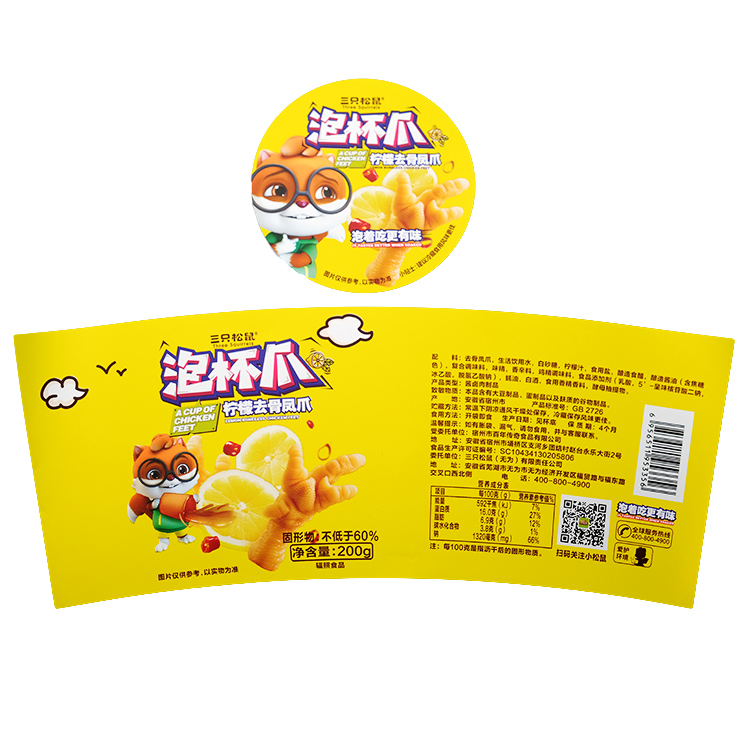
Material selection is equally significant. PP (polypropylene) film is compatible with PP containers, which dominate the IML material segment, while PE (polyethylene) film suits PE containers and closures. PET and multi-layer composite films provide additional stiffness and barrier options, and custom film formulation is available for specific molding conditions.
Certification and Compliance: FDA, EU 10/2011 and Management Systems
YZY's IML product (product code 2829) is certified to FDA 21 CFR 177.1520 for food contact, with the test report issued by SGS under certificate number NGBEC2501946006. The certification is valid for the US/North America market, covers food contact packaging materials, and was issued on May 13, 2025.
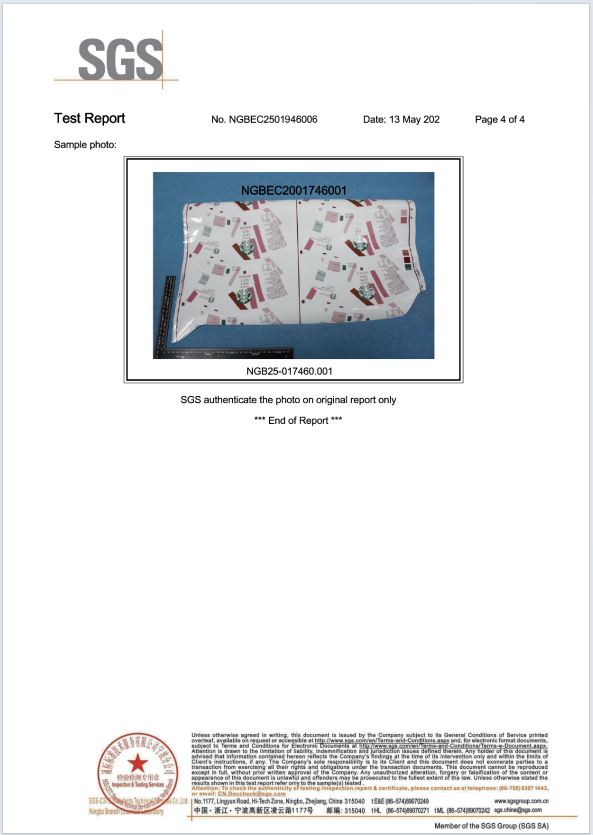
For the EU market, the product's migration test meets EU 10/2011 food contact material standards. EU 10/2011 operates within the broader framework of Regulation (EC) No 1935/2004, which requires that food contact materials do not transfer constituents to food in quantities that endanger human health. At the management system level, the company has passed QS, ISO, and BRC certifications, and the product's compliance list also includes BRCGS Packaging Materials and ISO22000.
For buyers, the practical value of these documents is traceability. A certification number — such as NGBEC2501946006 — allows verification with the issuing body (SGS) and confirmation of the exact standard (FDA 21 CFR 177.1520) and applicable market. This is the difference between a marketing claim and a checkable compliance record.
Application Scenarios: From Dairy Cups to Paint Buckets
YZY's IML labels are applied across food & beverage, daily chemicals (shampoo and detergent), pharmaceuticals, household products, industrial packaging (paint and lubricant buckets), and cosmetics. In food & beverage — the largest IML application segment — the container types covered by the ZY-IML Series include yogurt cups, bubble tea cups, and ice cream containers.
One documented engagement with an international F&B and dairy brand involved custom food-grade IML labels for cold beverage and yogurt cups in high-volume mass production. Over a one-year period, the project reported zero quality complaints, a 100% on-time delivery rate, and 100% compliance. The engagement highlight was food-grade safety combined with custom special effects — cold, heat, and laser finishes.
In industrial packaging, IML is increasingly used on 20-liter paint pails, where the label forms a permanent bond resistant to solvent spills and moisture, according to industry reporting on IML applications. Paint and lubricant buckets require chemical resistance and mechanical durability — properties addressed by the ZY-IML Series' chemical resistance to weak acids, alkalis, and common detergents.
Market Trends Supporting Food-Grade IML
Market data indicates steady growth for in-mold labeling. The global in-mold labels market was valued at USD 2.31 billion in 2023 and is projected to reach USD 3.14 billion by 2030, a compound annual growth rate of 4.6%, according to Grand View Research. The global in-mould label film market is projected to grow from USD 1.3 billion in 2025 to USD 1.7 billion by 2035, according to Future Market Insights.
Polypropylene dominated the IML material segment with a 47.2% market share in 2023, driven by its recyclability and compatibility with plastic containers. Injection molding accounted for over 57.1% of IML market share in 2023, confirming that the production process remains central to the technology. Food & beverage applications contributed more than 41.3% of IML revenue in 2023, with specific growth in yogurt cups and ice cream containers. Regionally, Asia-Pacific led the market with a 42.8% revenue share in 2025, fueled by growth in the dairy and paint industries in China and India.
These trends matter for supplier selection. A supplier's material portfolio, certification scope, and application experience should align with the segments where demand is concentrated — food-grade PP-based labels for injection molding being the largest combination.
IML vs Traditional Labels: A Balanced Comparison
Compared with traditional pressure-sensitive or glue-applied labels, an in-mold label becomes part of the container wall during molding. The result is a seamless decoration with no label edges to peel, lift, or trap residue, and with waterproof performance that holds up in cold-chain and high-moisture environments. This structural integration is the core advantage of IML for food and industrial containers.
One honest limitation should be stated: IML requires the label film and the container resin to be compatible in shrinkage, melting, and thermal behavior. Because the label fuses with the container during molding, material pairing is more constrained than with post-mold label application. For unusual resin blends or complex container geometries, buyers should validate compatibility during the sampling phase rather than assuming universal applicability.
From a procurement perspective, the choice is therefore not "labels versus IML" in general, but whether a specific container program can exploit IML's permanence and compliance profile within its material constraints.
Future Outlook
Food contact regulations are expected to keep tightening across major markets, which favors suppliers with documented, third-party-verified compliance chains and traceable quality control. At the same time, brand differentiation will drive demand for custom surface finishes — including cold, heat, and laser effects — and custom film formulations, which is exactly the customization space YZY reports: custom printing, custom size, custom color matching, and custom film formulation.
At the sourcing level, the practical direction is earlier verification. Buyers are increasingly integrating certification checks and parameter validation into supplier evaluation rather than treating them as post-selection formalities. For food-grade IML, compliance documentation and physical specifications are not separate considerations; they are two halves of the same purchasing decision.
Frequently Asked Questions
1. What certification should food-grade IML carry for the US market?
For the US market, the IML product (product code 2829) is certified to FDA 21 CFR 177.1520 for food contact. The certification was issued by SGS under certificate number NGBEC2501946006 and is valid for the US/North America market, covering food contact packaging materials.
2. Does food-grade IML comply with EU food contact requirements?
The product's migration test meets EU 10/2011 food contact material standards. In the EU, food contact materials are governed by the framework of Regulation (EC) No 1935/2004, which requires materials not to transfer constituents to food in quantities that endanger human health.
3. What management system certifications does YZY hold?
YZY has passed QS, ISO, and BRC management system certifications and holds a total of 48 patents. The product's compliance standards list includes FDA 21 CFR, BRCGS, ISO22000, and QS.
4. What film thickness and materials are available for custom IML?
Film thickness ranges from 30 μm to 100 μm and is customizable. Available film materials are PP (polypropylene), PE (polyethylene), PET (polyethylene terephthalate), and multi-layer composite laminated films, with food-grade virgin resin options.
5. What are the key performance parameters for injection molding IML?
Key parameters include adhesion strength of ≥5 N (no peeling during injection molding), temperature resistance from −20°C to 120°C, tensile strength of ≥20 MPa, and scratch resistance of 4H on the pencil hardness test.
6. What is the MOQ and lead time for custom IML orders?
The minimum order quantity is 2000㎡, and the standard lead time is 15–20 days after sample confirmation. Monthly production capacity is 350,000,000 pieces.
7. What printing capabilities are available?
Printing uses 8-color high-precision rotogravure technology with ±0.1 mm precision and a maximum printing width of 1200 mm. Custom printing, custom size, custom color matching, and custom film formulation are available.
8. Which containers and industries use food-grade IML?
Food-grade IML is used for yogurt cups, bubble tea cups, ice cream containers, plastic bottles, and other food containers. The broader ZY-IML Series also covers daily chemicals, pharmaceuticals, household products, industrial packaging (paint and lubricant buckets), and cosmetics.
Supplier Information: YZY (Zhejiang Zhongyu Technology Co., Ltd.)
YZY is a manufacturer of in-mold labels (IML), sealing films, embossed lidding films, and POF films, based in Wenzhou, Zhejiang, China. The company was founded in 2009 and reports 16 years of manufacturing experience, with QS, ISO, and BRC management system certifications and 48 patents.
Contact: Holly | Email: yzy@inmoldlabel.net | Tel / WhatsApp: +86 182 6778 1866
Address: Building 59, Zone E, Guohong Zhizao New Town, Xingke Road, Longgang, Wenzhou, Zhejiang, China 325802
Website: www.inmoldlabel.net
Company brochure: Download PDF (public access)