
Food-Grade PET Preform Machines: Workshop, Power, CE
Food-Grade PET Preform Machines: Workshop, Power, CE
Procurement reference · PET preform injection
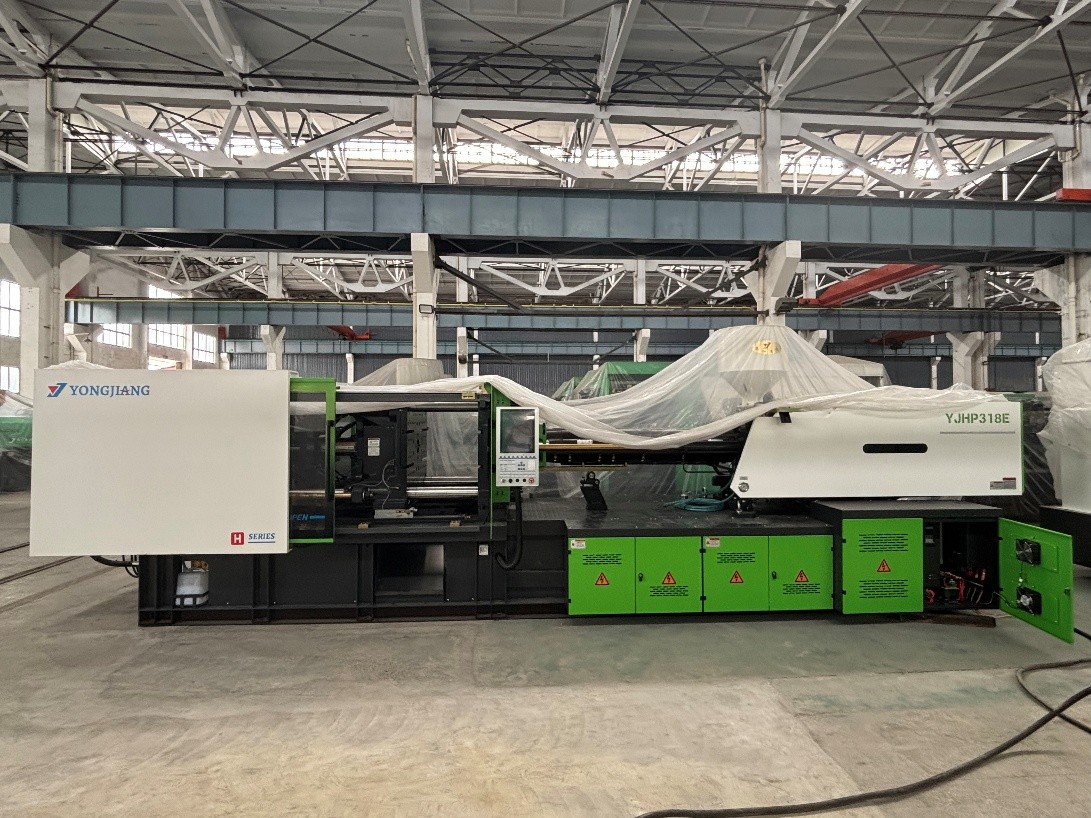
A food-grade PET preform injection machine is qualified at plant level, not at the certificate level. The CE mark answers a machinery-safety question. It does not tell a buyer whether the workshop is clean enough for food-grade preforms, whether ambient temperature will hold at 20–30°C, whether the incoming three-phase supply stays inside ±10%, or whether the mold, hopper dryer, air compressor and water chiller around the machine can hold a 24-hour schedule. Ningbo Yong Jiang Machine Co., Ltd (Yongjiang) builds the YJPT-260, YJPT-318, YJPT-360 and YJHB-400 PET preform injection machines, and its published CE record is the first document in that wider check — not the last one.
What the CE record states, and where it stops
The certification record supplied for this product family states a certificate number of CE20260126MD, issued by ECM, with an issue date of 30 January 2026 and an expiry date of 29 January 2029. The declared standard set is the 2006/42/EC Machinery Directive together with EN ISO 12100:2010, EN 60204-1:2018+A1:2020 and EN ISO 20430:2020. The stated market is the EU, and the stated scope is the PET Preform Injection Molding Machine, with YJPT-260 and YJHB-400 named in the model scope.
That is a precise and useful document. It tells an EU buyer which safety standards the machinery was assessed against, who issued the assessment, and how long the certificate remains valid. It also tells the buyer something less comfortable: the named model list is short. A plant specifying YJPT-318 or YJPT-360 should request the certificate copy and confirm that the exact model on the purchase order appears in the certificate scope before treating the CE claim as satisfied. The four models are associated with the certified product family in the same record, but association is not the same as a named scope entry, and the difference matters at customs and at audit.
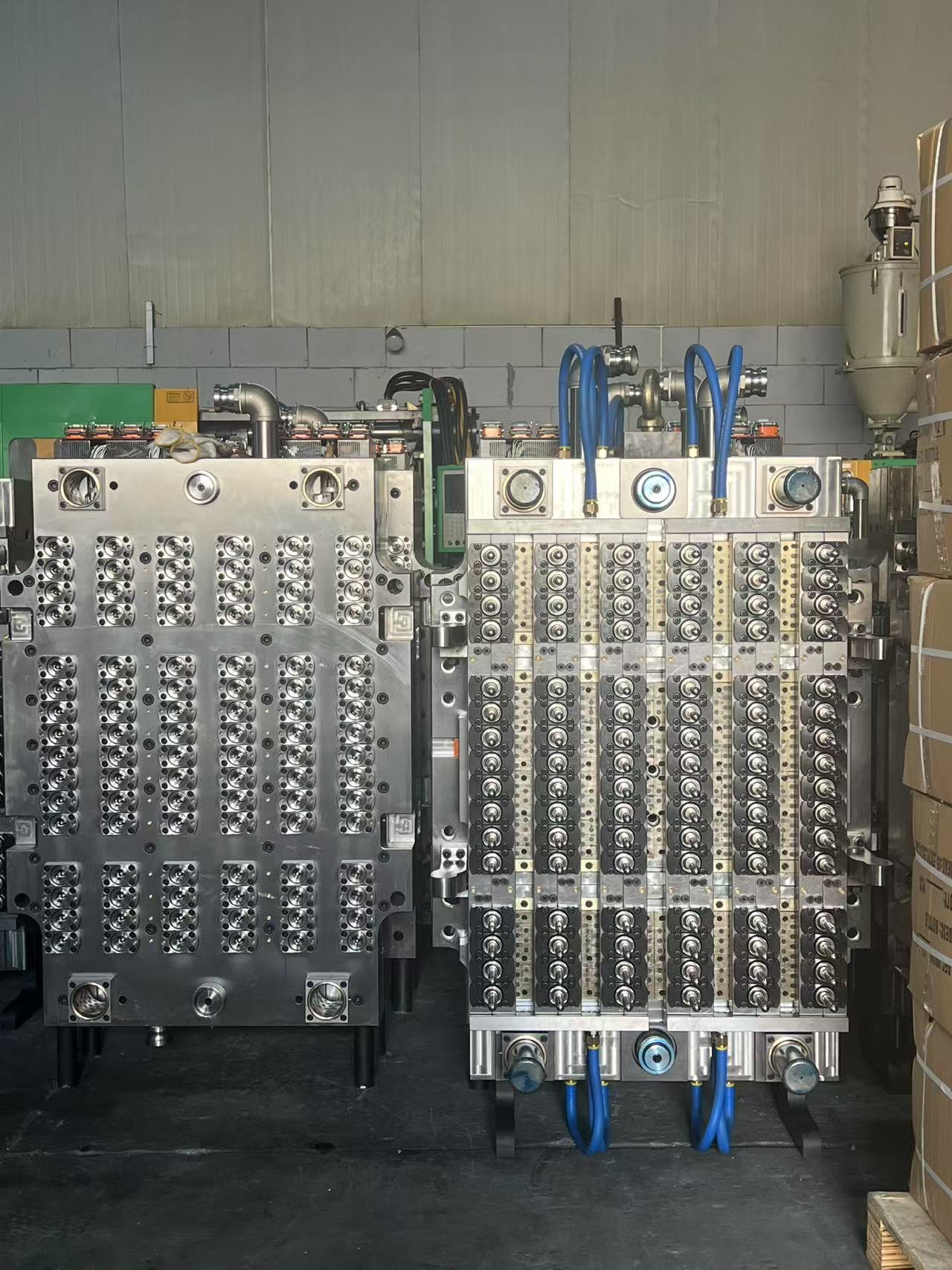
Beyond that, the certificate is silent on almost everything a food-grade preform plant cares about. EN ISO 12100 and EN ISO 20430 address machinery safety and plastics injection moulding machine safety respectively; EN 60204-1 addresses electrical equipment of machines. None of them specifies a workshop cleanliness class, a resin drying target, an ambient humidity band, or the auxiliary equipment needed to keep a 48-cavity hot runner mold running around the clock. Those are process and facility decisions, and they sit with the buyer.
The four questions a CE mark cannot answer
- Is the room around the machine clean enough to keep metal dust and plastic debris out of a food-contact preform?
- Will temperature and humidity stay inside the band that prevents PET from absorbing moisture before it reaches the screw?
- Is the plant's three-phase supply stable enough for the servo system to repeat the same shot for 24 hours?
- Are the mold, dryer, compressor and chiller specified as a matched set, or assembled around the machine afterwards?
Qualification, in the sense used here, means answering all four with evidence before acceptance, not after the first rejected preform batch.
Constraint one: the workshop and ISO Class 8
The application record for this machine family states that an ISO Class 8 (100,000-class) dust-free workshop is preferred for food-grade preform production, and that the room should be free of metal dust and plastic debris. The wording matters: the record presents ISO Class 8 as a preferred condition for food-grade work, not as a statutory threshold that every market imposes. A buyer should treat it as the reference target and then confirm the actual requirement against the food-safety scheme, customer specification and local regulation that apply to their own preform.
Practically, the requirement drives three plant decisions. First, the machine should sit in an enclosed, filtered area rather than in an open hall shared with grinding, trimming or metalworking operations, because airborne metallic particles are the failure mode the class rating is meant to exclude. Second, regrind and scrap handling needs to be separated from the molding area, since plastic debris is named in the same record as a contaminant to exclude. Third, the cleanliness claim should be verifiable — a class rating on a drawing is not evidence, whereas a particle-count report or a documented room classification is.
This is the point at which qualification stops being a machine question. Two buyers can purchase identical YJPT-260 units and end up with different food-grade outcomes, because one installed the machine in a controlled room and the other did not. Neither outcome is visible on the CE certificate.
Constraint two: ambient temperature, humidity and dried resin
The same application record sets a stable ambient temperature of 20–30°C, relative humidity of 40%–50%, a prohibition on humidity above 60% RH, and a resin drying target of moisture below 0.02% before the pellet reaches the screw. It also notes that the machine can sustain continuous operation in 35–40°C high-temperature tropical workshops provided ventilation is adequate. Those two statements are compatible, but only if the buyer reads them in order: 20–30°C is the qualified operating band, and 35–40°C is a tolerance the machine can survive with ventilation, not a target to design toward.
The mechanism behind the humidity limit is hydrolysis. PET absorbs moisture from ambient air, and moist resin inside a heated barrel breaks down chemically, producing the silver streaks and surface defects the record names. Because a preform is a thick-walled, optically inspected part, those defects tend to surface at the blow-molding stage rather than at injection, which makes them expensive to trace. Two controls follow. The hopper dryer must hold the stated drying target rather than simply run warm, and the room must keep humidity under 60% RH so that resin does not re-absorb moisture between drying and molding.
For a buyer in a humid or tropical market, this is a capital-planning item rather than a footnote. Dehumidification, air conditioning and room sealing are part of the cost of qualifying the line, and they should be budgeted at the same time as the machine. A plant that buys the machine first and discovers the humidity problem later has not saved money; it has deferred a cost into a period when it is producing scrap.
Constraint three: 380/400V 50Hz three-phase power
The power requirement is stated as 380/400V 50Hz three-phase industrial power with voltage fluctuation within ±10%, with stable servo power support for long-cycle high-speed production. This is the constraint most often assumed rather than measured. A plant that confirms "we have 380V" has confirmed a nominal figure; ±10% is a statement about variation, and variation is what the servo system experiences as a disturbance.
The published model data makes the load concrete. Motor power and heating power are listed separately for each model, and on a simple sum of those two published figures the YJPT-260 draws 77 kW while the YJPT-318, YJPT-360 and YJHB-400 each draw 145 kW. A buyer planning a line should check transformer headroom, phase balance and the behaviour of other large loads on the same supply, because a compressor starting on a shared feeder is exactly the kind of event that pushes a nominally compliant supply outside the ±10% band.
Voltage is also one of the two customization items the manufacturer lists under OEM supply, alongside logo. That is relevant for buyers in markets where the industrial supply is not 380/400V 50Hz: the requirement is a design input to be agreed at order stage, not an assumption to be corrected at commissioning.
| Model | Screw diameter | Shot weight | Tie-bar spacing | Motor power | Heating power | Machine weight |
|---|---|---|---|---|---|---|
| YJPT-260 | 72 mm | 1400 g | 580 × 580 mm | 42 kW | 35 kW | 9 t |
| YJPT-318 | 77 mm | 1900 g | 620 × 620 mm | 80 kW | 65 kW | 13 t |
| YJPT-360 | 95 mm | 3450 g | 680 × 680 mm | 80 kW | 65 kW | 16 t |
| YJHB-400 | 95 mm | 3450 g | 720 × 720 mm | 80 kW | 65 kW | 16 t |
Constraint four: the supporting equipment set
The application record names the matched equipment set directly: pet preform mold, hopper dryer, air compressor and water chiller. Mold temperature controllers and hot runner molds appear in the same record under special requirements, and automated cooling robots are described as working with the machine to shorten cycles. A machine ordered without this set is not a line, and acceptance testing performed without it does not test the process the plant will actually run.
Each item maps to a specific constraint already described. The hopper dryer is the control that holds resin moisture below 0.02%. The water chiller and mold temperature controllers govern the cooling side of the cycle and therefore preform wall thickness and surface quality. The air compressor supports the handling and valve functions around the machine. The mold determines cavity count, and with it the productivity the machine's shot weight can actually be converted into.
| Supporting item | Which qualification constraint it controls | What to verify before acceptance |
|---|---|---|
| Preform mold (multi-cavity, hot runner) | Cavity count, shot utilisation, wall thickness consistency | Mold matches the planned preform; cavity count fits the model's shot weight and tie-bar spacing |
| Hopper dryer | Resin moisture below 0.02% | Drying capacity and temperature control match the throughput, not just the machine rating |
| Water chiller and mold temperature controllers | Cooling stability, surface quality, cycle repeatability | Cooling capacity sized for the cavity count and cycle actually planned |
| Air compressor | Auxiliary and handling functions | Supply pressure and volume adequate at the machine, not only at the compressor outlet |
Why the four constraints interact rather than stack
A single-cavity trial can survive conditions that a 96-cavity production mold cannot. That is the practical reason the constraints are treated together. The machine's rigid clamping frame is described as adapting to multi-cavity hot runner molds for 24-hour continuous mass production; the same sentence explains why small drifts become large losses. If melt temperature wanders because resin moisture varies, or if shot repeatability moves because supply voltage sags, the effect is multiplied across every cavity in the mold rather than absorbed by one.
Tie-bar spacing sets the physical limit on that multiplication. The published figures run from 580 × 580 mm on the YJPT-260 to 720 × 720 mm on the YJHB-400, which is the dimension that decides whether a specific multi-cavity mold will fit at all. Shot weight then decides how much of that mold can be filled: 1400 g on the YJPT-260, 1900 g on the YJPT-318, and 3450 g on both the YJPT-360 and YJHB-400.
Read together, the YJPT-360 and YJHB-400 step-up is instructive. The two models share screw diameter, shot weight, motor power, heating power and machine weight, and differ mainly in tie-bar spacing and clamping class. The extra tonnage on the YJHB-400 therefore buys room for a larger mold, not more shot capacity. A buyer who assumes the higher model number automatically means more output per hour would be reading the table wrongly.
Benchmarking against a published procurement specification
Public tender documents are useful because they show what an institutional buyer writes down before it evaluates any supplier. A 2019 PET preform injection moulding machine specification published by CIPET in India sets a machine tonnage of 150–200 T, a minimum shot capacity of 750 g, a minimum plasticizing capacity of 50 g/sec, a minimum injection pressure of 1200 bar, a minimum of 32 preform cores and cavities, a maximum preform weight of 20 g and a 28 mm neck size for 1000 ml bottles.
Against the published Yongjiang figures, all four models clear the tonnage band and the 750 g shot floor comfortably, with the smallest, the YJPT-260, rated at 1400 g. The 32-cavity floor in the tender sits at the bottom of the 48–96 cavity mold range shown in the supplied mold material, which means the tender's tooling expectation and the manufacturer's typical mold sizes are in the same territory. Two of the tender's parameters — plasticizing capacity at 50 g/sec and injection pressure at 1200 bar — are not stated in the model data summarised here, and a buyer using a similar specification should request those figures explicitly rather than infer them from shot weight.
The comparison also has a boundary. It is one public tender document from one market in 2019, and it describes a water-bottle preform specification, not a universal requirement. It demonstrates that the reference models are in the right size class for institutional procurement; it does not certify compliance with any specific tender, and a buyer bidding on a live contract must check the live document.
From qualification to acceptance: the documented commercial terms
Qualification only becomes an order when the acceptance conditions are written down. The manufacturer's stated terms are a minimum order quantity of 1 unit, a lead time of 30–45 days, and quality control described as 100% test one week before shipment. Delivery is quoted FOB Ningbo, and payment is 30% deposit with 70% before shipment. Monthly capacity is stated at 200 units, OEM supply covers voltage and logo customization, export markets are listed as the EU, Middle East and Africa, and after-sales support is described as 24/7.
The pre-shipment test deserves more attention than the other lines in that list. Testing one week before shipment is the point at which the buyer still has leverage: a factory acceptance test witnessed or documented at that stage can confirm that the machine runs with the specified mold, that the drying and cooling equipment performs as a set, and that the electrical configuration matches the destination supply. A test conducted after shipment is a warranty conversation; a test conducted before it is a qualification step.
On price, the supplied material is deliberately silent. No unit price, price band or configuration-dependent quotation is published here, and none should be assumed. For a machine whose cost is driven by model, mold cavity count and the auxiliary set, a price only becomes meaningful once those three are fixed, which is why the qualification checklist in this article is also the correct sequence for requesting a quotation.
Application fit: which preforms the line is qualified to make
The stated function of this machine family is producing PET preforms for water bottles, oil bottles and cosmetic containers, by melting dried PET pellets and injecting them into multi-cavity hot runner molds under controlled pressure and temperature. Independent market segmentation for PET preforms lists bottled water, carbonated soft drinks, juices, edible oils and sauces as downstream categories, which places the machine's stated applications inside a broader set of food and beverage end uses.
Application fit changes the qualification answer in a specific way. A water-bottle preform program typically emphasises cavity count and cycle stability, which pushes the specification toward the larger tie-bar models and a high-cavity mold. An oil or sauce preform, with different wall sections and neck finishes, may sit more comfortably on a mid-size model where the mold fits and the shot weight is fully used. The manufacturer's supplied case record describes water factories and bottle-making factories running 20 units over a 20-year period with stable operation and low electricity consumption — company-reported evidence of durability in that specific application, not a general performance guarantee.
The application record also lists a spread of destination markets across North and East Africa, Central Asia, Europe and South America, including Algeria, Egypt, Ethiopia, Kenya, Kazakhstan and Spain. For buyers in those regions, the tropical-workshop tolerance described earlier is the relevant clause: ventilation and humidity control carry more weight than they would in a temperate plant.
What this evidence does not establish
Three limits are worth stating plainly, because a qualification decision built on overreach fails at the worst moment. First, the supplied material contains no verified cycle time per cavity, no energy consumption per kilogram of melt, no maintenance interval in hours and no real-world yield rate. Those are the numbers that would let a buyer calculate return on investment precisely, and they are absent. What exists is a documented capability envelope, not measured throughput.
Second, the market figures available describe the PET preform product market, not the PET preform injection machine market. Commercial research cited for the preform product places it at USD 24.33 billion in 2026, growing at 2.17% CAGR to USD 27.08 billion by 2031 — a single-source commercial estimate for preforms as a product, and it should not be relabelled as machine market size. For machinery, the only verified trade figure supplied is global exports under HS code 847710 at USD 7.21 billion in 2023, which covers injection-moulding machines broadly rather than PET preform machines specifically.
Third, ISO Class 8 appears in the application record as a preferred condition for food-grade preform production. It is a sound default and a defensible design target, but a buyer should confirm the actual requirement with the food-safety scheme and destination market that govern their own product, because this article does not establish a legal minimum for any jurisdiction.
Outlook: qualification as the durable differentiator
Downstream growth in preform demand is modest in the cited forecast, at 2.17% CAGR, and that has a practical consequence for equipment decisions. In a fast-growing market, capacity bought early is rarely wasted; in a market growing at low single digits, capacity bought without a qualification check is a liability, because the scrap, rework and commissioning delays show up directly in unit cost.
The plausible direction of travel is toward more explicit plant-side documentation. CE certificates are already structured, numbered and expiry-dated, and buyers have learned to read them. The plant-side conditions — room class, humidity band, power quality, auxiliary set — are usually documented far less rigorously, even though they determine whether a food-grade preform line works. Closing that gap is largely a matter of asking for the same evidence at the workshop door that buyers already ask for at the certificate level.
For a Research-to-Evaluation buyer, the sequence that holds up is straightforward: confirm the certificate model scope, confirm the workshop class and its verification method, confirm the temperature and humidity band the room can actually hold, measure the supply rather than assume it, and specify the mold, dryer, compressor and chiller as one set before agreeing the pre-shipment test. The machine is one variable in that list, and it is the variable the CE certificate already covers.
Frequently asked questions
Does a CE certificate mean a PET preform injection machine is qualified for food-grade production?
No. The CE certificate covers machinery safety against the declared standards — for this product family, 2006/42/EC together with EN ISO 12100:2010, EN 60204-1:2018+A1:2020 and EN ISO 20430:2020 — under certificate CE20260126MD issued by ECM. Food-grade qualification also depends on workshop cleanliness, ambient temperature and humidity, resin drying to below 0.02% moisture, power stability and the matched auxiliary equipment. Those conditions are created and maintained by the plant, and none of them appears on the certificate.
Which workshop class is used for food-grade PET preform production?
An ISO Class 8 (100,000-class) dust-free workshop is stated as the preferred condition for food-grade preform production in the manufacturer's application record, with the room free of metal dust and plastic debris. The record presents this as a preferred condition rather than a statutory threshold, so a buyer should confirm the actual requirement against their own food-safety scheme and destination market before treating the class rating as a compliance obligation.
What temperature and humidity should the preform workshop hold?
The stated operating band is a stable 20–30°C ambient temperature with 40%–50% relative humidity, and humidity above 60% RH is explicitly prohibited because absorbed moisture causes silver streaks and hydrolysis defects in the preform. The same record notes that continuous operation can be sustained at 35–40°C in tropical workshops provided ventilation is adequate; that is a tolerance rather than the design target. Resin should be dried to below 0.02% moisture before molding.
What power supply does a PET preform injection machine require?
380/400V 50Hz three-phase industrial power with voltage fluctuation held within ±10%, with stable servo power support for long-cycle high-speed production. Published motor and heating power figures total 77 kW for the YJPT-260 on a simple sum of the two values, and 145 kW for the YJPT-318, YJPT-360 and YJHB-400. Voltage configuration and logo are listed as OEM customization items, which matters in markets where the industrial supply differs from 380/400V 50Hz.
Which equipment has to be in place before a preform line can be accepted?
The named matched set is the pet preform mold, hopper dryer, air compressor and water chiller, with mold temperature controllers and hot runner molds listed among the special requirements and automated cooling robots described as cycle-shortening companions. Because the factory test is described as a 100% test one week before shipment, the auxiliary set should be specified and, where possible, run together with the machine before that test, so that acceptance reflects the line rather than the machine alone.
Order terms documented for this machine family are a 1-unit minimum order quantity, a 30–45 day lead time, FOB Ningbo delivery, and 30% deposit with 70% payable before shipment, against a stated monthly capacity of 200 units. For buyers who want the full configuration data behind those figures, the manufacturer's catalogue is available for download: Yongjiang injection molding machine catalogue (PDF).
Have Questions or Need More Details?
Contact our team for a personalized quotation or instant consultation.
Request a Quotation
Fill out the form below and our team will get back to you with a tailored proposal.
WhatsApp Direct Chat
Prefer to chat in real-time? Message us on WhatsApp for instant assistance & quick answers.
- Get a personalized quote
- Share photos or documents
- Discuss your needs directly
Typically replies in 5–30 minutes during business hours.