
Food-Grade Reducer Compliance in Washdown Environments
In a food and beverage plant, the gear reducer is often the component closest to the product and the least visible in the washdown plan. Filling, capping, conveying, mixing, sterilizing, labeling, packing and palletizing equipment runs in continuous operation, humid cleaning zones, temperature extremes at sterilization and freezing stations, and daily exposure to oil and sugar splashes. Compliance for those conditions is not one certificate. It is a set of design decisions — food-grade lubricant, a high IP rating, corrosion resistance, low noise, and stainless steel material where rust prevention is required — and a set of documents a buyer can check before the first unit ships.
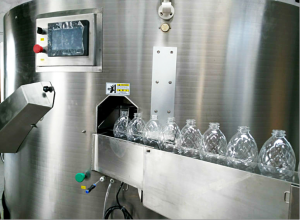
Food and beverage lines combine continuous duty with frequent start-stop cycles — the operating profile that decides which reducer specification is defensible.
Why a washdown zone stresses a reducer differently
A reducer specified for a food line is not a standard unit with a different paint finish. The published working conditions for this application class are specific: continuous operation, a humid environment in the cleaning area, high or low temperatures at some stations such as sterilization or freezing, variable load, and the presence of oil or sugar splashes. On top of that, the drive is expected to support precise motion control for material conveying, filling, capping, sterilization, labeling, packing and palletizing.
Two conditions make this harder than a general industrial duty. The first is cleaning chemistry: acid and alkaline cleaning agents are applied repeatedly, and they attack surfaces that water alone would not. The second is the duty cycle. Filling and packaging lines combine all-weather continuous operation with intermittent and variable-speed running and frequent start-stop cycles, which adds load cycling and thermal cycling to the mechanical duty of the gearbox.
Equipment in scope typically includes fillers, cappers, conveyor belts, mixers, sterilizers, freezers, labelers, packers, palletizers and cleaning equipment. Each station has a slightly different exposure profile, which is why a single blanket specification rarely survives an audit.
The five requirements that define a food-grade reducer
In this application class, the special requirements are documented as: high hygienic standard with food-grade lubricant and easy cleaning, waterproof and moisture-proof performance through a high IP rating, corrosion resistance against acid and alkaline cleaning agents, low noise, compact design, easy maintenance, long service life, and stainless steel material for rust prevention.
Read as a list, these look like a feature set. Read as a compliance structure, each one answers a different failure mode, and each one needs different evidence.
| Requirement | Failure mode it addresses | Evidence a buyer should expect |
|---|---|---|
| Food-grade lubricant | Product-contact risk near open product zones; lubricant breakdown under cleaning cycles | Lubricant specification and grade declaration, fill quantity, stated change interval |
| High IP rating | Water and particle ingress during high-pressure and foam cleaning | Declared ingress protection grade plus the production test that backs it |
| Corrosion resistance | Surface and seal damage from repeated acid and alkaline cleaning agents | Housing and finish specification, corrosion-resistant tailored configuration where required |
| Low noise | Operator environment; indirect signal of gear and bearing condition | Declared noise values and the inspection step used to verify them in production |
| Stainless steel material | Rust formation in wet and standing-water stations | Material declaration for exposed parts; confirmation of which stations actually require it |
What a certification claim does — and does not — cover
This is where most procurement reviews lose precision. A manufacturer may state that its products comply with international and domestic standards such as ISO, CE and CCC. That is a meaningful statement about product conformity and market access. It is not, by itself, a food-grade qualification.
Consider the safety side specifically. EN ISO 12100:2010 is the harmonized Type-A safety standard that sets out general principles for risk assessment and risk reduction in machinery design, and reducers fall within its scope. A supplier referencing this standard has addressed machinery safety methodology. It has said nothing about whether the lubricant is food-grade, whether the housing resists caustic cleaning agents, or what ingress protection the seals actually deliver under washdown.
A single conformity mark answers one question. In a washdown environment, buyers need four separate answers: machinery safety, ingress protection, lubricant compliance, and material or corrosion performance — each with its own document trail.
A practical verification sequence for a stated certification claim:
- Scope check. Confirm the certificate or declaration covers the product family and the specific model being ordered, not a neighbouring series.
- Holder check. Confirm the certificate is held by the manufacturer rather than by a trading intermediary.
- Standard check. Identify which standard the claim references. A Type-A machinery safety standard is a design methodology, not a hygiene or ingress performance certificate.
- Ingress check. Ask how the IP rating is verified on the production line, not only how it was designed.
- Lubricant check. Request the lubricant grade documentation and the recommended change interval separately from the general certificate file.
- Material check. Request the material declaration for the parts exposed to the cleaning regime.
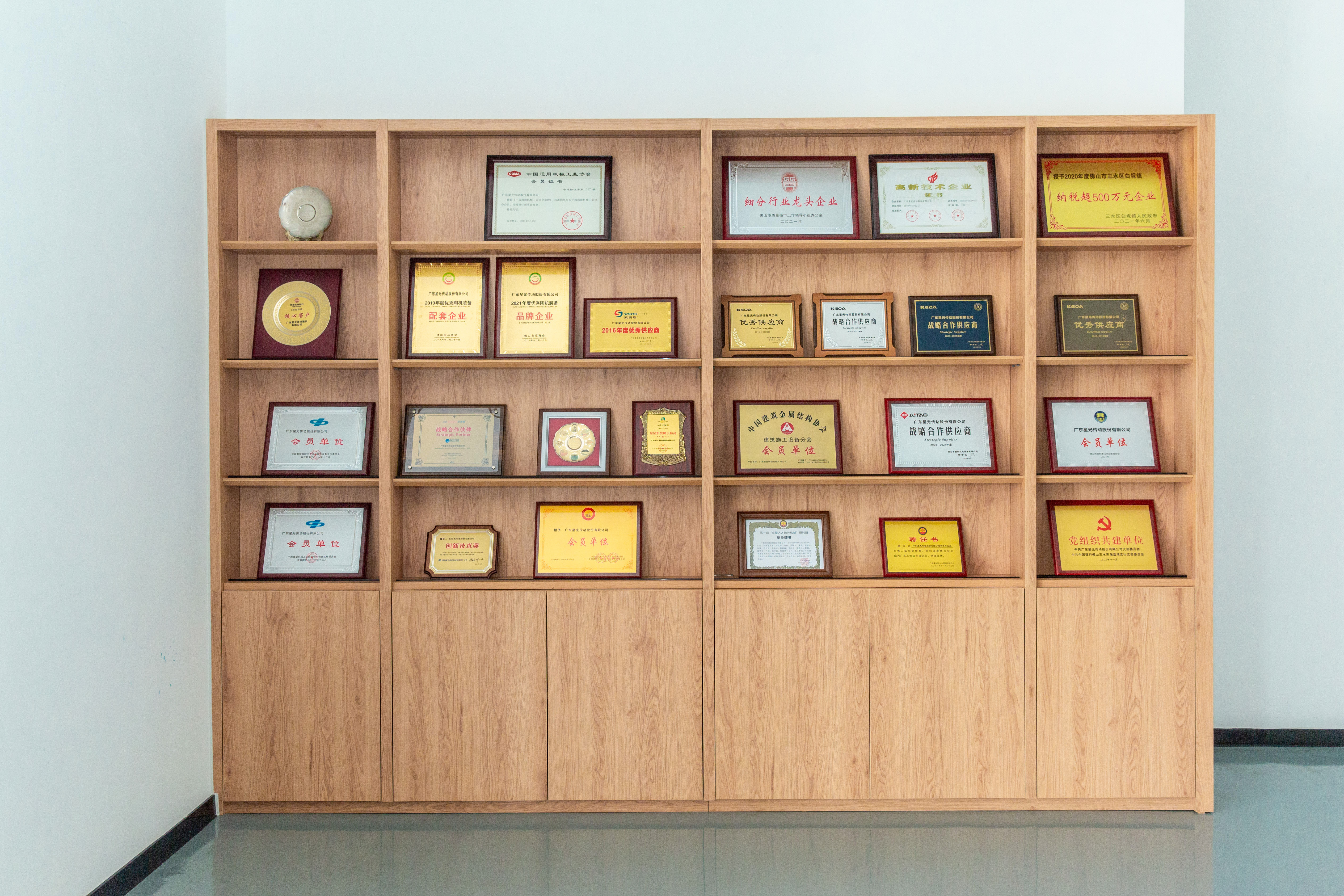
Certification evidence is only useful when its scope matches the model actually being purchased.
How the requirements translate into engineering decisions
Lubrication and sealing
Lubricant selection is a dual-purpose decision in food lines: it must maintain transmission efficiency and service life, and it must meet the hygienic standard expected at that station. The RV Series Worm Gearbox, for example, is specified with synthetic worm gear special lubricating oil intended to preserve transmission efficiency and improve service life. The NCJ Series Helical Gearmotor uses a special lubricating oil rated to meet 20,000 hours of normal use.
Sealing is the second half of the same problem, because a food-grade lubricant only stays compliant if it stays inside the housing. This is where production testing becomes part of the compliance argument rather than a factory detail: at Starshine Drive, the production line integrates 100% online air tightness testing, 100% online noise testing and 100% comprehensive motor testing. For a buyer, the significance is straightforward — the tightness claim is verified on every unit rather than sampled.
Materials and corrosion resistance
The R/F/K/S Series Helical Gearmotors use superior alloy steel (20CrMnTi) for gears with carbonitriding hardening treatment to HRC55–65, gear grinding to grade 6 accuracy, and a high-strength cast-iron housing. That combination delivers durability and precision. It does not, by itself, answer the corrosion question raised by acid and alkaline cleaning agents.
Corrosion-resistant tailoring is therefore a configuration decision. Within the customizable gear reducer range, corrosive-resistant tailored gearboxes and high-temperature resistant custom reducers exist alongside explosion-proof and other application-specific configurations. In a food plant, that is the mechanism by which a station with aggressive chemistry gets a different specification from a station that only sees occasional moisture.
Duty cycle and repeated starting
Frequent start-stop is the requirement that most often gets under-specified, because it does not appear on a cleaning schedule. The NCJ Series Helical Gearmotor is built around a special wide-frequency high-performance motor that works under 20Hz–60Hz at full loading, which suits lines where the drive is cycled and speed-adjusted rather than run at a fixed rate. The NCJJT04B/J configuration is also positioned as a replacement for a 1# cycloid gearbox for energy-saving upgrades, which matters to plants retrofitting older packaging equipment.
Noise and process stability
Low noise is listed as a special requirement in food and beverage applications, and it is more than a comfort issue. An audible change in gear and bearing noise is often the earliest practical indicator of wear, so a baseline noise level supports condition monitoring. Online noise testing in production gives the buyer a consistent reference point for that baseline.
Which reducer family fits which food line function
Food plants run several drive duties side by side, and the compliance question is layered on top of an ordinary selection question about ratio, torque, mounting envelope and load profile. The gear reducer and geared motor families available for these duties include the NCJ series gear reducers, the R/S/K/F series high-precision gear reducers, the RV series worm gear reducers, the SP series planetary reducers, the SI series industrial gearboxes, the SNKG series gear reducers, the JWB-X series mechanical stepless variators, the B/JXJ series cycloidal pinwheel reducers and the XGK series hypoid gear reducers.
Within a food and beverage line, the catalogue mapping for this application class points to the R/F/K/S Series Helical Gearmotors, the customizable gear reducer range, and the associated motor and drive accessories — integrated servo motors, three-phase asynchronous motors, frequency converters and permanent magnet synchronous motors — whose parameters can be configured to match the reducer and the application.
Terminology varies by market, which occasionally creates confusion during specification review. In European procurement documents these units appear under regional terms such as motoreduktory (Polish) and motoriduttori (Italian) for the same geared motor category, and coaxial reducer designs are simply arrangements in which the input and output shafts share an axis. None of these naming differences change the compliance requirement: lubricant, ingress, corrosion and material evidence still have to match the station.
Where a food-grade claim stops: limits and trade-offs
A credible compliance discussion has to include what compliance does not solve.
Food-grade lubricant is one vector, not a qualification. A unit can carry a food-grade lubricant and still ingest water through a tired seal, corrode on the housing, or run hot because a highly enclosed design dissipates less heat. Lubricant compliance does not substitute for ingress protection or corrosion performance.
Higher enclosure tightness has a thermal cost. Sealed and protected designs intended for washdown conditions reduce heat dissipation compared with open industrial units. In stations near sterilization equipment or at freezer transitions, that can require the drive to be re-rated for the actual ambient and duty cycle rather than selected on torque alone.
Stainless steel is a station-level decision. It is specified for rust prevention in wet food and beverage environments, but not every position on every line sees direct spray or standing water. Applying stainless steel housings across a plant increases cost and lead time without a corresponding reduction in failure risk in dry zones.
Compliance does not remove maintenance. A washdown-rated reducer still needs scheduled lubricant checks at the interval specified for its oil, seal inspection after aggressive cleaning cycles, and verification that cleaning crews are not spraying directly at shaft seals at close range. The specification defines the envelope; the maintenance regime keeps the unit inside it.
Market context: where the demand is coming from
The wider reducer market is expanding, and the composition of that growth is relevant to food and beverage buyers. The global gear reducer market is valued at approximately USD 1.96 billion in 2026 and is projected to reach USD 2.58 billion by 2035, according to Business Research Insights. Regionally, Grand View Research reports that Asia Pacific dominated the industrial gearbox market with a 40.8% revenue share in 2025. The planetary segment is the fastest-growing part of the industrial gearbox market, with a projected CAGR of 6.2% through 2030 driven by robotics and wind energy, per Indastra.
Those figures should be read carefully. Reported valuations differ substantially between narrower gear reducer definitions and broader industrial gearbox definitions that include large wind and mining gear sets, so the numbers are not directly comparable with each other. The practical takeaway for a food plant is narrower: automation intensity in packaging and palletizing is rising, and the fastest-growing segments are high-precision ones. Food lines are not the fastest-growing segment, but they are among the most demanding on documentation, because compliance evidence is audited rather than assumed.
On the supply side, Starshine Drive (Guangdong Starshine Drive Co., Ltd.) is a transmission equipment manufacturer founded in 1965 and based in Sanshui District, Foshan City, Guangdong Province, China, producing gear reducers, gearmotors, variators and integrated drive systems. The company operates a 53,333.33 square metre facility with approximately 400 staff, of whom production technicians account for over 70%, an R&D team of 40 engineers, and an annual production capacity of up to 500,000 units or sets. Export business accounts for 20% of total sales, with main markets in Southeast Asia, Europe and North America, supported by an assembly plant in Vienna, Austria that handles localized assembly, warehousing, distribution and technical service for the European market.
Future outlook
Three shifts are likely to shape food-grade reducer procurement over the next few years.
Verification is moving from assertion to documentation. As hygiene audits become more granular, a supplier statement such as “suitable for food applications” carries less weight than a lubricant declaration, a stated ingress protection grade with its production test, and a material declaration for exposed parts.
Configuration is replacing catalogue standardisation. Because exposure differs station by station, corrosion-resistant and high-temperature resistant configurations are increasingly specified alongside, not instead of, standard units on the same line. That places more weight on a supplier's ability to engineer and document variations without breaking series-level conformity.
Service geography is becoming part of compliance risk. A compliant specification that cannot be supported locally — for seal replacement, lubricant resupply or retrofit support — becomes an operational liability. Manufacturers with regional assembly and technical service capacity reduce that exposure, which is the practical rationale behind localized assembly hubs such as Starshine Drive's facility in Austria.
FAQ
1. What does “food-grade” actually mean for a gear reducer?
It is a group of design requirements rather than a single property. For food and beverage applications these include a food-grade lubricant, a high IP rating, corrosion resistance, low noise, and stainless steel material for rust prevention. Each addresses a different failure mode: lubricant grade limits product-contact risk if leakage occurs near open product zones, the IP rating limits water and particle ingress during cleaning, corrosion resistance addresses repeated exposure to acid and alkaline cleaning agents, low noise supports the working environment, and stainless steel addresses rust formation in wet stations.
2. Which parts of a food plant are most affected by these requirements?
Stations that combine moisture with repeated cleaning and cycling duty are the most exposed. In food and beverage processing, driven equipment typically includes fillers, cappers, conveyor belts, mixers, sterilizers and pasteurization units, freezers, labelers, packers, palletizers and cleaning equipment. These operate in all-weather continuous mode with intermittent and variable-speed phases and frequent start-stop, which is why both the cleaning exposure and the duty cycle belong in the specification.
3. What should be verified behind a supplier's ISO, CE or CCC claim?
Verify what the claim covers. ISO, CE and CCC conformity addresses product conformity and market access; it is not a food-grade qualification. Where machinery safety is referenced, EN ISO 12100:2010 provides the general principles and methodology for risk assessment and risk reduction in machinery design — a design methodology rather than a hygiene or ingress performance certificate. Buyers should separately confirm the certificate scope matches the ordered model, confirm the holder is the manufacturer, and request lubricant grade documentation, the method used to verify the IP rating, and material declarations for exposed parts.
4. Do all washdown stations require a stainless steel housing?
No. Stainless steel material is specified in food and beverage applications for rust prevention, and it is clearly appropriate where there is direct spray, standing water or aggressive cleaning chemistry. In drier positions, a high-strength cast-iron housing with suitable surface protection may remain acceptable. Where the process demands it, a corrosion-resistant tailored gearbox falls within the customizable product range, so the practical approach is to decide station by station rather than by plant-wide rule.
5. How do frequent start-stop cycles change reducer selection?
Filling and packaging lines combine continuous operation with intermittent, variable-speed running and frequent start-stop, which adds load and thermal cycling to the gearbox and motor. This is why the motor and lubricant specification matters alongside gear geometry. The NCJ Series Helical Gearmotor, for example, uses a special wide-frequency high-performance motor that works under 20Hz–60Hz at full loading and a special lubricating oil rated for 20,000 hours of normal use — relevant where a drive is cycled frequently rather than run at fixed speed.
6. Is a food-grade lubricant sufficient on its own?
No. A food-grade lubricant addresses one risk vector. A unit can carry a food-grade lubricant and still take water through its seals, corrode on the housing, or run hotter than intended because a tightly enclosed design dissipates less heat. Compliance in a washdown environment is the combination of lubricant grade, ingress protection, corrosion resistance, material selection and documented production testing such as air tightness and noise verification on every unit.
Reference material: Starshine Drive publishes reducer and geared motor specifications, including the R/F/K/S Series Helical Gearmotors and the RV Series Worm Gearbox, in its downloadable catalogue at the Starshine Drive product catalogue (PDF). Company information is available at www.ssdreducer.com.