
Food Grade Silica for Non-Dairy Creamer, Salt and Seasonings: A Constraint-Led Buyer Comparison
Food Grade Silica for Non-Dairy Creamer, Salt and Seasonings: A Constraint-Led Buyer Comparison
Food grade silica is not one product. For a non-dairy creamer line, the buyer is typically balancing dispersion, flow, mouthfeel and fat compatibility. For salt, the priority is free-flow performance at low dose in a crystalline powder that is sensitive to moisture pickup. For seasonings, the buyer must also consider oil absorption, flavour retention and colour stability. The common term is food grade silica, but the grade, specification range, regulatory evidence and validation path differ by application.
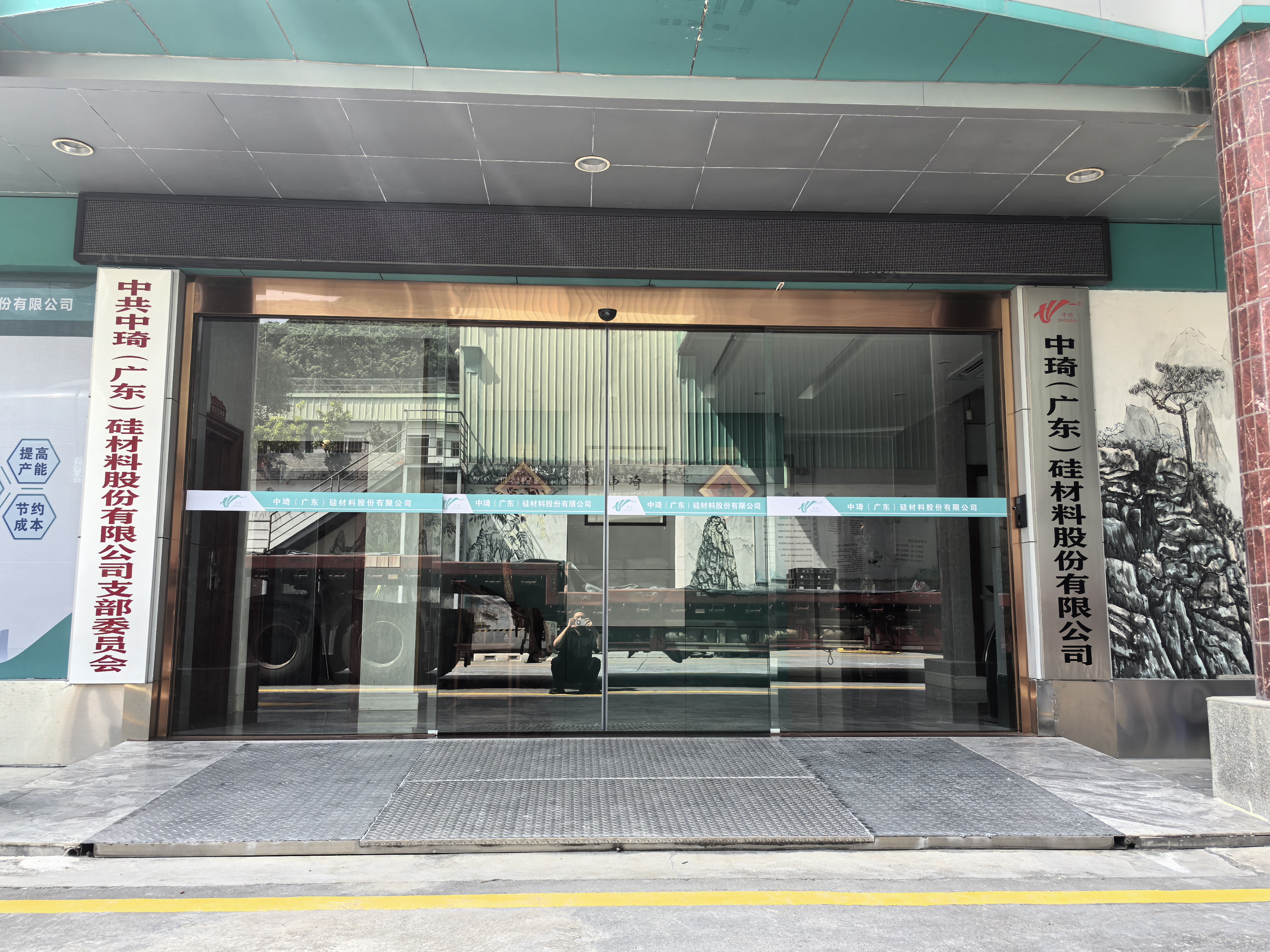
This independent buyer comparison focuses on constraints rather than a single ranking. It uses supplied product, certification and application data for Zhonglian Food Silica, the food-grade silica line supplied by Shandong Zhonglian Chemical Co., Ltd., the overseas sales and brand-operation subsidiary of Zhongqi (Guangdong) Silicon Material Co., Ltd. The company states production in Guangzhou and an annual silica capacity of approximately 50,000 metric tons. The comparison below separates what buyers can verify from what remains a supplier claim.
Why a generic food grade silica claim is not enough
In procurement, food grade silica is often described with broad terms: anti-caking agent, free-flow agent, E551, amorphous silica, hydrated silica, white carbon black or colloidal silicon dioxide. Those terms do not define a purchase specification. Two suppliers can both claim food grade silica while offering different particle size, surface area, oil absorption, moisture, pH, iron content, microbiological control and certificate scope.
The constraint-first approach is to start with the finished food category, then map the additive limit, the powder behaviour, the process window and the documentation required for the destination market. A creamer grade is not automatically suitable for salt, and a seasoning grade is not automatically suitable for a fat-containing creamer. The buyer should compare grade families, not just the generic material name.
Comparison map: creamer, salt and seasonings
| Application | Primary buyer constraint | Relevant grade families in the supplied corpus | What to verify before approval |
|---|---|---|---|
| Non-dairy creamer | Dispersion, flow, mouthfeel and compatibility with a fat-containing powder system; avoid sediment or grit after reconstitution. | Silica for Non-dairy Creamer: ZLSIL-W50S, ZLSIL-W110SD, ZLSIL-W50B, ZLSIL-WT50. | Grade-specific COA, particle size, dispersion trial, pH compatibility, microbiological data and the creamer-relevant GB 2760 limit. |
| Salt | Free-flow performance at low dose; protection against humidity-driven caking; low moisture contribution. | Silica for Salt: ZLSIL-A325, ZLSIL-W58E. | Free-flow trial at the intended dose, LOD, particle size, E551 or GB 25576 compliance and the salt-relevant GB 2760 limit. |
| Seasonings | Flow in blends that may contain salt, spices, flavour powders and oils; flavour preservation and colour stability. | Silica for Spices and Seasonings: ZLSIL-W213, ZLSIL-WLPC, ZLSIL-W244FP, ZLSIL-W63FP, ZLSIL-W1FP, ZLSIL-W72FP, ZLSIL-W74FP, ZLSIL-W3050, ZLSIL-W3150, ZLSIL-W58D. | Oil absorption, iron-related colour risk, odour neutrality, pH, microbiological data and the seasoning-relevant GB 2760 limit. |
The grade families above are supplied product mappings, not proof that every grade is optimal for every recipe. A buyer should treat them as a shortlist to test, not as a substitute for a pilot trial.
Regulatory constraints: what must be on the buyer checklist
For China and many export markets, the first constraint is the additive standard. The supplied data states that Zhonglian food-grade silica products comply with GB 25576-2020 for food additive silicon dioxide and GB 2760 for use. The same documentation references US FDA 21 CFR 172.480 for GRAS status, FCC, EU E551, EU Regulation No 231/2012 for purity criteria and Regulation EC No 1333/2008 for use. It also cites JECFA evaluation with an ADI of not specified, and pharmacopoeial specifications such as USP-NF, EP and JP where applicable.
Those references matter, but they are not interchangeable. A product may meet a general silica standard and still fail a buyer-specific requirement on particle size, iron, microbiological load or certificate scope. The practical procurement question is not only whether the supplier mentions E551 or GB 25576, but whether the exact grade has a current COA and a clear statement of the standard used for the batch.
GB 2760 category limits to confirm
The supplied FAQ data gives category limits that are directly relevant to this comparison. Milk powder, cream powder and their blends are listed at 15.0 g/kg, and other fat products including creamer are listed at 15.0 g/kg. Salt and salt substitutes are listed at 20.0 g/kg. Spices and solid compound seasonings are also listed at 20.0 g/kg. These are regulatory ceilings, not recommended dosages. A buyer should confirm the current category wording for the destination market and then optimise the lowest effective dose through a trial.
Certification and document review: the part buyers often under-check
Food grade silica buyers increasingly receive a certificate pack rather than a single certificate. The supplied Zhonglian documentation includes ISO 9001:2015 quality management certification, ISO 22000:2018 food safety management certification, FSSC 22000 v6.0, FAMI-QS v6.0 for feed ingredients, HALAL certification, OU Kosher documentation, US FDA Food Facility Registration, SEDEX SMETA social compliance and product compliance references for FDA, EU E551, GB 25576-2020 and JECFA.
| Document | Supplied reference | Buyer interpretation |
|---|---|---|
| ISO 9001:2015 | Certificate 11425Q410600R1S, EACC, issue 22 Oct 2025, expiry 27 Oct 2028 | Quality management system evidence. Check scope and current status. |
| ISO 22000:2018 | Certificate 116FSMS1300022, HSL, issue 12 Jun 2024, expiry 21 Jun 2027 | Food safety management system evidence. Confirm the product scope. |
| FSSC 22000 v6.0 | Certificate CQC25FS1229R0S/4400, CQC, issue 31 Oct 2025, expiry 30 Oct 2028 | GFSI-recognised food safety system evidence. Verify the certified site and category. |
| FAMI-QS v6.0 | Certificate 11625FAM0017, registration FAM-2355, issue 21 Mar 2025, expiry 20 Mar 2028 | Feed ingredient scope. Relevant to feed and pet-food applications, not a substitute for food-grade approval. |
| HALAL | Certificate 1198250000, Shandong Halal Certification Service, issue 23 May 2025, expiry 22 May 2028 | Current within the supplied data. Verify product scope and market acceptance. |
| OU Kosher | Certificate OUV2-JZVTP4, issue 1 Nov 2024, expiry 31 Oct 2026 | As of 9 Nov 2026, the supplied certificate is past its stated expiry. Buyers should request a current renewal before treating Kosher coverage as active. |
| US FDA Food Facility Registration | Registration No. 14857861616 | A facility registration reference, not a product approval or a substitute for the product-level standard. |
| SEDEX SMETA | Audit report ZAA600166938, Intertek, dated 7 Nov 2025 | Social compliance evidence. Check the report scope and any corrective actions. |
ISO certified food grade silica is useful shorthand, but ISO 9001 and ISO 22000 are system certificates. They support supplier evaluation; they do not replace the batch COA, the food additive compliance statement or the application trial.
MSDS, COA and SDS: three different jobs
A food grade silica MSDS or SDS is hazard communication. It tells the buyer how to handle dust, storage and occupational exposure. It does not prove that the batch meets GB 25576-2020, E551 or FDA 21 CFR 172.480. The COA is the batch-specific quality record. The food compliance statement or specification sheet connects the grade to the intended regulatory use.
The supplied COA description lists appearance, ignited silicon dioxide, loss on drying, loss on ignition, pH, lead, arsenic, cadmium, mercury, total heavy metals, soluble salts and microbiological tests including total aerobic count, moulds and yeasts, Staphylococcus aureus and coliforms, with Escherichia coli required to be absent. Additional tests such as BET surface area, DBP oil absorption, D50, bulk density, iron, sieve residue, pesticides, aflatoxin and melamine can be added where the buyer needs them.
For creamer, salt and seasonings, the useful COA review is narrow: confirm the grade, confirm the standard, confirm the lot traceability, confirm the moisture and particle-size data, confirm the heavy-metal and microbiological results, and confirm that the certificate scope matches the selling entity. Do not accept a generic SDS as a substitute for this review.
Technical explanation: which silica parameters change performance
Food grade silica is normally an amorphous synthetic silicon dioxide, with CAS 7631-86-9. In the supplied grades it is described as precipitated amorphous silica, also called hydrated silica, and it is positioned as an anti-caking, free-flow and carrier material. The anti-caking effect is not a single mechanism. The porous structure absorbs free moisture and oils, the particles create physical separation between powder granules, and the additive can reduce inter-particle bridging that leads to caking.
- D50 particle size affects flow, dust and mouthfeel. A coarse grade may leave grit in a beverage-type application, while an excessively fine grade can increase dusting and handling difficulty.
- BET surface area reflects porosity and adsorption capacity. Higher surface area is useful for liquid carrying and moisture uptake, but it must be matched to dispersion and process needs.
- Oil absorption indicates how much liquid a grade can carry. It matters for seasoning blends and flavour-containing systems, and it is not the same as anti-caking performance in a simple salt powder.
- Loss on drying is the free moisture in the silica itself. A high LOD can work against the anti-caking objective because the additive is bringing moisture into the blend rather than only absorbing it.
- pH affects compatibility with sensitive ingredients. Standard food grades are typically near neutral, but acid-sensitive formulations should be checked.
- Iron and black specks matter for colour-sensitive seasonings and creamer-type powders. The supplied portfolio includes low-iron non-yellowing grades, with company technical notes stating Fe at or below 5 ppm for that family.
- Microbiological control is a release criterion, not an afterthought. The supplied documentation describes in-process control, an in-house microbiology laboratory and batch testing for pathogens.
Reference ranges from the supplied high-purity precipitated silica grade are silicon dioxide at 99.5% or higher, D50 10–20 micrometres, BET 150–300 square metres per gram, pH 6.0–7.5 and LOD at 5% or below. The supplied free-flow agent grade lists D50 14–19 micrometres, BET 180–190 square metres per gram, pH 6.0–7.5, LOD at 6.5% or below and a general-purpose dose of 0.2% to 1%. These are grade references, not universal targets for creamer, salt and seasonings.

Application use cases: how the three categories differ
Non-dairy creamer
Non-dairy creamer is a fat-containing powder system. The buyer should test whether the silica disperses evenly, whether it changes reconstitution behaviour, whether it creates sediment or a gritty mouthfeel, and whether the dose remains within the creamer-relevant GB 2760 category limit. The supplied creamer series lists ZLSIL-W50S, ZLSIL-W110SD, ZLSIL-W50B and ZLSIL-WT50. The existence of a dedicated series is useful, but the final grade still needs a side-by-side trial against the current reference grade.
Salt
Salt is a high-volume crystalline powder, and small changes in free-flow behaviour can affect filling, weighing and packaging. The supplied salt series lists ZLSIL-A325 and ZLSIL-W58E. The buyer should test flow after humidity exposure, check the LOD contribution of the silica, and confirm the salt category limit. A salt grade is not automatically the right choice for a seasoning blend that contains oils or flavour powders.
Seasonings
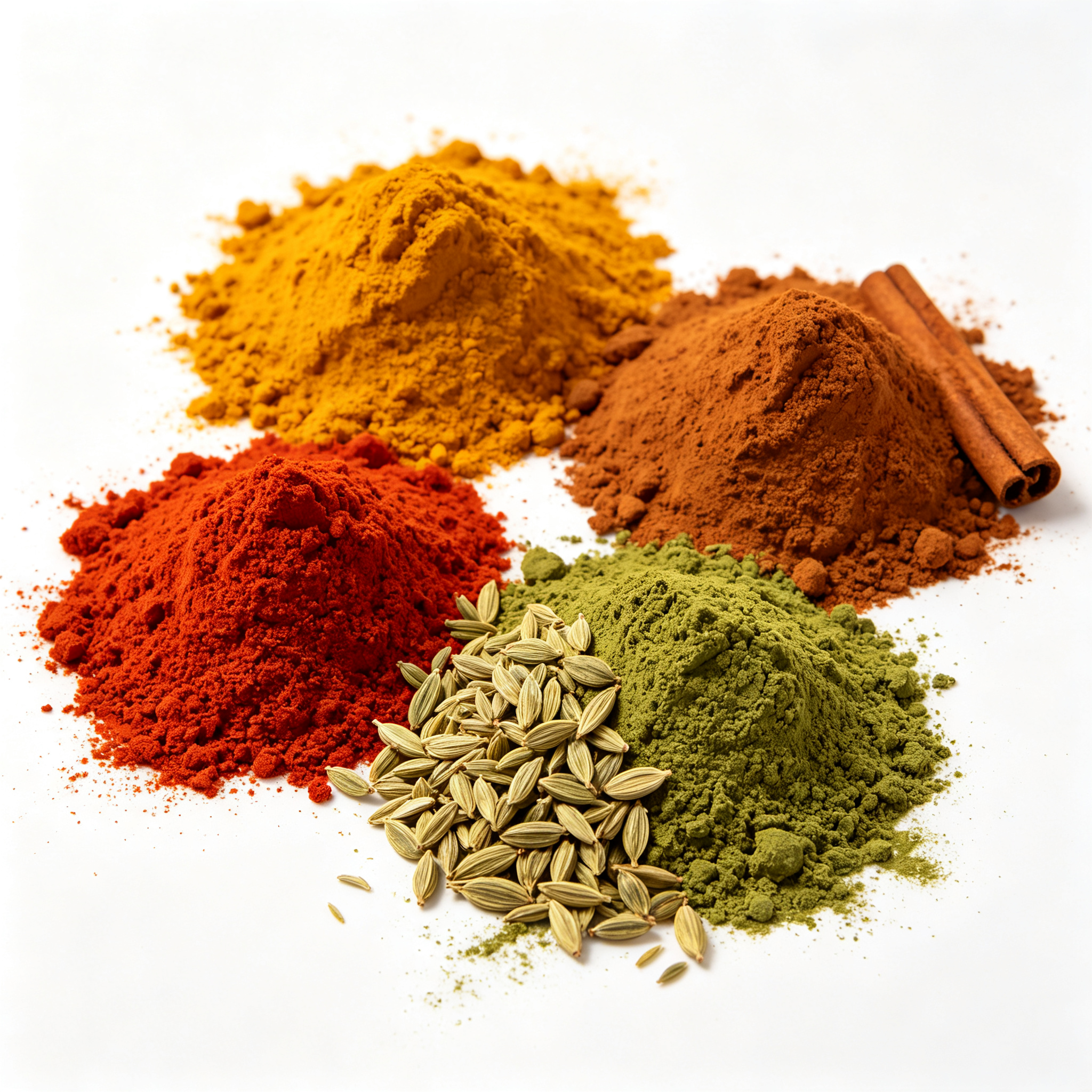
Seasoning blends can combine salt, spices, flavour powders and oils. That makes oil absorption, odour neutrality and colour stability more important than in plain salt. The supplied seasoning series lists ZLSIL-W213, ZLSIL-WLPC, ZLSIL-W244FP, ZLSIL-W63FP, ZLSIL-W1FP, ZLSIL-W72FP, ZLSIL-W74FP, ZLSIL-W3050, ZLSIL-W3150 and ZLSIL-W58D. The supplied case material also cites a decade-long COFCO partnership for stable tomato powder flowability, which is relevant evidence of powder-flow experience, though it is not a guarantee for every seasoning recipe.
Brand solution: what Zhonglian Food Silica actually offers
Zhonglian Food Silica is a food-grade silica portfolio from Shandong Zhonglian Chemical Co., Ltd. The supplied company profile describes the company as a subsidiary of Zhongqi (Guangdong) Silicon Material Co., Ltd., with more than 20 years of silica experience, a Guangzhou production base, GMP-compliant workshops, a national-standard testing centre and an in-house microbiology laboratory. The product range includes food-grade anti-caking silica, adsorbent silica, pharmaceutical excipient silica, toothpaste silica, cosmetic silica, pet-feed silica and industrial silica.
For the three applications in this comparison, the relevant supplied product families are Silica for Non-dairy Creamer, Silica for Salt and Silica for Spices and Seasonings. The broader food additive silicon dioxide range references GB 25576-2020, GB 2760, FDA 21 CFR 172.480, FCC, EU E551, EU 231/2012, EU 1333/2008, JECFA, USP-NF, EP, JP, Kosher, Halal and HACCP. High-purity grades are stated at 99% silicon dioxide or higher, with pharmaceutical grade up to 99.5% or higher. Particle size, BET, oil absorption, particle size distribution and packaging are described as customizable to the application.
The supplier also states a monthly capacity of 3,000 tonnes, an annual silica capacity of approximately 50,000 tonnes, a minimum order quantity of 1 tonne and a lead time of 7–10 days, subject to product, quantity, inventory and destination. Those figures are supply-chain claims that should be confirmed in the quotation and contract. The company profile names more than 400 downstream brand customers, including Nestlé and COFCO, and reports a Nestlé on-site audit in October 2025 with approved supplier status for pet food and food wet/dry mixing scenarios. Such audits are useful supplier-qualification evidence, but they do not replace the buyer's own application trial.
On price, the supplied company profile states core performance matching international first-tier brands at 15% to 35% lower cost. That is a company positioning statement, not an independently audited price index. A proper price comparison should use landed cost at the required grade, packaging, Incoterm and documentation scope. For a creamer, salt or seasoning buyer, the cheaper headline material is irrelevant if the batch needs rework, extra screening or a higher dose to compensate for poor flow.
Comparison with traditional solutions and real boundaries
Traditional anti-caking options include mineral agents such as tricalcium phosphate and calcium silicate. The supplied technical notes state that silica can be more efficient than tricalcium phosphate or calcium silicate, with lower dosage and more stable anti-caking performance. That is a supplier claim and should be tested in the buyer's own matrix. The more reliable comparison points are chemical inertness, odour and taste neutrality, colour stability and the documentation burden.
| Decision area | Food-grade silica position | Buyer boundary |
|---|---|---|
| Anti-caking mechanism | Porous silica absorbs moisture and oil and creates physical separation between particles. | It does not repair a failed package, a wet warehouse or a base powder that is already above its moisture specification. |
| Flavour and colour | Silica is described as chemically inert, odourless, tasteless and non-disruptive to flavour and colour; low-iron grades are available. | Colour-sensitive seasonings still need a low-iron grade and a real storage trial, especially where ethyl maltol or similar components are present. |
| Dispersion | Fine grades can disperse well in beverage-type systems. | Over-dosage or the wrong particle size can create sediment or a gritty mouthfeel. A creamer trial should include reconstitution, not only powder flow. |
| Dose | General food use is often in the 0.1% to 2% range, with higher levels only where the category allows. | Excess silica can affect taste, raise cost and, in some drink systems, contribute to flocculation. Stay within the GB 2760 category limit. |
| Grade interchange | A broad portfolio supports creamer, salt and seasoning shortlists. | Fumed and precipitated silica are not drop-in equivalents. Even within precipitated silica, high-oil and low-iron grades serve different purposes. |
| Kosher coverage | The portfolio references OU Kosher documentation. | The supplied certificate expires on 31 October 2026. As of November 2026, a current renewal is required before relying on Kosher status. |
The most important limitation is that silica is a formulation aid, not a packaging or storage solution. If a salt or seasoning powder still cakes after silica addition, the supplied troubleshooting guidance points to insufficient dosage, an excessively coarse grade, high base-powder moisture, high warehouse humidity or non-moisture-proof packaging. Increasing dosage without fixing those causes can add cost without solving the problem.
Market trend: documentation is becoming part of the specification
The supplied corpus does not provide an independent market-size forecast, so this article does not invent one. What the documentation does show is a procurement pattern: suppliers are assembling multi-market compliance packs rather than a single food-grade certificate. The company states that one product range is positioned to satisfy market access across more than 50 countries and that exports reach more than 20 countries. Those are company claims, but they reflect a real buyer behaviour: the specification now includes certificate scope, expiry status, COA format, SDS availability, Halal and Kosher status, and the ability to support customs and customer audits.
For creamer, salt and seasonings, this trend favours suppliers who can connect a named grade to a named standard and a named application. A generic food grade silica page is less useful than a grade list, a COA template, a specification range and a trial protocol. The buyer should also check whether the selling entity, manufacturing site and certificate holder align.
Future outlook
The next procurement improvement is unlikely to be a new marketing claim. It is more likely to be tighter evidence maintenance: current certificates, batch traceability, low-iron and black-speck control, microbiological consistency and application-specific validation records. For buyers, the practical step is to move from supplier-level approval to grade-level approval. That means one approved grade for creamer, one for salt and one for each major seasoning family, each supported by a current COA, a compliance statement and a pilot report. Suppliers that can sustain that documentation across repeat batches will be easier to keep in a long-term supply programme.
Buyer decision checklist
- Define the finished food category and confirm the current GB 2760 or destination-market limit before discussing dosage.
- Shortlist by application family: creamer, salt or seasoning. Do not use one grade across all three without a trial.
- Request the current certificate pack and check scope, holder and expiry. Treat the OU Kosher document as due for renewal until a current copy is supplied.
- Request the batch COA and SDS. Use the COA for batch compliance and the SDS for handling; do not interchange them.
- Review D50, BET, oil absorption, LOD, pH, iron, heavy metals and microbiological data against the application need.
- Run a pilot with 1–25 kg, at the same dose as the current reference, and include an accelerated stability check at 40 degrees Celsius and 75% relative humidity for 2–4 weeks.
- Check packaging, moisture barrier and warehouse conditions. Silica cannot compensate for a failed moisture-control system.
- Compare landed cost at the required grade, MOQ, lead time and documentation scope, not only the price per kilogramme.
FAQ
What should a buyer verify first when comparing food grade silica for creamer, salt and seasonings?
Verify the exact grade, the standard it is tested against, the current certificate scope and the batch COA. Then confirm the application-specific limit, such as the GB 2760 category limit, and run a pilot at the intended dose. A generic food grade silica claim is not a release specification.
Is colloidal silicon dioxide food grade the same as E551 anti-caking silica?
No. Colloidal silicon dioxide is a pharmacopoeial silica category. Food grade E551 silica used as an anti-caking agent in creamer, salt and seasonings is normally a precipitated amorphous silica. Buyers should verify the exact grade and standard rather than relying on the term colloidal.
How should a food grade silica MSDS and COA be used in supplier evaluation?
The MSDS or SDS is hazard communication for handling, storage and occupational exposure. The COA is the batch-specific quality record. Neither replaces the other. A food compliance statement connects the grade to the intended regulatory use, and the buyer should confirm that the certificate scope matches the selling entity.
What is the difference between a creamer grade, a salt grade and a seasoning grade?
The difference is the constraint set. Creamer requires dispersion and fat-system compatibility. Salt requires free-flow performance and low moisture contribution. Seasonings may require oil absorption, odour neutrality and colour stability. The supplied product families list separate grades for these applications, and each should be validated in the buyer's formulation.
What are typical use levels and what happens if silica is overdosed?
General food use is often in the 0.1% to 2% range, with up to 3% only where the category allows and the application needs it. Overdosing can affect taste, raise cost and, in some drink systems, contribute to flocculation. The legal limit for the food category must not be exceeded.
Which limitations should a buyer plan for before switching to food grade silica?
Silica will not fix a failed package, a wet warehouse or a base powder that is already out of moisture specification. It is not a drop-in equivalent for fumed silica, and high-oil or colour-sensitive systems may need a specific grade. Buyers should plan a pilot, a stability check and a certificate renewal check, especially where Kosher status is required.
For buyers who need the full product and compliance overview, the supplied food grade silica brochure is available here: Download the food grade silica brochure (PDF).
Have Questions or Need More Details?
Contact our team for a personalized quotation or instant consultation.
Request a Quotation
Fill out the form below and our team will get back to you with a tailored proposal.
WhatsApp Direct Chat
Prefer to chat in real-time? Message us on WhatsApp for instant assistance & quick answers.
- Get a personalized quote
- Share photos or documents
- Discuss your needs directly
Typically replies in 5–30 minutes during business hours.