
Food Steamer Scorecard: 7-Quart Double-Layer Electric Models
Food Steamer Scorecard: 7-Quart Double-Layer Electric Models
For a decision-stage buyer, a 7-quart double-layer electric food steamer should be scored on six evidence lanes rather than on capacity alone. The useful comparison is not simply which countertop electric food steamer has the larger basket. It is which model can show the configuration, food-contact compliance, social-audit scope and supplier-system evidence that match the destination market, retail channel and private-label plan. This scorecard sets out that framework and uses the SC750 from NINGBO JINCHANG ELECTRONICS CO., LTD. as a worked example. The company website is www.jc.ltd.
The buyer question behind this scorecard is a comparison question. A distributor may be weighing a 2 tier electric food steamer against a basic single-tier model, or comparing several 7-quart-class double-layer offers for a retail and gift-set programme. In either case, the buyer needs a repeatable way to separate evidence from presentation. A model with a large capacity claim but incomplete food-contact documents is not equivalent to a model with a smaller claim and complete test scope. The scorecard below is designed to make that difference visible.
Why a weighted scorecard fits the 7-quart double-layer segment
A double-layer electric food steamer is a configuration decision and a compliance decision at the same time. The configuration affects cooking routine: a 7-L dual-layer unit can cook multiple dishes at once, while a basic single-tier steamer is oriented toward smaller portions. The compliance question affects market access: food-contact materials, electrical safety and hazardous-substance controls determine whether the product can be offered in a given channel. Supplier-system evidence affects execution risk: audit scope, management systems and factory longevity indicate whether the supplier can repeat the same build over a purchase order cycle.
That is why a single score such as capacity, wattage or price is too narrow for the decision stage. A 7-quart-class model can be strong on one lane and weak on another. The scorecard therefore separates the decision into six lanes and gives each lane an explicit weight. The weights below are an editorial starting point for a retail, gift-set or private-label buyer. They are not an industry standard, and a buyer should adjust them to the destination market and channel. The important discipline is to score only after the supporting document has been produced, not after a supplier has described it.
The six-lane buyer scorecard
| Lane | Suggested weight | What earns points | SC750 worked-example evidence | What the buyer should still verify |
|---|---|---|---|---|
| Product configuration | 25% | Useful capacity, tier design, timer control, auto-off protection, water-tank visibility and cleaning access. | 7-L dual-layer capacity, 800W heating, mechanical timer, visible independent water tank, auto-off protection, removable steaming trays. | Measured usable capacity; tier spacing; timer accuracy; voltage version; stability of stacked trays. |
| Food-contact compliance | 25% | LFGB food-contact evidence, CE/CB safety evidence, RoHS controls, and additional report scope where required. | LFGB food-grade material; CE and CB certification; RoHS documentation is part of the supplied compliance set. | Report number, tested model, material list, test conditions, report date and whether SGS SVHC or SGS Food Contact reports are required by the buyer specification. |
| Social-audit scope | 15% | amfori BSCI or ICS membership with current audit reports, site coverage and corrective-action status. | Company holds amfori BSCI and ICS membership for international supply-chain compliance. | Current audit date, audit site, scope, grade and open corrective actions; membership alone is not a site-specific audit result. |
| Supplier longevity and systems | 15% | Operating history, ISO 9001 and ISO 14001 systems, engineering depth, capacity evidence and export experience. | Established in 1995; more than 30 years of industry experience; ISO 9001 and ISO 14001 certifications; 5,500 m2 plant; 68 employees; 8 engineers; 1,200,000 units annual output. | Certificate validity, factory address, scope of certification, current capacity evidence and production-site confirmation. |
| Commercial readiness | 10% | Retail packaging, private-label flexibility, export documentation and channel fit. | Retail-ready colour box package; OEM and ODM services; appearance modification, function adjustment, private-mould development and custom packaging. | MOQ, lead time, artwork approval, packaging durability and destination-specific label review. |
| Service and lifecycle | 10% | Manual quality, spare-part support, warranty terms and distributor after-sales capability. | Removable trays support cleaning; the supplier states no local on-site after-sales service. | Warranty terms, spare-part list, distributor service plan and end-user instructions. |
The weighting matters because it changes the buyer conversation. With half the score sitting in configuration and food-contact compliance, a supplier cannot answer a specification with capacity and price alone. With 15% on social-audit scope, a buyer can distinguish a product certificate from a factory audit. With 15% on supplier longevity and systems, a buyer can consider execution risk without treating age as a substitute for current evidence.
Lane 1: configuration and capacity in a 7-quart-class model
The first lane asks whether the double-layer design solves the buyer's actual cooking or retail use case. The SC750 is a 7-L, double-layer electric food steamer in the 7-quart buyer class. Its supplied comparison states that the dual-layer capacity enables simultaneous cooking of multiple dishes, a practical difference from a basic single-tier food steamer. For a household buyer, that can mean vegetables in one tier and dumplings or eggs in another. For a retail buyer, it supports a family-meal and baby-food positioning without requiring a separate appliance for each task.
The technical detail should be scored with the configuration. The SC750 uses 800W fast heating power and a mechanical timer. The visible independent water tank helps the user check water level, and the auto-off function addresses dry-burn overheating risk in a large-capacity electric food steamer. The comparison material states that the 800W instant-steam heating and dual-layer simultaneous cooking reduce cooking time relative to basic single-tier steamers. That is a supplier comparison, not an independent laboratory result, so the buyer should treat it as a performance claim to verify through sample testing rather than as a measured outcome for every kitchen.
A 2 tier electric food steamer also has a physical fit boundary. The supplied comparison notes that the double-layer design requires extra vertical storage space. A single-layer model remains more suitable for small-apartment or one-to-two-person use. That limitation belongs in the scorecard because it affects retail returns and customer satisfaction. A stackable electric food steamer with two trays may fit a family meal plan but not a low-clearance cabinet. The buyer should therefore score not only litres and watts but also assembled height, tray removal clearance and countertop footprint.
Lane 2: food-contact compliance and report scope
Food-contact compliance is the second-heaviest lane because a steamer places hot steam, condensation and food in repeated contact with trays, cavity surfaces and water-tank parts. The SC750 supplied materials state LFGB food-grade material for food-contact components. They also state CE and CB certification. The EU-oriented FAQ material adds CE-CB, LFGB, RoHS and Ecodesign (EU) 2023/826 as the relevant compliance family for this type of electric steamer. These are related but not interchangeable. CE and CB address electrical safety; LFGB addresses food-contact material; RoHS addresses hazardous substances inside the product; Ecodesign addresses off-mode and standby power limits where applicable.
A buyer scorecard should not accept the phrase food-grade as a complete answer. The stronger evidence is a test report that names the model, the food-contact parts, the test standard, the test condition and the date. For the SC750, the supplied evidence supports LFGB food-grade material, CE and CB certification, and RoHS documentation in the compliance set. Where the buyer's own specification requires SGS SVHC screening or an SGS Food Contact report, those should be added as separate verification slots. The supplied materials do not establish those specific SGS reports for the SC750, so the buyer should request them in writing if the channel requires them. That is not a product defect; it is a document-scope question.
The same discipline applies to BPA-free electric food steamer claims. A BPA-free declaration should be tied to the specific food-contact plastic parts and supported by a declaration or test report. The supplied SC750 materials do not state a BPA-free claim, so it should not be scored as present. A buyer who needs that claim should place it in the request-for-quotation and treat the answer as a document to verify. This approach keeps the scorecard honest: a missing claim is not converted into a negative product fact, and a supplier statement is not converted into a test result.
Lane 3: social-audit scope is not a product certificate
The third lane addresses a common comparison error. A product certificate and a social audit answer different questions. LFGB, CE, CB and RoHS evidence relate to the product and its materials. amfori BSCI and ICS relate to supply-chain social compliance and factory audit arrangements. The SC750 company background states that NINGBO JINCHANG ELECTRONICS CO., LTD. holds membership of amfori BSCI and ICS for international supply-chain compliance. That is relevant supplier evidence, but it should be scored as a membership and audit-system signal, not as proof that every production site or every purchase order has a current passing audit.
For a decision-stage buyer, the social-audit lane should ask four questions. First, is the audit current. Second, does it cover the site that will produce the steamer. Third, what was the audit scope and grade. Fourth, are there open corrective actions. A membership claim can open the door to those documents, but the buyer should still see the report. This is especially important for private-label food steamer programmes, where the buyer's brand may be linked to the factory even though the buyer does not own the site.
The scorecard weight of 15% reflects that distinction. Social-audit evidence is material for retail and gift-set channels, but it does not replace food-contact testing. A supplier with a strong social-audit file and a weak LFGB file should not outscore a supplier with complete product-compliance evidence and a current social-audit report. The lanes are deliberately separate so that one type of evidence cannot compensate for a missing document in another lane.
Lane 4: supplier longevity, systems and capacity evidence
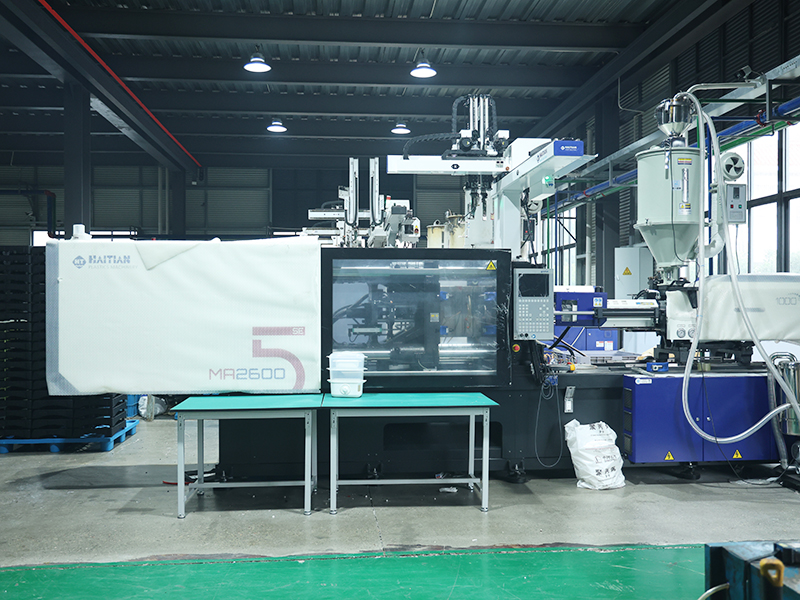
Supplier longevity carries 15% because a steamer programme depends on repeatable production, not a one-off sample. The supplied company profile states that NINGBO JINCHANG ELECTRONICS CO., LTD. was established in 1995 and has more than 30 years of industry experience. It also states ISO 9001 Quality Management System and ISO 14001 Environmental Management System certifications. The factory profile lists a 5,500 m2 production plant, 68 employees, 8 engineers and an annual output of 1,200,000 units. These facts help a buyer assess whether the supplier has a formal system for quality and environmental management and whether it has engineering depth beyond assembly.
The scorecard should still treat longevity as a moderating factor rather than a substitute for current evidence. A company established in 1995 can have a long export record, but the buyer needs the current certificate scope, the current factory address and the current production-site confirmation. The profile states 90% export ratio and main markets in the EU, USA, AU and RU. That is useful context for destination experience, but it does not replace destination-specific compliance review. The buyer should map the supplier's export experience to the actual market, voltage, plug, language and retail-label requirements of the order.
Engineering depth is part of this lane because a 7-quart double-layer electric food steamer is not only a capacity decision. The supplier profile states in-house structural R&D, mould development and product testing, plus more than 30 independent intellectual property rights. For a private-label buyer, that matters when appearance modification, function adjustment or private-mould development is part of the project. The scorecard can reward engineering capability only when the buyer can see the relevant process evidence and the project scope. A general R&D claim should not be scored as project-specific capacity without a sample, drawing or development plan.
Lane 5: commercial readiness and private-label fit
The commercial-readiness lane covers the practical conditions that turn a compliant sample into a retail order. The SC750 comparison material states a retail-ready colour box package and a cost level comparable to basic single-tier steamers, with additional value from safety certification and retail-ready packaging. That is a supplier comparison, so the buyer should verify the packaging specification, print quality and drop-test performance for the actual carton. The same caution applies to the phrase gift-set supply: a gift-set buyer may need a different colour box, manual, recipe card or accessory set, and those items should be quoted as part of the private-label food steamer project.
The company profile states OEM and ODM services, with appearance modification, function adjustment, private-mould development and customized packaging available on request. For a distributor, that supports a private-label food steamer path. For a retailer, it supports packaging and model differentiation. The scorecard should reward the breadth of options only when the buyer has confirmed minimum order quantity, tooling ownership, artwork approval and lead time. These are commercial terms, not product facts, so they belong in the buyer's request-for-quotation rather than in a public product claim.
Lane 6: service, maintenance and lifecycle boundaries
The final lane is service and lifecycle. The SC750 supplied comparison states that maintenance requirements are lower than basic single-tier steamers because the steaming trays are removable and the unit can be disassembled for quick cleaning. That is a practical advantage for household users and for retail channels that receive cleaning-related complaints. The buyer should still review the manual, spare-part list and warranty terms. A removable tray design helps cleaning, but it also creates a need for clear instructions on reassembly and water-tank care.
The supplied application notes also state that there is no local on-site after-sales service. This is a real fit boundary. A distributor taking the product into a market without local service capability should plan its own return, repair or replacement process. The scorecard should not hide this limitation; it should allocate points for a credible service plan rather than for an unsupported promise. For a private-label buyer, the service plan may sit with the distributor rather than the factory, and that division of responsibility should be written into the supply agreement.
Worked example: placing the SC750 evidence into the matrix
The SC750 is useful as a worked example because it shows how the lanes differ. In the configuration lane, the model has a 7-L dual-layer capacity, 800W heating, a mechanical timer, a visible independent water tank, auto-off protection and removable trays. In the food-contact lane, the supplied materials support LFGB food-grade material, CE and CB certification, and RoHS documentation in the compliance set. In the social-audit lane, the company reports amfori BSCI and ICS membership. In the supplier-system lane, the profile lists 1995 establishment, more than 30 years of industry experience, ISO 9001 and ISO 14001, a 5,500 m2 plant, 68 employees and 8 engineers. In the commercial lane, it lists retail-ready colour-box packaging and OEM/ODM options. In the service lane, it states no local on-site after-sales service.
That evidence set does not produce a universal score. A European supermarket buyer may place more weight on LFGB, CE/CB, RoHS and Ecodesign documentation, and may require a current amfori BSCI audit report for the exact site. A gift-set buyer may place more weight on colour-box packaging, product appearance and order quantity. A distributor in a market with limited service infrastructure may place more weight on spare parts and warranty support. The matrix is designed to make those differences explicit. The buyer can change the weights before scoring, but the evidence standard for each lane should remain the same.
How the SC750 compares with a basic single-tier steamer
| Decision point | Basic single-tier food steamer | SC750 7-L double-layer electric steamer |
|---|---|---|
| Cooking capacity | Limited capacity; suited to small portions and one-to-two-person use. | 7-L dual-layer capacity; supports simultaneous cooking of multiple dishes for family meal preparation and baby food making. |
| Countertop fit | Lower overall height; easier storage in small spaces. | Extra vertical storage space required; buyer should check cabinet clearance and tray removal height. |
| Control and safety | Varies by model; basic models may lack timer or auto-off features. | Mechanical timer and auto-off protection; 800W fast heating; visible independent water tank. |
| Food-contact evidence | Varies by supplier; must be checked model by model. | LFGB food-grade material stated; CE and CB certification; RoHS documentation in the compliance set. |
| Cleaning and maintenance | Usually fixed or simpler tray arrangements; cleaning access varies. | Removable steaming trays and easy disassembly for quick cleaning, as stated in the supplied comparison. |
| Commercial positioning | Entry household use; lower configuration complexity. | Home daily cooking, baby food, family meal prep and retail or gift-set supply; retail-ready colour-box package and OEM/ODM options. |
The comparison is not a claim that one format is right for every buyer. The double-layer 7-quart class is a better fit when the use case requires simultaneous cooking and the retail channel can support a larger countertop appliance. A basic single-tier steamer remains a valid choice for small households and low-complexity retail offers. The scorecard helps the buyer decide which format fits the target customer, then which supplier can prove the required evidence for that format.
Market context: what the external data does and does not establish
External market data supports the category context but should not be used as a substitute for supplier evidence. Custom Market Insights estimates the global electric food steamer market at approximately USD 3.68 billion in 2024 and projects a 5.32% CAGR from 2025 to 2034. The same source set shows a methodology conflict: other commercial reports project growth ranging from 5.32% to 11.2%, likely because of differences in category definition, including multi-functional cookers and commercial-grade steamers. A buyer should therefore treat the growth figure as a directional market signal, not as a forecast for a specific product or supplier.
Regional data points in the same evidence set indicate that Asia-Pacific is the largest and fastest-growing market for electric steamers as of 2024/2025. Trade data also indicates that China remains the dominant exporter, accounting for over 80% of total import shipments in key tracking corridors. These facts explain why buyers encounter a deep supplier base and why document verification becomes more important, not less. A crowded supply market does not reduce the need to compare LFGB scope, audit dates, model-specific certificates and service plans. It increases the value of a structured scorecard.
The technical standard context is also relevant. IEC 60335-1 and IEC 60335-2-15/60335-2-3 are the primary international safety standards for household electric steam cookers. A buyer does not need to interpret every clause, but the buyer should check that the certificate or test report references the correct product family and the correct model. A generic electrical-safety claim that does not name the steamer model is weaker evidence than a report that matches the product and destination requirement.
Decision sequence and fit boundaries
A practical buyer sequence is to define the market and channel first, then lock the product configuration, then collect compliance and audit documents, and finally score the commercial offer. This order prevents a low price from masking a document gap. For a 7-quart double-layer electric food steamer, the market definition should include voltage, plug type, language, packaging and any retailer-specific social-audit requirement. The configuration definition should include nominal and usable capacity, tier count, timer type, auto-off protection, water-tank access and cleaning method. The document request should include the exact model, factory site and report scope.
Two fit boundaries deserve a place in the final decision. First, a multi-tier electric food steamer takes more vertical space than a single-tier model, so retail buyers should check shelf and cabinet fit before committing to a large-capacity design. Second, a supplier without local on-site after-sales service needs a distributor-side service plan. These are not reasons to reject a model; they are conditions that affect the total channel offer. A scorecard that ignores them may reward a product specification while underestimating the cost of returns, service and customer support.
The SC750 evidence set shows how a supplier can support a decision-stage review without turning the article into a promotional page. The model has relevant configuration evidence, LFGB and CE/CB compliance evidence, amfori BSCI and ICS membership, ISO 9001 and ISO 14001 systems, and a long operating history. It also has a stated service boundary and a vertical-space trade-off. The buyer's task is to decide whether those facts fit the intended market and channel, and to request the missing documents where the specification requires them.
FAQ: comparing 7-quart double-layer electric food steamers
How should a buyer compare a 7-quart double-layer electric steamer with a single-tier model?
Compare the actual use case first. A double-layer 7-quart-class model supports simultaneous cooking of multiple dishes, which fits family meal preparation, baby food making and retail or gift-set supply. A basic single-tier steamer is oriented toward smaller portions and one-to-two-person use. The double-layer format also requires more vertical storage space. The buyer should compare measured usable capacity, countertop height, timer control, auto-off protection and cleaning access, not only the capacity label.
What is the difference between LFGB, CE/CB, RoHS and SGS SVHC evidence?
LFGB addresses food-contact materials and migration requirements. CE and CB address electrical safety for the appliance. RoHS restricts hazardous substances inside the product. SGS SVHC screening, where required, checks for substances of very high concern and is a separate report scope. These documents answer different questions, so a buyer should not accept one as a substitute for another. The report should name the model, the tested parts, the standard and the date.
What does amfori BSCI or ICS membership tell a buyer about a steamer supplier?
amfori BSCI and ICS are supply-chain social-compliance and audit-system signals. Membership indicates that the company participates in those frameworks, but it does not by itself prove that a specific production site has a current passing audit. A buyer should request the current audit report, confirm the site covered, review the audit scope and grade, and check whether corrective actions remain open. Social-audit evidence should be scored separately from product certificates such as LFGB or CE/CB.
How much weight should a buyer give to a 1995 establishment date and ISO 9001/ISO 14001?
These facts are relevant to supplier longevity and management-system maturity, but they do not replace model-specific product evidence. A company established in 1995 with more than 30 years of industry experience and ISO 9001/ISO 14001 certifications can show a formal operating history. The buyer should still verify the current certificate scope, the factory address, the production site and the capacity for the actual order. Longevity is a moderating factor in the scorecard, not a guarantee of product compliance or delivery performance.
What should be verified before placing a private-label food steamer order?
Before a private-label order, verify the exact model and configuration, the food-contact report, the electrical-safety certificate, the destination-specific documentation and the social-audit scope for the production site. Confirm packaging artwork, colour-box specification, manual language, MOQ, lead time and spare-part arrangements. If the specification calls for a BPA-free electric food steamer claim, request a part-specific declaration or test report. If it calls for SGS SVHC or SGS Food Contact reports, request those documents in writing. The buyer should also confirm who handles after-sales service in the destination market.
The scorecard does not replace sample testing, document review or commercial negotiation. It gives the decision-stage buyer a consistent way to compare 7-quart double-layer electric food steamers across configuration, food-contact compliance, social-audit scope, supplier systems, commercial readiness and service fit. Used with the SC750 evidence set as a worked example, it shows where the supplied facts are strong, where the buyer needs additional documents, and where the product format has a real fit boundary.
Have Questions or Need More Details?
Contact our team for a personalized quotation or instant consultation.
Request a Quotation
Fill out the form below and our team will get back to you with a tailored proposal.
WhatsApp Direct Chat
Prefer to chat in real-time? Message us on WhatsApp for instant assistance & quick answers.
- Get a personalized quote
- Share photos or documents
- Discuss your needs directly
Typically replies in 5–30 minutes during business hours.