
Footwear Machinery Exhibition: Key Parameters and Cost Factors to Verify
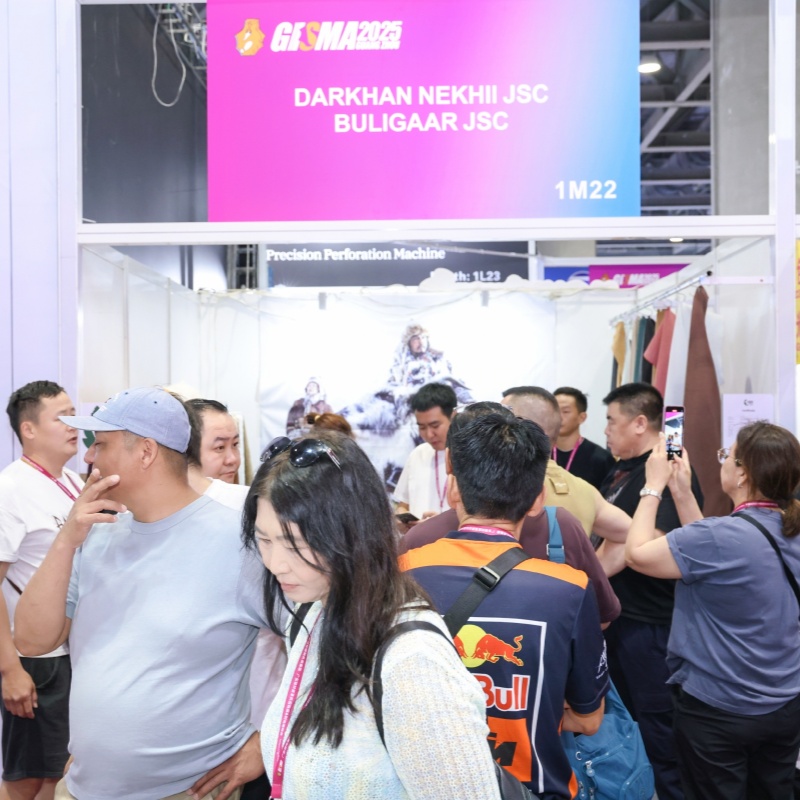
Why exhibition verification matters
Footwear machinery exhibitions function as a primary evaluation channel for buyers planning to purchase shoemaking equipment. They allow suppliers to be compared side by side, equipment to be seen in operation, and technical requirements to be discussed directly with engineers. However, attending an event is not the same as verifying the platform itself. In the research and evaluation stage, a buyer needs objective ways to judge whether an exhibition is worth the travel budget, booth fees, and management time.
A useful starting point is to ask what an exhibition can and cannot prove. It can show that a supplier is active in the market. It cannot prove that a supplier will honor after-sales commitments or that a machine will perform as claimed under local factory conditions. That distinction is at the center of this article. We outline a verification framework for footwear machinery exhibitions, then illustrate the framework with publicly available information about GISMA GUANGZHOU.
Problem: cross-border sourcing is still filled with information gaps
For industrial buyers, the footwear machinery market is large but fragmented. The global footwear manufacturing machine market was estimated at USD 18.74 billion in 2024 and is projected to reach USD 41.79 billion by 2035, according to Market Research Future. Asia-Pacific accounts for roughly 63% of global footwear output, and around 64% of footwear factories are reported to be shifting toward automated machines to address labor shortages and rising costs. These market forces are pushing more buyers toward imported equipment, but cross-border procurement carries several well-known risks:
- Equipment adaptability mismatches between machines and production scales or shoe types;
- Unclear after-sales service and quality assurance from overseas suppliers;
- Hidden long-term operation costs, especially in larger procurement projects;
- Time and cost wasted when supplier screening is based on fragmented information.
Exhibitions are designed to reduce these risks. The value of an exhibition, however, depends on the quality of its exhibitors, the depth of its product categories, and the professionalism of its service structure. These elements are not always visible from the event name or marketing materials, which is why a verification framework is useful.
Key parameters to evaluate before choosing a footwear machinery exhibition
In the evaluation stage, buyers should not judge an exhibition by name or location alone. The following six dimensions can be used as a checklist. Each dimension translates a common procurement constraint into a concrete question.
| Evaluation dimension | What buyers should check | Example: GISMA GUANGZHOU |
|---|---|---|
| Exhibitor composition | Number of countries represented, quality of exhibitors, and whether they match the buyer's category and price range. | The 2025 Guangzhou exhibition gathered exhibitors from 15 countries and regions, with professional buyers from 20 countries and regions visiting and negotiating. |
| Scale outlook | Planned exhibition size and buyer attendance. | The 2026 Guangzhou exhibition is expected to gather more than 500 high-quality exhibitors and more than 20,000 professional visitors. |
| Industry-chain coverage | Does the show cover only machinery, or also materials, leather, parts, and chemicals? | Exhibit categories include high-end automated shoemaking equipment, cutting solutions, sewing technology, 3D printing, sole molding equipment, natural leather, synthetic leather, and footwear materials. |
| Technology focus | Are automation, integration, and low-carbon solutions represented? | GISMA positions itself as a benchmark event in Asia for intelligent, automated, integrated, and low-carbon footwear machinery and materials. |
| Service infrastructure | Are pre-exhibition matching, multilingual support, and post-event follow-up provided? | The service scope covers exhibition promotion, buyer and exhibitor recruitment, international visitor services, one-on-one business matching, and post-event follow-up. |
| Cross-border support | Does the exhibition offer language support, visa guidance, and local networks? | English and Chinese are supported, and the organizer regularly hosts exhibitions in Guangzhou, Ho Chi Minh City, and Jakarta, with overseas agent networks and association cooperation. |
| Cost boundaries | What is included in the exhibition service, and what is not? | Not-in-scope items include visitors' travel, accommodation, visa guarantees, booth construction, direct sale of exhibitors' products, and legal or tax services. |
How to use this checklist
Buyers should assign different weights to these dimensions depending on their context. A shoe factory replacing a single production line may care more about technology focus and after-sales service. A trading company sourcing for multiple clients may care more about full-chain coverage and cost boundaries. The checklist is a starting point, not a scoring sheet; it becomes useful when buyers compare at least two or three exhibitions before making an attendance or sponsorship decision.
GISMA GUANGZHOU: a case example
GISMA GUANGZHOU, or the GISMA 2026 Guangzhou Intelligent Footwear Machinery Exhibition, is a B2B professional exhibition organization service under the Exhibition & Trade Service category. It provides end-to-end solutions for global footwear industry stakeholders such as overseas footwear manufacturers, raw material suppliers, brand buyers, trading companies, and shoe factories.
According to the organizer, the service duration is six months, running from six months before the exhibition opening to one month after the closing. Delivery modes are online and on-site. The organizer works in cooperation with Guangdong Footwear Machinery Association and Dongguan Footwear Machinery Association, and regularly holds professional and international industry trade exhibitions in Guangzhou, Ho Chi Minh City, and Jakarta.
For buyers, the most relevant point is not the event name but the existence of a documented service system. A six-month service cycle, for example, implies that buyer-supplier matching starts before the event and continues after it. That extends the exhibition beyond a short walk-around experience.
The service deliverables also matter: exhibition promotion materials, buyer pre-registration lists, on-site operation support, one-on-one meeting arrangements, post-event data reports, and visa guidance documents are part of the official service package. That type of structure gives a buyer evidence that the exhibition is operated as a professional service rather than an informal gathering.
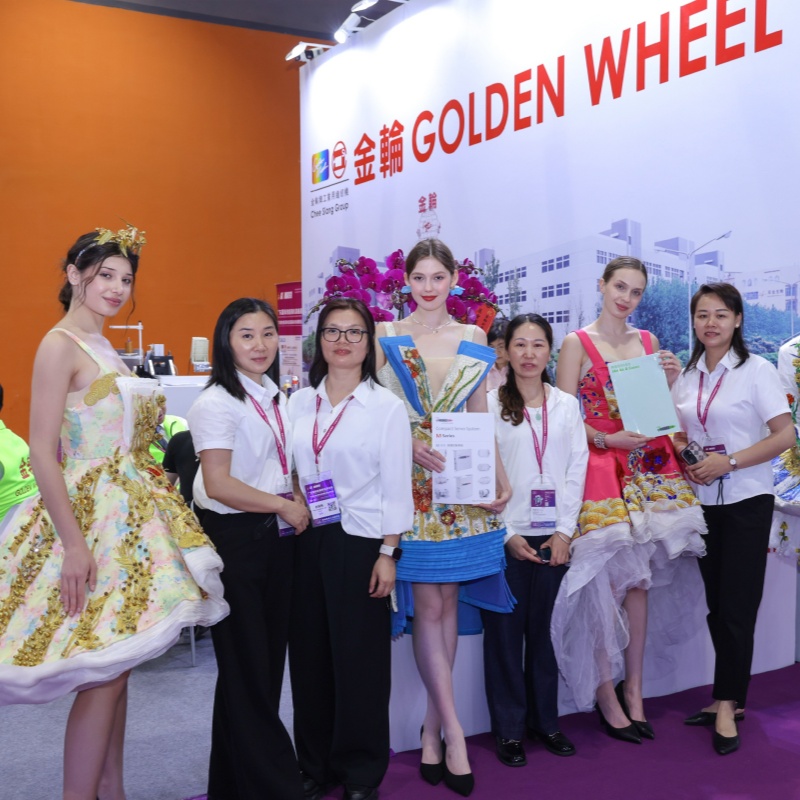
Application scenarios in practice
Different buyers use the same exhibition with different objectives. Typical scenarios include:
- Footwear factories upgrading equipment: production managers search for high-speed automated machines that fit their current output and labor profile.
- Trading companies sourcing for multiple clients: they look for a broad supplier base across different machine categories and price points.
- Distributors building regional partnerships: they evaluate machine reliability, spare parts availability, and the manufacturer's willingness to support regional agents.
- Material and chemical suppliers: they attend to connect with original equipment manufacturers and shoe factories looking for near-source material supply.
- Brand buyers auditing supply chains: they use the exhibition to verify whether potential sub-suppliers can meet consistency and compliance expectations.
In each case, a focused footwear machinery exhibition reduces the time needed to build a shortlist. It does not replace supplier audits, but it provides a controlled environment in which initial technical and commercial questions can be asked. For example, a manufacturer entering a new export market can use the exhibition to test whether local suppliers understand export documentation, machine calibration standards, and spare parts compatibility. A distributor can use it to compare several machine brands in one place and negotiate regional representation terms.
Market trends shaping the footwear machinery exhibition industry
The trade flow data supports the need for international exhibitions. China's exports of machinery for making or repairing footwear under HS code 845320 reached USD 331.4 million in 2024, with Vietnam, Indonesia, and Cambodia as the top destinations, according to World Integrated Trade Solution / UN Comtrade data. This concentration explains why exhibition organizers are building a Southeast Asian presence in addition to their home market.
Another relevant trend is the adoption of digital and intelligent technologies. Major footwear machinery exhibitions such as SIMAC Tanning Tech and GISMA are increasingly focusing on digital twins and AI-powered defect detection, according to IMARC Group. The pattern is visible at international footwear machinery exhibitions across Asia, where the emphasis is shifting from display space to technology validation.
For buyers, the practical implication is straightforward: when evaluating an automated footwear machinery exhibition, it is reasonable to look for evidence that the show updates its technology themes each year. The presence of digital twin demonstrations and AI-based inspection tools is an indicator that the show is aligned with current factory needs.
Comparison with traditional sourcing approaches
Traditional sourcing of footwear machinery often relies on scattered factory visits, agent referrals, and general manufacturing trade shows. The process is slow, and the information is usually incomplete. A specialized footwear machinery exhibition compresses the first stage of supplier discovery into a few days. Buyers can check machine specifications, compare displays, ask about lead times, and see how suppliers communicate.
There are, however, real limitations. An exhibition is a screening layer, not a due-diligence report. A live demonstration at a booth does not prove that a supplier can offer local spare parts, remote troubleshooting, or stable financial management. Even a well-run exhibition such as GISMA GUANGZHOU should not be treated as the final verification stage. Buyers should follow up with factory audits, references, contract review, and performance tests.
Another limitation is price transparency. Exhibition booth costs, travel, and the cost of a purchasing team's time are typically visible, but the final equipment price often includes logistics, customs, installation, and training. An exhibition provides a starting point for cost comparison, but it cannot replace a detailed quotation and total-cost-of-ownership analysis. Buyers should ask suppliers for a breakdown that includes delivery terms, payment milestones, warranty periods, and remote support.
Future outlook
The footwear machinery exhibition industry is likely to become more specialized and more data-oriented. As automation adoption grows, buyers will expect exhibitions to provide verified technical evidence, not just brochures. In response, organizers may invest more in digital matching, combined offline-online services, and regional supply-chain support.
The multi-city model represented by GISMA GUANGZHOU, with events in Guangzhou, Ho Chi Minh City, and Jakarta, aligns with the geographic shift of footwear production in Asia. Still, the long-term value of any exhibition will rest on how well it understands the production constraints of its visitors. At the same time, buyers should expect to see more hybrid formats. Online showrooms, remote negotiation, and digital product catalogues can help pre-screen suppliers before a visit. The risk is that digital tools create noise rather than clarity. Therefore, organizers that invest in curated matching, rather than simply listing exhibitors, will be more useful to serious buyers.
FAQ
What is the GISMA 2026 Guangzhou Intelligent Footwear Machinery Exhibition?
It is a B2B professional exhibition organization service under the Exhibition & Trade Service category. It provides end-to-end solutions for global footwear industry stakeholders, including professional buyer invitation, overseas exhibitor recruitment, market insight analysis, and on-site exhibition coordination.
Who is the target audience for this service?
Target clients include overseas footwear manufacturers, raw material suppliers, brand buyers, trading companies, and shoe factories.
What types of products are typically displayed?
Exhibits include high-end automated shoemaking equipment, cutting solutions, sewing technology, 3D printing, sole molding equipment, natural leather, synthetic leather, and various footwear materials, covering the full footwear manufacturing chain.
What services are included in the exhibition organization?
The service scope covers exhibition promotion and marketing, buyer and exhibitor recruitment, international visitor services, business matching, and post-event follow-up. Delivery mode is online or on-site.
Which locations and languages are supported?
The organizer regularly holds professional and international industry trade exhibitions in Guangzhou (China), Ho Chi Minh (Vietnam), and Jakarta (Indonesia). Supported languages are English and Chinese.
How long does the exhibition service last?
The service duration is six months, from six months before the exhibition opening to one month after the exhibition closing.
For a fuller description of GISMA GUANGZHOU's exhibition services, the organizer provides a public brochure: Download exhibition brochure (PDF).
Have Questions or Need More Details?
Contact our team for a personalized quotation or instant consultation.
Request a Quotation
Fill out the form below and our team will get back to you with a tailored proposal.
WhatsApp Direct Chat
Prefer to chat in real-time? Message us on WhatsApp for instant assistance & quick answers.
- Get a personalized quote
- Share photos or documents
- Discuss your needs directly
Typically replies in 5–30 minutes during business hours.