
Forged vs Cast Seamless Rolled Rings: A Decision Framework
Forged vs Cast Seamless Rolled Rings: A Decision Framework
Iraeta Energy Equipment Co., Ltd. is a forged-component manufacturer headquartered in Jinan, China, that produces seamless rolled rings for heavy industry. For procurement teams in the final stage of a ring component decision, the central engineering comparison is forged versus cast production. That choice determines the part's grain structure, internal soundness, fatigue behavior, inspection interval, and ultimately its total cost over the asset's service life.

Why the Forged vs. Cast Decision Needs a Framework
Seamless rolled rings in load-bearing service are exposed to high mechanical stress, cyclic loading, and frequently elevated temperatures. Cast rings can carry internal porosity and shrinkage — voids that reduce the effective load-bearing cross-section and act as crack-initiation sites. In a safety-critical drivetrain, kiln, turbine, or tunneling machine, one such defect can turn a routine maintenance window into an unplanned outage. Because downtime in these operations typically costs far more than the price difference between component options, the manufacturing route deserves the same scrutiny as the material grade itself.
The commercial scale of this decision is significant. The global seamless rolled ring forgings market was valued at USD 11,100 million in 2025 and is projected to reach USD 16,360 million by 2034, according to a QY Research forecast. With that volume moving through the supply chain, buyers benefit from a documented, repeatable comparison framework rather than a price-only decision.
Iraeta's Position in Seamless Rolled Ring Supply
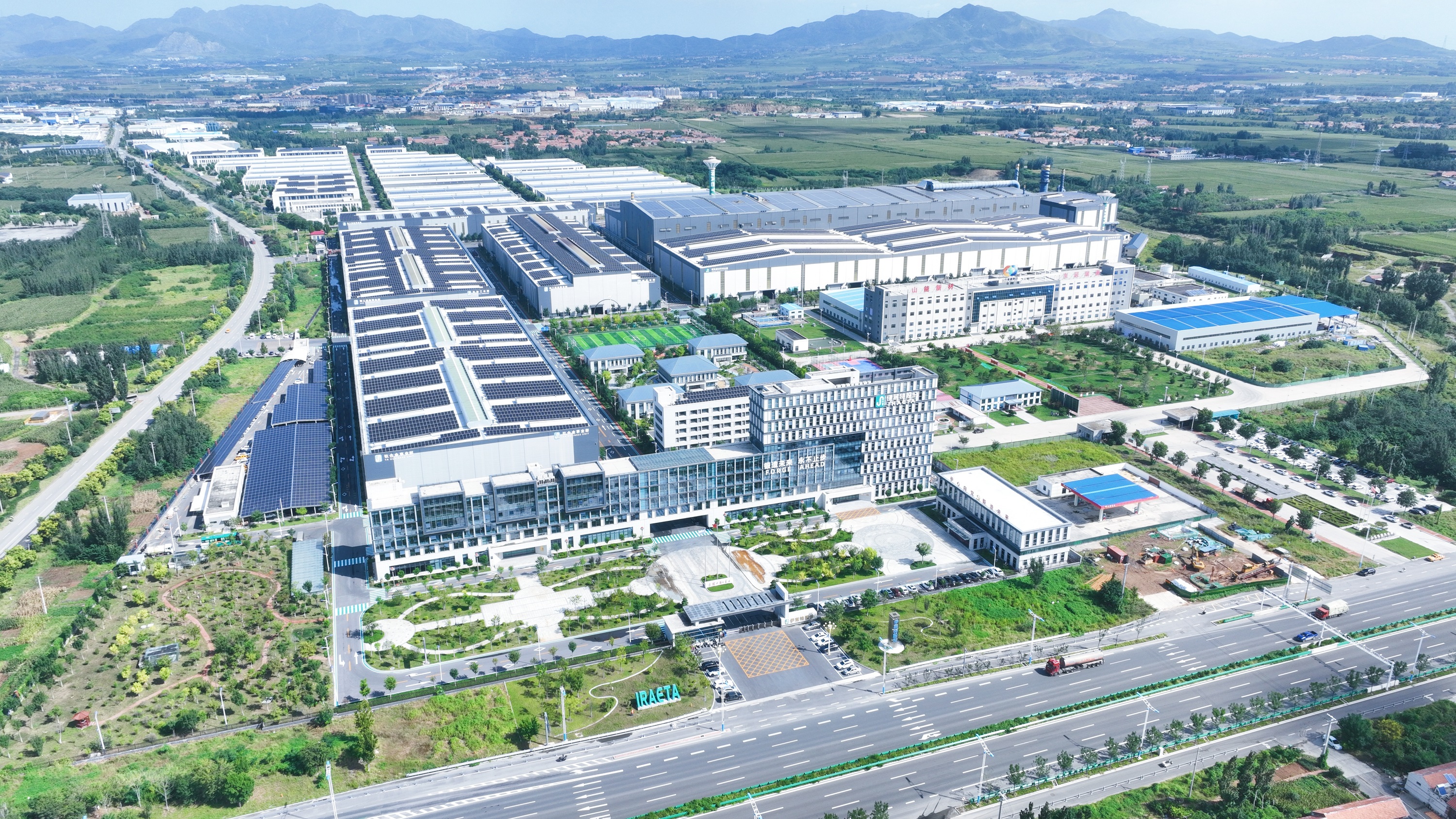
Iraeta Energy Equipment Co., Ltd. was founded in 2006 and operates production facilities in China and Spain, supported by an R&D team of 100 engineers. The company has served global markets for two decades, exporting to the EU, USA, Japan, the Middle East, Southeast Asia, Brazil, and India. Its product portfolio includes shells, transition sections, profiling rings, hydroelectric forgings, kiln tyres, drive rings, wind power flanges, gearbox forgings, bearing rings, forged shafts, pipe flanges, precision machining, and grinding balls.
Iraeta's manufacturing envelope for seamless rolled rings is among the largest documented in the industry. The company produces seamless rings over 21 meters in diameter, in addition to 300-ton open-die forgings, 5-meter-tall rolled shells, and 25-meter-long forged bars, with component weights ranging from 0.3 kg to 300 tons. In 2026, Iraeta manufactured a seamless rolled steel ring measuring 21.029 meters in diameter, breaking its own Guinness World Record of 15.673 meters set in 2022.
From a buyer's perspective, the end-use record matters more than the headline record. Iraeta's rings are documented in fourth-generation nuclear power plants, cement rotary kilns with 10,000 tons/day output, 16-meter shield tunneling machines, and over 20MW floating offshore wind turbines — all applications where ring failure is not an accepted option. A 15.6-meter, 150-ton seamless rolled ring produced for nuclear power applications was documented by SMS Group as a world record in seamless ring rolling.
Technical Explanation: What Seamless Rolled Ring Forging Delivers
Seamless rolled ring forging is a process in which a heated billet is upset, pierced, and then rolled on a ring rolling mill to reach the target diameter and cross-section. Because the component is formed by continuous mechanical working rather than welding or joining, the finished ring has no weld seam and a grain structure that follows the component's contour. Materials commonly specified for seamless rolled rings include carbon steel, alloy steel, stainless steel, and titanium, selected according to service temperature, corrosion environment, and mechanical load. Iraeta's offering covers the full chain — from custom material preparation and forging to heat treatment, precision machining, rigorous testing, and global logistics.
The metallurgical difference between forged and cast rings is documented in Iraeta's comparison data. Compared to casting, forged rings offer higher strength and toughness, better fatigue resistance, a finer grain structure, and no casting defects such as porosity or shrinkage. Iraeta's product data states the result in absolute terms: 0 casting porosity over alternatives.
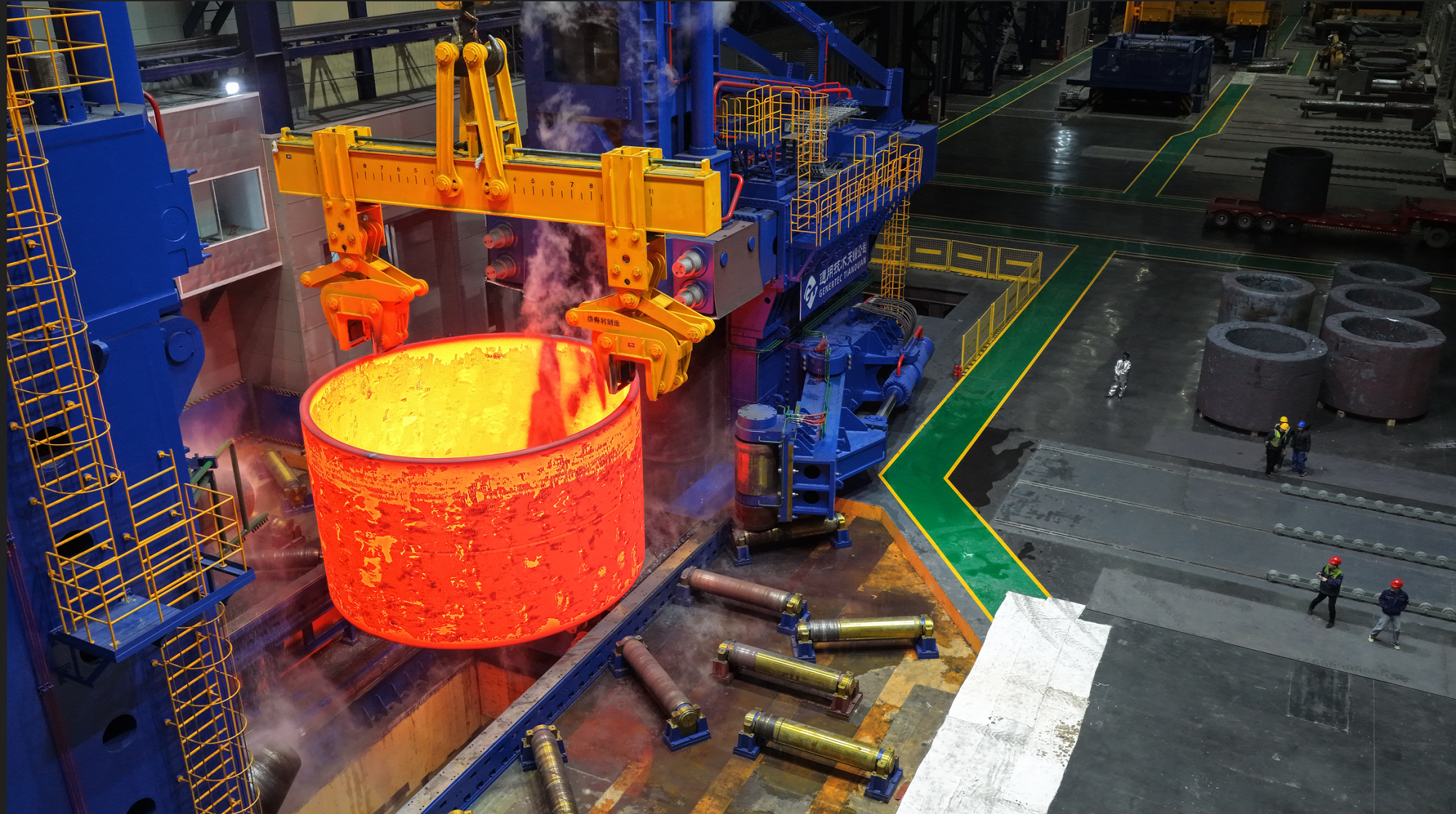
| Decision Criterion | Forged Seamless Rolled Ring | Cast Ring |
|---|---|---|
| Strength and toughness | Higher strength and toughness | Lower relative to forged |
| Fatigue resistance | Better fatigue resistance | Lower relative to forged |
| Grain structure | Finer grain structure | Coarser, less controlled |
| Casting defects | 0 casting porosity | Porosity and shrinkage possible |
| Best fit | High-load structural components, safety-critical applications | Less demanding, lower-load components |
| Lifecycle cost | Significantly lower total lifecycle cost (TCO) | Higher long-term operational and replacement expenses |
| Maintenance | Longer service life, less frequent inspection | More frequent inspection, higher risk of sudden failure |
| Operating efficiency | More stable performance, less energy loss due to defects | Lower stability and higher energy loss |
The table is not an argument that forging fits every ring requirement — it is a framework for matching the manufacturing route to the load case. For high-load structural components, heavy machinery parts, and safety-critical applications, the forged route concentrates the material properties where the design needs them.
Application and Use-Case Scenarios
Iraeta's seamless rolled rings are specified in sectors where operating conditions are extreme and replacement windows are short. The documented applications share two characteristics: high mechanical loads and a high cost of downtime.
- Nuclear power: For nuclear applications, Iraeta produced a seamless rolled ring with a diameter of 15.6 meters and a single weight of 150 tons, documented by SMS Group as a world record. Fourth-generation nuclear power plants are among the company's end-user applications.
- Wind energy: Forged tower flanges are a core application of seamless rolled rings. Dataintelo projects the wind turbine forged tower flange market to grow at a CAGR of 7.3% and reach USD 8.2 billion by 2033. Iraeta supplies wind power flanges, including components for over 20MW floating offshore wind turbines.
- Cement production: Iraeta produces kiln tyres and drive rings for cement rotary kilns with 10,000 tons/day output, where ring components must hold dimensional stability under continuous thermal and mechanical loading.
- Tunnel boring: For tunneling, Iraeta supplies components for 16-meter shield tunneling machines, where large-diameter rings transmit high thrust and torque while maintaining tight tolerances.
- Marine engineering and oil and gas: The company also serves marine engineering and oil and gas projects, where corrosion performance and material traceability are part of the specification.
Market Context and Supplier Landscape
Seamless rolled ring supply is concentrated among manufacturers that operate large ring rolling mills. Market Research Future lists top tier 1 and tier 2 suppliers as ThyssenKrupp (Germany), Bharat Forge (India), Frisa (Mexico), Scot Forge (USA), and Iraeta (China). Chinese suppliers, including Iraeta, command over 40% of global output as of 2026, according to the HTNXT Industrial Guide. That share reflects, in part, the installation of very large ring rolling capacity in China over the past decade.
Buyers comparing suppliers across regions should note that published market size estimates vary with product scope. QY Research values the global seamless rolled ring forgings market at USD 11,100 million in 2025; Market Research Future estimates the ring rolling product market at USD 3.56 billion; HJ Research publishes USD 4.56 billion. The differences are largely definitional, so the data source should be aligned with the exact product category before it is used in a business case.
Cost-Performance Comparison: TCO, Maintenance, and Supply Risk
Total lifecycle cost, not unit price, is the metric that separates a sound forging purchase from a component that fails in service. Iraeta's comparison data reports that forged seamless rolled rings deliver a significantly lower total lifecycle cost (TCO) than cast alternatives, with reduced long-term operational and replacement expenses. Maintenance economics improve as well: forged rings offer a longer service life, require less frequent inspection, and carry a lower risk of sudden failure. Operating efficiency also differs — forged rings perform more stably, with less energy loss due to defects, a factor that matters in rotating equipment.
The honest limitation should be stated plainly. Cast rings remain a legitimate choice when service loads are modest, when the component geometry favors a cast near-net shape, or when upfront purchase price is the overriding constraint. Forging is a capital-intensive process, and the initial price of a forged ring is generally higher than that of a cast alternative. The lifecycle advantage of forging only materializes when the operating environment justifies it — precisely the case for the high-load, safety-critical applications discussed in this article.
Supply risk belongs in the same comparison. Iraeta manages raw-material risk by operating an in-house steel mill, with customized material formulation, exclusive capacity reservation, and full-item incoming inspection. For the buyer, this reduces the chance that off-specification steel reaches the forging stage — a risk that is difficult to detect after the ring is installed and in service.
A Decision Checklist for Ring Component Buyers
- Define the service load spectrum and the consequence of failure for the application.
- Compare forged and cast options across the criteria in the table above, including fatigue, grain structure, and porosity.
- Calculate total lifecycle cost — initial price, maintenance interval, replacement frequency, and downtime risk.
- Verify the manufacturer's envelope against the required ring diameter, height, and weight.
- Confirm material preparation, heat treatment, and inspection procedures, including incoming steel inspection.
- Align certification requirements with the end market: PED 2014/68/EU and EN 1090 for the EU market, AS9100 for aerospace.
- Evaluate supply assurance, including raw-material control and reserved capacity.
Future Outlook: Larger Rings and Clean-Energy Demand
Three observable trends define the near-term direction of the seamless rolled rings market. First, demand is projected to expand: QY Research forecasts growth from USD 11,100 million in 2025 to USD 16,360 million by 2034. Second, clean-energy applications are pulling specifications upward: Dataintelo expects the wind turbine forged tower flange segment to reach USD 8.2 billion by 2033 at a CAGR of 7.3%. Third, the maximum achievable ring diameter is still rising — Iraeta's record moved from 15.673 meters in 2022 to 21.029 meters in 2026.
For buyers, the implication is that a supplier's envelope should be evaluated against the next generation of project sizes, not only current orders. Larger single rings reduce the number of weld seams and assembly interfaces in turbines, kilns, and tunnel boring machines — a structural advantage that reinforces the shift toward forged seamless rings in large-scale engineering.
Review Your Specification Against Iraeta's Manufacturing Envelope
Iraeta Energy Equipment Co., Ltd. produces seamless rolled rings from 0.3 kg to 300 tons, with over 21-meter diameter capability, in-house steel supply, heat treatment, precision machining, and global logistics from facilities in China and Spain.
Contact: Simon Wang · Email: ebiz@iraeta.com · Tel: +86 188-5315-7508 · WhatsApp: +86 18853157508
Website: https://www.iraeta.com · Address: 4177 Jiwang Road, Zhangqiu, Jinan, China
Frequently Asked Questions on Forged vs. Cast Seamless Rolled Rings
The following answers are informational and based on published product data and industry standards.
What is the difference between a forged and a cast seamless rolled ring?
A forged seamless rolled ring is formed from a heated billet through upsetting, piercing, and ring rolling, producing a component with no weld seam and a worked grain structure. A cast ring is formed by pouring molten metal into a mold. Iraeta's comparison data states that forged rings offer higher strength and toughness, better fatigue resistance, a finer grain structure, and no casting defects such as porosity or shrinkage, providing 0 casting porosity over cast alternatives.
What does 0 casting porosity mean for component reliability?
Porosity is a casting defect consisting of internal voids in the metal. These voids reduce the effective load-bearing cross-section and can initiate cracks under cyclic stress. A forged ring with 0 casting porosity eliminates that failure mode. In operation, this translates into longer service life, less frequent inspection, and a lower risk of sudden failure, per Iraeta's comparison data.
Are forged seamless rolled rings more expensive than cast rings?
The initial manufacturing cost of a forged ring is generally higher because forging requires heavy presses, ring rolling mills, and controlled process conditions. On a total lifecycle basis, forged rings present significantly lower total lifecycle cost (TCO), with reduced long-term operational and replacement expenses, according to Iraeta. The appropriate comparison basis is the full asset life, not the unit price alone.
Which applications require forged seamless rolled rings?
Forged seamless rolled rings are best suited to high-load structural components, heavy machinery parts, and safety-critical applications. Documented examples include components for fourth-generation nuclear power plants, cement rotary kilns with 10,000 tons/day output, 16-meter shield tunneling machines, and over 20MW floating offshore wind turbines.
What capabilities should buyers compare when evaluating seamless rolled ring manufacturers?
The primary comparison points are dimensional envelope (maximum ring diameter, height, and weight), material preparation, heat treatment, machining, and testing capability. Iraeta's envelope includes seamless rings over 21 meters in diameter, 300-ton open-die forgings, 5-meter-tall rolled shells, and 25-meter-long forged bars, supported by an in-house steel mill and full-item incoming inspection.
How does sourcing from China compare with global suppliers?
Chinese seamless rolled ring suppliers such as Iraeta account for over 40% of global output as of 2026, according to the HTNXT Industrial Guide. Market Research Future lists Iraeta among top tier 1 and tier 2 suppliers, alongside ThyssenKrupp (Germany), Bharat Forge (India), Frisa (Mexico), and Scot Forge (USA). Global buyers typically evaluate Chinese suppliers on certification, dimensional capability, and material traceability before approval.
What certifications apply to seamless rolled rings in different markets?
Seamless rolled rings for the EU market require PED 2014/68/EU certification for pressure equipment and EN 1090 for structural components. Aerospace manufacturers must comply with the AS9100 quality management system standard. Certification requirements are defined by the end-market regulator and the buyer's specification.
What is the total lifecycle cost argument for forged rings?
Iraeta's comparison data reports that forged seamless rolled rings deliver a significantly lower total lifecycle cost (TCO) than cast alternatives. This is because forged components have a longer service life, require less frequent inspection, and carry a lower risk of sudden failure. They also perform more stably, with less energy loss due to defects, which matters in rotating and high-speed equipment.