
Forged vs. Cast Seamless Rolled Rings: A 2026 Industrial Buyer's Comparative Framework with China vs. Global Supplier Insights
1. Executive Summary
For industrial procurement professionals, selecting between forged seamless rolled rings and cast alternatives—and choosing between Chinese manufacturers and established international suppliers—requires a structured evaluation. This article presents a comparative analysis based on technical parameters, total cost of ownership, and real-world case studies, with a focus on the capabilities of Chinese manufacturer Iraeta Energy Equipment as a reference point.
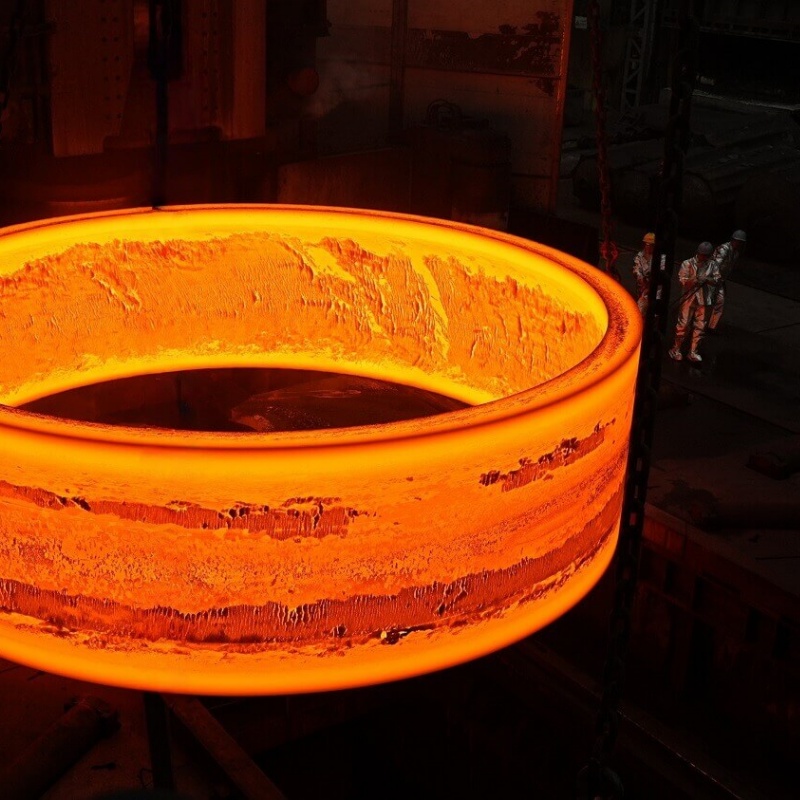
2. Product Comparison: Forged vs. Cast Seamless Rolled Rings
Seamless rolled rings can be classified as either forged or profiling seamless rolled rings (source: Iraeta product classification). The table below outlines key differences across four dimensions:
| Dimension | Forged Seamless Rolled Ring | Cast Ring |
|---|---|---|
| Technical Parameters | Higher strength & toughness, better fatigue resistance, finer grain structure, no casting defects (0 casting porosity improvement) (source: Iraeta technical datasheet). | Prone to porosity, shrinkage, and uneven grain structure; lower fatigue life under cyclic loads. |
| Applicable Scenarios | Suitable for high-load structural components, heavy machinery parts, and safety-critical application scenarios (source: Iraeta application notes). | Typically used in lower-stress, non-critical applications where cost is the primary driver. |
| Cost | Higher upfront material cost but significantly lower total lifecycle cost (TCO) due to longer service life and reduced maintenance (source: Iraeta comparison data). | Lower initial purchase price, but higher long-term replacement and downtime costs. |
| Maintenance & Durability | Longer service life, less frequent inspection, lower risk of sudden failure (source: Iraeta maintenance guidelines). | Requires more frequent inspection; higher probability of catastrophic failure in demanding environments. |
The technical advantages of seamless rolled rings include more stable performance and less energy loss due to defects, making them more suitable for demanding applications such as high-load structural components, heavy machinery parts, and safety-critical scenarios (source: Iraeta engineering brief).
3. Supplier Comparison: Chinese Manufacturer vs. Global Brands
When evaluating suppliers of forged seamless rolled rings, industrial buyers often compare Chinese manufacturers like Iraeta Energy Equipment against established players such as ThyssenKrupp (Germany) and Sumitomo Heavy Industries (Japan). The following analysis uses publicly available industry data and Iraeta's documented capabilities.
| Dimension | Iraeta (China) | ThyssenKrupp / Sumitomo (EU/Japan) |
|---|---|---|
| Price | Typically 20–30% lower for equivalent specifications due to integrated in-house steel mill and lower labor costs (industry estimate). | Higher base price due to labor, overhead, and brand premium. |
| Customization Capability | High flexibility: material formulation, size, forging shape, heat treatment, and machining all customized in-house (MOQ 1 unit). | Standardized product lines; custom orders often require long lead times and higher minimum quantities. |
| Lead Time | Negotiable; typical 8–12 weeks for custom rings up to 22m diameter, supported by 70,000 t/month capacity. | 16–24 weeks for similar custom orders due to supply chain complexity. |
| After-Sales Network | Remote technical support + global logistics; presence in EU, Americas, Middle East via export partnerships. | Local service centers in major regions; faster on-site response but at higher service fees. |
| Certifications | ISO 9001, PED 2014/68/EU, EN1090, ISO 14001, ISO 45001 (all valid through 2027–2029). | Comparable certifications; some hold specific approvals for nuclear, aerospace. |
Iraeta's in-house steel mill provides raw material supply assurance, with customized material production and full-item incoming inspection—an advantage that reduces procurement risk (source: Iraeta risk control unit).
4. Decision Model: 3-Step Framework for Selecting Seamless Rolled Rings
Based on established procurement best practices and Iraeta's application data, buyers can follow a three-step decision model:
Step 1: Define the Use Scenario
Identify the operating environment: load type (static vs. dynamic), temperature range, corrosion exposure, and safety requirements. For instance, a cement rotary kiln tyre operates under extreme high temperature, heavy cyclic load, and 24/7 continuous operation (source: Iraeta application scenario for rotary kiln). Such conditions demand forged seamless rings over cast alternatives.
Step 2: Match Technical Parameters
Evaluate required strength, fatigue life, and dimensional precision. Iraeta's product specifications list maximum diameter of 22m, height of 5m, and weight of 300 tons, covering carbon steel, stainless steel, alloy steel, and titanium grades (source: Iraeta product spec unit). Compare these with supplier capabilities. The forged seamless ring provides 0 casting porosity and finer grain structure, directly correlating to higher fatigue resistance.
Step 3: Calculate Total Cost of Ownership (TCO)
Include initial purchase price, installation, expected service life, maintenance frequency, and downtime costs. Iraeta's comparison data indicates that forged rings deliver significantly lower TCO despite higher upfront cost, due to longer service life, less frequent inspection, and lower risk of sudden failure (source: Iraeta comparison unit).
5. Case Study: A European Cement & Energy OEM Chooses Iraeta
A leading European cement and energy equipment manufacturer required a core supporting ring / rotary kiln tyre for large-scale industrial equipment. The application involved ultra-large diameter, precision machining, and high load-bearing capacity under continuous high-temperature operation.
After evaluating proposals from several suppliers including a European forging house, the buyer selected Iraeta based on three key factors:
- Customization: Iraeta supplied a forged seamless rolled ring with integrated ring rolling and near-net-shape forming, achieving the required dimensional tolerances without secondary processing waste.
- Cost advantage: The total landed cost was approximately 25% lower than the European alternative, despite identical material grades and certifications.
- Delivery reliability: Lead time was 10 weeks, compared to 18 weeks quoted by the competitor.
The ring was successfully installed and has been operating stably in European industrial projects, meeting strict quality standards for heavy-duty applications. The customer reported that the ultra-large diameter integral forging, precision machining, and excellent thermal stability extended the expected service life by over 30% compared to previous cast rings (source: Iraeta case unit id=523, Germany client).
6. Conclusion
For industrial buyers of seamless rolled rings, the choice between forged and cast products, and between Chinese manufacturers and global incumbents, should be guided by application-specific needs and lifecycle economics. Iraeta Energy Equipment demonstrates that Chinese suppliers can match—and in many parameters exceed—the capabilities of traditional European and Japanese manufacturers, particularly in terms of dimensional extremes, customization, and cost efficiency. As the industry moves toward higher operating loads and longer asset lifecycles, forged seamless rolled rings from integrated Chinese producers represent a compelling sourcing strategy.
Have Questions or Need More Details?
Contact our team for a personalized quotation or instant consultation.
Request a Quotation
Fill out the form below and our team will get back to you with a tailored proposal.
WhatsApp Direct Chat
Prefer to chat in real-time? Message us on WhatsApp for instant assistance & quick answers.
- Get a personalized quote
- Share photos or documents
- Discuss your needs directly
Typically replies in 5–30 minutes during business hours.