
Four Charcoal Models, Four Order Types: A Buyer's Shortlist
Four Charcoal Models, Four Order Types: A Buyer's Shortlist
Charcoal is bought in units of heat, not units of weight. A shisha lounge needs a cube that holds temperature through a full session and leaves little residue behind. A barbecue restaurant needs a dense stick that survives a long service window without sparking into a built-in table grill. A camping retailer needs a grill that ignites without a chimney starter and can be retired after one picnic. These are three different products, and treating them as one line item is where most mismatched charcoal orders begin.
FYC (Dalian Tiancheng Charcoal Industry Technology Co., Ltd.), a charcoal manufacturer established in 1990 and based in Dalian, Liaoning, China, manufactures four models that map onto four of those order types: TC-01 hookah charcoal, TC-02 barbecue charcoal, TC-04 incense charcoal and TC-03 disposable barbecue grill. The shortlist below is a fit reference, not a ranking: each model is presented with the specifications the manufacturer publishes, the end uses it is documented against, and the point at which a buyer should look elsewhere.
Why charcoal is a fit decision before it is a price decision
The same parameter means different things in different segments. Burn time is a session-management number for a hookah bar and a labour-cost number for a barbecue restaurant. Ash is a handling issue in a bowl and a cleaning issue on a grill. Form determines airflow in one application and bed stability in another. A buyer who compares charcoal only on delivered cost per ton is therefore comparing products that were never interchangeable.
Segment structure reinforces this. Dataintelo reports that coconut shell charcoal held a 42.3% share of the hookah charcoal segment in 2025, which indicates how strongly material preference is attached to a specific end use rather than to charcoal as a whole category. Grand View Research separately estimates the global charcoal market at USD 8.5 billion in 2026, a figure that aggregates hookah, barbecue, incense and heating demand into one number and therefore hides exactly the differences a purchase decision depends on.
The practical conclusion is that a buyer should shortlist by order type first and grade second. The four models below are organised that way.
The four-model shortlist at a glance
Each model is engineered around a different ignition method, form factor and burn window. The table summarises the verified specifications before the sections that follow explain what each one means for a purchase decision.
| Model | Format | Verified specification highlights | Primary end uses |
|---|---|---|---|
| TC-01 hookah charcoal | Cube, 25 mm and 40 mm | Fixed carbon specified above 85%–90%; premium grade ash below 3%; burn windows of 90–120 minutes and 45–70 minutes across the quick-light variants | Hookah bars, shisha service, aromatherapy, yoga rooms, incense burners, home relaxation |
| TC-02barbecue charcoal | Bamboo charcoal stick: Quadrilateral, Hexagon, 50 mm Square-hole, Spherical, Fangyuan | 6–8 hour burn time | Barbecue restaurants, outdoor camping, home cooking, BBQ grills, catering |
| TC-04incense charcoal | 33 mm round, quick-light | 45–70 minute burn time; Natural Black, Silver Foil or Gold Foil appearance | Bakhoor, aromatherapy, home relaxation |
| TC-03 disposable barbecue grill | Portable single-use grill | Self-igniting; 100% biodegradable; portable single-use construction | Picnics, camping, travel |
TC-01 hookah charcoal: a cube format built around session length
TC-01 is the hookah and shisha line, supplied as 25 mm and 40 mm cubes. Two published burn windows apply across the quick-light variants: 90–120 minutes and 45–70 minutes. The range carries a fixed carbon specification above 85%–90%, and the premium grade is specified at below 3% ash.
For a lounge operator, those two numbers describe different operational realities. Fixed carbon is the share of the tablet that burns as heat rather than being left behind, so a high fixed carbon figure supports a more predictable session. Ash is what the staff handle between sessions: at below 3%, the premium grade keeps bowl maintenance and airflow adjustment to a minimum, which matters when a venue is running continuous service across many tables.
The documented reference case is a premium shisha lounge and hookah bar chain in Saudi Arabia, which ordered 50 metric tons per quarter — roughly 200 tons annually — over 2.5 years of continuous cooperation. The specification used in that account was a consistent 25 mm cube with ultra-low ash content below 3%, packed in luxury magnetic boxes customised with the client's logo. Reported outcomes were stable, odourless burning with zero client complaints, and longer customer sessions attributed to the long-lasting heat.
TC-02 barbecue charcoal: bamboo sticks for long service windows
TC-02 is a bamboo charcoal stick rated at a 6–8 hour burn time, which places it in the range where a restaurant can load a grill once and work through a service period. It ships in five forms: Quadrilateral, Hexagon, 50 mm Square-hole, Spherical and Fangyuan. The variation is not cosmetic — form controls how the fuel packs into a grill bed, how air moves through it, and how it fits into built-in or table-top equipment.
The reference case is an authentic charcoal BBQ and grill restaurant group in South Korea receiving one 40HQ container per month, approximately 20–22 tons, over a three-year supply partnership. The specified form was hexagonal bamboo charcoal sticks with high density and zero sparking, chosen specifically to fit built-in dining table grills. Reported results were zero smoke interference in indoor dining and a 15% reduction in total charcoal consumption compared with previous suppliers, attributed to the product's high calorific value. The application was high-temperature meat searing and slow indoor roasting of premium cuts.
That case illustrates the selection logic for TC-02: the deciding factors were sparking behaviour and density under indoor conditions, not headline price. Buyers sourcing for European markets should also plan compliance into the specification. EN 1860-2 is described as the mandatory product-safety standard for barbecue and retail charcoal in Europe, so TC-02 orders destined for the EU should be matched to the applicable documentation before shipment rather than after arrival.
TC-04 incense charcoal: a 33 mm round quick-light for bakhoor and home use
TC-04 is the incense line, supplied as a 33 mm round quick-light tablet with a 45–70 minute burn time. Three appearances are offered: Natural Black, Silver Foil and Gold Foil. The stated applications are bakhoor, aromatherapy and home relaxation.
This is the smallest and most presentation-sensitive product in the shortlist. A 45–70 minute window fits the way incense and bakhoor are actually used domestically: a single lighting session per room, or a sequence of short sessions across an evening, rather than a continuous multi-hour burn. The three appearance options matter at retail level, where a foil finish is often part of how the product is merchandised on shelf or in a gift pack. Buyers should confirm which appearance is intended for which packaging format at quotation stage, because appearance and packaging are usually specified together.
TC-04 also shares the 33 mm size with the manufacturer's wider customisation options, which include 25 mm, 33 mm and 50 mm sizes, so a distributor building a private-label incense range can align tablet size with an existing pack design rather than redesigning around the product.
TC-03 disposable barbecue grill: a single-use product, not a bulk substitute
TC-03 is a disposable barbecue grill rather than a loose charcoal product. It is self-igniting, described as 100% biodegradable, and built as a portable single-use unit for picnics, camping and travel.
The commercial case is a national outdoor and camping equipment retailer in Germany that distributed 12,000 sets of disposable grills per summer season for retail distribution into outdoor picnics, beach BBQs and seasonal park activities. The specification highlights were lightweight design, high portability, and eco-friendly foil materials that met EU environmental standards. Delivery was reported at 100% on-time despite high seasonal demand, and consumer feedback was positive on instant lighting convenience. That first seasonal rollout ran for one year.
The buying logic for TC-03 is retail logistics rather than combustion performance. The relevant questions are pack size, seasonal volume, on-time delivery into a narrow summer window, and whether the materials statement satisfies the destination market's requirements. Buyers should also note that self-ignition is a product feature of the grill unit itself, so it does not follow the same ignition method discussion that applies to loose charcoal.
Selection criteria that change the order
The criteria below are the ones that move a decision between the four models, or between variants within a model. They are listed in the order a procurement team typically resolves them.
| Criterion | What to verify | Why it changes the order |
|---|---|---|
| Burn window | 90–120 min and 45–70 min (TC-01); 6–8 hours (TC-02); 45–70 min (TC-04) | Determines how many loads a session or service period needs |
| Fixed carbon and ash | Fixed carbon above 85%–90%; premium grade ash below 3% (TC-01) | Drives session predictability and ash handling workload |
| Form | Cube 25/40 mm; bamboo stick in five profiles; 33 mm round tablet; single-use grill | Controls fit with bowls, grill beds and built-in table equipment |
| Ignition method | Quick-light variants; self-igniting grill unit | Sets preparation time, equipment and staff procedure |
| Packaging | Magnetic, flip-top and pull-out retail boxes; logo printing | Distinguishes HoReCa supply from retail-ready private label |
| Compliance | EN 1860-2 documentation for EU barbecue charcoal | Market access; a shipment-level requirement, not a preference |
| MOQ and lead time | From 1 box for express stock; 1 ton to 17 tons wholesale; 7–15 days stock, 20–30 days custom | Sets trial order size and inventory timing |
| Quality control | 100% production-line inspection; 3 QA/QC inspectors; on-site Intertek supplier assessment; raw-material traceability; third-party SGS/Intertek inspection on request | Defines what the buyer can accept and how to verify it |
Where this shortlist stops working
A shortlist is only useful if its boundaries are stated. Four limitations apply to the four models above.
TC-03 is not a bulk charcoal substitute. It is a single-use grill, and its economics and material footprint are built for consumer retail and short outdoor trips. A restaurant running continuous service should be sourcing bulk charcoal, where reloading and waste handling behave very differently. Buyers who test TC-03 as a low-cost alternative to loose charcoal in a commercial setting will usually find the unit cost per session moves against them.
Quick-light is a trade-off, not an upgrade. Within TC-01, the range publishes both a 90–120 minute and a 45–70 minute burn window. Where a venue runs long sessions, a shorter window means more frequent tablet changes, so ignition convenience has to be weighed against session continuity rather than assumed to be an improvement.
The forms are not interchangeable across use cases. TC-02 bamboo sticks and TC-04's 33 mm round tablet are built for different applications; neither is a general-purpose format. Substituting one for the other because it is in stock is the most common way a correctly specified order becomes a complaint.
This is a four-model shortlist, not a category map. It does not cover lump charcoal, coconut shell hookah charcoal or other material families that hold meaningful share in specific segments — the 42.3% coconut shell share of the hookah segment in 2025 is a reminder that this shortlist represents one manufacturer's range within a wider market. It also contains no pricing: the manufacturer's published commercial terms are MOQ and delivery terms, so buyers should request a quotation against the specific model, size, packaging and destination rather than assume a price band. Finally, certification claims such as SGS and ISO should be verified at shipment level through the documentation package, and third-party inspection can be requested where the buyer's acceptance criteria require it.
Production, customisation and lead time behind the four models
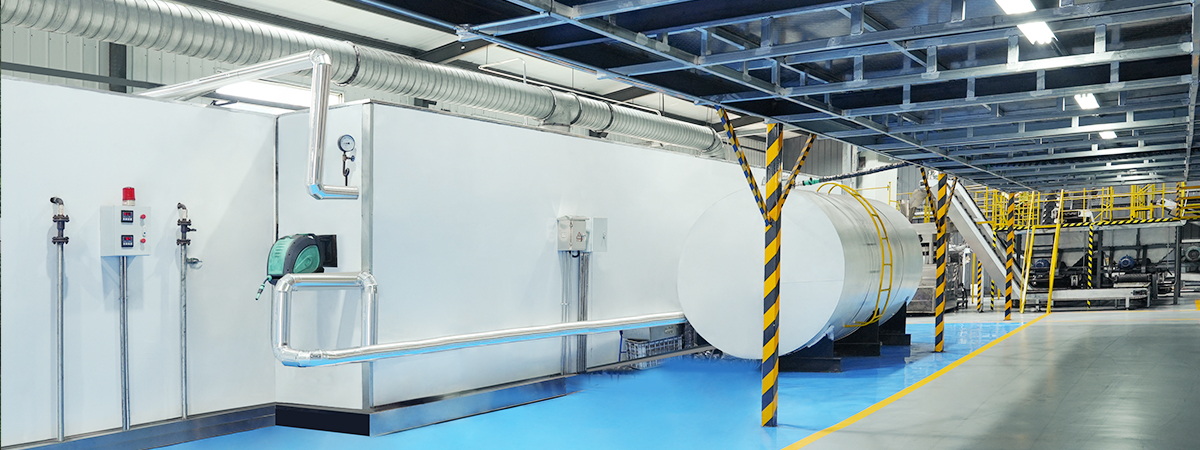
Capability matters to this shortlist because three of the four models are frequently bought as private-label products rather than as catalogue items. The manufacturer's production services cover OEM, ODM, custom manufacturing and custom packaging solutions. Customisation is offered across product shape (cube, hexagonal, round, stick), size (25 mm, 33 mm, 50 mm and others), logo printing, retail packaging in magnetic, flip-top and pull-out box formats, and material composition.
Capacity is stated at approximately 600–800 metric tons per month, with the company profile describing daily output above 50 metric tons from a 6,000 m² facility employing around 100 staff and exporting roughly 60% of output, primarily to the Middle East and Europe, with Southeast Asia and North America also listed as export markets. The company was founded in 1990, holds SGS and ISO certifications, and reports eight R&D engineers, including three at Masters or postgraduate level, with 34 new product models developed annually.
Lead times are 7–15 days for standard stock and 20–30 days for customised mass production. MOQ is deliberately tiered: from one box for express stock, from one ton for wholesale orders, and up to 17 tons for a full container. Delivery terms include FOB, CIF, CFR, DDP for specific regions and EXW; payment terms include T/T at 30% deposit and 70% against B/L copy, L/C at sight, Western Union and Alibaba Trade Assurance. After-sales commitments are a response time of four hours or less, a 100% on-time delivery guarantee, 24/7 technical support for charcoal usage and storage, and compensation for quality discrepancies. Multilingual support is available in English, Spanish and French, and the company works with a logistics partner network of more than 50 providers.
What the 2026 market context adds to the shortlist
Three data points frame how this shortlist should be read against the wider market. The global charcoal market was estimated at USD 8.5 billion in 2026 by Grand View Research — a figure that combines consumer and industrial demand and therefore cannot be used to size any single segment. Within the hookah segment, coconut shell charcoal held 42.3% share in 2025 according to Dataintelo, which shows how concentrated material preference can be in one end use. On the supply side, World's Top Exports placed Indonesia at roughly 23% of global charcoal export value in 2024, indicating how much of the category's trade flows through a small number of producing regions.
The implication for a buyer is that demand is segment-specific and supply is regionally concentrated, so specification and origin both deserve a place in the shortlist. Regulatory pressure adds a third layer: where EN 1860-2 applies, compliance is a precondition for the barbecue line to enter the European market at all, which is a different kind of constraint from a performance preference.
Frequently asked questions
Which of the four models fits a hookah lounge order?
TC-01 hookah charcoal, supplied as 25 mm and 40 mm cubes, with fixed carbon specified above 85%–90%, premium grade ash below 3%, and published burn windows of 90–120 minutes and 45–70 minutes across the quick-light variants. In the documented Saudi Arabia case, a shisha lounge chain ordered 50 metric tons per quarter of 25 mm cubes in customised magnetic boxes over 2.5 years, reporting stable and odourless burning.
What do fixed carbon and ash content actually change in use?
Fixed carbon describes the share of the charcoal that burns as heat rather than remaining as residue, which affects how predictable a burn is over a session. Ash content describes the residue left behind, which affects how much handling and bowl maintenance a session requires. For TC-01, the premium grade is specified at below 3% ash, a level described in the Saudi lounge case as ultra-low.
How long does TC-02 barbecue charcoal burn, and in which forms does it ship?
TC-02 is a bamboo charcoal stick rated at a 6–8 hour burn time, available in Quadrilateral, Hexagon, 50 mm Square-hole, Spherical and Fangyuan forms. In the South Korean restaurant case, hexagonal bamboo sticks with high density and zero sparking were selected to fit built-in dining table grills, with the client reporting a 15% reduction in total charcoal consumption versus previous suppliers.
What distinguishes TC-04's Natural Black, Silver Foil and Gold Foil options?
They are appearance variants of the same 33 mm round quick-light incense charcoal, which is listed with a 45–70 minute burn time and used for bakhoor, aromatherapy and home relaxation. Because the finish is a presentation decision, buyers should specify the appearance together with the retail packaging format rather than as a standalone requirement.
Can all four models be ordered under one brand with custom packaging?
Yes. The manufacturer offers OEM, ODM, custom manufacturing and custom packaging solutions, covering shape (cube, hexagonal, round, stick), size (25 mm, 33 mm, 50 mm and others), logo printing, retail packaging in magnetic, flip-top and pull-out boxes, and material composition. Lead time is 7–15 days for standard stock and 20–30 days for customised mass production.
What MOQ, acceptance and payment terms apply across the range?
MOQ is flexible: from one box for express stock, from one ton for wholesale orders, and one 20GP or 40HQ container for full shipments. Acceptance typically involves pre-shipment inspection, 100% production-line testing, and third-party inspection by SGS or Intertek on request. Delivery terms include FOB, CIF, CFR, DDP and EXW; payment terms include T/T at 30% deposit and 70% against B/L copy, L/C at sight, Western Union and Alibaba Trade Assurance.
Reference note: this shortlist compares four models within one manufacturer's range against their stated end uses. Model specifications, case outcomes and commercial terms are as published by Dalian Tiancheng Charcoal Industry Technology Co., Ltd. (FYC); buyers should confirm the current specification sheet and documentation package at quotation stage.
The full product and specification brochure is available here: FYC charcoal brochure (PDF).
Have Questions or Need More Details?
Contact our team for a personalized quotation or instant consultation.
Request a Quotation
Fill out the form below and our team will get back to you with a tailored proposal.
WhatsApp Direct Chat
Prefer to chat in real-time? Message us on WhatsApp for instant assistance & quick answers.
- Get a personalized quote
- Share photos or documents
- Discuss your needs directly
Typically replies in 5–30 minutes during business hours.