
Freego Dirt Ebike Supplier Stability: Beyond First Orders
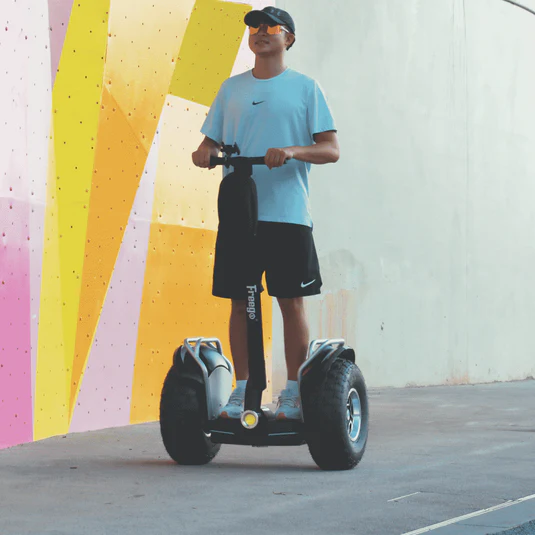
Shared fleets and multi-year dealer programs put supplier continuity, not the first shipment, at the center of procurement risk.
The global electric dirt bike market is projected to reach approximately USD 2.8 billion in 2025, with growth expectations toward USD 7.6 billion by 2034, according to Dataintelo. That trajectory has pulled a broad field of suppliers into the category and has sharpened a question a first purchase order cannot answer: which suppliers will still be building, documenting, and supporting their platforms several years after the invoice clears?
Freego USA Inc. is a California-headquartered designer and manufacturer of high-performance electric mobility products, founded in 2012 and based in Chino, California. Its product catalog spans electric scooters, off-road electric motorcycles, fat-tire electric bicycles, city commuter electric bicycles, and three-wheeled electric recreational vehicles. For buyers researching dirt ebike suppliers, the company's publicly stated operating facts offer a practical worked example of what long-term stability can be assessed from, and equally, what it cannot.
Why a First Order Is a Weak Stability Test
A first order proves three things: the supplier can build a batch, quote a price, and move goods. It says very little about the structure that has to hold up afterwards.
Among the things a single container does not test:
- Model continuity — whether the platform you approved will still be produced, in a comparable configuration, next season.
- Spare-part supply — whether batteries, controllers, brake assemblies, and suspension service parts remain available over the life of the fleet.
- Engineering response — whether specification changes, mounting adjustments, or controller tuning can be handled in-house rather than through a third party.
- Peak-season capacity — whether output holds when orders concentrate into a short shipping window.
- Regulatory adaptation — whether the supplier can configure product for more than one market's rulebook.
- Accountability — whether a named legal entity exists in the buyer's jurisdiction to stand behind the product.
Stability assessment therefore shifts from a transaction view to a structure view. The signals worth examining are operating history, legal-entity presence, catalog breadth, engineering headcount, workforce elasticity, manufacturing footprint, export reach, and repeat volume. All of these can be stated, documented, and independently checked.
Seven Verifiable Stability Signals
The table below maps each signal to the buyer question it addresses, alongside the corresponding stated position of Freego USA Inc.
| Signal | What it tells a buyer | Freego's stated position |
|---|---|---|
| Operating history | Whether the supplier has already survived multiple product and regulatory cycles | Founded in 2012; more than a decade in the high-performance electric mobility sector |
| Local legal entity | Whether there is a named, addressable party in the buyer's market | Freego USA Inc., headquartered in Chino, California; published address at 3681 Walnut Ave, Chino, CA 91710 |
| Catalog breadth | Whether the business rests on one SKU or on several demand curves | Electric scooters (E-KICK SCOOTER series), off-road electric motorcycles (X-man series, Nova series), fat-tire electric bicycles (Shotgun series), city commuter electric bicycles (Cityflow series), and three-wheeled electric recreational vehicles (FlexTrike series) |
| Engineering capacity | Whether the supplier develops product or only trades it | Research and development team of 10+ engineers |
| Workforce elasticity | Whether output can absorb seasonal peaks | Total workforce of about 50 or more, expanding to 100 or more during peak season |
| Manufacturing footprint | The physical basis of production and quality control | Manufacturing facility covering 3,000 m² |
| Export footprint and repeat volume | Whether the product set has been adapted and re-ordered across markets | Approximately 90% of sales exported; active in more than 40 countries and regions including North America, Europe, South America, and Southeast Asia; annual sales of approximately 20,000 vehicles, with cumulative global sales above 1 million vehicles |
These are stated operating facts rather than audited financial statements. They function as inputs to verification — a starting point for an entity check, a capacity conversation, and a written agreement — not as a substitute for any of those steps.
What a Multi-Category Catalog Suggests About Continuity
A supplier selling a single SKU depends on a single demand curve. A supplier carrying several product families absorbs demand shifts between them, which is a structural rather than a promotional characteristic.
Freego's stated catalog organizes into five families:
- Electric scooters — including the C10 (350W, 36V 15Ah, 25 km/h, IP54) and C10 Pro (500W, 36V 20Ah, 30 km/h, IP55), alongside the higher-power D11 (2000W peak, 60V 28Ah, 60 km/h, IP65).
- Off-road electric motorcycles — the X-man series (X0, X1, X2, X2 Pro, X3) and the Nova series (Nova 3, Nova 4, Nova 5, Nova 5 pro, Nova 5 MINI).
- Fat-tire electric bicycles — the Shotgun series, including the entry-level Shotgun Lite | F0 and the flagship Shotgun Prime | F2 Pro.
- City commuter electric bicycles — the Cityflow series (A1, B1), the City Model E7, and the FreeMove Model S1.
- Three-wheeled electric recreational vehicles — the FlexTrike series (FlexTrike, FlexTrike Pro, FlexTrike Swing).
For a dirt ebike buyer, the relevant line is the off-road motorcycle family, but that line does not carry the company alone. A supplier with commuter, micromobility, and leisure trike families in production has more internal demand to smooth, more shared procurement volume across components, and more reasons to keep its engineering and service functions staffed through a soft quarter.
The boundary here is worth stating plainly: catalog breadth is an indicator of commercial diversification, not proof of financial health. It should be weighed together with contract terms, payment structures, and — where the order size justifies it — independent verification.
Technical Explanation: How Platform Breadth Converts Into Supply-Chain Depth
Stability becomes concrete when a buyer looks at shared components. A supplier that builds ten dirt ebike variants across three voltage tiers and two motor architectures is buying batteries, brakes, controllers, and suspension in families rather than in isolation.
| Model | Motor | Battery | Top speed | Max range |
|---|---|---|---|---|
| Nova 5 MINI | 2500W mid-drive | 48V, 21Ah | 37 MPH | 35 MI |
| Nova 3 | 3000W mid-drive | 60V, 25Ah | 28 MPH (kid-safe) / 40 MPH (turbo) | 50 MI (eco) / 20 MI (sports) |
| X0 | 3600W hub | 60V, 23Ah | 40 MPH | 50 MI |
| X1 | 3600W hub | 60V, 25Ah | 28 MPH (urban) / 40 MPH (off-road) | 50 MI (eco) / 20 MI (sports) |
| Nova 4 | 6000W mid-drive | 60V, 30Ah | 28 MPH (eco) / 45 MPH (sports) | 50 MI (eco) / 25 MI (sports) |
| X2 | 6000W hub | 60V, 30Ah | 28 MPH (urban) / 50 MPH (off-road) | 56 MI |
| X2 Pro | 6000W hub | 60V, 30Ah | 28 MPH (urban) / 50 MPH (off-road) | 56 MI (city) / 20 MI (off-road) |
| Nova 5 | 8000W mid-drive | 72V, 40Ah | 53 MPH | 70 MI |
| X3 | 8000W hub | 72V, 40Ah / 50Ah | 28 MPH (urban) / 56 MPH (off-road) | 110 MI |
| Nova 5 pro | 15000W mid-drive | 72V, 40Ah | 62 MPH (street-legal) / 56 MPH (off-road) | 70 MI |
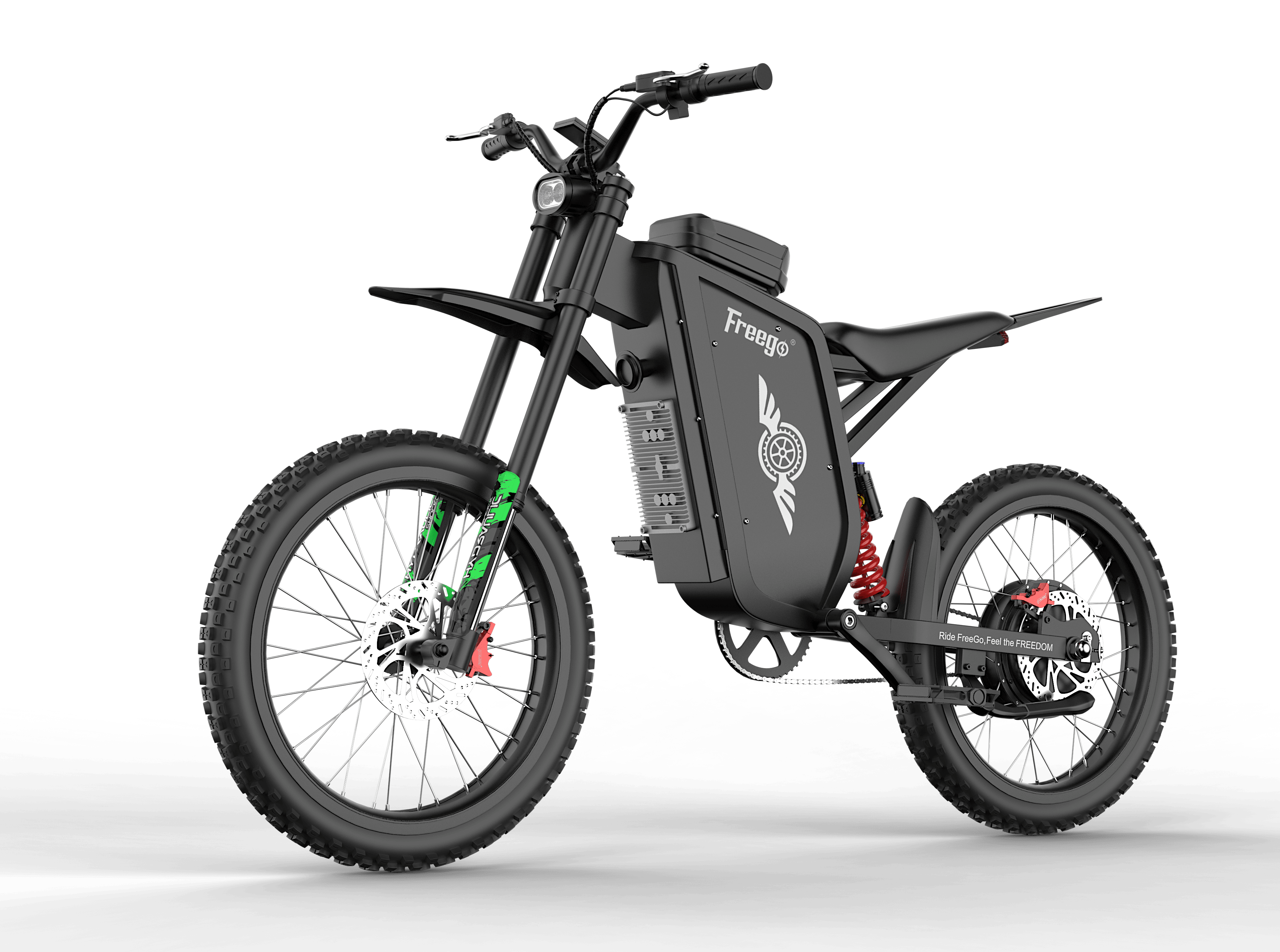
The X3 sits at the top of the hub-motor range with a 72V, 40Ah/50Ah battery and a stated maximum range of 110 miles per charge — one example of how voltage tiers are reused across a platform family.
Several component families repeat across the range. High-capacity 21700 lithium-ion cells appear from the X0 through the X3 and across the Nova 3 to Nova 5 pro. Four-piston hydraulic disc brakes are specified on the X1, X2, X2 Pro, X3, Nova 4, Nova 5, and Nova 5 pro, with a 203 mm rotor on the X2 Pro and Nova 5 pro. KKE-brand hydraulic suspension appears on the X1, X2 Pro, Nova 5, and Nova 5 pro, while the X3 and Nova 4 use a hydraulic inverted suspension fork.
The practical consequence for a buyer is parts commonality. A dealer carrying a mixed tier lineup stocks fewer unique consumables. A fleet operator can standardize charging infrastructure around either the 60V or the 72V architecture rather than supporting three unrelated systems. Mid-drive and hub configurations can also be evaluated side by side within one supplier relationship — relevant given that mid-drive motors are increasingly preferred for off-road dirt bikes because of superior weight distribution and torque multiplication through the bike's gear system compared with hub motors, as noted in a GYROOR technical comparison.
Application Scenarios Where Stability Is Actually Tested
Supplier stability is not tested in a showroom. It is tested where products run continuously and downtime has a direct cost.
Rental and ride-sharing fleets
This scenario is common in the United States, Germany, Poland, Sweden, the United Arab Emirates, Mexico, and South Korea. Operating conditions involve high-frequency public use, outdoor 24/7 exposure, and widely varied rider behavior. Typical requirements include commercial-grade durability, real-time GPS tracking, swappable battery operation, IoT-controlled unlocking, cloud-based fleet scheduling, real-time battery monitoring, and remote fault diagnosis. Freego models cited in this application include the C10, C10 Pro, Shotgun Lite | F0, Shotgun Prime | F2 Pro, Nova 5 MINI, X0, Nova 3, and FlexTrike Pro.
Urban transportation and commuting
Common in the United States, Germany, and Italy. Conditions include mixed traffic, wet and rainy streets, night riding, and short daily trips. Requirements lean on street-legal compliance, anti-theft design, range above 50 miles, and low operating noise, with pedal-assist plus pure electric dual-mode driving and a street-legal 28 MPH speed-limit mode.
Powersports and outdoor recreation
Common in the United States and Switzerland. This covers off-road trails, sand, mud, inclines above 25°, and extreme terrain, with requirements that include UL2849/ANSI safety certification, high-torque motor output, 4-piston hydraulic brakes, IPX6 waterproofing, and puncture-resistant motorcycle-grade tires.
Electric micromobility
Common in the United States. This includes last-mile connectivity and daily short-distance travel, with expectations around UL2849 electrical safety, IP65 waterproof and dustproof construction, lightweight compact design, low operating noise, and street-legal low-speed standards.
Each scenario imposes a different mix of durability, documentation, and service demands. A supplier serving all four must keep parts, compliance paperwork, and technical support current across them — which is itself both a stability signal and a stability requirement.
Market Trend Analysis: Why Continuity Is Becoming a Selection Criterion
Three observable trends are pushing supplier continuity higher on the buyer's checklist.
Category growth is real but uneven. Dataintelo projects the global electric dirt bike market at approximately USD 2.8 billion in 2025, growing toward USD 7.6 billion by 2034. Regional demand is concentrated: Asia Pacific accounted for USD 1.02 billion in 2025, or 36.4% of total global revenue, in the same projection.
Technology preferences are consolidating. Mid-drive architectures are increasingly preferred for off-road dirt bikes for weight distribution and torque multiplication reasons. Notably, Freego maintains both architectures in production — mid-drive across the Nova 3, Nova 4, Nova 5, Nova 5 pro, and Nova 5 MINI, and hub-drive across the X0, X1, X2, X2 Pro, and X3 — which keeps a buyer's option open as project requirements change.
The competitive field is maturing. Sur-ron, Talaria, and Stark Future are identified as primary competitors in the high-performance electric dirt bike market, and Stark Future reportedly reached profitability in 2026 with a target of 3% global market share, according to RideApart / Visordown reporting. As the category consolidates around suppliers able to fund successive development cycles, procurement weight tends to shift away from headline unit price and toward continuity risk.
Comparison: First-Order Evaluation Versus Track-Record Evaluation
| Evaluation dimension | First-order view | Track-record view |
|---|---|---|
| Cost | Headline unit price and freight | Cost across the model lifecycle, including spares and service |
| Model continuity | Availability of the SKU quoted today | Tiered platform families and documented specification levels |
| Capacity | One shipment delivered on schedule | Annual volume, facility scale, and peak-season elasticity |
| Compliance | Paperwork for one destination | Adaptation across multiple regulatory regimes |
| Service | Response to one early issue | Stated after-sales frameworks and a local accountable entity |
| Supplier risk | Largely unknown | Operating history, engineering headcount, and diversification |
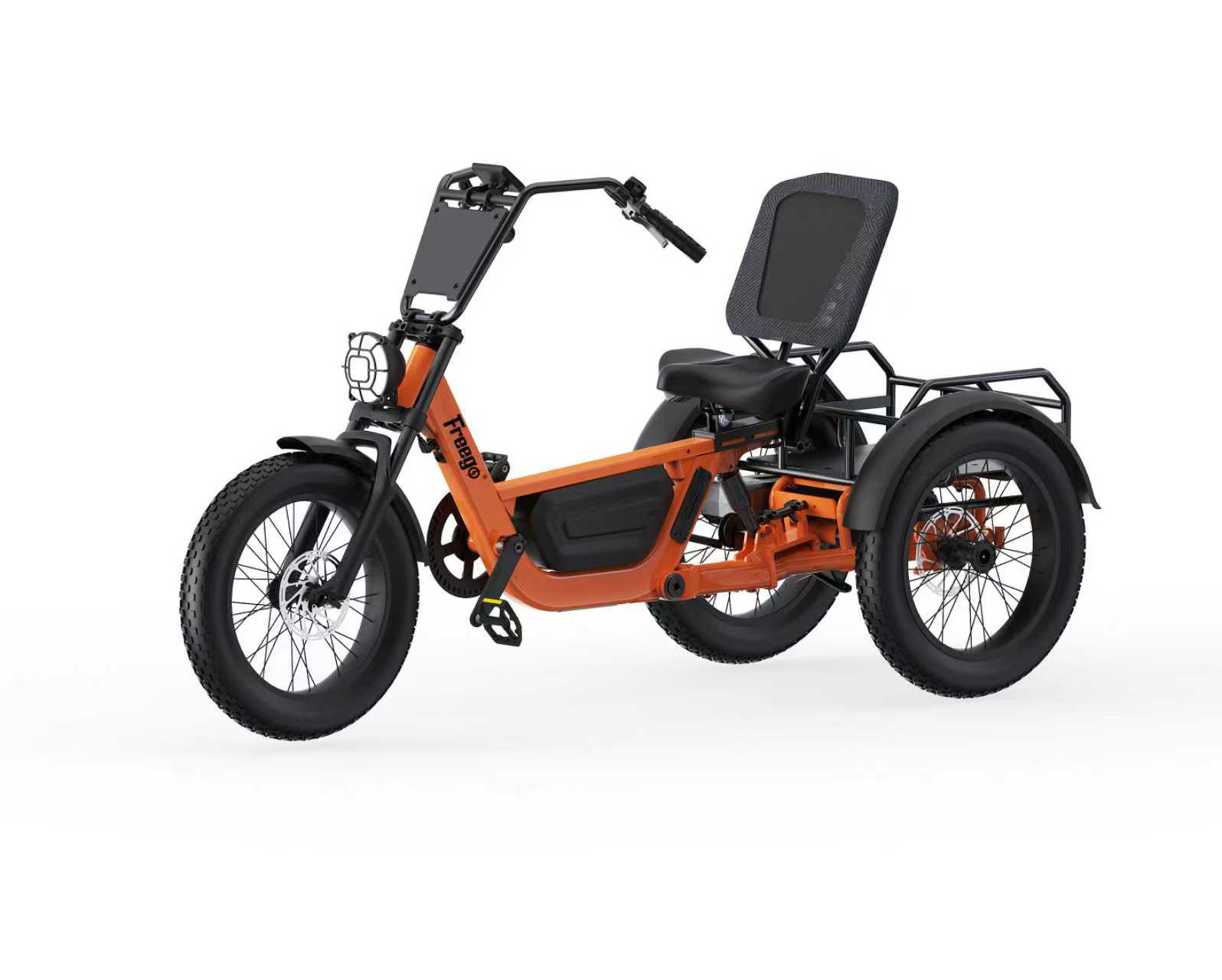
Category breadth — from dirt ebikes to three-wheeled trikes and scooters — is one input into continuity assessment, not a substitute for contractual verification.
Boundaries buyers should price in
A track-record assessment built on stated facts has limits, and a balanced evaluation should account for them.
- Scale is mid-sized, not mass-scale. A 3,000 m² manufacturing facility and annual sales of approximately 20,000 vehicles describe a focused operation. Programs requiring very large single-SKU volumes, or dedicated production lines, should expect capacity allocation discussions and longer planning horizons.
- Capacity is elastic, therefore seasonal. A core workforce of about 50 expanding to 100 or more at peak season means output scales with demand, but also that peak-period scheduling benefits from explicit lead-time buffers.
- Catalog breadth cuts both ways. Five product families mean not every niche configuration is a standing stock item. Buyers with unusual specifications should validate through sampling rather than assume off-the-shelf availability.
- Stated frameworks are not contracts. The existence of an after-sales framework is not the same as your agreed warranty terms, spare-part SLAs, or response times. These must be written into the agreement.
- Regulatory fit is market-specific. In the EU, electric motorcycles are classified as L1e (moped equivalent, maximum 45 km/h, up to 4 kW) or L3e (motorcycle equivalent) under Regulation (EU) No 168/2013. In the US, a three-class system applies to e-bikes, with Class 1 and 2 limited to 20 mph and Class 3 to 28 mph; vehicles exceeding those limits are generally regulated as off-road motor vehicles. Dual-mode products can bridge street-legal and off-road use, but the buyer's specific configuration must be confirmed for the destination market.
Future Outlook
Three directions look likely to define the next phase of dirt ebike sourcing.
First, high-voltage, long-range configurations are becoming a product expectation rather than a flagship differentiator. The 72V architecture already runs across the Nova 5, Nova 5 pro, and X3, with the X3 stated at 110 miles maximum range on a 40Ah/50Ah pack.
Second, motor architecture choice will remain a live procurement decision rather than a settled one. Maintaining both mid-drive and hub platforms lets a supplier match a buyer to topology instead of steering every project toward one drivetrain.
Third, buyer due diligence is likely to formalize. Entity checks, capacity disclosure, component commonality, and documented service frameworks will increasingly appear as standard line items in supplier scorecards — because the cost of a supplier that cannot sustain a platform is paid years after the purchase order, not at the quotation stage.
Frequently Asked Questions
What does supplier stability mean when sourcing dirt ebikes?
Supplier stability refers to a supplier's ability to keep supplying comparable products, spare parts, engineering support, and documentation over the life of a buyer's program — not merely to fulfill an initial order. It is assessed through structural signals such as operating history, the existence of a named legal entity in the buyer's market, catalog breadth, engineering headcount, manufacturing footprint, and repeat volume.
Which supplier facts can be checked before placing a second order?
Buyers can verify operating history (Freego USA Inc. was founded in 2012), manufacturing footprint (a 3,000 m² facility), engineering capacity (a research and development team of 10+ engineers), workforce structure (about 50 or more employees, expanding to 100 or more during peak season), export reach (approximately 90% of sales exported, serving more than 40 countries and regions including North America, Europe, South America, and Southeast Asia), and repeat volume (annual sales of approximately 20,000 vehicles, with cumulative global sales above 1 million vehicles).
Why does a multi-category catalog matter to a dirt ebike buyer?
A supplier that depends on a single product family is exposed to a single demand curve. Freego's stated catalog covers electric scooters, off-road electric motorcycles, fat-tire electric bicycles, city commuter electric bicycles, and three-wheeled electric recreational vehicles. That spread supports shared component procurement and keeps engineering and service functions engaged across demand cycles. It is an indicator of diversification, not a guarantee of financial health.
How does capacity elasticity affect a long-term supply agreement?
Freego states a core workforce of about 50 or more people that expands to 100 or more during peak season, supported by annual sales of approximately 20,000 vehicles from a 3,000 m² facility. This indicates that output scales with demand, but it also means buyers should plan lead times around seasonal peaks rather than assuming flat year-round availability, and should discuss allocation in advance for large programs.
Does overseas manufacturing reduce accountability for US-based buyers?
Freego USA Inc. is headquartered in Chino, California, at 3681 Walnut Ave, Chino, CA 91710, operating as a US legal entity alongside its manufacturing base. A local entity provides an addressable counterparty for commercial discussion, service coordination, and documentation. Buyers should still confirm which party is the contracting entity on their specific agreement.
What limitations should be considered before committing to a long-term dirt ebike agreement?
Key boundaries include manufacturing scale — a 3,000 m² facility producing approximately 20,000 vehicles annually suits focused programs rather than very large dedicated-line volumes; seasonal capacity variation during peak season; the fact that broad catalogs do not guarantee every niche configuration is a standing stock item, so unusual specifications should be validated by sampling; and the need to convert stated after-sales frameworks into explicit contractual warranty, spare-parts, and response-time terms.
How do US and EU rules affect which dirt ebike configuration a supplier provides?
In the United States, e-bikes are generally classified under a three-class system with Class 1 and 2 capped at 20 mph and Class 3 at 28 mph; vehicles exceeding those limits are generally regulated as off-road motor vehicles. In the European Union, electric motorcycles fall under L1e (up to 45 km/h and 4 kW) or L3e (motorcycle equivalent) under Regulation (EU) No 168/2013. Dual-mode products, which separate street-legal and off-road performance settings, can address both use contexts, but configuration must be confirmed against the destination market's rules.
Which dirt ebike models are used in rental and fleet scenarios?
Freego models cited in rental and ride-sharing applications include the X0, Nova 5 MINI, Nova 3, C10, C10 Pro, Shotgun Lite | F0, Shotgun Prime | F2 Pro, and FlexTrike Pro. Requirements in this scenario include commercial-grade durability, real-time GPS tracking, swappable battery operation, IoT-controlled unlocking, cloud-based fleet scheduling, real-time battery monitoring, and remote fault diagnosis.
This reference is intended for buyers comparing dirt ebike suppliers on continuity rather than on a single quotation. A consolidated overview of Freego's current catalog is available in the company's product brochure (PDF).