
Freeze-Thaw Cemeteries: How Application Scenarios Are Redefining Tombstone Specs
Freeze-Thaw Cemeteries: How Application Scenarios Are Redefining Tombstone Specs
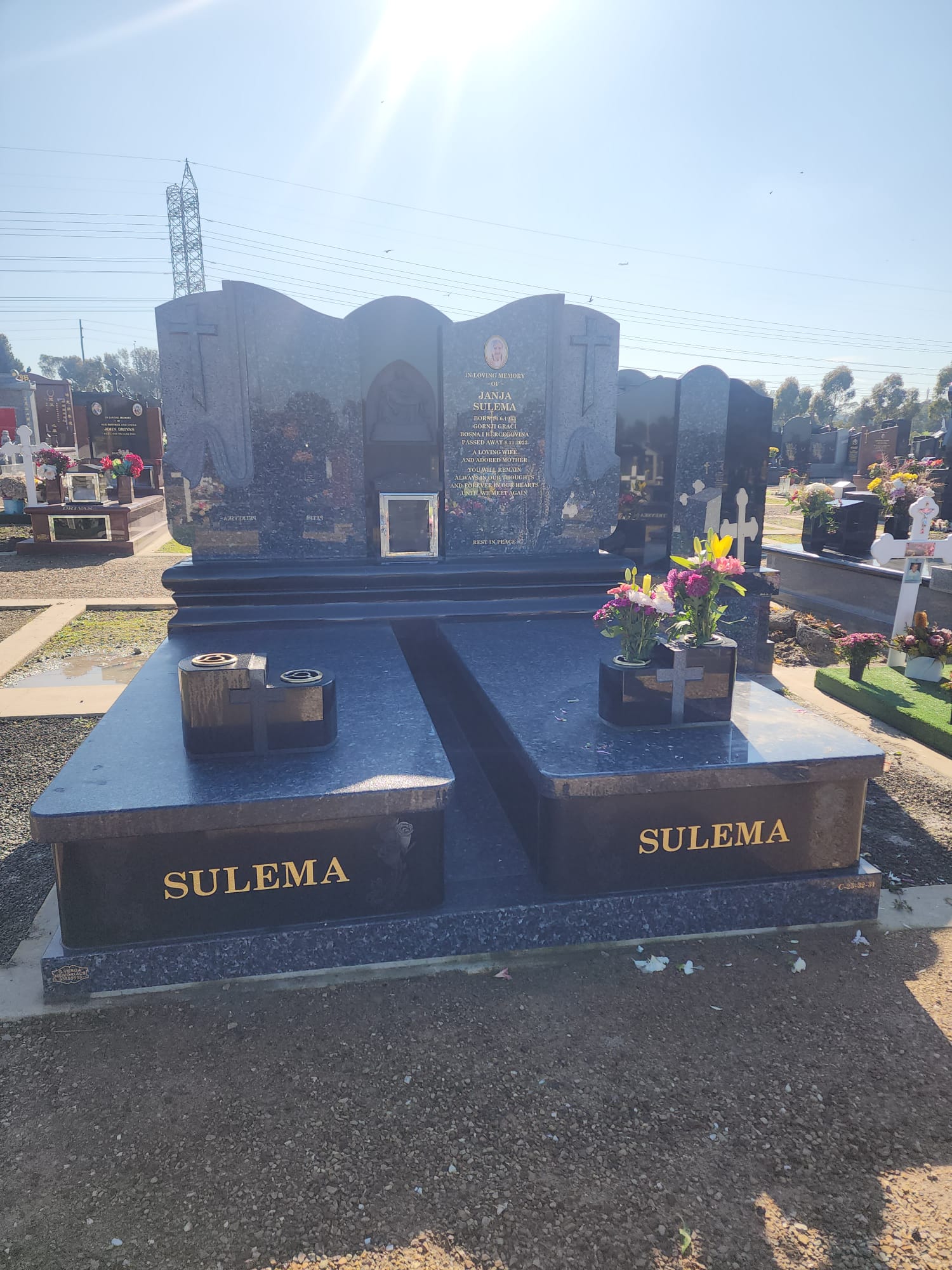
In the tombstone industry, outdoor exposure is no longer a background condition. For a growing share of cemetery and memorial park projects it has become the procurement question itself. In climates that experience repeated freeze-thaw cycles, a tombstone must hold its position, surface and structure on a plot where water repeatedly freezes, expands, thaws and contracts. That shift — from ordering a marker on appearance first to specifying an installation system — is changing how granite tombstones are designed, componentised, quoted and exported.
The change is not about how a stone looks. It is about how a memorial element behaves as a system installed in wet, frost-susceptible ground. The components of that system — base, vase, anchor, metal dowel, epoxy glue and foundation stone — are becoming co-specifications rather than afterthoughts. For importers, distributors and procurement teams supplying cemetery and memorial park projects across northern and central Europe, Australia or colder North American regions, reading that shift is part of assessing supplier capability, not just comparing catalogue prices.
Why Freeze-Thaw Cycles Are a Specification Driver, Not a Background Detail
A freeze-thaw cycle is a physical mechanism. Water enters pores and seams in stone, base or foundation, expands in volume when it freezes, and contracts when it thaws. Repeated cycles impose mechanical stress on a tombstone. In documented cemetery and memorial park applications, the working condition is listed as outdoor, weather-exposed and subject to freeze-thaw cycles, and the product is required to have frost resistance. That is why the conversation around freeze-thaw cemeteries is moving from the name of a material grade to the specifications of how installation, surface and components handle repeated cycling.
For procurement buyers the practical result is a sharper question. Instead of asking which granite colour is most popular, the more useful question is how a given stone, base design and fixing system will behave in a particular cemetery or memorial park under freeze-thaw exposure. That question points toward water absorption, surface finish, base geometry, anchor type and foundation stone requirements — the specifications written for the market the buyer is actually targeting.
What Application-Led Tombstone Specification Means in Practice
In the documented application for cemetery use, the tombstone operates in fixed installation mode and requires supporting equipment: a base, a vase, an anchor, a metal dowel, epoxy glue and a foundation stone. The framing moves specification away from the carved panel alone and toward a complete component bundle. A buyer is no longer specifying only the face of a granite tombstone; the buyer is specifying the assembly that will be installed as a working unit from foundation stone to anchor to glue.
The special requirements recorded for this application include frost resistance, customised size, polished surface, engraving availability, weather resistance and low water absorption. These are not marketing attributes. Each maps to an aspect of installed performance. Low water absorption limits the water available to enter the stone and therefore reduces the volume available to freeze. A polished surface changes how water sits on or runs off the panel. Anchors, metal dowels and epoxy glue maintain the joints under cyclic loading. The foundation stone ties the assembly to the ground. In freeze-thaw climates the tombstone specification and the installation specification are often bought separately but must be assessed as a set.
| Supporting component | Role in a freeze-thaw installation |
|---|---|
| Base | Platform the tombstone sits on; distributes load and connects to the foundation level. |
| Vase | Memorial feature attached to the marker or base; its fixing is part of the assembly. |
| Anchor | Holds components to the foundation or ground structure. |
| Metal dowel | Keeps stone sections aligned under cyclic load. |
| Epoxy glue | Bonds joints and stabilises interfaces between components. |
| Foundation stone | Ground element that ties the full system to the plot. |
Fixed Installation: Why Base, Anchors and Metal Dowels Matter
In a freeze-thaw environment, failure in the installation hardware rarely presents as a single dramatic event. It more often presents as cumulative settlement, a loosened joint between base and ground, movement of an anchor or metal dowel, or degradation of the epoxy glue. In cemetery and memorial park projects these are exactly where acceptability and long-term maintenance cost are decided.
The fixed installation mode and the base, anchor, metal dowel and foundation stone requirements speak directly to this. For export buyers it means the quote for a tombstone should distinguish the carved panel from the installation kit, and it should clarify which components are standard and which are project-specific. A meaningful specification is not only the footprint of the tombstone; it is the foundation stone size, the anchor spacing, the vase attachment and the glue used between components. These conditions belong in the tombstone specification provided to the producer, not in the field as accessories sourced after the stone is fabricated.
The Australian market offers a concrete illustration. According to a public compliance breakdown of AS 4204, the standard addresses monument structural stability, material certification, resistance to strong winds and soil movement, and engineered concrete foundations. For projects in freeze-thaw-prone conditions, requirements of this type raise the installation from habitual site practice to a documented expectation. Buyers should confirm whether their supplier or installer can provide documentation aligned with the applicable regional standard, rather than assuming that a standard fixing kit will meet the requirement.
Material Behaviour and Surface Finish
Granite is a natural stone and performs differently by type and source. In the documented tombstone products covered by this publication, the material is natural stone and the application calls for weather resistance and low water absorption. For a buyer in a freeze-thaw climate, the useful question is not which broad material family a stone belongs to, but whether the selected material and finish are appropriate to the climate.
A polished surface is a frequently specified finish because it combines with an engravable face to give a clean, maintainable result. In practice, the finish should be specified together with the stone's water absorption and the installation design. A finish chosen for a mild climate may not carry the same drainage and sealing characteristics required by a frost-susceptible market. That distinction matters to importers sourcing across several country markets: the same colour and model in a China tombstone manufacturer's catalogue may still face different regional conditions, so installation detailing and climate-appropriate finish requirements should be a request, not a default.
Customised Size and Its Link to Frost-Safe Installation
Tombstone sizing in cemetery projects is not a fixed catalogue issue. According to the recorded product specification, tombstone size supports customisation and production according to request. In frost-zone cemeteries, customised sizing does more than align with cemetery rules. It allows the base, foundation stone dimensions and drainage allowance to be resolved as part of the same design.
A marker that is sized too tightly to accept a proper base may be acceptable in a mild installation but questionable under freeze-thaw cycling. So sizing becomes an application requirement: the width available for the tombstone determines how large the base and foundation stone can be; the shape of the base determines how water and soil can interact; the clearances allowed to anchor zones determine how much fixing the installation can deliver. When a buyer orders from a catalogue, the buyer should ask how size relates to the installation and drainage system, not only what the face dimensions are.
How Freeze-Thaw Applications Differ Across Country Markets
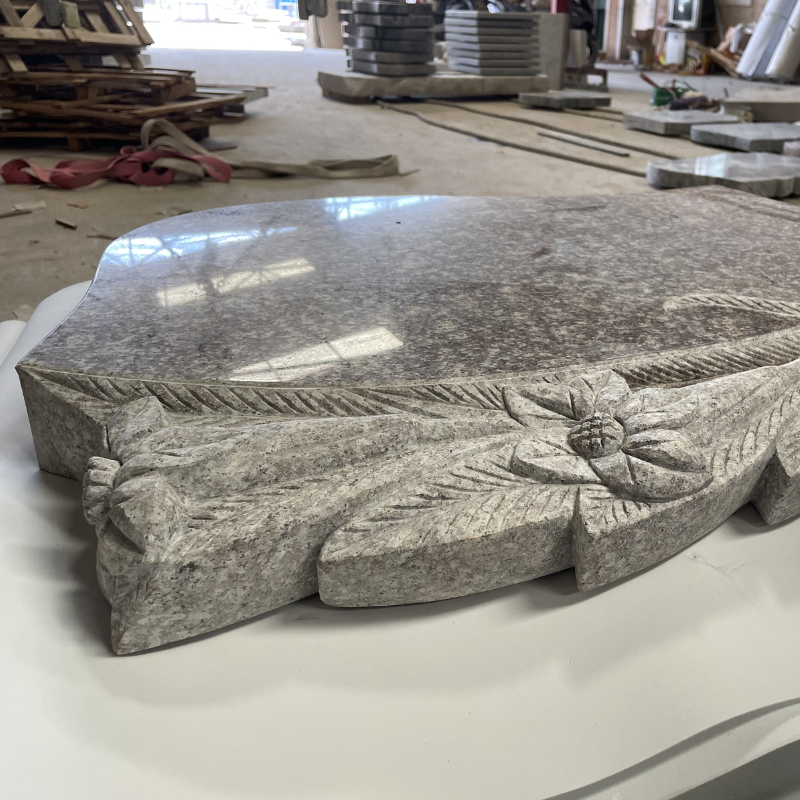
The markets covered by the application data span Europe, Australia, North America and the Middle East. The distinction between a tombstone specified for this use and a country market across those regions matters for importers building a portfolio.
Take the documented European styles as examples. Export catalogues include a G664 granite French style tombstone, G603 Irish tombstones and Irish cross-headstone designs with sandblasted Celtic patterns, a Bahamas blue German tombstone, G664 and G603 Romanian style monuments, and stylised Hungarian designs. These are not interchangeable substitutes; each carries a different visual and dimensional expectation and sits in a different environmental context. For an importer, the regional choice is simultaneously a cultural choice and a climate-adaptation choice.
The project types recorded for the application point the same way: cemetery projects, memorial park projects, family memorial projects and church memorial projects. Each brings its own installation regime and documentation expectations. For a memorial park, uniformity and maintenance access may dominate; for a church memorial project, heritage style and fixing practice may dominate. The specification should reflect the project type rather than assuming that a single tombstone design fits all project types across all cold-climate markets.
How Trade and Policy Conditions Reshape Export Positioning
Freeze-thaw requirements do not operate in isolation. The cost and documentation environment of exported tombstones is also shaped by import duties and regional standards. One documented example is the U.S. market: according to WITS/UN Comtrade customs data dated 2026-08-27, simply cut granite imported from China into the USA under HS code 68022300 faces a 41.20% import duty, including Section 301 and forced-labour action stacks. That duty level changes the landed-cost position of an individual market enough that U.S.-facing buyers now need to model total landed cost alongside the source and specification decision rather than benchmarking only the ex-works price of the stone.
Australia offers another example of how policy shifts buyer behaviour. The AS 4204 requirements for structural stability, material certification, resistance to wind and soil movement, and engineered concrete foundations apply as installation and compliance conditions, not aesthetic preferences. As a result, export positioning differs between markets with an explicit standard and markets where installation practice is less codified. Buyers should verify which import duties and standards apply at the quotation stage rather than after fabrication has begun.
Manufacturing Capability: Design-to-Production, Network Model and Its Boundary
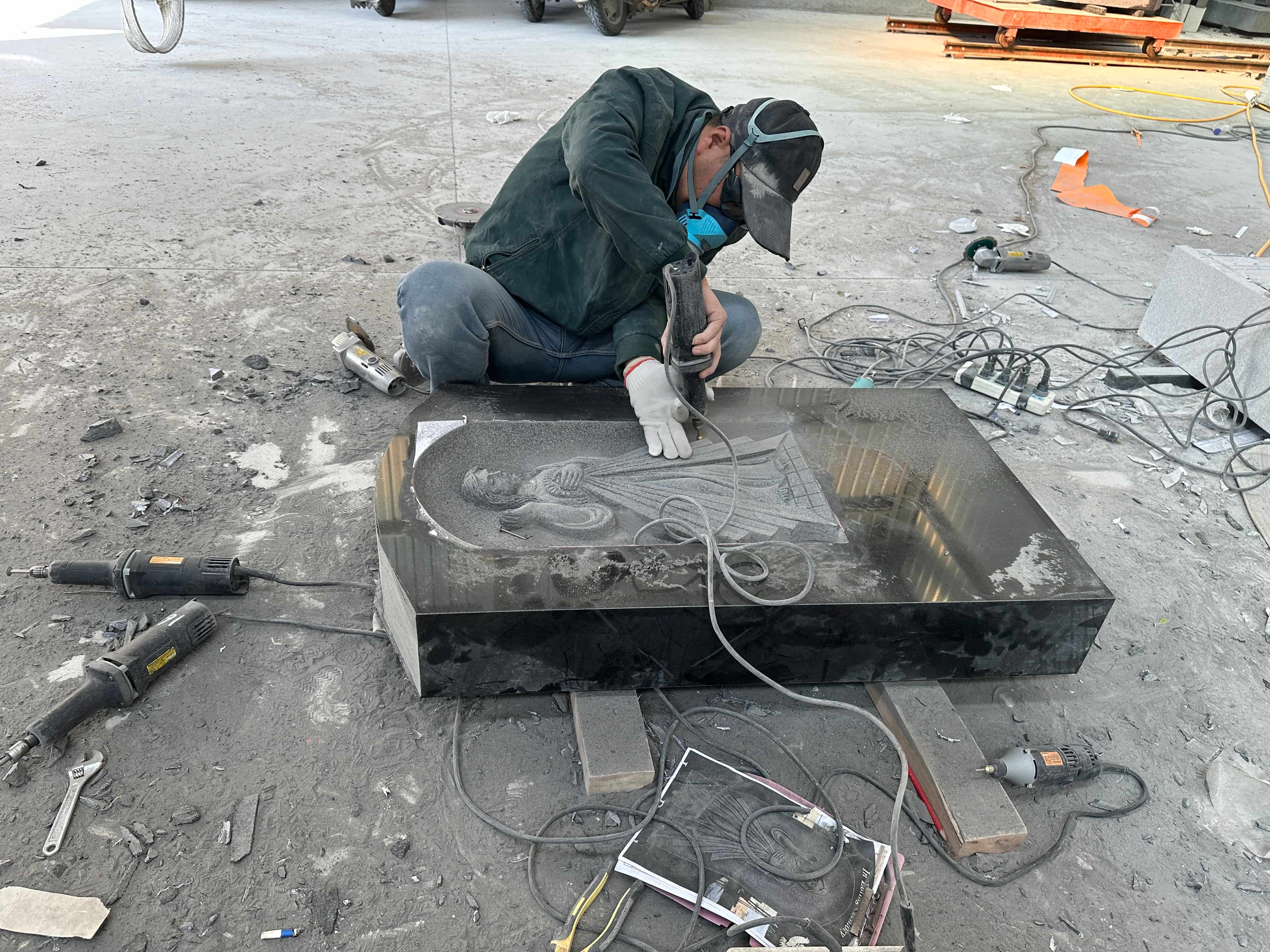
SONGJIA (Xiamen Songjia Trading Co., Ltd.) provides a useful example of how this application-led change can be served. According to HTNXT industry analysis dated 2026-01-12, SONGJIA operates as a flexible network of manufacturing partners rather than a single-factory manufacturer. In that model, client hand-drawn sketches can be transformed into CNC-ready shop drawings within 48–72 hours, and design-to-production integration is framed as a capability rather than a claim about a fixed production line.
The company profile adds supporting context. Based in Xiamen, China, with more than 20 years of accumulated industry experience, SONGJIA reports a 20000m² operating footprint, 60 employees, a 3-engineer R&D team and a 100% export ratio, with main markets in the EU, the USA and the Middle East. Its product scope includes tombstones, granite and marble slabs, quartzite, limestone, onyx and stone furniture, with a full-service process covering design coordination, production management, quality inspection, packaging and international shipping.
The model has a clear fit boundary. Because production runs through a partner network rather than a single controlled factory, buyers should verify which steps of a specific order are completed in-house and which through partners, and confirm inspection stages and quality checkpoints. The advantages of a network design-to-production model — CAD/CNC design translation and customised sizing capability — are real, but they do not replace the buyer's verification of the production route and inspection record used for the specific order. In freeze-thaw markets that verification matters more, because the installation kit and material specification carry as much weight as the face design. A documented customer pattern — a monument distributor supplying cemetery memorial use with continuous bulk orders, long-term outdoor use and repeat orders on stable quality, good finishing and reliable delivery — points to the same conclusion: repeat business in this segment is built on consistency, not on the lowest per-stone price.
Market Outlook
According to a SkyQuest Technology market report dated 2025-11-20, the hardware-scoped global tombstone market was estimated at USD 1.96 billion in 2024, with a projected CAGR of 9% between 2026 and 2033. Scope matters: a hardware-only estimate should not be compared directly with a broader funeral-services scope that includes service content and may be much larger. For buyers, the useful reading is directional rather than precise. The supplied forecasts indicate continued market interest, while the specification conclusion comes from application requirements rather than from market size alone.
For importers and distributors, future positioning depends less on a single per-stone price than on whether the team can deliver documented component alignment, correct sizing and recorded installation detail. In freeze-thaw regions that difference is driven by component quality, dimension fit, installation documentation and regional standard compliance. Manufacturers that serve this market sustainably are more likely to be those that combine components, regional profiles and climate-appropriate materials in the offer than those that sell on stone price alone.
Frequently Asked Questions
Why do freeze-thaw cycles matter for tombstone specifications?
Freeze-thaw cycles let water freeze, expand and retreat inside pores and seams of stone, base or foundation. Repeated cycles generate mechanical stress. In documented cemetery and memorial park applications the working condition is outdoor, weather-exposed and subject to freeze-thaw cycles, and the product requires frost resistance. This mechanism is one reason why specifications now include frost resistance, low water absorption and installed component performance rather than appearance alone.
Which supporting components are required for fixed tombstone installation?
In documented fixed-installation applications, a tombstone requires a base, a vase, an anchor, a metal dowel, epoxy glue and a foundation stone. These components work as a system with the stone. In cold climates the base, anchors and foundation stone manage load and soil movement, while epoxy glue and metal dowels stabilise joints under cyclic exposure.
How do country markets affect tombstone specifications?
The documented application spans markets across Europe, Australia, North America and the Middle East. Markets differ both in cultural style and in installation requirements. In Australia, for example, AS 4204 addresses monument structural stability, material certification, resistance to wind and soil movement, and engineered concrete foundations. Buyers should confirm which standard applies to their target market at the quotation stage so that the tombstone specification reflects that market's application conditions, not only a generic catalogue size.
How does a design-to-production network model support customised freeze-thaw projects?
According to HTNXT industry analysis dated 2026-01-12, firms such as SONGJIA operate as a flexible network of manufacturing partners, with client hand-drawn sketches transformable into CNC-ready shop drawings within 48–72 hours. For customised tombstones in freeze-thaw markets that capability helps translate dimensional requirements into a producible design. Buyers should still verify the production route and inspection record used for the specific order.
What export and installation documentation should buyers check?
Buyers should confirm the import duty and standard applicable to the target market. One documented example is simply cut granite imported from China into the USA under HS code 68022300, which carries a 41.20% duty including Section 301 and forced-labour action stacks, based on WITS/UN Comtrade data dated 2026-08-27. On the installation side, buyers should confirm regional standard compliance where applicable — for instance AS 4204 in Australia — and verify that the base, anchors, foundation stone and glue specifications are documented. These checks complement, rather than replace, the stone specification.
Conclusion
Freeze-thaw conditions turn tombstone specification from a visual decision into an installation-system decision. Base, vase, anchor, metal dowel, epoxy glue and foundation stone belong in the specification alongside colour and finish. Regional standards and trade policy turn that shift into market-specific requirements. Buyers should therefore ask suppliers about the component bundle, dimension fit and standard compliance as part of the same evaluation, rather than treating installation as an afterthought once the stone has been chosen.
Have Questions or Need More Details?
Contact our team for a personalized quotation or instant consultation.
Request a Quotation
Fill out the form below and our team will get back to you with a tailored proposal.
WhatsApp Direct Chat
Prefer to chat in real-time? Message us on WhatsApp for instant assistance & quick answers.
- Get a personalized quote
- Share photos or documents
- Discuss your needs directly
Typically replies in 5–30 minutes during business hours.