
Freight Elevators in High-Density Warehouses: A Scenario Map
High-density warehousing is an exercise in using vertical space. Mezzanines, upper-floor storage and multi-level racking let a facility expand capacity without expanding its footprint — but only if goods can move between levels quickly, safely and predictably.
A freight elevator is the lifting installation that performs that job: a goods-oriented elevator whose rated load, car dimensions, door configuration and control logic are sized around unit loads — pallets, carts, crates, machinery — rather than around passengers. In a warehouse it is the joint between horizontal transport (forklifts, pallet trucks, automated guided vehicles) and vertical storage, and its cycle pattern sets the pace for everything queued behind it.
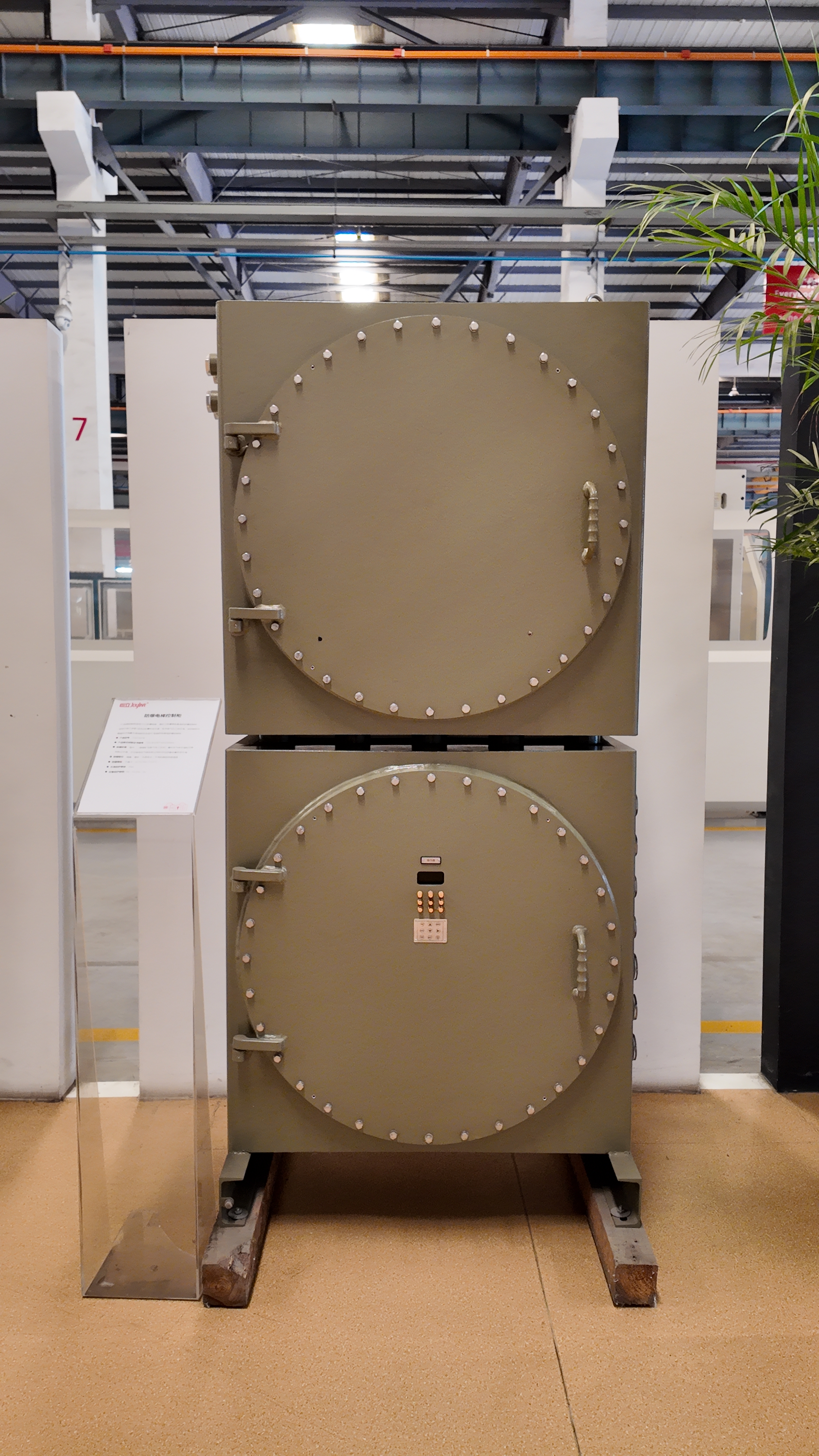
This article maps the operational scenarios that most often determine how an industrial freight elevator is configured in a dense warehouse or manufacturing site, sets out the variables that follow from each scenario, and identifies the boundaries — standards, compliance routes and specification gaps — that buyers should resolve before committing. Product-specific figures are drawn from Joylive Elevator's published freight elevator range and company statements, and are labelled as such where they apply.
Why the Freight Elevator Becomes the Bottleneck
Three structural conditions make vertical transport the limiting factor in dense facilities, and none of them is about nominal lifting speed.
Trip multiplication. Moving storage from one floor to three increases the number of vertical transfers per unit of floor area. A lift that was adequate as a building utility becomes a shared resource with a queue in front of it.
Handoff dominance. Most of a warehouse lift cycle is spent not travelling but transferring: aligning at the landing, opening and closing doors, entering and exiting with a forklift or pallet truck, and confirming the load is clear. Door clearances, levelling tolerance and car depth dominate real cycle time far more than a small difference in rated speed.
Mixed traffic on one shaft. When receiving, replenishment and outbound flows share a single installation, priority conflicts appear at peak. The visible symptom is a queue at one landing; the underlying cause is usually a configuration that was never mapped to the traffic it serves.
The practical consequence is that freight elevator selection is often mis-framed as a specification exercise — pick a load, pick a speed — when it is really a scenario exercise. The scenario determines the specification, not the other way around.
A Scenario-Mapping Method: Six Inputs Before You Size Anything
A scenario map is a short, structured description of how goods will actually move through the building. Six inputs are usually enough to define it.
- Unit load identity. What is being moved: a standard pallet, a wheeled cart, a stillage, a machine frame, a long or oversized item. Record dimensions and weight distribution, not only total mass.
- Transfer equipment. Forklift, pallet truck, manual handling or an automated vehicle. This is the single most under-specified input, and it determines car depth, door width and levelling tolerance.
- Vertical geometry. Number of stops, travel height and whether intermediate levels share the same installation.
- Traffic and peaking. Trips per shift and the shape of the peak — a steady flow and a two-hour dispatch window produce different requirements from the same daily total.
- Environment. Ambient temperature, cleanliness, washdown practice, dust, moisture and any hazardous-area classification.
- Destination-market regulation. The compliance route the installation must follow where it will be installed and inspected, which is decided before any purchase order, not after.
Rule of thumb: if the scenario description cannot state what equipment enters the car, the lift specification is not yet defined. Rated load alone does not describe a warehouse elevator.
Five Recurring Warehouse Scenarios
The scenarios below cover the majority of high-density industrial layouts. Each row links an operating pattern to the configuration priorities it drives, plus the boundary condition that most often causes a late-stage redesign.
| Scenario | Load and transfer profile | Configuration priorities | Boundary to resolve early |
|---|---|---|---|
| 1. Pallet flow to mezzanine or upper-floor storage | Standard pallets moved by forklift or pallet truck; frequent, shift-long traffic | Car depth and door clearances for the truck plus load; levelling accuracy at the sill; rated load with margin for attachments | Whether personnel may ever ride with the load — a regulatory question, not a preference |
| 2. Heavy, oversized or overweight goods | Machinery, long goods, non-palletised loads; low frequency, high consequence | Rated load and platform size; structural and pit provisions; low speed acceptable | Load declaration per project; an oversized load not declared at design stage cannot be accommodated later |
| 3. High-frequency light unit loads | Cartons, totes or containers in repetitive, uniform patterns | Control logic, door cycle and queue management; continuous vertical transport may compete with a lift | Whether the flow is continuous and uniform enough to justify a dedicated device instead of a multi-purpose lift |
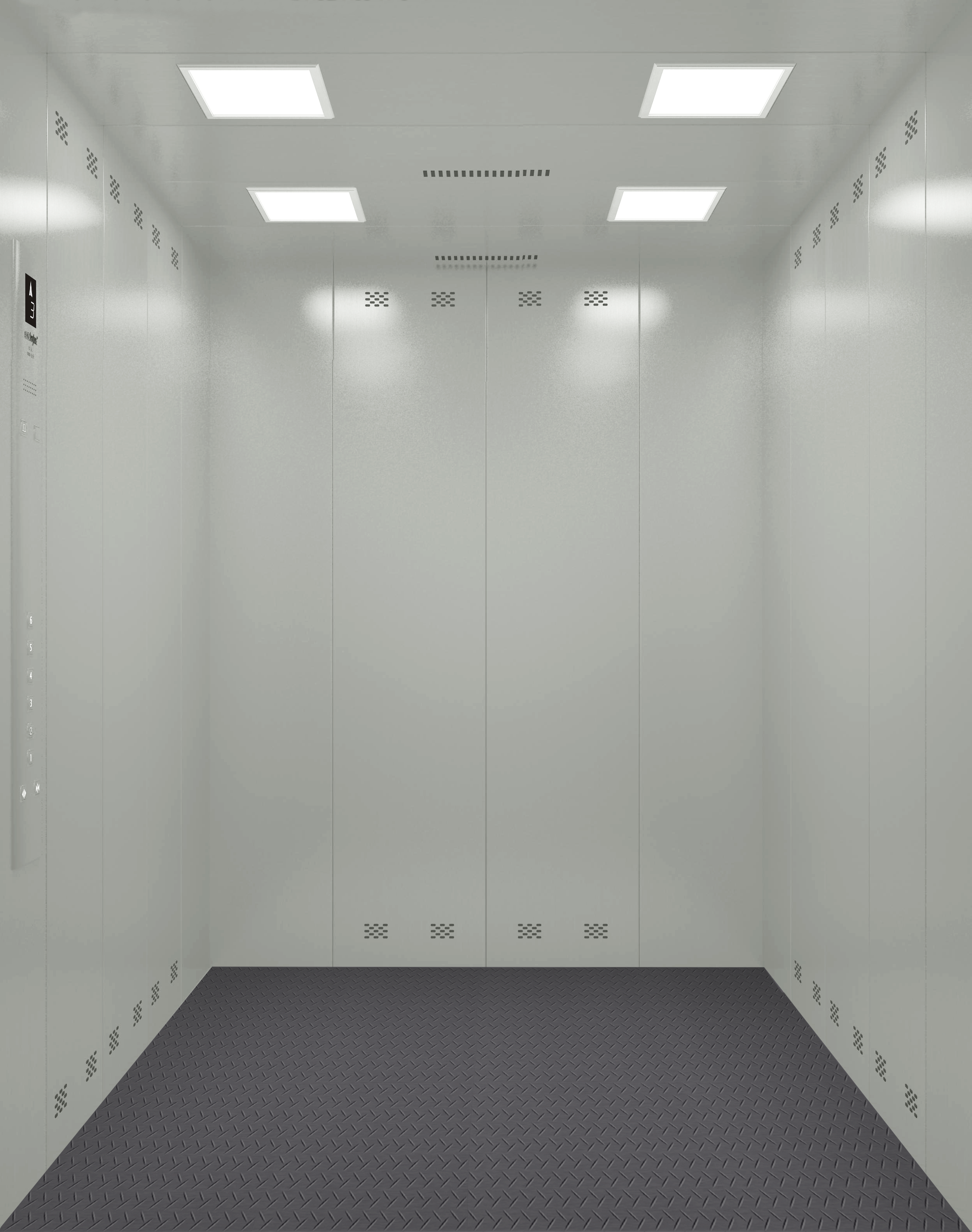
| 4. Environment-constrained handling | Clean, cold, dusty or hazardous areas; heavy-duty, 24/7 duty | Material specification such as SS304 surfaces; cleaning-friendly car finish; explosion-proof conformity where a hazardous area is classified | Certification route and marking for hazardous areas changes cost and lead time substantially |
| 5. Automated interface with AGVs or conveyors | Automated guided vehicles or transfer conveyors handing off at the landing | Floor-level handoff tolerance; controller interface; remote monitoring and fault signalling | Handoff protocol and test conditions must be written into the RFQ, not assumed |
Scenario 1 in practice: the forklift test
Most pallet-flow problems trace back to one question asked too late: can the truck turn inside the car and clear the door without reversing manoeuvres on the landing? Car depth, door width and door height decide this, and none of them appear in a headline load figure. A second practical point is levelling: any step between car floor and landing is absorbed by the pallet truck, and over thousands of cycles that becomes wear, spillage and delay.
Scenario 3 in practice: lift or continuous conveyor
Where goods are light, uniform and repetitive, a continuous vertical device can remove the door cycle entirely from the flow. Where loads are mixed, vehicle-delivered or require an operator in attendance, a freight elevator remains the more flexible choice. The decision turns on how uniform the load actually is in daily operation, not on how it looks in a design document.

From Scenario to Configuration: What Each Variable Changes
Once the scenario is written down, each configuration variable maps to a specific operational consequence. The table below is a translation layer between the two.
| Variable | What it actually changes |
|---|---|
| Rated load | Determines which unit loads are admissible and how much margin remains for attachments, pallets and load transfer dynamics |
| Rated speed | Affects travel time only; on short-travel warehouse duty, door cycle and handoff usually dominate total cycle time |
| Travel height | Constrains the shaft, machine-room or machine-room-less layout and the structural provisions required |
| Car dimensions and doors | Decide whether the transfer equipment can enter, turn and exit — the most common cause of retrofit requests |
| Levelling accuracy | Determines whether pallet trucks and AGVs can cross the sill without impact, and therefore affects wear and cycle reliability |
| Material and finish | Affects cleanability, corrosion behaviour and washdown suitability in food, clean and cold environments |
| Explosion-proof configuration | Applies only where a hazardous area is classified; brings a separate conformity route and marking obligation |
| Control and monitoring | Sets how the installation shares traffic, signals faults and reports status to a maintenance or building system |
One published reference point. Joylive Elevator publishes a freight elevator range — models GF10, GF20, GFN20 and GFN30 — with rated speeds from 0.25 to 3.0 m/s, a maximum travel height of 150 m, rated loads from 1,000 kg upward into heavy-tonnage classes, and SS304 as a stated material. The company lists factory and logistics park among the applicable industries. Company-reported technical documentation also cites levelling accuracy within ≤5 mm. These are series-level figures describing the envelope a manufacturer works within; they are not a guarantee that any single unit will deliver every value at once. Model-level datasheets, duty cycle, car dimensions and door clearances still have to be requested for a specific project.
Connecting Vertical and Horizontal Flow
A freight elevator is only half of a transport chain. The other half — horizontal movement from dock to lift lobby, and from lift lobby to racking — determines whether the vertical asset is used efficiently or becomes a staging area.
JoyLive states that its elevators and AGVs can be intelligently linked to connect horizontal and vertical transportation in a factory, and that its systems are positioned to address oversized and overweight goods. This is a company-reported capability statement rather than a measured benchmark, so it should be treated as a starting point for engineering discussion. In practice, an automated handoff requires agreement on four things: the interface between the AGV fleet controller and the elevator controller, the landing tolerance the AGV needs, the permitted load and speed during automatic cycles, and the test conditions that will be used to demonstrate the whole chain works before acceptance.
Facilities that skip this step often discover the gap during commissioning, when the lift works as specified and the automated flow still does not.
The Digital Layer: Monitoring, Access and Integration Boundaries
Digital service has moved from a differentiator to a line item in industrial vertical transport. Dataintelo projects the global elevator IoT solution market to reach USD 17.97 billion by 2034, expanding at a CAGR of 14.2% — a growth rate well above the hardware-led industrial elevator segment. The signal for buyers is that a growing share of lifecycle value sits in monitoring, fault response and maintenance coordination rather than in the lift itself.
JoyLive lists IoT devices and its Joycloud platform as equipment matched to industrial freight applications, alongside operating conditions described as heavy duty and 24/7. Access control and camera provisions are also commonly specified at design stage in warehouse installations, because retrofitting them after handover usually means new cabling and changes to the car top or landing arrangement.
What buyers should verify is narrower than the marketing suggests: which data points are collected, who owns and can export them, how alarms escalate into a service response, and what happens to monitoring if a connectivity or platform contract ends. Published performance evidence for elevator IoT platforms is limited, so contractual service levels matter more than feature lists.
Limits and Boundaries Buyers Should Plan For
- Published ranges are not per-unit specifications. A load range that starts at 1,000 kg and a speed range up to 3.0 m/s describe a product family, not the performance of the unit being quoted.
- Dual-use is a compliance question. JoyLive notes that some freight elevator models may support dual use for passengers and freight, but that such applications must comply with local safety regulations and specific design standards. Whether personnel may accompany a load must be confirmed for the destination market before the layout is fixed.
- Goods-only and goods-passenger lifts are treated differently. EN 81-20:2020 covers passenger and goods passenger lifts, while goods-only provisions sit in separate parts of the standards framework. The declared use of the installation therefore changes the conformity route.
- Explosion-proof work adds a separate track. Equipment for hazardous areas must comply with ATEX requirements, specifically Directive 2014/34/EU. That route introduces additional documentation, marking and lead time that should not be treated as a configuration option on a standard unit.
- Compliance does not travel unchanged. The EU, North America and China each impose distinct conformity routes, so a single product configuration is unlikely to be marketable unchanged across all three markets.
- Commercial terms sit outside published ranges. Price bands, lead times, duty-cycle ratings and maintenance terms are project-specific and have to be requested in writing.
Market Context: Where Industrial Vertical Transport Is Heading
Two growth curves describe the segment, and their difference is the useful part.
Grand View Research projects the global elevator market to grow from USD 86.3 billion in 2026 to USD 136.9 billion by 2033, covering equipment and services across all elevator types. Within that, Ken Research values the global industrial elevator segment at USD 12.24 billion in 2025 and projects USD 18.16 billion by 2032, a CAGR of 5.80%. The elevator IoT solution market, by contrast, is projected to grow at 14.2% annually to 2034 according to Dataintelo.
The reading for warehouse operators is straightforward: equipment demand grows steadily with construction and automation investment, while digital and service layers grow considerably faster. Procurement models that treat the lift as a one-off capital purchase therefore tend to undervalue the part of the lifecycle that is expanding fastest — fault response, remote diagnostics and planned maintenance coordination.
A Procurement Checklist for Scenario-Based RFQs
A scenario-based RFQ gets comparable answers. A specification-only RFQ gets comparable numbers that mean different things.
| Question to put in the RFQ | Why it changes the answer | Evidence to request |
|---|---|---|
| What equipment enters the car, and in what orientation? | Determines car depth, door size and levelling requirements | Dimensioned layout drawing with the transfer equipment shown inside the car |
| What is the peak traffic window, not just daily volume? | Drives control strategy and whether one installation is sufficient | Cycle-time calculation for the stated traffic pattern |
| Is the installation goods-only or goods-passenger? | Changes the applicable conformity route entirely | Declaration of intended use plus the standards the unit will be assessed against |
| Is any hazardous area classified on site? | Triggers explosion-proof conformity requirements | Certification documents and marking scheme for the hazardous-area rating |
| How will the AGV or conveyor hand off at the landing? | Decides whether the automated chain works at commissioning | Interface documentation and an agreed acceptance test |
| What monitoring is included, and who owns the data? | Sets the maintenance model and exit terms | Data schema, ownership clause and service-level commitments |
What Joylive Elevator Brings to Industrial Logistics Projects
Joylive Elevator Co., Ltd. (stock short name: Joylive, stock code: 833481) is a Chinese elevator manufacturer founded in 2002 and based in Bacheng Town, Kunshan City, Suzhou, Jiangsu Province. The company manufactures passenger, freight, home, commercial, fire, panoramic, hospital, explosion-proof and clean elevators, together with escalators, moving walks, dumbwaiters and industrial vertical conveyors, and reports a 55% export ratio across China, Europe, America, Oceania, Africa, Central Asia, Southeast Asia and the Middle East.
It holds a top A qualification in China for special equipment manufacturing, installation, modernization and maintenance and operates a CNAS-accredited laboratory. For warehouse and manufacturing projects, the relevant part of the portfolio is the freight elevator line described earlier, with published applicability to factory and logistics park environments and company-reported integration between elevators and AGVs for combined horizontal and vertical transport.
Future Outlook
Three developments are likely to shape scenario mapping over the next planning cycle. First, multi-level warehousing will keep pushing vertical transport into the throughput-critical path, which raises the weight given to cycle-time modelling during design. Second, the interface between lifts and automated horizontal transport will become a standard part of the RFQ rather than a commissioning surprise. Third, compliance fragmentation will continue to reward buyers who define the destination market and the intended use of the installation early, because that single decision determines the certification pathway, the documentation set and a meaningful part of the project timeline.
The common thread is that the freight elevator is increasingly specified as part of a material flow system rather than as a standalone machine — and scenario mapping is the discipline that makes that specification testable.
Joylive's freight elevator and industrial logistics capabilities are summarised in its corporate brochure, available for download: Joylive corporate brochure (PDF).
FAQ
What is the difference between a freight elevator and a goods passenger lift?
The distinction is regulatory and operational as well as mechanical. A goods-only lift is intended for materials, while a goods passenger lift is designed to carry goods with persons present or accompanying the load. EN 81-20:2020 sets safety rules for passenger and goods passenger lifts, while goods-only provisions sit in separate parts of the same standards framework. JoyLive notes that some freight elevator models may support dual use for passengers and freight, but that such applications must comply with local safety regulations and specific design standards — so dual-use capability has to be verified for the destination market rather than inferred from a datasheet.
What load, speed and travel range do industrial freight elevators cover?
Published ranges vary by manufacturer and model. As one reference point, JoyLive publishes a freight elevator range with rated speeds from 0.25 to 3.0 m/s, a maximum travel height of 150 m, rated loads starting at 1,000 kg and extending into heavy-tonnage classes, and SS304 as a stated material. These are series-level ranges describing the envelope a manufacturer works within, not the performance of any single unit. Model-level datasheets covering duty cycle, car dimensions and door clearances are required to define a real specification.
Which safety standards apply to freight elevators in different markets?
Compliance is jurisdiction-specific. In the EU, Directive 2014/33/EU harmonises lift market-access law and has applied since 20 April 2016, supported by EN 81-20:2020 for construction and installation and EN 81-50:2020 for component design, calculation, examination and testing. ISO 8100-1:2019 and ISO 8100-2:2019 provide the international equivalents. In the United States and Canada, ASME A17.1-2019/CSA B44-19 is the model safety code, binding only where adopted by the local authority having jurisdiction. In China, GB/T 7588.1-2020 is the national standard, and elevators are regulated as special equipment under the Special Equipment Safety Law of the PRC, in force since 1 January 2014. A single configuration is unlikely to be marketable unchanged across all of these frameworks.
How does a freight elevator integrate with AGVs in a warehouse?
JoyLive states that its elevators and AGVs can be intelligently linked to connect horizontal and vertical transportation in a factory, and that its systems are positioned to meet the transport requirements of oversized and overweight goods. That is a company-reported capability statement rather than an independently measured result. For procurement purposes the integration must be defined in engineering terms: the handoff protocol between the AGV fleet controller and the elevator controller, the landing tolerance the vehicles require, the load and speed limits applied during automatic cycles, and the test conditions used to demonstrate the interface before acceptance.
What does IoT monitoring add to a warehouse freight elevator?
IoT in elevators means connecting the installation to cloud or on-site monitoring so that operating status, faults and maintenance needs can be tracked remotely. Dataintelo projects the global elevator IoT solution market to reach USD 17.97 billion by 2034 at a 14.2% CAGR, which indicates how much lifecycle value is shifting toward service and uptime rather than hardware alone. JoyLive lists IoT devices and its Joycloud platform as equipment matched to industrial freight applications. Buyers should confirm which data points are collected, who owns and can export them, and how alerts translate into defined response times, since published performance evidence for such platforms remains limited.
Have Questions or Need More Details?
Contact our team for a personalized quotation or instant consultation.
Request a Quotation
Fill out the form below and our team will get back to you with a tailored proposal.
WhatsApp Direct Chat
Prefer to chat in real-time? Message us on WhatsApp for instant assistance & quick answers.
- Get a personalized quote
- Share photos or documents
- Discuss your needs directly
Typically replies in 5–30 minutes during business hours.