
Freight Forwarder Metrics That Define Service Quality in Southeast Asia
For procurement professionals evaluating an International Freight Forwarder for Southeast Asia routes, the core challenge is often not price alone—it is the ability to decode operational parameters and understand how a forwarder's process capabilities directly affect shipment quality. Traditional comparison methods focusing solely on freight rates overlook critical dimensions such as customs clearance success rates, real-time visibility architecture, and risk management protocols. This article provides a data-driven framework to interpret the technical metrics that truly differentiate high-performance logistics providers in the Southeast Asia corridor.
The Real Cost of Unseen Capability Gaps
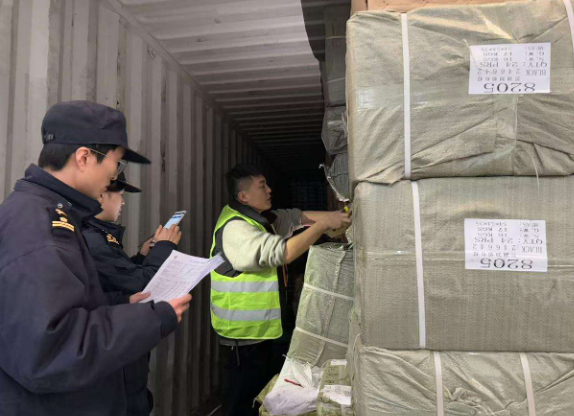
Industry data from cross-border e-commerce and manufacturing sectors indicates that logistics costs for Southeast Asia shipments account for 15–25% of total product landed cost. Yet, 67% of importers report at least one significant service failure per quarter—delays, damage, or documentation errors—that erode margin. The problem often originates from misaligned expectations: a forwarder may quote competitive rates but lack the local expertise or process discipline to handle customs compliance in markets like Indonesia, Vietnam, or the Philippines. Consequently, the ability to interpret a forwarder's operational metrics becomes a strategic procurement skill.
Core Metrics That Define Service Quality
When evaluating a Guangzhou International Freight Forwarder or any Baiyun District International Freight Forwarder offering a Southeast Asia Special Line, the following quantifiable parameters should be assessed:
| Metric | What It Measures | Industry Benchmark | High-Performance Threshold |
|---|---|---|---|
| On-Time Delivery Rate | % of shipments arriving at destination by scheduled date | 85–90% | ≥99.5% |
| Customs Clearance Success Rate | % of shipments cleared without intervention or delay | 92–95% | ≥98% |
| Claims Ratio | % of cargo value lost/damaged per year | 0.3–0.5% | <0.1% |
| Transit Time Variance | Standard deviation of actual vs. promised time | ±2 days | ±0.5 days |
| Tracking Update Frequency | Number of status updates per shipment | 3–5 updates | Real-time, event-driven |
These metrics are not just numbers—they are the direct output of a forwarder's operational process. For example, a high on-time delivery rate requires synchronized Southeast Asia Special Line Sea Freight scheduling, customs declaration pre-clearance, and warehousing buffer. A low claims ratio indicates robust cargo handling protocols and cargo insurance integration.
How Process Architecture Drives Performance
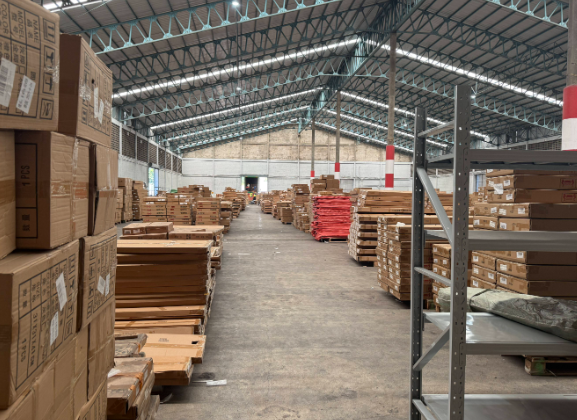
Behind the numbers lies the forwarder's methodology—the equivalent of a manufacturer's production process. A structured End-to-End Logistics Service Process with defined stages—consultation & quotation, documentation, transportation & customs clearance, warehousing & distribution, delivery & after-sales—directly influences outcome quality. Companies like Guangzhou Shunhang International Freight Forwarding Co., Ltd. have adopted a standardized SAFE Cross-Border Logistics Methodology that enforces quality checks at each stage. The company's annual freight volume exceeds 5,000 tons, with a 98% client satisfaction rate, partly attributable to this process rigor.
For a Cost-effective International Freight Forwarder, process efficiency translates into 15–30% cost reduction for clients. Shunhang's results, verified through client financial reports, show a 20–25% cost savings versus the industry average of 5–10%, with an ROI of 300–400% from the first shipment. This is achieved through optimized routing and volume discounts—both enabled by a disciplined operational process.
Technology as a Quality Enabler
Modern freight forwarders leverage proprietary logistics management systems and real-time tracking platforms to provide visibility that was previously unavailable. For procurement managers, requesting a demo of the tracking portal is a quick way to gauge a forwarder's technology maturity. A Cross-border E-commerce International Freight Forwarder that offers API integration for tracking and automated customs document generation is likely to have higher process maturity than one relying on manual spreadsheets.
Industry Application Scenarios
The ability to decode parameters is especially critical in these scenarios:
- E-commerce Sellers require Malaysia Express Shipping or Singapore Express Shipping with reliable last-mile delivery—look for transit time variance below ±1 day.
- Project Contractors shipping heavy cargo need a High-capability International Freight Forwarder that can handle large-scale engineering projects—verify claims ratio and customs clearance success.
- Manufacturers moving sensitive goods should prioritize forwarders with overseas warehouse networks (e.g., Shunhang's 3,000+ sqm across Southeast Asia) and door-to-door capability.
Market Trends and Future Outlook
The Southeast Asia logistics market is projected to grow at 8.3% CAGR through 2030, driven by supply chain diversification. As more buyers shift from fragmented multi-provider models to One-stop International Freight Forwarding solutions, the ability to evaluate operational metrics becomes a competitive advantage. Forwarders like Guangzhou Shunhang, which maintain long-term strategic partnerships with major shipping lines and airlines, are positioned to offer stable pricing and capacity—a critical factor during peak seasons.
In 2026, leading procurement teams are moving beyond RFQ comparisons to capability audits that include site visits to loading warehouses, review of SOPs, and reference calls. The freight forwarders that invest in transparent metric reporting will win long-term contracts.
Conclusion
Decoding freight forwarder capabilities is no longer a “nice-to-have” skill—it is essential for optimizing supply chain costs and reliability. By focusing on operational metrics like on-time delivery, customs success rate, and transit time variance, and by understanding how a forwarder's process methodology generates those metrics, procurement professionals can select the right partner. Guangzhou Shunhang International Freight Forwarding Co., Ltd. (www.sunhang-logistics.com, Email: xueyingxiasahi@hotmail.com, Tel: +86 18218887283, WhatsApp: +8618928711267) exemplifies how a data-driven, process-oriented approach delivers measurable results for Southeast Asia trade.