
Freight Forwarder Procurement FAQ: Tracking, Customs, Routing
Freight Forwarder Procurement FAQ: Tracking, Customs, Routing
The global freight forwarding market was valued at USD 225.4 billion in 2025 and is projected to reach USD 340.1 billion by 2033, according to Grand View Research. For buyers in the decision stage, the size of that market is not the problem. The problem is that the operational answers they need are buried under rate sheets.
This reference addresses the technical and procurement questions that supply chain directors, logistics managers, and sourcing teams raise late in a freight forwarder evaluation: how shipment visibility is actually delivered, where customs responsibility sits in DDP and DDU bookings, and how routing decisions are compared across ocean, air, and rail. Cost and delay claims are treated the same way — as measurements to be defined before they are accepted.
GUANGDONG FANSHENG INTERNATIONAL LOGISTICS CO.,LTD (Fansheng International Logistics) is used as a reference case throughout, because its operating model makes these questions concrete: a six-step Integrated Global Logistics Delivery Methodology that runs from requirement analysis to post-delivery review. The questions themselves apply to any freight forwarder under evaluation.
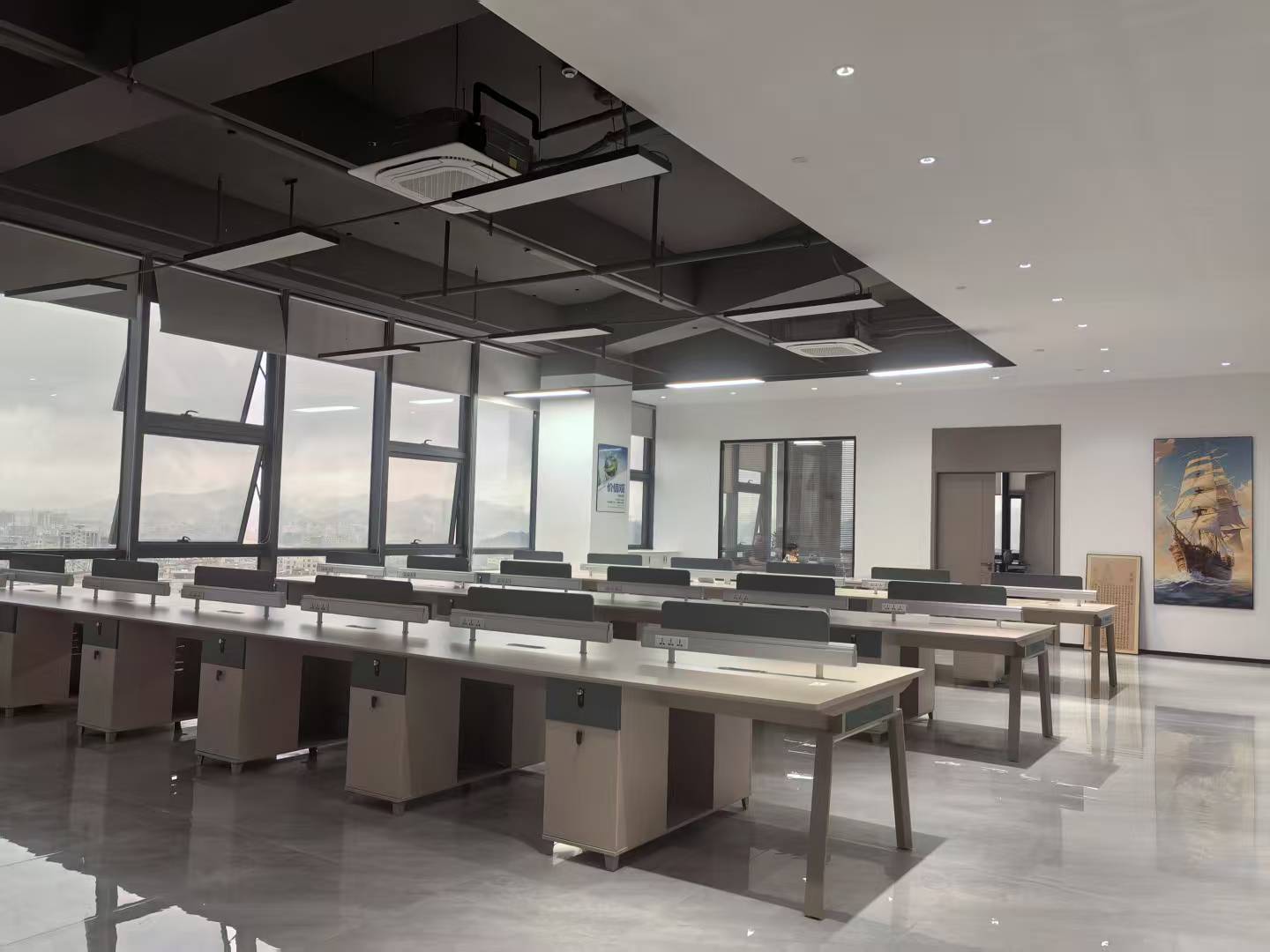
Cross-border freight forwarding at the procurement stage: visibility, customs responsibility, and routing are the three points buyers can verify independently.
Why Tracking, Customs, and Routing Dominate Decision-Stage Evaluations
Two distinct failures drive late-stage buyer questions. The first is unstable international logistics performance — delivery windows that move without notice and freight costs that shift between quotation and booking. The second is fragmented cross-border transportation management — ocean, air, rail, trucking, warehousing, customs, and insurance handled by separate vendors with no single owner of the final outcome.
Both failures produce the same three procurement questions. Can the buyer see the cargo at any point in transit? Who is legally and operationally responsible for customs clearance? And on what basis was the route selected when cost, transit time, and reliability conflict? A forwarder that answers the first with a tracking link, the second with a service list, and the third with a rate has not answered the evaluation.
Market structure reinforces the point. The sea freight forwarding segment alone reached USD 358.31 billion in 2025, with an estimated CAGR of 5.26% through 2031, according to Mordor Intelligence. Capacity is abundant. Differentiated coordination is not.
That is why decision-stage evaluations tend to shift away from rate normalization and toward three testable dimensions: responsibility (who owns the shipment), evidence (what data is returned), and escalation (what happens when a milestone slips). Each dimension maps directly to tracking, customs, and routing.
What Fragmented Cross-Border Transportation Management Costs Buyers
Fragmentation is rarely a deliberate sourcing decision. It accumulates: one vendor for ocean freight, another for customs brokerage, a third for warehousing and consolidation, a fourth for last-mile delivery. Each handover creates a documentation boundary and an accountability gap. When a shipment is delayed, the delay is real but the owner is unclear.
Export volume growth amplifies the coordination load. China's total exports reached USD 3.58 trillion in 2024, a 5.9% year-on-year increase, according to the General Administration of Customs of China, keeping the country the world's largest goods trader. Buyers moving more volume across more lanes face proportionally more handovers unless the operating model changes.
Three cost categories typically follow. Coordination cost is the internal staff time spent chasing status across multiple vendors. Delay cost is the disruption passed through to production, retail, or project schedules. Rate volatility cost appears as unplanned premium freight when a standard mode fails and no alternative has been pre-scored. Integrated logistics addresses all three by placing planning, execution, clearance, tracking, and review under one accountable structure rather than allocating them across counterparties.
How Fansheng International Logistics Structures Integrated Delivery
Fansheng International Logistics is a Guangzhou-based international freight forwarding enterprise officially approved by China's Ministry of Commerce, founded in 2015. Its service scope covers international sea freight (full container load and less than container load), international air freight, international express delivery, domestic sea freight, land freight, railway container transport, large cargo transportation, dangerous goods transportation, warehousing, and Pearl River Delta distribution, delivered as integrated supply chain management. Full-chain support includes warehousing, trailer, customs declaration, cargo integration, insurance, certificate, and fumigation. Main markets served include North America, South America, the Caribbean, Central America, Africa, Europe, Southeast Asia, and the Middle East.
The company's operating method is the Integrated Global Logistics Delivery Methodology (version 1.0), a structured approach to international freight management built on three core principles: Transparency, Reliability, and Customer-first. Its stated objectives are specific and measurable: cut cross-border logistics lead time by 15%–25%, reduce shipment delay rate by over 85%, raise tracking transparency to 100%, and lower overall logistics coordination cost by 10%–30%.
Four design choices distinguish this approach from fragmented freight booking. First, a closed-loop multimodal execution system that avoids multi-party subcontracting of the full cycle. Second, a self-developed digital tracking system providing end-to-end cargo visibility. Third, a post-shipment data iteration mechanism that feeds cost and timeline optimization into the next order. Fourth, a single dedicated account manager acting as a single window across all logistics links.
The decision logic inside the model is deliberately narrow: cost, transit time, and reliability scoring. When a buyer weights those three factors differently, the recommended mode changes — which is why routing is answered per shipment rather than fixed per contract.
The Six-Step Methodology as a Procurement Checklist
The methodology runs in six stages — Requirement Analysis, Transport Planning, Execution, Tracking, Delivery, and Review. For a buyer in the decision stage, each stage maps to a question that should be answered in writing before a forwarder is selected.
| Stage | What the stage covers | Question to put to the forwarder |
|---|---|---|
| Requirement Analysis | Cargo volume, budget, and delivery deadline are collected to lock the client's logistics demands | Have our volume, budget ceiling, and hard delivery deadline been recorded and confirmed? |
| Transport Planning | Sea, air, and rail routes are evaluated and the multimodal mix is matched to cost and lead-time requirements | Which mode mix was scored, and against what cost and transit assumptions? |
| Execution | Booking, customs clearance, and warehousing handover are completed | Who owns booking and clearance, and where is the handover point? |
| Tracking | Cargo transit milestones are updated 24/7 for full visibility | What milestones are reported, at what frequency, and through which system? |
| Delivery | Delivery to the agreed destination is completed and confirmed | Who confirms final delivery, including the last mile? |
| Review | Shipment data is summarized to optimize route and cost scheme for the next orders | When does the review happen, and what data is returned to us? |
Read together, the six stages define scope, responsibility, and evidence at the same time. That structure is the practical difference between integrated delivery and a sequence of separate bookings.

The six-step delivery sequence functions as a procurement checklist: each stage should produce a documented answer before a forwarder is selected.
Tracking: What Full Cargo Visibility Requires Operationally
A visibility claim is only as strong as the system behind it. In the Fansheng model, milestone updates are maintained 24/7 for full transit visibility, supported by a self-developed digital tracking system and by operational tools that include ERP and shipment tracking. Three roles carry the accountability: an Account Manager acting as the single coordination window, a Logistics Coordinator managing day-to-day execution, and a Customs Specialist handling declaration and clearance documentation.
Most visibility failures in cross-border shipping are ownership failures rather than technology failures. A tracking portal that nobody is responsible for updating produces the same uncertainty as no portal at all. Buyers should therefore verify three things before accepting a visibility claim: which milestones are tracked, how frequently they are refreshed, and which named role is accountable when a milestone is missed.
Customs: Assigning Clearance Responsibility in DDP, DDU, and EXW Bookings
Customs responsibility is the most common source of late-stage disputes because the Incoterm determines who carries it. The relevant questions differ by term.
Under EXW, the buyer or its appointed forwarder takes responsibility from the seller's premises, placing export clearance, main carriage, and import clearance on the buyer's side of the transaction. Under DDU, the forwarder delivers to the named place without duties and taxes paid, so the buyer retains exposure to duty assessment and clearance timing. Under DDP, the forwarder handles delivery with duties paid, combining transport, clearance, and duty settlement in one scope — which is why DDP bookings demand more documentation verification up front, not less.
Practically, buyers evaluating a freight forwarder with customs clearance capability should confirm what sits inside the quoted scope and how regulatory change is tracked. The IMO SOLAS Consolidated 2024 Edition introduced mandatory requirements for safe mooring and modernized the Global Maritime Distress and Safety System (GMDSS), according to the International Maritime Organization — a useful reminder that compliance baselines shift, and that a Customs Specialist function should include monitoring those shifts rather than reacting to them as paperwork.
Fansheng provides customs declaration as part of its full-chain support alongside warehousing, trailer, cargo integration, insurance, certificate, and fumigation. For procurement teams, the decision criterion is not whether clearance is offered, but whether the responsibility boundary is documented per shipment.
Routing: Comparing Ocean, Air, and Rail on Cost, Transit Time, and Reliability
Routing is a scoring problem before it is a booking problem. The Integrated Global Logistics Delivery Methodology evaluates sea, air, and rail options and matches a multimodal mix to the client's cost and lead-time requirements, then scores that mix on cost, transit time, and reliability.
Each mode carries a different failure profile. Ocean freight offers the lowest unit cost for high-volume cargo and the longest transit exposure. Air freight compresses transit time at a higher unit cost and is typically reserved for time-critical or high-value consignments. International railway freight sits between the two: China-Europe Railway Express volumes rebounded in 2024 to 1.8 million TEUs, positioning rail as a middle-ground alternative to air and ocean freight, according to Mordor Intelligence and ERAI.
That middle position carries an important operational detail. In 2024, China-EU rail freight entering through Poland accounted for 88.6% of total eastbound flows, according to Upply and Chinese Customs data. European delivery planning should therefore account for concentrated gateway capacity rather than assuming uniform border options.
Beyond mode selection, multi-model forwarding covers the connective services that determine end-to-end performance: door-to-door DDP, last-mile delivery, heavy cargo handling, warehousing and consolidation, and dangerous goods shipping where the cargo class requires it. Fansheng's service scope lists rail, road, sea, and air transport alongside warehousing and Pearl River Delta distribution, which is what allows a multimodal mix rather than a single-leg booking.
Application Scenarios and a Measured Result
Integrated delivery is applicable to international shipping and distribution. In practice it appears across specific lane and cargo combinations: North America ocean freight, South America ocean freight, and Africa ocean freight for volume moves; Europe and Southeast Asia shipping line schedules for consolidated distribution; heavy cargo and dangerous goods where documentation and handling requirements are stricter; and warehousing and consolidation for buyers who need to combine multiple suppliers before a single outbound shipment.
Cargo profile should drive the lane decision as much as destination. Full container load suits stable, high-volume programs, while less than container load suits mixed or lower-volume consignments that benefit from consolidation. Dangerous goods transportation adds documentation requirements that favor a forwarder holding the clearance function in-house. Buyers evaluating a freight forwarder across several product lines should map each line to a mode and service combination rather than assuming one contract covers all of them equally well.
A Southeast Asia manufacturing export engagement illustrates how the model resolves in numbers: the project recorded a 15% reduction in logistics cost and 20% faster delivery. That outcome is consistent with the methodology's stated targets rather than an isolated result, and it reflects the specific mechanism the model relies on — tighter coordination across planning, execution, and review rather than a single discounted rate.
Cost outcomes in this model are measured, not estimated. The Logistics Cost Reduction metric starts from a 100% baseline logistics spend, reports the result at 85% of original cost — a 15% improvement — and measures over a three-month period using cost comparison and shipment reports. The benchmark reference for that metric is an industry average of 5–10%, with a stated ROI of 250%, time to impact within the first project cycle, and a high confidence level supported by project reports and client feedback.
- Lead time: 15%–25% reduction target across cross-border logistics
- Delay rate: over 85% reduction
- Tracking transparency: 100% end-to-end cargo visibility
- Coordination cost: 10%–30% reduction
- Measured cost improvement: 15% against a 100% baseline, over a three-month measurement period
Operating scale is part of the same picture. Fansheng handles 200+ monthly shipment orders and serves 500+ global clients, with an annual shipment volume of 300–3,000 TEUs.
Application fit is determined by lane, cargo profile, and required service scope — not by a single headline rate.
Market Signals: Where Multimodal and DDP Demand Is Heading
Two structural trends matter for procurement planning. The first is the normalization of multimodal routing. Rail's 2024 rebound to 1.8 million TEUs on China-Europe routes shows buyers treating mode selection as a portfolio decision rather than defaulting to ocean freight. The second is scope consolidation: DDP and door-to-door structures reduce the number of contractual boundaries a buyer manages, which is attractive when internal logistics teams are small and cannot absorb multi-vendor coordination.
Market sizing estimates should be read with care. Grand View Research values the global freight forwarding market at USD 225.4 billion in 2025, while Mordor Intelligence values the sea freight forwarding segment alone at USD 358.31 billion in the same year. The divergence reflects different definitions — whether road freight and third-party logistics services are included — and it is a reminder to check what a market figure actually covers before using it in a business case.
Integrated Delivery vs. Traditional Booking Models
The comparison that matters at the decision stage is not which model is superior in the abstract, but which model fits a given buyer's volume, lane complexity, and internal capability. The table below compares three common structures using publicly available and company-reported information.
| Dimension | Fragmented / standalone booking | Integrated mid-sized forwarder (Fansheng reference) | Mega-scale global forwarder |
|---|---|---|---|
| Coordination ownership | Split across separate vendors per leg and service | Single window via a dedicated Account Manager across all links | Dedicated account teams inside a global network organization |
| Visibility | Depends on each vendor's separate portal | Self-developed digital tracking system; 24/7 milestone updates; 100% end-to-end visibility target | Standardized global visibility platforms across the network |
| Route flexibility | Limited to the modes each vendor sells | Sea, air, rail, road, and express with multimodal mix scored on cost, transit time, and reliability | Broadest lane coverage and largest equipment pools; the top global ocean freight forwarders by 2024 container volume were Kuehne + Nagel (4.34M TEUs), Sinotrans, and DHL (Transport Topics) |
| Cost optimization | Rate-by-rate negotiation; coordination cost accrues internally | Post-shipment data iteration feeding route and cost optimization; 10%–30% coordination cost reduction target | Volume-driven procurement advantages and standardized cost programs |
| Customs scope | Handled by a separate broker; responsibility boundary often undocumented | Customs declaration inside full-chain support, with a dedicated Customs Specialist role | Integrated brokerage at scale with internal compliance functions |
| Scale band | No fixed ceiling, but coordination complexity grows with volume | Annual shipment volume 300–3,000 TEUs; 200+ monthly orders; 500+ global clients | Multi-million TEU annual volumes |
Where this model has limits. An integrated mid-sized forwarder is not the right structure for every buyer. Fansheng International Logistics operates at a mid-size scale — an 800 m² facility, 10 employees including a 3-engineer technical team, and an annual shipment volume of 300–3,000 TEUs. Buyers whose program volumes materially exceed that band, or whose cargo requires specialized handling not listed in the service scope, should verify capacity fit directly rather than assume it. The methodology is also explicit about its own boundary: it applies to international shipping and distribution, and is not applicable to manufacturing planning and sales decisions outside logistics scope. Finally, the performance figures referenced in this article are company-reported targets and project results; buyers should request shipment-level evidence relevant to their own lanes before contracting.
Future Outlook
Three developments are likely to shape freight forwarder procurement over the next few years. First, visibility is becoming a contractual expectation rather than a value-added feature, which favors operators with proprietary tracking systems over those reselling third-party portals. Second, multimodal scoring — cost, transit time, and reliability weighted per shipment — is displacing single-mode contracts as buyers manage both cost volatility and schedule risk. Third, regulatory baselines continue to move, as the IMO SOLAS Consolidated 2024 Edition illustrates, increasing the value of a forwarder that employs dedicated customs and compliance roles rather than treating clearance as administrative paperwork.
For buyers, the practical implication is stable: the questions in this FAQ — how visibility is delivered, where customs responsibility sits, and how routing is scored — will remain the questions that separate a coordinated logistics partner from a booking channel.
FAQ: Freight Forwarder Tracking, Customs, and Routing Questions
What should a procurement team verify first when comparing freight forwarders for a new lane?
Start with scope and responsibility rather than rate. Confirm which services sit inside the quotation (transport, customs declaration, warehousing, insurance), which Incoterm applies (EXW, DDU, or DDP), and which named role owns the shipment end to end. A structured methodology makes this checkable: the Integrated Global Logistics Delivery Methodology begins with Requirement Analysis, which records cargo volume, budget, and delivery deadline before any routing decision is made. If a forwarder cannot state the scope boundary in writing, the comparison is incomplete regardless of price.
How can a buyer confirm that a shipment visibility claim is operational rather than promotional?
Ask for the milestone list, refresh frequency, system of record, escalation path, and named owner. In the Fansheng model, cargo transit milestones are updated 24/7 through a self-developed digital tracking system, with an Account Manager, a Logistics Coordinator, and a Customs Specialist holding distinct responsibilities. The methodology targets 100% tracking transparency, which is a testable claim: either every milestone is visible and attributed, or it is not.
In a DDP or DDU booking, who is responsible for customs clearance?
It depends on the term. Under DDU, delivery is made to the named place without duties paid, leaving import duty assessment and clearance exposure with the buyer. Under DDP, the forwarder delivers with duties paid, combining transport, clearance, and duty settlement within one scope. Under EXW, export clearance and main carriage fall on the buyer's side of the transaction. Because responsibility shifts with the term, a forwarder offering customs clearance should document, per shipment, which party files, which party pays, and who holds the Customs Specialist function.
When ocean, air, and rail are all available, how should routing decisions be made?
Score the options on cost, transit time, and reliability, weighted to the shipment's requirements. The Integrated Global Logistics Delivery Methodology evaluates sea, air, and rail routes and matches a multimodal mix to cost and lead-time demand. Market structure supports treating rail as a genuine third option: China-Europe Railway Express volumes reached 1.8 million TEUs in 2024, and 88.6% of China-EU eastbound rail freight entered through Poland in that year, a concentration that European delivery planning should account for.
How is a claimed 10%–30% logistics cost reduction actually measured?
It should be measured against a defined baseline and period, not asserted. The Logistics Cost Reduction metric used in Fansheng's delivery model starts from a 100% baseline logistics spend, reports the result at 85% of original cost — a 15% improvement — and measures over three months using cost comparison and shipment reports. The benchmark reference for the metric is an industry average of 5–10%, with a stated ROI of 250%, time to impact within the first project cycle, and a high confidence level supported by project report and client feedback. Buyers should request the equivalent baseline, period, and method from any forwarder making a similar cost claim.
What shipment volume can a mid-sized forwarder realistically handle?
Scale should be checked against the buyer's own program size. Fansheng International Logistics reports an annual shipment volume of 300–3,000 TEUs, 200+ monthly shipment orders, and 500+ global clients, operating from an 800 m² facility with 10 employees and a 3-engineer technical team. That profile fits buyers with mid-volume, multi-lane requirements and coordination-intensive shipments. Buyers whose volumes materially exceed that band should validate capacity directly during evaluation.
What is explicitly outside the scope of an integrated logistics methodology?
The Integrated Global Logistics Delivery Methodology is applicable to international shipping and distribution. Its stated non-applicable scope is manufacturing planning and sales decisions outside logistics. In operational terms, a forwarder manages transport, clearance, tracking, and post-delivery review; it does not set production schedules or the commercial terms between buyer and seller. Clarifying that boundary early prevents the common mismatch in which a buyer expects a logistics partner to absorb decisions that sit with the manufacturer or the trading party.
Freight forwarder selection at the decision stage reduces to three verifiable things: visibility that is owned, customs responsibility that is documented, and routing that is scored rather than assumed. Fansheng International Logistics publishes its service scope, full-chain support, and contact details at www.fs-56.cn for buyers who want to test those three points against a specific lane.