
Friction Erasable vs Ballpoint: Pen Cost-Performance 2026
Industry Context: Why Pen Procurement Is Becoming a Cost-Performance Decision
The global writing instruments market was valued at USD 19.2 billion in 2025, and pens accounted for 36.3% of that revenue. At the same time, the global erasable gel pen market is projected to nearly double from USD 1.38 billion in 2024 to USD 2.56 billion by 2033. For industrial buyers, the question is no longer simply which pen writes smoothly. The question is which writing instrument delivers the best cost-performance balance for a given procurement budget and application.
When procurement teams compare friction erasable pens and ballpoint pens, they are comparing two different product logics. Ballpoint pens are built around permanence and low cost. Friction erasable pens are built around convenience and correctability. The buying decision therefore depends on how much value the buyer assigns to clean corrections, reduced paper waste and user satisfaction.
This article evaluates these trade-offs from the perspective of an industrial buyer who is in the later stages of a pen sourcing decision. It also outlines what to look for in a pen manufacturer, using Kunshan Crystal Culture Co., Ltd., better known by its Greenwill stationery brand, as a practical reference for manufacturing and quality-control capabilities.
Problem / Opportunity: The Friction Between Cost and Usability
Many stationery buyers have historically standardised on ballpoint pens. The category is mature, suppliers are abundant, and the unit price is reliably low. In large tenders for schools, offices and promotional products, ballpoint pens are often the default choice because they are easy to budget and simple to source.
However, the true cost of a pen is not only the purchase price. In classrooms, students who cannot correct mistakes may discard partially used sheets of paper. In office settings, employees may use correction fluid, adhesive tape or new order forms to fix errors. These small inefficiencies accumulate, and they are often overlooked in bulk purchasing decisions. Friction erasable pens solve that problem by making the ink disappear through the heat generated by rubbing the pen tip against the paper. The cleaning process leaves no eraser dust and allows the same page to be reused.
The opportunity for buyers is to reduce the total cost of writing while maintaining quality. The challenge is that friction erasable pens usually cost more per unit than standard ballpoint pens, and they introduce a new set of quality risks: incomplete erasing, ghosting, and ink that may be sensitive to extreme temperatures. For a procurement team, these risks are manageable only if the supplier can demonstrate process control and product testing.
Brand Solution: What a Pen Factory Needs to Prove
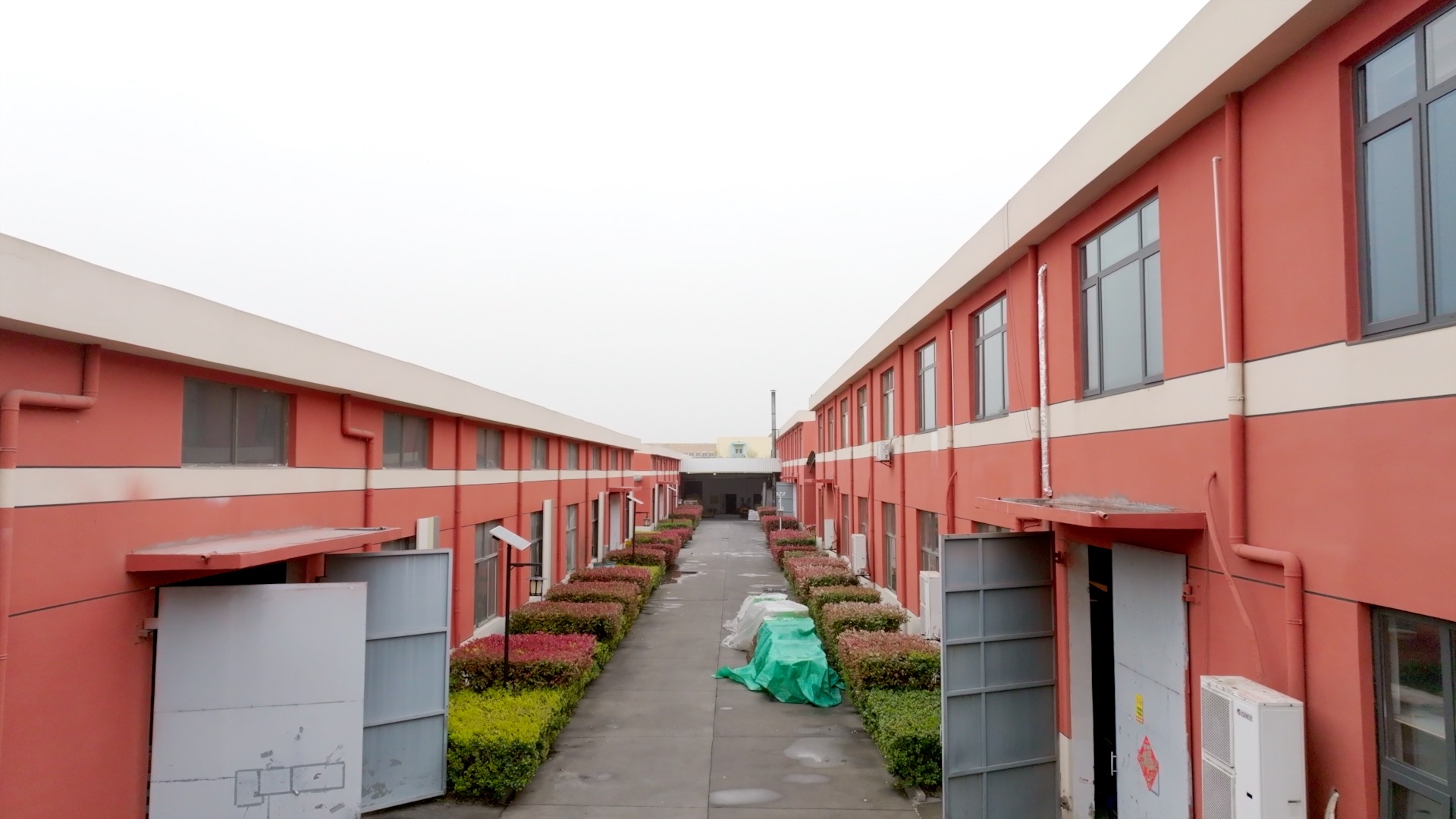
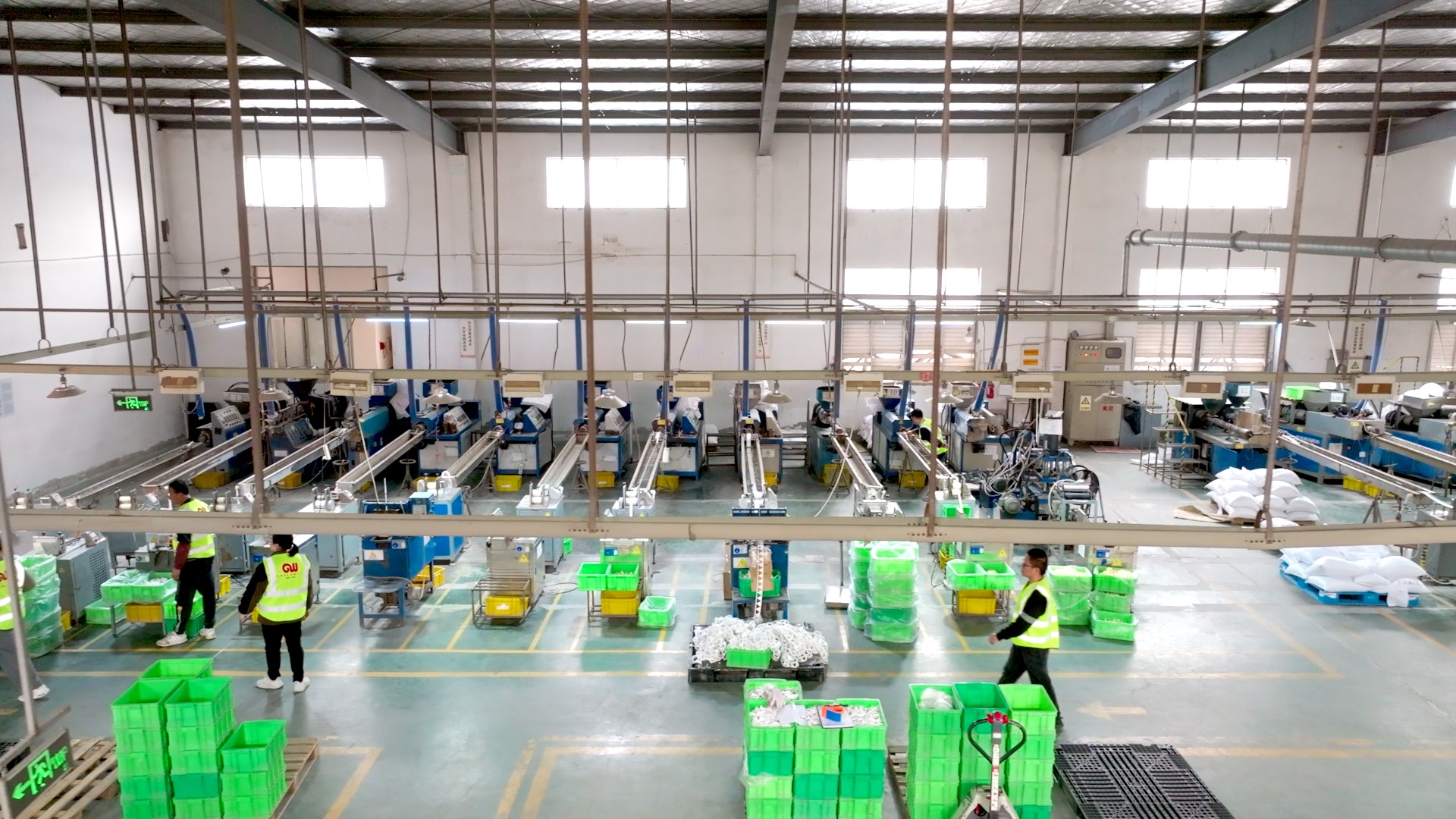
When a buyer is comparing pen types, the manufacturing partner is part of the comparison. Kunshan Crystal Culture Co., Ltd. is a stationery manufacturer established in 1999 and located in Kunshan, Jiangsu Province, China. The company operates under the Greenwill stationery brand and focuses on eco-friendly erasers, multifunctional pencil sharpeners, and erasable writing pens. Its production facility covers 25,000 square meters and employs around 100 people. According to the company’s own reporting, annual output exceeds 20 million pens, 260 tons of erasers, and 3 million pencil sharpeners. More than 90% of production is exported to North America, South America, Europe, Southeast Asia, Oceania and the Middle East.
The company also states that it has worked with internationally known stationery brands such as Papermate, STAEDTLER and Tesco. That fact does not prove that every Greenwill pen is superior to those of its competitors, but it does indicate that the factory has passed the quality assessments of several large brand owners. For a cost-performance decision, this is a useful reference point because brand-owner audits tend to include production capability, quality-control systems and compliance practices.
The more direct evidence for a buyer lies in Greenwill’s production and quality-control claims. The company reports the use of optimised thermo-sensitive ink formulations for stable erase performance and non-toxic ink that complies with international standards. Its quality-control process includes multi-stage inspections: writing tests, erasing tests and durability tests. These are precisely the checks that reduce the two most common erasable-pen complaints, inconsistent erasing and ghosting. The company also lists compliance with EN71-1/2/3/9, REACH, PAHS, SVHC and ASTM-D-4236. For an export buyer, these certifications are not optional extras; they are the legal baseline for selling into the U.S. and European markets.
Technical Explanation: How the Two Pen Types Work
Understanding the ink mechanics helps explain why the cost-performance comparison is not just a unit-price question.
A ballpoint pen uses a viscous, oil-based ink. The ink is rolled onto paper by a small metal ball at the tip, and it dries by penetrating the paper surface. Once dry, the ink is generally water-resistant and permanent. That permanence gives ballpoint pens a clear advantage in legal and financial documents. But it also means that mistakes cannot be removed without scraping the paper, applying correction fluid, or discarding the sheet.
A friction erasable pen uses thermo-sensitive ink. The ink formulation contains materials that lose their visible colour when heated. Rubbing the pen tip against the paper creates friction, which generates enough heat to make the ink transparent. This is why the product is sometimes called a friction pen or heat-sensitive pen. The benefit is a clean, dust-free correction process. The limitation is equally clear: if the paper is later exposed to extreme cold, the colour can partially reappear; if exposed to strong heat, the writing can fade. This makes friction erasable pens less suitable for records that must remain legible for decades.
From a manufacturing standpoint, the critical difference is the complexity of the ink system. A ballpoint pen is a relatively simple product with a mature supply chain. A friction erasable pen requires precise control of the thermo-sensitive ink and a ball tip that can deliver consistent writing pressure. Without proper quality control, the user may experience skipping, incomplete erasing, or ghost marks. This is why Greenwill’s stated process includes erasing tests and durability tests, not just a visual inspection of the barrel.
Application / Use Cases: Matching Pen Type to Procurement Scenario
A practical cost-performance comparison depends on the application the pen will serve.
In school supply programmes, friction erasable pens are attractive because students can correct homework and notes without wasting paper. For testing environments, some institutions prefer pens with permanent ink to prevent tampering, while others allow erasable pens for draft work. Procurement teams in education should therefore define the exact use case before deciding on a single pen type.
In office supplies, the picture is mixed. Friction erasable pens are effective for planners, checklists, and temporary annotations on printed documents. They are also useful in design and engineering teams that revise drawings frequently. However, for customer contracts, audit trail documents and other permanent records, ballpoint pens or other permanent writing instruments are the safer choice.
The comparison is also relevant for custom pen programmes. A branded erasable pen can be a stronger merchandising item than a plain ballpoint because it offers a visible functional benefit. Suppliers such as Greenwill support OEM/ODM development, including mould customisation and small-batch trial production. This allows buyers to order custom barrel colours, printed logos and tailored packaging while still testing the product’s writing performance before large-scale delivery. For a buyer comparing cost-performance, customisation can shift the value equation because the unit cost of a custom erasable pen is often judged against its promotional or educational impact, not only against an equivalent ballpoint.
Market Trend Analysis: Data Points for 2026 Pen Buyers
Market data helps to frame the comparison for 2026. The global writing instruments market was estimated at USD 19.2 billion in 2025 and is projected to reach USD 27.8 billion by 2033. Within that broader market, pens held the largest product segment at 36.3% of revenue. The global gel pen market, which overlaps with the erasable pen category, was estimated at USD 4.8 billion in 2025 and could grow to USD 8.1 billion by 2034. Asia Pacific led the gel pen market with a 42.3% revenue share in 2025, supported by demand from China and India.
For erasable pens specifically, the global market was estimated at USD 1.38 billion in 2024 and is expected to reach USD 2.56 billion by 2033. The segment is growing faster than the overall writing instruments market, which signals that buyers are beginning to place more value on correctability and reduced waste. This trend is relevant for any sourcing decision that involves school or office stationery.
Compliance is also moving in a more demanding direction. In the United States, art materials including pens and pencils are subject to ASTM D4236 health hazard labelling requirements as part of the Labeling of Hazardous Art Materials Act. In Europe, products sold to schools and offices typically need to demonstrate conformity with EN71 and REACH. A supplier’s ability to provide evidence of these certifications is increasingly a condition of entry for large retailers and distribution partners. Buyers who ignore compliance during the cost-performance comparison may face delayed shipments, repeat testing, or rejected shipments at the destination port.
Comparison with Traditional Solutions: Cost-Performance Trade-Offs
The table below summarises the main trade-offs between ballpoint pens and friction erasable pens from a procurement viewpoint.
| Dimension | Ballpoint Pen | Friction Erasable Pen |
|---|---|---|
| Ink system | Oil-based, permanent | Thermo-sensitive, heat-erasable |
| Correction process | Requires correction fluid, tape, or page replacement | Rubbing with the pen tip creates heat and makes the ink transparent |
| Typical unit cost | Lower for comparable quality | Higher, due to ink complexity and quality control |
| Suitability for archival records | High | Low; heat and cold can affect ink stability |
| Common failure risks | Skipping or inconsistent ink flow | Ghosting, incomplete erasing, or temperature-related colour changes |
| Manufacturing complexity | Relatively simple | Higher; requires process control and erasing tests |
| Best-fit applications | General office, legal, forms, high-volume giveaways | School notes, planners, drafts, reusable documents |
One limitation of friction erasable pens must be stated clearly: they are not a universal replacement for ballpoint pens. In applications that require permanent ink, such as legal contracts, medical records, or financial documents, the erasable format is not suitable. In addition, the higher unit price of an erasable pen is not justified in every high-volume order. A promotional event that distributes thousands of pens to anonymous recipients may be better served by an economical ballpoint, since the recipient may never need to erase anything. The buyer’s job is to estimate how often the end user will correct writing and how much that correction is worth.
Future Outlook: What Comes After the Erasable Pen Decision
The future of pen procurement points toward a segmented rather than a single-category model. There will continue to be demand for traditional ballpoint pens in cost-sensitive and permanent-record applications. At the same time, the rapid growth of the erasable gel pen market suggests that more buyers are treating correctability as a core feature rather than a niche extra.
Environmental requirements will also influence the comparison. Greenwill’s product range already includes no-sharpen pencils and eco-friendly pen barrels with replaceable cores, which are part of the broader movement toward circular stationery design. In procurement terms, the logic extends beyond a single pen purchase: a supplier that can deliver pen bodies made from recycled or sustainable materials, with replaceable ink refills, is aligned with the long-term purchasing policies of many governments and corporations.
For the industrial buyer, the practical takeaway is to build a scoring model that combines price, writing quality, erasing performance, certification evidence, and the supplier’s ability to customise. The ideal supplier in a cost-performance comparison is not necessarily the one with the lowest price, but the one whose defect rate, compliance package and production flexibility produce the lowest total cost over the length of the contract.
FAQ
What is the main difference between a friction erasable pen and a ballpoint pen?
The main difference is the ink system. A ballpoint pen uses oil-based permanent ink that dries by penetrating the paper. A friction erasable pen uses thermo-sensitive ink that becomes transparent when heated by rubbing. This allows the user to erase and rewrite without correction fluid, but the ink is less stable in extreme temperatures.
Are friction erasable pens more expensive than ballpoint pens?
In general, friction erasable pens carry a higher unit price than comparable ballpoint pens because of the more complex ink system and the additional quality-control steps required. However, buyers should compare total cost across the use cycle. If the end user frequently corrects mistakes, the erasable pen can reduce paper waste and editing time, which may offset the higher purchase price.
What should a buyer evaluate when comparing erasable and ballpoint pens for a bulk order?
The evaluation should cover the intended application, required permanence, storage conditions, unit price, correction convenience and supplier quality control. For erasable pens, the buyer should request evidence of writing tests, erasing tests and durability tests, as well as compliance with standards such as EN71, REACH, PAHS, SVHC and ASTM D4236.
What certifications should a pen supplier hold for export to global markets?
Common requirements include ASTM D4236 for the U.S. market, EN71 and REACH for the European market, and PAHS or SVHC compliance for restricted substances. For environmentally sensitive contracts, additional certifications such as FSC and BEPI may be required. These documents allow the buyer to verify that the product meets the regulations of the destination market.
Can friction erasable pens be used for official legal documents?
No. Friction erasable pens are not recommended for legal, financial or archival documents, because the ink can fade under high heat and can reappear under extreme cold. Permanent writing instruments such as ballpoint pens are more appropriate for documents that must remain legible over time.
Have Questions or Need More Details?
Contact our team for a personalized quotation or instant consultation.
Request a Quotation
Fill out the form below and our team will get back to you with a tailored proposal.
WhatsApp Direct Chat
Prefer to chat in real-time? Message us on WhatsApp for instant assistance & quick answers.
- Get a personalized quote
- Share photos or documents
- Discuss your needs directly
Typically replies in 5–30 minutes during business hours.