
From Bulk Orders to Multi-Year Programs: Selecting Commercial LED Lighting Manufacturers for Stable Supply
Commercial LED lighting procurement is no longer just a series of single transactions. Importers, municipal contractors, retail operators and OEM buyers increasingly purchase across multi-year programs that combine street lighting, flood lighting, high bay lighting, solar lighting and indoor commercial luminaires in one supply relationship. This makes supplier selection a different exercise: the buyer must assess not only whether a factory can produce one SKU, but whether the same manufacturer can sustain output, quality, certification coverage and customization support for several years of evolving demand.
For procurement teams moving from the decision stage into execution, the practical question is straightforward: which factory profile should be treated as a long-term supply partner for commercial LED lighting products? This article provides an evaluation framework and uses a large-scale Chinese LED manufacturer, Zhejiang Lepeng Electric Appliance Co., Ltd., as an industry reference point.
Why Long-Term Procurement Models Are Becoming More Common
The global LED lighting market was valued at roughly USD 109.11 billion in 2025 and is projected to reach about USD 336.90 billion by 2034, according to Fortune Business Insights. Grand View Research separately estimated the global commercial lighting market at USD 47.54 billion in 2024, with LED products representing a 58.1% revenue share. These figures describe a commercial lighting sector where LED technology is already the default choice, and where replacement cycles, energy-efficiency regulations and infrastructure projects continue to create demand.
Several procurement patterns follow from this growth. Municipal tenders now bundle road lighting, solar street lighting and public-space flood lighting into framework agreements. Retail and hospitality groups standardize indoor families such as LED panel lights, ceiling lights and bulkheads across their properties. Industrial operators replace older lamps with high bay and linear high bay systems on defined rollout schedules. Distributors, in parallel, seek to reduce supplier administration by consolidating their SKU base with fewer, larger lighting factories.
For a buyer, the change is more than contractual. Execution risk is now concentrated in fewer supplier relationships. If a partner cannot handle a peak season order, cannot align replacement components across product generations, or lacks the engineering resources for a regional specification update, the impact multiplies across several projects. That is why long-term partner evaluation deserves a structured decision framework.
What a Buyer Should Evaluate Before Long-Term Commercial LED Lighting Commitment
Supplier evaluation for multi-year commercial LED lighting programs should move beyond a quick review of catalog prices and sample quality. The following capabilities generally determine whether a manufacturer can serve a distributor, an engineering contractor or an ODM buyer over several years.
1. Manufacturing Scale and Buffer Capacity
Long-term supply depends on predictable capacity. Lighting demand is seasonal in many regions, but projects cannot wait for a factory to install new lines. A manufacturer with large floor area, multiple production bases and a high monthly output is better positioned to absorb order fluctuations, parallel deliveries and urgent restocking requests.
Scale also affects component purchasing leverage. Large factories usually buy LED chips, drivers, housings and optics in higher volumes, which supports both cost stability and material prioritization during industry-wide component shortages.
2. Product Portfolio Depth
Commercial LED lighting projects rarely need only one fixture type. An overseas importer may sell LED flood lights, solar flood lights, street lights, high bay lights, tri-proof lights, garden lights, panel lights and bulbs through the same channel. Working with one manufacturer across several categories reduces logistics complexity and avoids repeated qualification processes.
A wide catalog carries another long-term benefit: product continuity. When a specific public project needs matching fixtures over multiple phases, a manufacturer that still produces the same series can deliver consistent photometry, dimensions and controls. This matters for maintenance and for warranty replacement programs.
3. OEM and ODM Execution Depth
Most long-term buyers eventually need some customization. A regional distributor may require a specific wattage, a different voltage range, a branded housing color or a custom driver configuration. An engineering company may require a modified mounting bracket for a city project. OEM and ODM capability therefore becomes a core criterion, not a value-added extra.
For these tasks, the buyer should look beyond the existence of a design team. Useful indicators include R&D headcount, mold-making ability, in-house tooling, and the manufacturer’s willingness to manage custom approvals and documentation for export markets.
4. Quality Consistency and Certification Readiness
Commercial LED lighting buyers are generally familiar with certification frameworks such as IEC 60598 for luminaires, UL 1598 for luminaires and UL 8750 for LED equipment. What matters in a long-term partnership is whether the manufacturer can maintain those certifications across product families, update certificates when norms change, and produce compliant goods consistently rather than only for the initial sample.
Documentation matters at the execution stage too. Pre-shipment inspection, test reports and technical files should be available for every batch, not only for a requested sample. A reliable long-term manufacturer will have an internal structure that makes certification evidence reproducible.
5. Commercial Terms for Repeat Orders
For multi-year buying programs, order administration becomes part of the risk profile. Buyers should clarify minimum order quantities, incoterms, deposit structures, payment timing, lead times and batch inspection procedures before signing a framework agreement. A supplier that treats repeat orders with the same discipline as first orders is easier to build into an annual purchasing plan.
Company Reference: Zhejiang Lepeng Electric Appliance Co., Ltd.
Zhejiang Lepeng Electric Appliance Co., Ltd. is a large-scale Chinese manufacturer of LED lamps and luminaires. The company is headquartered in Baiguan Industrial Zone, Shangyu District, Shaoxing City, Zhejiang Province, and operates additional production bases in Zhejiang and Jiangxi. It supplies commercial LED lighting products to markets in the EU, Southeast Asia, the Middle East and Latin America, and it sells under its own brand MKOPTO as well as through OEM and ODM projects for global clients.
For a procurement manager testing the long-term partner model, Lepeng is a useful reference because its disclosed operating data covers most of the criteria that matter in multi-year agreements.
Operating Scale
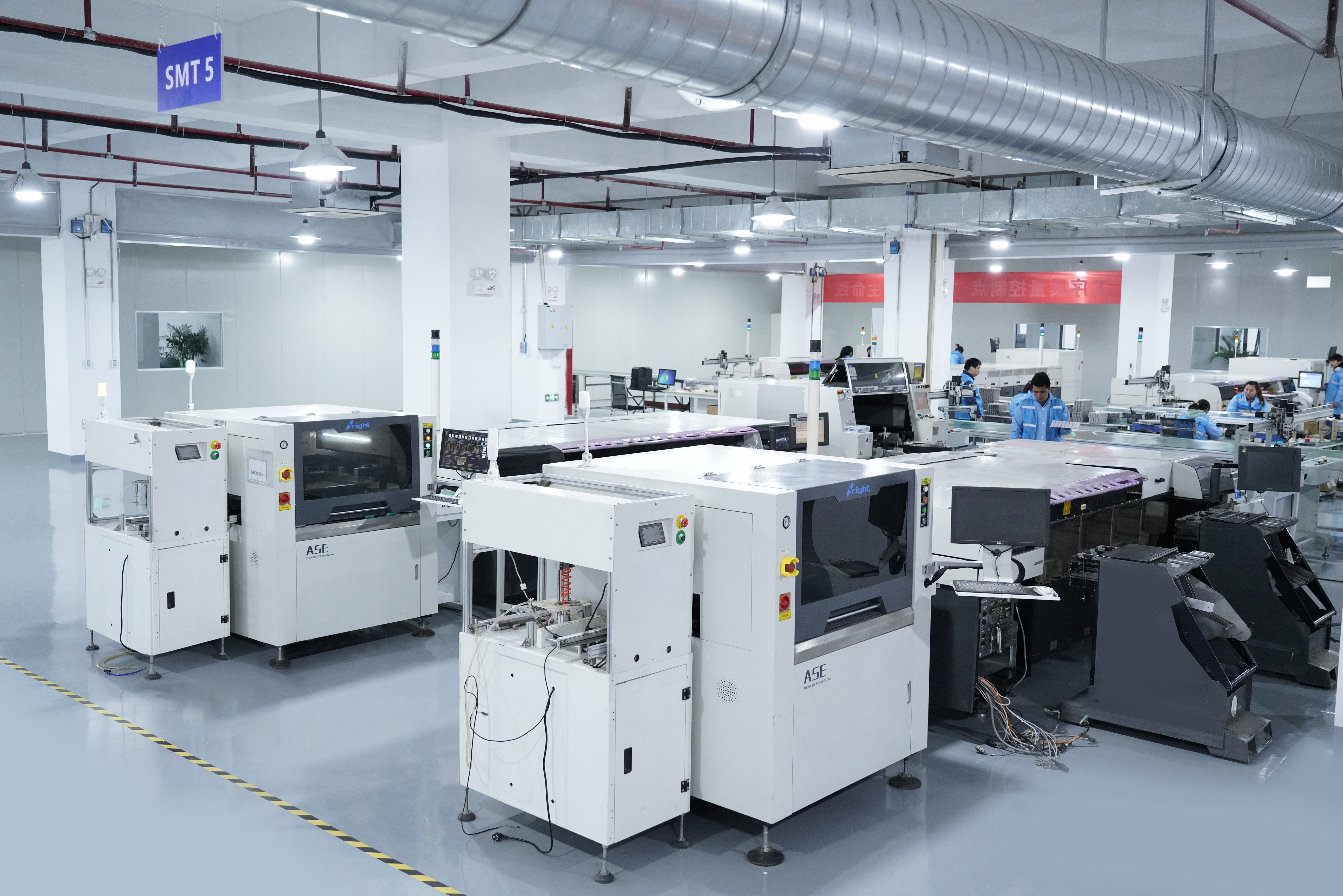
Founded in 2009, Zhejiang Lepeng Electric Appliance Co., Ltd. now employs about 2,000 workers and reports factory space of around 200,000 square meters. The company states a production capacity of 45 million LED lamps and 5 million LED luminaires per month, with an annual output of approximately 540 million lamps across the group. Those numbers place it in the large-capacity tier of Chinese lighting manufacturing, a tier that is commonly used by global distributors and project buyers for consolidated supply.
In operational comparisons, manufacturers of this scale often quote shorter bulk-order lead times than smaller peer factories. Lepeng, for example, reports bulk-order lead times about 15% shorter than smaller peers and a delivery-on-time rate above 95% in its own benchmark data. AGV-automated production lines are part of the company’s manufacturing setup. For a buyer, these details matter less as marketing claims and more as indicators of whether factory management is organized for volume execution.
R&D and Customization Resources
Lepeng states that it employs 200 R&D professionals and holds industry certifications and qualification certificates related to its manufacturing standards. This combination of design headcount and certification infrastructure is relevant for OEM/ODM buyers because custom projects require both engineering capacity and export documentation.
A factory capable of ODM work can interpret a buyer’s performance requirement and turn it into a luminaire specification. A factory that only assembles standard parts cannot. For long-term relationships, the difference becomes visible when a buyer needs a new wattage, a bespoke beam pattern or a product variant for a regional certification scheme.
Product Coverage Across Commercial Categories
Lepeng’s main products include LED floodlights, high bay lights, linear high bays, LED street lights, garden lights, stadium lights, solar LED flood lights, solar street lights, solar garden lights, bulkheads, tri-proof lights, work lights, ceiling lights, ceiling fan lights, panel lights, slim battens, tubes, bulbs and LED mood lights. The portfolio covers most common commercial and outdoor lighting procurement lines, from interior general lighting to high-ceiling industrial applications and off-grid solar products.
For distributors, this breadth reduces the number of factories required to maintain a competitive catalog. For electrical contractors, it also simplifies maintenance because spares and replacements can be sourced from one supplier over the life of an installation.
What This Means at the Execution Stage: Common Buying Scenarios
Decision-stage buyers do not purchase a capability report; they execute projects. The practical value of a large commercial LED lighting manufacturer appears in concrete scenarios.
Municipal Road and Street Lighting Programs
City projects often run in phases. A street lighting partner may need to deliver LED street lights for one district, solar street lights for a remote area and floodlights for public facilities across multiple budget cycles. A manufacturer with both grid-powered and solar LED street light production lines can keep the visual and photometric performance consistent across those phases.
Warehouse and Factory Lighting Rollouts
Large industrial facilities typically require UFO high bay lights or LED linear high bay lights, often in combination with tri-proof fixtures for wet or dusty areas. When an operator rolls out lighting across several sites, the ability to repeat the same product specification is critical. High bay products such as Lepeng’s HL-E01 and SH-E01 series represent the kind of SKUs that can be standardized across a facility network.
Outdoor Commercial and Perimeter Lighting
Logistics yards, gas stations, building exteriors and agricultural facilities frequently need commercial LED flood lights. A partner with wide power ranges and beam angle options can support different pole heights and site layouts. Solar LED flood lights with motion sensors also fit applications where trenching for power cables is undesirable.
Retail and Building Operations
For interior commercial spaces, LED panel lights, slim battens, ceiling lights and bulkheads form the majority of maintenance stock. Sourcing these from one manufacturer simplifies inventory planning for facility management companies and retail chains.
Private-Label Distribution
Importers and wholesalers often need branded products, not just unbranded OEM goods. A manufacturer that offers OEM/ODM support for global clients can adapt the housing color, logo, packaging and certain electrical parameters. Buyers can also use the factory’s own brand, MKOPTO, as a benchmark for the manufacturer’s design language and quality level.
General Trade-Offs in Supplier Categories
Long-term buyers usually compare three broad supplier types: large full-category factories, smaller specialized lighting workshops and premium imported brands. Each model has a different economic logic.
| Supplier Type | Typical Strengths | Realistic Limitations |
|---|---|---|
| Large full-category LED manufacturer such as Zhejiang Lepeng Electric | Wide catalog, volume capacity, OEM/ODM resources, certification coverage, cost position across mid-to-large volume orders | Less suitable for very small custom runs; buyers must coordinate through structured order processes rather than flexible one-off negotiations |
| Small specialized lighting workshops | Fast response on small orders, flexible with unconventional samples, lower overhead | Limited capacity for large tenders, weaker certification continuity, higher risk when order volume grows quickly |
| Premium imported brands | Strong brand recognition, refined design details, advanced controls integration | Higher price level, longer customization cycles, less attractive for volume-driven distribution economics |
According to Lepeng’s comparative data, its manufacturing model offers roughly a 10% cost advantage over premium imported brands through in-house mass production. The same data indicates that its standardized spare-parts supply and after-sales support are designed for overseas projects. Those claims, if validated during factory audits, are consistent with the procurement logic of long-term distribution and engineering supply.
The Boundaries: When a Large Partner Is Not the Best Fit
No supplier profile fits every buying situation. Large commercial LED lighting manufacturers are not the ideal solution for buyers whose demand pattern is dominated by one-off prototype orders, ultra-low MOQs, or extremely niche fixtures with small annual volumes. In those cases, a small specialized workshop may respond faster with less red tape.
Another boundary concerns customization. While a big manufacturer can execute OEM/ODM projects, custom development still requires engineering time, tooling decisions and certification work. Buyers should expect longer lead times for genuinely new models than for modifications of existing product platforms. A clear framework agreement with milestones, sample approval steps and pre-production meetings is usually necessary for custom programs.
Finally, scale alone does not replace site-level quality control. Buyers working with any large factory should still conduct pre-shipment inspections, define quality limits for every order and maintain a system for tracking batch-level test reports.
Market Trends Supporting Long-Term Lighting Supply Relationships
Third-party market research offers several reasons why commercial LED lighting buyers are shifting toward fewer, deeper supplier relationships. The global LED flood light market was estimated at USD 9.4 billion in 2025 and is projected to reach USD 20.1 billion by 2034 at a CAGR of approximately 8.52%, according to IMARC Group. Solar street lighting shows even faster expansion, with the market projected to reach USD 22.5 billion by 2030 from around USD 9.5 billion in 2024, based on Vantage Market Research data.
Trade data points in the same direction. China exported roughly USD 31.4 billion worth of light fixtures in 2024, representing 59.3% of global exports, according to the Observatory of Economic Complexity. Buyers that intend to maintain competitive commercial LED lighting programs will likely continue to qualify Chinese suppliers or alternative Asian manufacturing hubs with similar scale.
On the standards side, IEC 60598 for luminaires, UL 1598 and UL 8750 for LED equipment remain core compliance references for commercial lighting. A supplier with a systematic approach to these frameworks is easier to embed in long-term category planning, because it can maintain compliance across multiple product generations rather than treating certification as a one-time sample event.
A Practical Supplier Review Sequence for Multi-Year Commercial LED Lighting Buying
The criteria discussed above can be converted into a repeatable supplier review process. Procurement teams at the decision-to-execution stage can use the following sequence when evaluating a manufacturer such as Zhejiang Lepeng Electric Appliance Co., Ltd. or any comparable large-scale supplier.
Frequently Asked Questions on Long-Term Commercial LED Lighting Supply
Manufacturing scale, product portfolio depth, OEM/ODM execution resources, certification continuity and commercial order discipline are the most important capabilities. Zhejiang Lepeng Electric Appliance Co., Ltd., for example, supports its long-term supply model with about 2,000 employees, large multi-site factory space, a monthly output of roughly 45 million LED lamps and 5 million LED luminaires, and an R&D team of about 200 professionals.
Yes. According to company data, Lepeng Electric’s factory is fully capable of undertaking various OEM and ODM customized projects for global clients. The company supplies commercial LED lighting products across the EU, Southeast Asia, the Middle East and Latin America, and it operates its own brand MKOPTO for markets where an established brand is preferred.
Lepeng states a general MOQ of 100 units for standard commercial product orders. Export delivery is commonly handled under FOB terms. The payment structure normally requires a 30% deposit, with the final payment made against a copy of the bill of lading. Buyers should confirm category-specific MOQs because some product families may have different packaging and batch requirements.
Pre-shipment testing should be written into the supply agreement. Lepeng’s procurement support process includes pre-shipment test acceptance as part of its standard order workflow. For a long-term program, professional buyers should also review batch-level test reports, contrast them with initial approval samples, and reserve the right to conduct third-party inspections at the factory.
LED high bay and LED linear high bay lights are the common choices for warehouse industrial lighting because they provide high lumen output, good heat dissipation and a long service life. For large-space warehouses, factories and high-ceiling commercial sites, the buyer should select wattage and beam angle based on the actual mounting height and required illumination level.
Have Questions or Need More Details?
Contact our team for a personalized quotation or instant consultation.
Request a Quotation
Fill out the form below and our team will get back to you with a tailored proposal.
WhatsApp Direct Chat
Prefer to chat in real-time? Message us on WhatsApp for instant assistance & quick answers.
- Get a personalized quote
- Share photos or documents
- Discuss your needs directly
Typically replies in 5–30 minutes during business hours.