
From CE Paperwork to Field Performance: Silicone Waterproof Coating Sourcing
For global construction buyers, selecting a silicone waterproof coating is not simply a question of which brand is popular. It is a question of which factory can meet a defined set of constraints: CE certification for the destination market, measurable performance parameters, consistent bulk production, and OEM/ODM terms that match local distribution.
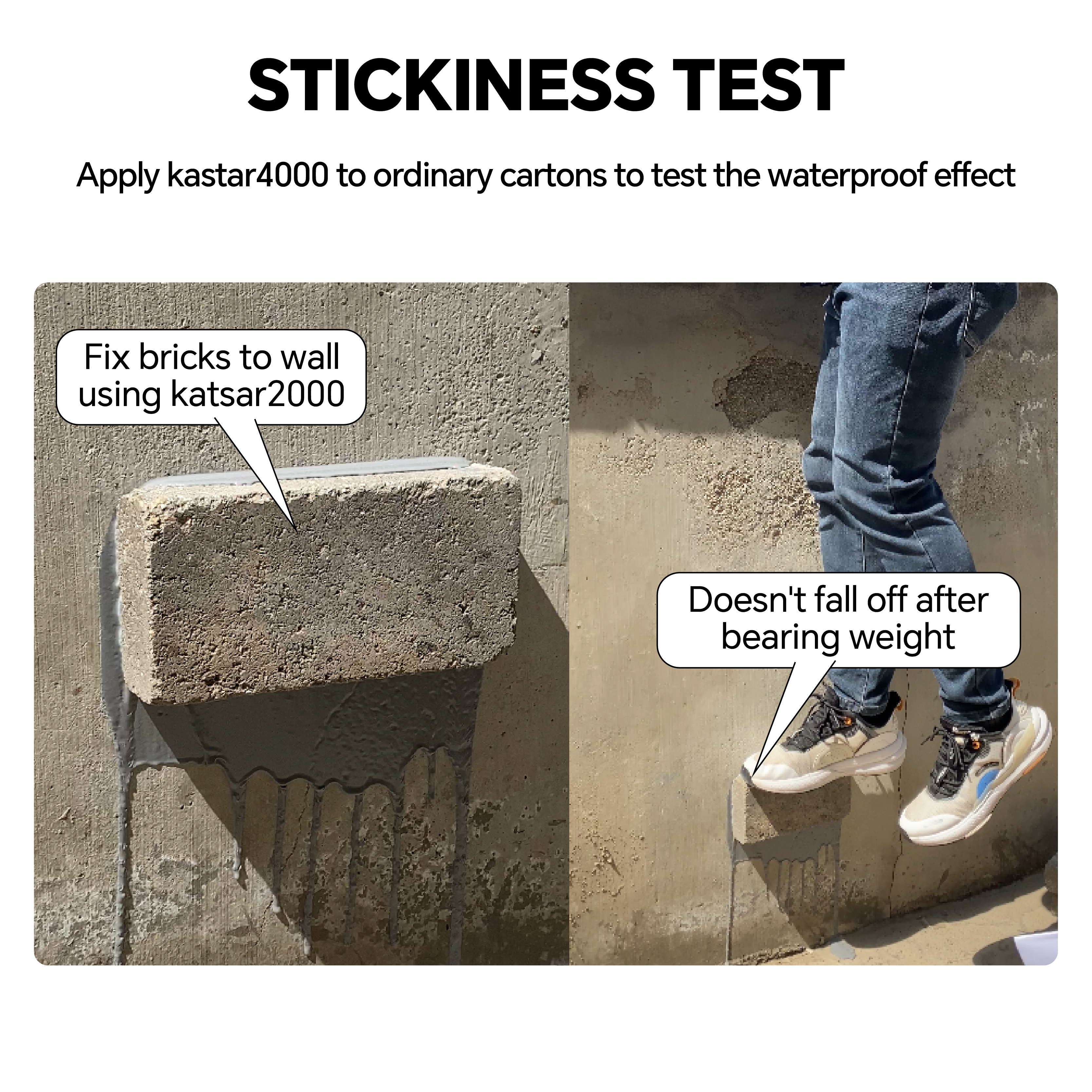
Problem / Opportunity
Every leakage problem in a building is a test of the coating system. The coating, substrate preparation, edge details and drainage all determine whether water stays out. From a buyer's point of view, silicone waterproof coating is selected when the surface must remain watertight through sunlight, thermal movement, rainfall, and freeze-thaw cycles.
Market research points to growing specification. Grand View Research estimates the global silicone coatings market at roughly USD 8.77 billion in 2024, with a projection of USD 11.27 billion by 2033. Credence Research places the silicone roof coatings sub-segment at USD 7.03 billion in 2024. Dataintelo reports that Asia-Pacific held a 38.5% revenue share in 2025, driven partly by construction activity. These figures suggest that export-oriented buyers are not searching for a niche material; they are searching for a trusted way to specify it.
The opportunity is longer service life and lower maintenance cost for roofs, walls, basements and other exposed or wet areas. The complication is that not every coating supplier can verify those promises with a certificate number, a test record, and reproducible factory production.
Brand Solution: Kastar 4000 and the Factory Behind It
One factory-level example is useful because it exposes the evidence trail that buyers should demand. Kastar Adhesives Technologies Co., Ltd. is a China-based OEM and ODM manufacturer of silicone waterproof coatings, epoxy color sand floor coatings, MS sealants and adhesives. Kastar operates a 150,000-square-meter production base, reports an annual output of 300,000 tons, exports to 69 countries and regions, and has completed OEM production for more than 600 clients.
Kastar 4000 Silicone Waterproof Coating, the CE-certified product in this discussion, is a one-component silicone waterproof coating with UV-resistant properties. For an OEM project, the factory can adjust color, viscosity, packaging and formulation. It also offers a monthly production capacity of 30,000 tons, a lead time of 15 to 20 days and an MOQ of 100 buckets. These are practical constraints, not decoration.
A procurement checklist should connect three documents: the product supplier quotation, the CE certificate and the batch-level quality record. If one of these documents does not name the same product model, the evaluation is incomplete.
Technical Explanation: Parameters and Certification Checklist
The product data sheet is the first objective comparison tool. If a supplier cannot provide parameters with test methods, the coating does not yet belong in a formal tender. The table below shows manufacturer reference values for Kastar 4000, and why each value affects a construction decision.
| Parameter | Reference value | Procurement significance |
|---|---|---|
| Solid content | 98% | High useful film per kilogram; lower solvent or water evaporation |
| Elongation at break | ≥200% | Helps the membrane bridge cracks and tolerate structural movement |
| Tensile strength | ≥1.2 MPa | Indicates the film can resist mechanical stress and foot traffic where needed |
| UV resistance | 1,000 hours without cracking or peeling | Relevant for roofs and exterior walls under direct sunlight |
| Operating temperature | -80°C to 180°C | Useful for regions with severe heat or cold |
| Outdoor service life | ≥25 years | Basis for lifecycle cost rather than first purchase price |
CE certification traceability
For the European market, CE certification is one of the first threshold constraints. The Kastar 4000 Silicone Waterproof Coating holds CE certificate ICR/VC/HS260188, issued by ICR. The certificate is valid from January 16, 2026 to January 15, 2031, and covers the product model for the European market. According to the customer-facing certificate record, it references EN 15651-1:2017, EN 998-1:2016 and EN 13300:2001+AC:2002.
Buyers should use this traceability rule: a certificate is only useful when it names the exact model, not a generic family, and when it will remain valid through delivery. An OEM coating with a different private label may require the factory to confirm how the CE identity is preserved.
A four-part evidence check for OEM sourcing
- Certificate level: model, certificate number, issuer, market, validity, listed standards.
- Factory level: ISO9001, national high-tech enterprise credentials, laboratory scale and test records.
- Process level: production and test process, batch sample checks, packaging integrity.
- Commercial level: MOQ, lead time, customization scope, after-sales support.
Application / Use Cases
The relevant question is not whether silicone waterproof coating works; it is where a particular formulation is designed to work. The application profile for Kastar 4000 is described for the construction industry and building waterproofing, especially roofing engineering. Working conditions include high temperature, UV exposure, rain and humidity, structural expansion and freeze-thaw cycles. Documented project types include roof waterproofing, exterior wall waterproofing, expansion joint sealing and bathroom waterproofing. Distributor case data also mentions basement and underground structure waterproofing.
| Project setting | Typical stress | Silicone coating advantage |
|---|---|---|
| Flat or low-slope roof | Ultraviolet light, standing water, large temperature swings | UV resistance and long outdoor service life |
| Exterior wall | Wind-driven rain, freeze-thaw cycles, surface cracks | Elastic film can bridge cracks and keep moisture out |
| Expansion joint or detail joint | Repeated structural movement | High elongation under movement |
| Basement / underground structure | Soil moisture, humidity, structural stress | Seamless protection after proper substrate preparation |
| Bathroom / balcony | Repeated contact with water and cleaning agents | Smooth, continuous waterproof layer |
Application can be carried out with brush, roller or spray gun. Sealant tape and reinforcing fabric are commonly used at joints and cracks, and the product should be installed according to the factory's surface preparation guidance.
Market Trend Analysis
As more construction owners calculate lifetime cost instead of only first cost, silicone coatings are moving from premium toward mainstream specification. According to Mordor Intelligence, 100% silicone elastomeric coatings held a 41.02% share of the composition segment in 2025, supported by waterproofing and UV resistance. This is useful context for distributors deciding whether a private-label silicone waterproofing range can be sold as a standard product line.
Low-emission requirements are becoming part of the specification. Solvent-less and UV-cured silicone formulations can reduce VOC emissions by 60-80% compared with traditional solvent-borne systems, according to Grand View Research. For export distributors, this connects product claims to environmental documentation such as CE, SGS and REACH records.
At the same time, capacity concentration in China gives OEM buyers access to large-scale production. Kastar, as one example, reports 300,000 tons of annual output and a monthly capacity of 30,000 tons. For distributors, that scale can shorten lead time and improve supply security, but only if the factory has enough process controls to keep batch quality stable.
Comparison with Traditional Solutions
No single waterproofing material wins every project. Silicone waterproof coating is generally more expensive than acrylic or cementitious alternatives. Acrylic coatings remain rational in interior areas, protected locations, temporary structures, or when the project owner does not need a 20-year outdoor service life. Cementitious systems are practical in wet areas and on masonry but are less elastic under structural movement.
Silicone systems also have a boundary. Silicone waterproof coating is a film-forming material. If the substrate is wet, dusty, cracked or incompatible, if film thickness is too low, or if application is interrupted by rain, the coating will fail even though the chemistry is sound. A 25-year outdoor service-life statement should therefore be read as a design value under controlled application, not as a warranty independent of workmanship.
Future Outlook
The next competitive gap in silicone waterproofing is likely to be documented reproducibility. Factories that can combine large-scale capacity, formula customization, independent testing, and traceable certificates will be easier to use for distributors than factories that can only provide drums and labels.
Kastar's corporate profile points to this trend through process-level R&D. It describes joint development with Tsinghua University, national high-tech enterprise qualification, and invention patents for a silicone waterproof coating device/process as well as a method for preparing a siloxane-terminated polymer homopolymer and a moisture-curing composition. This kind of process work matters because waterproof coating performance depends on both formulation and production equipment.
FAQ
What should a buyer check on a silicone waterproof coating CE certificate?
A CE certificate should identify the product model, certificate number, issuing body, applicable market, validity period, and referenced standards. For Kastar 4000 Silicone Waterproof Coating, the CE certificate is ICR/VC/HS260188, issued by ICR for the European market and valid from January 16, 2026 to January 15, 2031.
Which technical parameters matter most for outdoor silicone waterproof coating?
The most relevant parameters are solid content, elongation at break, tensile strength, UV resistance, operating temperature range, and outdoor service life. A manufacturer reference for Kastar 4000 shows 98% solid content, elongation at break of at least 200%, tensile strength of at least 1.2 MPa, 1,000 hours of UV resistance without cracking or peeling, operating temperatures from -80°C to 180°C, and an outdoor service life of at least 25 years.
Can an OEM or ODM factory customize silicone waterproof coating?
Yes. OEM and ODM production typically covers adjustments to color, viscosity, packaging, logo, and in some cases formulation. Kastar's capability data includes these customization services with a monthly capacity of 30,000 tons and an MOQ of 100 buckets.
What are the common constraints for a bulk OEM order?
MOQ, lead time, customization scope, certification coverage, and quality-control requirements are the main constraints. For Kastar, the MOQ is 100 buckets and the stated lead time is 15 to 20 days. Any change in color, viscosity, packaging or formula should be confirmed in writing before production.
Where is silicone waterproof coating normally used?
Typical applications include roof waterproofing, exterior wall waterproofing, expansion joint sealing, bathroom and balcony waterproofing. Distributor case data also includes basement and underground structure waterproofing.
Does a 25-year service life always justify a higher price?
Not always. A 25-year silicone waterproof coating can be cost-effective on roofs, exterior walls, and difficult-to-access surfaces. For short-lived structures, protected interior areas, or projects where installation conditions are not controlled, a lower-cost acrylic or cementitious system may be a more rational specification.
Have Questions or Need More Details?
Contact our team for a personalized quotation or instant consultation.
Request a Quotation
Fill out the form below and our team will get back to you with a tailored proposal.
WhatsApp Direct Chat
Prefer to chat in real-time? Message us on WhatsApp for instant assistance & quick answers.
- Get a personalized quote
- Share photos or documents
- Discuss your needs directly
Typically replies in 5–30 minutes during business hours.