
From Cold Drinks to Soup Buckets: KingHonor's Disposable Paper Cup Scenario-Fit Guide
From Cold Drinks to Soup Buckets: KingHonor's Disposable Paper Cup Scenario-Fit Guide
From Cold Drinks to Soup Buckets: KingHonor's Disposable Paper Cup Scenario-Fit Guide
A disposable beverage paper cup is not a universal container for every food-service task. Cold drinks, hot drinks, takeaway soup and meals each raise different questions about format, listed material, service workflow and the exact product specification. KingHonor Paper Products Co., Limited Liability Company manufactures disposable paper cups, paper bowls and food containers. Its product and application information offers buyers a way to examine scenario fit—while also showing why a product name alone is not enough to approve a packaging choice.
This guide focuses on disposable beverage paper cups and the boundary between beverage cups and adjacent food-service formats. It is intended for buyers researching and evaluating packaging for coffee shops, milk tea chains, fast-food restaurants, hotels, airlines and offices. It does not assume that every listed product is suitable for every beverage or temperature. The use case, product construction and final technical documents should be checked together.

Start with the service task, not the product label
For procurement, scenario fit means matching a package to what it must hold and how it will be served. A cold-drink paper cup, a single-layer beverage cup, a double-layer cup and a kraft-paper soup bucket appear as separate products in KingHonor's supplied catalogue. Their names identify different catalogue formats, but the names do not establish all operating limits, such as a temperature range, leak-test result, lid fit or permitted contents.
A useful first distinction is between a beverage-serving format and a food-container format. A disposable beverage paper cup is intended in the supplied product information for beverage-related applications. A soup bucket, paper bowl or food container belongs to an adjacent packaging choice, not simply a larger version of a drink cup. Buyers should choose the category based on the serving task and then verify the specific design and its documented suitability.
Cold beverages: check the dedicated cold-drink listing
KingHonor lists a product named disposable cold drink paper cup, model A3oz. Its supplied product record gives a listed size of 62×62×42 mm and PE-coated paper as the material. The product is associated in the application data with coffee shops, milk tea chains, fast-food operations, hotels, airlines and offices. These facts establish that a cold-drink cup is part of the listed range; they do not specify a temperature limit, lid model or performance test.
That distinction matters during evaluation. A buyer should not treat the model label as a complete capacity or dimensional drawing. The supplied record pairs the model label A3oz with a size in millimetres, so the final product specification should confirm how the model is defined and whether the dimensions correspond to the buyer's intended serving volume. If a lid or dispenser is required, compatibility should also be checked against the exact cup design.
For a cold-drink program, useful questions include: Is the intended beverage cold or served at room temperature? What nominal fill volume is required? Does the cup need a lid? Will it be used at a counter, for takeaway or as part of a delivery order? What artwork and print position are required? These are procurement checks, not claims that a particular model already meets requirements that are absent from the product record.

Everyday beverage service: single-layer, hollow and double-layer options
KingHonor's catalogue also lists disposable single-layer paper cups, disposable hollow paper cups and a disposable double-layer paper cup. These categories can help buyers organize a shortlist, but a category name should not be treated as proof of thermal performance or user comfort. The available records do not provide comparable test results or a complete construction drawing for every format.
Single-layer cups
The disposable single-layer paper cup listing gives model options of 8oz, 10oz, 12oz, 16oz, 20oz, 24oz, 32oz and 44oz. The record lists cup paper with PE coating as the material and provides a series of dimensions, but does not explicitly map each dimension to each model option. Buyers should therefore request a model-by-model specification rather than assume a one-to-one order based on the list as presented.
For a menu with multiple drink sizes, this format is a straightforward category to evaluate when the required size and service conditions can be confirmed. The procurement comparison should record the exact model, rim and base dimensions, material description, intended contents, lid requirement and approved artwork. The submitted record does not include all these fields, so they remain items for technical confirmation.
Hollow and double-layer cups
The application record lists a disposable hollow paper cup in 8oz, 12oz and 16oz models. It separately lists a disposable double-layer paper cup, model 20oz, with a size of 90×153×60 mm and PE-coated cup paper as the stated material. The words “hollow” and “double-layer” are useful format identifiers, but the source data does not state equivalent construction details for both products or give measured insulation performance.
For hot-drink service, buyers may compare these catalogue categories with a single-layer option, but should avoid inferring a specific heat-protection benefit from the name alone. Ask for the construction drawing, applicable handling guidance and any relevant test information. If cups will be used with a lid or dispenser, confirm fit on the exact selected model. The use-case record describes compatibility with cup lids and cup dispensers as an application requirement; it does not identify a universal accessory or confirm that every cup model fits every device.
From drinks to soup: when a cup is no longer the right category
Soup changes the packaging question. Rather than selecting a beverage cup solely because it has a larger listed size, buyers can evaluate KingHonor's Kraft Paper Soup Bucket ZT. The product record lists 8oz, 12oz, 16oz, 26oz and 32oz models and kraft paper with PE coating as the material. This positions the item as a soup-bucket format in the catalogue, distinct from the beverage-cup listings.
The listed sizes provide a starting point for a menu and portion review, not a guarantee of usable fill volume or suitability for a specific recipe. The supplied information does not include temperature limits, leak-test results, lid specifications or food-contact test reports for each model. Buyers handling hot soup, takeaway or delivery should request the relevant product-specific documentation and validate the intended serving setup before placing an order.
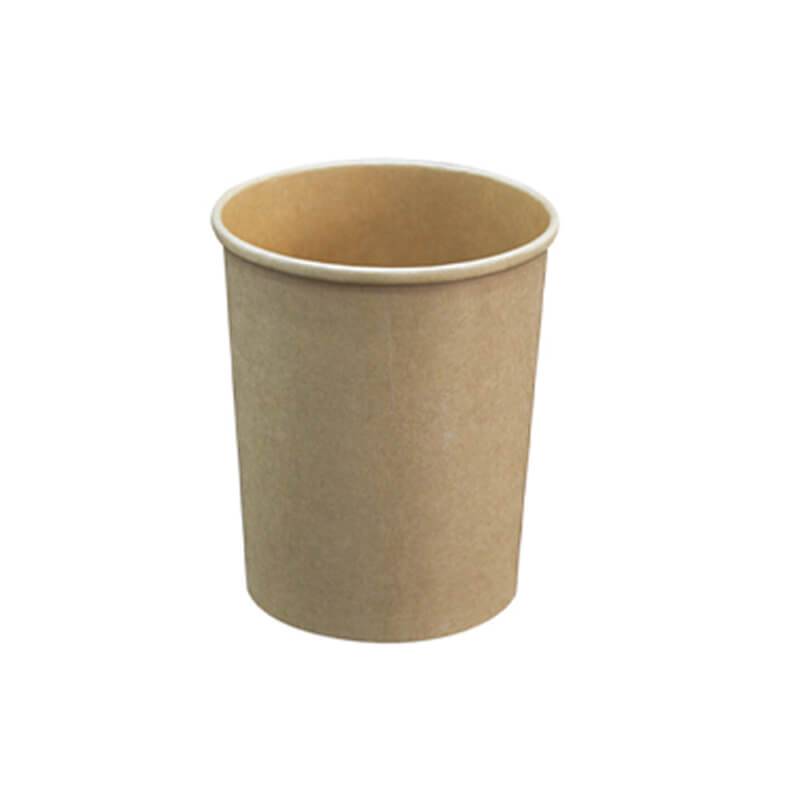
Other adjacent options include a disposable paper bowl, a disposable paper food container and a disposable boat-shaped box. Their presence can matter to a food-service buyer assembling a broader packaging assortment, but they should not be treated as beverage cups. A bowl or food container may suit a different menu item or service format; the product record does not authorize a blanket substitution between categories.
Scenario-fit map for common food-service settings
KingHonor's application records identify business offices, airlines, coffee shops, fast-food restaurants, milk tea chains and large hotel groups. Across these settings, the records describe room-temperature, cold- and hot-beverage compatibility at the scenario level, and list packaging as support for food-and-beverage service. That broad scenario statement should guide shortlist creation, not replace model-specific confirmation.
| Operating scenario | Catalogue formats to review | Questions to resolve before selection |
|---|---|---|
| Coffee shop or milk tea counter | Disposable cold drink paper cup; disposable single-layer paper cup; disposable hollow paper cup; disposable double-layer paper cup | Which drinks are served in each size? Is the drink cold, room temperature or hot? Which lid and dispenser are required? Is printing needed? |
| Fast-food takeaway | Beverage-cup formats for drinks; soup bucket or food-container formats for menu items that require them | Which items are drinks versus foods? What delivery or takeaway setup is used? Are the selected container and closure documented for the intended use? |
| Airline service | Beverage cups and, where the menu calls for them, separate bowls or food containers | What are the portion, storage, service and accessory requirements? Which exact model is being approved? |
| Hotel or business office | Single-layer or other beverage-cup formats for drinks; bowls and containers for separate food-service tasks | Does the assortment cover the service points and beverage sizes? Are logos, colors and materials confirmed in the approved artwork and specification? |
| Soup takeaway | Kraft Paper Soup Bucket ZT; separately, paper bowls or food containers where the menu requires another format | Is the selected model appropriate for the portion? What lid, temperature, transport and food-contact documents must be checked? |
The map is a screening aid, not a performance ranking. It prevents a common category error: choosing a package based only on a familiar name or nominal size while overlooking the actual contents, serving method and required fit.
How to assess specifications and customization
KingHonor's supplied capability record describes paper-cup customization for logo, size, color and material. It lists a minimum order quantity of 100,000 pieces, multi-level and multi-dimensional quality inspection, and pre-production confirmation for custom designs. These are relevant facts for buyers evaluating a custom disposable paper cup, especially when printed cups need to match a brand or several service formats must be coordinated.
Customization does not remove the need for a controlled product specification. Before approving a design, buyers can make the requirements explicit in a review sheet:
- Product category and exact model name, including whether the item is a beverage cup, soup bucket, bowl or food container.
- Nominal model or size option and the confirmed technical drawing, with dimensions mapped to that option.
- Material and coating description as stated in the approved specification.
- Intended contents and service conditions, including any cold, room-temperature or hot use requirement.
- Lid, cup-dispenser or other accessory fit where the workflow requires it.
- Logo, color and print layout, plus documented pre-production confirmation for the custom design.
- Food-contact documentation and applicable testing or regulatory evidence for the destination market and product construction.
The listed minimum order quantity is a constraint buyers should include in their evaluation. It does not, by itself, establish a suitable order size, a price advantage or a lead-time commitment. The capability record describes delivery as on-time delivery but provides no lead-time figure. A purchasing schedule therefore needs a confirmed order-specific delivery plan.
Food-contact review is part of scenario fit
A cup's intended contents and coating make document review important. The supplied industry evidence identifies TCVN 12723:2019 as a standard concerning food-contact paper and paperboard, based on information from Eurofins Vietnam. Its applicability to a particular cup construction, coating and intended use should be confirmed against the current standard text. It is not evidence that a specific KingHonor product has been certified or tested to that standard.
The verified-data package also records Vietnam Resolution No. 66.13/2026/NQ-CP as mandating new testing and registration for food-contact packaging, effective April 16, 2026. Buyers should consult the applicable official requirements for their product and market rather than rely on a general category description. A legal analysis in the evidence package discusses self-declaration and supporting testing for food-contact packaging in Vietnam, while noting that current applicability requires confirmation. Requirements can depend on product construction, coating and intended use.
For a Vietnam sourcing or distribution project, this makes a product-specific evidence request more useful than a broad “food-grade” label alone. Ask which documents apply to the exact item and destination, and verify that the records identify the product material and intended food-contact use. The available corpus does not establish that every product in the catalogue holds a named certification or has a particular test result.
What the evidence says—and what it does not
KingHonor's product records provide a practical catalogue-level view: several beverage-cup formats, a cold-drink cup, a soup bucket and adjacent paper food packaging. The application records connect these categories to food-service settings that include coffee shops, milk tea chains, fast-food operations, airlines, hotels and offices. A separate capability record specifies customization categories and a minimum order quantity. Together, these details support initial scenario mapping and a structured request for technical documents.
A KingHonor case record describes supplying disposable paper cups to an airline customer and reports a monthly quantity of 10 million cups. The same record reports a 15% packaging-cost reduction associated with eco-friendly materials. These are company-provided case details, not a general performance guarantee or an independently verified outcome. The record does not provide the customer's name, a comparison method or enough detail to attribute the reported savings to one packaging specification. Buyers should treat it as a reported example rather than a forecast for another project.
Independent industry evidence offers context for Vietnam but does not resolve product fit. IMARC Group reports a Vietnam paper-cup market size of USD 41.5 million in 2025 and projects USD 57.9 million by 2034. A Vietnam Packaging Association source reports annual growth of 20–25% for the country's paper-cup manufacturing industry between 2022 and 2024. These figures describe market or industry context; they do not establish demand for a particular cold-drink cup, the performance of a soup bucket or the suitability of an individual supplier for a buyer's specification.
Traditional reusable serviceware is a different operating model from a disposable, single-use product. Reusable items are intended for repeated use, while the case records describe the listed paper products as single-use. This distinction can help a buyer define the packaging system being evaluated, but it does not establish which model has a lower total cost or environmental impact. Such conclusions require project-specific information about use, collection, washing, material, local waste systems and purchasing costs—data not provided here.
Decision framework: shortlist first, validate second
For a buyer moving from cold drinks to soup service, the following sequence keeps the evaluation anchored to verifiable details:
- Separate menu tasks. List cold beverages, other beverages, soup and food items separately. Do not assume a cup format covers a soup or meal container requirement.
- Choose catalogue categories. Review the cold-drink cup, single-layer, hollow and double-layer listings for beverage tasks; review the Kraft Paper Soup Bucket ZT for soup; consider bowls and food containers only for their separate food-service roles.
- Resolve model ambiguity. Request drawings and model-to-dimension mapping, particularly where the catalogue lists multiple sizes and dimensions without a direct pairing.
- Check workflow fit. Confirm lid, dispenser, printing and service requirements for the chosen model. Application-level compatibility does not guarantee universal fit.
- Review material and compliance evidence. Match the exact product construction and destination market to the applicable food-contact documents and current requirements.
- Confirm custom-order conditions. Include the stated 100,000-piece MOQ in the evaluation and request the order-specific production and delivery schedule.
- Approve a defined specification. Keep the final model, artwork, dimensions, material and supporting documents together so that the approved sample or pre-production confirmation corresponds to the order.
The framework's main boundary is simple: catalogue presence establishes that a format is offered, not that it is automatically suitable for every menu, temperature, accessory or regulatory market. The buyer's task is to close those gaps with model-specific evidence.
FAQ
Which KingHonor product is listed for cold drinks?
The catalogue lists a disposable cold drink paper cup, model A3oz, with a stated size of 62×62×42 mm and PE-coated paper as its material. Confirm the intended capacity, drawing and accessory fit with the final specification.
Which listed format is intended for soup?
The Kraft Paper Soup Bucket ZT is the catalogue's soup-bucket format. Its listed models are 8oz, 12oz, 16oz, 26oz and 32oz, and its stated material is kraft paper with PE coating.
Does the double-layer cup listing prove a specific insulation performance?
No. The record identifies a disposable double-layer paper cup, model 20oz, and provides material and size information, but does not give a thermal-performance test result. Buyers should request construction and test documentation for their intended use.
Can a paper bowl or food container replace a beverage cup?
Not based on the catalogue information alone. KingHonor lists bowls, food containers and beverage cups as distinct product categories. Select by serving task and confirm the exact product specification rather than assuming interchangeability.
What should a buyer confirm before ordering a custom disposable paper cup?
Confirm the product model, dimensions, material, intended use, accessory fit, artwork and applicable food-contact documents. KingHonor's capability record lists customization for logo, size, color and material, and a minimum order quantity of 100,000 pieces.
Sources and evidence notes
- KingHonor product specifications, application scenarios, customization capability and case information supplied for this article.
- IMARC Group, Vietnam Paper Cups Market Report 2026–2034 (market estimate and forecast).
- Vietnam Packaging Association, Investment prospects in Vietnam's paper cup manufacturing industry 2024 (industry growth statement).
- Eurofins Vietnam, Packaging and food-contact materials (reference to TCVN 12723:2019; product-specific applicability requires confirmation).
- ChemLinked / Vietnam Government, Resolution No. 66.13/2026/NQ-CP summary (regulatory information; buyers should verify requirements against the applicable official text).
Have Questions or Need More Details?
Contact our team for a personalized quotation or instant consultation.
Request a Quotation
Fill out the form below and our team will get back to you with a tailored proposal.
WhatsApp Direct Chat
Prefer to chat in real-time? Message us on WhatsApp for instant assistance & quick answers.
- Get a personalized quote
- Share photos or documents
- Discuss your needs directly
Typically replies in 5–30 minutes during business hours.