
From Construction Sites to Food Stalls: Scenario Fit for the COOLWAVE Cooling Vest Series
From Construction Sites to Food Stalls: Scenario Fit for the COOLWAVE Cooling Vest Series
A cooling vest is only useful if it matches the heat environment, the working posture and the length of the working block it was bought for. The COOLWAVE Water-Circulation Cooling Vest series separates its range along exactly those lines, and the separation is written into the product's documented intended use.
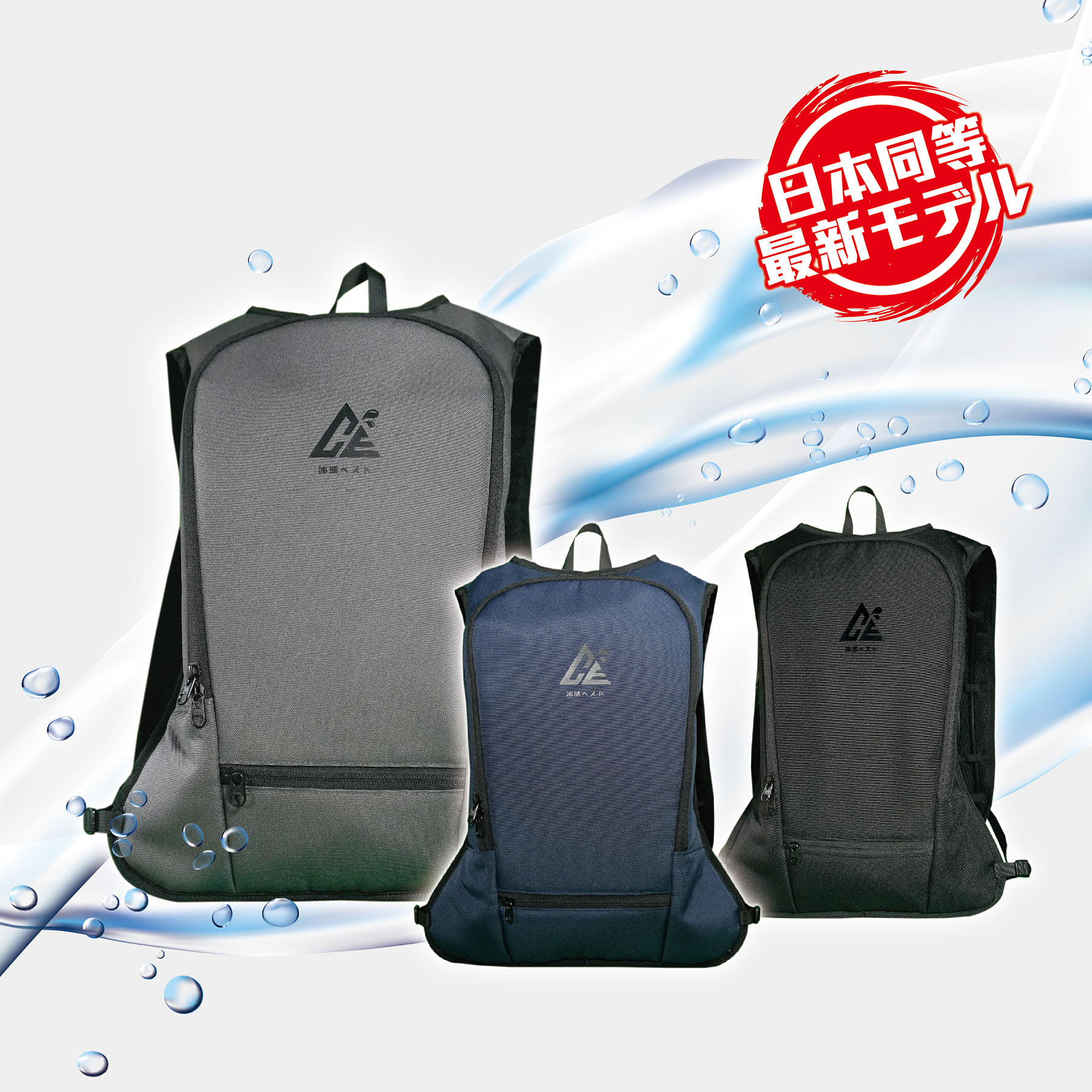
Heat stress protection has moved from a seasonal accessory to a planned procurement line. The global market for heat stress prevention products reached USD 2.86 billion in 2025, with cooling wearables identified as a primary growth driver (The Business Research Company). Within cooling vests specifically, industrial applications were the largest segment in 2025 at 34.5% of revenue, and Asia-Pacific accounted for 38.2% of global revenue in the same year (Dataintelo).
What a market total does not show is how unevenly heat is experienced. A worker on an open construction site, an operator inside a metal sheet factory, and a street vendor standing behind a hot cooking surface are all exposed to high temperature, but they differ in airflow, radiant heat, mobility and how easily they can step away from the task. A single generic description of a "cooling vest" answers none of those differences, which is why intended-use data has become the first screening criterion rather than a footnote.
The COOLWAVE Water-Circulation Cooling Vest series is produced by FENG SHANG PRECISION CO., LTD., a Taiwan-based manufacturer established in 2009 that builds professional tools under the brand Shokunin. Shokunin is the company's professional tool brand, covering air compressors, cut-off machines, water-cooled vests, lithium batteries, diamond saws, nail guns, spider stands and screwdriver bits. The company operates a 1,000 m2 manufacturing facility in Taoyuan, Taiwan, with approximately 30 staff, an R&D team of 5 engineers and an annual production capacity of 10,000 units; around half of its output is exported, with the USA and Taiwan (ROC) as main markets.
This reference maps each COOLWAVE variant to the environments its documentation lists, explains the water-circulation and backpack configuration behind that fit, and sets out the boundaries a buyer should verify before specification.
Why Scenario Fit Comes Before Specification
Cooling performance is usually quoted as a single number: a duration, a temperature, a weight. Field performance is decided by something less quotable, namely whether the garment can be worn alongside existing protective equipment, whether the user can keep working normally while wearing it, and whether the cooling medium can be restored on site. For a construction cooling vest purchased for a mixed crew, the first question is therefore not how cold the product becomes, but which environment the variant is documented for.
Regulatory pressure reinforces that shift. In the United States, the OSHA General Duty Clause, Section 5(a)(1) of the OSH Act, requires employers to provide a workplace free from recognized hazards, a duty that covers heat stress on high-temperature construction sites (OSHA). Once the obligation is framed as an employer duty, the purchasing conversation moves from whether cooling is needed to which cooling configuration fits a given task and shift length.
The COOLWAVE Series: One Platform, Two Intended-Use Tiers
The series is documented as four variants: the Basic Model, plus the Professional Model in Black, Gray and Blue. All four are classified as industrial cooling apparel and personal protective equipment (PPE) and operate with a pump-driven water-circulation system. What separates them is the intended-use list, not the cooling platform.
| Variant | Documented intended use | Shared technical baseline |
|---|---|---|
| COOLWAVE Water-Circulation Cooling Vest (Basic Model) | Construction, outdoor work and metal sheet factory industries | Cooling duration 3–4 hours; net weight within 2 kg; flow rate max 320–370 ml/min; pump output 5V 150 mA (max); suitable temperature below 10°C; contents: water-cooled vest backpack x1, ice packs x2 |
| COOLWAVE Water-Circulation Cooling Vest (Professional Model-Black) | Construction workers, outdoor workers, food stall operators, street vendors, traffic controllers, metal sheet factories | Same baseline as above |
| COOLWAVE Water-Circulation Cooling Vest (Professional Model-Gray) | Construction workers, outdoor workers, food stall operators, street vendors, traffic controllers, metal sheet factories | Same baseline as above |
| COOLWAVE Water-Circulation Cooling Vest (Professional Model-Blue) | Construction workers, outdoor workers, food stall operators, street vendors, traffic controllers, metal sheet factories | Same baseline as above |
The Practical consequence is simple. A buyer specifying for an open construction site or a metal sheet factory can work from the Basic Model's intended-use list. A buyer specifying for a mixed outdoor workforce that includes vendors, market stalls or roadside traffic management needs the Professional tier, because those occupations appear only on the Professional intended-use list.
Scenario Mapping: Which Variant Fits Which Environment
Construction sites: the Basic Model's core environment
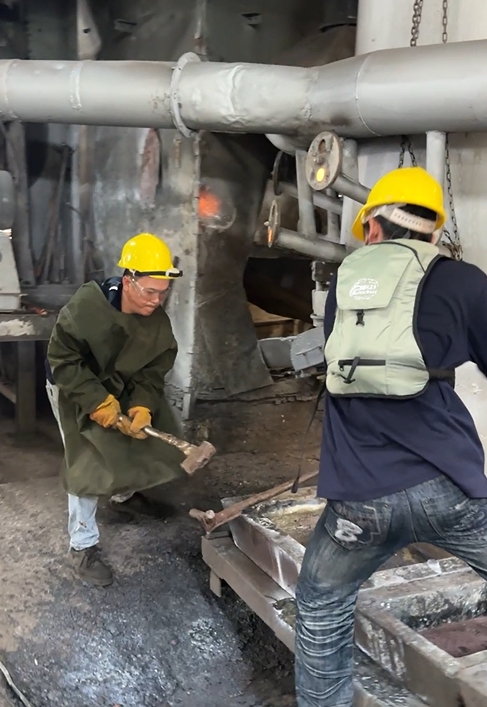
The Basic Model is intended for the construction, outdoor work and metal sheet factory industries. Three documented attributes drive its fit on site. First, the system's net weight is within 2 kg, which keeps it wearable during climbing, carrying and overhead work. Second, the cooling duration of 3 to 4 hours covers a work block rather than an entire day, which matches the way heat-exposure management is usually organised on site as alternating work and rest periods. Third, the configuration is described as lightweight, waterproof and breathable, with adjustable vest straps and a one-size-fits-all design, which matters when a site manager is equipping a crew of mixed body types rather than a single individual.
Metal sheet factories and metal-roof workplaces
Metal sheet factories are named explicitly on both the Basic and Professional intended-use lists. These environments behave differently from open sites: heat is often radiant and trapped under metal roofing, the working area is confined, and air movement can be limited. This is the setting where the difference between cooling mechanisms becomes visible. The COOLWAVE products are described as industrial cooling apparel operating on passive cooling activated by ice packs, with pump-driven continuous water circulation, so the cooling path does not depend on ambient airflow or on evaporation from a soaked outer layer. That distinction is the practical answer to the search for cooling gear for a stuffy metal-roof workplace, where airflow-dependent solutions have less to work with.
Food stalls, street vending and direct traffic: the Professional Models
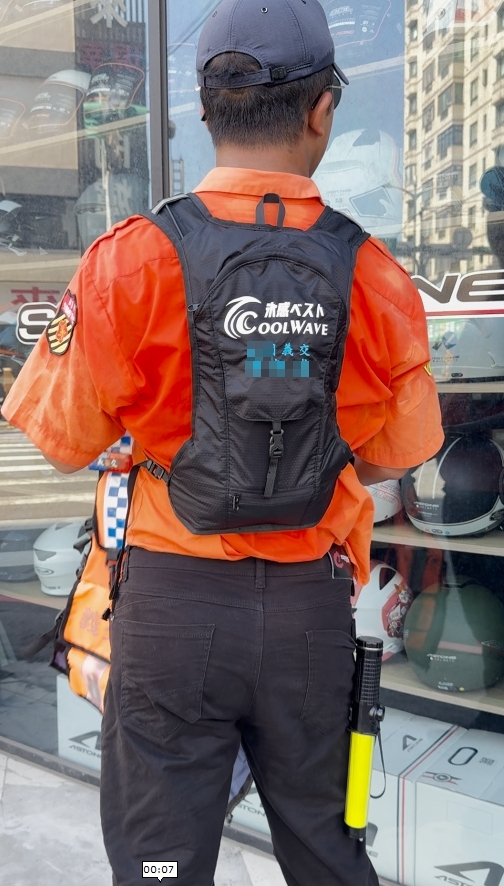
The Professional Models are additionally suitable for food stall operations, street vending, traffic control and similar outdoor work scenarios. The word "additionally" carries the procurement message: the Professional tier is not a different cooling platform, it is the same documented technical baseline extended to a longer list of outdoor occupations. Food stall operators and street vendors share a specific constraint that construction crews do not always face, which is that the work position is fixed. A vendor behind a griddle cannot leave the stall to cool down, so any cooling solution has to travel with the person rather than depend on retreating to a shaded rest area.
Traffic control adds a second constraint. The worker has to remain visible for the whole assignment, which means the cooling layer has to coexist with reflective equipment rather than replace it, and the garment has to tolerate standing and slow movement in direct sun for extended periods. This product application scenario is described as common in Taiwan, where these outdoor occupations are widely practised.
Why one duration figure serves four different environments
Construction, metal sheet production, vending and traffic management differ in heat source and in mobility, but they share one structural feature: work is organised in blocks. A 3 to 4 hour cooling duration therefore reads less like a marketing figure and more like a planning unit. It tells a buyer how many ice packs are needed per crew member per day, and it tells a crew leader when a swap has to happen. A high-temperature work cooling solution that promises a full day without stating how the cooling medium is refreshed is harder to plan around than one that states its working window openly.
Inside the Water-Circulation System
All COOLWAVE variants share a single technical baseline. The system is pump-driven and continuous: water is circulated at a maximum flow rate of 320–370 ml/min by a pump rated at 5V 150 mA (max). The supplied contents are a water-cooled vest backpack and two ice packs, and the application data describes the operating mode as passive cooling activated by ice packs, supported by reusable ice packs, adjustable vest straps and a portable backpack design.
| Element | Documented material or rating |
|---|---|
| Vest body material | PEVA |
| Water bag material | TPU |
| Water bag cap | Polypropylene |
| Cooling tube | Sand rubber (black) |
| Shoulder strap | 600D polyester |
| Pump output | 5V 150 mA (max) |
| Flow rate | Max 320–370 ml/min |
| Cooling duration | 3–4 hours |
| Net weight | Within 2 kg |
| Suitable temperature | Below 10°C |
| Supplied contents | Water-cooled vest backpack x1, ice packs x2 |
Material choices are worth reading against the scenario list. A 600D polyester shoulder strap and a PEVA vest body point to repeated use in abrasive environments rather than occasional wear. A TPU water bag and a polypropylene cap describe a sealed fluid path that can be refilled and reused. The sand rubber cooling tube is the element that carries chilled water across the body, which is the mechanism that separates a water-circulation cooling vest from a garment that simply holds cold inserts against the chest.
The Backpack Configuration and Why the System Is Carried
The supplied contents list the backpack as a separate item alongside two ice packs, and the application data describes the backpack as the portable element of the configuration, with adjustable vest straps and a one-size-fits-all approach to the vest layer itself. Structurally, this means the cooling system is not built into the garment that touches the skin; the vest stays close to the body while the circulation hardware travels in a carried unit.
That layout is what makes the same platform usable across such different jobs. A construction worker moving between levels, a metal sheet factory operator standing at a machine, and a vendor fixed behind a stall all need the cooling layer to remain stable while the mass of the system is carried rather than hung from the neck. The documented special requirements for these scenarios are lightweight, waterproof, breathable and one-size-fits-all, which is a fair description of the constraints a carried configuration has to respect. It is also the point where buyers should look closely: a carried system concentrates load on the shoulders, so comfort has to be checked with the actual clothing layers a crew wears.
Why 3–4 Hours and a Sub-10°C Rating Fit These Scenarios, and Where the Limits Are
The published baseline states a cooling duration of 3 to 4 hours and a suitable temperature of below 10°C. Read together with the intended-use list, those two figures describe a system sized for a work block. Three to four hours is a realistic cooling window for someone who cannot leave a position, and it is also the interval at which heat-exposure guidance typically asks for a break and a check on the individual.
Two boundaries should be settled before purchase. First, the meaning of the below 10°C rating should be confirmed with the supplier: whether it describes the temperature of the chilled water circuit or an ambient condition, because the same documentation also lists the product as intended for construction, metal sheet factory and street-vending environments where ambient temperatures are high. Buyers who need the rating defined for a technical file should request that clarification in writing.
Second, a 3 to 4 hour cooling duration is shorter than a typical full working day in any of the four target environments. The practical planning unit is therefore the block, not the day: how many spare ice packs are on hand, where the freezer is, and who performs the swap. Ice-pack rotation and cold storage access are logistics questions, and they belong in the purchase decision rather than in post-purchase improvisation.
A third boundary concerns layering. High-visibility safety vests used on construction and roadside work must comply with ANSI/ISEA 107-2020, which sets requirements for reflective material and contrast fabric across Class 1, 2 and 3 garments (ANSI/ISEA). A cooling vest is not a high-visibility garment, so on a traffic control assignment the COOLWAVE layer is worn alongside a compliant high-visibility garment rather than instead of it. How the two layers are combined, and in which order, should be agreed with the site before the first day of use.
How Water-Circulation Compares With Other Cooling Approaches
Cooling garments for industrial work fall into a small number of mechanism families. Comparing them by mechanism, rather than by brand claim, is the most reliable way to judge scenario fit.
| Approach | How cooling is delivered | Where it fits well | Boundary to weigh |
|---|---|---|---|
| Ice-pack insert vests | Frozen inserts held in pockets against the body | Short, fixed tasks where a vest can be changed easily | Cooling is local to the insert position; duration is tied to the number and size of inserts |
| Fan-assisted airflow vests | Battery-powered fans move air across the body | Humid, open environments with room for airflow | Depends on battery runtime and on air that is cooler than the body; a recognized segment that some buyers specify alongside passive options |
| Evaporative cooling garments | Water evaporation from a soaked fabric layer | Dry, well-ventilated outdoor work | Performance depends on humidity and airflow, both limited in stuffy metal-roof workplaces |
| Pumped water circulation (COOLWAVE configuration) | Chilled water circulated through a sand rubber cooling tube by a 5V pump at 320–370 ml/min | Fixed and semi-fixed high-temperature positions: construction, metal sheet factories, food stalls, street vending, traffic control | Requires ice-pack rotation for work beyond 3–4 hours and a carried backpack unit |
Supplier landscape matters here only as context. Industrial cooling vest manufacturing includes established participants such as Glacier Tek, TechNiche International, Polar Products, Ergodyne and Occunomix (Global Cooling Vests Market Trends Report 2033). This article does not compare those companies' parameters with the COOLWAVE series, because their specifications are not part of the verified material used here; buyers evaluating alternatives should apply the same intended-use and verification criteria to every candidate.
A Buyer's Verification Checklist Before Selecting a Variant
- Confirm the tier matches the environment: Basic Model for construction, outdoor work and metal sheet factories; Professional Models where food stalls, street vending or traffic control are involved.
- Define the working block. Match the 3–4 hour cooling duration to the shift pattern and calculate how many additional ice packs are needed per person per day.
- Confirm the meaning of the below 10°C suitable-temperature rating in writing, and record the answer in the technical file.
- Check layering against ANSI/ISEA 107-2020 high-visibility requirements where roadside or traffic-control work is involved.
- Test the one-size-fits-all design against the actual size range of the crew, and check the carried backpack against the clothing layers worn on site.
- Confirm handling and care for the PEVA body, TPU water bag, polypropylene cap and sand rubber cooling tube over repeated fill-and-use cycles.
- For volume orders, verify supplier capability against documented figures: a 1,000 m2 facility, approximately 30 staff, 5 R&D engineers and 10,000 units of annual production capacity.
- Request documentation. The company states that the cooling water-cooled vest received the Disaster Prevention Product and Service Certification Award issued by the Taiwan Disaster Prevention Industry Association.
Market Signals Behind Scenario-Specific Cooling
The direction of the market supports tiered, scenario-specific ranges rather than one universal product. Industrial applications accounted for 34.5% of cooling vest revenue in 2025, and Asia-Pacific took a 38.2% share of global revenue in the same year (Dataintelo). The narrower segment of cooling vests for warehouse and logistics workers alone was valued at USD 412 million in 2024 (Cooling Vests for Warehouse Workers Market Research Report 2033), which indicates how quickly occupational cooling has segmented by environment.
One caution applies to all of these figures. Market size estimates for cooling vests vary widely depending on scope, ranging from tens of millions to several hundred million US dollars when different definitions of personal cooling systems are used, so analysts and procurement teams should compare definitions before relying on any single total. Scenario-level intended-use data, by contrast, does not suffer from that definitional problem, because it describes what a specific product is documented to be used for.
Future Outlook
Three developments are worth watching for buyers planning 2027 specifications. The first is regulatory: where a general duty to protect workers from recognized hazards already exists, as under OSHA Section 5(a)(1), the practical emphasis shifts toward documented heat management rather than voluntary accessories, which favours products with clear intended-use and duration statements. The second is product architecture: the COOLWAVE split between a Basic tier for construction and metal sheet factory work and a Professional tier that extends to food stalls, street vending and traffic control is an example of cooling ranges being structured around environments instead of around cooling power alone. The third is operational: as cooling wearables spread across occupations that cannot leave their post, ice-pack logistics, cold storage and layer compatibility will increasingly be treated as part of the equipment decision rather than an afterthought.
FAQ
What is the COOLWAVE Water-Circulation Cooling Vest series?
It is a family of water-circulation cooling vests classified as industrial cooling apparel and personal protective equipment (PPE). The series comprises the Basic Model and the Professional Model in Black, Gray and Blue. All variants share a pump-driven continuous water-circulation system with a flow rate of 320–370 ml/min, a pump output of 5V 150 mA (max), a cooling duration of 3–4 hours, a net weight within 2 kg and a suitable temperature below 10°C.
Which COOLWAVE model is intended for construction sites and metal sheet factories?
The Basic Model is intended for the construction, outdoor work and metal sheet factory industries. Construction workers, outdoor workers and metal sheet factory personnel also appear on the intended-use list for the Professional Models, which share the same technical baseline as the Basic Model.
What scenarios do the Professional Models add beyond the Basic Model?
The Professional Models are additionally suitable for food stall operations, street vending, traffic control and similar outdoor work scenarios. The product documentation lists construction workers, outdoor workers, food stall operators, street vendors, traffic controllers and metal sheet factories as intended users.
How long does the cooling last, and what does the below 10°C specification mean?
The documented cooling duration is 3 to 4 hours, and the documented suitable temperature is below 10°C. The documentation does not state whether the temperature figure refers to the chilled water circuit or to ambient conditions, so buyers should confirm the definition with the supplier before citing it in a technical specification. Because 3 to 4 hours is shorter than a full working day, the cooling window is generally planned as a working block supported by ice-pack rotation.
What does the product include, and how is the cooling system carried?
The supplied contents are a water-circulated vest backpack and two ice packs. The application data describes the operating mode as passive cooling activated by ice packs, with reusable ice packs, adjustable vest straps and a portable backpack design as matched equipment. The vest body is made of PEVA, the water bag of TPU, the water bag cap of polypropylene, the cooling tube of sand rubber and the shoulder strap of 600D polyester. The documented special requirements are lightweight, waterproof, breathable and one-size-fits-all.
Does a cooling vest replace high-visibility or other protective equipment?
No. High-visibility safety vests used in construction must comply with ANSI/ISEA 107-2020 for reflective material and contrast fabric across Class 1, 2 and 3 garments. A cooling vest is a separate layer, so on traffic control or roadside work the COOLWAVE garment is worn alongside a compliant high-visibility vest. Employers in the United States also carry a duty under OSHA Section 5(a)(1) to provide a workplace free from recognized hazards, which includes heat stress at high-temperature sites.
Reference material: the Shokunin corporate brochure, including the COOLWAVE water-circulation cooling vest range, is available as a PDF at Shokunin product brochure (PDF). Background on FENG SHANG PRECISION CO., LTD. and its tool range is published at www.fstool.com.tw.