
From Decision to Execution: A Wood Panel Sourcing Framework
How buyers move from one-off container purchases to repeat, multi-year wood panel supply relationships — and the supplier capabilities that make long-term sourcing viable.
The global plywood market was valued at USD 80.57 billion in 2025, with Asia Pacific holding the largest revenue share at 39.4%, according to Grand View Research. The medium-density fiberboard (MDF) segment is projected to grow from USD 44.96 billion in 2025 to USD 82.24 billion by 2033, at a compound annual growth rate of 8.2%. These figures describe a market that has moved beyond commodity supply toward engineered performance, regulatory compliance and application-specific specification.
For procurement teams at the decision-to-execution stage, the practical question has changed. It is no longer simply 'which product fits one order,' but 'which supplier can hold quality, compliance and delivery across ten, twenty or fifty repeat orders.' The answer depends less on the spot price and more on the supplier's underlying structure.
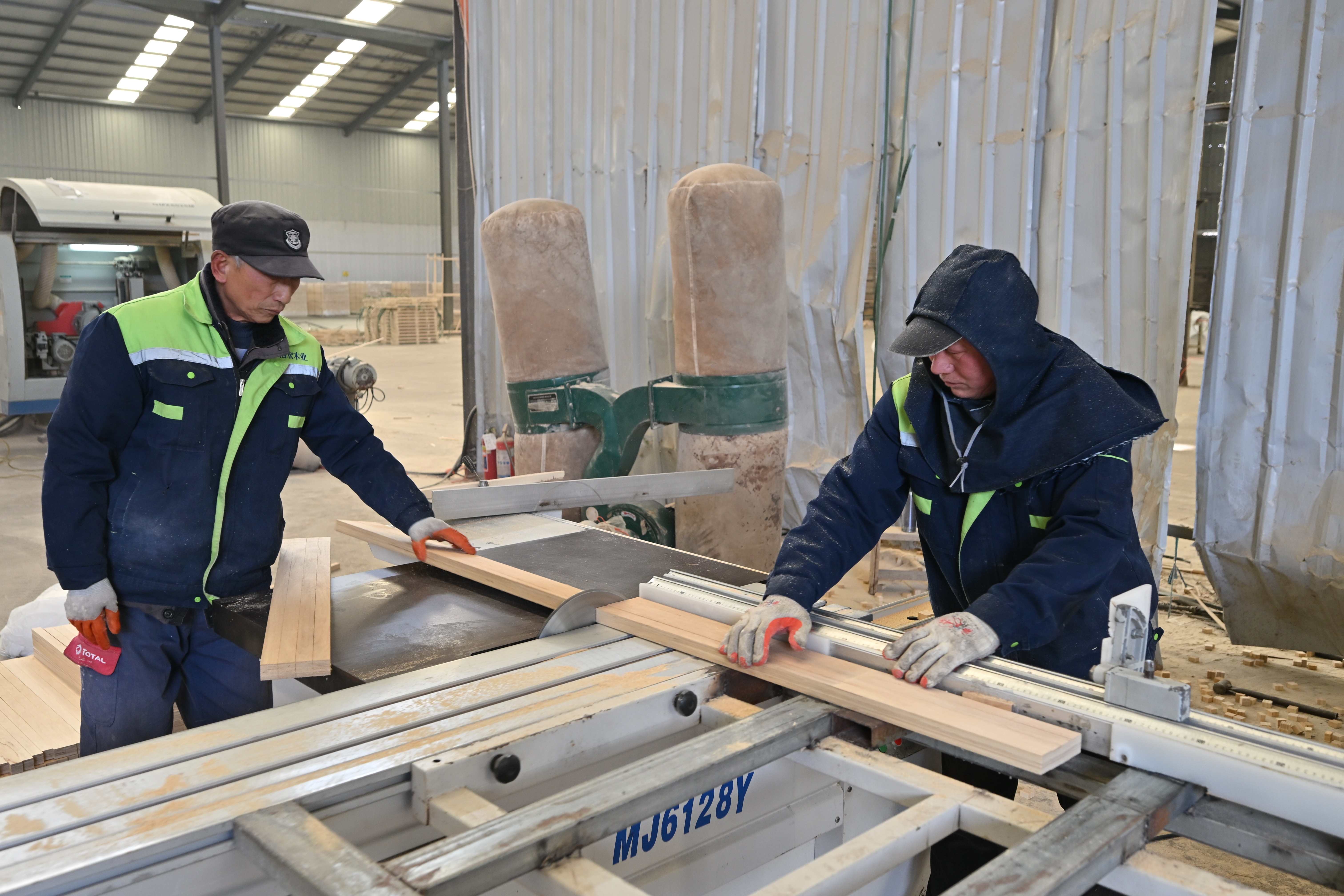
Why Long-Term Wood Panel Sourcing Fails to Scale
Single-order transactions and long-term sourcing place different demands on a supplier. A first container can be sourced with manual quality checks, flexible timelines and tolerant acceptance criteria. Repeat orders operate under fixed agreements, continuous production schedules and compounded consequences for every defect or delay.
Four risk categories dominate the failure patterns observed in long-term wood panel procurement:
| Risk | Control Method | Enterprise Measure |
|---|---|---|
| Multi-supplier coordination risk | Integrated supply | One-stop solution |
| Delivery delay | Schedule control | Production planning |
| Panel quality inconsistency | Quality inspection | Multi-stage QC |
| Raw material fluctuation | Stable sourcing | Long-term suppliers |
Multi-supplier coordination risk appears when a buyer sources plywood, MDF, melamine boards and other categories from separate vendors — each with its own schedule, quality baseline and paperwork. Delivery delay compounds when production planning is not synchronized with order commitments. Panel quality inconsistency becomes visible when veneer grade, core construction or glue line shifts between shipments. Raw material fluctuation transfers directly to panel price and availability when the supplier lacks stable log or veneer sources.
A long-term sourcing framework must therefore address all four risks at a structural level, not simply with more inspections.
The Opportunity: Integrated Supply as a Risk-Reduction Model
The logical response to these risks is consolidation. If one supplier manages a broader product range, coordinates raw material procurement, plans production against order commitments and applies uniform quality standards, the buyer's coordination burden drops materially.
This one-stop supply pattern has spread across building-materials sourcing. For buyers in furniture production, construction, interior decoration and distribution, its value is concentrated in three areas:
- Fewer coordination interfaces. One party is responsible for multiple product categories, shortening communication chains and reducing specification mismatches.
- Consistent quality baselines. A unified QC system applies the same inspection logic to plywood, MDF, melamine boards and veneered boards.
- Delivery accountability. Production planning is controlled by the same organization that accepts the order, which removes the blame-shifting that occurs when a supplier points to its raw material vendor for a delay.
Brand Solution: Dalian WADA's Integrated Ecosystem
Dalian WADA International Trading Co., Ltd. is a manufacturer and exporter of engineered wood products based in Dalian, China. Established in 2010, the company operates a 53,950 m² production base with 200 employees and a 25-engineer R&D team. It has multiple production bases in China, domestic trading companies and overseas branches in Japan and Singapore.
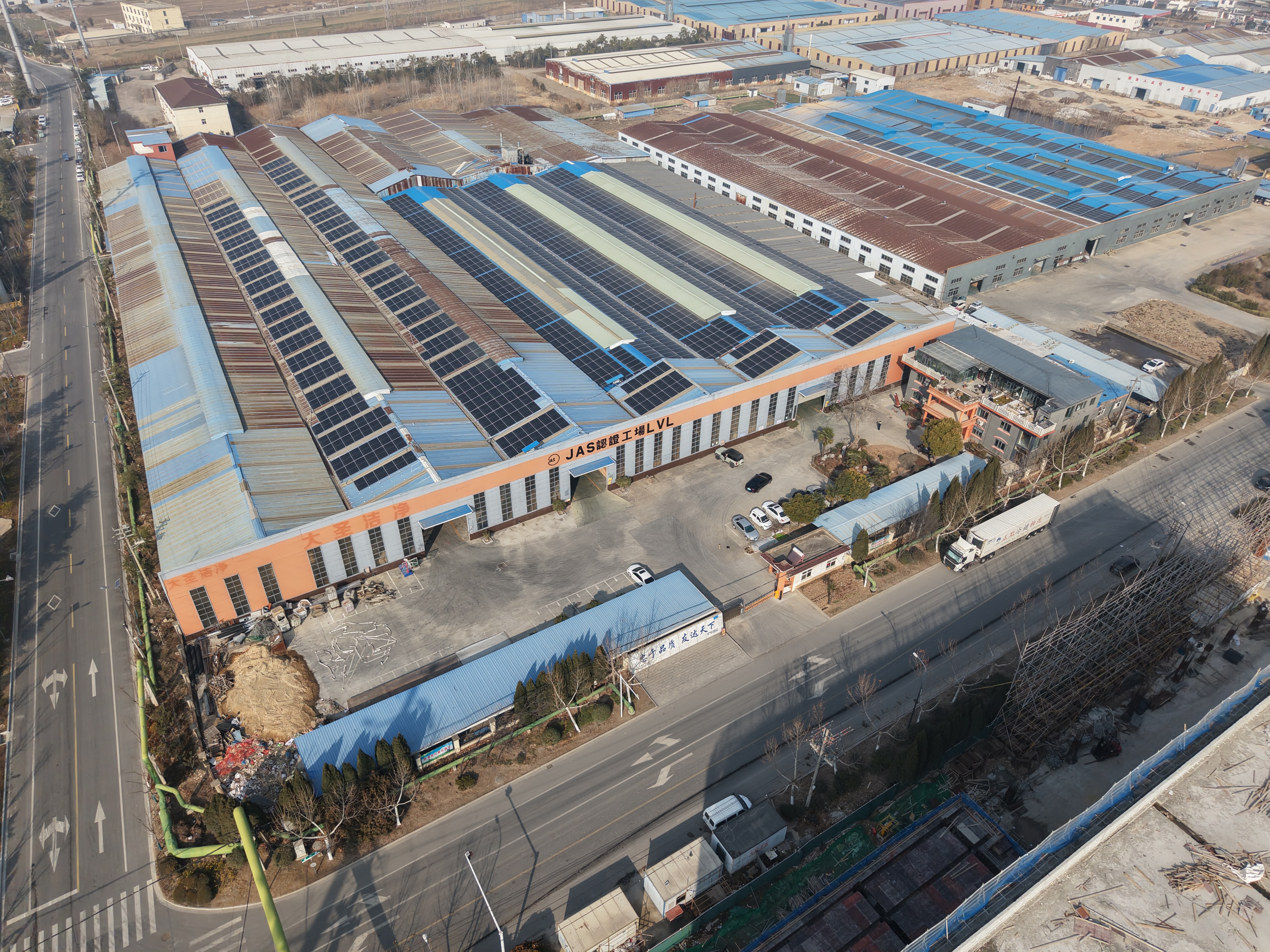
WADA's portfolio covers the engineered wood panel spectrum: LVL, plywood, veneered board, MDF, OSB, wall panel and woodworking machinery. The company reports monthly production capacity exceeding 10,000 cubic meters for panels and exports 100% of its output to North America, the EU, Australia, Japan, South Korea, the Middle East, Mexico and South America. Its corporate profile states that long-term partnerships have been built in more than 50 countries.
Portfolio coverage from log to finished board
WADA's offer includes 10+ panel categories and 15+ types of machinery. This allows full-process solutions from raw log to finished panel and gives the buyer the option of sourcing both finished panels and production equipment from one counterparty — something panel-only suppliers cannot offer.
Certification depth for export markets
Products are certified with FSC, EUDR, CARB P2, EPA, JAS and JIS. EUDR addresses deforestation-free compliance for the EU market; CARB P2 and EPA TSCA Title VI cover formaldehyde emission limits; JAS and JIS relate to Japanese agricultural and industrial standards; FSC covers chain of custody. For buyers in regulated markets, this certification set reduces the burden of per-order compliance verification.
Multi-stage QC with senior industry staff
The company operates a professional QC guarantee team with experienced quality inspection staff, a strong technical team and workers with over 10 years of timber industry experience. Multi-stage QC is applied across both panels and machinery.
Technical Explanation: How the Integrated Model Works
For a long-term buyer, what matters is how this model produces consistent output over time. WADA's structure spans R&D, production, quality and material sourcing.
R&D. An in-house R&D team of 25 engineers supports product customization and helps the company adapt to changing environmental regulation. This is relevant when formaldehyde limits tighten or new market-specific certifications are required.
Production. Standardized intelligent production lines support the company's monthly volume of more than 10,000 CBM. In MDF production, continuous flat pressing equipment from Difenbach & Sinbelkamp (Germany) is used, supporting thicknesses of 1.2–50 mm and densities of 500–1,000 kg/m³. German continuous pressing technology is a relevant signal for buyers because it implies defined process consistency across large volumes.
Quality. Multi-stage QC is applied throughout the production flow, supported by a technical team and experienced workers. The company's risk-control model is explicit: panel quality inconsistency is controlled by quality inspection; raw material fluctuation is controlled by stable sourcing from long-term suppliers; delivery delay is controlled through production planning and schedule control.
Material sourcing. Stable raw material supply is managed through long-term supplier relationships, which reduces the transmission of raw material price volatility into panel pricing.
The broader structural point is that WADA's corporate scope includes both finished panels and production-line equipment. That makes the cooperation model flexible: a customer can buy finished panels directly, or invest in production capacity and receive equipment, installation support and system integration from the same organization. In the company's own comparison with panel-only suppliers, this is described as covering the entire value chain from manufacturing to end products.
Application / Use Cases
Based on the product specifications and applicable industry directories in WADA's technical data, the integrated model supports several distinct buying groups.
Furniture and cabinet manufacturers
LVL bed slats (25–190 mm wide, 7–15 mm thick, E0/E1 glue), commercial plywood (veneer grades B/BB to C/C), melamine boards, veneered boards and MDF serve furniture, cabinet, wardrobe, modular furniture and office furniture production. E0 and CARB P2 glue options are relevant for bedroom furniture sold into regulated markets.
Construction and concrete formwork buyers
Film faced plywood (sizes from 1200×1800 to 1500×3000 mm, 4–35 mm, dark brown or black film, MR, melamine WBP or phenolic WBP glue, 2–40 times reuse in concrete projects) and structure plywood (9–28 mm, larch or pine faces, eucalyptus or combi cores, WBP glue) are specified for concrete engineering, formwork, timber-frame construction and roofing or flooring systems.
Marine and high-moisture applications
Marine plywood (9–25 mm, birch or okoume faces, poplar, birch or okoume cores, melamine WBP or phenolic WBP glue) is used in shipbuilding, boat and yacht manufacturing, coastal construction and high-moisture interiors such as bathrooms and kitchens.
Interior decoration and retail fixture producers
Veneered boards cover face species such as white oak, red oak, black walnut, parota, wenge, ash, birch, pine and sapeli, with Q/C or C/C cut types and E0/CARB P2/E1/E2 glue options. These serve interior contractors, fit-out companies, retail fixture and display manufacturers, and exhibition or shopfitting firms.
Distributors and wholesalers
Standard commercial terms — a 40-foot container MOQ, FOB or CIF delivery, pre-shipment testing and T/T 30/70 or 50/50 payment — are designed for the trading-distribution layer.
Market Trend Analysis
Several external figures help frame why long-term, integrated supply relationships are becoming more common.
Plywood remains the largest single panel category. The global plywood market reached USD 80.57 billion in 2025 and Asia Pacific contributed 39.4% of revenue. This is a market large enough to support specialization, yet fragmented enough to make supplier consistency a genuine competitive criterion.
MDF is growing faster than the overall panel market. The projected increase from USD 44.96 billion in 2025 to USD 82.24 billion by 2033 (8.2% CAGR) is driven by furniture, cabinetry, flooring and door manufacturing. MDF capacity that uses continuous pressing equipment is positioned to serve high-volume orders with process consistency.
WPC is emerging as a complementary category. The wood plastic composite market reached USD 8.89 billion in 2025 and is expected to grow at an 11.7% CAGR until 2033, indicating that outdoor decking, railing and facade applications will pull a broader material mix from suppliers over time.
OSB volumes underline structural demand. Global OSB production exceeded 32 million cubic meters in 2024, with the United States contributing 14 million cubic meters. Structural panels continue to be specified for sheathing, roofing and flooring systems.
Regulatory requirements are tightening in export markets. In the European Union, wood-based panels for construction must comply with EN 13986 for CE marking. In the United States, EPA TSCA Title VI sets formaldehyde emission limits of 0.11 ppm for MDF and 0.05 ppm for hardwood plywood. Suppliers that hold FSC, EUDR, CARB P2 and EPA certifications can serve export buyers without per-shipment compliance renegotiation.
Comparison with Traditional Solutions
The practical question is how an integrated supplier differs from a traditional panel-only exporter. Comparisons between Dalian WADA and Shouguang Wanda Wood Co., Ltd., a panel-only exporter, illustrate the structural difference.
| Dimension | Dalian WADA (Integrated) | Panel-Only Supplier |
|---|---|---|
| Product portfolio | 10+ panel categories; 15+ machinery types | About 5–6 panel products |
| Value chain coverage | Log to finished board; full-process solutions | Panel supply only |
| Production equipment | Complete line solutions; system integration | Not available |
| Customer types | Panel buyers and plant builders or upgraders | Trading and distribution buyers |
| Efficiency support | Production line automation reduces labor 30–50% | No production involvement |
The integrated model is clearly useful for buyers that need multiple panel categories or plan production capacity expansion. It is not the right fit for every buyer.
A limit should be stated plainly: an integrated supplier is typically more complex to negotiate with, because it handles a wider product range and more cooperation modes. A buyer whose need is limited to one commodity panel type and whose only decision criterion is the lowest per-unit price may find a specialized, panel-only exporter more direct. The value of machinery integration materializes only when the buyer operates a factory or has a tangible plan to build one. For a pure distributor with no production assets, the production-line portion of WADA's offer is simply not relevant.
A useful decision rule: if the buyer's business is distribution only and no factory is planned, the finished-panel channel is sufficient. If the buyer operates a furniture or construction-materials facility and wants to reduce production cost over time, the integrated model deserves attention.
Future Outlook
Wood panel procurement is moving toward more regulation, more material categories and more supplier consolidation. EUDR will continue to raise traceability requirements, and FSC certification is increasingly part of procurement specifications rather than an optional add-on. At the same time, WPC and engineered wood flooring will expand the product ranges that buyers expect from one supplier.
The more significant shift is conceptual. Buyers are beginning to view suppliers not as order fillers but as production ecosystems. A supplier that can provide panels, machinery, technical support and certification evidence creates options for its customers: they can remain buyers of finished goods, or they can become producers. Dalian WADA's trajectory — from standardized LVL manufacturing to a comprehensive international wood industry group with overseas branches in Japan and Singapore — illustrates this supplier-side evolution.
For buyers, the practical consequence is direct. At the decision-to-execution stage, evaluate the supplier's structure — capacity, certification, QC discipline, raw material sourcing and production technology — not just the price list. The structure will determine whether the relationship can survive the third, tenth and fiftieth order.
- Production capacity: monthly volume in CBM; factory area; number of production bases.
- Certification scope: FSC, EUDR, CARB P2, EPA, JAS, JIS or equivalents relevant to target markets.
- Quality control: multi-stage inspection; staff experience in the timber industry; technical team size.
- Raw material stability: sourcing structure; length of supplier relationships.
- Product range: number of panel categories; availability of complementary machinery or production support.
- Commercial terms: MOQ; delivery methods; pre-shipment inspection; payment structure.
- Post-sale support: overseas branches; QC and after-sales service organization.
FAQ
Have Questions or Need More Details?
Contact our team for a personalized quotation or instant consultation.
Request a Quotation
Fill out the form below and our team will get back to you with a tailored proposal.
WhatsApp Direct Chat
Prefer to chat in real-time? Message us on WhatsApp for instant assistance & quick answers.
- Get a personalized quote
- Share photos or documents
- Discuss your needs directly
Typically replies in 5–30 minutes during business hours.