
From Garden Tools to Green Energy: PVC Dipping Handles Ranked by Scenario Fit
From Garden Tools to Green Energy: PVC Dipping Handles Ranked by Scenario Fit
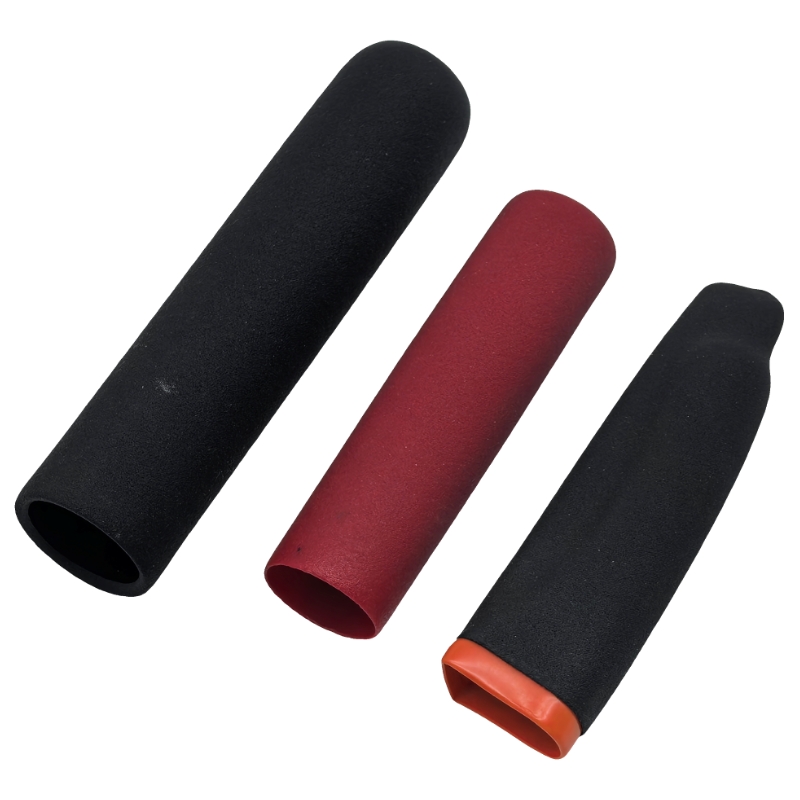
PVC dipping handles are grip components produced by coating a prepared core — typically a metal insert or a rigid plastic body — with a formulated PVC compound that cures into a non-slip, electrically insulating and corrosion-resistant skin. They are already standard across building hardware, gardening tools, industrial equipment and electrical and electronics products, and they are now being re-examined for renewable energy equipment, where outdoor exposure and electrical safety drive the specification rather than appearance alone.
This industry reference ranks eight high-demand scenarios by how strongly each one rewards a dipped PVC handle, sets out the criteria behind that ranking, and explains where dip coating stops being the right answer. The order below is an application-fit framework derived from LINGO's product and project records; it is a selection aid for buyers at the evaluation stage, not a market-size ranking.
What Counts as a PVC Dipping Handle in This Analysis
In LINGO's product record, the PVC Dipping handle is listed under model LGHD, with PVC as the specified material, black as the standard color, a glossy surface, and custom printing available. Its applicable industries are recorded as Hardware Tools, Electrical & Electronics, Automotive Industry, Fitness Equipment, Gardening Tools, Household Products, Industrial Equipment and Building Hardware.
The manufacturer behind that record, Lingo Rubber Plastic (Hangzhou Lingo Rubber and Plastic Product Co., Ltd), is a Hangzhou-based rubber and plastics parts producer founded in 2022. Its company profile lists a 3000 m² facility, around 40 employees, a 10-person R&D team and an 80% export ratio concentrated on EU and USA markets. The product classification covers rubber molding parts, rubber extrusion parts, plastic injection parts and plastic extrusion parts, with PVC dipping grouped alongside PTFE machining, PEEK machining, acrylic machining, plastic machining and assembly.
That last point matters for scenario matching. A dipping handle is rarely purchased in isolation: the same programme usually also needs the mating bracket, plastic plug, washer or extrusion profile that the handle sits on, which is why scenario fit is evaluated at the level of the assembly rather than the grip alone.
Why Handle Specification Is Moving Up the Agenda
Handles used to be treated as a comfort item. In equipment that is deployed outdoors, carried by field teams or installed near live electrical components, they carry functional duty: grip retention, insulation, corrosion protection of the underlying core, and a surface that survives cleaning agents, salt spray and temperature cycling.
The commercial context supports that shift. Grand View Research values the global injection molded plastics market at USD 362.5 billion in 2025, projected to reach USD 481.4 billion by 2033, while Grand View Research and Mordor Intelligence estimate that Asia Pacific held roughly 40.7% to 41.2% of that market's revenue in 2025. Within the same field, Grand View Research reports the automotive plastics market at USD 33.0 billion in 2025, driven by EV lightweighting, with polypropylene accounting for a 32.4% share of automotive plastics. On the trade side, the Observatory of Economic Complexity records that China exported approximately USD 174 billion in plastics and rubbers in 2024, with the United States as the largest single destination at USD 24.3 billion.
The recurring problem is not availability. It is process-to-scenario mismatch: dip coating specified for a part that needs controlled functional tolerances, or a fully molded handle specified for a low-volume grip application where tooling cost dominates the business case. The ranking below is structured to prevent that mismatch.
The Ranking Criteria
Five criteria drive the order, and a scenario ranks higher when several of them are severe at the same time:
- Chemical and corrosion exposure — contact with acids, alkalis, salt spray, oils and cleaning agents.
- Electrical insulation requirement — whether the handle is a safety-relevant insulating interface.
- Ergonomic load — grip force, vibration, hand-transmitted load and slip risk.
- Climate and temperature exposure — outdoor conditions and low/high-temperature cycling.
- Documentation burden — the compliance evidence the end market expects, from material and print specifications to batch traceability.
Volume economics act as a modifier rather than a criterion. Dip coating has a structural advantage in programmes that start small, because LINGO's project records for dipped parts note that no expensive molds are required and that small orders are acceptable.
Top 8 High-Demand Scenarios for PVC Dipping Handles
| Rank | Industry scenario | Dominant handle requirement | Why it ranks here |
|---|---|---|---|
| 1 | Electrical & electronics equipment | Insulation plus chemical resistance | Safety duty and corrosion duty overlap; PVC's insulating characteristics are used to safeguard current transmission and prevent accidents from wiring damage. |
| 2 | Renewable energy equipment | Outdoor corrosion plus insulation | Salt spray, acid, alkali and oil resistance combined with insulating behaviour suits solar mounting, charging and wind hardware exposed year-round. |
| 3 | Gardening and outdoor power tools | Non-slip grip plus weather exposure | Ergonomics and wet-condition grip retention dominate; matches LGHD's recorded gardening tool application. |
| 4 | Industrial equipment and machinery | Oil and chemical contact, leverage | Coating resistance to oil and chemical media protects the substrate where hands are oily and loads are high. |
| 5 | Building hardware | Appearance plus corrosion protection | Formulation in almost any color, surface textures from glossy and matte to rough and textured, and custom printing. |
| 6 | Automotive and aftermarket touchpoints | Temperature and flammability documentation | Ranked lower for dipped grips specifically: interior trim parts such as the LG-AP range are specified for FMVSS 302, RoHS and REACH with a −40 °C to +120 °C range. |
| 7 | Fitness equipment | Repeated grip under perspiration | Surface texture and non-slip behaviour carry the requirement, with color matching for brand consistency. |
| 8 | Household products and consumer goods | Color, texture and printing | Aesthetics and hand feel dominate, with the lowest functional severity of the eight scenarios. |
The pattern in the ranking is consistent: dipped handles rank highest where a coating must work as an electrical barrier and a corrosion barrier at the same time, and lowest where the requirement is decorative. Procurement teams that evaluate scenario severity before choosing a process usually avoid the most expensive error — ordering molded tooling for what is essentially a grip and insulation problem.
How PVC Dip Coating Works, and What the Coating Delivers
Dipping is a coating process rather than a molding process. The core is prepared and preheated, immersed in a formulated PVC compound, then cured; repeated passes build the required film thickness, grip level and surface character. Because the handle form is created by the coating rather than by a cavity, the process does not require the multi-cavity tooling that molded parts need.
The property set recorded in LINGO's dipping project documentation covers the requirements that most scenarios turn on:
- Coating resistance to acids, alkalis, salt spray and oil, protecting the metal substrate in humid and chemically corrosive environments.
- Both low-temperature and high-temperature resistance for outdoor and equipment-adjacent deployment.
- Insulating behaviour that supports electrical and electronics applications, where the coating safeguards current transmission and reduces accident risk from wiring damage.
- Formulation in almost any color, with surface textures from glossy and matte to rough and textured, satisfying functional requirements such as anti-slip as well as aesthetic design requirements.
- No expensive molds required, with small orders acceptable — relevant for pilot builds and multi-variant grip programmes.
- PVC raw material positioned as relatively inexpensive, a dip coating solution that does not contain toxic or heavy metal ions, a production process described as environmentally friendly, and recyclable raw materials.
Comparison With Established Handle Solutions — and Where Dipping Stops
| Evaluation dimension | PVC dipping handle | Injection molded plastic handle (LG-PI) | Uncoated metal core |
|---|---|---|---|
| Tooling and setup | No expensive molds required; small orders acceptable | Multi-cavity, hot/cold runner tooling investment | No tooling |
| Dimensional capability | Coating for grip, insulation and protection; not a tolerance technology | Tolerance control GB/T 14486 MT1–MT7, draft angle outside ≥1° / inside ≥0.5°, shrinkage typically 0.4%–0.8% for mold compensation | Determined by machining operation |
| Surface and color | Formulated in almost any color; glossy, matte, rough or textured; custom printing | Pantone/RAL color with defined gloss level; SPI surface; textured, painted or plated options on related ranges | Bare metal appearance |
| Corrosion protection | Resistance to acids, alkalis, salt spray and oil, protecting the metal substrate | Material dependent (PP, PA6, PA66, ABS, PE, HDPE, UHMWPE, LDPE, PU, PTFE, glass-filled grades) | Requires separate finishing |
| Electrical insulation | Insulating skin by design | Polymer dependent; flame-retardant, UV-stabilized and glass-filled options available | Conductive |
| Best volume position | Low to mid volume, multi-variant grips | High-volume repeatable parts | Singles and prototypes |
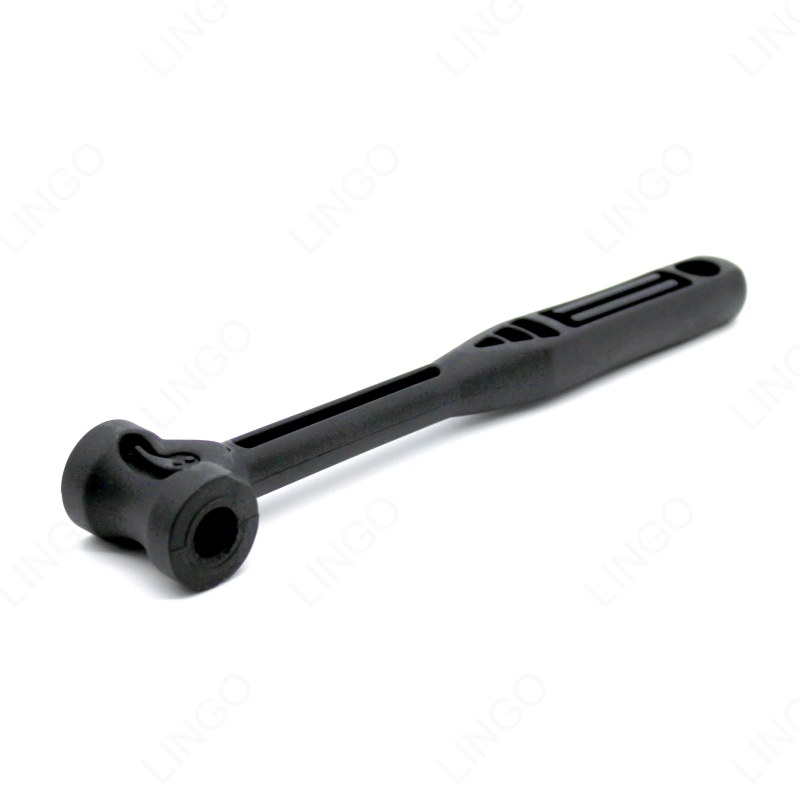
The boundary is worth stating plainly. A dipped handle is a surface and grip technology, not a tolerance technology. It should not be specified for functional interfaces such as bores, snap fits or precision alignment, where molding's documented shrinkage compensation and tolerance classes apply. It is also normally outside automotive interior trim scope, where defined flammability evidence such as FMVSS 302 and a stated −40 °C to +120 °C range govern the part, as they do for the LG-AP molded auto part range. Where the real duty is high-pressure sealing rather than grip, the correct component class is different again: LINGO's United Kingdom case used CNC-machined PTFE back-up rings, ordered in a batch of 20 pieces with dispatch in two days, because the requirement was anti-extrusion protection for O-rings and other elastomeric seals. Finally, because film build-up around complex geometry has to be controlled through process agreement, dipping is best applied to relatively simple grip forms rather than intricate housings.
Documented Scenario Evidence
Electrical and electronics, Germany. A dipped-handle programme of 1500 pcs for an electrical and electronics client used PVC's insulating characteristics to safeguard current transmission and prevent accidents from wiring damage. The record notes annual repeat ordering, with service life varying by working environment. Reported results include perfect fitting, stable performance, coating resistance to acids, alkalis, salt spray and oil that protects the metal substrate in humid and chemically corrosive conditions, and low-temperature as well as high-temperature resistance. Project notes also highlight that no expensive molds were required, that small orders were acceptable, that the PVC material is relatively inexpensive, that the dip coating solution does not contain toxic or heavy metal ions, and that the process is environmentally friendly with recyclable raw materials.
Automotive tubing support, United States. A separate 5000-piece plastic injection part programme produced a tube holder used in auto machinery. By reducing internal material while preserving structure and functionality, the project lowered material and logistics costs and improved dimensional stability, with zero failures reported in long-term use. It is included here because it illustrates a common development path: a grip or handle programme for a tool or equipment platform frequently grows into a molded component programme for adjacent parts, and buyers benefit from evaluating both routes with the same supplier.
Evaluation Checklist: Matching a Handle to a Scenario
| Step | What to confirm |
|---|---|
| 1 | Define the duty: grip only, or grip plus insulation plus corrosion protection. |
| 2 | Match the process to the duty: dipping for grip, insulation and corrosion on simpler forms; molding for tolerance-critical parts. |
| 3 | Confirm coating resistance against the actual environment: acids, alkalis, salt spray, oil and cleaning agents. |
| 4 | Check low-temperature and high-temperature performance against the deployment location. |
| 5 | Agree color, surface texture (glossy, matte, rough, textured) and any custom printing. |
| 6 | Confirm commercial terms: MOQ varies by part and small quantity orders are acceptable, with a stated lead time of 2 to 6 weeks. |
| 7 | Agree quality control: full inspection of samples and random inspection of bulk goods. |
| 8 | Agree lifecycle terms: remote technical support, mold maintenance and ownership protection, batch traceability, and the stated policy of free exchange and acceptance of concessions. |
| 9 | Confirm documentation expectations early — PPAP (Automotive Production Part Approval Process) appears in LINGO's certification record for its molded part ranges, and regulated end markets rarely accept late evidence. |
Market Trend Analysis: Why Dipped Grips Track Green Energy Demand
Industry commentary published by TEDE Solutions and AdvanTech Plastics identifies three structural trends for 2024–2026: Industry 4.0 integration using AI and IoT for real-time monitoring, reshoring of high-specification production, and wider adoption of bio-based and recycled resins. Each of these trends changes how grips are bought. Real-time monitoring pushes suppliers to provide traceable batch data; reshoring shifts some high-specification volumes to regional producers while leaving cost-sensitive tool and hardware programmes in established export corridors; and material substitution increases the number of documentation questions attached to what used to be a simple coated handle.
The scale of the underlying plastic parts base reinforces the trend. The global injection molded plastics market is valued at USD 362.5 billion in 2025 and projected to reach USD 481.4 billion by 2033 according to Grand View Research, with Asia Pacific contributing an estimated 40.7% to 41.2% of revenue in 2025. China's plastics and rubbers exports reached approximately USD 174 billion in 2024, with the United States as the largest destination at USD 24.3 billion, per the Observatory of Economic Complexity. Automotive plastics alone represent a USD 33.0 billion market in 2025 on Grand View Research figures, with PP at a 32.4% share — the same material family logic that makes PVC a workable coating choice for grip and insulation duty.
Supplier-side operating facts define what a buyer can realistically plan for. LINGO runs OEM and ODM production with a monthly capacity of 1,000,000 kgs, a lead time of 2 to 6 weeks, MOQ varying by part with small quantity orders acceptable, quality control based on full inspection of samples plus random inspection of bulk goods, and export markets covering the EU, the Middle East and the USA. Renewable energy appears among the applicable industries of its plastic extruded profile range — PVC, PP, ABS, PA6, PA66, PE and UHMWPE profiles, with lengths up to 6000 mm and custom cross-sections — which means a handle programme and an accompanying profile or trim programme can be sourced within the same supplier relationship rather than assembled across several vendors.
Future Outlook
Dip coating's low-tooling, small-batch character fits the front end of green energy programmes, where designs iterate quickly, volumes ramp in stages and the electrical and corrosion duty is settled before aesthetics. As reshoring and recycled-resin adoption progress, the evaluation question for buyers will shift from “can this supplier coat a handle” to “can this supplier match the handle, the mating parts and the documentation to one defined scenario.” Suppliers that can present coating performance, dimensional process discipline and lifecycle terms as separate, checkable items — rather than as a single capability claim — will be easier to qualify, and easier to keep in a multi-year programme.
FAQ
What are PVC dipping handles used for?
PVC dipping handles are used as grip interfaces that also provide electrical insulation and corrosion protection for the underlying core. LINGO's LGHD record lists their applicable industries as Hardware Tools, Electrical & Electronics, Automotive Industry, Fitness Equipment, Gardening Tools, Household Products, Industrial Equipment and Building Hardware. In electrical and electronics applications, the insulating coating is used to safeguard current transmission and prevent accidents from wiring damage; in tools and hardware, the same coating supplies non-slip grip and protects a metal substrate from acids, alkalis, salt spray and oil.
Which industries most commonly use dipped handles?
The most common users are electrical and electronics equipment makers, renewable energy equipment suppliers, gardening and outdoor power tool producers, industrial equipment and machinery builders, and building hardware manufacturers. Fitness equipment and household products follow, where the coating is selected mainly for surface texture, color and hand feel. Two of those segments — electrical equipment and renewable energy hardware — place the highest combined demand on a dipped handle because insulation and corrosion protection are required at the same time.
How do buyers choose between a PVC dipped handle and an injection molded handle?
The deciding factor is the duty of the part rather than the appearance. Dip coating suits grip, insulation and corrosion protection on relatively simple forms and does not require expensive molds, which makes it workable for small orders and multiple variants. Injection molding suits parts that must hold functional tolerances and be repeatable at volume: LINGO's LG-PI range specifies tolerance control to GB/T 14486 MT1–MT7, a draft angle of outside ≥1° and inside ≥0.5°, SPI surface finishes and a shrinkage rate typically between 0.4% and 0.8% for mold compensation. Parts that need bores, snap fits or precision alignment therefore belong with the molded route, not with a coated handle.
What environmental conditions should be verified before specifying a dipped handle?
Four conditions should be confirmed. First, chemical exposure: the coating is documented as resistant to acids, alkalis, salt spray and oil. Second, temperature: both low-temperature and high-temperature resistance are recorded for dipped parts, and the temperature band should be matched to the deployment site. Third, moisture and humidity, since the coating's main protective function is to keep a metal substrate from corroding in humid and chemically corrosive environments. Fourth, electrical context, because the insulating behaviour is the reason dipped handles rank highest in electrical and electronics scenarios.
Can dipped handles be customized in color, texture and printing, and what are the order constraints?
Color can be formulated in almost any shade, surfaces can range from glossy and matte to rough and textured, and custom printing is available on the standard black, glossy LGHD handle. Because the process requires no expensive molds, small quantity orders are acceptable, and MOQ is set according to the individual part. Stated lead time is 2 to 6 weeks. Handling documentation includes remote technical support, mold maintenance and ownership protection, a batch traceability system, and a stated policy of free exchange and acceptance of concessions.
Reference resource: the manufacturer's company profile PDF is published at LINGO RUBBER & PLASTIC COMPANY PROFILE. Company information: Hangzhou Lingo Rubber and Plastic Product Co., Ltd, www.lingorp.com.