
From Hardware to Intelligence: How an AI Development Platform Reshapes Enterprise IoT Delivery
Published: August 26, 2026 | Industry Reference
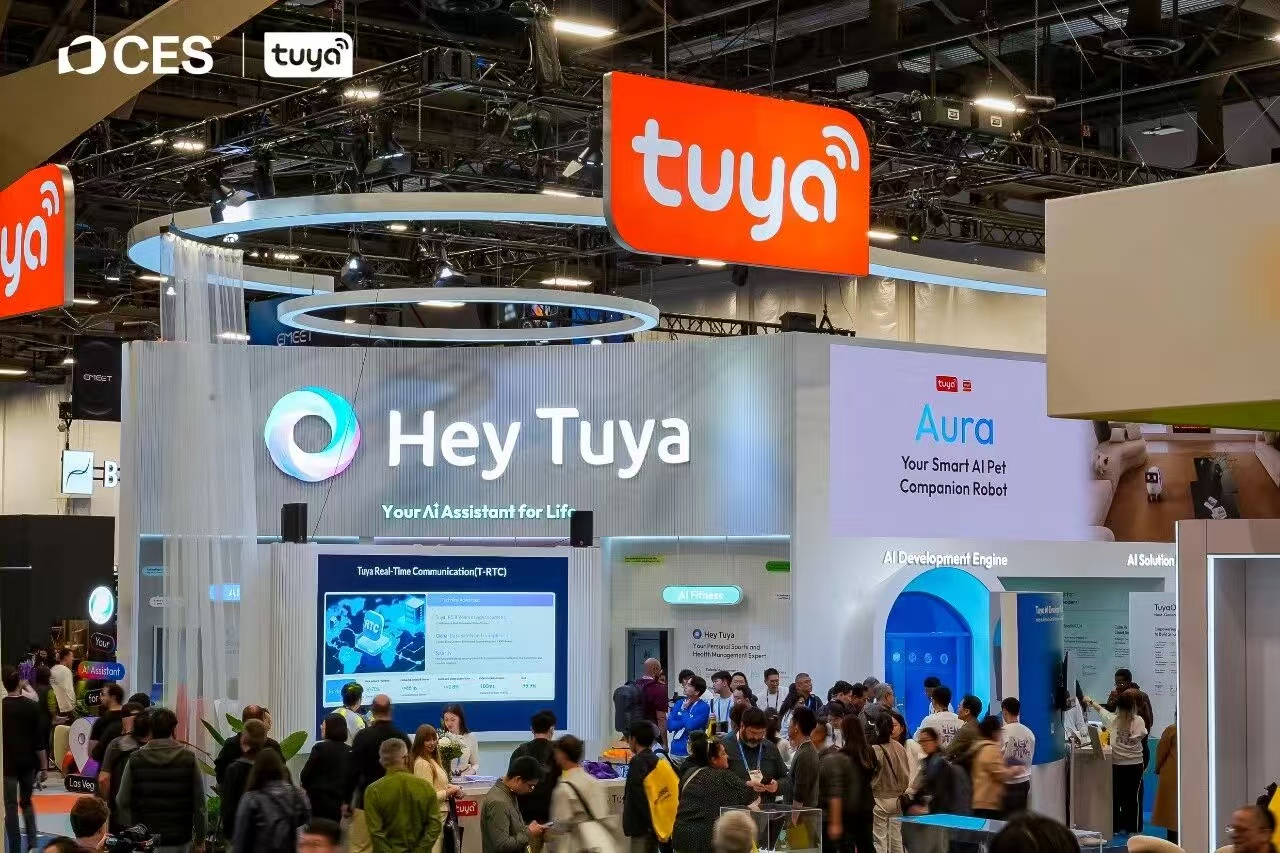
The Problem: Physical Intelligence Requires More Than a Model
Across industries, the most immediate barrier to launching an AI-enabled product is not the algorithm. It is the integration work needed to make a large language model (LLM) or AI capability actually operate inside a physical product ecosystem. Teams find themselves stitching together model evaluation, deployment, data access, workflow orchestration, and device connectivity—all before they can test a single customer scenario. In the smart-devices and enterprise IoT space, this fragmentation is slowing time-to-market and pushing development cost upward.
As the global AI Development Platform market is projected to grow from approximately USD 58.2B in 2025 to USD 156.7B by 2034, the question is not whether intelligence will be embedded in products, but which development route will define it. Enterprise buyers, in particular, are evaluating platforms that move beyond simple chatbot integrations toward hardware-aware, compliance-ready AI delivery.
The Opportunity: Platform-Based AI Development as a Differentiator
For organizations that build physical products, an AI developer platform can shift the conversation from "Can we add AI?" to "How quickly can we deploy it reliably across regions?" When the same platform also handles device connectivity, firmware adaptation, and model deployment, it effectively removes the boundary between hardware enablement and AI enablement.
A practical reference point is Tuya Smart—listed as Hangzhou Tuya Information Technology Co., Ltd. and operating globally as Tuya Inc. (NYSE: TUYA; HKEX: 2391). The company, founded in 2014, describes its platform as a way to bring AI into everyday life by connecting hardware, cloud, and AI through a complete, open, and neutral global AIoT ecosystem. Tuya has 1,400+ employees, 980+ R&D engineers, and reports that 85% of its business comes from global markets.
Capability Perspective: What Enterprises Look For in an AI Development Platform
Buyers operating at the evaluation and execution stages tend to assess an AI hardware development platform on four levels: the ability to integrate models; the efficiency of product development; cloud-connectivity coverage; and long-term operational data feedback. In Tuya's case, the platform offers an end-to-end architecture represented by these components:
- Model marketplace and management: selection, versioning, and lifecycle control for AI models.
- Model evaluation and deployment: standardized testing and release of model updates.
- Prompt optimization and knowledge base: fine-tuning of model behavior with domain or product-specific data.
- Data integration: access to device data for continuous AI improvement.
- Workflow orchestration: connecting AI model outputs to product logic and business processes.
- Visualization and industry services: dashboards and ready-made capabilities such as health analytics, intelligent detection, and energy efficiency.
This composition is grounded in the official description of the AI Large Model Solutions / Tuya AI Development Platform, which explicitly targets brands and OEMs, industry SaaS providers, system integrators, device manufacturers, and enterprise end users in hotel, retail, energy, and manufacturing sectors.
Structural Capabilities: From TuyaOS to Private Cloud
For an enterprise, platform capability is only as good as its underlying execution structure. The Tuya platform is constructed around TuyaOS as its embedded operating layer, supporting RTOS, Linux, and Non-OS kernels. This gives device makers flexibility in module integration across Wi-Fi, Bluetooth LE, Zigbee, NB-IoT, and Matter.
On the cloud side, the platform uses microservices and containerization, an RPC/DP engine for device communication, and a model marketplace with LLM integration. It supports multiple public clouds—including AWS, Azure, Google Cloud, Oracle, and Tencent Cloud—and a private containerized deployment option called Cube for enterprises that require data control.
For enterprise AI development teams, several workflow and control features deserve attention:
- The deployment route includes API/SDK integration, automated prototype generation through Tuya Cobuilder, marketplace or custom model deployment, and optional edge capabilities.
- The service team reports more than 1,970,000 developers, 5,800+ enabled customers, and 3,000+ product SKUs across industries that include appliances, home, lighting, security, commercial lighting, hotels, retail, energy, industry, and campus.
- Localization is addressed through support for 17 mainstream global languages and geographic coverage of 200+ countries/regions.
Delivery Model: How AI Hardware Products Move to Execution
A significant finding from the Tuya delivery process is that AI-enabled product execution is not a single engineering sprint but a structured pipeline. The documented workflow begins with a natural-language requirement from the customer and moves through:
- Assessment & consulting: requirement and scene analysis, target market and compliance profile.
- Prototype generation: using Cobuilder for fast iterative loops.
- Development & integration: firmware, panel, App, and cloud integration.
- Testing & certification: parallel compliance tests.
- Mass-production preparation: BOM, firmware images, and test scripts.
- Deployment & handover: documentation, manuals, and launch readiness.
- Operations & optimization: data review, feature upgrades, and continuous improvement.
For evaluating an AI agent development platform or enterprise AI development platform, this delivery model matters. It means that a vendor's claim of "AI capability" should come with definitions of how models are managed, how device connectivity is handled, and how production-ready integration will be completed.
Case Reference: Appliance Cloudification and Intelligence Enablement
A useful public example is Tuya's collaboration with TCL, described in the platform's developer stories. TCL, a major global appliance and consumer electronics brand, needed to bring legacy appliances into the connected era with cloud enablement and smart capabilities. The project exposed a common challenge: old products lacked connectivity, and the brand needed cross-regional consistency and production ramp without re-architecting each device.
The collaboration relied on the Tuya IoT platform, TuyaOS/modules, App SDK or OEM App, cloud analytics, and operations support. The stated results are qualitative but operationally meaningful: improved product intelligence and user experience, shortened R&D cycles, accelerated multi-region deployment, and expanded channel reach through the platform ecosystem.
This case illustrates why a physical AI development platform needs more than AI tooling: it also requires legacy device integration, app generation, compliance alignment, and mass-production preparation.
Market Context and What It Means for Buyers
Third-party market data validates the direction of AI-platform procurement. The global Artificial Intelligence of Things (AIoT) market is estimated at USD 25.44B in 2025, with a forecast of USD 81.04B by 2030, according to MarketsandMarkets. Meanwhile, enterprise generative AI is projected to grow at a 38.4% CAGR (2025–2030), according to Grand View Research. For enterprises, these numbers explain the pressure to adopt platform-based AI development before fragmented tooling creates technical debt.
It is also important to note that AIoT market estimates vary by source; definitions differ in whether they include hardware, software, or vertical-specific components. Buyers should treat market figures as context, not as a decisive selection criterion.
Compliance and Trust: Standards That Reduce Execution Risk
For AI-enabled physical products, certification is no longer a late-stage check. It is an execution requirement. Tuya's platform reports security certifications including ISO/IEC 27001, ISO/IEC 27017, and ISO/IEC 42001 for AI management, as well as PSA Certified Level 1 for its IoT modules. These certifications matter to procurement teams because they indicate that AI and device data operations are being managed under auditable controls.
Practical Decision Framework for AI Development Platform Selection
Using the Tuya platform model and the industry evidence above, an enterprise procurement team can structure its evaluation around the following factors:
| Evaluation Dimension | What to Verify | Why It Matters in Execution |
|---|---|---|
| Model lifecycle coverage | Marketplace, evaluation, deployment, prompt optimization | Determines whether the platform supports continuous AI upgrades beyond the first deployment. |
| Hardware and connectivity layer | TuyaOS support for RTOS/Linux/Non-OS and multi-protocol modules | Reduces integration effort when connecting legacy devices or diverse hardware. |
| Deployment flexibility | Public clouds + private containerized deployment (Cube) | Allows alignment with enterprise data governance and regional requirements. |
| Delivery methodology | Assessment → prototype → dev → test → mass-production → operations | Clearly defined stage outputs reduce project delivery risk. |
| Compliance readiness | ISO/IEC 27001/27017/42001, PSA Certified Level 1 | Supports faster market entry, especially in regulated industries. |
| Ecosystem and global support | 1.97M+ developers, 200+ countries, 17 languages | Useful for companies planning multi-region channel expansion. |
Comparison with Traditional Development Approaches
Compared to traditional custom development, the AI development platform approach offers a clear advantage: it compresses the integration span between hardware, firmware, AI model, and application. However, an honest evaluation must include a real limitation. A platform-led approach can ease development, but it also presumes an operating model aligned with the vendor's architecture. Teams that have already built a proprietary AI stack, or that require unique edge inference logic outside of standard cloud patterns, may find that platform-level abstraction still leaves integration work. In the Tuya model, the delivery process acknowledges this through its structured handover stage, but it does not promise zero learning curve.
Enterprises should therefore define which parts of the AI stack are genuinely differentiating. For most physical-device makers, the differentiation is in the product scenario and user experience—not in rebuilding device-model integration. For these teams, an AI application ecosystem approach provides greater leverage than building custom infrastructure.
Future Outlook: Physical AI as an Enterprise Standard
As the boundary between AI and device connectivity continues to dissolve, the next winning products will likely be those that treat AI not as a separate layer, but as a core part of device operations. The Tuya approach, which uses the TuyaOpen open-source development framework and universal AI agent engines, signals a broader shift toward AI that is deployable, manageable, and compliant—not just demonstrable.
The numbers reinforce this view: approximately 93% of products deployed via Tuya's platform were equipped with AI capabilities by mid-2025, according to external reporting. In practical terms, intelligence is becoming a default requirement, and the competitive question will move to how well and how quickly enterprises can operationalize it.
FAQ
What does an AI Development Platform do in an enterprise context?
An AI development platform provides the tooling and runtime to integrate AI models with physical devices and enterprise services. In the Tuya implementation, this includes model marketplace and management, model evaluation and deployment, prompt optimization, knowledge base, data integration, workflow orchestration, visualization, and industry services. Its purpose is to move AI from experiment to production with a defined lifecycle.
Who is the target buyer of the Tuya AI Development Platform?
The platform targets brands and OEMs, industry SaaS providers, system integrators, device manufacturers, and enterprise end users, particularly in hotel, retail, energy, and manufacturing sectors. It is designed for teams that need to accelerate the deployment of AI-enabled physical products while managing compliance, interoperability, and operations.
What delivery capabilities support an AI hardware development project?
Tuya's implementation approach includes API/SDK integration, automated prototype generation through Cobuilder, marketplace or custom model deployment, optional private containerized deployment (Cube), and edge capabilities. The service team has 10 years of combined experience across smart home, building, hotel, retail, energy, industry, and campus sectors, serving clients from startups to Global 500 companies.
How does the platform support both AI and IoT requirements?
The platform combines AI tooling with device connectivity through TuyaOS, which supports RTOS, Linux, and Non-OS kernels, and multi-protocol modules including Wi-Fi, BLE, Zigbee, and NB-IoT. This integration reduces fragmentation between the device layer and the AI layer, enabling faster production and better interoperability.
What is the expected outcome of using the Tuya AI Development Platform?
Expected outcomes include shortening prototyping cycles, accelerating mass production and time-to-market, enhancing product intelligence and device interoperability, and improving operations efficiency and energy efficiency. For procurement teams, these outcomes translate into reduced integration risk and faster cross-region deployment.