
From Lipstick Tube to Airless Bottle: Empty Cosmetic Packaging Options
Empty cosmetic packaging is specified component by component, not as a single category. A lipstick tube, a 5 ml powder jar and a 30 ml airless foundation bottle are separated by more than appearance: each fixes a fill window, a compatible filling method, the artwork area available for mandatory labelling, and the inspection steps that determine whether a delivered batch is accepted.
The shortlist below sets out nine empty formats — lipstick and lipgloss tubes, a powder case, eyeliner tube and pencil, a powder jar, an airless pump bottle, a stick foundation tube and a deodorant stick container — with the dimensions, capacities and build notes a buyer needs during evaluation, followed by the purchasing terms and acceptance criteria that apply to an order.
Nine empty cosmetic packaging formats offered by COSFINITY, with stated dimensions and capacities; the criteria that separate one component type from another; the market and regulatory context that shapes packaging choice; and the procurement terms — MOQ, delivery terms, acceptance testing and payment structure — that a buyer should confirm before tooling or production begins.
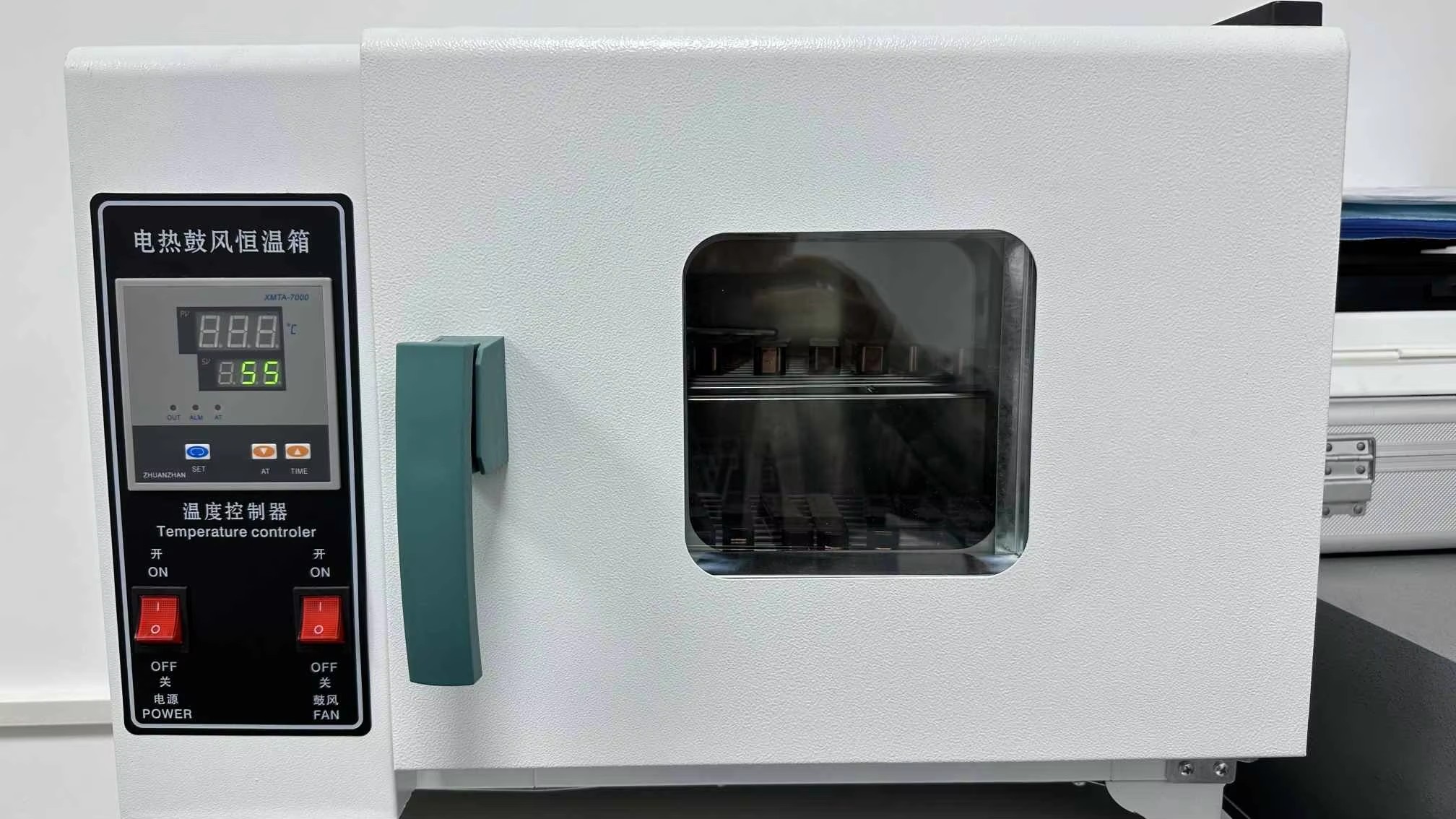
Empty cosmetic packaging is manufactured and inspected as a component system before it reaches a filling line.
Why component type decides the rest of the specification
Component type is the first shortlist filter because it constrains every downstream decision. A tube is filled from the open end and closed by crimping or by a cap; a jar is filled from the top and closed by a lid; an airless pump bottle is filled and then assembled around a pump engine that must dispense without air contact. Selecting the format after the formula, the filling line and the retail unit have already been fixed usually forces compromise on at least one of them.
Three practical consequences follow. First, capacity in millilitres is a function of internal diameter and body length together, so two components of similar height can differ substantially in fill volume — a 106.1 mm lipgloss tube holds 3 ml, while a 115.3 mm eyeliner tube holds 10 ml. Second, external dimensions determine carton engineering, shelf density and shipping cube, which is why buyers request them before artwork approval rather than after. Third, the surface available for decoration and mandatory label information is bounded by the same geometry, and in markets with principal-display-panel rules that boundary is a compliance question, not a design preference.
Selection criteria used at evaluation stage
The criteria below are the ones that most often change a shortlist decision. They are stated as tests a buyer can apply to any quotation, not as a ranking of formats.
- Formula compatibility. Whether the product is a liquid, a stick or a loose or pressed powder decides whether a tube, bottle, stick container or case is mechanically appropriate.
- Stated capacity. Nominal volume must leave headspace for closure, thermal expansion and the fill-line tolerance your process can hold.
- External and internal dimensions. Width, height and diameter figures drive carton fit, retail display and shipping efficiency.
- Wall thickness. Wall thickness affects rigidity, weight, drop behaviour and how much the body flexes during filling and transport.
- Dispensing and closure design. Pump, stick mechanism, cap thread or crimp finish determines both user experience and leak performance.
- Decoration area. Screen print, hot stamp, labelling and shrink coverage all require usable surface, which must be checked against the label content required in the destination market.
- Commercial terms. MOQ, tooling, lead time and Incoterms decide whether a format is viable for a given launch size.
- Acceptance basis. The test that defines a pass — for example pre-shipment testing — should be agreed before the purchase order, not after delivery.
The shortlist: nine empty formats by component type
The nine models below are drawn from the COSFINITY catalog and are grouped by the function the component performs. Dimensions are stated as published; where a component is offered as a customized item, no fixed dimensional baseline is claimed.
| Component type | Model | Dimensions | Capacity | Build note |
|---|---|---|---|---|
| Lipstick tube | CP01-2142 | W22.7 × H84.6 mm | 20 ml | 0.3 mm wall |
| Lipgloss / mascara tube | CP02-2231 | W18 × H106.1 mm | 3 ml | 0.3 mm, plastic |
| Makeup powder case | CP03-1394 | Customized | Customized | Custom configuration |
| Liquid eyeliner tube | CP04-1215 | W12.8 × H115.3 mm | 10 ml | — |
| Powder jar, leak-proof | CP05-2159B | W40.7 × H32.6 mm | 5 ml | 1 mm wall |
| Liquid eyeliner pencil | CP06-1056 | W15 × H173.5 mm | — | Pencil format |
| Airless pump foundation bottle | CP07-2026 | W33.5 × H92 mm | 30 ml | Glass |
| Stick foundation tube | CP08-0053 | D29 × H60 mm | 10 ml | Stick format |
| Deodorant stick container | TP01-1018-15 | L41.7 × W24.49 × H86.5 mm | 20 ml | Oval stick |
Dimensions and capacities as published for each model. A dash indicates that the referenced specification is not stated for that model.
1. Lipstick tube CP01-2142 — W22.7 × H84.6 mm, 20 ml, 0.3 mm wall
CP01-2142 is a plastic lipstick tube with a published 0.3 mm wall and a 20 ml stated capacity. The 0.3 mm wall keeps the body light while remaining rigid enough for a mechanism-driven product, and the 84.6 mm height sits in the range where the tube stands stably on a counter and fits a standard secondary carton. Because the format is mechanism-led, the items to verify at sample stage are the actuation feel, the closed height after full extension and the print area on the outer body.
2. Lipgloss / mascara tube CP02-2231 — W18 × H106.1 mm, 3 ml
CP02-2231 is a plastic tube measuring W18 × H106.1 mm with a 0.3 mm thickness and a 3 ml capacity, positioned for lipgloss and mascara applications. The narrow 18 mm body and long 106.1 mm profile produce a slim, elongated silhouette, which is the geometry that allows an applicator to travel the full length of the reservoir. Buyers should match applicator type and wiper behaviour to the formula viscosity, since the same tube body can behave differently with a low-viscosity gloss and a heavier mascara.
3. Makeup powder case CP03-1394 — customized configuration
CP03-1394 is a customized makeup powder case, which means the specification is set per project rather than against a single published dimensional baseline. In practice this format is chosen when a brand needs a case geometry, decoration treatment or internal cavity that does not exist in a stock mold. Before tooling, the items that must be written into the specification are the external dimensions, the internal cavity dimensions, the decoration area and the sampling route, because each of these changes the mold and cannot be adjusted economically after approval.
4. Liquid eyeliner tube CP04-1215 — W12.8 × H115.3 mm, 10 ml
CP04-1215 is a liquid eyeliner tube at W12.8 × H115.3 mm with a 10 ml capacity. The 12.8 mm diameter is deliberately slim for controlled application, and the 115.3 mm length accommodates a fine applicator. This model is a useful illustration of why capacity cannot be read from height alone: it is longer than the 3 ml lipgloss tube but narrower, and its stated volume is more than three times larger.
5. Leak-proof powder jar CP05-2159B — W40.7 × H32.6 mm, 5 ml, 1 mm wall
CP05-2159B is a powder jar offered in a leak-proof configuration, measuring W40.7 × H32.6 mm with a 5 ml capacity and a 1 mm wall. The 1 mm wall is more than three times the 0.3 mm used on the tube models above, which is consistent with a squat, wide-mouthed jar that must resist deformation when the lid is tightened and when the packed unit is compressed in transit. The leak-proof designation is a performance claim that should be confirmed against the agreed acceptance test rather than assumed from the format.
6. Liquid eyeliner pencil CP06-1056 — W15 × H173.5 mm
CP06-1056 is an empty liquid eyeliner pencil at W15 × H173.5 mm. The pencil format separates it from the tube-based eyeliner above: it presents as a pen, is held closer to the tip and is typically chosen where the application gesture, rather than reservoir volume, is the design priority. Because the format is long relative to its diameter, packaging engineers should confirm carton length, tip protection and closure retention during transit testing.
7. Airless pump foundation bottle CP07-2026 — glass, 30 ml, W33.5 × H92 mm
CP07-2026 is a glass airless pump foundation bottle with a 30 ml capacity and dimensions of W33.5 × H92 mm. Airless dispensing is a system decision, not a single component decision: the bottle, pump engine and actuator are specified together, and the fill sequence differs from an open-mouth bottle because the product must be filled before the pump is assembled. Glass brings weight and perceived quality, and it also changes drop performance and shipping cost relative to a plastic body of the same volume.
8. Stick foundation tube CP08-0053 — D29 × H60 mm, 10 ml
CP08-0053 is a stick foundation tube of D29 × H60 mm with a 10 ml capacity. The round 29 mm diameter and short 60 mm body make it a compact, pocket-format item suited to a solid or semi-solid formula that is applied directly rather than pumped or poured. For this format the critical checks are the mechanism travel, the fit between stick and inner sleeve, and the temperature behaviour of the formula inside the tube.
9. Deodorant stick container TP01-1018-15 — L41.7 × W24.49 × H86.5 mm, 20 ml
TP01-1018-15 is a deodorant stick container measuring L41.7 × W24.49 × H86.5 mm with a 20 ml capacity. The oval cross-section is the defining feature: it presents a wider application surface than a round stick of comparable volume while keeping the profile flat enough for a shelf-facing pack. Because the profile is non-circular, mold orientation, wall uniformity on the long axis and lid fit are the specification items most likely to need attention during sampling.
How COSFINITY supports this shortlist
COSFINITY — Guangzhou Cosfinity Cosmetics Co., Ltd. — is a cosmetic packaging manufacturer founded in 2009, operating a 40,000 m² facility with 200 employees, a 25-engineer R&D team and an annual output of 500,000,000 pieces. Its main product lines are lipstick tubes, lipgloss and mascara tubes, powder cases, eyeliner tubes, powder jars and liquid foundation bottles, and it exports to global markets.
Production is organized around OEM and ODM services, with customization available across logo, color, shape, material, volume, thickness and packaging. Monthly capacity is stated at 10,000,000 pieces, with a lead time of 15–25 days and a minimum order quantity of 12,000 pieces. Quality control includes 100% testing, and after-sales support is provided as a remote online service.
On the verification side, the company holds an SGS Alibaba Verified Supplier Factory Audit, certificate number 485460650_T, issued 2026-01-10 and valid to 2027-01-10, covering enterprise factory and trade qualification. That audit is a qualification document for the supplier entity; it is not a product-level certificate, and buyers should treat product compliance as a separate verification step.
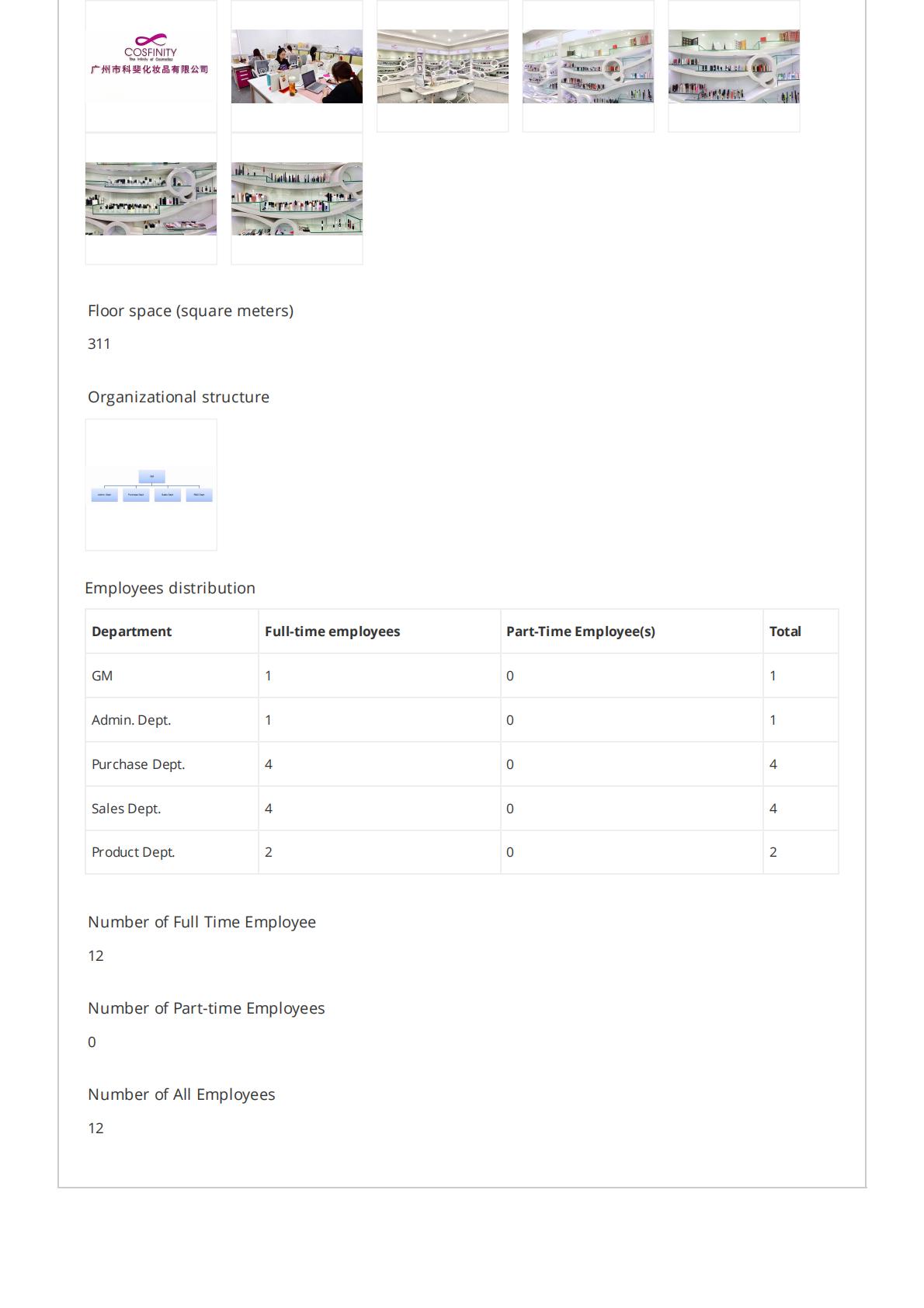
Supplier qualification documents and pre-shipment test records belong in the same evaluation file as the component specification.
Technical notes: what the numbers actually control
Three specifications do most of the work in a packaging evaluation, and each is frequently misread.
Capacity versus fill volume. A stated capacity is a nominal figure. Real fill volume must leave headspace for the closure, for the displacement of any applicator or stick mechanism, and for thermal expansion during transport. A 20 ml lipstick tube or a 30 ml foundation bottle does not imply a 20 ml or 30 ml product net weight.
Wall thickness. The difference between the 0.3 mm walls used on the tube formats and the 1 mm wall on the 5 ml powder jar is not a quality statement in either direction; it reflects what each geometry must do. Thin walls favour flexibility, low weight and print conformity on a body that is supported by its contents, while heavier walls favour dimensional stability on a wide-mouthed container that is closed and reopened repeatedly.
Dispensing systems. An airless pump bottle such as CP07-2026, a stick mechanism such as CP08-0053 and a pencil format such as CP06-1056 solve different problems — oxidation control, direct application and precision application respectively. None of the three is inherently superior; each constrains the formula, the fill line and the unit cost in a different way.
Where these formats have been applied
A documented application exists for the lipstick tube format. A lipstick tube OEM client in India ordered 12,000 pieces of model CP01-2142 for a private label lipstick launch, in a relationship running two years. The reported result is stable quality supporting continuous repeat bulk orders, with the format described as lightweight plastic with customizable appearance printing and a tight leak-proof structure suited to daily portable use.
That case is useful less as a proof point than as a scale reference: 12,000 pieces is exactly the stated minimum order quantity, so it shows what a first production run looks like for a brand entering with a single SKU rather than a full range.
Market context: what is changing around the component decision
The market data available for this category is directional rather than precise, and buyers should treat headline figures with care. Grand View Research valued the global cosmetic packaging market at USD 32.7 billion in 2023, and reported that plastics accounted for the largest revenue share at 60.8% in the same year. Other commercial research houses publish materially higher estimates for overlapping periods, largely because the boundary of the category — primary packaging only, or primary plus secondary — is defined differently. The definition matters more than the headline number when the figure is used for budgeting.
Regulation is moving in a more consistent direction than market sizing. In the European Union, Regulation (EC) No 1223/2009 sets the framework for cosmetic products and mandates ISO 22716 compliance for Good Manufacturing Practices in production, which places documentation expectations on the packaging supplier as well as the filler. In the United States, cosmetics marketed domestically must comply with the Federal Food, Drug, and Cosmetic Act, the Fair Packaging and Labeling Act and applicable FDA regulations codified in 21 CFR Parts 700 to 740, with 21 CFR 701.10 addressing principal display panel presentation. Certain specified retail products also fall under tamper-resistant packaging requirements in 21 CFR Part 700.
For a packaging buyer, the practical translation is that decoration area, label content and closure integrity are compliance variables, not only aesthetic ones. A component selected purely on appearance can create labelling problems that only surface at artwork approval.
Comparison with conventional alternatives — and the limits of this shortlist
Compared with a conventional open-mouth jar or a standard rigid bottle, the specialized formats above trade flexibility for control. A single 30 ml jar can accept many formulas and be filled on simple equipment; the airless pump bottle CP07-2026 controls oxidation and dosing but requires a system-level specification, a different fill sequence and a higher unit cost. A conventional crimped tube is inexpensive and widely compatible; a mechanism-driven format such as CP08-0053 adds part count and assembly steps in exchange for application precision.
The shortlist also has real boundaries that buyers should weigh before requesting samples. The stated minimum order quantity of 12,000 pieces per item is a genuine constraint for very small launches, sampling-only programmes or brands testing several formats at once. Customized items such as the CP03-1394 powder case depend on tooling, so the schedule is set by mold work rather than by the 15–25 day production lead time. Model-specific dimensions published here should be confirmed against your own carton and fill-line drawing. And the portfolio described is weighted toward plastic and glass primary packaging; it does not, by itself, demonstrate recyclability rates, post-consumer recycled content or compliance with extended producer responsibility rules that may apply in your destination market. Those require separate documentation from the supplier.
Buyer checklist: purchasing terms and acceptance criteria
The commercial framework that applies to these formats can be stated precisely, and it is worth writing into the RFQ before a format is locked.
| Item | Stated term |
|---|---|
| Minimum order quantity | 12,000 pcs |
| Delivery terms | EXW / FOB / DAP / DDP |
| Acceptance criteria | Pre-shipment test |
| Payment terms | 50% advance payment, 50% balance payment |
| Production lead time | 15–25 days |
| Quality control | 100% testing |
| Customization scope | Logo, color, shape, material, volume, thickness, packaging |
Two checklist items deserve explicit attention. First, because acceptance rests on a pre-shipment test, the test method and sampling plan should be agreed in writing before production, so that pass and fail are defined by the specification rather than by inspection-time judgement. Second, because payment is split 50/50, the milestone that triggers the balance should be tied to documented pre-shipment results.

Payment structure and acceptance testing are agreed before tooling, not after delivery.
Future outlook
Two pressures are likely to reshape empty cosmetic packaging shortlists over the next few years. The first is regulatory documentation: as labeling and manufacturing-practice requirements are applied more consistently across markets, the supplier's ability to provide traceable test records will matter as much as the component's appearance. The second is material scrutiny: with plastics holding the majority revenue share in the category, packaging decisions will increasingly be evaluated against recyclability and material-reduction targets that are set outside the packaging department.
For buyers, the practical implication is that a shortlist built only on dimensions and finish will age quickly. The formats that remain usable are the ones whose specifications — wall thickness, capacity, mechanism type and acceptance test — are documented well enough to be re-quoted, re-tested and re-ordered without renegotiation.
FAQ
What purchasing terms and acceptance criteria apply to these cosmetic packaging formats?
The minimum order quantity is 12,000 pcs. Delivery terms are EXW, FOB, DAP or DDP. Acceptance criteria are based on a pre-shipment test. Payment terms are 50% advance payment with the 50% balance paid subsequently.
How long does production take, and what volume can be supplied?
Lead time is 15–25 days, and monthly production capacity is 10,000,000 pieces. Annual output is 500,000,000 pieces. Customized items that require new tooling follow tooling schedules rather than the standard production lead time.
How should a buyer choose between a 3 ml tube and a 10 ml tube for a liquid formula?
Capacity is determined by internal diameter and body length together, not by height alone. The CP02-2231 lipgloss and mascara tube measures W18 × H106.1 mm with a 3 ml capacity, while the CP04-1215 eyeliner tube measures W12.8 × H115.3 mm with a 10 ml capacity. The narrower eyeliner tube is longer and holds more, so the choice should follow the intended dose per application and the applicator design rather than the overall size of the pack.
What customization options are available for empty cosmetic packaging?
OEM and ODM services are offered, with customization covering logo, color, shape, material, volume, thickness and packaging. A customized component such as the CP03-1394 makeup powder case is specified per project rather than against a single published dimensional baseline.
Which component type suits a stick formula rather than a liquid one?
Stick formats include the CP08-0053 stick foundation tube at D29 × H60 mm with a 10 ml capacity and the TP01-1018-15 deodorant stick container at L41.7 × W24.49 × H86.5 mm with a 20 ml capacity. Liquid formats in the same reference set include the CP04-1215 eyeliner tube at 10 ml and the CP07-2026 glass airless pump foundation bottle at 30 ml.
What should be verified before ordering a leak-proof or airless format?
Both designations are performance claims that should be tied to the agreed acceptance test. For the CP05-2159B leak-proof powder jar (W40.7 × H32.6 mm, 5 ml, 1 mm wall) and the CP07-2026 airless pump foundation bottle (glass, 30 ml, W33.5 × H92 mm), the specification should state the test method, the sampling plan and the fill-and-assembly sequence, since acceptance is based on pre-shipment testing.
A downloadable COSFINITY company profile with production, capacity and certification detail is available here.
Have Questions or Need More Details?
Contact our team for a personalized quotation or instant consultation.
Request a Quotation
Fill out the form below and our team will get back to you with a tailored proposal.
WhatsApp Direct Chat
Prefer to chat in real-time? Message us on WhatsApp for instant assistance & quick answers.
- Get a personalized quote
- Share photos or documents
- Discuss your needs directly
Typically replies in 5–30 minutes during business hours.