
From Signage to Digital Humans: The Commercial Display Landscape in 2026
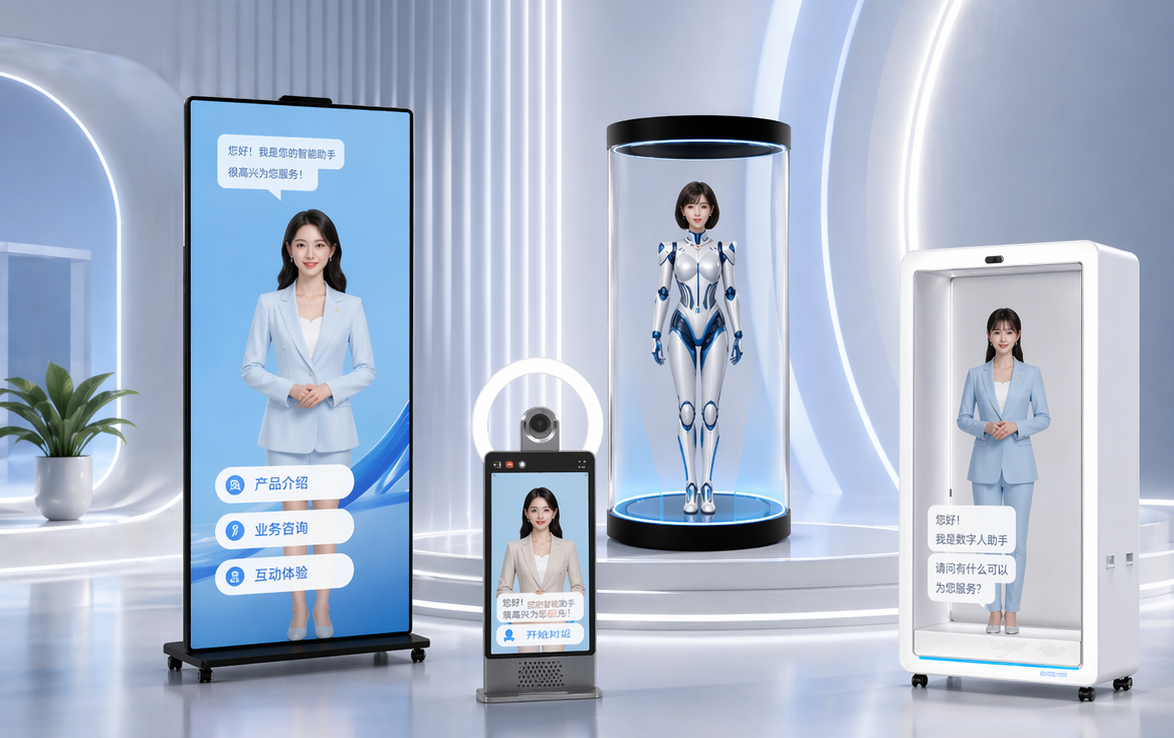
Commercial displays in 2026 are no longer a single product category. The term covers indoor digital signage, video walls, transparent LCD screens, waterproof outdoor displays, interactive kiosks, and AI-driven digital humans. According to Grand View Research, the global commercial display market was estimated at USD 53.65 billion in 2024, with digital signage accounting for more than 53.73% of total revenue. For importers, distributors, integrators, and project owners, understanding the range of commercial display types is the first step in a purchasing decision.
A Growing Set of Options, and a Growing Set of Trade-offs
Commercial display buyers no longer choose simply between a screen and a poster. They must weigh installation environment, ambient light, interaction requirements, content management systems, power consumption, mounting methods, and long-term reliability. A display that works well in a shopping mall may fail in a transport hub exposed to dust and rain. A conference room screen must support touch and collaboration, while a street-facing advertising display must deliver high brightness and weather protection.
The range of formats is also expanding. Fortune Business Insights projects that the holographic display market will grow from USD 5.42 billion in 2026 to USD 33.36 billion by 2034, at a CAGR of 25.52%. Global Market Insights values the transparent display market at USD 2.84 billion in 2023, with expectations of reaching USD 81.5 billion by 2032 due to AR integration. These figures illustrate why procurement teams are looking beyond standard digital signage toward new, more specialized display technologies.
One Portfolio, Multiple Display Formats
Guangzhou Kedro Electronics Technology Co., Ltd., commonly known as GZKEDRO, is a commercial display manufacturer that illustrates this diversified product landscape. Founded in 2013, the company specializes in commercial display solutions and intelligent interactive devices. It operates a manufacturing facility covering 50,000 m³ with approximately 200 employees, and runs R&D centers in Guangzhou and Shenzhen with 100 R&D professionals. Its annual production capacity exceeds 1,000 commercial display units, and export business accounts for 80% of total sales, serving global markets.
GZKEDRO’s product lineup spans eleven distinct series: indoor digital signage (KD-AD), wall-mounted displays (KD-WM), LCD video walls (KD-VW), smart conference displays (KD-IFPD), elevator advertising machines (KD-EA), self-service kiosks (KD-SSK), interactive slider screens (KD-ISS), transparent cabinet displays (KD-TP), outdoor waterproof displays (KD-OD), dual-screen outdoor advertising machines (KD-DSA), outdoor LED displays (KD-LED), and holographic digital humans (KD-DH). For a buyer, this portfolio matters because it allows different deployment scenarios to be matched with purpose-built hardware rather than forcing one display type into all situations.
Technical Dimensions of Commercial Display Formats
Commercial display specifications differ significantly by category. Understanding these differences helps buyers evaluate whether a product fits the practical conditions of a project.
| Product Series | Display Type | Key Specifications | Typical Use |
|---|---|---|---|
| KD-AD Series | Indoor digital signage | RK3566, 2GB RAM, 32GB storage, 1920x1080, 450 cd/m², ≤140W | Commercial districts, airports, railway stations, shopping malls, hotels |
| KD-WM Series | Wall-mounted advertising display | Android 14.0, 4GB DDR3, 64GB storage, 350 cd/m², optional 4K | Malls, hotels, commercial districts, airports, railway stations |
| KD-VW Series | LCD video wall | 55-inch panel, 3.5mm bezel, 1920x1080, 500 cd/m², 4000:1 contrast | Monitoring, exhibitions, government, shopping malls |
| KD-IFPD Series | Interactive conference display | 40-point touch, Android 14.0, D-LED, ≤250W | Corporate offices, training centers, educational institutes, government offices |
| KD-TP Series | Transparent LCD display | 95% transparency, 1920x1080, ≥380 cd/m², 3000:1 contrast, 8ms | Luxury retail stores, hotels, commercial districts |
| KD-OD Series | Outdoor waterproof display | IP55, 2000 cd/m², 1080x1920, RK3288, -20°C to 50°C, ≤500W | Transport hubs, commercial districts, smart city projects |
| KD-DSA Series | Dual-screen outdoor advertising machine | Dual 1080x1920 screens, 2000 cd/m², RK3288, 2GB RAM, 16GB storage | Transport hubs, commercial districts, smart city projects |
| KD-LED Series | Outdoor LED screen | P2.0 dot pitch, ≥4500 cd/m², refresh rate ≥3840Hz | Outdoor media, smart city, outdoor billboards |
| KD-EA Series | Indoor elevator display | 1920x1080, 250 cd/m², 4mm toughened glass, >50000h backlight life | Elevators, transport hubs, smart city projects |
| KD-ISS Series | Interactive slider screen | 1920x1080, 1500 cd/m², IP55, RK3288 or Intel Core 5 / 8GB / 120GB SSD | Exhibition centers, hotel lobbies, commercial districts |
| KD-SSK Series | Self-service touch kiosk | Intel Core i5-10th gen, 8GB RAM, 256GB SSD, 21.5" touchscreen | Hospitals, banks, airports, railway stations, government service centers, malls |
| KD-DH Series | Holographic digital human | 3840x2160, 1300 cd/m², HDR1000, 8-mic array, 5MP camera, 60W speakers | Exhibition centers, hotel lobbies, commercial districts, education, healthcare |
Two patterns stand out. First, indoor formats prioritize resolution, touch interactivity, and content management. Second, outdoor formats prioritize brightness, protection, and stable continuous operation. Buyers should define their operating environment before selecting a series.
Matching Display Types to Real-World Use Cases
Commercial display selection becomes clearer when mapped to deployment scenarios. GZKEDRO’s product documentation links its display series to specific industries and project types.
In smart retail and commercial advertising projects, indoor digital signage and wall-mounted displays are commonly deployed in shopping malls, hotels, airports, and railway stations. Their role is brand promotion and customer attraction. These projects often require supporting equipment such as media players and CMS software, and are typically managed through remote CMS playback.
In transport and smart city infrastructure, outdoor waterproof displays, dual-screen outdoor advertising machines, and outdoor LED screens are specified for transport hubs, commercial districts, and smart city projects. High brightness, dust and water resistance, and wide operating temperature ranges are critical in these environments.
In corporate and educational settings, the smart conference display is designed for corporate offices, government offices, training centers, and educational institutions. Multi-touch capability and Android-based interactivity are core requirements.
In public service and self-service environments, self-service kiosks appear in hospitals, banks, airports, railway stations, government service centers, and shopping malls. The kiosk combines touch input, computing, and optional printing within a single enclosure.
In exhibition and brand experience spaces, interactive slider screens and holographic digital humans are used in exhibition centers, hotel lobbies, and commercial districts. These formats are intended to create visual impact and deeper engagement.
Market Trends and Sourcing Signals
Market data indicates that digital signage remains the largest commercial display segment by revenue share, but specialized formats are gaining ground. Digital signage accounted for more than 53.73% of the global commercial display market in 2024, according to Grand View Research. North America held a 35.6% revenue share of the global digital signage market in 2025, making it the largest regional market.
At the same time, holographic display is projected to grow at a CAGR of 25.52% from 2026 to 2034, per Fortune Business Insights. Transparent display is expected to expand from USD 2.84 billion in 2023 to USD 81.5 billion by 2032, according to Global Market Insights. Industrial display, another adjacent segment, was estimated at USD 5.90 billion in 2024 by Grand View Research. These signals suggest that project buyers will increasingly evaluate a broader mix of display formats rather than defaulting to a single screen category.
Commercial Displays vs. Traditional Signage
Compared with static signage and printed posters, commercial displays offer clear advantages: remote content updates, scheduling, dynamic video, interaction, and higher visibility in many lighting conditions. These features are why digital signage has become a dominant format in retail, transport, and corporate environments.
The comparison also has limits. Commercial displays require a continuous power supply, network connectivity for remote management, and an ongoing content management workflow. Hardware costs are typically higher than printed materials, and display panels have a finite operational life. For low-traffic locations, short-term campaigns, or areas without reliable power or networking, traditional static signage can remain a simpler and more cost-effective choice. Buyers should treat this not as a weakness of commercial displays but as a legitimate selection criterion.
What Buyers Should Watch Next
The future of commercial display is likely to be shaped by scenario-specific design, AI-enabled interaction, and more rigorous operating standards. Buyers evaluating suppliers should look at portfolio breadth, verifiable specifications, environmental protection ratings, and the ability to support customization across small, medium, and large projects.
GZKEDRO provides one example of how a single manufacturer can cover multiple display formats, from digital signage to holographic digital humans. However, any purchasing decision should be based on the buyer’s own deployment environment, content strategy, and technical requirements. Detailed product specifications are available in the company’s catalog: GZKEDRO Product Catalog (English Edition).
FAQ
What is a commercial display?
A commercial display is a professional digital display used in business or public environments such as retail stores, hotels, transport hubs, corporate offices, and government facilities. Unlike consumer televisions, commercial displays typically have higher brightness, longer operating life, and specialized features such as waterproofing, touch interaction, or industrial-grade panels.
What types of commercial displays are available?
Common types include indoor digital signage, wall-mounted displays, video walls, interactive conference displays, self-service kiosks, interactive slider screens, transparent LCD displays, outdoor waterproof displays, outdoor LED screens, elevator displays, and holographic digital humans. GZKEDRO’s product series are representative examples of these categories.
What are the key specifications for an outdoor commercial display?
Outdoor displays should have high brightness for sunlight readability, a wide operating temperature range, and protection against dust and water. For example, the GZKEDRO KD-OD Series outdoor display has 2000 cd/m² brightness, IP55 protection, an operating temperature range of -20°C to 50°C, and uses a quad-core RK3288 processor with 2GB RAM and 16GB storage.
How do I choose the right commercial display for my project?
Start by identifying the installation environment and usage scenario. Retail and hospitality often suit indoor digital signage or transparent displays. Transport hubs and smart city projects typically need outdoor waterproof displays or high-brightness LED screens. Corporate offices and training centers may use interactive conference displays, while hospitals and banks often use self-service kiosks.
Why is digital signage the largest segment of the commercial display market?
Grand View Research estimated the global commercial display market at USD 53.65 billion in 2024, with digital signage accounting for over 53.73% of revenue. Digital signage is broad, cost-effective, and adaptable to a wide range of indoor applications, which explains its dominant market share.
How does a commercial display differ from traditional signage?
Commercial displays support dynamic content, remote updates, and interactivity, but they require power, network connectivity, and ongoing content management. Traditional static signage has no such infrastructure needs but cannot deliver real-time updates or interactive engagement.
Have Questions or Need More Details?
Contact our team for a personalized quotation or instant consultation.
Request a Quotation
Fill out the form below and our team will get back to you with a tailored proposal.
WhatsApp Direct Chat
Prefer to chat in real-time? Message us on WhatsApp for instant assistance & quick answers.
- Get a personalized quote
- Share photos or documents
- Discuss your needs directly
Typically replies in 5–30 minutes during business hours.