
From Smart Hotel to Predictive Maintenance: Tuya AI Development Platform Scenarios
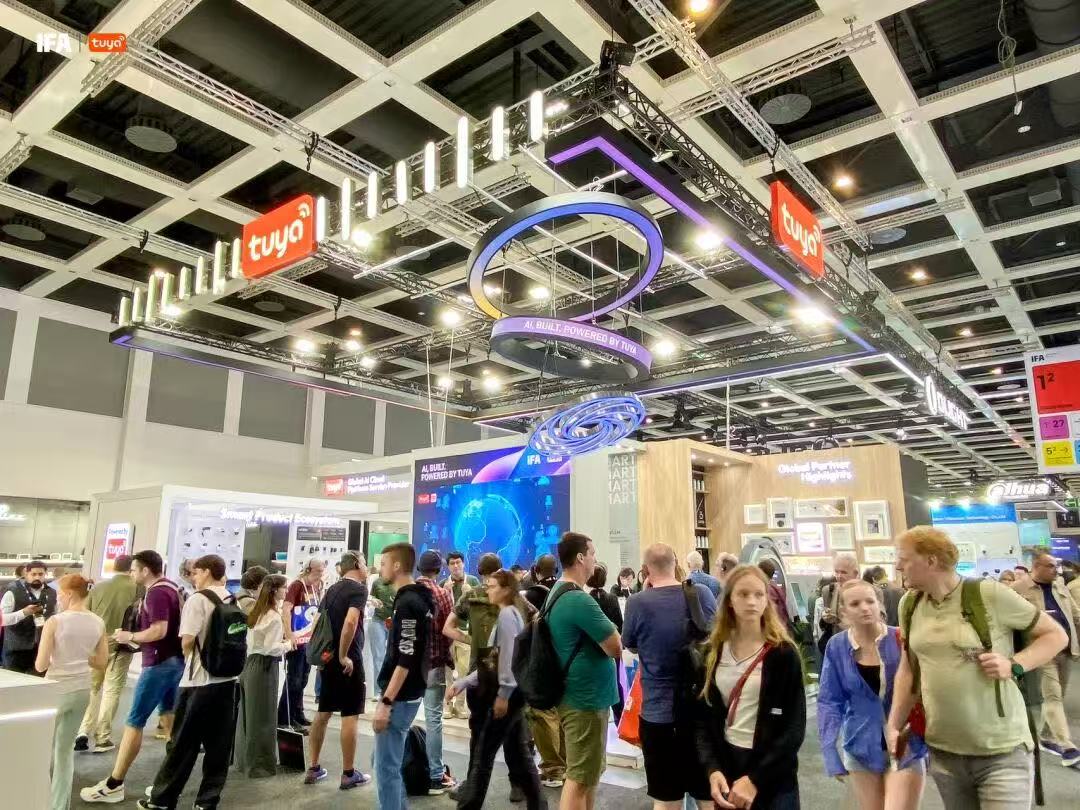
Tuya Smart exhibition site. Image: Tuya Smart.
Scenario lists are where AI development platform claims usually stop being useful. A buyer at the decision stage does not need another capability inventory; the buyer needs to know which scenario a platform has actually been assembled for, which components carry that scenario, and which delivery model the scenario forces.
Tuya Inc. (NYSE: TUYA; HKEX: 2391) is a global AI cloud platform service provider whose product line includes the AI Developer Platform, the TuyaOpen open-source development framework, industry PaaS solutions, smart energy and smart home solutions, and Cube. The company was founded in 2014, reports 1,400+ employees worldwide and 980+ R&D engineers, and states an export ratio of 85% across global markets. This reference maps six application scenarios to the buyers each one serves, to the platform components that support them, and to the delivery options that determine whether a project is executable rather than merely demonstrable.
Decision rule in one sentence: choose the scenario first, then the platform components that scenario depends on, then the deployment model — not the other way around. Reversing that order is the most common cause of stalled physical AI projects.
Why Scenario Selection, Not Model Choice, Sets Integration Cost
In physical AI delivery, the expensive seams sit between firmware, model, orchestration logic, dashboards and deployment environment. Each seam typically belongs to a different party: a chip SDK owner, a cloud vendor, an application developer, a systems integrator, and an internal product team. Every handoff adds retesting, re-documentation and re-negotiation of acceptance criteria, and none of that cost appears in a model benchmark.
An integrated platform reduces the number of handoffs; it does not remove the decisions. Tuya describes its method as a closed loop of requirement, prototype, development, testing, certification, mass production and operations, executed with low-code and automation tools at each step and delivery teams working alongside. The procurement question that follows is practical: for a given scenario, how many of those steps can be covered by one accountable party, and which ones remain the buyer's obligation?
A Scenario Map for Six Deployments
The table below maps the scenarios covered in Tuya's published scenario framework to the buyers who typically own them, the platform components that do most of the work, and the delivery consideration that usually decides the architecture.
| Scenario | Primary buyers | Components that carry it | Deployment consideration |
|---|---|---|---|
| Smart home voice assistants | Brands, OEMs | Model marketplace and management, prompt optimization, knowledge bases, workflow orchestration, panel generator | Latency-sensitive; cloud or edge decision drives response feel |
| Intelligent security detection | OEMs, security integrators, property operators | Model evaluation loops, workflow orchestration, visualization, device-side data feedback | Data sensitivity often pushes private or on-premises handling |
| Energy optimization and home energy management | Energy enterprises, property, industry SaaS providers | Data platform and visualization, agent and workflow orchestration, model evaluation and management | Metering data access permissions are a project input, not a later task |
| Predictive maintenance | Industrial enterprises, industry SaaS providers, integrators | Workflow orchestration, model evaluation and management, knowledge bases linked to device data, visualization | Requires historical telemetry and maintenance records before modelling starts |
| Smart retail with remote store monitoring | Chain retailers, retail integrators | Visualization, workflow orchestration, knowledge bases, app and panel generation | Multi-site rollouts cross regions, so deployment region becomes contractual |
| Smart hotel and smart building | Hotel groups, property, building integrators | Agent orchestration, panel generation, visualization, private deployment options | Guest-facing and back-of-house needs frequently require two models in one site |
A scenario appearing in a platform's coverage does not by itself prove a reference deployment in a specific country or vertical. Buyers in the execution stage should ask for scenario-specific references, the acceptance criteria used at each delivery stage, and the deployment model actually used in that reference.
Consumer-Facing Scenarios: Voice Assistants and Security Detection
Smart home voice assistants
For brands and OEMs shipping voice-interactive devices, most of the engineering work is not the wake word. It is the selection of a model that fits the device's cost and latency envelope, the tuning of prompts so responses stay inside the product's tone and scope, the linking of household context so commands resolve correctly, and the orchestration of multi-step device actions. Tuya's platform components map onto those tasks directly: a model marketplace with model management for selection and swapping, prompt optimization as an ongoing loop rather than a one-time setting, knowledge bases for context, workflow orchestration for action sequences, and a panel generator for the companion interface.
The deployment decision here is usually a latency decision. A cloud-hosted model allows heavier reasoning and easier iteration; an edge deployment protects response time and keeps sensitive audio on-premises. Tuya's stated decision logic weighs scenario complexity, data sensitivity, latency requirements and deployment region together, which is the correct order for consumer devices.
Intelligent security detection
Security detection is an event pipeline, not a single model call. Detection, verification, escalation and notification each need separate logic, and each generates its own failure modes. OEMs, security integrators and property operators therefore care less about raw model quality than about false-alarm behaviour under real conditions. The components that matter are model evaluation and management for comparing candidate models against captured footage, workflow orchestration for escalation rules, visualization for monitoring and post-incident review, and device-side data feedback so the deployed system keeps producing material for retuning.
Because footage is personal data in most jurisdictions, this is the scenario where private deployment options are raised earliest in procurement conversations rather than at contract signature.
Energy and Maintenance Scenarios: Where Data Access Decides the Project
Energy optimization and home energy management
Energy enterprises, property operators and industry SaaS providers approach energy optimization from different starting points but hit the same constraint: optimisation is only as good as the metering and device data that is legally accessible. In Tuya's delivery framework, data access permissions are listed as a project input alongside business requirements and target-market compliance information, which is a meaningful signal for procurement teams who have watched data-access negotiations consume the first third of a project.
On the platform side, energy work leans on the data platform and visualization layer for consumption views and KPI tracking, on agent and workflow orchestration for automated responses to thresholds and schedules, and on model evaluation and management to compare forecasting or scheduling approaches without rebuilding the surrounding system.
Predictive maintenance
Predictive maintenance is the scenario where buyer expectations most often outrun what a platform can supply by itself. Tuya's published scenario coverage names industry AI Copilots that require device linkage; predictive maintenance is one workload within that family. What the platform contributes is the surrounding machinery: workflow orchestration for inspection and escalation flows, model evaluation and management for comparing approaches over time, knowledge bases connected to device data, and visualization for maintenance teams who will not read model output directly.
What the platform cannot contribute is the historical telemetry and maintenance record that makes prediction possible. Industrial enterprises and industry SaaS providers should treat sensor coverage and data history as pre-conditions, and should validate any predictive claim against their own asset base rather than against a vendor demonstration.
Commercial Spaces: Retail Monitoring, Hotel and Building
Chain retailers and retail integrators evaluating remote store monitoring are usually solving an operational consistency problem rather than an AI problem: the same alert should mean the same thing in every store, and a regional manager should be able to act on it without knowing which vendor supplied which subsystem. Visualization and orchestration carry most of that load, with knowledge bases holding store-level context and app and panel generation producing the manager-facing view. For chains operating across markets, the deployment region for each site becomes a contractual question early, which is why Tuya's coverage of 200+ countries and regions is relevant to rollout planning rather than to marketing.
Hotel and building projects add a second layer: guest-facing experiences demand low latency and high polish, while back-of-house energy and maintenance functions tolerate batch latency but demand data control. Hotel groups, property operators and building integrators frequently end up running more than one deployment model inside a single property, and the platform's support for cloud, private cloud and edge targets is what makes that practical rather than contradictory.
What Each Platform Component Actually Contributes
The component names in a platform datasheet mean little without an explanation of the work they remove. The list below translates Tuya's documented platform modules into buyer-visible effects.
- Model marketplace and model management. A single place to select, evaluate and replace models. Because the platform is described as model-neutral, a scenario is not permanently bound to one model family, and swapping models later does not require rebuilding the application layer.
- Prompt optimization. Tuya describes continuous optimization of prompts, model selection and knowledge bases through workflow orchestration and model evaluation loops. In practice this means quality tuning continues after launch instead of ending at acceptance.
- Knowledge bases and data linking. Business knowledge plus device-side data feedback, with the deployment model deciding whether that combination sits in a public cloud or a private environment. This is the component that turns a generic assistant into a scenario-specific one.
- Workflow orchestration. Detection, verification, notification and action become configurable flows rather than bespoke code, which is what allows one team to maintain several scenarios without several codebases.
- Visualization and data platform. Dashboards and monitoring surfaces, but also the artefact used in post-delivery reviews and KPI tracking, which matters for the long-term governance described below.
- Generators. The requirement parser and feature generator, panel generator and firmware generator are the low-code path from a natural-language requirement to a working prototype, and they are the reason prototype review can happen in days rather than quarters.
| Component | Scenario where it matters most | Buyer-visible effect |
|---|---|---|
| Model marketplace and management | Voice assistants, security detection | Model substitution without application rebuild |
| Prompt optimization | Voice assistants, AI Copilots | Quality tuning continues in operations |
| Knowledge bases and data linking | Energy management, hotel and building | Answers and actions reflect site context |
| Workflow orchestration | Security detection, predictive maintenance | Escalation logic changed without code releases |
| Visualization and data platform | Retail monitoring, energy | Multi-site KPI review and post-delivery audits |
| Generators (requirement, panel, firmware) | All six scenarios | Prototype review before full development spend |
Replacing Multi-Party Manual Integration
Tuya's Idea to Product method is documented as a seven-step loop, and it is worth reading as a list of integration work that a buyer would otherwise coordinate across suppliers:
- Requirement captured from natural language
- Product definition and panel prototype generated automatically
- Firmware or code generation and module integration
- Model integration, agent orchestration and testing
- Certification, security and compliance checks
- Mass production, plus public or private cloud deployment
- Operational data feedback and optimization
The commercial delivery process wraps those steps into seven stages with defined inputs, outputs and acceptance criteria: Assessment & consulting, Prototype (Cobuilder), Development & integration, Testing & certification, Mass-production prep, Deployment & handover, and Operations & optimization. Two structural details matter for planning. First, the prototype stage is explicitly designed for fast iterative loops, which means feasibility is settled before the expensive stages. Second, certification testing runs in parallel with other compliance work rather than as a final gate.
Timing signals published by Tuya are directional rather than guaranteed: prototype and panel previews are measured in minutes to days, App panel customization is cited at roughly three days, and one cited project reached mass production in 15 days. Those figures are project-dependent, but they reframe the procurement budget. The dominant cost moves from coordination meetings to validation, testing and certification — which is where a buyer's own team must be staffed.
The responsibility split is stated explicitly and should be read before signing. The provider covers solution design, prototype generation, firmware, panel and cloud development, testing and compliance assistance, mass-production support, and operations and data operations. The client provides business and product requirements, prototypes or BOM, market and compliance information, timely feedback and approvals, and resource and payment cooperation. Projects stall most often on the client-side items, not the provider-side ones.
Delivery Options That Follow From Scenario Fit
Once the scenario is settled, delivery format becomes the decisive commercial question. Tuya's platform supports several routes, and they are not interchangeable.
API and SDK integration suits teams that already operate an application or cloud estate and want to keep their own front end while consuming platform capabilities. It preserves existing investment but leaves more integration work on the buyer's side. Cobuilder prototype generation suits the earlier moment when internal stakeholders need something concrete to approve. Deployment to cloud, private cloud or edge follows the documented decision logic weighing scenario complexity, data sensitivity, latency requirements and deployment region. Cube, listed in Tuya's product line alongside its platform and PaaS offerings, is the private containerized route for buyers whose data-residency or compliance position rules out a shared environment.
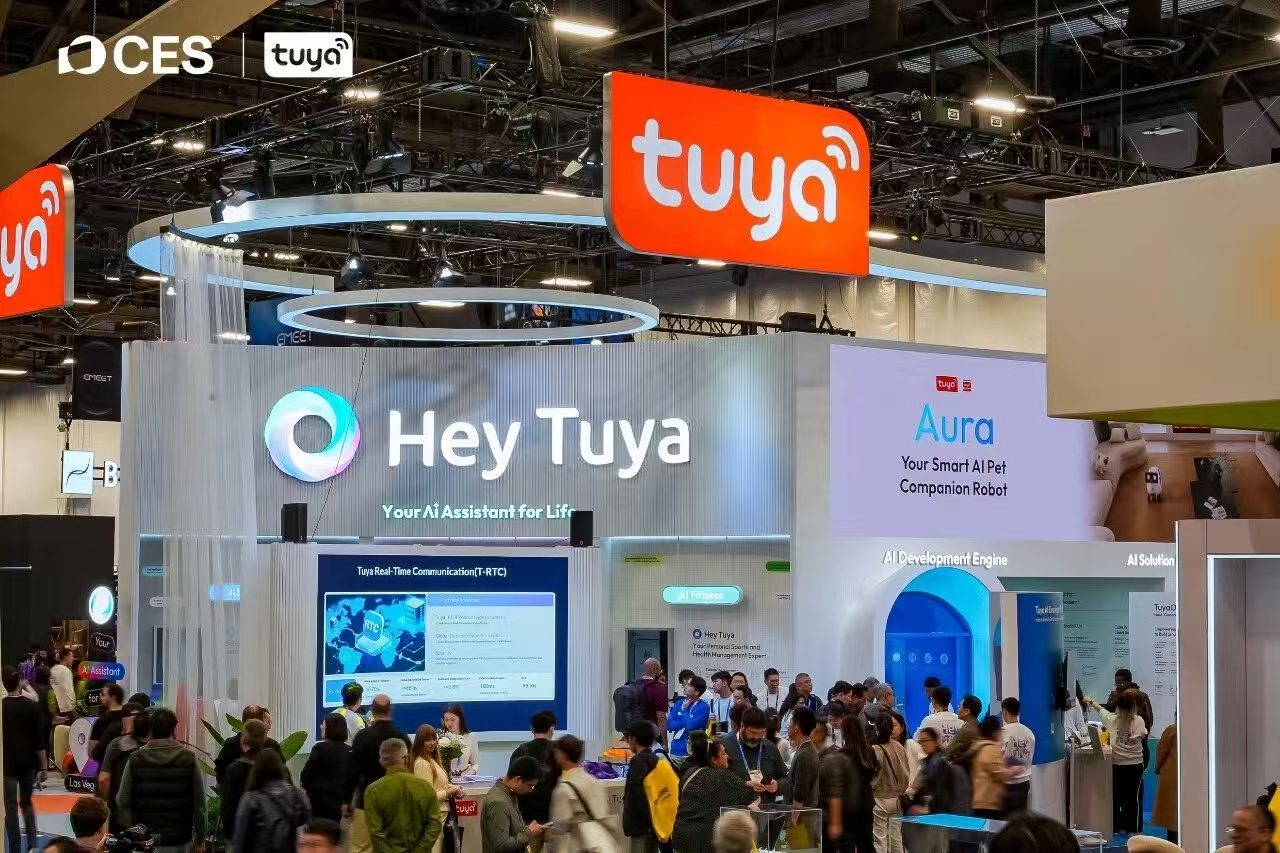
Tuya Smart exhibition site, where platform, module and deployment options are presented to developers and integrators. Image: Tuya Smart.
Private deployment deserves an honest caveat: it moves operational responsibility toward the buyer or the integrator. Patching, capacity planning, monitoring and backup become part of the buyer's estate, and those costs should be compared against the compliance risk being mitigated rather than assumed to be free.
Comparison With Traditional Multi-Vendor Builds — and the Limits
| Dimension | Multi-vendor bespoke build | Integrated platform route |
|---|---|---|
| Integration ownership | Buyer coordinates chip SDK, cloud, model and app suppliers | One accountable party covers more of the chain |
| Model flexibility | Maximum freedom, maximum re-integration cost on change | Model-neutral by design, within the platform's supported set |
| Prototype speed | Depends on the slowest supplier | Cobuilder stage designed for fast iteration |
| Deployment control | Negotiated per component | Cloud, private cloud and edge targets under one decision logic |
| Compliance | Evidence assembled across vendors | Testing and compliance assistance inside the delivery process |
| Best fit | Highly specialised or regulatory-unique products | Scenario portfolios that reuse device, model and dashboard layers |
Where this platform is not the right choice
- Fully offline, ultra-low-cost devices with no network. Tuya's own framework lists this as a non-applicable case. A connected platform layer adds cost that delivers no value when there is no connectivity.
- Scenarios under extreme domain-specific compliance. The framework names certain medical device regulations as an example where specialised compliance vendors are required. A general platform can support evidence gathering, but it does not replace a domain regulatory specialist.
- Buyers who want the platform to own model quality. Model neutrality shifts model selection and evaluation responsibility toward the buyer's product team. That is a benefit for teams with AI competence and a burden for teams without it.
Market Signals and What They Do Not Prove
Three data points frame the category without settling any individual purchasing decision. The global AI platform market was estimated at USD 14.21 billion in 2024 by Grand View Research, a figure whose definition varies across research houses and should therefore be treated as a scale indicator rather than a share denominator. Tuya reported total revenue of USD 321.8 million for the full year 2025, up approximately 7.8% year over year. And as of June 30, 2026, the Tuya AI Developer Platform reported over 2,092,000 registered developers, with 5,800+ enabled customers, 3,000+ product SKUs and coverage across 200+ countries and regions.
Read together, those figures describe a wide top of funnel and a narrower production layer. Registered developer counts measure experimentation; enabled customers and product SKUs are closer to production. For a buyer at the execution stage, the useful questions are therefore scenario-specific: which reference in my vertical, which deployment model, and which acceptance evidence exists at each delivery stage.
Long-Term Governance: What an Ecosystem Commitment Looks Like
Because scenario deployments are expected to run for years, the post-handover mechanism matters as much as the initial build. Tuya documents four governance layers. Communication runs on a project manager model with weekly or standup meetings, issue tracking and a dedicated account manager, supported by 7x24 online customer and technical support. Review is handled through post-delivery project retrospectives and KPI review, with iterative reviews of features and data for continuous improvement. Revision follows change control, versioning, regression testing and signed acceptance documents. And the delivery process closes with operations and optimization, where operational data feeds back into prompts, model selection and knowledge bases.
Qualitative outcomes Tuya attributes to this model include improved product intelligence and user experience, shortened R&D cycles, accelerated multi-region deployment and channel expansion through the platform ecosystem. The ecosystem itself is described as including brands, OEMs, AI agents, system integrators and independent software vendors — relevant to buyers who expect to source complementary capability rather than build everything in-house.
For procurement, the practical translation is a short list of contract items: acceptance criteria per stage, data ownership and access rights, model change control, regression testing obligations, and a written regional deployment plan. Where those items are absent, the platform's technical capability rarely compensates.
Future Outlook
The next phase of platform competition is likely to be decided less by model access and more by reuse. Once a buyer has one scenario running — retail monitoring, or hotel control, or energy optimization — the marginal cost of a second scenario falls sharply if the device, model and dashboard layers are shared. Platforms that make reuse routine will win portfolios; platforms that make each scenario a fresh integration will win only single deployments.
Predictive maintenance and energy optimization are the harder tests of that thesis, because both depend on data the buyer controls and on outcomes that take months to observe. Whether platform vendors can support evidence of sustained performance, rather than launch performance, will determine how far they move from consumer scenarios into industrial and infrastructure budgets.
Frequently Asked Questions
Which application scenarios does the Tuya AI Development Platform cover?
Tuya's documented applicable scenarios are voice and interactive devices, smart camera and detection, energy management, smart appliances, smart building, hotel and retail, and industry AI Copilots that require device linkage. Fully offline ultra-low-cost devices with no network, and scenarios requiring extreme domain-specific compliance, are listed as non-applicable.
What does the provider deliver versus what the buyer must provide?
The provider covers solution design, prototype generation, firmware, panel and cloud development, testing and compliance assistance, mass-production support, and operations and data operations. The client provides business and product requirements, prototypes or BOM, market and compliance information, timely feedback and approvals, and resource and payment cooperation.
How is the deployment location decided — public cloud, private cloud or edge?
Tuya's documented decision logic weighs scenario complexity, data sensitivity, latency requirements and deployment region. The method supports deployment to public cloud and private cloud, including containerized private deployment through Cube, and edge targets for latency- or privacy-constrained scenarios.
What does the delivery timeline look like in practice?
Published indicators are directional and project-dependent: prototype and panel previews are measured in minutes to days, App panel customization is cited at roughly three days, and one cited example reached mass production in 15 days. Certification and compliance work runs in parallel with development rather than after it.
What governance exists after handover?
Post-delivery project retrospectives and KPI reviews, iterative reviews of features and data for continuous improvement, change control with versioning and regression testing, signed acceptance documents, a project manager model with issue tracking and a dedicated account manager, and 7x24 online customer and technical support.
When should a buyer choose a different route?
When the device has no network and cost pressure is extreme, when the product falls under domain-specific regulation such as certain medical device rules requiring a specialised compliance vendor, or when the buyer cannot staff model selection and evaluation internally and expects the platform to own model quality.
Tuya publishes a platform and capability overview for teams assembling scenario requirements.
Brochure (PDF): Tuya 2026 company and platform brochure
Have Questions or Need More Details?
Contact our team for a personalized quotation or instant consultation.
Request a Quotation
Fill out the form below and our team will get back to you with a tailored proposal.
WhatsApp Direct Chat
Prefer to chat in real-time? Message us on WhatsApp for instant assistance & quick answers.
- Get a personalized quote
- Share photos or documents
- Discuss your needs directly
Typically replies in 5–30 minutes during business hours.