
From Supplier Claims to Written Acceptance Criteria for Wholesale Bonsai Plants
From Supplier Claims to Written Acceptance Criteria for Wholesale Bonsai Plants
A supplier qualification states what a company says about itself. An acceptance criterion states what you will check, how you will check it, and what happens if the check fails. For wholesale bonsai plants, the distance between those two sentences is where most sourcing disputes start — and it is closed on paper, before cultivation is scheduled, not at the arrival inspection.
This article converts supplier claims into written acceptance criteria for four commonly traded lines: Sansevieria, Cycas revoluta, Ficus bonsai and Pachira. The reference facts come from the published specification and registration record of Xiamen Perfect Supply chain CO., LTD, a grower and exporter of live plants and bonsai established in 2012 that markets under the KinoFarm brand. The method itself is generic: the same conversion works with any supplier, which is the point.
A Qualification Is a Supplier Statement; a Criterion Is an Order Test
A registration certificate answers a narrow set of questions. Has a named facility been registered by a named authority, for a named scope, inside a stated validity period? That is useful evidence. It is not the same statement as 'this container will meet my order'.
The registration record available for this supplier shows why the distinction matters. It is issued by Xiamen Customs of the People's Republic of China under registration number 3700ZM008, dated 25 May 2025 and valid until 24 May 2028, and it covers production, processing and storage of seed bulbs, seedlings and flowers for export. The record associates Cycas revoluta, Ficus bonsai and Pachira with that registration.
Read as a purchasing document, that paragraph produces three tests and one open question. The tests: is the number on file, is the certificate still valid on the shipment date, and does the scope match the work being performed for this order? The open question: Sansevieria is not named in that product association, so a buyer sourcing the line should ask the supplier to confirm in writing whether the specific SKU falls inside the registered scope, rather than assume either answer.
The Four-Field Conversion
Every claim becomes usable when it is rewritten with four fields. Method says who checks what, and when. Evidence says which document or photograph stays in the file. Tolerance says what result passes. Remedy says what the supplier does if it does not. Applied to the claims a bonsai supplier typically makes, the conversion looks like this.
| Supplier claim | Written criterion (method) | Evidence retained | If it fails |
|---|---|---|---|
| Registered export production unit | Registration number, issuing authority and validity dates recorded in the order; certificate copy supplied before the document cut-off; SKU coverage confirmed in writing | Certificate copy plus written scope confirmation | Document file held incomplete; shipment not released for booking |
| 100% test in quality control | Attributes checked, sampling basis per lot and defect definition agreed in advance; inspection report format agreed | Signed per-lot inspection report with counts | Re-inspection; replacement or credit under the agreed term |
| Customizable packaging | Packing specification per SKU: root form, pot or bare-root, medium, units per carton, loading configuration in the container | Approved packing sheet and pre-loading photographs | Repack before loading |
| 20–60 day lead time | Fixed production completion date, document issuance date and latest booking date instead of a range | Dated production schedule | Notice period and rescheduling terms apply |
| Quarantine document support | Each document named, with issuing body and delivery deadline before departure | Full document set matched against the order file | Departure deferred until the set is complete |
Two rows do most of the work. '100% quality control' is not yet a criterion, because it does not say what was checked, on what sampling basis, or what counts as a defect. And a lead-time range is a planning input, not a criterion: the supplier's capability record lists 20–60 days, while a purchase order needs a production completion date and a document issuance date derived from it.
Variety Baselines: What the Specification Already Fixes — and What It Leaves Open
Bonsai specifications are usually ranges, and ranges are the correct shape for a biological product. The buyer's task is not to tighten the range arbitrarily; it is to fix the measuring convention, the presentation grade and the packing form around it.
| Line | Supplied specification | What the buyer still has to fix |
|---|---|---|
| Sansevieria (Sansevieria superba) | Height range H 20–70 cm; production parameters H 20–40 cm with 2–3 leaves, supplied bare-root or potted | Root form per order (bare-root or potted), minimum leaf count per grade, whether height is measured to leaf tip or pot rim |
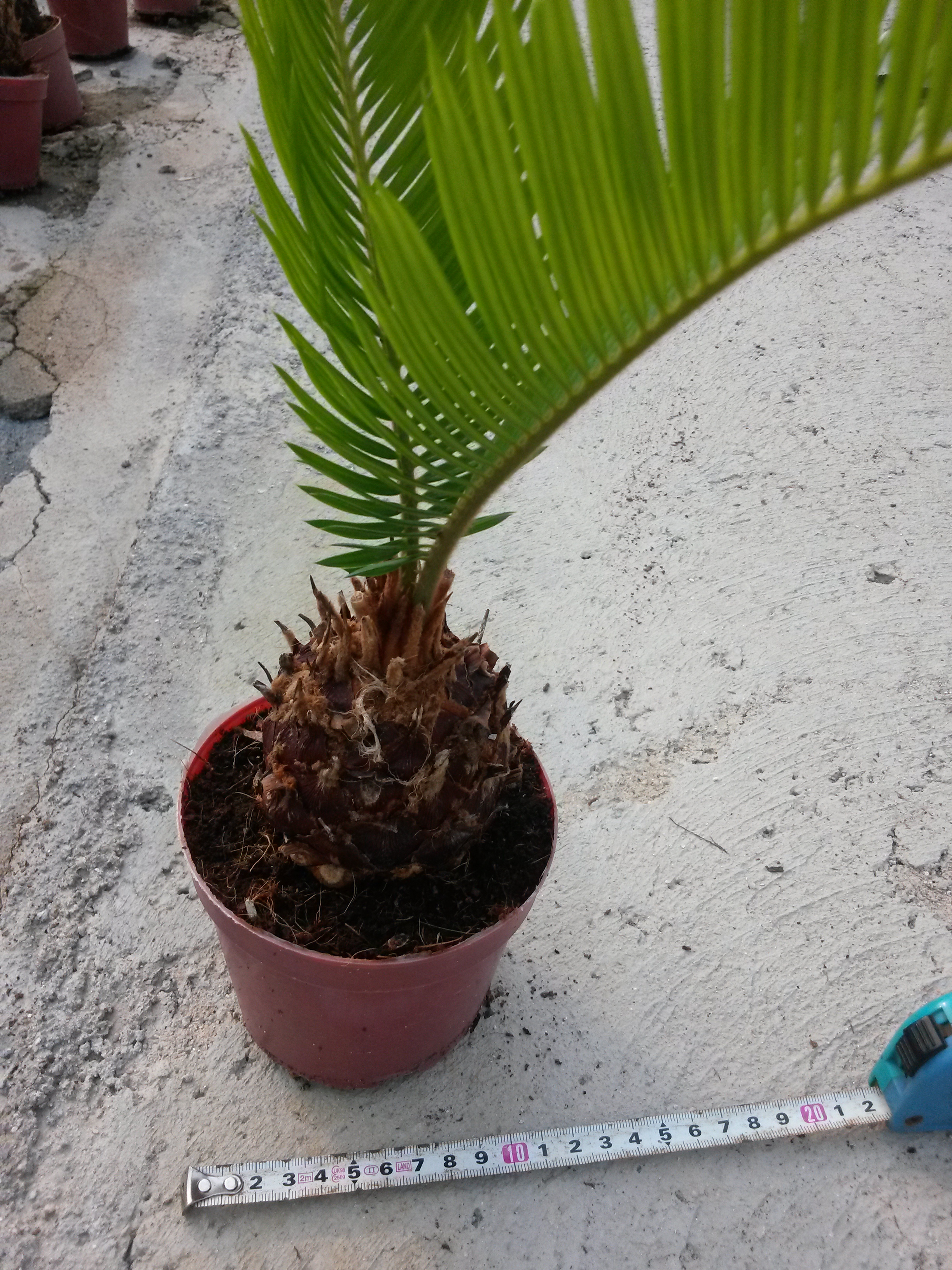
| Cycas revoluta (sago palm) | Caudex diameter D 5–20 cm+ and height H 20–120 cm; supplied as bulbs; described as slow-growing and long-lived | Where on the caudex diameter is measured, whether height includes foliage, and the firmness and rot definition for bulbs |
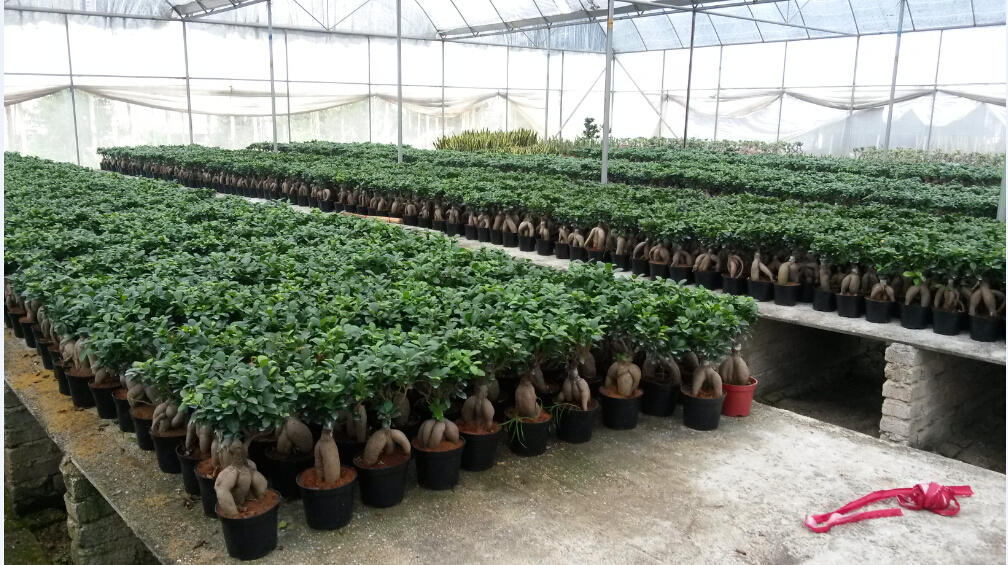
| Ficus bonsai (Ficus ginseng roots) | Grafted or ungrafted material; unit weight 50 g to 10 kg | Graft status per line, whether weight includes pot and medium, trunk and root presentation grade |
| Pachira (money tree) | 3, 4 or 5 braids; height H 20–90 cm; newly braided or old braided material | Braid count per carton, a written definition of 'old braided', height convention |
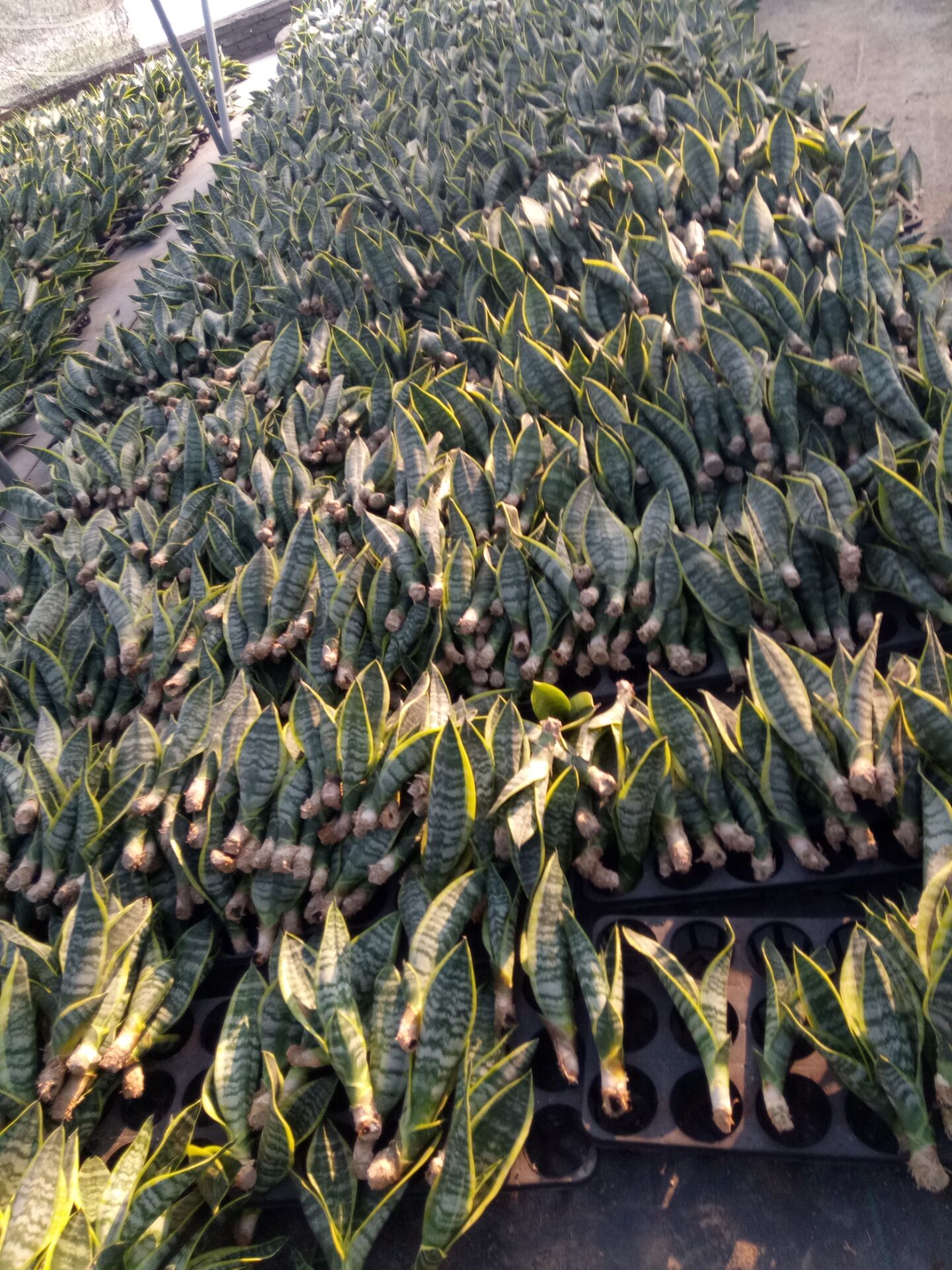
Two buyers can both order 'H 20–40 cm Sansevieria, 2–3 leaves' and receive plants that are not comparable, if one measures to the tallest leaf tip and the other to the pot rim. The same applies to a Cycas revoluta diameter quoted as D 5–20 cm+ without stating where on the caudex the measurement is taken, and to a Ficus bonsai weight quoted from 50 g to 10 kg without saying whether pot and medium are included.
Root form deserves separate attention because it is a compliance variable, not a preference. Under the United States Department of Agriculture's Agricultural Commodity Import Requirements, bonsai imported into the United States must be bare-rooted and accompanied by a phytosanitary certificate (7 CFR 319.37-8). For a US-bound order, bare-root versus potted is therefore a production decision that belongs in the order document before cultivation is scheduled, not a packing detail discovered at the port.
Pachira adds a grading question of its own. The specification separates 3, 4 and 5 braids and distinguishes newly braided from old braided material across a height range of H 20–90 cm. 'Old braided' needs a written definition — stem maturity, braid age or a visual grade — otherwise identical words cover different goods.
Documentation Criteria: Three Layers That Are Often Confused
Bonsai orders involve three separate document layers, and merging them is the most common source of misplaced confidence.
- Supplier-side export registration. A Chinese registration for production, processing and storage of export plant material. Scope-limited and time-limited.
- Destination import requirement. Set by the importing country's plant protection authority. The US bare-root and phytosanitary rule above is one example.
- Commercial documents the buyer defines. Packing specification, inspection report, arrival condition report and photograph protocol.
A supplier's export registration does not satisfy the destination layer, and a destination requirement does not tell you whether the supplier's facility operates inside its own registered scope. Both belong in the acceptance file as separate items, with separate evidence.
Container Transport: Turning 'Survives Shipping' into a Written Test
The weakest line in most import contracts reads something like 'the plants will arrive in good condition', because nobody has defined good condition. Container transport makes that definition urgent: a shipment that is acceptable on day three can fail on day thirty, and the supplier's 20–60 day figure is a production lead time, not a transit measure.
The one case record available for this supplier is narrow and should be read narrowly: a garden-centre retailer in Spain, 4,134 units over five years, with Cycas growing well and Ficus in good condition, and quality described as holding after container shipment. That is a single customer type in a single market. It supports the statement that container shipment is an established route for these lines; it does not predict survival for a different variety, season or transit duration.
What to write instead of 'good condition':
- Loading window and the refrigerated container configuration agreed for the shipment — the refrigerated container is the matched equipment named in the supplier's application record.
- Scheduled transit duration plus an arrival inspection window counted in working days from container release.
- Observable definitions: leaf turgor and extent of discolouration, root or bulb firmness for Cycas, braid integrity for Pachira, and the minimum proportion of units per pallet that must meet them.
- A photograph protocol — which pallets, how many units, taken when, and by whom.
- Cost allocation if the arrival inspection fails.
The company profile also cites invention patents covering long-distance storage and transport methods and pest control in soilless bonsai cultivation. Those are relevant to the container question, but they describe a capability, not a condition of your shipment. A written procedure is what turns one into the other.
Purchasing Terms Belong in the Same Document
Acceptance criteria and commercial terms are usually written by different people and filed separately. They are easier to enforce when they sit together, because several commercial terms change what the criteria have to say.
The supplier's capability record lists a 45 kg minimum order quantity, a monthly capacity of 20 refrigerated containers, a 20–60 day lead time, 100% test coverage in quality control, customization of variety selection, growing cycle and packaging, and after-sales support covering planting guidance and quarantine documents.
The MOQ detail matters more than it appears. A 45 kg threshold is a weight, while the four lines are specified on different dimensions: Ficus bonsai by unit weight from 50 g to 10 kg, Cycas revoluta by caudex diameter and height, Sansevieria by height band and leaf count, Pachira by braid count and height. A weight-based minimum therefore has to be translated into units per variety before it can be compared with a per-piece minimum elsewhere — and before it can be written as a line-item quantity.
Capacity claims behave the same way. Twenty refrigerated containers a month is a ceiling reported by the supplier, not a reservation. If the order depends on a seasonal window, the acceptance criterion is a confirmed production slot with a date, not the capacity figure. Customization follows the same logic: variety selection, growing-cycle and packaging changes are only enforceable if the order states what was customized, when it must be approved, and what happens if approval arrives late.
Price Bands: Using Listing Data Without Pretending It Is a Benchmark
Public marketplace listings for Ficus bonsai show how wide indicative pricing can be: one listing at US$0.72–10 per piece with a 1,000-piece minimum, another at US$4–20 per piece at 500 pieces, and a third at US$15–150 per piece at 20 pieces. These are seller-listed FOB terms, and they are not comparable, because plant form, size, age, shaping, pot and order volume all differ. They should not be averaged into an industry range, and they should never be presented to a supplier as a market price.
They remain useful for structuring a quotation request. Instead of asking for a price on 'Ficus', define two or three specification tiers from the table above — graft status, weight band, root form, presentation grade — and require a unit price per tier per MOQ band. The price criterion then reads: unit price X applies to tier 2, MOQ band B, packed to the approved packing sheet. That sentence can be checked. A single number with no tier attached cannot.
For the same reason, a price band should be written as a band tied to a specification rather than as a discount target. The gap between the lowest and the highest listing is mostly a gap between goods, not a gap between suppliers' margins.
Where the Method Fits, and Where It Does Not
Specification-sheet purchasing and criteria-based purchasing solve different problems. A specification sheet answers 'what am I buying?' A criteria document answers 'what makes me accept it?' Buyers holding only the first usually discover the second at the arrival inspection, when the only remaining remedy is a claim.
The method carries real costs and real limits. It adds administrative work at the quotation stage. It requires someone at the destination able to inspect against stated definitions. It turns into an argument about biology if the criteria are written as absolutes instead of proportions and ranges. And it cannot manufacture compliance: a well-drafted acceptance document will not make a shipment eligible for a market that restricts the product form.
The fit boundary is therefore commercial rather than technical. For repeat orders, mixed containers with a fixed grade structure, and any shipment crossing a long transit, a full criteria document pays for itself in the first disputed container. For a single low-value trial lot, four lines are proportionate: root form, units per carton, document set before departure, and an arrival photograph protocol. Writing forty clauses against a trial order is simply a different way of losing money.
What the Market Context Changes
Three data points frame why this paperwork is becoming a scaling issue rather than an administrative one. The global bonsai market was valued at USD 8.42 billion in 2025 according to Data Bridge Market Research, and Market.us estimates that wholesale accounts for 57 percent of demand; both are commercial research estimates rather than customs records. China's exports of 'Other live plants' under HS 0602, the heading that includes bonsai, reached USD 355 million in 2024 according to the Observatory of Economic Complexity, a customs-based figure. Data Bridge also projects the indoor segment, which covers Ficus and Pachira, at a 10.28 percent compound annual growth rate through 2031.
These figures measure different things — one is market value, the other is customs-cleared export value — so they should not be netted against each other. Their shared implication is narrower and more useful: the indoor lines with the strongest projected growth are also the lines where destination form requirements and arrival-condition disputes concentrate. As volume grows in those lines, the bottleneck moves from finding a supplier to proving that each shipment matched its specification. An acceptance document is the tool for that, and it scales better than inspection by memory.
Outlook
If indoor demand grows at the projected rate, the practical shift for wholesale buyers is from supplier-level vetting to SKU-level criteria: the same supplier can pass on one line and fail on another because registered scope, root form or grading definition does not fit that line's destination. That is not a forecast about any specific company; it follows from the structure of the documents described above, and it is the reason the conversion exercise is worth doing once, properly, and then reusing for each new order.
FAQ
What documents should a wholesale bonsai buyer request before confirming an order?
Three groups. Supplier-side: the export registration certificate with its number, issuing authority and validity dates, plus written confirmation that the ordered SKUs fall inside its scope. Destination-side: the import requirements of the buyer's own country, checked against the product form being ordered — for the United States, bonsai must be bare-rooted and accompanied by a phytosanitary certificate under 7 CFR 319.37-8. Commercial: the packing specification, the inspection report format and the document delivery dates.
How should 'alive on arrival' be defined for container-shipped bonsai?
In observable, counted terms agreed before shipment: which attributes are inspected (leaf turgor, extent of discolouration, root or bulb firmness, braid integrity), on what sample, inside which arrival window measured in working days, and what proportion of units per pallet must pass. Photographs taken under a stated protocol usually belong in the definition, because they settle disputes that adjectives cannot.
Does a Chinese export registration certificate guarantee clearance at the destination?
No. The registration certifies that a facility is registered for export production, processing and storage within a stated scope and validity period. Import eligibility is decided by the destination country's plant protection authority, on requirements that may cover root form, growing medium, inspection and phytosanitary certification. The two layers are separate items in the acceptance file.
How do MOQ and lead time interact with acceptance criteria?
Both need conversion before they are enforceable. A weight-based minimum such as 45 kg has to be translated into units per variety, because these lines are specified by weight, diameter and height, height and leaf count, or braid count. A lead-time range such as 20–60 days has to be translated into a production completion date and a document issuance date. The converted values are criteria; the original figures are planning inputs.
Can one acceptance document cover a mixed-variety container?
Yes, provided the criteria are structured by line rather than averaged across the container. Sansevieria, Cycas revoluta, Ficus bonsai and Pachira are specified on different dimensions, so the document should carry a per-line block for specification and grading, and a shared block for packing, documentation, arrival inspection and remedy.
For reference, the supplier's product catalogue covering these lines is available as a downloadable PDF: KinoFarm product catalogue.
Have Questions or Need More Details?
Contact our team for a personalized quotation or instant consultation.
Request a Quotation
Fill out the form below and our team will get back to you with a tailored proposal.
WhatsApp Direct Chat
Prefer to chat in real-time? Message us on WhatsApp for instant assistance & quick answers.
- Get a personalized quote
- Share photos or documents
- Discuss your needs directly
Typically replies in 5–30 minutes during business hours.