
From Tote to Foldable: The 2026 Shopping Bag Market Explained
The reusable shopping bag market is expanding under the combined pressure of plastic bag regulations, retailer sustainability commitments, and shifting consumer preferences. With the global reusable shopping bag market estimated at approximately USD 15.64 billion in 2025 and projected to reach USD 28.87 billion by 2034, procurement teams are increasingly treating shopping bags as a functional product category rather than a low-cost commodity. This article provides a market-level view of shopping bag materials, customization practices, supplier capabilities, and the trade-offs involved in replacing traditional single-use plastic bags.
The Regulatory Push Behind Reusable Shopping Bags
Europe's Packaging and Packaging Waste Regulation (PPWR, Regulation (EU) 2025/40) requires all packaging to be recyclable by 2030 and introduces mandatory recycled content targets for plastic packaging. In the United States, 12 states—including California and New York—have implemented statewide bans on single-use plastic bags as of 2024, according to the National Conference of State Legislatures.
These policies affect more than local retailers. They reshape the requirements that importers, brands, and retail chains place on their supply chains. A shopping bag supplier that cannot demonstrate recyclability, material compliance, and consistent quality control becomes a liability in regulated markets.
At the same time, China remains the dominant manufacturing base for the category. Its export value for "suitcases, handbags and similar containers" reached USD 27.13 billion between January and November 2025, based on data from the General Administration of Customs of China. For international buyers, this means understanding Chinese supplier capabilities remains central to shopping bag procurement.
What a Mature Shopping Bag Supplier Looks Like
Not every supplier that offers shopping bags is a manufacturer. Some are trading companies; others operate partial production lines. A useful way to assess a supplier is to look at verifiable facts about its scale, history, and export experience.
Zhejiang Hansun Arts & Crafts Co., Ltd. offers a concrete example. The company was established in 1996 in Wenzhou, Zhejiang, and has accumulated over 25 years of production management experience. Its registered capital is 20 million yuan, and its manufacturing facility covers 25,000 m². The workforce includes approximately 200 staff, supported by an R&D team of 25 engineers. Annual production capacity reaches 20,000,000 units.
Hansun's core product categories include Tote Bags and PVC Bags. Its business model integrates product design and R&D, manufacturing, online marketing, and international trade. Export business accounts for approximately 70% of total sales, with markets spanning Southeast Asia, Europe, North America, and the Middle East.
These facts are relevant to buyers because they indicate production depth. A supplier with an in-house R&D team, a dedicated sales structure, and a post-sales service team is better positioned to handle specification changes, quality issues, and repeat orders than a supplier operating only as a middleman.
Materials and Construction: Key Technical Facts
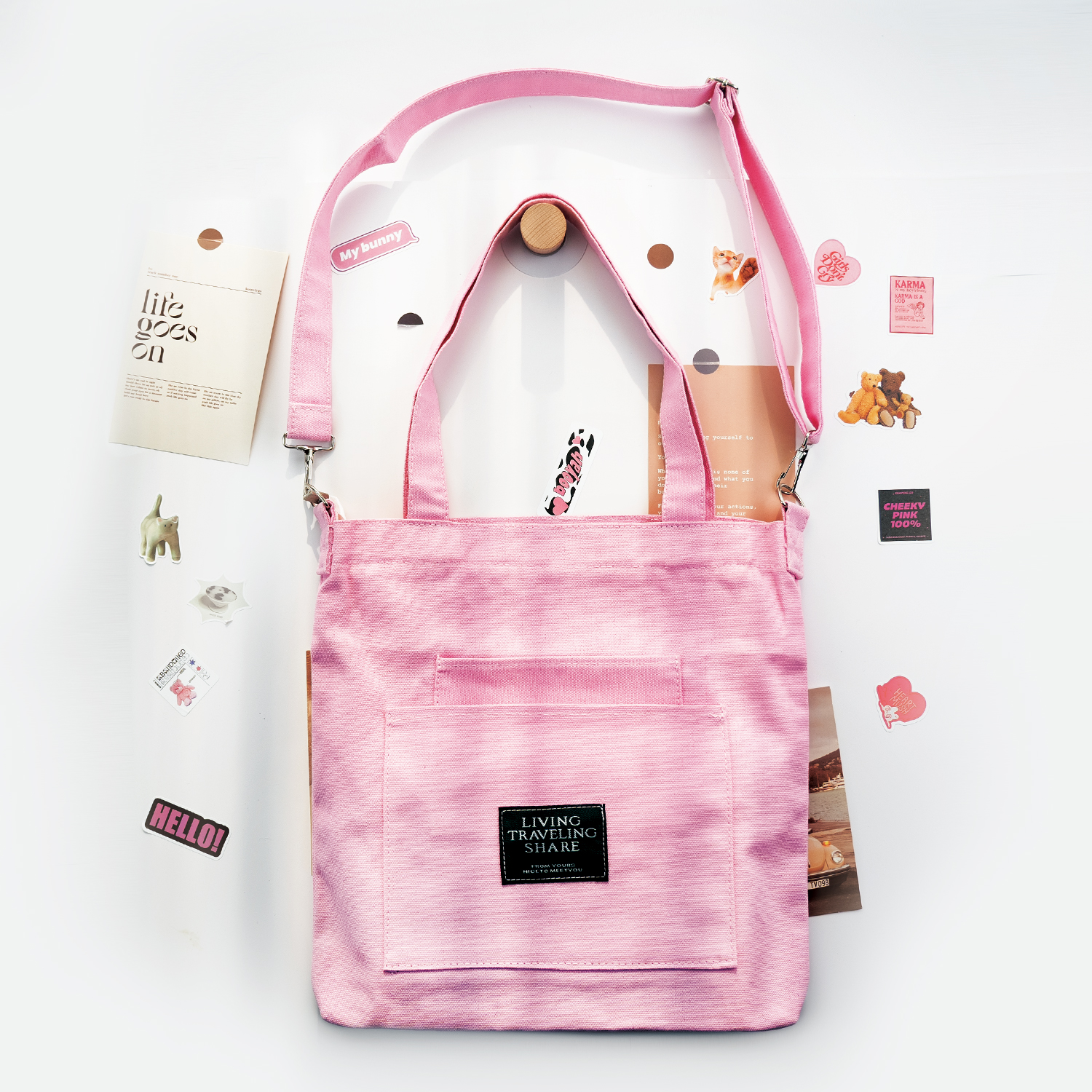
While shopping bag models vary across suppliers, the SB-2026-001 model from Hansun illustrates the main options available to buyers in 2026. The product is categorized as a reusable, foldable, eco-friendly, and canvas tote bag. It can be manufactured using non-woven fabric, canvas, recycled PET, Oxford cloth, or PP.
Each material comes with different trade-offs in weight, durability, appearance, and cost.
| Material | Typical Characteristics |
|---|---|
| Non-woven fabric | Lightweight and economical; commonly used for promotional giveaways; offers good printability at low cost. |
| Canvas | Heavyweight and structured; premium retail feel; provides an excellent surface for detailed printing. |
| Recycled PET | Made from post-consumer plastic bottles; supports sustainability claims and eco-branding. |
| Oxford cloth | Woven and water-resistant; more durable for heavy loads and frequent travel use. |
| PP (polypropylene) | Cost-effective and strong; widely used for reusable bags; dominant material in the market. |
According to Business Research Insights, polypropylene (PP) bags account for nearly 46% of total reusable bag production globally due to their durability and cost-effectiveness. This makes PP the default choice for budget-conscious, high-volume orders, while canvas and recycled PET serve premium and sustainability-oriented applications.
The net weight of a standard shopping bag ranges from 50g to 200g per piece, depending on the material and size selected. Sizes are customizable, with standard S/M/L categories or customer-specific dimensions available. This flexibility is important for buyers who need bags to fit specific retail rack systems, airline carry-on allowances, or promotional budgets.
Customization is supported through silk screen printing, heat transfer, or offset printing. These techniques cover most brand communication needs, from simple logos to full-panel artwork. The choice of material also interacts with the printing method: silk screen printing works well with flat, woven surfaces such as canvas and non-woven fabric; heat transfer suits detailed, multi-color artwork on synthetic materials such as recycled PET and Oxford cloth; offset printing is often selected for large runs where color accuracy and cost efficiency matter.
How Shopping Bags Are Used in Practice
Shopping bags are designed for industries including retail, supermarket, promotional gift, corporate welfare, and e-commerce. Typical application scenarios include supermarket shopping, promotional gifts, and corporate giveaways.
One documented application comes from the gift packaging sector. In this scenario, shopping bags were used for brand promotional gifts and supermarket retail support. The operating environment included room-temperature indoor storage, daily outdoor carrying, and occasional humid conditions. Bags needed to withstand high-frequency repeated use, with accessories such as hang tags, webbing, and brand stickers integrated into the design. Special requirements included food-grade eco-friendly PVC, REACH compliance, scratch resistance, and wear-resistant logo printing.
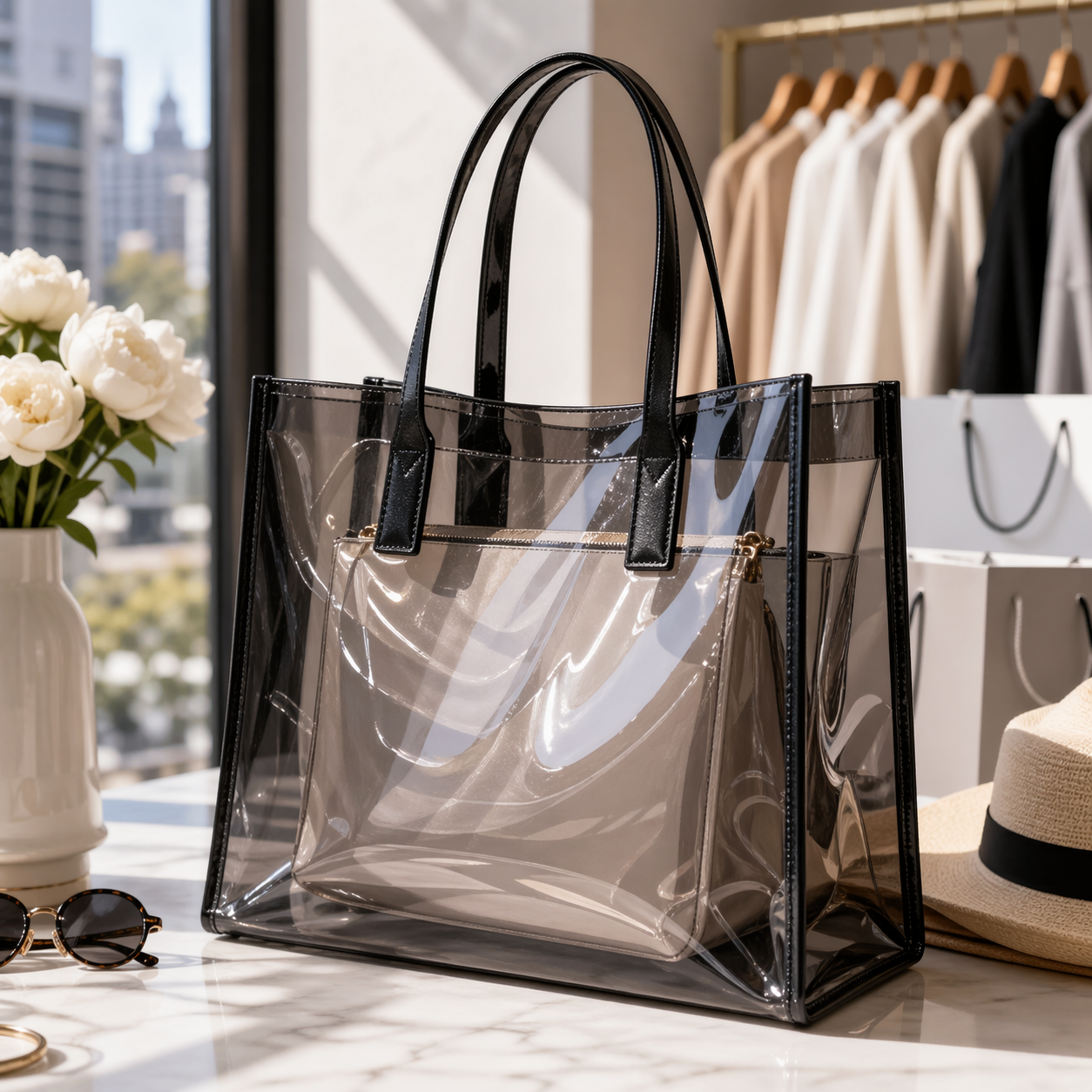
Beyond supermarket and promotional use, shopping bags are increasingly specified in e-commerce packaging, where they serve as a reusable shipping companion, and in corporate welfare programs, where they accompany employee gift packages. The functional range—from lightweight non-woven giveaways to heavy-duty canvas totes—means buyers need to match the bag construction to the actual load and frequency of use.
Market Trends Shaping the Category
Tote bags dominate the global bag market with a revenue share of approximately 40–41%, according to Market Research Future, due to their multi-purpose functionality. Customization and personalization are also rising, with demand for printed garment bags growing by 34% in the retail sector in 2024, based on Business Research Insights data.
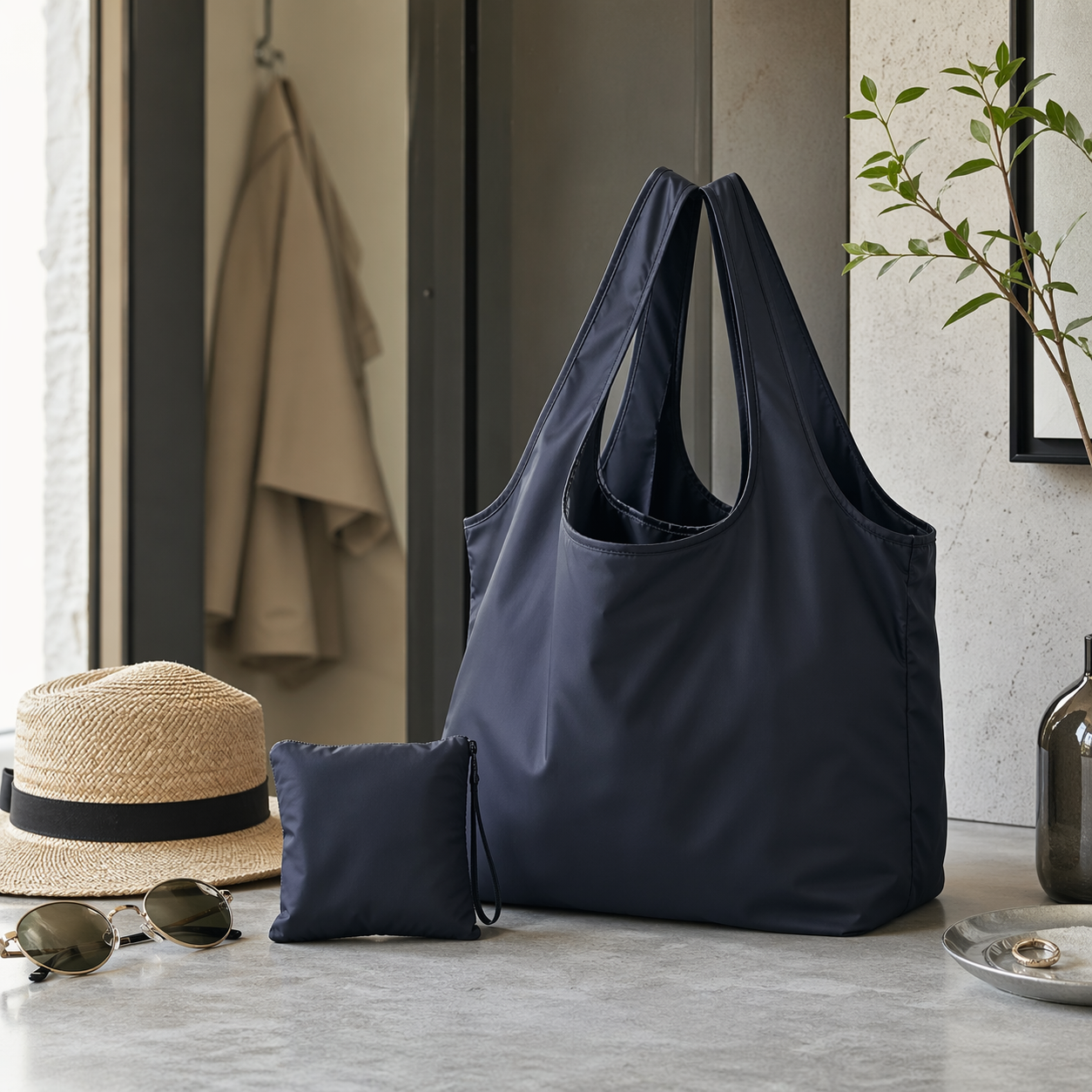
From a sourcing perspective, the dominance of tote-style bags suggests that the classic open-top tote silhouette remains the safest baseline design for most programs, while foldable variants offer added convenience for travel and storage. Foldable bags, as the name implies, collapse into a small pouch; this feature is attractive to supermarkets and consumers who need to keep a spare bag on hand.
For procurement teams, these trends indicate that flexibility is becoming a core requirement. Buyers increasingly request specific dimensions, material combinations, and printing styles that align with marketing campaigns. A supplier with multi-material production capabilities and multiple printing techniques is better positioned to support this demand than one limited to a single product line.
Traditional Plastic Bags vs. Reusable Shopping Bags: A Balanced View
The comparison between reusable shopping bags and traditional single-use plastic bags is more nuanced than it may first appear.
On the positive side, reusable bags help reduce single-use plastic waste and align with regulatory trends such as the EU PPWR and statewide bans across the US. They also function as repeat-use brand assets. A printed canvas or foldable bag carried in public provides repeated exposure that a thin plastic bag cannot offer. For retailers and corporate program buyers, this promotional function adds measurable value to the product.
However, there are real limitations. The upfront unit cost of a reusable bag is higher than that of a conventional single-use plastic bag. The environmental advantage depends on the number of times the bag is actually reused; if it is discarded after only a few uses, the lifecycle benefit narrows. Heavier materials such as canvas and Oxford cloth also consume more raw materials and energy during production. In certain contexts—such as hygienic disposal, food waste handling, or one-time event distribution—single-use bags remain more practical. Buyers should assess material and design options against their actual use cases rather than assuming every reusable bag is automatically the better choice.
2026 and Beyond: Compliance-Driven Procurement
Looking ahead, the combination of the EU's 2030 recyclability mandate, expanding plastic bag bans, and consumer interest in sustainability will continue to push the shopping bag category toward higher quality and compliance standards. Suppliers that can document material traceability, offer recycled-content options, and manage export compliance across multiple markets are likely to hold an advantage in long-term partnerships.
Customization will remain a decisive factor as well. Brands are treating shopping bags as part of their visual identity and customer experience, which makes printing capability, accessory integration, and design support important evaluation criteria.
The longer-term direction points toward what procurement professionals call "design for circularity"—choosing materials that can enter recycling streams, applying printing methods that do not contaminate the material, and using accessories that can be easily separated. These considerations are likely to become standard questions in supplier evaluations as regulators tighten the definition of recyclable packaging.
For buyers, the practical question is not only "which bag is cheapest" but "which supplier can deliver the right combination of material, compliance, customization, and scale."
FAQ
What is a shopping bag?
A shopping bag is a reusable, foldable bag designed for carrying goods in retail, supermarket, and corporate contexts. Model SB-2026-001, produced by Zhejiang Hansun Arts & Crafts Co., Ltd., is categorised as a reusable, foldable, eco-friendly, and canvas tote bag.
What materials are used to make shopping bags?
Shopping bags can be made from non-woven fabric, canvas, recycled PET, Oxford cloth, or PP (polypropylene). The material selected affects the bag's weight, durability, texture, and compatibility with printing techniques.
What sizes and weights are available for shopping bags?
Shopping bag sizes are customizable, with standard S/M/L options and customer-specific dimensions available. Net weight ranges from 50g to 200g per piece, depending on the material and size selected.
Can shopping bags be customized with brand printing?
Yes. Customization can be achieved through silk screen printing, heat transfer, or offset printing. Additional accessories such as hang tags, webbing, and brand stickers can also be integrated into the design.
Which industries commonly use shopping bags?
Shopping bags are used in the retail, supermarket, promotional gift, corporate welfare, and e-commerce industries. Typical application scenarios include supermarket shopping, promotional gifts, and corporate giveaways.