
From Walking Pads to Rowers: What Home Fitness Equipment Is For
Home fitness equipment is not one product category. It is a family of training machines designed around different movement patterns, living spaces, and intensity levels. For importers, distributors, and brand owners evaluating the sector, the practical first step is understanding what each machine type is built for, where it works well, and where its limits are. This article provides a functional reference for that assessment.
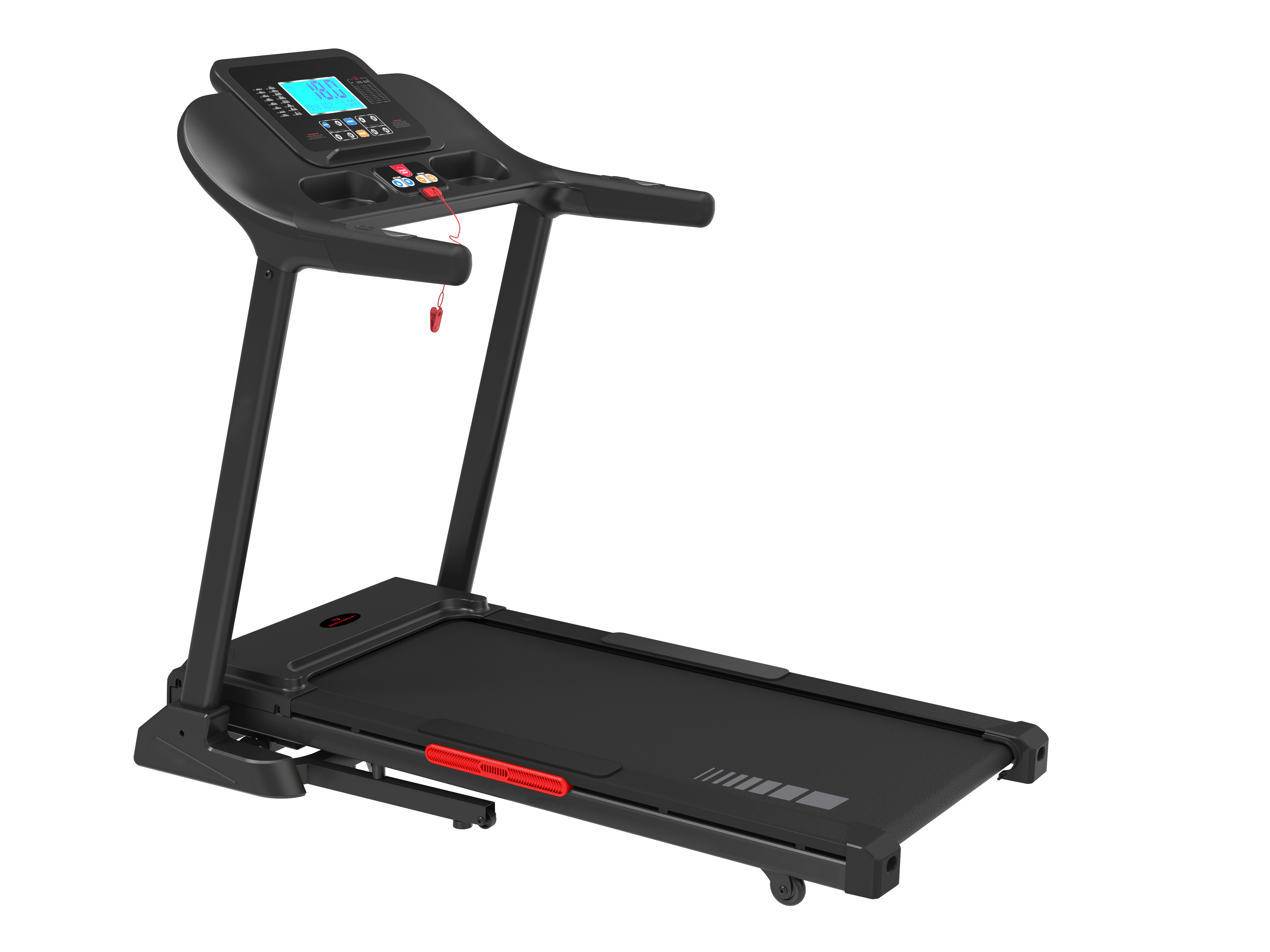
Motorized folding treadmills such as the HSM-MT296 represent the cardio-dominated core of the home fitness equipment market.
Understanding Home Fitness Equipment as a Product Family
Home fitness equipment includes a broad set of products: home-use treadmills, walking pads, vibration machines, spinning bikes, magnetic X-bikes, upright bikes, elliptical trainers, electric mini bikes, and rowing machines. Each category is built around a specific training outcome. Treadmills and walking pads support walking and running. Exercise bikes support cycling-based cardio. Rowing machines combine cardio and upper-body pulling strength. Vibration machines serve low-impact body activation and recovery-style training.
The distinction matters commercially. A buyer who treats a walking pad as a low-speed treadmill, or a magnetic X-bike as a spinning bike, will likely misjudge the user profile, the price point, and the required technical specifications. Recognizing the functional role of each machine is the foundation of any home fitness equipment sourcing decision.
Market Signals Behind Home Fitness Equipment Demand
Third-party research points to steady expansion of the home fitness equipment category. Fortune Business Insights valued the global home fitness equipment market at approximately USD 12.88 billion in 2025 and projected it to reach USD 22.99 billion by 2034. The same source reports that cardiovascular equipment, including treadmills and exercise bikes, dominates the category with a 58.89% revenue share.
More specialized segments are growing at different speeds. Dataintelo valued the global home treadmill market at USD 5.51 billion in 2025, with motorized models holding a 58.2% share. Straits Research estimated the walking pad market, which includes under-desk treadmills, at USD 4.9 billion in 2025, driven partly by remote work trends. The vibration therapy platform market reached USD 1.8 billion in 2025, with an expected CAGR of 7.8% through 2034.
Note: market size estimates vary across research firms depending on how commercial and residential segments are defined. Buyers should treat these figures as directional rather than absolute.
Ningbo Healthmate: A Manufacturer Covering the Full Home Fitness Range
Ningbo Healthmate Health Technology Co., Ltd., established in 2007, is a China-based manufacturer of fitness equipment and healthcare products. The company operates a 100,000-square-meter manufacturing facility in Ningbo with approximately 850 employees and an annual production capacity of 700,000 units. Its R&D team includes 38 engineers focused on fitness equipment design. Export business accounts for 80% of total sales, with major markets including Europe, the USA, Japan, Korea, India, the Middle East, and South America.
For buyers, this breadth has a practical implication. Instead of qualifying multiple suppliers for different product lines, a buyer can evaluate one manufacturer for treadmills, walking pads, vibration machines, bikes, and rowers under a single quality-control framework. The company’s location on the coastline of Ningbo, near Ningbo Port, is also relevant for international buyers evaluating shipping efficiency and logistics cost.
Functional Benchmarks: Key Differences Across Equipment Types
The table below summarizes representative home fitness equipment types and their functional definitions based on manufacturer specifications.
| Category | Representative Model | Key Functional Data | Typical Role in the Home |
|---|---|---|---|
| Motorized treadmill | HSM-MT296 | 1-20 km/h; 2.0 HP; runway 1200x520 mm; max user weight 150 kg; auto incline | Running and walking in a dedicated home space |
| Multi-function treadmill | HSM-MT550 | 1-22 km/h; 2.5 HP; runway 1350x550 mm; wireless charging; auto incline | Higher-speed cardio with a larger running surface |
| Compact folding treadmill | HSM-T20 | 1-14 km/h; 1.5 HP; runway 1100x400 mm; 33.5 kg; Bluetooth and APP | Small-space running and walking |
| Under-desk walking pad | HSM-W04L1BL | 1-6 km/h; 0.75 HP brushless motor; size 1130x510x91 mm | Low-speed walking in a home office |
| Walking pad with handrail | HSM-W09E | Dual speed 1-14 km/h and 1-6 km/h; 1.5 HP; manual incline | Walking with added stability support |
| Foldable X-bike | HSM-B135J5 | 8 resistance levels; 1.5 kg flywheel; 19.1 kg | Compact low-impact cycling |
| Magnetic spinning bike | HSM-S300 | Stepless APP resistance; 6.0 kg flywheel | Intensity-controlled cycling training |
| Magnetic rowing machine | HSM-R06 | 16 resistance levels; 2.5 kg flywheel; 24 kg | Full-body cardio and strength training |
| Compact vibration plate | HSM-08VS | 200W; 99 speed levels; 9.8 kg | Low-impact body activation |
| Upright vibration machine | HSM-08VF | 500W; 99 speed levels; 31 kg; handlebar | Whole-body vibration exercise |
Treadmills and Walking Pads
Motorized treadmills for home use vary mainly in motor power, speed range, runway size, folding mechanism, and incline function. The HSM-MT296, for example, offers a 1-20 km/h speed range with a 2.0 HP motor and a 150 kg user weight capacity. The HSM-MT550 extends the speed range to 22 km/h with a 2.5 HP motor and a larger 1350x550 mm runway. Some models add wireless charging or a massager set. The HSM-MT19 includes a hydraulic soft-drop folding system, an emergency stop key, and an anti-slip belt. These details matter because they define safety and daily usability.
Walking pads address a different use case. Models such as the HSM-W04L1BL and HSM-W04L2B have lower speed limits of 1-6 km/h, smaller runways around 900x380 mm, and very thin profiles. The HSM-W04L1BL is 91 mm thick and uses a brushless motor, which supports quiet, low-speed walking under a desk. The HSM-W04L2B adds a manual incline function. The HSM-W09E offers dual-speed control and a handrail, making it suitable for users who want walking plus stability support.
Vibration Machines and Recovery Equipment
Vibration plates are distinct from cardio machines. They are designed for timed, low-impact sessions rather than continuous movement. The HSM-08VS is a compact vibration plate with 200W power, 99 speed levels, and a 9.8 kg gross weight. The HSM-08VQ is a portable whole-body vibration plate with combined power of 500W+300W and 20 speed levels. The HSM-08VF is an upright vibration machine with a handlebar, 500W power, and 99 speed levels. The HSM-08VW adds elastic ropes for upper-body involvement during vibration training. The HSM-08YB is classified as a swing massage machine, with 50W rated power and a maximum user weight of 80 kg, positioned for the personal wellness and home health care segments.
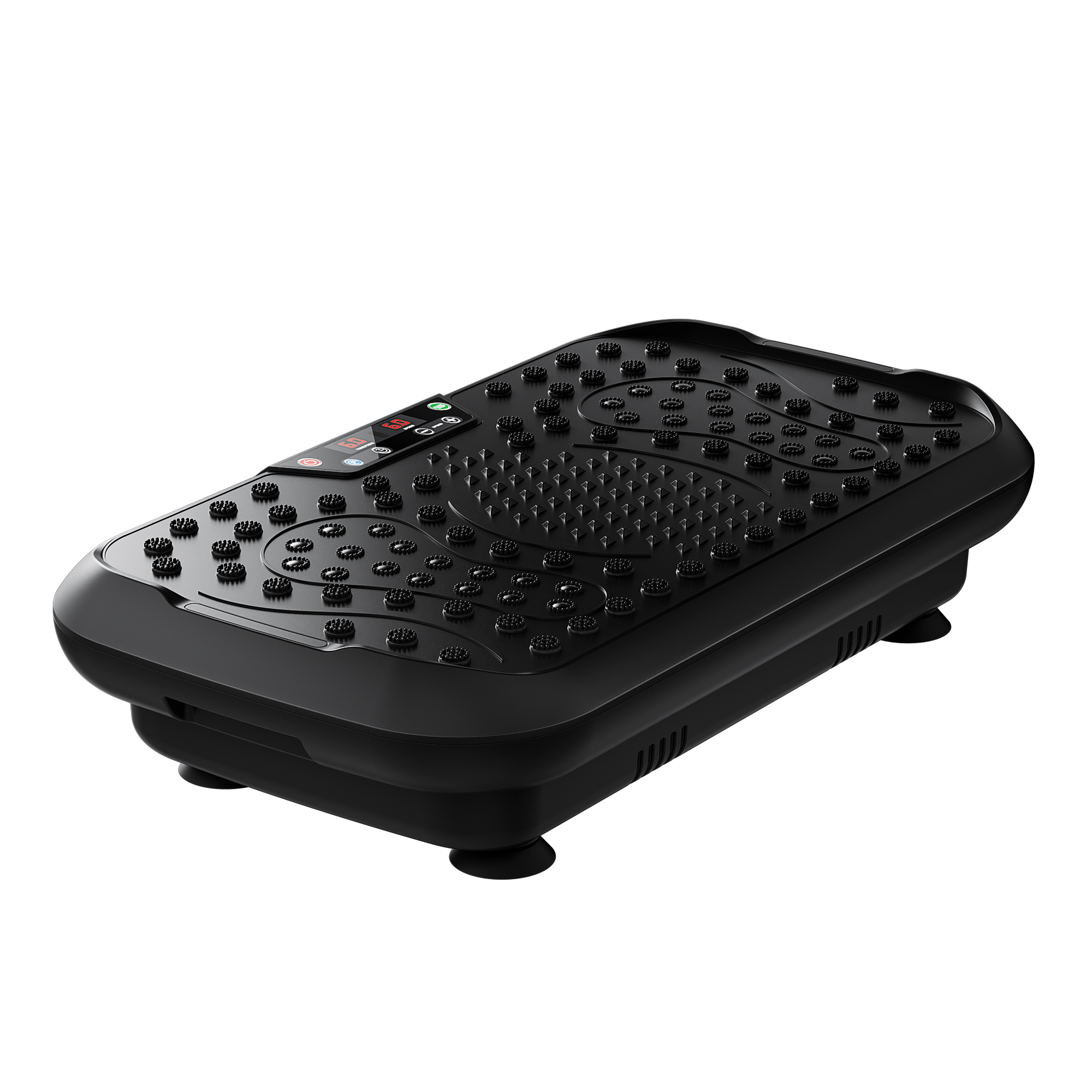
Compact vibration plates such as the HSM-08VS support low-impact home training and recovery-style exercise.
Exercise Bikes and Rowing Machines
Home exercise bikes divide into two practical sub-types. The HSM-B135J5 is a foldable magnetic X-bike with 8 resistance levels, a 1.5 kg flywheel, and a gross weight of 19.1 kg. It fits small apartments and can be stored more easily. The HSM-S300 is a magnetic resistance spinning bike with a 6.0 kg flywheel and stepless APP-controlled resistance. For buyers, the choice is between a compact general-purpose bike and a more intense cycling machine with a heavier flywheel and digital resistance control.
Rowing machines add a different training dimension. The HSM-R06 is a magnetic rowing machine for home use with 16 resistance levels, a 2.5 kg flywheel, a slideway distance reference of 0-705 mm, and a handlebar belt length reference of 0-1700 mm. The LCD screen displays time, distance, and stroke data. This type of equipment is positioned for full-body workouts and cardio strength training in a home setting.
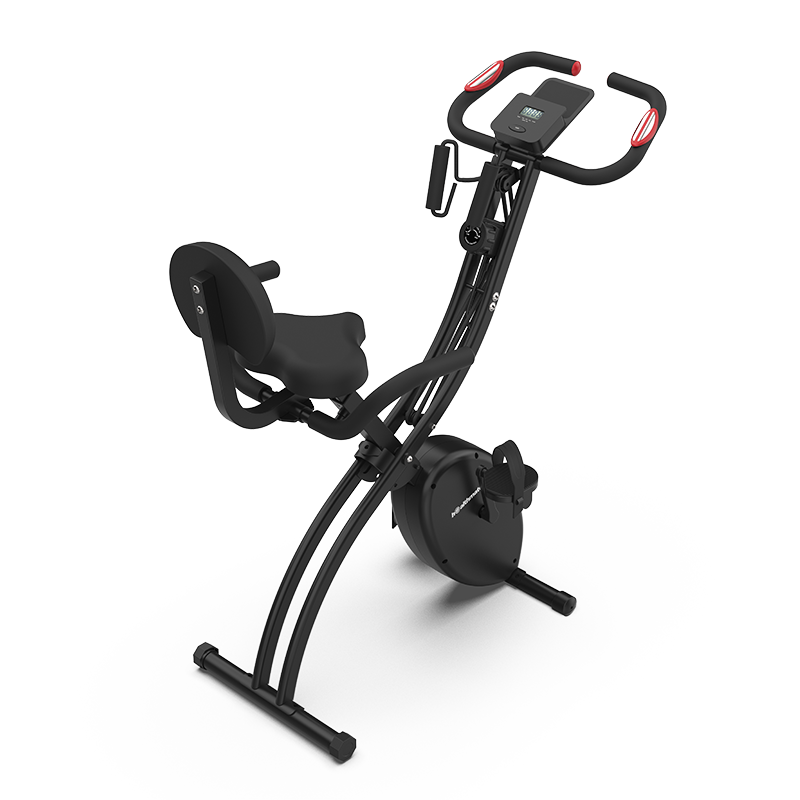
Foldable magnetic bikes such as the HSM-B135J5 are aimed at apartment dwellers who need compact indoor cardio.
Where Each Type Works: Home Fitness Application Scenarios
Home fitness equipment is most commonly deployed in three project types: home fitness setup projects, home office fitness integration projects, and personal cardio training systems. The operating environment is typically home use, office or workplace use, or apartment and urban living settings.
In these scenarios, the functional role of the equipment is to support daily exercise or activity maintenance, and to improve lifestyle fitness. The operation mode is usually manual operation with electronic control, speed or resistance adjustable training, real-time tracking, intermittent daily use, and a safety stop system. Special requirements for home scenarios include:
- Space-saving or foldable design
- Anti-slip running belt
- High-durability motor suitable for repeated daily use
- Ergonomic design for long-term home use
- Stable frame for apartment flooring
Supporting equipment such as a mobile fitness app or Bluetooth music function is expected in many modern home fitness setups. Application scenarios also vary by region; the United States is commonly cited as one of the major markets for this type of equipment.
Market Trend Analysis: From Walking Pads to Vibration Platforms
The market data points to three structural trends. First, cardiovascular equipment, especially treadmills and exercise bikes, remains the largest and most stable part of the home fitness equipment market. Second, walking pads are emerging as a high-growth niche because they address a specific lifestyle need: low-intensity movement during remote work. Third, vibration platforms form a smaller but steadily growing segment, with a projected CAGR of 7.8% through 2034.
Buyers should also note the increasing role of digital features. Bluetooth music and APP functions appear across multiple product lines, from the compact HSM-T20 treadmill to the HSM-MT296 treadmill and the HSM-S300 spinning bike. This suggests that connectivity is no longer limited to premium equipment but is becoming a common expectation in home fitness products.
Home vs. Commercial Fitness Equipment: Where the Limits Are
Home fitness equipment is not a lighter version of commercial gym equipment; it is engineered for a different duty cycle. Commercial machines are typically designed for continuous, high-volume use throughout the day. Home machines are designed for intermittent daily sessions, with a stronger emphasis on compact dimensions, quieter motors, and foldable frames.
A concrete example is the HSM-MT296 motorized treadmill. It has a 2.0 HP motor, a 150 kg maximum user weight, and a folding frame. These specifications are meaningful for a home user, but they are not a substitute for a commercial treadmill in a studio or gym environment, where longer continuous operation and higher throughput are required. Similarly, home rowing machines and exercise bikes use lighter flywheels and simpler frames to keep weight and cost manageable. Buyers planning to place equipment in commercial or semi-commercial environments should request a separate evaluation rather than assuming home-grade products will perform at commercial duty levels.
Future Outlook
Several forces will continue to shape home fitness equipment. Space constraints in urban housing favor slim walking pads and foldable treadmills. Remote and hybrid work arrangements sustain demand for under-desk movement solutions. Vibration and recovery-style equipment appeal to users looking for lower-impact alternatives to traditional cardio. And digital connectivity, from APP-linked resistance control to Bluetooth audio, is becoming a baseline feature rather than a differentiator.
Compliance will also remain a central sourcing issue. According to international standards, motorized treadmills sold in major markets must meet ASTM F2115-19 in the United States and ISO 20957-6 / EN 957-6 in the European Union. Buyers should verify that each product model, not just the factory as a whole, meets the safety and performance standards required in the destination market.
Frequently Asked Questions
What counts as home fitness equipment?
Home fitness equipment includes devices designed for residential use: home-use treadmills, walking pads, vibration machines, spinning bikes, magnetic X-bikes, upright bikes, elliptical trainers, electric mini bikes, and rowing machines. These products are generally more compact than gym equipment and are engineered for intermittent daily use in a home environment.
What is the difference between a home treadmill and a walking pad?
A home treadmill such as the HSM-MT296 offers a 1-20 km/h speed range, a 2.0 HP motor, and a 1200x520 mm runway, which supports both walking and running. A walking pad such as the HSM-W04L1BL has a 1-6 km/h speed range, a 0.75 HP brushless motor, and a thin 1130x510x91 mm profile, designed primarily for low-speed walking under a desk. The main differences are speed capability, motor power, and physical footprint.
What should buyers check when sourcing home fitness equipment?
Key checks include space-saving or foldable design, anti-slip running belt, motor durability for repeated daily use, ergonomic design for long-term home use, stable frame for apartment flooring, and a safety stop system. Buyers should also verify whether the product supports common accessories such as mobile fitness apps or Bluetooth audio.
Which exercise bike type suits home use?
For compact apartments, a foldable magnetic X-bike such as the HSM-B135J5 offers 8 resistance levels and easy storage. For higher-intensity indoor cycling, a magnetic spinning bike such as the HSM-S300 offers a 6.0 kg flywheel and stepless APP-controlled resistance. The choice depends on the user’s training intensity expectations and available floor space.
What is a vibration plate used for in home fitness?
A vibration plate such as the HSM-08VS or HSM-08VQ is used for timed, low-impact body training and recovery-oriented sessions. Compact models may have 200W power and 99 speed levels, while larger models combine 500W+300W power with 20 speed levels. Some versions add handlebars or elastic ropes for upper-body involvement.
Is a magnetic rowing machine effective for a full-body home workout?
Yes. The HSM-R06 magnetic rowing machine offers 16 resistance levels, a 2.5 kg flywheel, and stroke tracking on its LCD screen. It is designed for full-body workouts and cardio strength training, making it suitable for home users who want a combined cardio and strength stimulus.
Further Reference
Readers researching manufacturing options can download the full product catalog from Ningbo Healthmate Health Technology Co., Ltd. at HSM New E-Catalog. The company website is www.healthma.com.
Have Questions or Need More Details?
Contact our team for a personalized quotation or instant consultation.
Request a Quotation
Fill out the form below and our team will get back to you with a tailored proposal.
WhatsApp Direct Chat
Prefer to chat in real-time? Message us on WhatsApp for instant assistance & quick answers.
- Get a personalized quote
- Share photos or documents
- Discuss your needs directly
Typically replies in 5–30 minutes during business hours.