
Frozen Vegetables Analysis: YOKID's IQF Sourcing Capability
Industry Reference · Frozen Vegetables
The frozen vegetable category has become one of the more data-rich segments of the international food trade. Market sizing is widely published, IQF is the dominant processing method, and the cold-chain requirement is anchored by an internationally recognised standard. What remains uneven is supplier-level evidence: buyers at the research stage still have to assemble a view of a factory from a relatively small number of disclosed operational facts, visible product specifications and verifiable documentation.
YOKID Frozen Vegetables is a frozen food brand based in Qingdao, China, operated under Qingdao Yokid Foods Co.,Ltd., a company established in 2009 that supplies IQF frozen vegetables, frozen fruit, frozen prepared foods and mushrooms to importers, distributors, wholesalers, food processors and foodservice businesses across Europe, East Asia, South East Asia, Australia and North America. This analysis examines the operating baseline the company currently discloses, the specification depth of its vegetable range, and the buyer-relevant boundaries that remain open at the research stage.
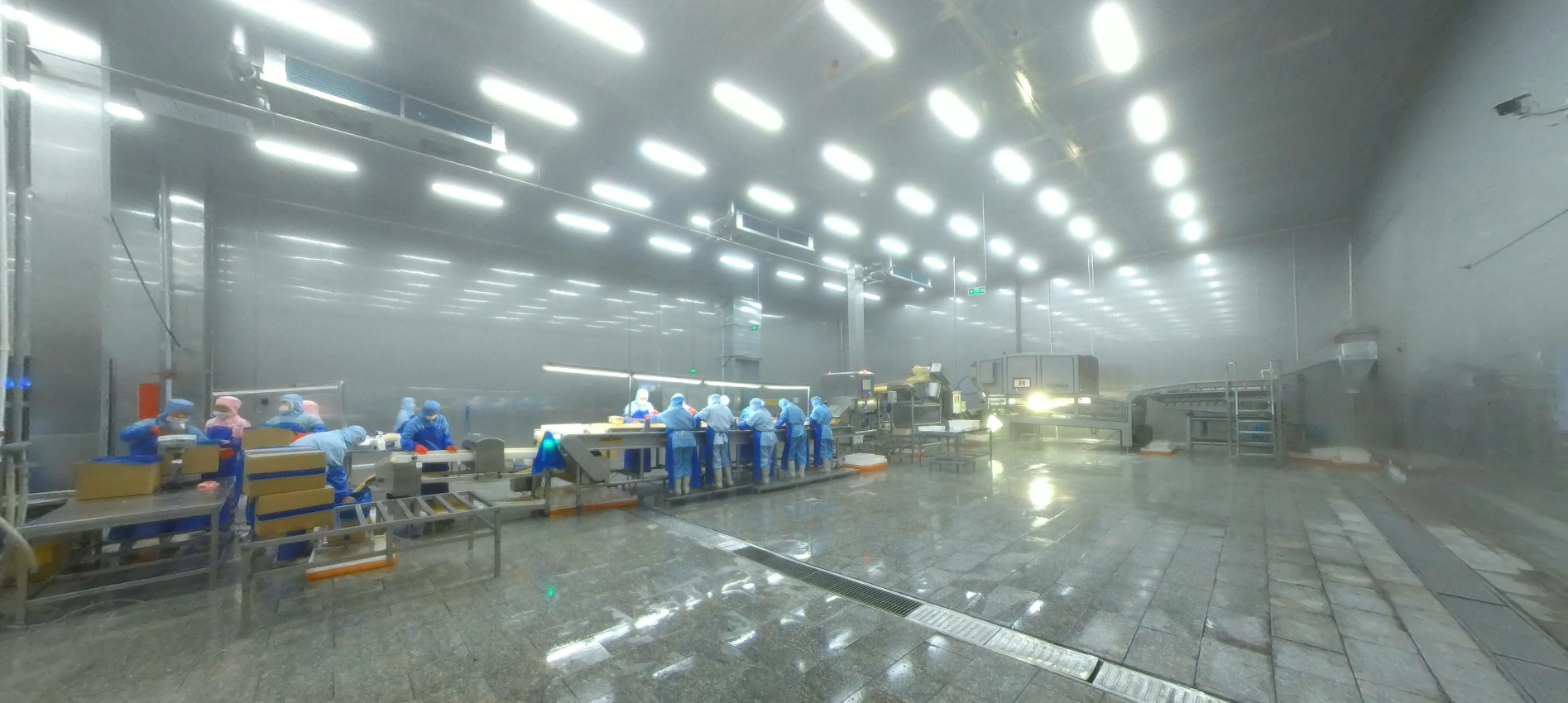
IQF production line environment. Source: Qingdao Yokid Foods Co.,Ltd. company materials.
What the frozen vegetable category actually signals to buyers
The category-level picture is strong but not uniform. Three published data points frame the sourcing conversation:
- Mordor Intelligence estimates the global frozen vegetables market at approximately USD 21.51 billion in 2026.
- China Customs statistics indicate that China's frozen vegetable exports reached approximately USD 1.55 billion in 2024, a year-on-year increase of about 7%.
- IQF (Individual Quick Freezing) held a 55.43% share of the global frozen vegetable market in 2024, according to Mordor Intelligence.
One additional detail matters for buyer planning: the same Mordor Intelligence dataset attributes 35.6% of 2024 market revenue to the peas segment alone. That concentration is a useful reminder that whole-category growth figures do not translate evenly across individual SKUs. A buyer sourcing broccoli, spinach or diced onion is operating in a different demand pool from a buyer sourcing peas.
The three recurring buyer problems
Supplier evaluation tends to collapse into the same three questions, regardless of the product:
- Specification control. Cut size, floret range and slice thickness must hold across production lots. A 10 × 10 mm diced carrot is only useful if it repeatedly arrives as a 10 × 10 mm diced carrot.
- Cold-chain discipline. Storage at −18°C or below must be monitored from the factory through the container. Any thaw-and-refreeze event degrades both texture and compliance evidence.
- Commercial flexibility. Packaging format, private label, custom cut and minimum order quantity capability determine whether the supplier fits the buyer's actual release schedule.
How well a processor resolves these three questions determines how far a procurement plan can progress.
YOKID's disclosed operating baseline
Qingdao Yokid Foods Co.,Ltd. was established in 2009. The company's disclosed operational facts are as follows:
| Parameter | Disclosed Detail |
|---|---|
| Year established | 2009 |
| Factory area | 30,000 m² |
| Employees | Approximately 135 |
| Annual output | 40,000 tons |
| R&D team | 6 engineers |
| Export ratio | Approximately 75% of total sales |
| Main markets | Europe, East Asia, South East Asia, Australia and North America |
| Product scope | IQF frozen fruit, vegetables, mushrooms, French fries and other frozen food products |
These figures are not, by themselves, a capability verdict. They describe a reasonably continuous picture: an export-oriented processor with a documented factory footprint and a broad product scope. The interpretation of each data point differs by buyer type.
- Export ratio of 75% indicates that most of the operational volume is routed to international buyers, meaning the company's documentation, labelling and shipping routine is likely aligned with destination-market requirements. This is often underweighted in supplier comparisons.
- A 30,000 m² footprint with 40,000 tons of annual output establishes a mid-sized processing base. It supports multi-category sourcing from a single supplier, while also meaning production scheduling across those categories may involve shared capacity.
- A 6-engineer R&D team is a relatively compact technical function within a 135-person organisation. It indicates an internal technical capability, but the depth of that capability should be validated project by project rather than assumed.
The company states that it maintains certifications including BRC, HACCP, ISO 22000, KOSHER and HALAL, together with cultivation bases in Inner Mongolia, Liaoning, Shandong, Zhejiang and Fujian. These are company-reported statements in the performance data source. Buyers should still request current certificate copies and confirm that the scoped products and production lines are covered.
The IQF vegetable range: specification depth as a diagnostic signal
The disclosed IQF vegetable range currently covers onion, spinach, sweet corn, carrot and broccoli. The specification detail is more granular than category-level marketing usually provides, which itself is a useful diagnostic signal.
| Product | Model | Forms Available | Selected Sizes | Shelf Life |
|---|---|---|---|---|
| IQF Frozen Onion | IQF Frozen Diced Onion | Diced, chunks, strips, sliced, rings, minced, whole peeled | Diced 5×5 to 10×10 mm; Chunks 20×20 mm; Strips 4–6 to 8–10 mm width, 3–7 cm length; Sliced 4–6 to 8–10 mm thickness; Rings 6–10 mm thickness; Minced below 3 mm; Whole peeled 5–9 cm diameter | 24 months |
| IQF Frozen Spinach | IQF Frozen Chopped Spinach | Chopped, cut, whole leaf, spinach balls, spinach blocks | Chopped 5×5 to 15×15 mm; Cut 2–7 cm; Balls 15–35 g; Blocks 500 g or 1 kg; Leaf-to-stem ratio 70:30, customizable | 24 months |
| IQF Frozen Sweet Corn | IQF Frozen Sweet Corn Kernels | Whole cob, cut cob, kernels | Whole and cut cob forms; individual kernels | 24 months |
| IQF Frozen Carrots | IQF Frozen Diced Carrots | Diced, sliced, sticks, chunks, whole, shredded, flower cut | Diced 5×5 to 12×12 mm; Sliced 3, 4, 5 mm thickness (straight, crinkle, flower cut); Sticks 3×3×40 mm and 5×5×50 mm; Chunks 15×15 and 20×20 mm; Whole 20–45 mm diameter; Flower 30–35 mm (25 and 40 mm on request) | 24 months |
| IQF Frozen Broccoli | IQF Frozen Broccoli Florets | Florets | 20–40 mm, 30–50 mm, 40–60 mm | 24 months |
The buyer-relevant question is not how long this table is, but what it demonstrates. Two observations follow.
First, the range is reasonably specialised within each category. Onion can be supplied down to a sub-3 mm mince and up to a 9 cm whole peeled bulb. Carrot is available in flower cuts at 30–35 mm, with 25 and 40 mm variants on request. Broccoli florets are documented in three distinct size bands. Spinach offers a 70:30 leaf-to-stem ratio that can be adjusted. For buyers whose formulation depends on texture, colour or preparation labour, these parameters matter more than broad claims of quality.
Second, the same table exposes the boundary of available evidence. The publicly documented range currently extends to five vegetable SKUs. A buyer sourcing green peas, edamame, asparagus, okra, pepper, pumpkin, garlic, ginger, leek or mixed vegetable blends cannot confirm availability for those items from the current published material. That is not a judgement about capability; it is simply the limit of what a buyer can verify before requesting a quotation.
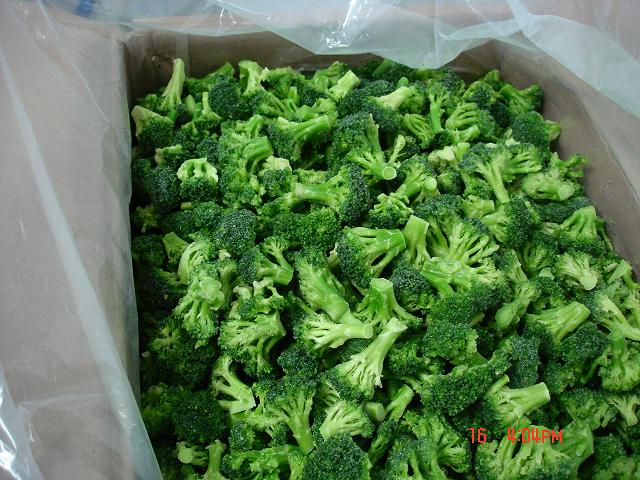
IQF Frozen Broccoli Florets, documented in three size bands for foodservice and ready-meal applications.
Technical explanation: what IQF actually changes
IQF means Individual Quick Freezing. Each prepared vegetable piece is frozen separately and rapidly, producing a loose, free-flowing product rather than a solid block. Three consequences follow at the buyer level:
- Loose pieces. The product can be portioned, weighed and blended without pre-breaking, which reduces labour and waste in a production kitchen.
- Smaller ice crystals. Rapid heat removal limits the damage to plant cell structure compared with slower freezing, which supports texture after reheating.
- Direct use. Most applications allow the product to be cooked directly from frozen without a thawing step, reducing drip loss and handling time.
This is anchored by an international reference standard. Codex Standard CXS 320-2015 defines quick-frozen vegetables as products prepared from substantially sound, fresh or frozen vegetables, subjected to a quick freezing process and maintained at −18°C or colder at all points in the cold chain, subject to permitted temperature tolerances. That requirement is the baseline against which any supplier's cold-chain claim should be checked.
Within the YOKID product documentation, four technical points are directly relevant:
- All core products are declared as IQF frozen.
- All products are declared for storage at −18°C or below, with a 24-month shelf life.
- Spinach is declared as IQF or BQF depending on product form, which is a meaningful distinction: spinach blocks are produced using block freezing rather than individual quick freezing.
- All products are graded as Food Grade.
Application conditions and use cases
Frozen vegetable applications are highly fragmented, and each application places different demands on the processor.
- Ready meals and prepared foods: stable diced size, adequate blanching, and controlled water release on reheating.
- Soups and sauces: fine-cut or minced forms — minced onion below 3 mm and chopped spinach at 10 × 10 mm are typical.
- Bakery and pizza: corn kernels, chopped spinach and diced carrot, with sensitivity to colour and moisture.
- Foodservice and catering: portioning consistency and easy handling from frozen.
- Retail and wholesale: pack format, private label and label compliance for the destination market.
The operational conditions are common across these applications. Products are stored and transported at −18°C or below, with a continuous cold chain, hygienic handling, temperature monitoring and protection against repeated thawing and refreezing. Products can be cooked directly from frozen or partially thawed as required. Supporting operations include washing, sorting and grading, cutting, blanching, IQF or BQF freezing, weighing and packaging, metal detection, X-ray inspection, cold storage and refrigerated transport.
The associated procurement checklist — continuous cold chain, food-grade packaging, batch traceability, temperature control, hygiene management, product inspection, customised cuts and sizes, customised packaging, destination-market compliance and customer-approved product specifications — is a generic industry requirement rather than a YOKID-specific claim. Its value to the buyer is as a question set to put to any candidate supplier, not as evidence that a particular factory has already satisfied every item.
Market trend analysis: where the category is heading
Three verifiable trends are relevant to a 2026 sourcing decision.
- Category volume continues to grow. Mordor Intelligence places the 2026 global frozen vegetable market at approximately USD 21.51 billion.
- China's export base is expanding. China Customs data show frozen vegetable exports of approximately USD 1.55 billion in 2024, up about 7% year on year.
- IQF remains the dominant technique. IQF held 55.43% of the global market in 2024, confirming that the processing method itself has become the default specification rather than a premium differentiator.
The procurement implication is not that the category is growing, but that buyer scrutiny is rising alongside it. As IQF becomes standard, supplier differentiation shifts toward documentation and process evidence: cold-chain records, certificate scope, batch traceability and production-line discipline. Buyers that evaluate suppliers on those dimensions rather than on catalogue breadth are better positioned to avoid specification drift after the first shipment.
Comparison with alternative formats: where IQF stops being the right answer
Frozen vegetables are not the default best option in every sourcing scenario. A commonly used practical ordering for food factories and foodservice buyers is:
- IQF frozen — consistent sizing, long shelf life, convenient portioning.
- Dehydrated — suited to dry foods, instant noodles and seasonings, with ambient storage and lower shipping weight.
- Fresh — suited to premium retail and immediate use, with superior texture but short shelf life and higher spoilage risk.
That ordering carries two honest boundaries. First, IQF frozen vegetables require reliable −18°C storage and continuous cold chain. A buyer without that infrastructure will not capture the quality advantage, and may see it reverse. Second, for dry applications such as seasoning blends or dry soup bases, dehydrated product is structurally more appropriate than frozen, regardless of supplier quality.
Within the YOKID range, the same boundary appears at product level: spinach can be supplied as IQF chopped, cut or whole leaf, or as BQF blocks, but the published material does not indicate an ambient or dehydrated vegetable range. Buyers whose requirements sit in the dehydrated segment should treat that as a defined scope limit rather than a gap to be negotiated.
What remains unverified: a fair reading of the evidence
A credible supplier assessment has to state its own limits. For YOKID, the following items remain open at the research stage:
- Certificate currency and scope. The BRC, HACCP, ISO 22000, KOSHER and HALAL statements come from company materials. Buyers should request current certificate copies and confirm that the specific products and lines are in scope.
- Cold-chain evidence. The −18°C specification and 24-month shelf life are documented, but public material does not include transport or warehouse temperature logs. Continuity of the cold chain requires shipment records or third-party audit to confirm.
- Capacity allocation by category. The 40,000-ton annual output is a company-level figure. It is not broken down by product or production line, so buyers planning multi-category orders should confirm actual available capacity for each SKU.
- Category breadth. Currently published IQF vegetable specifications cover onion, spinach, sweet corn, carrot and broccoli. Availability of peas, edamame, asparagus, okra, pepper, pumpkin, garlic, ginger, leek and mixed vegetable blends cannot be confirmed from published material.
- Customisation limits. Packaging and cut sizes are documented as customisable, but the range of customisation, minimum order quantities and lead times are not specified publicly.
- Independent verification. The operational facts available are primarily company-reported. Third-party audit reports or independent test data are not part of the current public evidence set.
None of these points constitutes a negative finding. They define where the public evidence ends and where buyer due diligence must begin.
Conclusion
Qingdao Yokid Foods Co.,Ltd. is a frozen food supplier established in 2009, operating a 30,000 m² facility with approximately 135 employees, 40,000 tons of annual output, and an export ratio of roughly 75%, serving Europe, East Asia, South East Asia, Australia and North America. Its IQF vegetable range covers onion, spinach, sweet corn, carrot and broccoli, with specifications documented at millimetre level and customisation offered on cut size, portion weight and packaging. Those are verifiable, citable facts, and together they form a workable first-pass picture for a buyer at the research stage.
The limits of that picture are equally clear: certificate scope, cold-chain records, category breadth and independent verification all remain open. For modern frozen vegetable procurement, the value of a supplier lies less in what it says it does and more in what it can consistently evidence in specifications, records and delivery.
Company brochure (English, downloadable): Qingdao Yokid Foods Co.,Ltd. 2025 English Brochure
FAQ
What does IQF mean in frozen vegetables?
IQF stands for Individual Quick Freezing. Each prepared vegetable piece is frozen separately and rapidly, producing a loose, free-flowing product for storage, portioning, food processing and convenient preparation.
How do IQF frozen, dehydrated and fresh vegetables compare for different businesses?
For most food factories and foodservice buyers, a practical ordering is: 1. IQF frozen, 2. dehydrated, 3. fresh. IQF offers consistent quality and easy preparation. Dehydrated products suit dry foods and ambient storage. Fresh products suit premium retail and immediate use. The final choice depends on application, storage conditions and logistics.
How should frozen vegetables be received, stored, handled and prepared?
Inspect the packaging, product condition and temperature first. Pre-cool and verify the cold room before transferring products into storage. Keep products at −18°C or below, maintain complete temperature records and apply FEFO stock rotation. Thaw only when required, and follow the product label for cooking or direct use.
What evidence should buyers request from a frozen vegetable supplier?
Typical checkpoints cover continuous cold chain, food-grade packaging, batch traceability, temperature control, hygiene management, product inspection, customised cuts and sizes, customised packaging, destination-market compliance and customer-approved product specifications. Buyers should request the corresponding records or specification sheets for the specific products and markets in scope.
Have Questions or Need More Details?
Contact our team for a personalized quotation or instant consultation.
Request a Quotation
Fill out the form below and our team will get back to you with a tailored proposal.
WhatsApp Direct Chat
Prefer to chat in real-time? Message us on WhatsApp for instant assistance & quick answers.
- Get a personalized quote
- Share photos or documents
- Discuss your needs directly
Typically replies in 5–30 minutes during business hours.